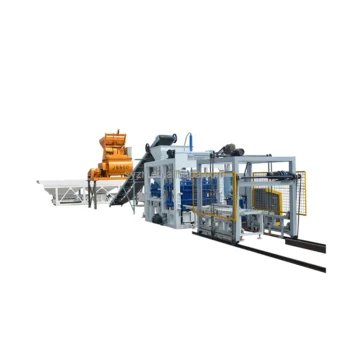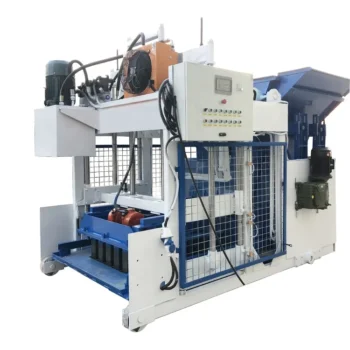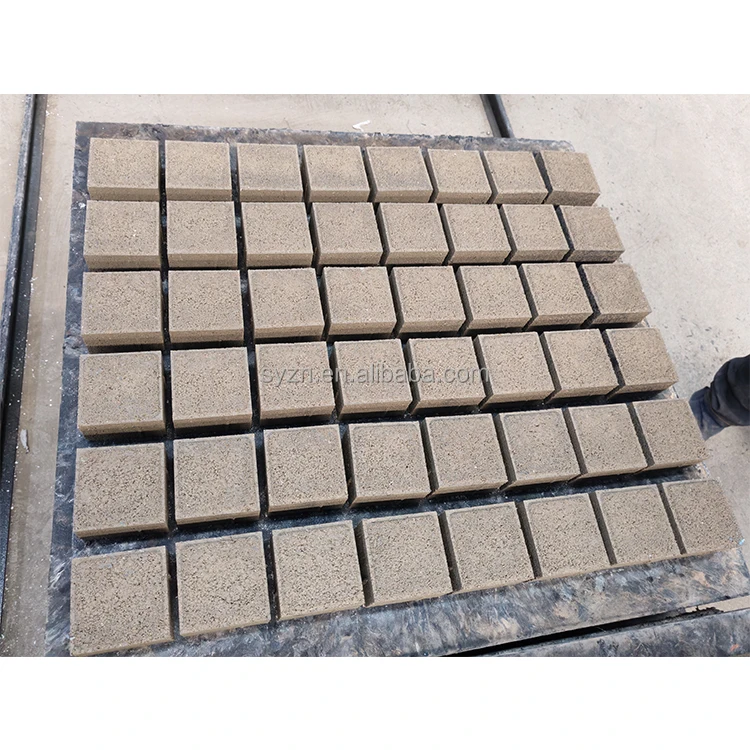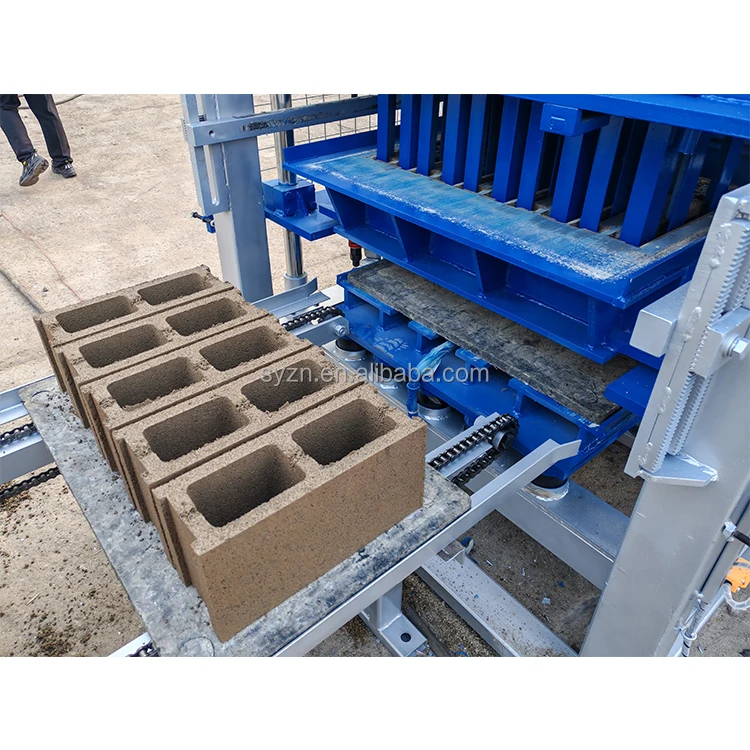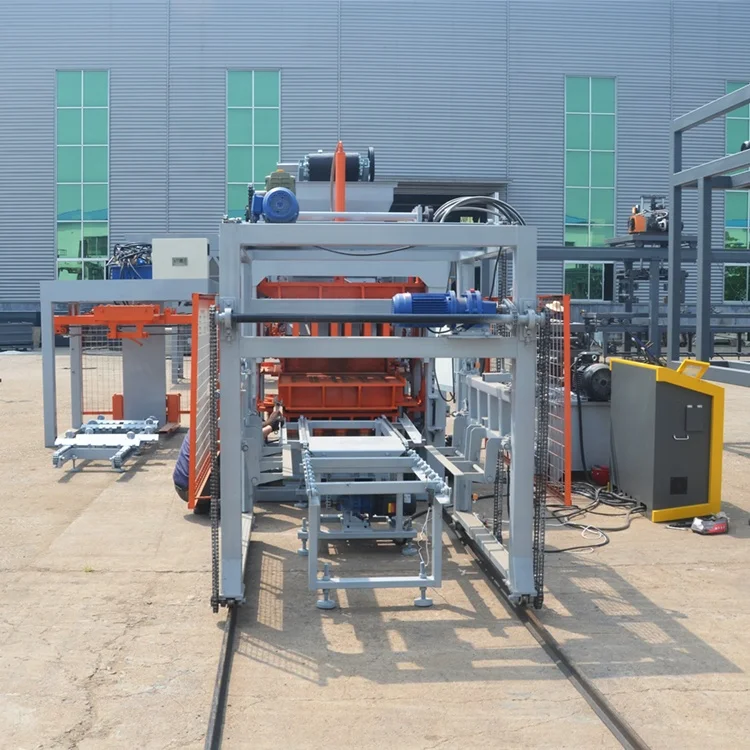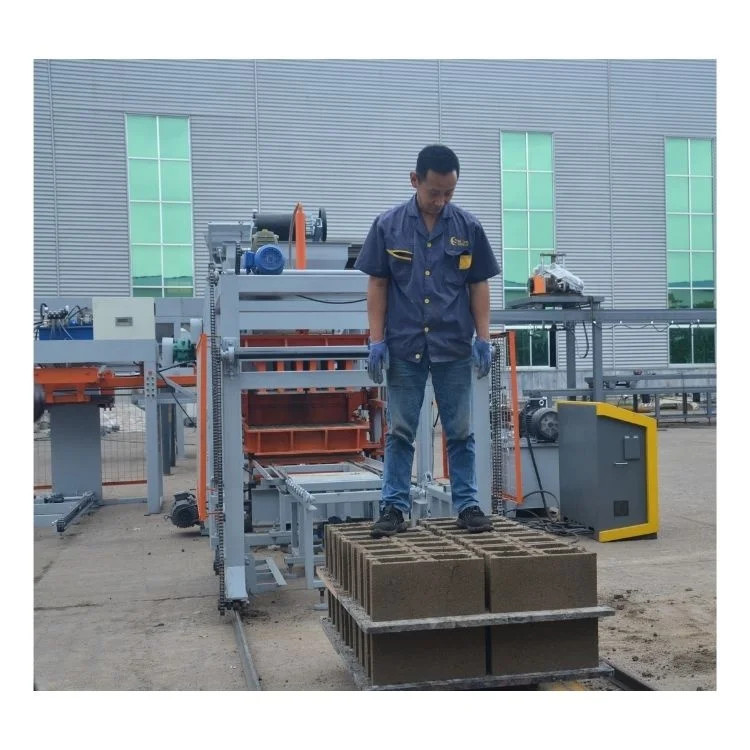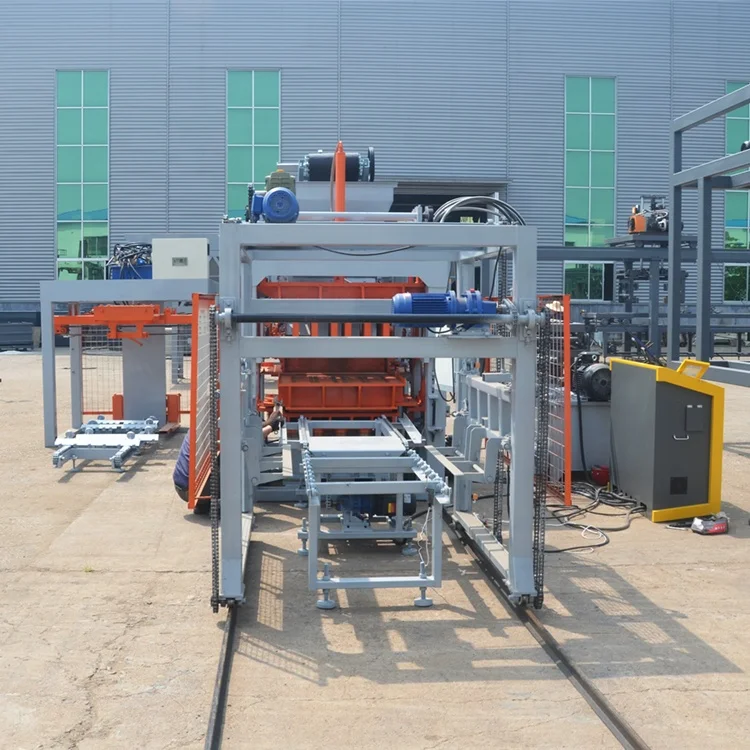
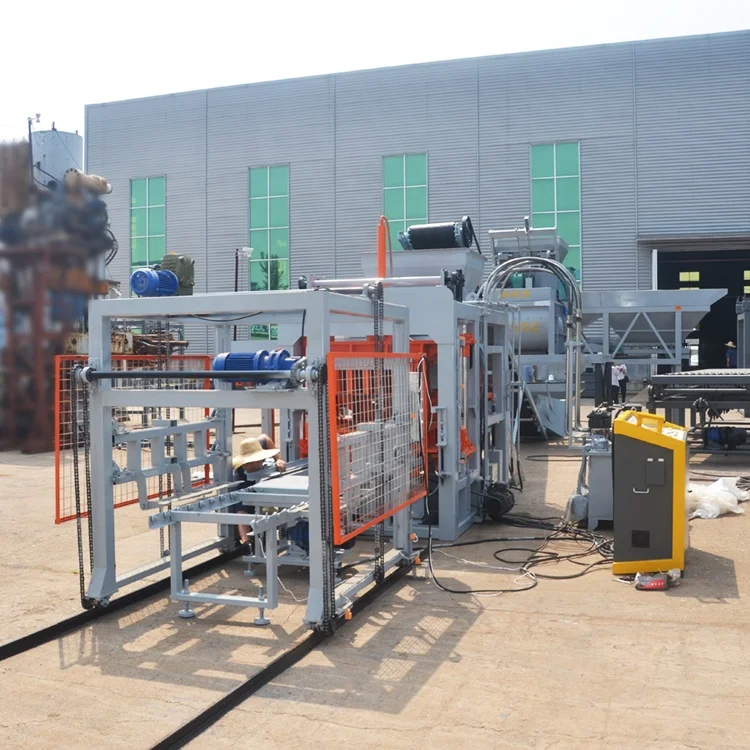
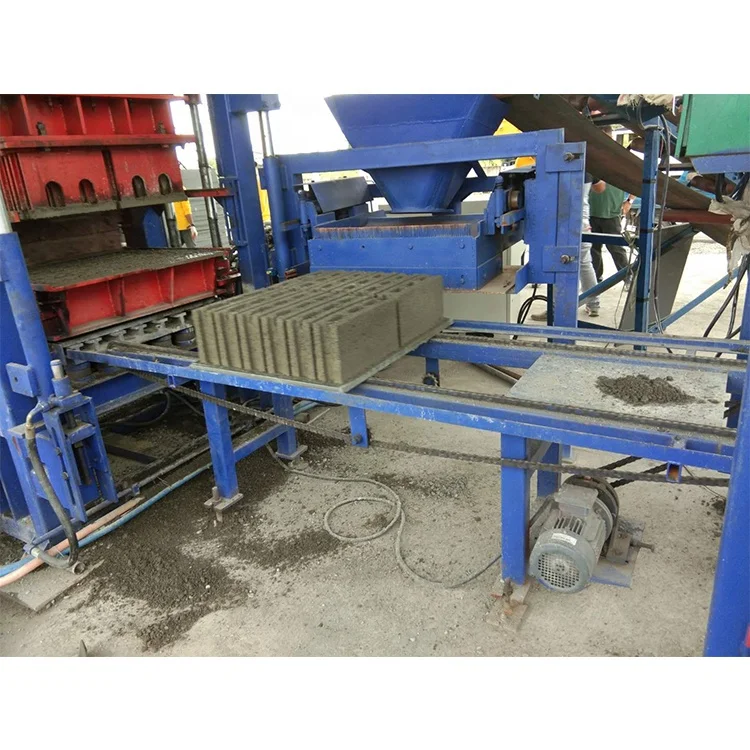
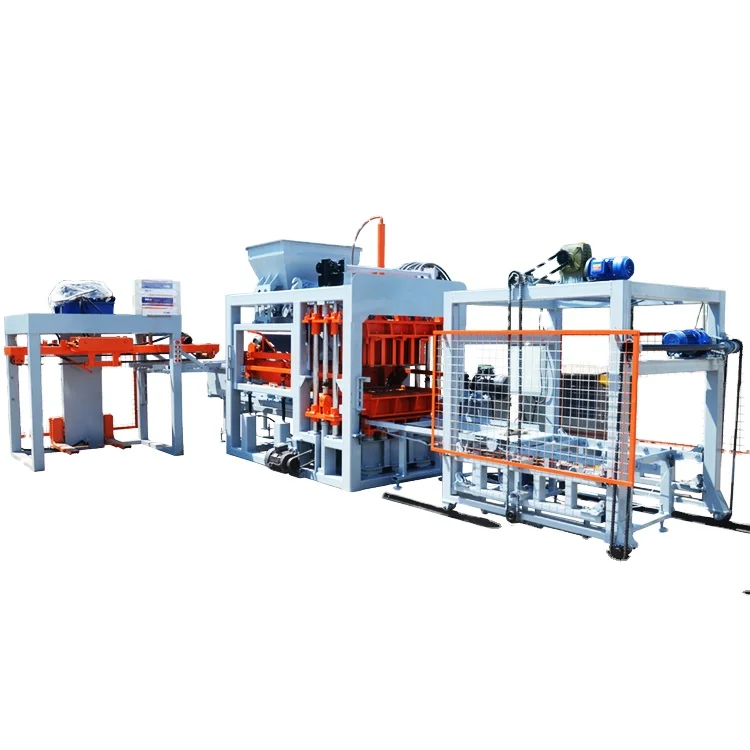
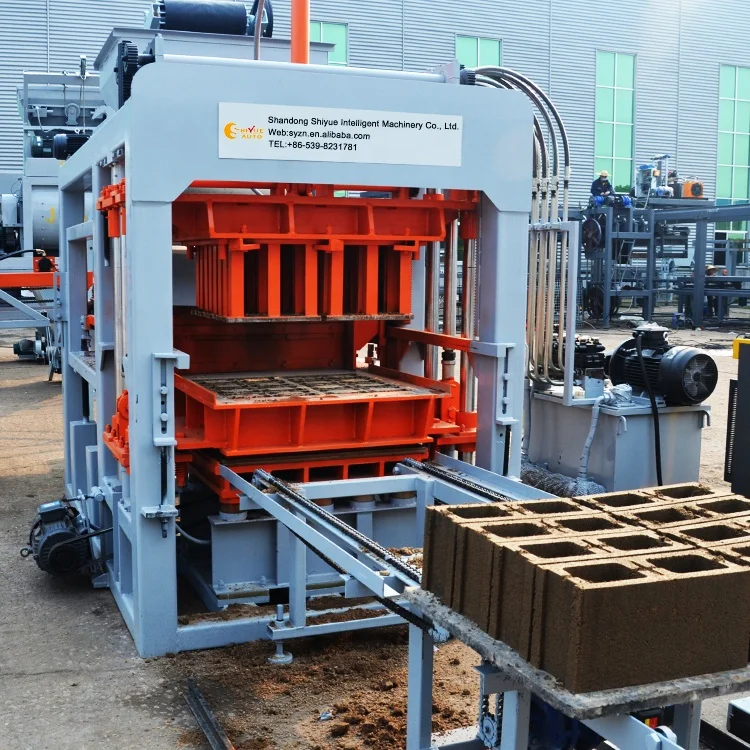
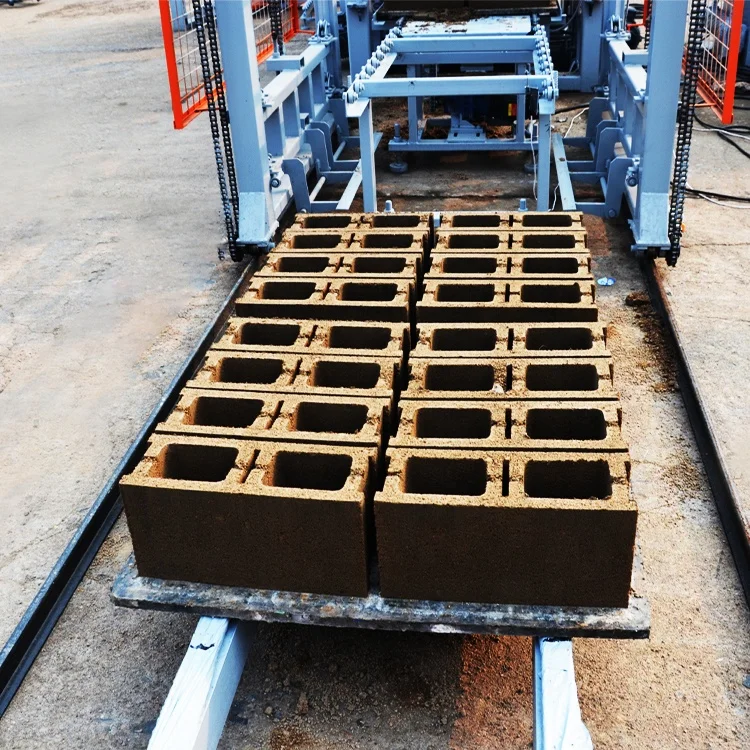
Description
Block machinery as a single focus — we specify the QT6-15 against your actual mix design and local aggregate, not a catalogue default, so cycle times reflect real conditions.
Technical Specifications
| Parameter | Value |
|---|---|
| Model | QT6-15 |
| Product Type | Hollow Block Making Machine |
| Overall Dimensions | 8200 × 1700 × 2950 mm |
| Total Mass | 7 T |
| Pallet Size | 880 × 850 mm |
| Molding Cycle | 15–20 s (basis: standard hollow and solid formats) |
| Vibration Frequency | 0–60 Hz |
| Vibration Force | 45 KN |
| Vibration Form | Platform Vibration |
| Moulding Mode | Load automatically, vibration moulding |
| Demolding Method | Hydraulic |
| Hydraulic System | Independent integrated type hydraulic station |
| Overall Power | 37 kW |
| Control System | PLC (Programmable Controller) with touch screen |
| Compressive Strength of Blocks | More than 15 MPa |
| Factory Area Required | 1200 m² |
| Raw Material Adaptability | Waste ash, slag, various aggregates |
| Output Format | Pieces per Mould | Cycle | Hourly Output | 8-hour Output |
|---|---|---|---|---|
| Hollow block 400×200×200 mm | 6 | 15–20 s | 1080–1440 pcs/hour | 8640–11520 pcs/8hr |
| Hollow block 400×150×200 mm | 8 | 15–20 s | 1440–1920 pcs/hour | 11520–15360 pcs/8hr |
| Solid brick 240×115×53 mm | 32 | 15–20 s | 5760–7680 pcs/hour | 46080–61440 pcs/8hr |
| Rectangular brick 200×100×60 mm | 21 | 20–25 s | 2160–2880 pcs/hour | 17280–23040 pcs/8hr |
| Zigzag brick 225×112.5×60 mm | 15 | 20–25 s | 2160–2880 pcs/hour | 17280–23040 pcs/8hr |
Application Suitability
| Application | Material or Output |
|---|---|
| Hollow block production | Crushed stone, cement, waste ash blends for load-bearing and partition walls |
| Solid brick production | Dense aggregate and cement mixes for structural masonry |
| Paving brick production | High-strength mixes with fine aggregate for pedestrian and vehicular surfaces |
| Interlocking brick production | Graded aggregate blends for mortarless wall systems |
| Multi-cellular brick production | Lightweight aggregate or slag blends for thermal insulation blocks |
What "Pieces per Hour" Leaves Out When Sizing a Hollow Block Making Machine
Capacity only means something when the block format, mould cavity count and cycle time are stated together.
I once watched a buyer sign for a line based on a single headline number. When their local aggregate turned out to carry high clay content, the vibration cycle had to be extended to achieve acceptable compaction. Daily output dropped well below the brochure figure, and the project contractor held them accountable for the shortfall. That is the gap between a catalogue spec and a working plant. With the QT6-15, every hollow block making machine specifications sheet we issue names the block format, the number of cavities per mould and the cycle window so you can cross-check against your actual production target [NEED_CITE: how aggregate clay content affects concrete block cycle time].
Mould Format and Cycle Time Alignment
The QT6-15 produces five standard block formats, each with its own cavity count and cycle range. Hollow blocks at 400×200×200 mm run six per mould on a 15–20 second cycle, while interlocking pavers require 20–25 seconds due to the more complex mould geometry and surface finish demands. This means a buyer comparing hollow block making machine specifications across suppliers must verify which format the quoted capacity assumes before drawing conclusions.
Pallet Sizing Against Your Curing Area
The 880×850 mm pallet dimension dictates how many wet blocks you can stage before moving them to the curing racks. If your existing forklift tines and rack spacing were set for a different pallet footprint, you face either a handling bottleneck or an unplanned rack rebuild. We confirm pallet size against your curing layout before the QT6-15 enters production so that output flows from press to rack without manual restacking.
Reading the Pressure and Vibration Balance
The 45 KN vibration force and independent integrated hydraulic station work together to compact the mix inside the mould cavity. Vibration liquefies the concrete around the aggregate while hydraulic pressure locks the particle structure before demolding. If either value is too low for your aggregate gradation, the block emerges with weak edges or uneven density. The platform vibration design isolates the vibration table from the main frame, keeping force delivery consistent across the full 0–60 Hz range and protecting structural components from fatigue [NEED_CITE: hydraulic pressure and vibration force interaction in block compaction].
The PLC touch screen control lets the operator store cycle parameters for each mould format, so switching from hollow blocks to pavers does not require manual timer adjustments. The independent hydraulic station sits apart from the vibration zone, which reduces seal wear and keeps pressure stable over long shifts. Combined with the 37 kW total power rating, the QT6-15 maintains cycle consistency whether you are running lightweight ash blends or dense crushed stone mixes.
What Happens When Format and Mould Are Chosen Blindly
A buyer who selects mould size without confirming local market demand ends up with pallets of a block nobody orders, while the format that sells out stays on backorder. Mould changeovers that consume most of a shift erase the flexibility the machine was supposed to deliver. Pallet handling and stacking left out of the quotation means wet blocks pile up at the press exit waiting for manual carrying, and the real daily output never reaches the rated figure [NEED_CITE: hidden costs of incomplete block line quotation].
Why the QT6-15 Is Specified as a Matched System
Block machinery is our single focus, so the press, mould, pallet and handling equipment are specified as one coordinated package rather than assembled from unrelated suppliers. Each hollow block making machine specifications document we prepare states capacity per format with the mould cavity count and cycle time named. Mould design covers the formats your market actually sells, including custom drawings when your region uses a non-standard dimension. We set the automation level so you can start with semi-automatic pallet handling and add automatic stacking later. Installation includes on-site commissioning with operator training so the crew understands cycle tuning and mould change procedures from the first shift.
Documentation & Verification
- Line layout with capacity calculation stating the block format assumed for each output figure
- Mould drawing and format list confirming every block dimension included in the order
- Pallet specification cross-referenced to your curing rack spacing and forklift capacity
- Voltage, frequency and PLC display language written confirmation before production begins
- Factory test record run on your specified mix and block format prior to dispatch
- Hydraulic and electrical schematic package for on-site maintenance reference
Installation, Commissioning & Support
- Foundation pad sized to the 8200 × 1700 mm footprint with anchor bolt plan provided
- Dedicated power circuit rated for the 37 kW total load at your confirmed voltage and frequency
- Machine shipped in dismantled modules with reassembly sequence documented in the manual
- First-run commissioning includes cycle tuning on your local aggregate and mix proportions
- Operator training covers PLC touch screen navigation, mould change procedure and fault diagnosis
- Wear parts list and hydraulic seal kit specified for your first scheduled maintenance interval
What to Prepare Before Requesting a Quote
Tell us the block formats your market demands, the daily volume you need to hit and the aggregate sources available near your site. Share your workshop dimensions and curing area layout so the pallet and handling configuration fits your space. We also need your local voltage and frequency along with the PLC language preference so the QT6-15 arrives ready to run.
Frequently Asked Questions
Q: How is the capacity figure calculated and which block format does it assume?
A: Each output figure on the QT6-15 hollow block making machine specifications table states the block format, number of cavities per mould and the cycle time range. For example, 1080–1440 pieces per hour is based on a 400×200×200 mm hollow block with six cavities and a 15–20 second cycle. This lets you match the figure to your actual product mix instead of relying on a single unqualified headline number.
Q: What mould formats are available and how long does a change take?
A: The QT6-15 supports hollow blocks, solid bricks, rectangular pavers, zigzag pavers and custom formats drawn to your market requirements. Mould change time depends on the operator’s familiarity with the quick-release clamps. After initial training, a crew typically completes a swap within a short shift segment, keeping format flexibility practical rather than theoretical.
Q: How do I confirm the pallet size matches my curing racks and handling equipment?
A: The standard 880×850 mm pallet must align with your curing rack shelf width and forklift tine spacing. We request your rack and forklift dimensions during the inquiry stage and adjust pallet material or size if needed so wet blocks move from the press to the curing area without manual restacking or rack modification.
Q: What mix design and local aggregate conditions should I provide?
A: Share your available aggregate types, grading curves and any waste materials such as fly ash or slag you plan to use. We run a mix trial against the QT6-15 vibration and pressure settings to verify that cycle time, block density and compressive strength meet your target before the machine enters production.
Q: How are voltage, frequency and control language confirmed before shipment?
A: During the order confirmation stage we document your site voltage, frequency and preferred PLC display language in writing. The touch screen interface and electrical components are then set to those values, and the factory test runs under the same electrical conditions to prevent commissioning delays after arrival.