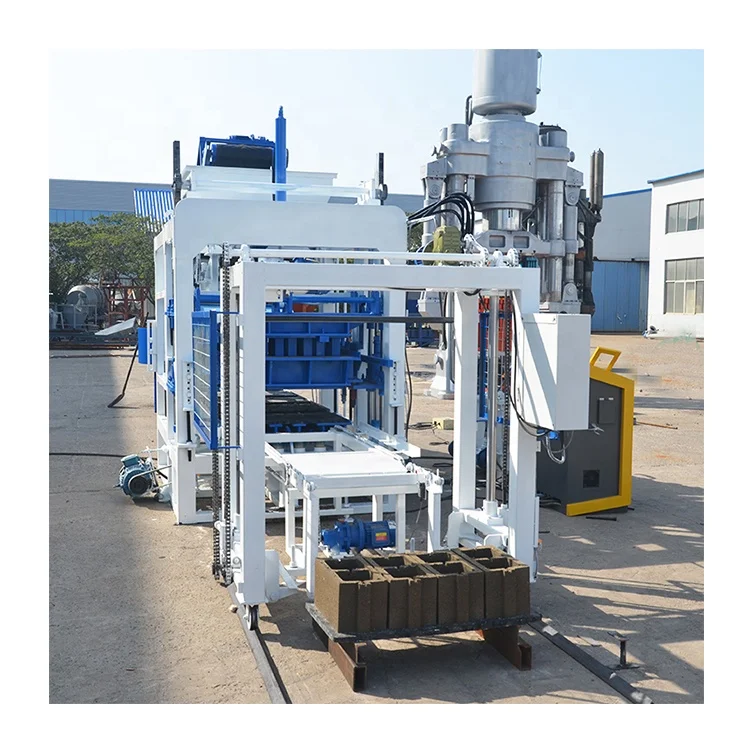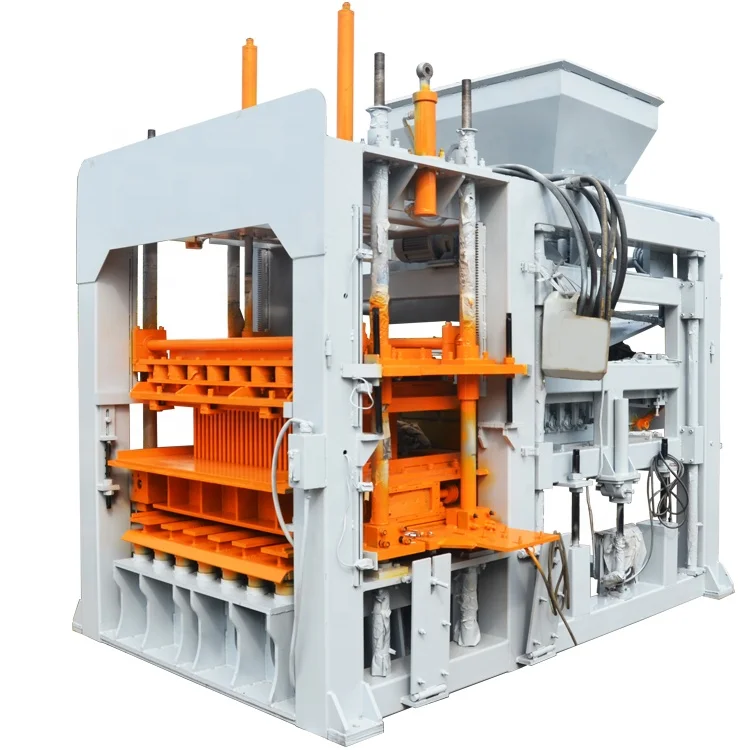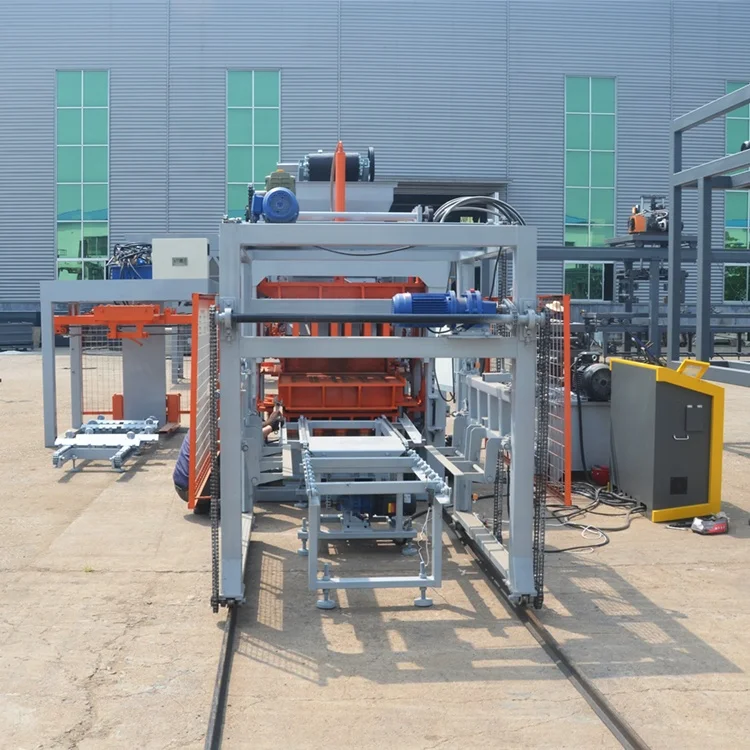
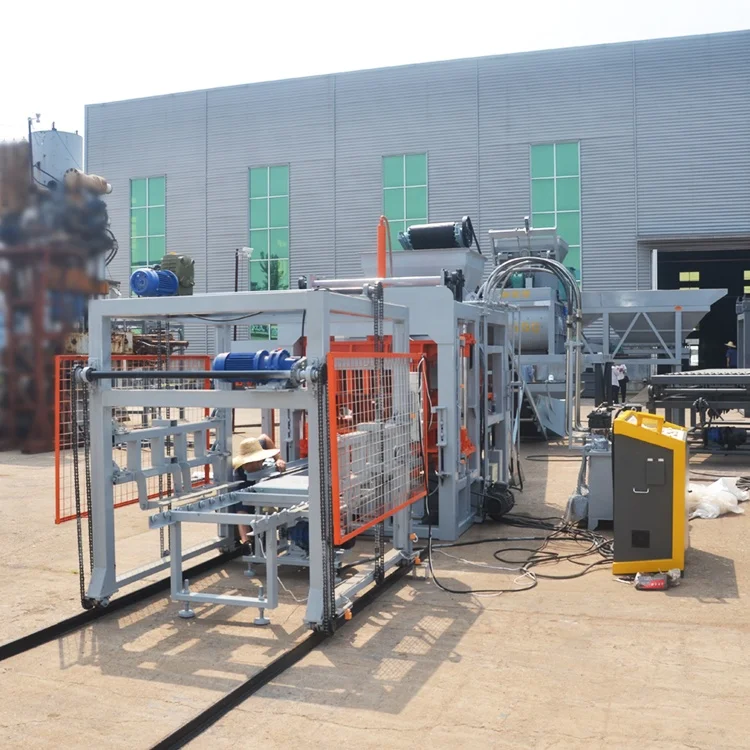


Description
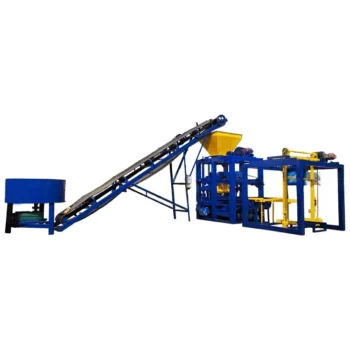
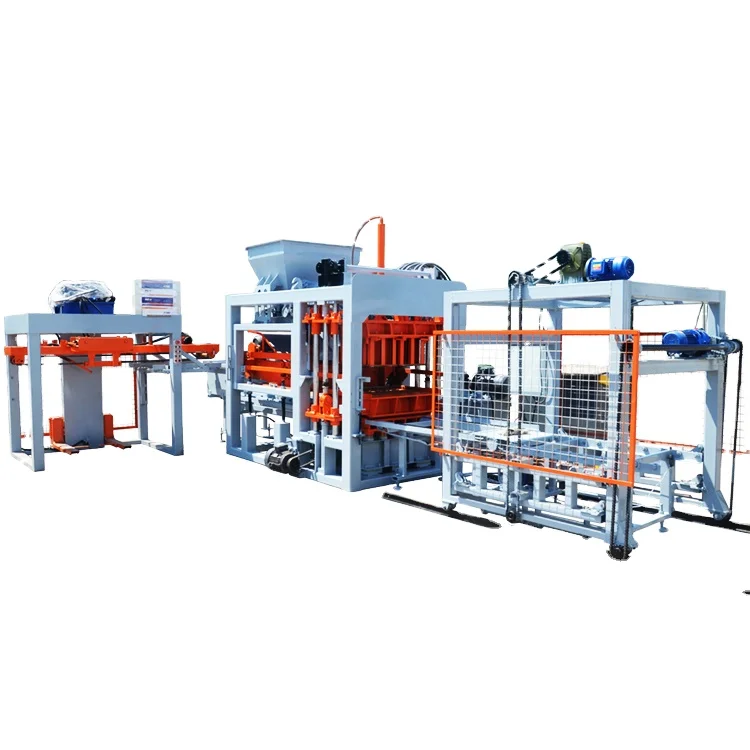
Matched System Sizing — every QT6-15 configuration is built around the buyer’s target block format, local aggregate properties, and existing pallet handling setup rather than a catalogue default.
Technical Specifications
| Parameter | Value |
|---|---|
| Model | QT6-15 |
| Product Type | Hydraulic Block Making Machine |
| Overall Dimensions (L×W×H) | 8200×1700×2950 mm |
| Total Mass | 7 T |
| Overall Power | 37 kW |
| Vibration Form | Platform Vibration |
| Vibration Frequency | 0-60 Hz |
| Vibration Force | 45 kN |
| Moulding Mode | Automatic loading, vibration moulding |
| Demolding Method | Hydraulic |
| Pallet Size | 880×850 mm |
| Molding Cycle | 15-20 s (basis not stated in source — confirm block format / material / thickness) |
| Factory Area | 1200 m² |
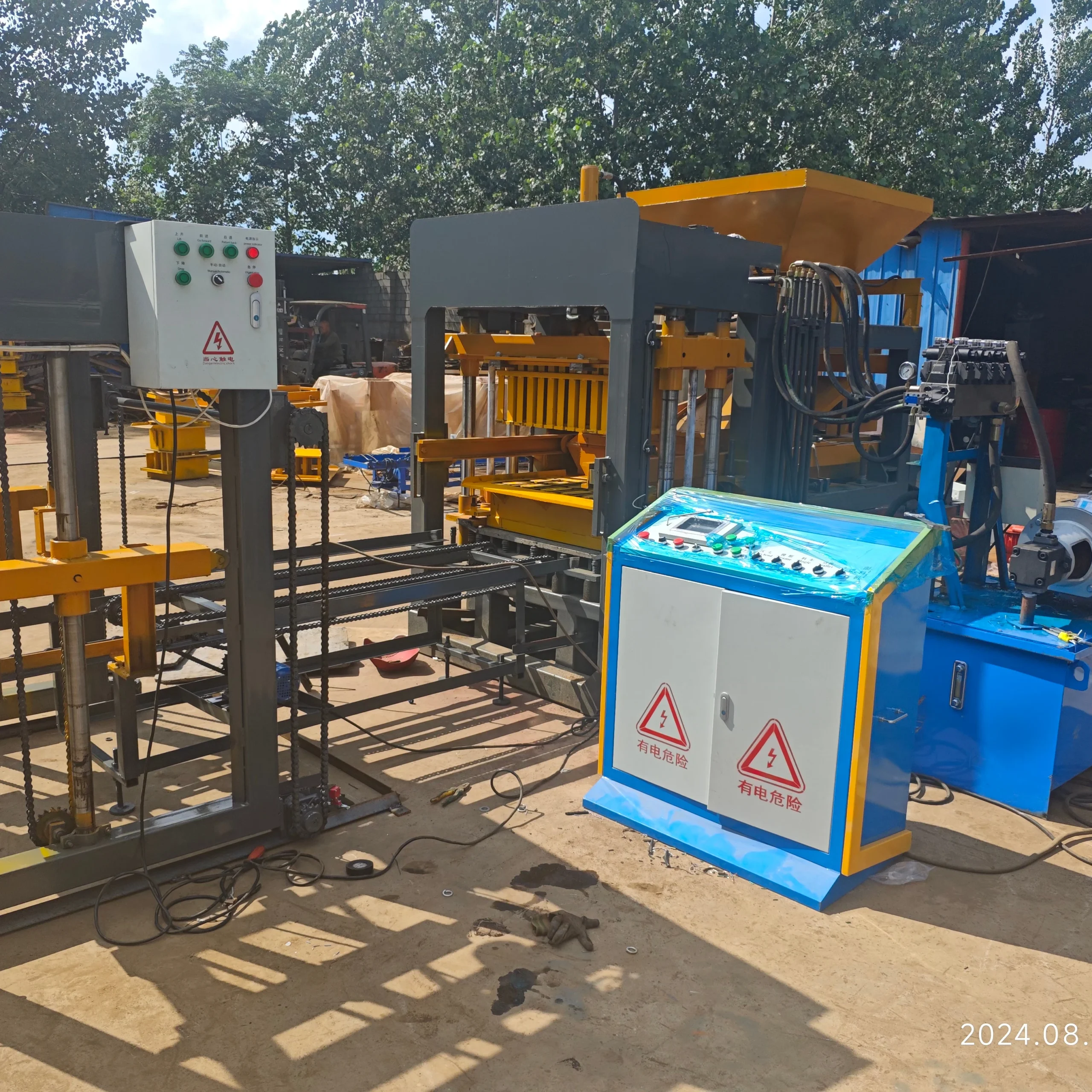
| Control System | PLC with touch screen and fault diagnosis |
| Hydraulic System | Independent integrated hydraulic station |
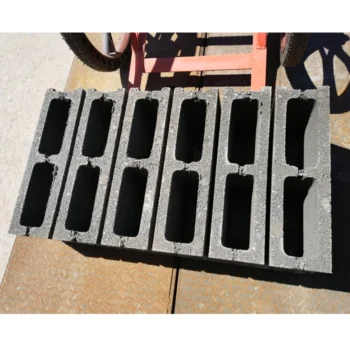
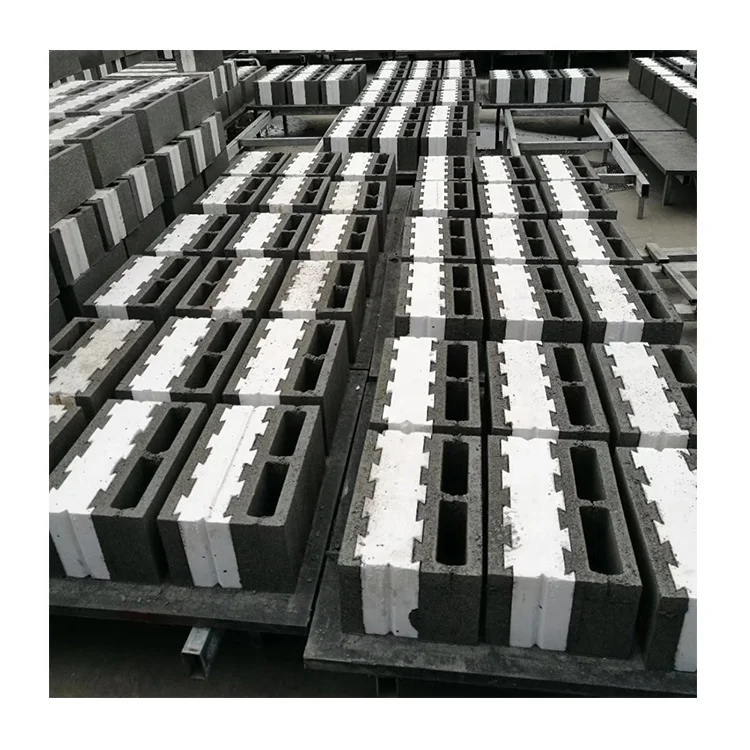
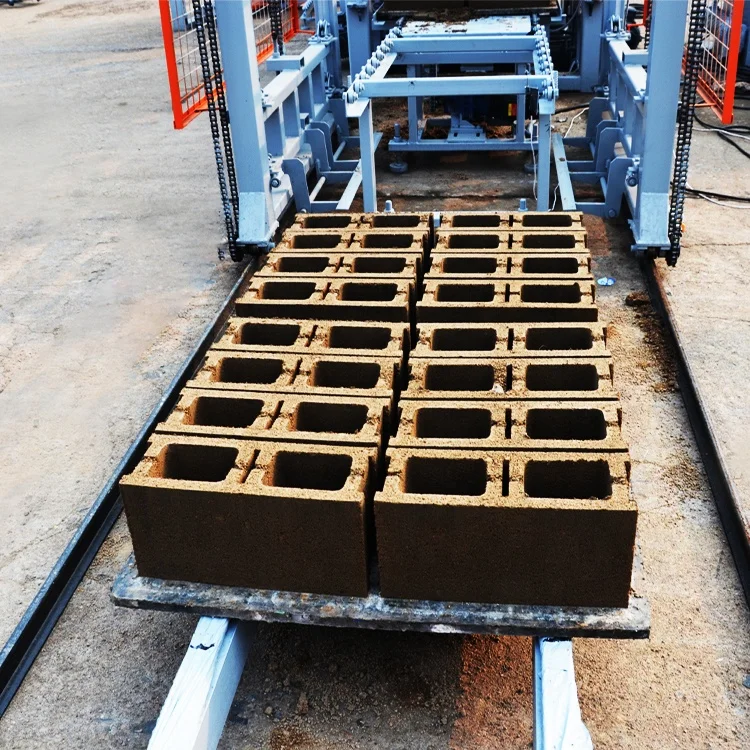
| Output (Hollow 400×200×200 mm) | 1080-1440 pcs/hour, 8640-11520 pcs/8hr |
| Output (Hollow 400×150×200 mm) | 1440-1920 pcs/hour, 11520-15360 pcs/8hr |
| Output (Solid brick 240×115×53 mm) | 5760-7680 pcs/hour, 46080-61440 pcs/8hr |
| Output (Rectangular paver 200×100×60 mm) | 2160-2880 pcs/hour, 17280-23040 pcs/8hr |
| Output (Zigzag paver 225×112.5×60 mm) | 2160-2880 pcs/hour, 17280-23040 pcs/8hr |
| Compressive Strength | >15 MPa (source value — verify against manufacturer catalog) |
| Voltage & Frequency | Configurable — confirm with buyer |
| PLC Display Language | Configurable — confirm with buyer |
| Warranty | 1 year for whole machine (excluding spare parts) |
Application Suitability
| Application | Material or Output |
|---|---|
| Hollow block production | Crushed stone, sand, cement and fly ash blends for bearing and non-bearing walls |
| Solid brick manufacturing | Dense aggregate mixes for structural and partition brick formats |
| Rectangular paving brick | Fine aggregate and cement blends for pedestrian and light-traffic paving |
| Zigzag interlocking paver | Graded aggregate mixes for driveway and roadway interlock layouts |
| Waste material utilization | Ash, slag and recycled aggregate to reduce cement dosage in non-structural blocks |
What "8640 Blocks per Shift" Actually Means for the QT6-15 Hydraulic Block Making Machine Specifications How to Choose
Capacity figures are only honest when tied to a specific block format, mix design and curing method.
I have watched buyers sign off on a QT6-15 based on a single headline output number, then discover on commissioning day that their local crushed limestone requires a longer vibration cycle than the factory test used. The 8640-piece shift figure applies to 400×200×200 mm hollow blocks under controlled test conditions. Switch to a 200×100×60 mm paving brick with a stiffer zero-slump mix and the cycle extends, the hourly count changes, and the daily total shifts accordingly. [NEED_CITE: aggregate grading and moisture content effect on vibration cycle time] This is not a machine fault — it is physics. The problem is that most quotations never mention which format the capacity assumes.
Mould Format Determines the Real Cycle Time
The QT6-15 hydraulic block making machine supports platform vibration across a 0-60 Hz adjustable range, which means the operator can tune frequency to the block geometry on the mould. A tall hollow block needs sustained low-frequency vibration to consolidate the deep web sections, while a thin paving brick requires higher frequency for surface finish. Every format change therefore resets the cycle time window. Choosing a machine without mapping each target mould to its expected cycle leaves daily capacity as a guess.
Pallet Size Locks in Your Curing Logistics
The 880×850 mm pallet dimension is not arbitrary — it determines how many blocks sit on each board, how boards stack in the curing racks, and whether the forklift tines you already own can handle the loaded weight. A buyer who sources pallets locally after the machine arrives often ends up with boards that warp under steam curing or that do not seat correctly on the feed conveyor. Confirming pallet material and thickness against the curing environment before the order is placed avoids a bottleneck that no amount of press speed can fix. [NEED_CITE: pallet material selection for steam versus ambient curing]
Reading the Specs That Actually Matter
The 45 kN vibration force works together with the independent hydraulic station to compact the mix in the mould box. Higher force is not universally better — a lightweight aggregate blend for non-bearing partitions can fracture under maximum vibration, producing surface spalling rather than denser blocks. The PLC touch screen with fault diagnosis allows the operator to store vibration profiles per mould, so switching from hollow block to paver does not require manual trial and error each shift. The 37 kW total power draw covers the hydraulic pump, vibration motor and conveyor drives simultaneously, meaning the electrical supply must sustain continuous load at that level, not just peak starting current. Mould change time on the QT6-15 hydraulic block making machine depends on whether quick-clamp brackets are specified; without them, a format swap can consume a significant portion of a shift.
The Cost of Skipping Format-Level Configuration
When vibration force is left at a default setting that does not match the buyer’s aggregate hardness, blocks leave the press with inconsistent density — some pass the 15 MPa target, others crumble at the curing rack. I have seen plants run an entire week before anyone tests compressive strength across the batch. The pallets that arrived unmatched to the curing rack spacing force workers to hand-stack boards sideways, slowing output to whatever human arms can manage. [NEED_CITE: block density variation caused by uncalibrated vibration settings] These are not warranty claims. They are configuration gaps that could have been closed before the machine left the factory.
Why Buyers Source This Machine Here
Block machinery is the sole product focus, so the press, mould, pallet and handling equipment are specified as a single matched system rather than assembled from unrelated suppliers. Each QT6-15 configuration starts from the buyer’s target block format and local material test report, not from a standard catalogue line. Mould design covers the specific formats the buyer’s market demands, including custom drawings when local building codes call for non-standard dimensions. Automation level is selectable — a buyer can begin with semi-automatic pallet handling and add stacking or cubing modules later without replacing the press. Installation support includes on-site commissioning with operator training tied to the buyer’s actual mix recipe.
Documentation & Verification
- Line layout drawing showing capacity per block format with assumed cycle time
- Mould drawing set listing every included format and optional cavity count
- Pallet specification matched to buyer’s curing rack dimensions and forklift capacity
- Voltage, frequency and PLC language confirmation sheet signed before production
- Factory test record run on buyer’s specified block format before dispatch
Installation, Commissioning & Support
- Foundation plan based on the 8200×1700 mm footprint and 7 T operating mass
- Dedicated electrical circuit sized for the 37 kW continuous load at confirmed voltage
- Machine shipped in modular sections for container loading and reassembly on site
- First-run parameter setting using buyer’s local aggregate sample and target mix ratio
- Operator training covering PLC touch screen menus, fault diagnosis and mould change procedure
- Wear parts list covering hydraulic seals, vibration motor bearings and mould liner plates
Before You Request a Quote
To size the QT6-15 hydraulic block making machine to your actual production target, we need the block formats your market sells, the daily output you plan to run per format, your local aggregate type and a recent sieve analysis, the voltage and frequency at your site, and the PLC display language your operators read. If you already have curing racks or forklifts in place, share the pallet dimensions they accept. This information lets us return a capacity calculation that holds up on day one, not just on paper.
Frequently Asked Questions
Q: How is output capacity calculated for each block format on the QT6-15?
A: Every capacity figure references a specific block dimension, mix consistency and molding cycle. The 8640-11520 pieces per 8-hour shift, for example, assumes 400×200×200 mm hollow blocks at the tested cycle range. When you switch to a smaller paver or a solid brick, the cycle time and pieces-per-mould change, so the daily total must be recalculated per format rather than carried over from one headline number.
Q: Which mould formats come with the machine and how long does a change take?
A: The standard quotation includes moulds for the block formats stated in the specification table — hollow blocks, solid bricks and two paver profiles. Additional or custom moulds are designed from buyer drawings. Mould change time depends on whether quick-clamp hardware is specified; without it, a full swap including vibration re-calibration can occupy a significant part of a shift.
Q: How are vibration force and hydraulic pressure matched to my aggregate?
A: The 45 kN vibration force and 0-60 Hz frequency range are adjusted after reviewing your local aggregate sieve analysis and mix design report. A hard crushed granite demands different settings than a soft fly-ash blend. We set the PLC vibration profile for each mould format during commissioning so operators select a stored program rather than guessing at the touch screen.
Q: Is the pallet size confirmed against my existing curing setup before I order?
A: Yes. The 880×850 mm pallet dimension is checked against your curing rack spacing, forklift tine width and stacking height before the order is finalized. If your existing infrastructure calls for a different board size, we adjust the pallet feed system and mould cavity layout so the press output integrates with your handling equipment from day one.
Q: Are voltage, frequency and control language confirmed before shipment?
A: Voltage, frequency and PLC touch screen language are confirmed in writing during the order stage, before production begins. This prevents the common situation where a machine arrives on site and waits days for an electrician to sort out a supply mismatch or an operator who cannot read the fault diagnosis display. [NEED_CITE: voltage and frequency standards by export market]