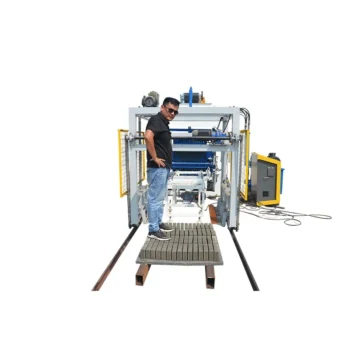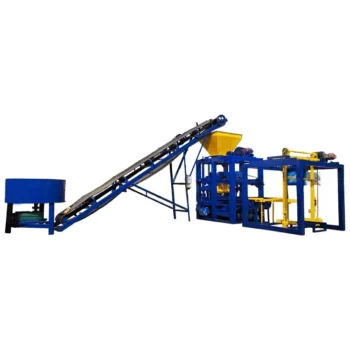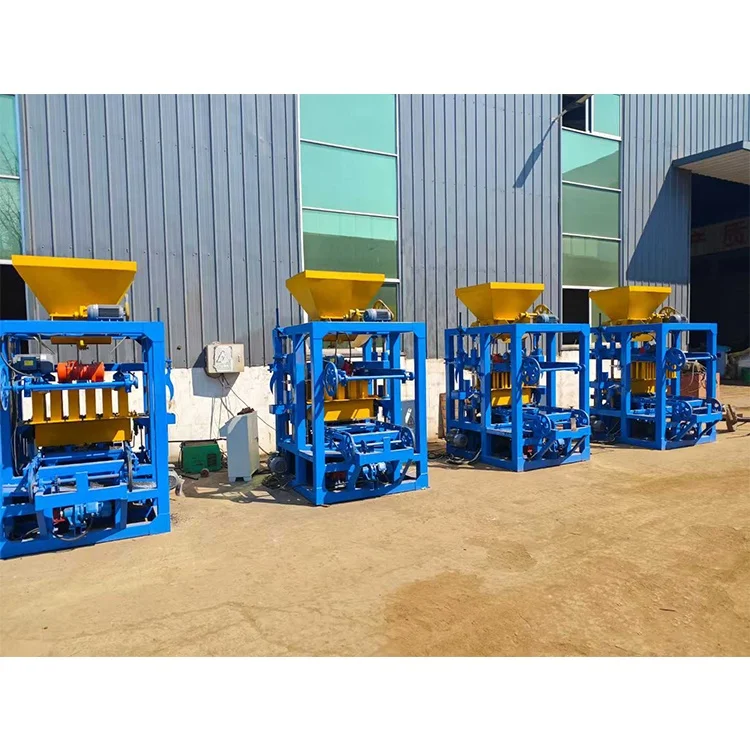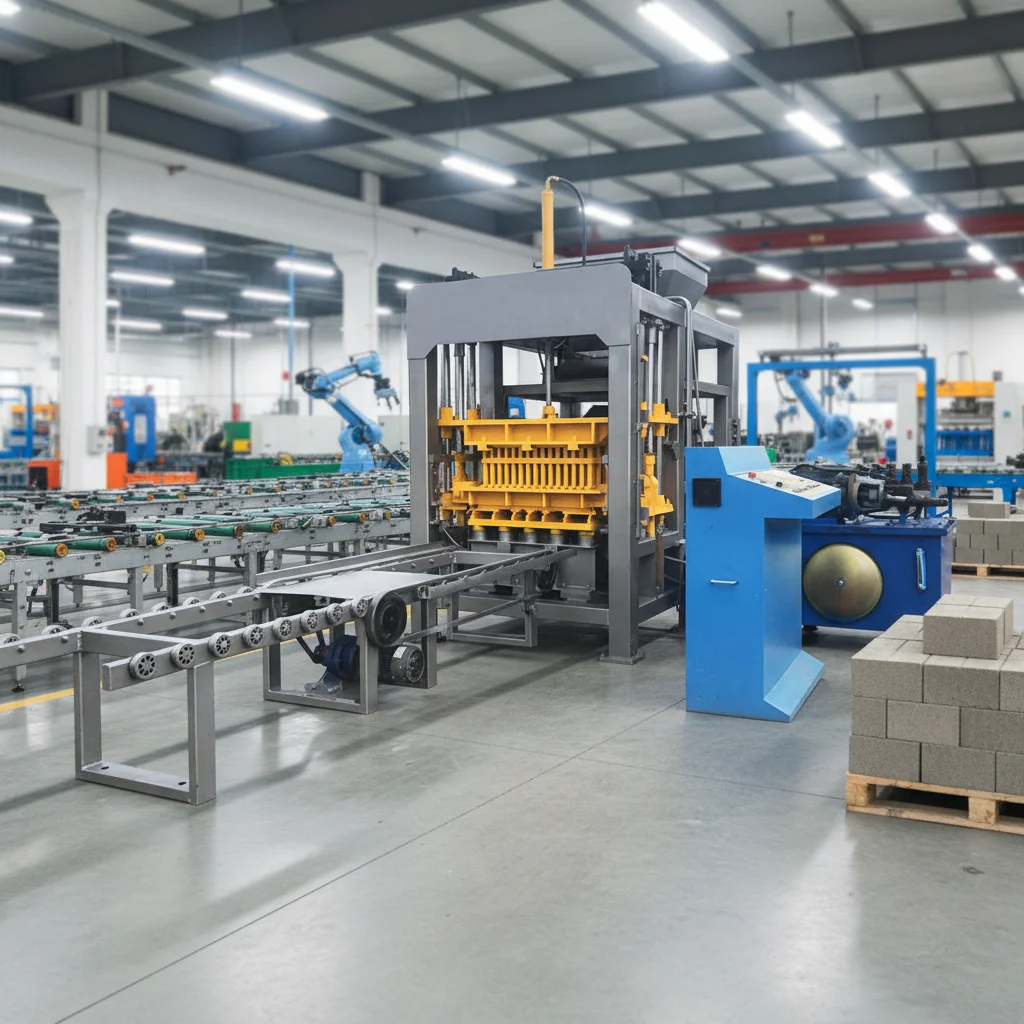


Description
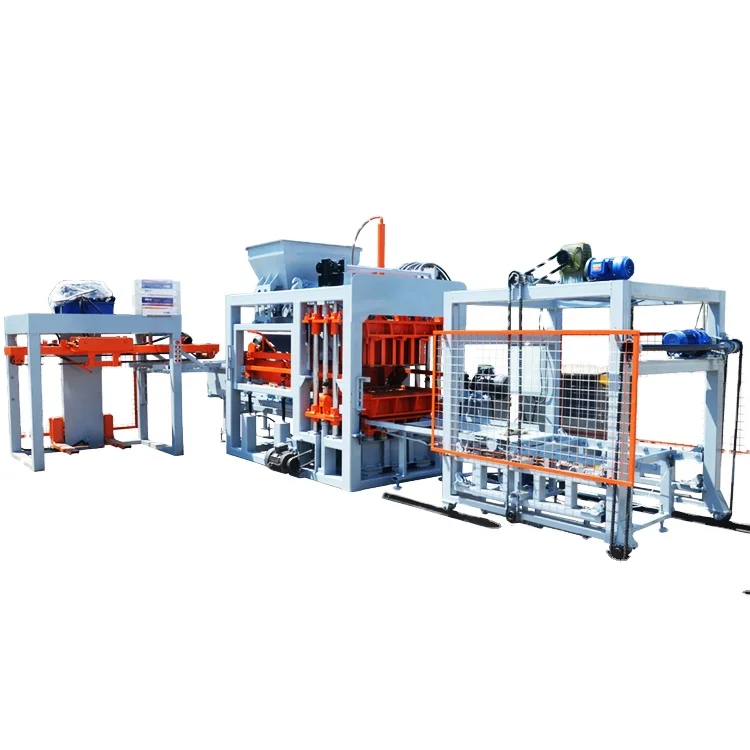
Configuration tied to buyer’s local aggregate and target format — every QT6-15 specification here reflects a matched system of mould, pallet, vibration force, and mix design rather than a generic catalogue sheet.
Technical Specifications
| Parameter | Value |
|---|---|
| Model | QT6-15 |
| Product Type | Hydraulic Concrete Block Making Machine |
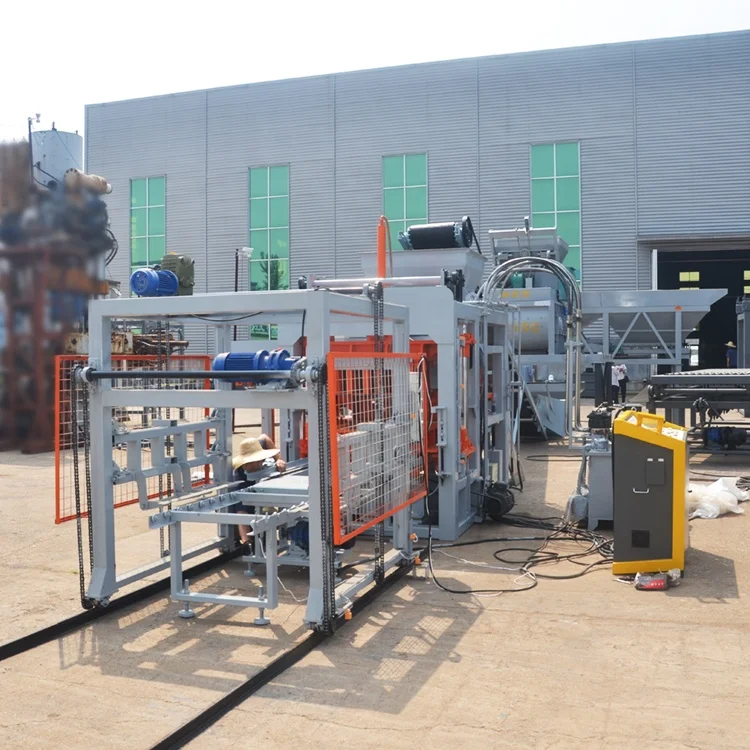
| Overall Dimensions (L×W×H) | 8200×1700×2950 mm |
| Vibration Frequency | 0-60 Hz |
| Vibration Form | Platform Vibration |
| Vibration Force | 45 kN |
| Pallet Size | 880×850 mm |
| Molding Cycle | 15-20 s (hollow/solid), 20-25 s (paving) |
| Overall Power | 37 kW |
| Total Mass | 7 T |
| Demolding Method | Hydraulic |
| Control System | PLC with touch screen HMI, built-in fault diagnosis |
| Block Compressive Strength | >15 MPa |
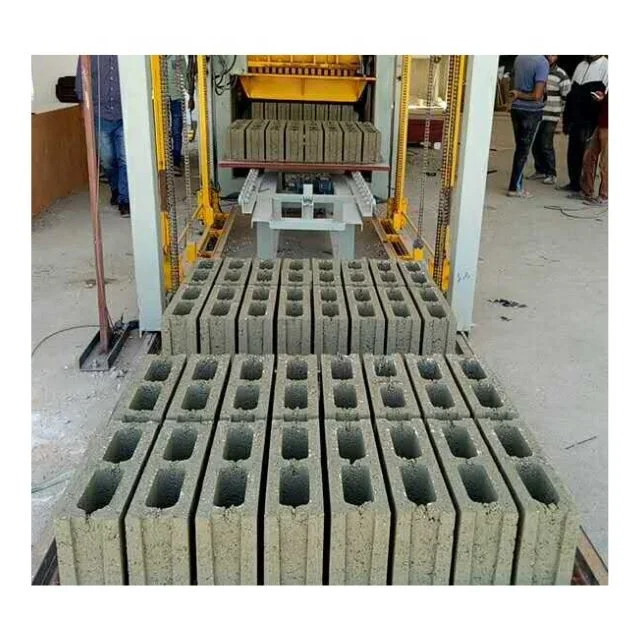
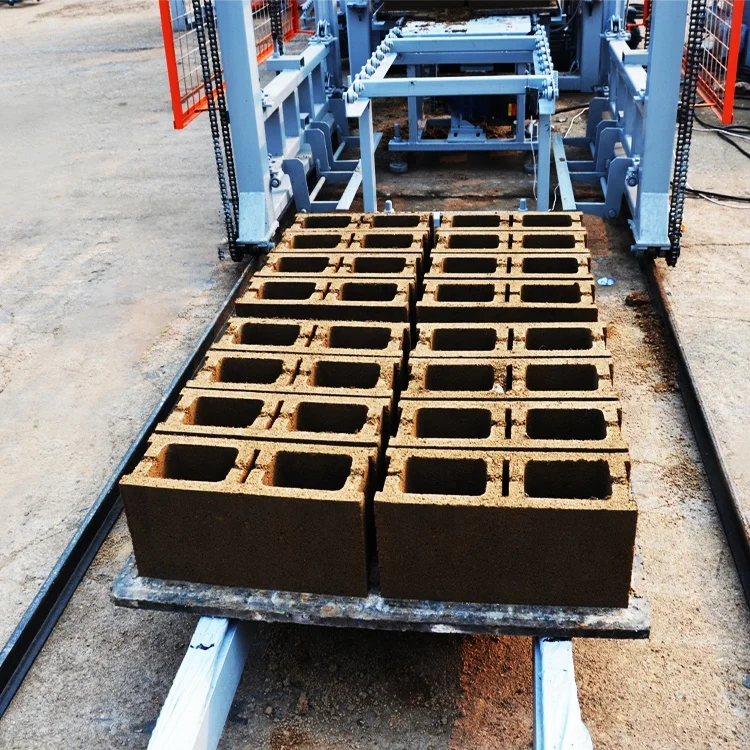
| Output — Hollow Block 400×200×200 mm | 1080-1440 pcs/hour, 8640-11520 pcs/8hr |
| Output — Hollow Block 400×150×200 mm | 1440-1920 pcs/hour, 11520-15360 pcs/8hr |
| Output — Solid Brick 240×115×53 mm | 5760-7680 pcs/hour, 46080-61440 pcs/8hr |
| Output — Rectangular Paving Brick 200×100×60 mm | 2160-2880 pcs/hour (20-25s cycle), 17280-23040 pcs/8hr |
| Output — Zigzag Paving Brick 225×112.5×60 mm | 2160-2880 pcs/hour (20-25s cycle), 17280-23040 pcs/8hr |
| Moulding Mode | Automatic loading, vibration moulding |
| Mould Formats Supported | Hollow block, solid brick, rectangular paving brick, zigzag paving brick |
| Hydraulic System | Independent integrated hydraulic station |
| Safety Logic | Interlock control circuit |
| Recommended Factory Area | 1200 m² |
| Standards | CE (available where applicable) |
Application Suitability
| Application | Material or Output |
|---|---|
| Load-bearing hollow block production | Crushed stone, fly ash, and cement blends |
| Non-load-bearing hollow block production | Slag aggregate with reduced cement dosage |
| Solid brick manufacturing for masonry | Local aggregate and waste ash mixtures |
| Rectangular and zigzag paving brick production | High-density concrete with fine aggregate |
| On-site block production for housing projects | Concrete mixes adapted to locally available raw materials |
What "10,000 Blocks a Day" Actually Means When You Get Down to Format
A single headline capacity figure hides the real difference between producing hollow blocks and solid bricks on the same QT6-15 block machine. When a quotation states output per hour without naming the block format, the number is meaningless for your daily planning.
I once quoted a QT6-15 for a West African project where the contractor needed 400×200×200 mm hollow blocks. The capacity they expected came from a generic number based on solid bricks — nearly five times higher than what that format actually delivers. The mismatch surfaced only after the container arrived. Now I insist on stating the QT6-15 block machine specifications per format: 8,640-11,520 hollow blocks per 8-hour shift for the 400×200×200 mm size, versus 46,080-61,440 solid bricks per shift for 240×115×53 mm. Same machine, completely different daily planning reality. [NEED_CITE: standard methods for calculating block machine output per format]
Why Format Determines Everything on the QT6-15
The QT6-15 produces five standard block formats, each with its own cycle time. Hollow blocks and solid bricks run at 15-20 seconds per cycle. Paving bricks require 20-25 seconds because the higher density and surface finish demand longer vibration and compaction. This difference of just five seconds per cycle accumulates across thousands of cycles per shift and directly shapes how you schedule production runs.
Matching Mould Selection to the Blocks Your Market Actually Buys
The mould formats supported — hollow, solid, rectangular paving, and zigzag interlocking paving — cover the most common construction products in developing markets. But the QT6-15 block machine specifications mean little if the mould dimensions do not match what your local buyers expect. A contractor ordering hollow blocks for wall construction needs the 400×200×200 mm cavity pattern, not the 400×150×200 mm variant, even though both fit the same pallet. Confirming the exact mould drawing against your market demand before production begins eliminates the most common disappointment at commissioning. [NEED_CITE: regional block format standards across African and Southeast Asian markets]
How Vibration Force and Hydraulic Pressure Shape Block Strength
The 45 kN platform vibration force works together with the independent hydraulic demolding system to compact the concrete mix. This combination determines the block’s compressive strength — rated above 15 MPa when the vibration force and hydraulic pressure are correctly matched to the buyer’s mix design and local aggregate. If the raw material includes volcanic ash instead of standard crushed stone, the vibration frequency and duration must be adjusted to achieve the same density. The 0-60 Hz adjustable vibration frequency allows this tuning, but only if the raw material characteristics are known before the machine is configured. The PLC touch screen HMI lets operators store different vibration profiles for each format and aggregate combination.
The Cost of Skipping the Raw Material Conversation
When the aggregate on site differs from what the machine was configured for, block strength drops and rejection rates climb. I have seen this play out more than once — a machine arrives, the operator runs a standard concrete mix, and the blocks crumble at the edges during demolding. The vibration force and hydraulic pressure were set for a completely different material profile. By the time the parameters are re-tuned on site, production has already lost valuable days. [NEED_CITE: impact of aggregate variation on concrete block compressive strength]
Why Configuration Starts Before the Order
Block machinery works as a matched system only when the press, mould, pallet, and handling equipment are specified together. The QT6-15 block machine specifications here are the starting point, not the final word. The 880×850 mm pallet size must fit your existing curing racks and forklift. The 37 kW power requirement must align with your site electrical supply, and the PLC display language must be one your operators can read. Every one of these points is confirmed before the machine enters production, not after it arrives in a container. [NEED_CITE: common commissioning delays caused by voltage and control language mismatches]
Documentation That Matches What Was Actually Ordered
- Line layout showing QT6-15 placement within your 1200 m² factory area with format-specific output notes
- Machine specification sheet confirming vibration force, pallet size, and cycle time per block format
- Mould drawing and format list covering each block dimension your market requires
- Voltage, frequency, and PLC display language confirmation signed before production
- Factory test record on your target block format with actual cycle times measured
- Hydraulic and electrical schematic for on-site maintenance reference
Installation, Commissioning & Support
- Site preparation for the 8200×1700×2950 mm footprint and 7-tonne machine weight on level concrete base
- Dedicated 37 kW power circuit with confirmed voltage and frequency matching the PLC and hydraulic station
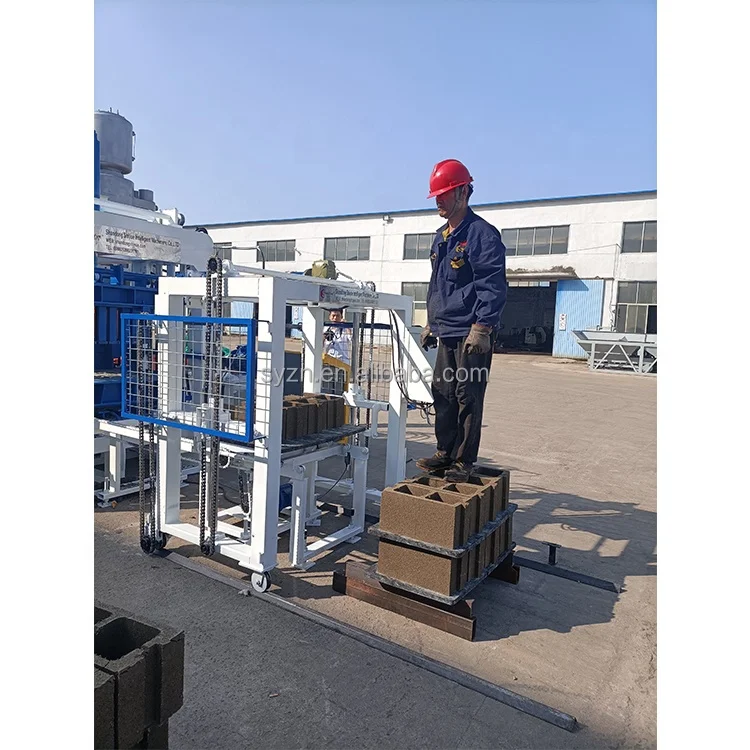
- On-site assembly of hydraulic station and pallet feeding system after container delivery
- Commissioning run using your local aggregate to validate block compressive strength above 15 MPa
- Operator training on PLC touch screen HMI, mould change procedure, and fault diagnosis system
- Wear parts list covering hydraulic seals, vibration springs, and mould liner components
What We Need From You to Size This Correctly
Share the exact block dimensions your market demands, the daily volume you need for each format, and a sample or lab report of your local aggregate. If you already have curing racks and a forklift on site, tell us the pallet dimensions they accept and the lifting capacity available. Confirm your site voltage, frequency, and preferred PLC display language so the QT6-15 arrives ready to run.
Frequently Asked Questions
Q: How is QT6-15 capacity calculated per block format?
A: Output depends on the block size and corresponding cycle time. The QT6-15 runs hollow blocks at 15-20 seconds per cycle and paving bricks at 20-25 seconds. For 400×200×200 mm hollow blocks, that gives 8,640-11,520 pieces per 8-hour shift. For 240×115×53 mm solid bricks on the same pallet, the count rises to 46,080-61,440 per shift. Always confirm which format the quoted number assumes.
Q: What pallet size does the QT6-15 use, and how does it affect my curing layout?
A: The machine uses 880×850 mm pallets. This dimension determines your curing rack spacing, forklift tine width, and floor area calculation for the recommended 1200 m² factory layout. If your existing racks or forklift are sized for a different pallet, you will need to adjust before the machine arrives, so confirm this during the quotation stage.
Q: Can the QT6-15 run my local aggregate and mix design?
A: The 45 kN vibration force and 0-60 Hz adjustable frequency allow tuning for different aggregates, but the machine must be configured against your actual material before production. We ask for a raw material report or sample so the vibration profile and hydraulic pressure settings match your local conditions and deliver consistent block strength above 15 MPa.
Q: What voltage and PLC language options are available for the QT6-15?
A: Voltage, frequency, and the PLC touch screen display language are all confirmed before the machine enters production. This prevents commissioning delays caused by electrical mismatches or operators unable to read the HMI. Provide your site specifications during the inquiry so the control system is built to match.
Q: How long does a mould change take on the QT6-15?
A: Mould change time depends on the format transition and operator experience. The hydraulic demolding system and interlock safety logic are designed to keep the changeover procedure straightforward, but buyers running multiple formats daily should plan shift schedules around realistic changeover windows rather than assuming instant swaps between hollow blocks and paving bricks.