Description
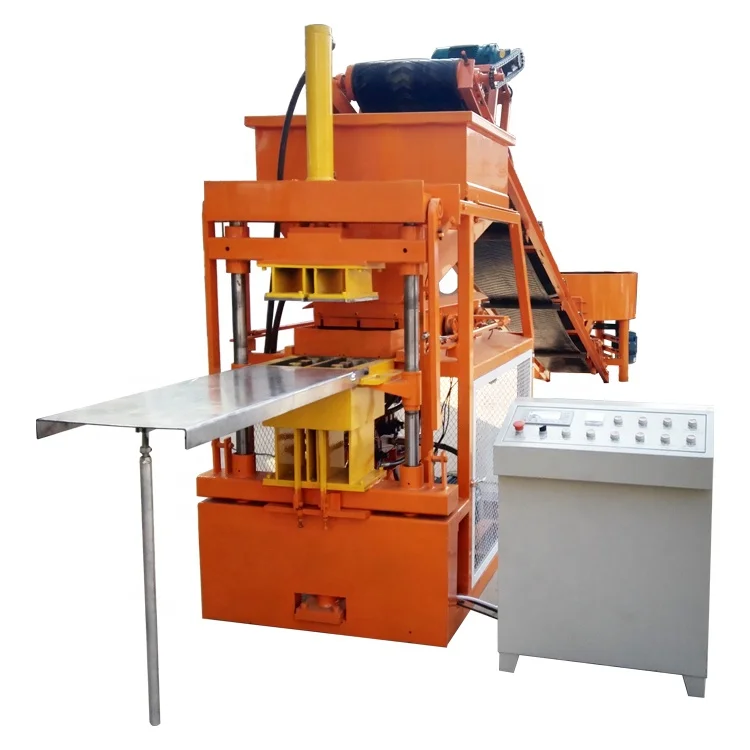
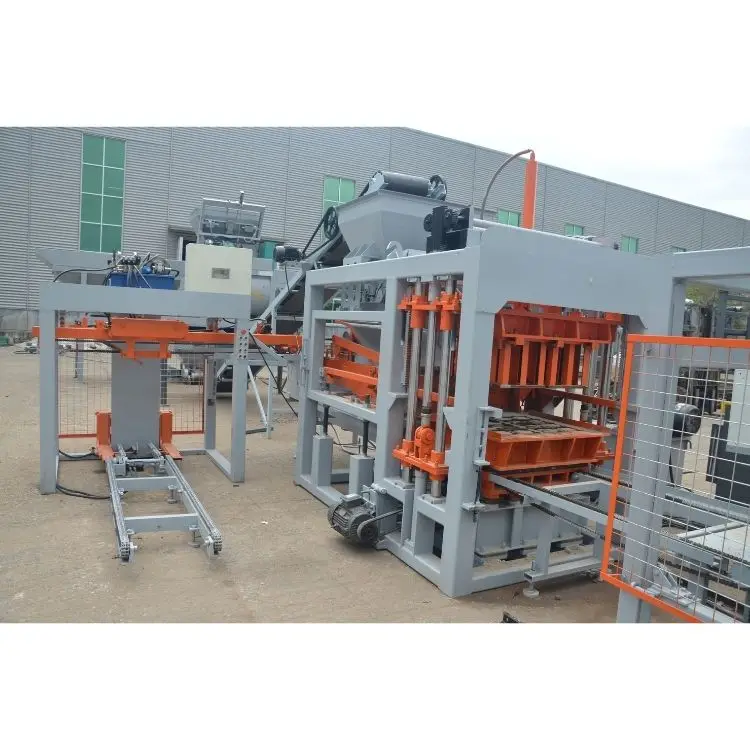
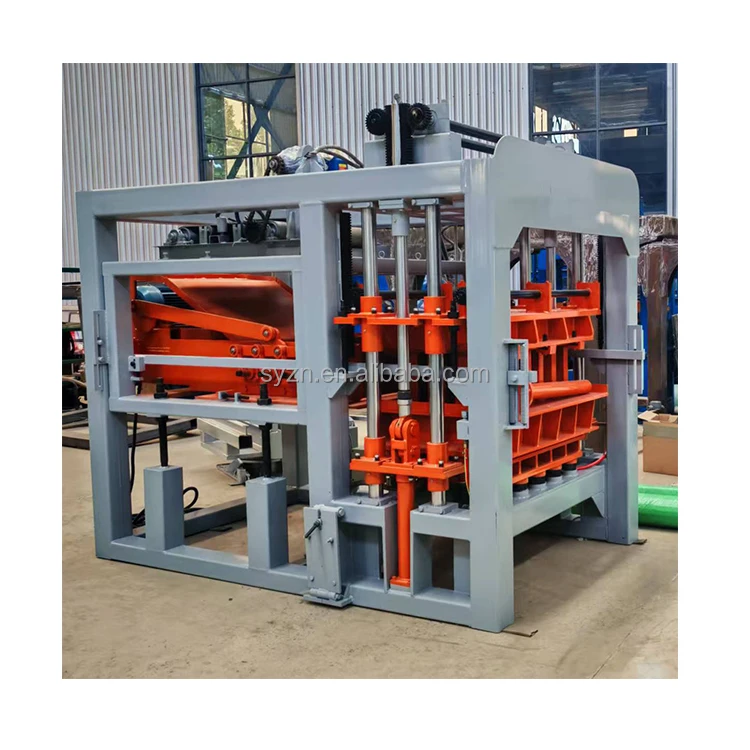
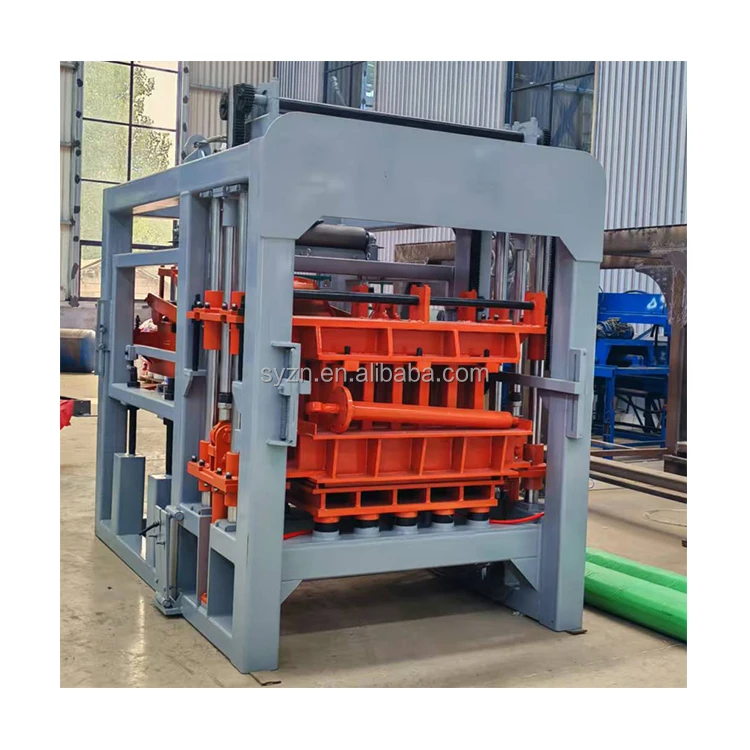
Mould-to-Press Integration — The QT6-15 is configured so that hydraulic pressure, vibration force, pallet size, and mould format are specified as one matched system against your target block type, not sourced from separate catalogues.
Technical Specifications
| Parameter | Value |
|---|---|
| Model | QT6-15 |
| Product Type | Automatic Concrete Block Making Machine |
| Automation Level | Fully automatic (man-machine combination, unattended operation) |
| Control System | PLC controller |
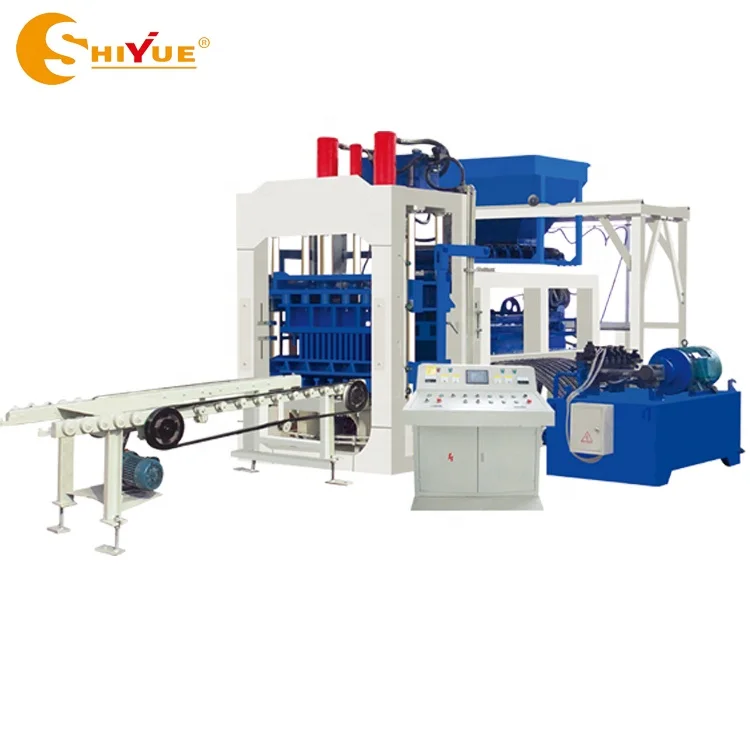
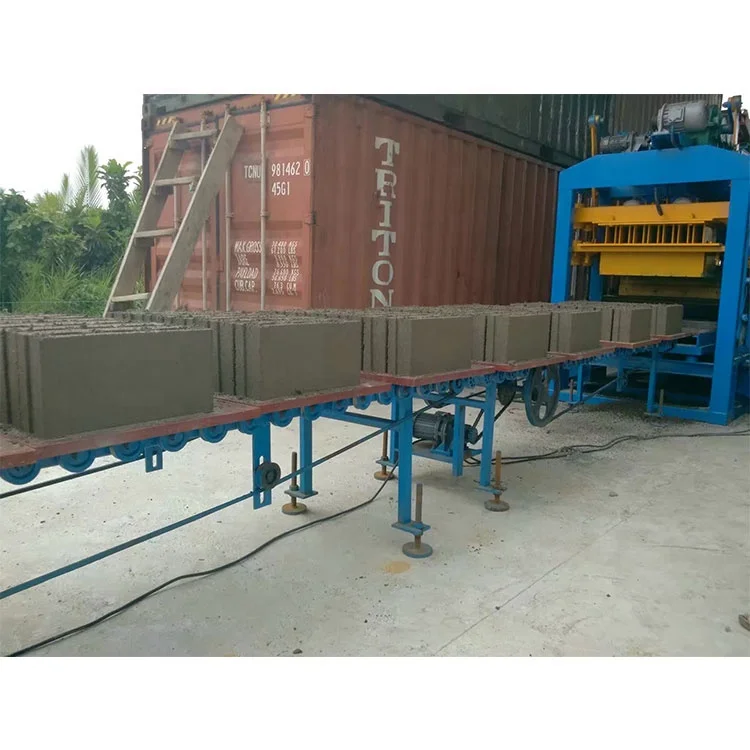
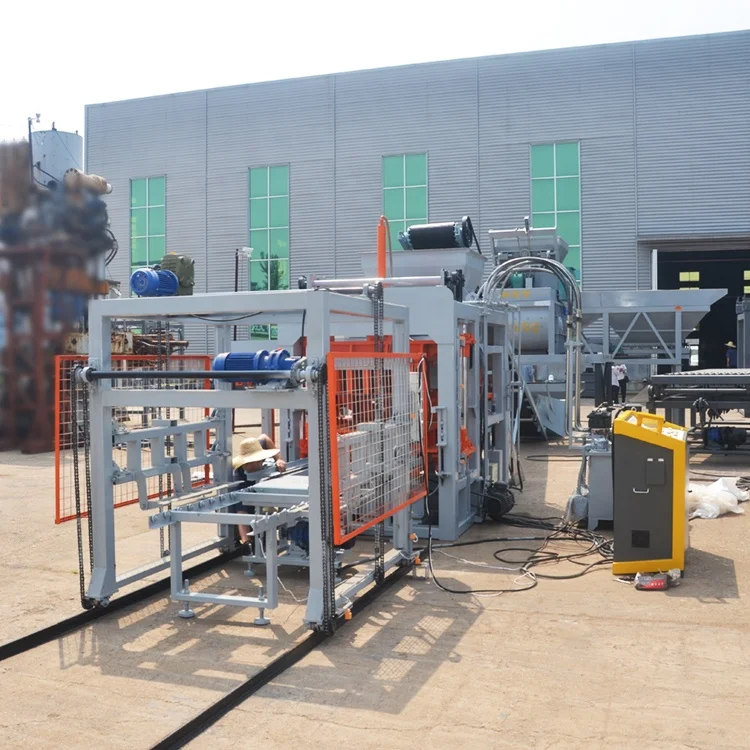
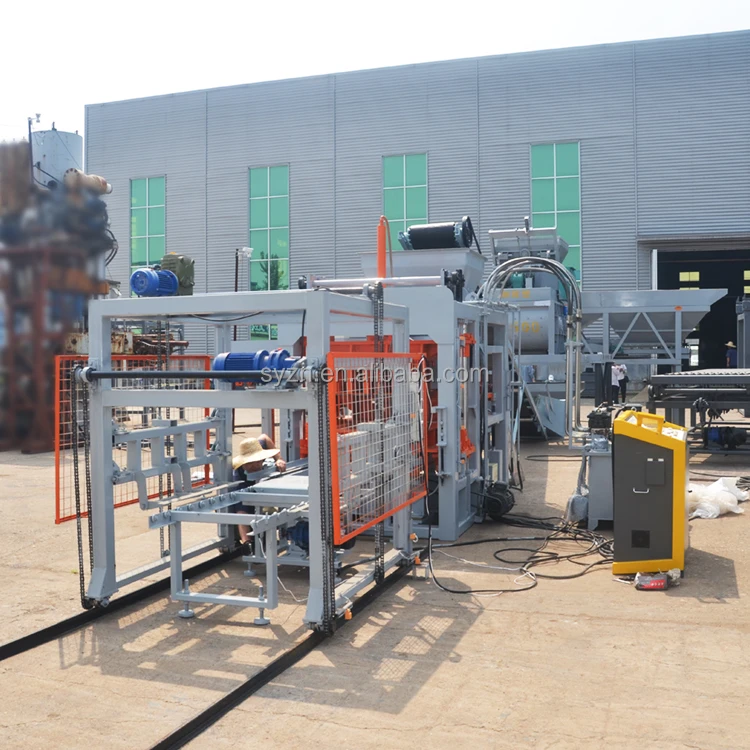
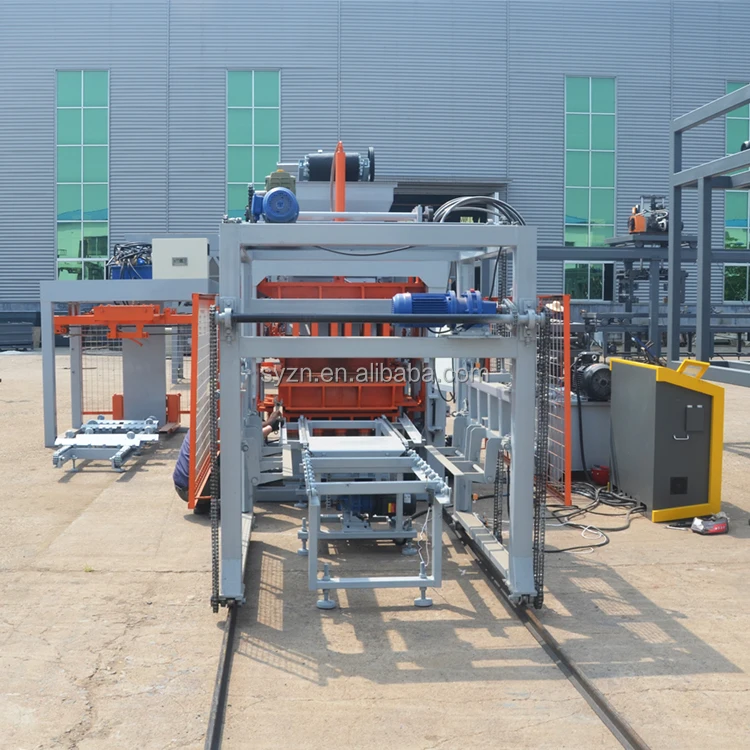
| Line Composition | Batching machine, mixer, cement silo, conveyor, block forming machine, stacker |
| Mould Format | Paving blocks, hollow blocks |
| Pallet Transport | Forklift truck transport of blocks and empty plates after forming |
| Output Capacity | High output (basis not stated in source — confirm block format / material / thickness) |
| Production Cost | Low production cost (qualitative claim from source) |
| Maintenance Requirement | Simple maintenance |
| Stacking Method | Stacker included in line |
| Hydraulic Pressure (MPa) | To be confirmed based on mix design |
| Vibration Force (kN) | To be confirmed based on target block density |
| Pallet Size | To be confirmed based on curing area and forklift |
| Mould Change Time | To be confirmed based on mould format |
| Voltage & Frequency | To be confirmed before production |
Application Suitability
| Application | Material or Output |
|---|---|
| Hollow block production for load-bearing and non-load-bearing walls | Crushed stone, sand, cement, and lightweight aggregates |
| Paving block production for pedestrian and vehicular surfaces | Granite chips, river sand, and cement with high-compression moulds |
| Interlocking block production for retaining walls | Local quarry dust and cement blends requiring precise interlock geometry |
| Solid block production for foundation and boundary walls | Dense aggregate mixes with high hydraulic pressure settings |
What "High Output" Actually Means When You Read the Brochure
A capacity figure without a stated block format is a number that will disappoint you on the first production day.
Every automatic concrete block making machine specifications sheet in the industry quotes cycles per hour, but that figure is almost always based on a standard hollow block — typically 400×200×200mm. When you switch to a 60mm paving block or a thin-wall hollow block, the cycle time changes, the vibration duration changes, and the realistic daily output can drop significantly [NEED_CITE: block format impact on actual cycle time in hydraulic press operations]. I have seen buyers in South Asia order a QT6-15 block machine how to choose based on a quoted hourly number, only to find that their local stone powder had a high clay content, which slowed the mix feed and cracked the blocks during ejection. The daily output fell far short of expectation, and the construction site was waiting for material. This is why every capacity figure on this page must be confirmed against your specific block format, your local aggregate, and your mix design before it can be treated as a commitment.
How the Line Stations Must Align With the Press Cycle
The QT6-15 is a fully automatic block making line where the press is only one station among several. The batching machine must deliver a weighed batch to the mixer within the same window that the press completes a cycle. If the mixer takes longer than the press cycle, the press sits idle. If the stacker cannot clear a finished pallet before the next one is ejected, the entire line stalls. This is where automatic concrete block making machine specifications must be read as a system, not as individual machine ratings. The conveyor speed, the pallet feeder timing, and the stacker lift rate are all set during commissioning to match the slowest station in your specific configuration.
Matching Pallet Size to Your Existing Curing Area
The pallet is the surface on which every block is formed and then carried to the curing zone. If the pallet size is chosen without considering the dimensions of your curing racks and the lifting capacity of your forklift, you will end up restacking blocks by hand or buying new racking after the machine arrives [NEED_CITE: pallet and curing rack mismatch causing secondary handling costs]. The QT6-15 line uses forklift transport of blocks and empty plates after forming, which means the pallet must fit your forklift tines and your curing area aisle width. We confirm pallet dimensions and material — whether bamboo, steel, or composite — against your site layout before the order is finalized.
Reading the Specifications That Determine Block Strength
Hydraulic pressure and vibration force work together to compact the mix inside the mould cavity. Higher hydraulic pressure alone does not guarantee a stronger block if the vibration force is insufficient to settle the aggregate evenly. The QT6-15 block machine how to choose decision must account for your target block strength, which depends on the interplay between pressure rating, vibration amplitude, and the gradation of your local aggregate. The PLC controller manages the duration of each vibration phase and the pressure hold time, allowing the operator to store different recipes for hollow blocks versus paving blocks. Mould format coverage spans paving blocks and hollow blocks, but each format demands a different pressure-vibration balance, and that balance is confirmed during the factory test using a sample of your actual raw material.
The Hidden Cost of Skipping Format-Specific Capacity Checks
When a buyer accepts a single output number without asking which block format it assumes, the consequence is not just a slower line — it is a mismatch between the machine’s rhythm and the market’s demand. If your primary product is a 60mm paving block but the line was tuned for a 200mm hollow block, every pallet change and every mould swap will consume time that was never accounted for in the project schedule [NEED_CITE: mould change downtime impact on daily output in block plants]. The stacker, the pallet feeder, and the curing rack handling system were all sized around a cycle time that no longer applies. The result is a plant that technically runs but never reaches the throughput the business plan assumed.
Why Sourcing the Press and the Line Together Matters
Block machinery is our single focus, which means the QT6-15 press, its moulds, the pallet specification, and the stacker are engineered as one system rather than assembled from separate suppliers who have never tested their equipment together. Configuration is set against your actual mix design and target block format, not a catalogue default. Mould design covers the formats your market sells, and custom mould drawings can be produced to your specifications. The automation level is selectable, so a buyer can begin with semi-automatic pallet handling and add a stacker later without replacing the press. Installation includes on-site commissioning where every station’s cycle time is verified against the press to confirm the line runs without idle gaps.
Documentation & Verification
- Line layout drawing showing each station’s position and the pallet flow path from press to curing rack
- Capacity calculation sheet stating the exact block format and mix ratio assumed for each output figure
- Mould drawing and format list confirming which block types are covered and the mould change procedure
- Pallet specification sheet matched to your curing area dimensions and forklift load rating
- Voltage, frequency, and PLC display language confirmation signed off before production begins
- Factory test record using your sample aggregate to verify block strength and cycle time per format
Installation, Commissioning & Support
- Foundation plan with load points for the QT6-15 press and the stacker unit, including anchor bolt positions
- Dedicated electrical circuit sized to the rated power of the batching machine, mixer, and press combined
- Machine arrives partially dismantled for container loading; reassembly sequence documented in the manual
- PLC parameters for vibration duration, pressure hold time, and pallet feed speed set during commissioning using your mix
- Operator training covers mould change procedure, fault diagnosis on the PLC display, and daily lubrication points
- Wear parts list identifies hydraulic seals, vibration springs, and mould liner plates with reorder part numbers
- Maintenance schedule specifies inspection intervals for the conveyor belt, stacker chains, and mixer blade clearance
Before You Request a Quotation
To size the QT6-15 accurately, we need your target block format with dimensions, your local aggregate type and gradation, and your target daily output per format. Share your workshop floor plan including the curing area dimensions and the forklift model you currently operate, so the pallet size can be matched before the order is placed. Confirm your site voltage and frequency, along with the preferred PLC display language, to avoid commissioning delays after the line arrives [NEED_CITE: voltage and frequency standards by export market].
Frequently Asked Questions
Q: How is QT6-15 daily output calculated, and which block format is each figure based on?
A: Every output figure we provide states the exact block format, mix ratio, and pallet cycle time assumed. A 400×200×200mm hollow block will have a different cycle time than a 60mm paving block, so the daily output differs. We do not quote a single number — we provide a capacity table per format, confirmed during the factory test with your sample material.
Q: How is the machine configured against my local aggregate and mix design?
A: Before the order is finalized, you send us a sample of your local aggregate and your preferred cement ratio. We run a test on the QT6-15 to verify that the hydraulic pressure and vibration force produce the target block strength. The PLC recipe is then saved for your operator, and any adjustments to the mould or feeder are documented in the delivery file.
Q: What PLC language and control interface options are confirmed before delivery?
A: The PLC display language is confirmed during the quotation stage and locked in before production. Available languages depend on the controller model selected. We document the chosen language, the voltage, and the frequency on the specification sign-off sheet so there is no mismatch when the line is powered up on your site.
Q: How do batching, mixing, and stacking cycle times align with the press to avoid idle time?
A: Each station’s cycle time is measured during commissioning. The batching machine discharge rate, the mixer rotation speed, and the stacker lift cycle are all adjusted so that the QT6-15 press is never waiting for a pallet or a batch. If your target format demands a faster cycle, the conveyor speed and feeder timing are recalibrated to match.
Q: Which mould wear parts and hydraulic components are included in the first spare parts list?
A: The first spare parts list includes mould liner plates, hydraulic seals for the main press cylinder, vibration springs, and conveyor belt sections. The exact quantities are based on your target production volume and the abrasiveness of your aggregate. We provide the part numbers so you can reorder directly or source locally if the specifications match.