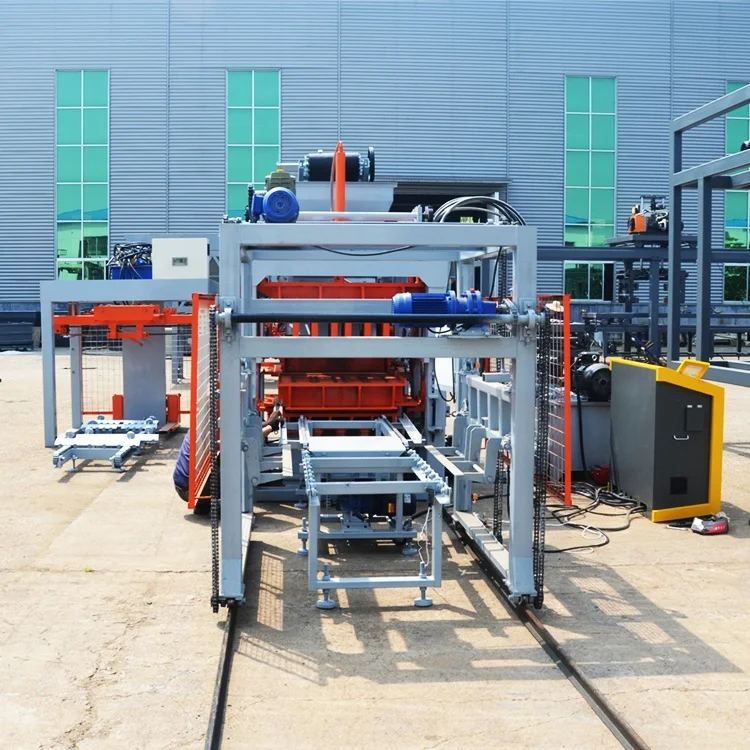


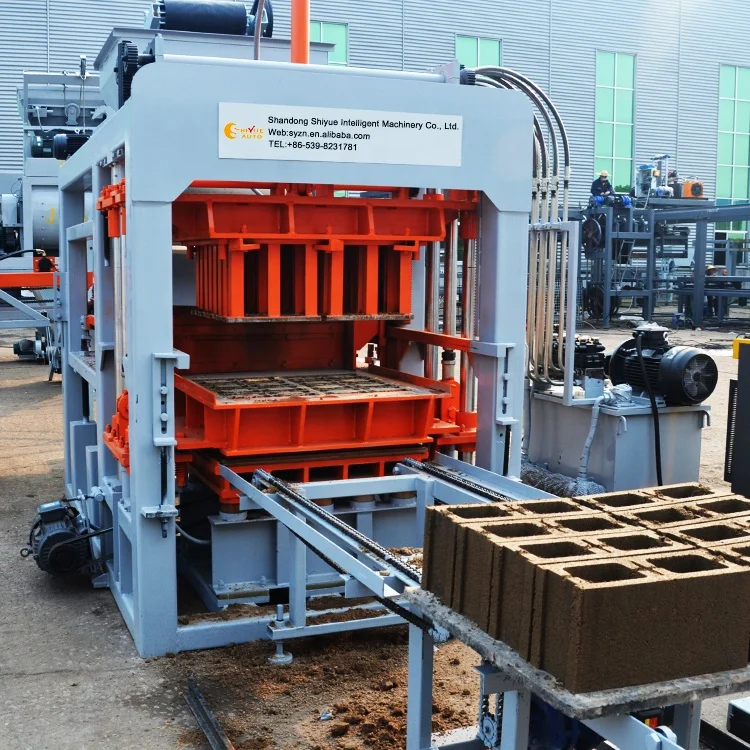

Description
Matched System Sizing — every QT6-15 configuration leaves our floor only after the vibration force, hydraulic pressure, and pallet format are checked against the buyer’s actual mix design and target block, not a catalogue default.
Technical Specifications
| Parameter | Value |
|---|---|
| Model | QT6-15 |
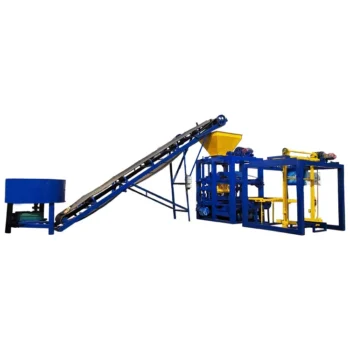
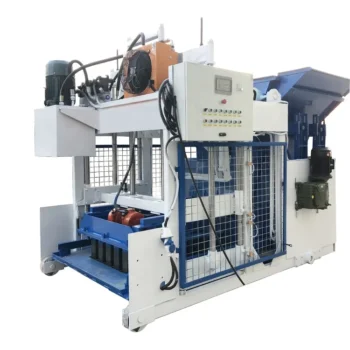
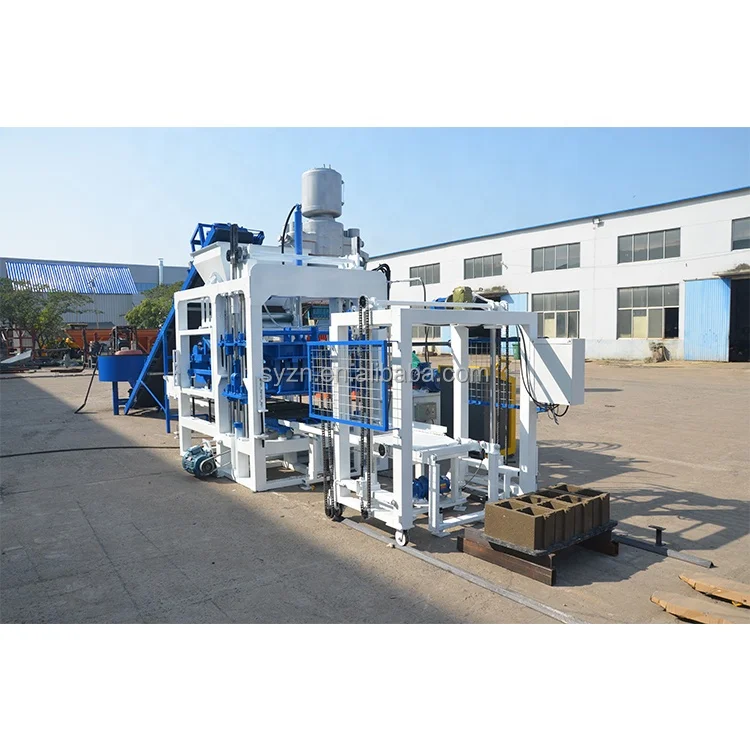
| Product Type | Fully Automatic Hydraulic Vibration Block Making Machine |
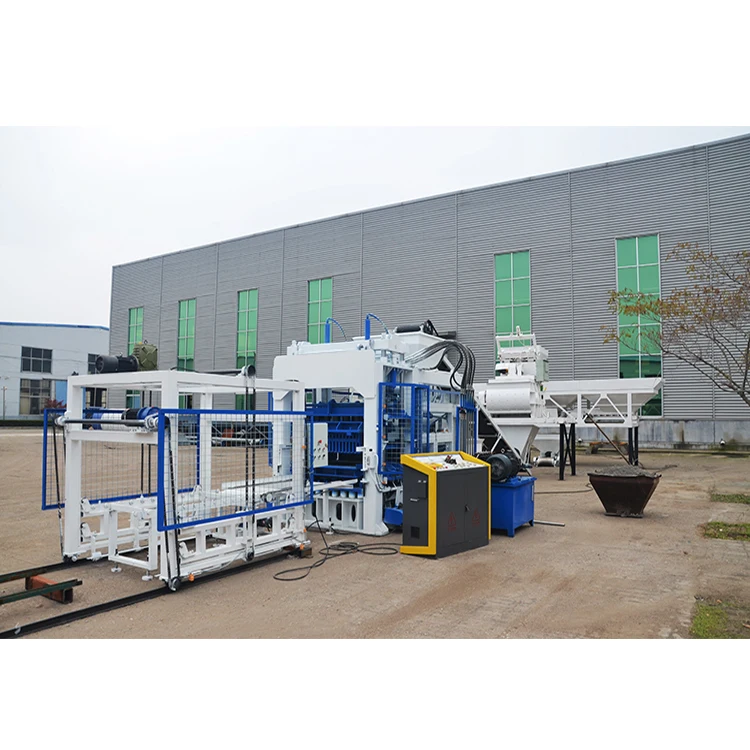
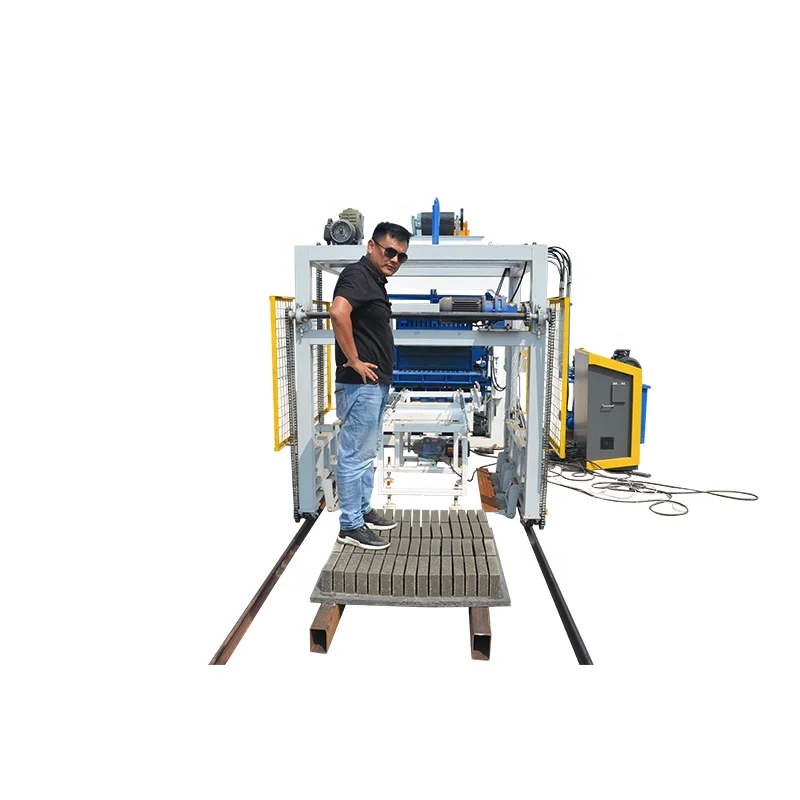
| Overall Dimensions (L×W×H) | 7400×1900×2660 mm |
| Molding Cycle | 15-25 s (basis not stated in source — confirm block format / material / thickness) |
| Vibration Frequency | 4600 r/min |
| Vibration Force (Exciting Power) | 40-50 kN |
| Total Power | 31.25 kW |
| Mixer Model | JQ350 |
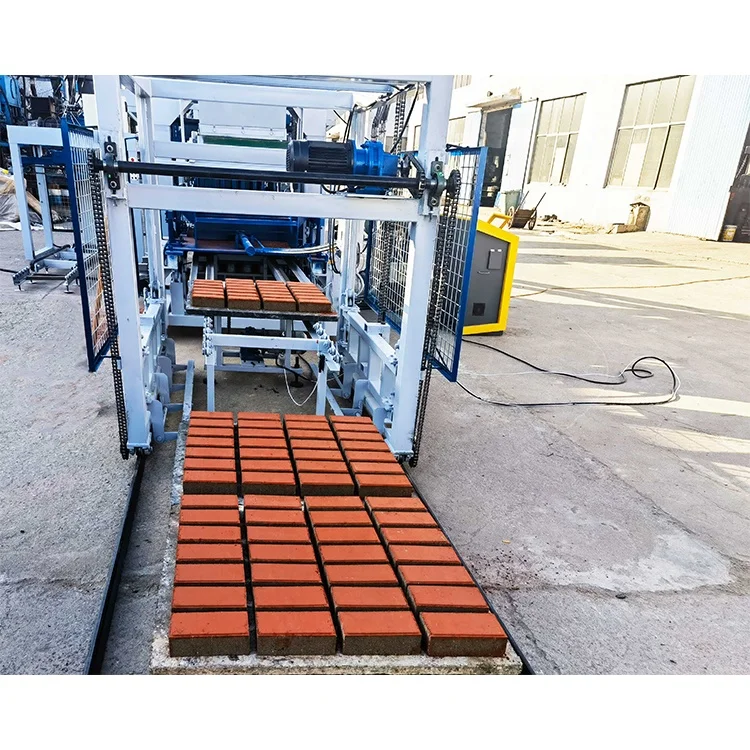
| Pallet Size | 850×550×25 mm |
| Total Weight | 7 T |
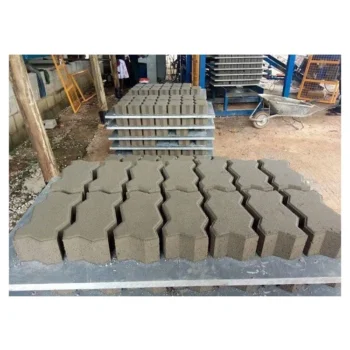
| Applied Products | Paver, solid block, hollow block, curbstone |
| Raw Materials | Crushed stones, sand, cement, dust, fly ash |
| Control System | PLC control system |
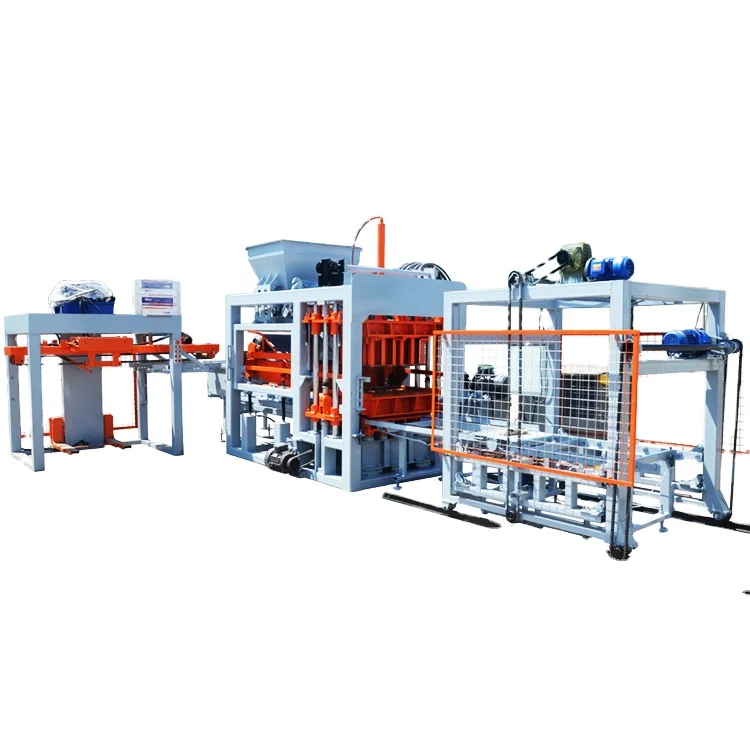
| Automation Level | Fully automatic (hydraulic station, pallet feeder, brick conveyor, block sweeper included) |
| Output Capacity | 1200-1680 pcs/hr (based on 400×200×200 mm hollow block, 15-20 s cycle) |
| Output Capacity | 1800-2400 pcs/hr (based on 400×150×200 mm hollow block, 15-20 s cycle) |
| Output Capacity | 3240 pcs/hr (based on 240×115×53 mm solid brick, 15-20 s cycle) |
| Included Auxiliary Equipment | Hydraulic station, PLC control system, pallet feeder, brick conveyor, block sweeper, manual hydraulic trolley |
Application Suitability
| Application | Material or Output |
|---|---|
| Hollow block production for building envelopes | Crushed stone, sand, cement, and fly ash mixes forming 400×200×200 mm or 400×150×200 mm units |
| Solid brick manufacturing for load-bearing walls | Fine aggregate and cement blends producing 240×115×53 mm standard bricks |
| Paving block and curbstone runs for infrastructure | High-strength concrete mixes shaped into interlocking pavers and kerb units |
| On-site production for housing developments | Locally sourced aggregates processed directly at the project footprint |
Why the Mould Question Decides the Real QT6-15 Block Making Machine Specifications
The cycle time changes every time you swap the mould, and the quoted hourly output is only true for one specific block format.
When I first started on the assembly floor, I watched a buyer receive a machine rated for an impressive hourly figure, only to discover that number applied to a small solid brick his market never asked for. His actual hollow block cut the daily volume nearly in half. That gap between brochure capacity and real output is where most disputes begin. Sizing a QT6-15 block making machine without locking the target format and local aggregate first leaves the buyer holding a machine that technically meets spec but commercially misses the mark [NEED_CITE: block format assumptions in capacity quotations].
Format-First Capacity Breakdown
The QT6-15 block making machine delivers different output tiers depending on the block geometry loaded into the press. A 400×200×200 mm hollow block requires a longer vibration window to consolidate the thicker web walls, yielding 1200 to 1680 pieces per hour on a 15-20 second cycle. Drop the width to 150 mm and the cycle stays similar, but more units fit on each 850×550 mm pallet, pushing output to 1800-2400 pieces per hour. Switch to a 240×115×53 mm solid brick and the smaller footprint packs the pallet densely, reaching 3240 pieces per hour under the same cycle assumption. These are the QT6-15 block making machine specifications tied to their specific formats, not a single blanket number.
Matching Vibration and Pressure to Local Aggregate
Every region has its own aggregate story — volcanic ash in one zone, river gravel in another, crushed limestone in a third. The 40-50 kN vibration force and hydraulic station on this machine must be tuned to the density and particle shape of what the buyer actually feeds into the JQ350 mixer. A lightweight aggregate needs less exciting power to avoid fracturing particles, while angular crushed stone demands higher force to lock the mix into the mould cavity [NEED_CITE: aggregate grading effects on block compaction]. Getting this match wrong shows up as inconsistent block strength across a single production run, a problem that surfaces only after the first few thousand units leave the curing rack.
Reading the Core Parameters Beyond the Brochure
The 7400×1900×2660 mm overall footprint dictates the bay width and headroom a buyer must prepare before the machine arrives. At 31.25 kW total power, the electrical supply needs a dedicated circuit with enough reserve to handle the hydraulic motor starting surge without tripping adjacent equipment. The 4600 r/min vibration frequency sits in the mid-range for concrete block presses, fast enough to consolidate semi-dry mixes but dependent on the mould cavity depth to transmit energy evenly. Pallet size at 850×550×25 mm is the dimension that links the press to the curing area — if the buyer’s existing racks or forklift tines are built around a different pallet footprint, every wet block coming off the conveyor becomes a handling problem before it even reaches the curing zone.
The Cost of Skipping the Pallet and Voltage Conversation
A pallet size mismatch does not announce itself on day one. It surfaces when the forklift operator cannot slide tines under the curing rack, or when the rack slots are too narrow for the 850 mm pallet length, forcing a manual restack that doubles handling labour. Voltage and frequency assumptions are equally quiet until the machine arrives and the local supply is 50 Hz while the motor was wound for 60 Hz, leaving the vibration force below spec and the hydraulic pump running hot [NEED_CITE: voltage and frequency mismatch consequences on industrial motors]. Neither issue appears in a quotation that only lists the press.
What We Build Into Every QT6-15 Shipment
Block machinery is our single focus, so the press, mould, pallet, and handling equipment are specified as one matched line rather than assembled from separate suppliers. We set the QT6-15 configuration against the buyer’s mix design and target block format before production begins, not after. Mould design covers the formats the buyer’s market actually sells, with custom drawings available when standard options fall short. The automation level is selectable — a buyer can start with the included pallet feeder and brick conveyor, then add automatic stacking later as volume grows. Installation support includes on-site commissioning and operator training so the crew understands cycle adjustments and mould change procedure from the first shift.
Documentation & Verification
- Line layout showing capacity calculation for each block format included in the order
- Mould drawing and format list confirming standard and optional cavity designs
- Pallet specification matched to buyer’s curing rack dimensions and forklift type
- Voltage, frequency, and PLC display language confirmation signed before production
- Factory test record run on buyer’s specified block format before crating
Installation, Commissioning & Support
- Foundation plan sized to the 7400×1900 mm footprint and 7 T operating weight with vibration isolation pads
- Dedicated power feed rated for 31.25 kW total draw with hydraulic motor inrush allowance
- Machine shipped in dismantled modules for container loading, reassembled on-site with alignment check
- First-run commissioning includes cycle time tuning on buyer’s actual mix and block format
- Operator training covers PLC format selection, mould change sequence, and daily greasing points
- Wear parts list with hydraulic seal kit and mould liner replacement intervals documented
Before You Request a Quote
To size the QT6-15 correctly we need the block formats your market moves, the daily volume you plan to sustain, and the aggregate sources available within hauling distance of your plant. Send the local voltage and frequency at the installation point, the PLC display language your operators read, and the pallet dimensions your current curing racks and forklifts accept. If you already run a mixer or batching system upstream, share that model so we can match the feed rate to the press cycle.
Frequently Asked Questions
Q: How is QT6-15 output capacity calculated per block format?
A: Output is derived from the pallet area, the number of cavities per mould, and the cycle time for that specific format. A 400×200×200 mm hollow block yields 1200-1680 pieces per hour on a 15-20 second cycle, while a 240×115×53 mm solid brick reaches 3240 pieces per hour under the same cycle window because more units fit on each pallet.
Q: Which mould formats come standard and how long does a change take?
A: The standard package covers the hollow block, solid brick, paver, and curbstone formats listed in the specification. Mould change time depends on whether the quick-lock system is selected; without it, a full cavity swap can consume a significant portion of a shift, so we confirm the change method during configuration.
Q: How is the machine tuned to my local raw material?
A: We ask for the buyer’s aggregate type, grading curve, and cement ratio before setting the vibration force within the 40-50 kN range and adjusting hydraulic pressure. This ensures the mix consolidates fully in the mould without particle fracture or weak spots in the finished block.
Q: What pallet size does the QT6-15 use and why must I confirm it early?
A: The machine runs 850×550×25 mm pallets. This dimension must align with your curing rack slots and forklift tine spacing. A mismatch forces manual restacking of every wet block, adding labour and increasing breakage before the product even enters the curing zone.
Q: When must voltage, frequency, and PLC language be confirmed?
A: These must be locked before production starts. The motor winding, hydraulic pump rating, and PLC display are all built to the confirmed specification. A change after assembly means rewinding motors or replacing control components, delaying shipment by several weeks.