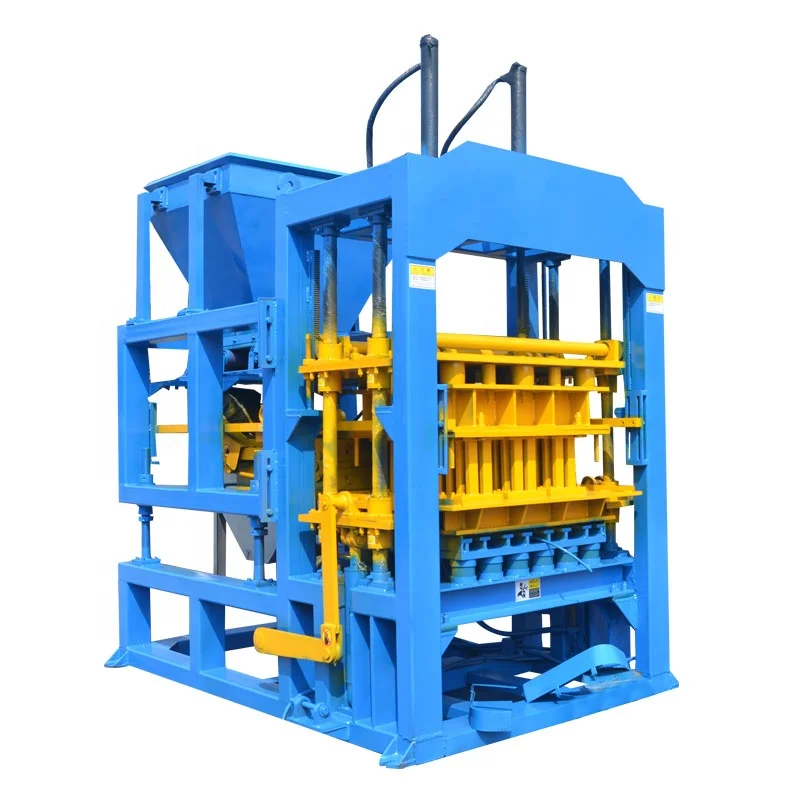
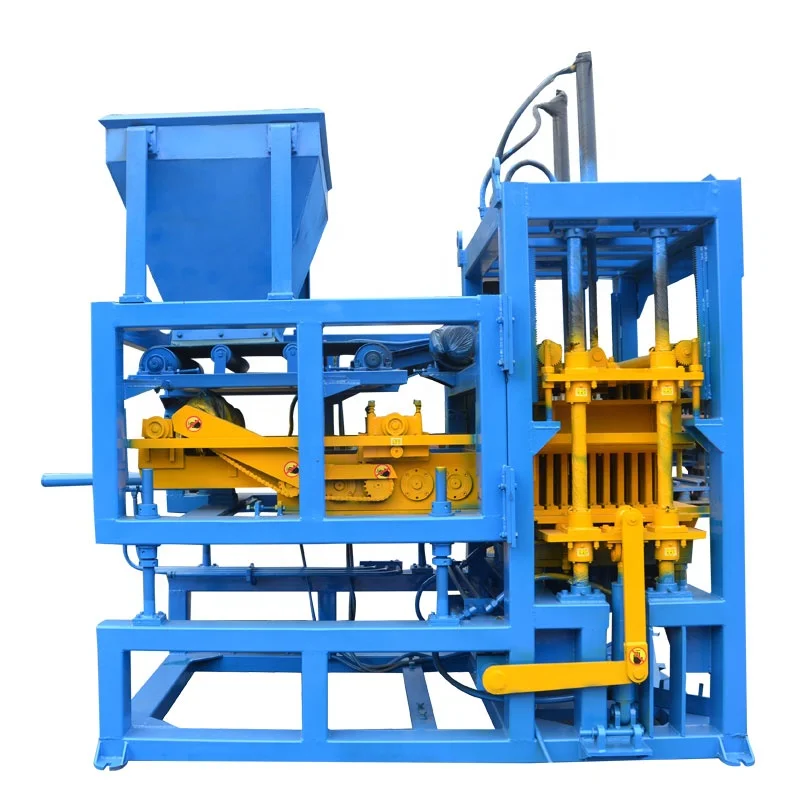

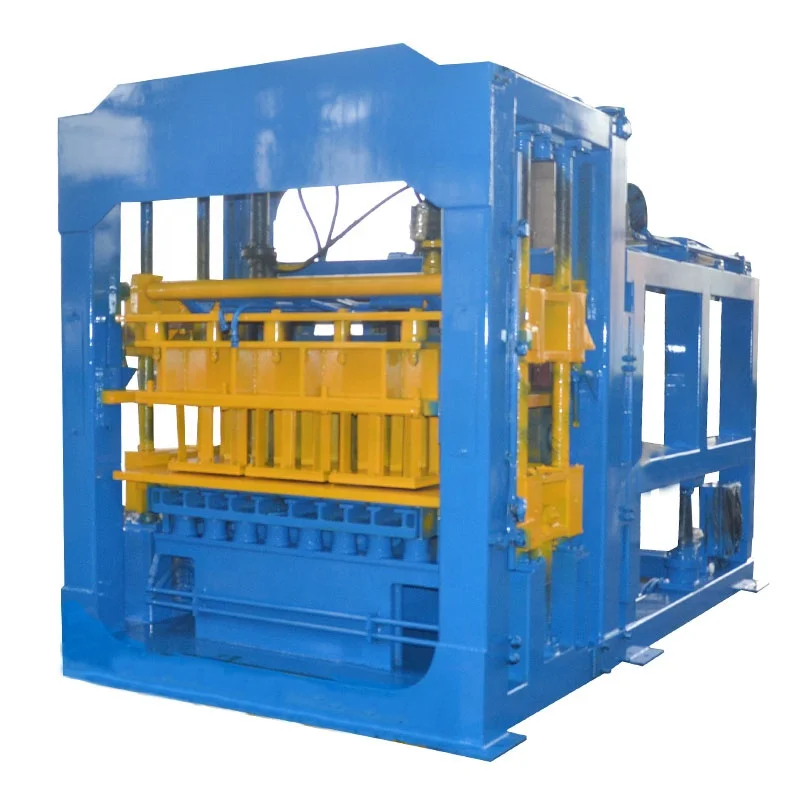

Description
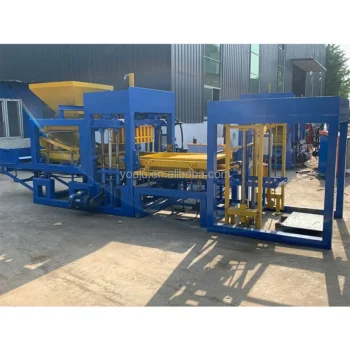
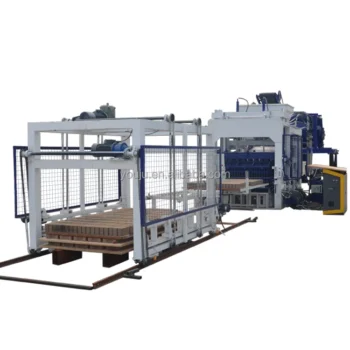
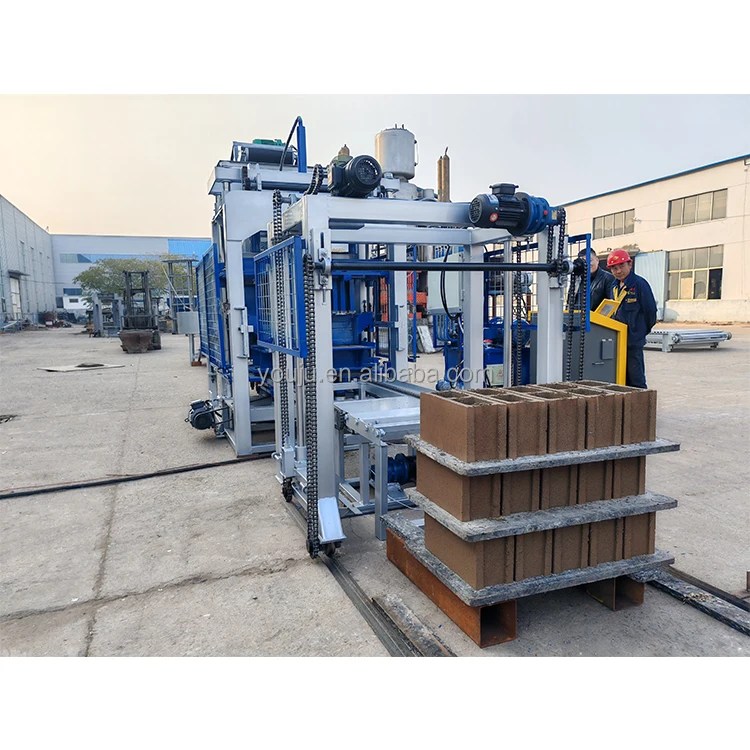
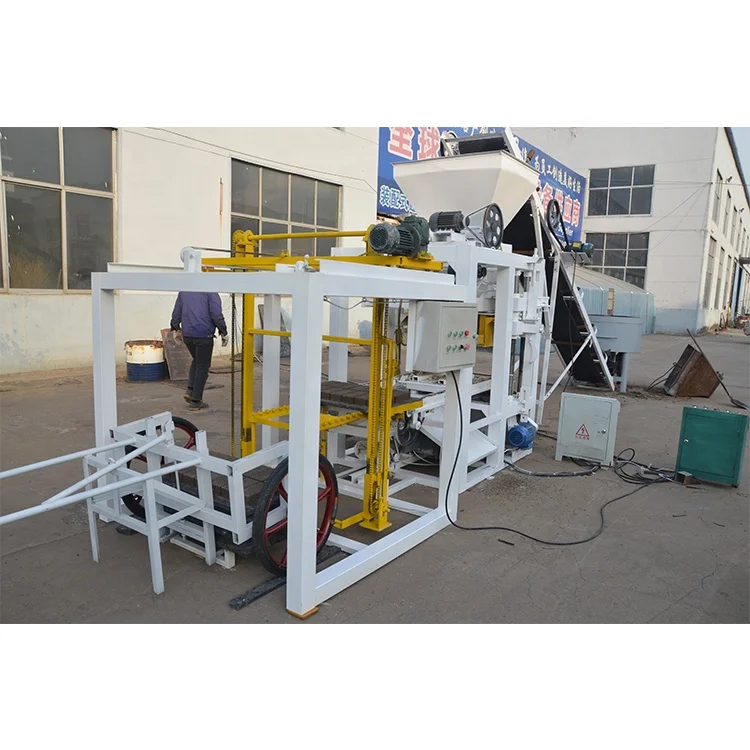
Block Machinery Focus — Every QT5-15 proposal begins with your actual mix design and target block format, ensuring machine, mould, pallet and handling are specified as one matched system rather than assembled from separate sources.
Technical Specifications
| Parameter | Value |
|---|---|
| Model | QT5-15 |
| Product Type | Automatic Hydraulic Block Making Machine |
| Control System | PLC with fault diagnosis, long-distance monitoring and control |
| Vibration System | Variable-frequency synchronization (low frequency for feeding, high frequency for molding) |
| Material Feeding System | Dedicated storage and dispensing system for consistent feeding accuracy |
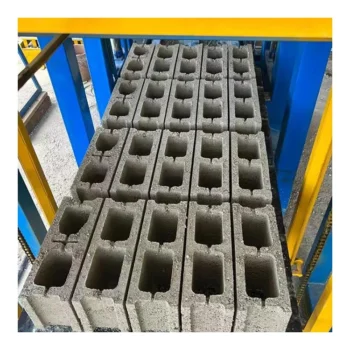
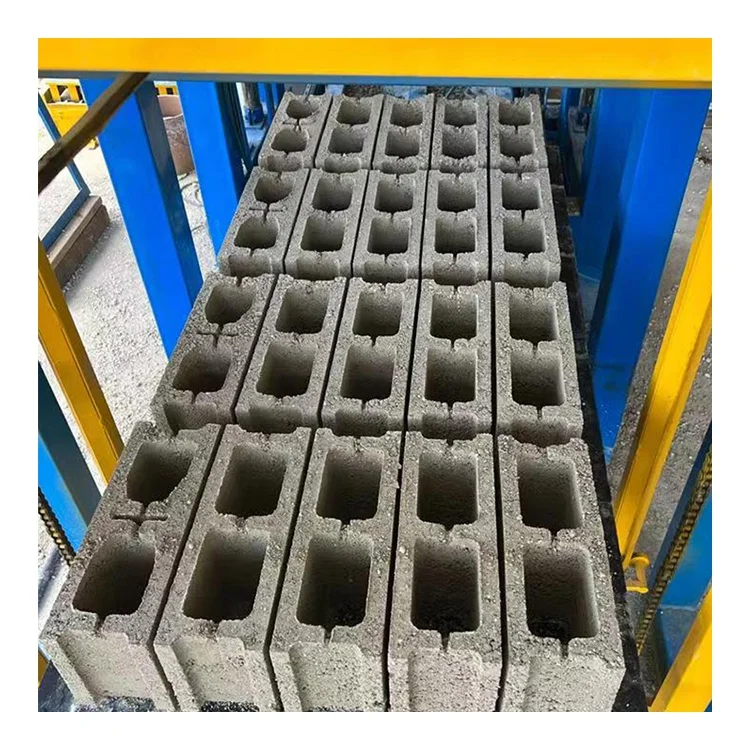
| Output: Hollow Block 400×200×200mm | 900–1200 pcs/h (7200–9600 pcs/8hr), 5 pcs/mould, 15–20s cycle |
| Output: Hollow Block 400×150×200mm | 1080–1440 pcs/h (8640–11520 pcs/8hr), 6 pcs/mould, 15–20s cycle |
| Output: Solid Brick 240×115×53mm | 5760–7680 pcs/h (46080–61440 pcs/8hr), 32 pcs/mould, 15–20s cycle |
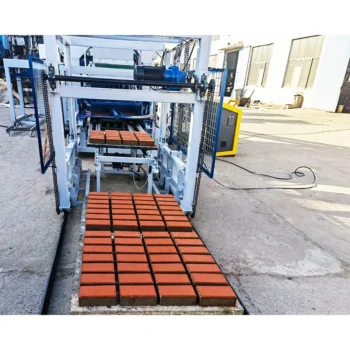
| Output: Rectangular Paver 200×100×60mm | 3600–4500 pcs/h (28800–36000 pcs/8hr), 25 pcs/mould, 20–25s cycle |
| Output: Zigzag Brick 225×112.5×60mm | 2304–2880 pcs/h (18432–23040 pcs/8hr), 16 pcs/mould, 20–25s cycle |
| Automation Level | Automatic |
| Hydraulic Pressure | Configuration dependent on block format and mix design (basis to be confirmed) |
| Vibration Force | Matched to aggregate type and target density (basis to be confirmed) |
| Pallet Size | Selected based on curing area and handling equipment (basis to be confirmed) |
| Voltage & Frequency | Configured to buyer’s site supply (basis to be confirmed) |
| CE Certification | Available where applicable |
Application Suitability
| Application | Material or Output |
|---|---|
| Hollow block production (400×200×200mm and 400×150×200mm) | Crushed stone, river sand, cement, fly ash blends |
| Solid brick production (240×115×53mm) | Fine aggregate and cement mixes for structural or infill brick |
| Rectangular paving brick (200×100×60mm) | High-density aggregate blends for driveway and walkway pavers |
| Zigzag interlocking brick (225×112.5×60mm) | Interlocking profile mixes for road and slope stabilization |
What "900 to 1200 Pieces per Hour" Actually Means for the QT5-15 Block Making Machine
Output capacity is only meaningful when tied to a specific block size, mould cavity count and cycle time.
I once visited a plant where the owner had purchased a block machine based on a headline output number. The quotation said the machine could produce up to a certain figure per hour — but that figure assumed a solid brick format with 32 cavities per mould. What the buyer actually needed was 400×200×200mm hollow blocks at five cavities per mould. The real throughput was a fraction of the quoted number, and the plant never met its revenue plan. With the QT5-15 block making machine, every capacity figure in the specification table above names the exact block dimensions, the cavity count and the assumed cycle time so you can calculate your own daily output honestly. [NEED_CITE: common block machine capacity misrepresentation in equipment quotations]
Matching Format, Mould and Cycle Time to Your Market
The QT5-15 block making machine covers four distinct product families on a single press: hollow blocks, solid bricks, rectangular pavers and zigzag interlocking bricks. Each format demands a different mould cavity layout, and the cycle time shifts between 15–20 seconds for standard blocks and 20–25 seconds for paver and interlocking profiles. The specification table states the pieces per mould and cycle range for every format, letting you model a realistic production schedule around the products your local market actually buys.
How Vibration Behaviour Changes Across Formats
Variable-frequency synchronization vibration runs at low frequency during material feeding and switches to high frequency for compaction. This two-stage approach matters because a hollow block mould with large voids fills differently from a solid brick mould packed with 32 cavities. The frequency transition must match the aggregate grading and moisture content in your specific mix — a parameter I always confirm before finalizing a QT5-15 configuration, because the wrong vibration profile leads to weak corners on pavers or inconsistent wall thickness on hollow blocks. [NEED_CITE: relationship between vibration frequency and aggregate compaction in block molding]
Reading the Specs That Determine Block Strength
Hydraulic pressure and vibration force together define the compaction density of every block that leaves the press. If pressure is high but vibration force is low, the aggregate does not settle uniformly and you get density variation across the pallet. If vibration is strong but hydraulic pressure is undersized, the block surface may look dense while the core remains loose. Neither parameter is quoted as a fixed number here because the correct rating depends on your local aggregate hardness, the cement-to-aggregate ratio and the target compressive strength. This is the conversation that must happen before an order is placed.
The Cost of Skipping Pallet and Curing Layout Planning
A buyer who selects pallet size without checking their existing curing yard and forklift capacity ends up with pallets that do not stack in the available space or cannot be moved by the handling equipment on site. The resulting bottleneck is not in the press — it is in the curing area, where wet blocks sit waiting for transport. I have seen plants where the QT5-15 ran well below its cycle rate simply because there was no room to stage the next set of loaded pallets. Pallet dimensions, material and the entire curing rack handling arrangement should be confirmed as part of the line layout before the machine enters production. [NEED_CITE: pallet handling bottlenecks in stationary block production plants]
Why Configuration Must Start With Your Raw Material
Every block machine supplier can provide a default configuration from a catalogue. What separates a working plant from a stalled one is whether that configuration was built around the aggregate you can actually source. I was once involved in a project where the machine was set up for standard river sand, but the buyer’s local supply was volcanic ash blend. The mix behaved differently under vibration, and it took two weeks of recalibration to recover consistent block strength. The QT5-15 block making machine should be configured — vibration force, hydraulic pressure, feeding system timing — against your submitted raw material sample and target mix design, not against a generic baseline.
How the Line Around the Press Determines Real Output
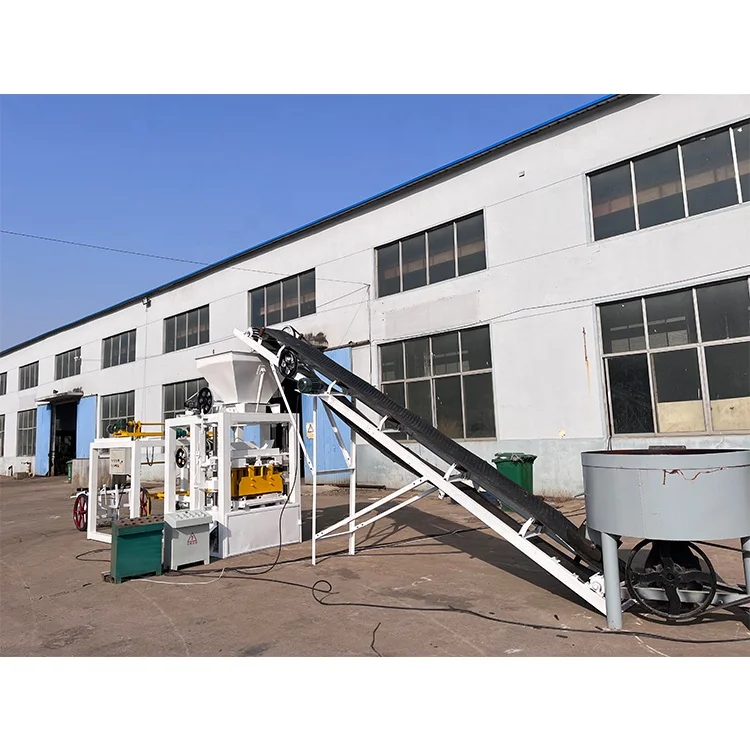
The press itself is only one station in the production sequence. Raw material feeding accuracy, pallet feeding speed, automatic stacking cycle time and curing rack handling must all match the QT5-15 cycle rate so the press is never left waiting. If the batching system cannot deliver a consistent mix at the required pace, or if the stacker cannot clear finished pallets fast enough, the press cycle time on paper becomes irrelevant. This is why the entire line layout — not just the press specification — must be calculated and documented together before equipment is committed to production.
Documentation & Verification
- Line layout drawing stating capacity per block format and assumed cycle time
- Mould drawing with cavity count and dimensions for every quoted format
- Factory test record on your specified block format before dispatch
- Hydraulic and electrical schematic matching your confirmed voltage and frequency
- Voltage, PLC language and control configuration confirmed in writing pre-production
Installation, Commissioning & Support
- Foundation plan matched to the QT5-15 vibration load and overall footprint
- Dedicated power circuit sized to the confirmed rated power and voltage
- On-site assembly with mould alignment checked against pallet flatness
- First-run parameter tuning using your local aggregate and mix design
- Operator training covering mould change procedure and PLC fault diagnosis
- Wear parts list with hydraulic seal and vibration module replacement intervals
What to Prepare Before Requesting a Quotation
Share your target block formats with exact dimensions, the daily output you need for each format, and a sample or analysis of your local aggregate and cement supply. Include your site voltage, frequency and preferred PLC display language, along with the pallet size and curing area you already have or plan to build. This information allows the QT5-15 block making machine configuration to be matched to your actual conditions rather than a catalogue default.
Frequently Asked Questions
Q: How is QT5-15 output capacity calculated per block format, and what cycle time does each figure assume?
A: Each capacity line in the specification table states the block dimensions, the number of cavities per mould and the cycle time range. For example, hollow block 400×200×200mm assumes 5 pieces per mould at a 15–20 second cycle. You can multiply the hourly figure by your planned shift length to model daily output.
Q: Which mould formats are available for the QT5-15, and how long does a mould change take?
A: Available formats include hollow blocks in two sizes, solid brick, rectangular paver and zigzag interlocking brick. Mould change time depends on the changeover system specified — confirm this during configuration so format switching fits your production schedule without consuming a full shift.
Q: How should vibration frequency and hydraulic pressure be matched to my local aggregate?
A: Submit a sample or lab analysis of your aggregate along with your target mix ratio. Vibration frequency, hydraulic pressure and feeding timing are then set to match the particle size, hardness and moisture behaviour of your specific material, avoiding weak blocks or surface defects.
Q: What pallet size does the QT5-15 require, and is it compatible with my existing curing setup?
A: Pallet size is selected based on the mould dimensions and your curing yard layout. Confirm the forklift capacity and curing rack spacing you already have so the pallets supplied with the QT5-15 fit your handling and storage infrastructure.
Q: What voltage, frequency and PLC language options are confirmed before shipment?
A: Your site voltage, frequency and preferred PLC display language are confirmed in writing before production begins. This ensures the electrical cabinet, motor ratings and control interface match your local supply and operator requirements upon arrival.