
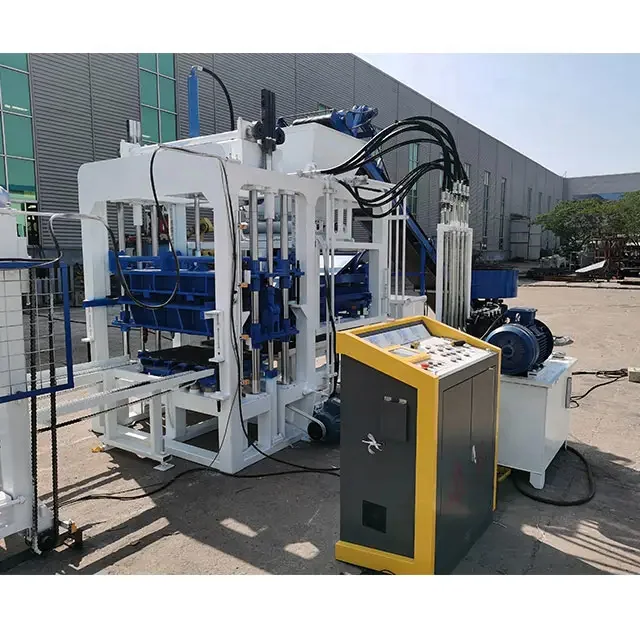

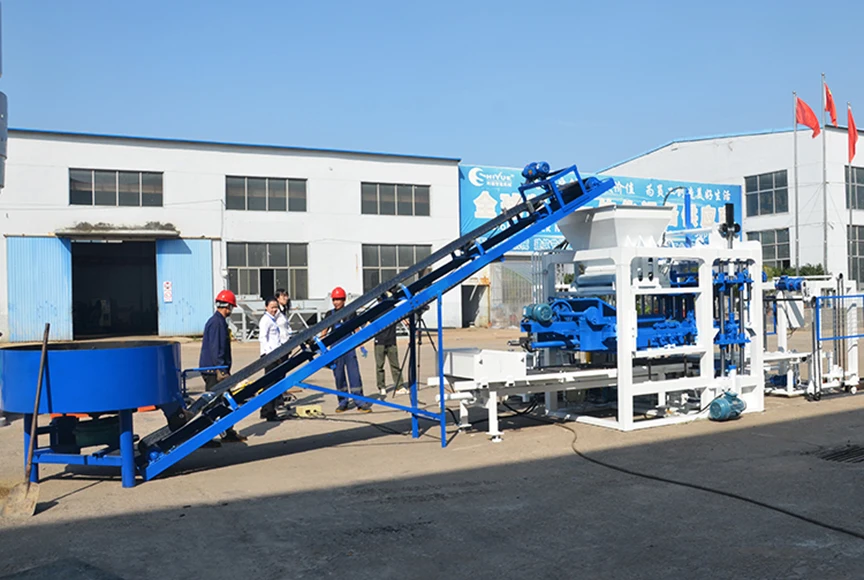
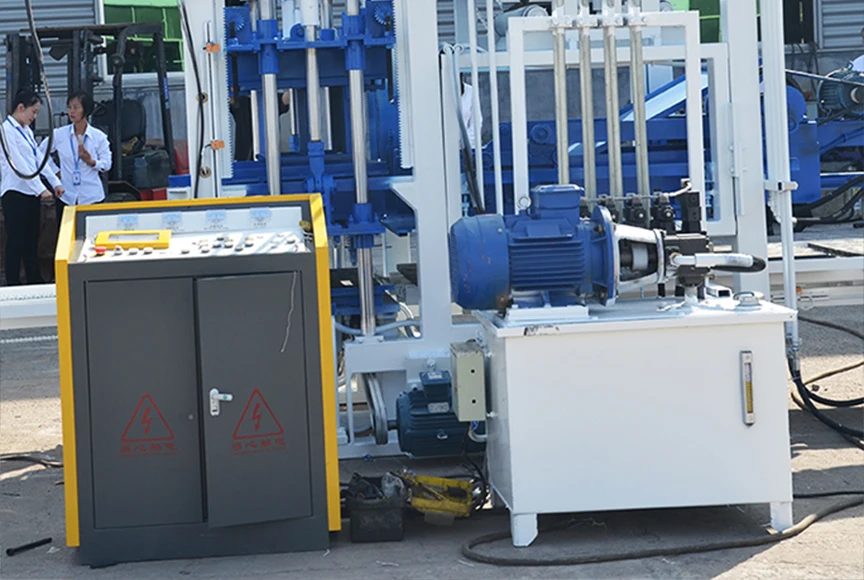
Description
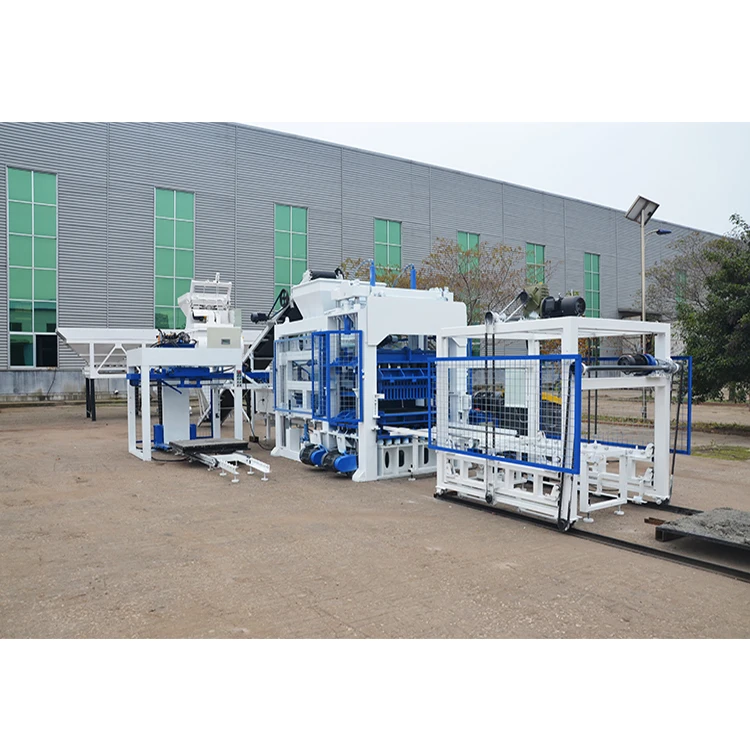
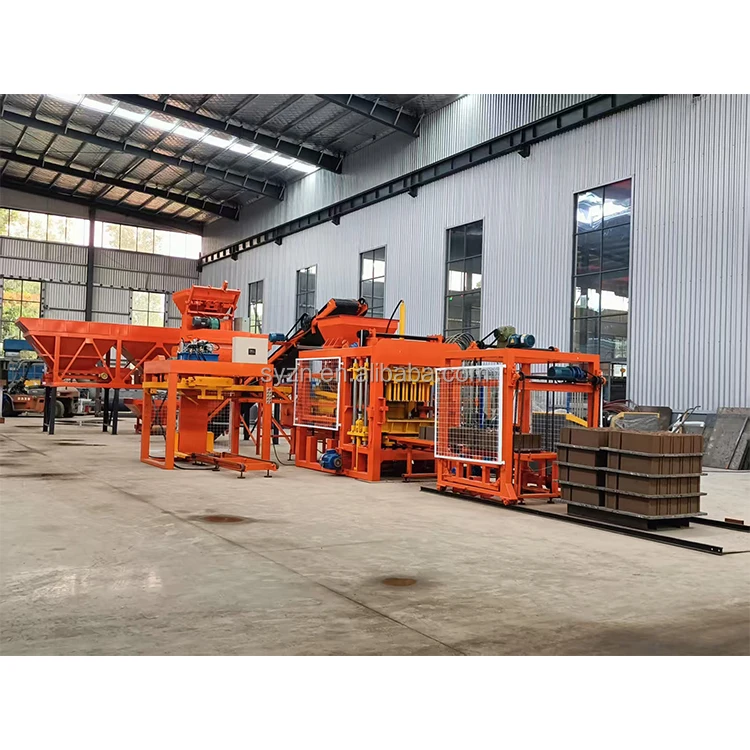
Mould-to-Market Match — the QT4-18 block making machine is sized and vibrated around the brick format your local market actually buys, not a generic catalogue default.
Technical Specifications
| Parameter | Value |
|---|---|
| Model | QT4-18 |
| Product Type | Concrete Block Making Machine |
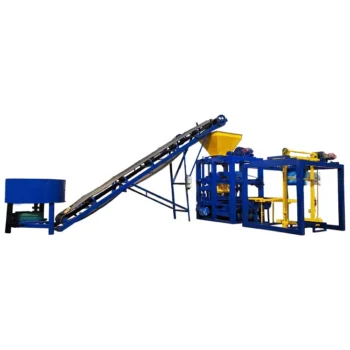
| Overall Dimensions (L×W×H) | 3900 × 1600 × 2300 mm |
| Total Weight | 3 T |
| Rated Power | 24 kW |
| Molding Cycle | 15–25 s (basis to be confirmed per format and mix) |
| Vibration Force | 40–50 kN |
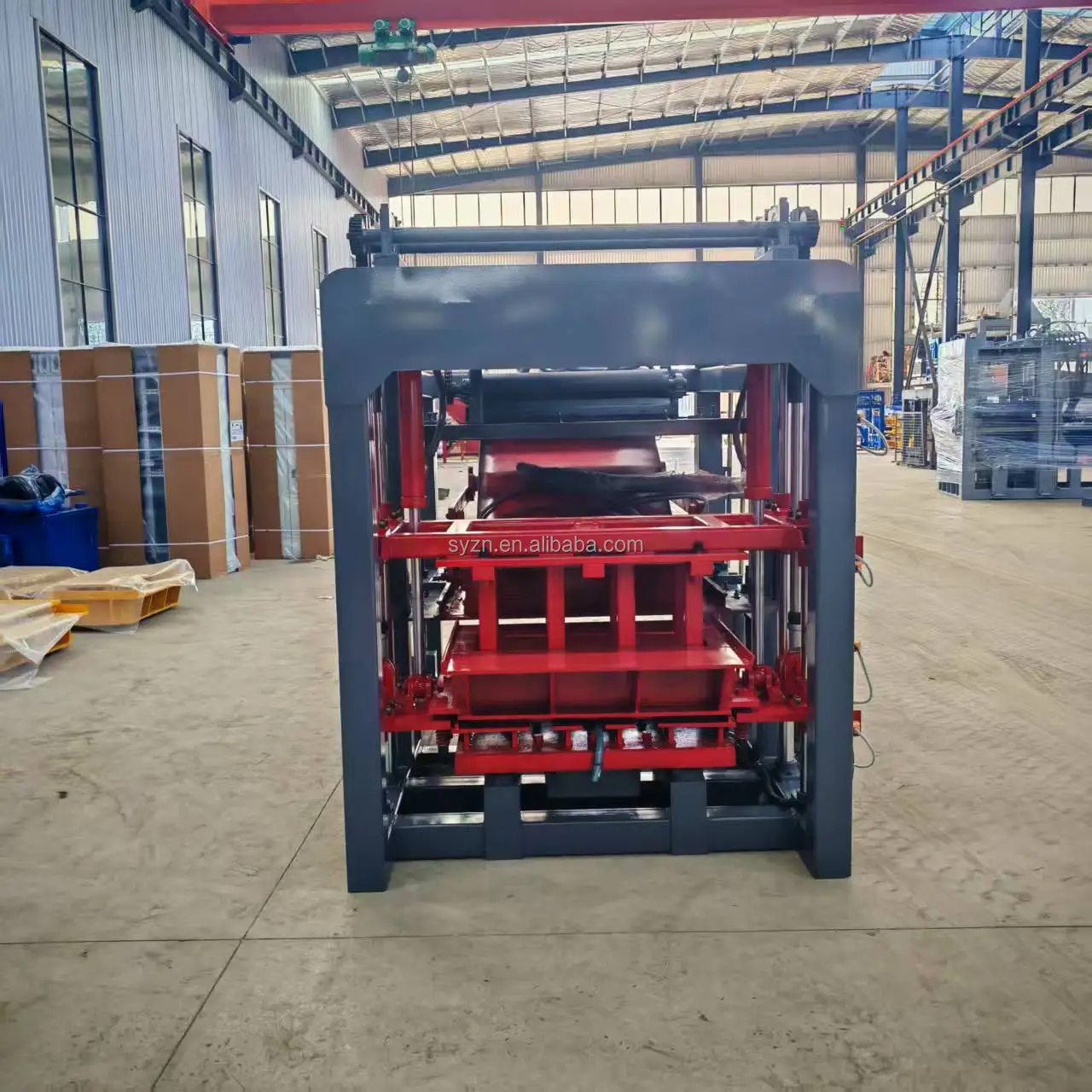
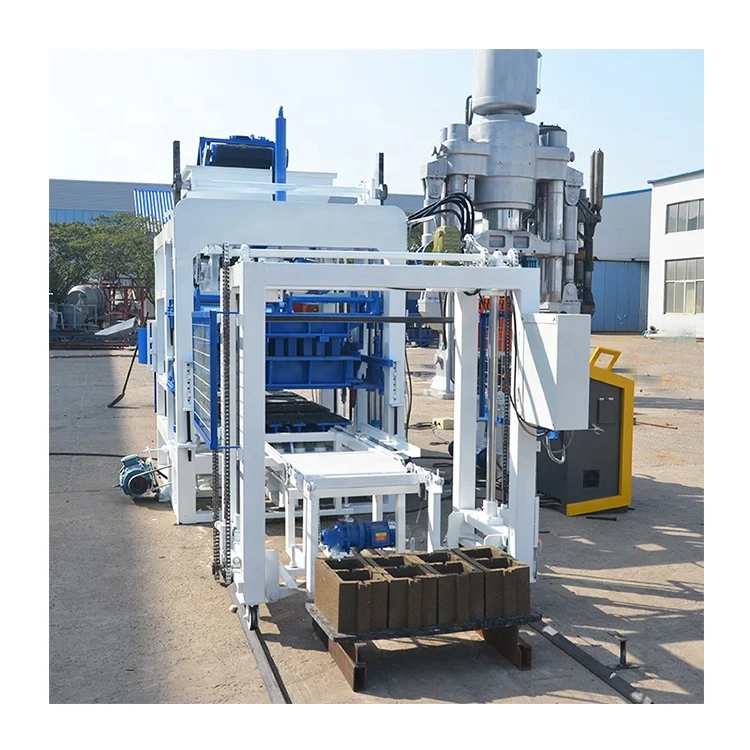
| Vibration Method | Bed mould vertical vibration + upper mould compression vibration |
| Hydraulic System | Equipped with hydraulic station |
| Mixer Model | JQ350 |
| Pallet Size | 850 × 550 × 25 mm |
| Automation Level | Semi-automatic |
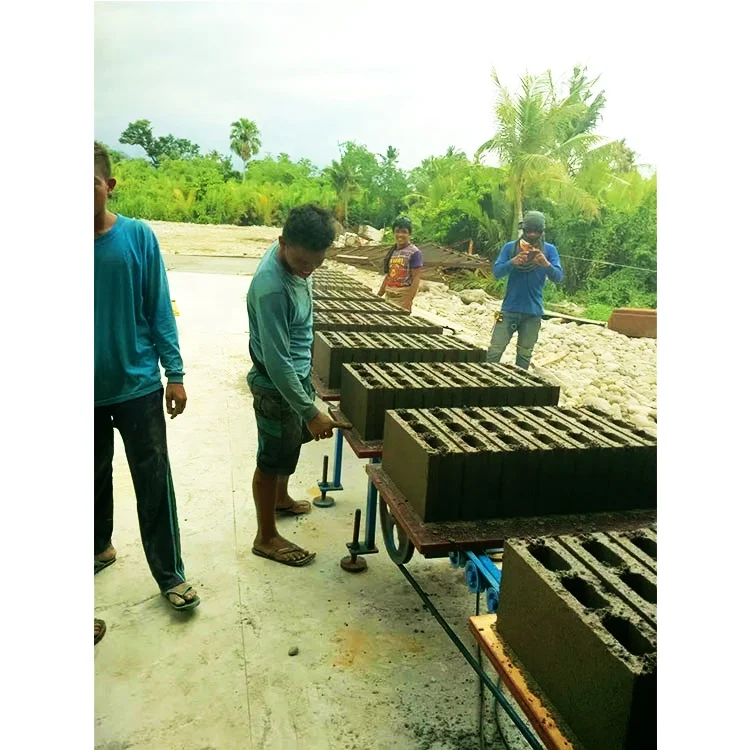
| Applied Products | Paver, solid brick, hollow block, curbstone |
| Raw Materials | Crushed stones, sand, cement, dust, fly ash |
| Output Capacity | 1200–1680 pcs/hr based on 400 × 200 × 200 mm hollow block, 4 pcs/mould |
| Output Capacity | 1800–2400 pcs/hr based on 400 × 150 × 200 mm hollow block |
| Output Capacity | 3240 pcs/hr based on 240 × 115 × 53 mm solid brick |
Application Suitability
| Application | Material or Output |
|---|---|
| Hollow block production for wall construction | Crushed stone, sand, cement, fly ash blends |
| Solid brick manufacturing for load-bearing structures | Dense aggregate and cement mixes |
| Paving block production for driveways and walkways | High-strength concrete with fine aggregate |
| Curbstone forming for road and kerb projects | Coarse aggregate and cement at low slump |
| On-site block manufacturing for housing projects | Locally sourced river sand and crushed stone |
Why "15-25 Seconds per Cycle" Is Not the Whole Story
Cycle time means nothing until you tie it to the block format and the mix that actually flows into the hopper.
I once stood next to a semi-automatic press in West Africa where the quoted cycle looked promising on paper. The local river sand carried a heavy clay fraction, and the aggregate top size was larger than what the mould cavity was designed to clear smoothly. Every cycle stretched toward the upper end of the range, and the daily tally ended well below the number in the brochure. The buyer had paid for a machine rated at a certain output and received a machine that could only deliver that output under conditions he could not reproduce. Honest capacity planning starts with the block you will sell and the raw material you can actually source, which is why discussing the QT4-18 block machine specifications only makes sense after we review your target format and local aggregate [NEED_CITE: effect of aggregate grading and clay content on concrete block cycle time].
Matching Vibration to the Block You Actually Sell
The QT4-18 uses a dual vibration approach combining bed mould vertical vibration with upper mould compression vibration. This arrangement matters most when you switch between formats on the same line. A 400 × 200 × 200 mm hollow block needs the vibration energy to travel through deeper cavity walls, while a thinner paver demands faster consolidation across a wider face. The 40–50 kN exciting force range covers both ends, but the real question is whether your specific mix transmits that energy evenly through the mould cavity.
What the Pallet Footprint Decides Before You Pour Concrete
At 850 × 550 × 25 mm, the pallet size locks in the maximum block footprint per cycle and also dictates what your curing yard and forklift must accommodate. I have seen plants order a machine, then realise their existing forklift tines were too short for the pallet depth, forcing an unplanned equipment purchase before the first block was cured. Confirming pallet dimensions against your curing rack spacing and handling equipment is a step that belongs in the quotation stage, not on commissioning day [NEED_CITE: pallet sizing guidelines for concrete block curing areas].
Reading the Specs That Actually Shape Your Daily Output
The 24 kW rated power figure tells you the electrical headroom the press and mixer together demand, which in turn decides whether your site supply needs a dedicated transformer tap. The JQ350 mixer sets the batch volume per charge; if your target format is the 400 × 150 × 200 mm hollow block at the upper end of the capacity range, the mixer must keep pace with the press or the cycle will stall waiting for the next batch. The hydraulic station provides the clamping and compression force that works alongside vibration to achieve block density. When hydraulic pressure and vibration force are balanced correctly for your mix, the blocks leave the press with consistent wall thickness and compressive strength. When they are not, you see edge spalling or density variation from the first block to the last in a run.
The Cost of Skipping the Mix Design Conversation
A machine configured for a clean, graded aggregate that you cannot source locally will force you into a material substitution that changes water demand, cycle behaviour, and final block strength. Buyers who skip the mix review often find themselves adjusting water content by feel on the shop floor, chasing a consistency the machine was never set up to deliver. That variability shows up in rejected batches and customer complaints about block breakage during transport [NEED_CITE: concrete block compressive strength variation due to uncontrolled mix proportions].
Why Buyers Source This Machine Here
Block machinery is the single focus of the workshop, so the QT4-18 is specified as a matched system — press, mould, pallet, and handling — rather than assembled from separate suppliers. The configuration is set against your actual mix design and target block format, not pulled from a catalogue default. Mould design covers the formats your market sells, with custom drawings available when local dimensions differ from standard sizes. The semi-automatic level lets you start with manageable investment and add automation later as volume grows. Installation support includes on-site commissioning and operator training so your crew understands cycle settings, mould change procedure, and daily maintenance from the first week.
Documentation & Verification
- Line layout showing QT4-18 capacity calculation stated per block format
- Mould drawing and format list confirming local market dimensions
- Pallet specification matched to 850 × 550 mm footprint and curing setup
- Hydraulic and electrical schematic for site preparation
- Factory test record verifying cycle time against your mix sample
- Voltage and control language confirmation before dispatch
Installation, Commissioning & Support
- Foundation plan sized to the 3900 × 1600 mm machine footprint and 3 T operating weight
- Dedicated power circuit rated for 24 kW total draw at confirmed voltage and frequency
- Machine shipped in dismantled state with reassembly guidance on site
- First-run commissioning with cycle time and vibration force tuned to your mix
- Operator training covering mould change, pallet handling, and daily inspection routines
- Wear parts and mould availability list provided at delivery for planning replacements
What We Need to Quote the Right Configuration
Share your target block format with exact dimensions, the daily output you need to hit, and a sample or description of the aggregate and sand available locally. Let us know your site voltage and frequency, the control panel language your operators prefer, and the pallet handling equipment already on your floor. With those details, we build the QT4-18 concrete block making machine capacity proposal around your actual production conditions.
Frequently Asked Questions
Q: How is QT4-18 capacity calculated for different block formats?
A: The capacity figures are tied to specific block sizes and mould cavity counts. For example, 1200–1680 pieces per hour applies to 400 × 200 × 200 mm hollow blocks at four per mould. When you switch to a different format, the cycle time and pieces per mould both change, so we recalculate the hourly and daily output for your chosen product before confirming the machine.
Q: What is the realistic mould change time on this machine?
A: Mould change involves releasing the old mould, aligning the new one, and adjusting vibration and compression settings for the new cavity depth. On a semi-automatic press of this class, the physical swap is straightforward, but the total downtime depends on crew familiarity and whether the new mould is pre-staged. We include the procedure in operator training so format switches do not consume an entire shift.
Q: How do I match vibration force to my local aggregate?
A: The 40–50 kN range covers typical crushed stone and sand blends, but the right setting depends on particle size distribution and cement content. Coarser aggregate generally needs stronger vibration to consolidate fully, while fine sand with higher clay content may require a longer cycle. We review your material sample and adjust the vibration parameters during commissioning.
Q: What pallet material works best with the 850 × 550 mm size?
A: Pallet material choice depends on your curing method and climate. Bamboo and PVC pallets suit ambient curing in warm regions, while steel pallets handle steam curing environments. The 25 mm thickness provides rigidity under the vibration load. We confirm the material against your curing setup and forklift specifications before including pallets in the shipment.
Q: Can the QT4-18 be upgraded to higher automation later?
A: The semi-automatic configuration handles pallet feeding and block removal manually, keeping initial investment lower. As your volume grows, automatic pallet feeding, stacking, and cubing stations can be added to the line. The machine’s hydraulic and control architecture supports this progression without replacing the core press.