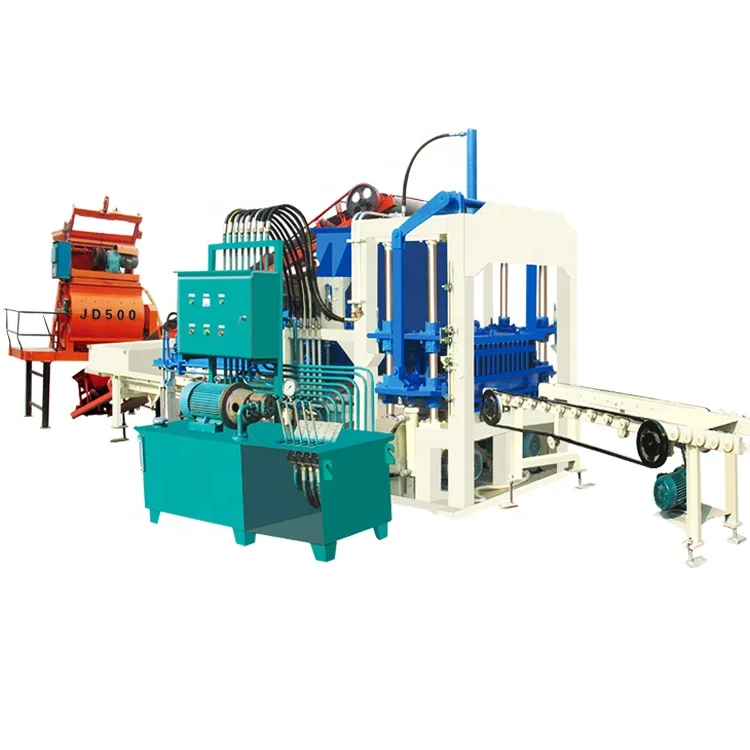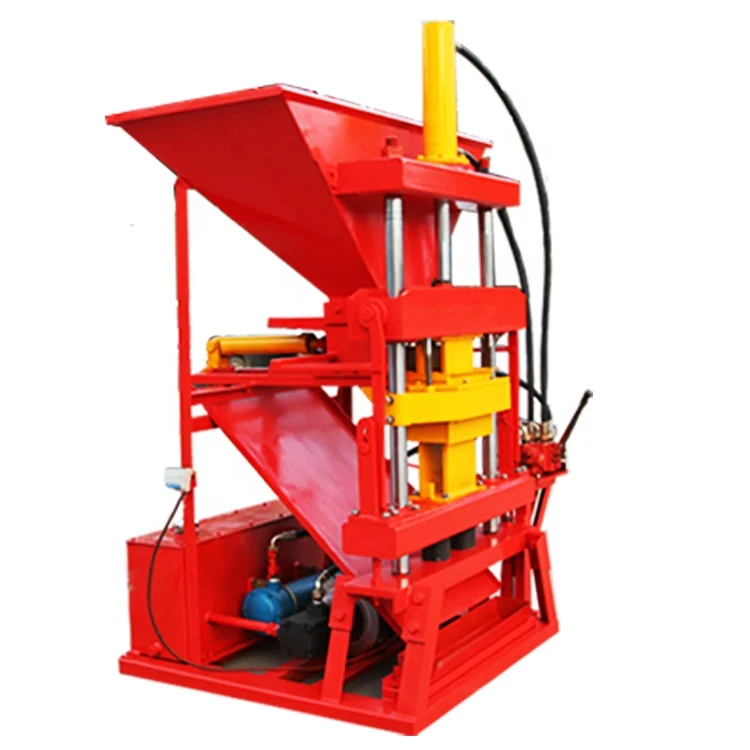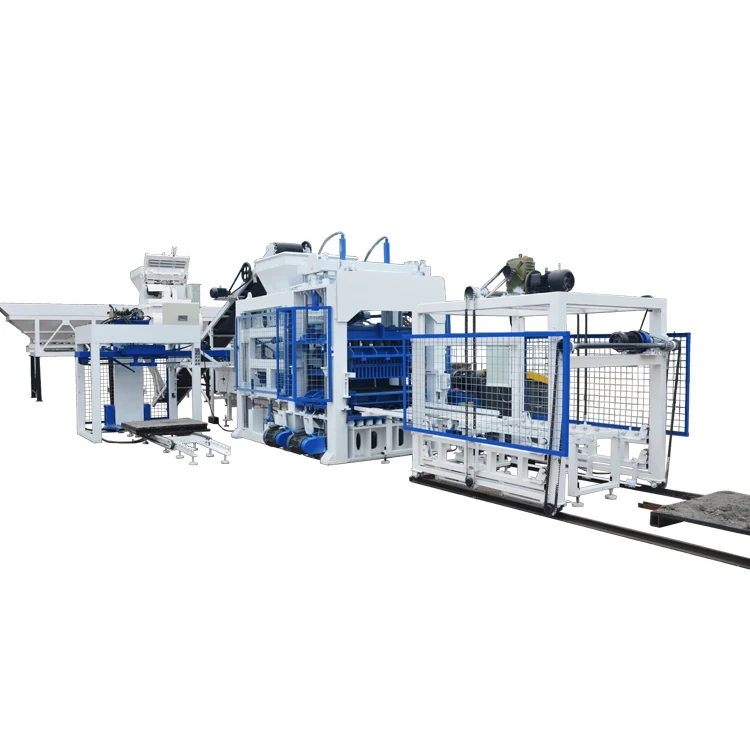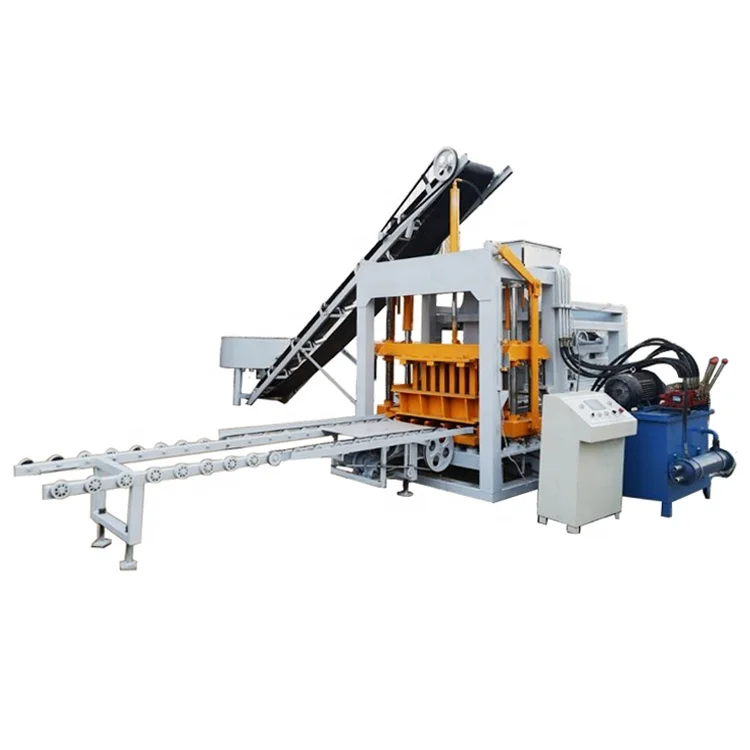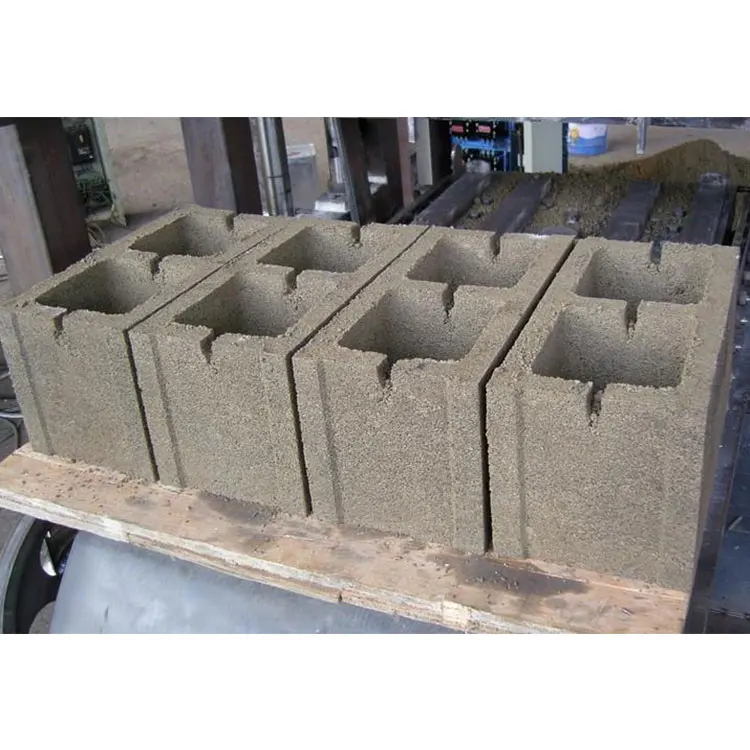
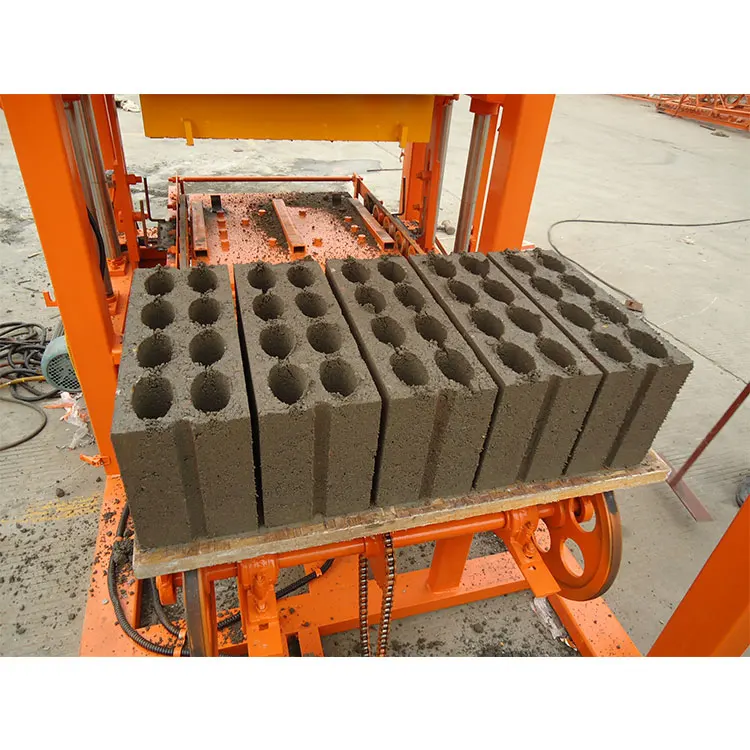
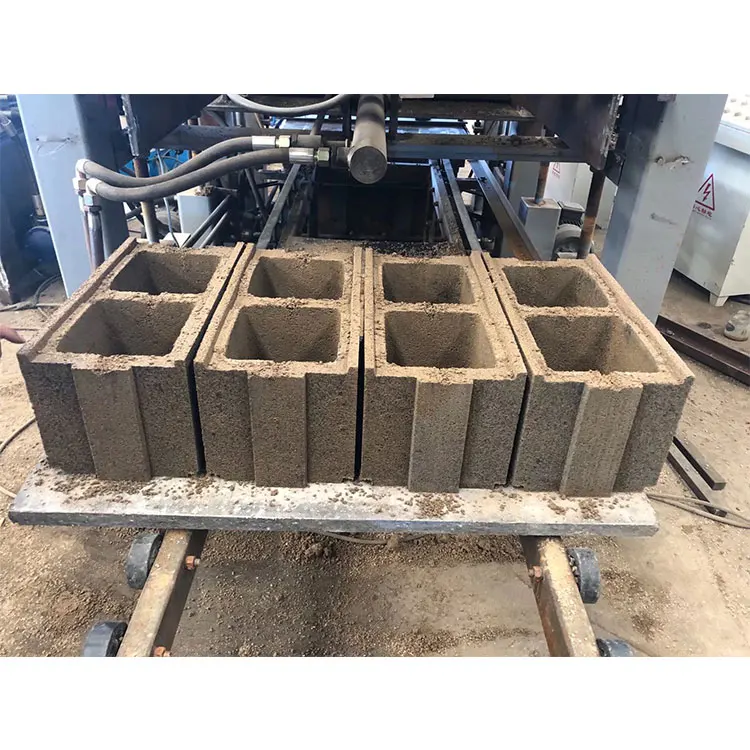
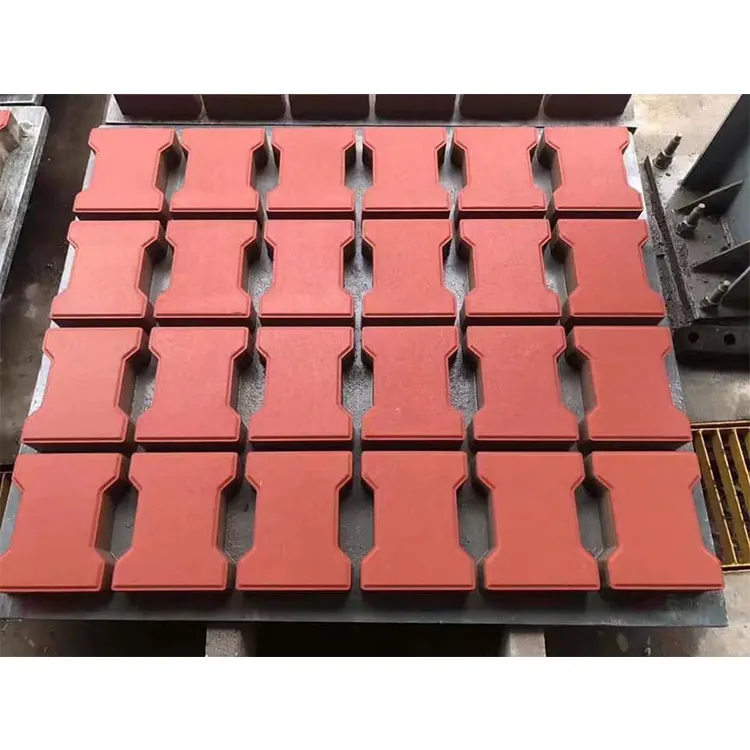
Description
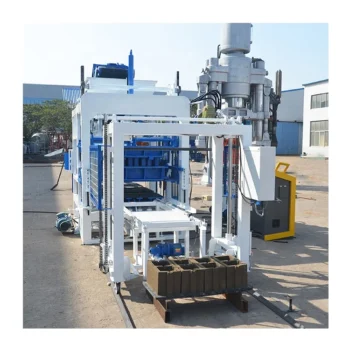
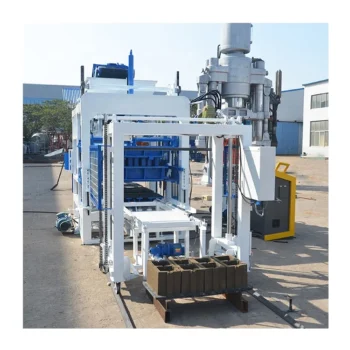
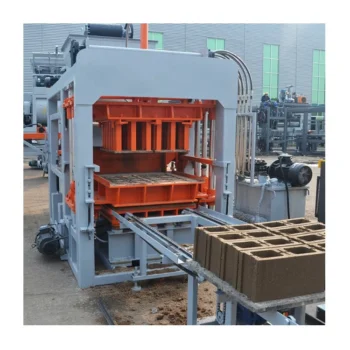
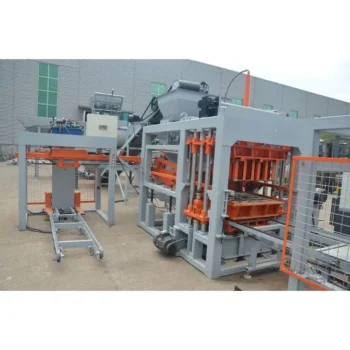
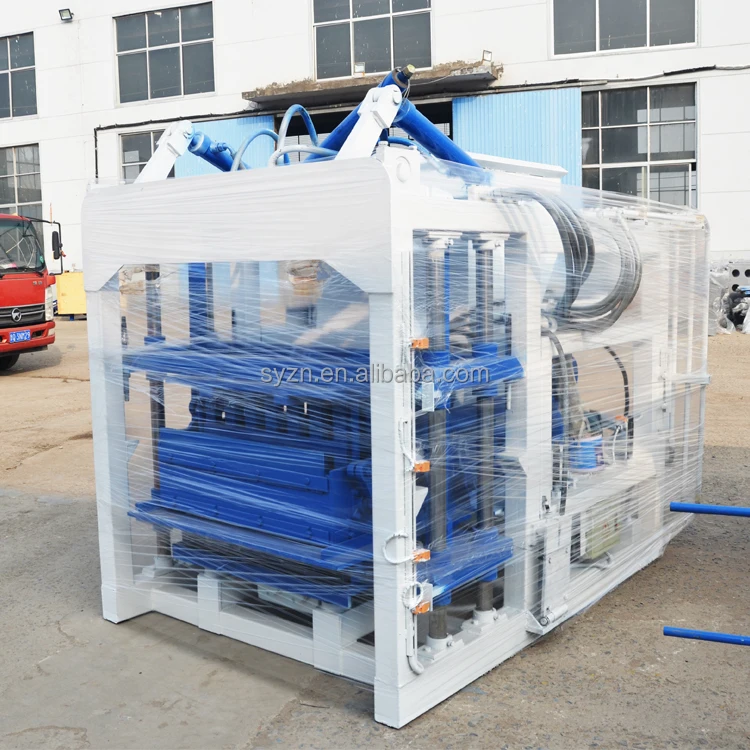
Configuration matched to your local aggregate and target block format — The QT4-15A automatic block machine is not a catalogue default; its vibration frequency, hydraulic pressure, and pallet dimensions are verified against your actual mix design before production begins.
Technical Specifications
| Parameter | Value |
|---|---|
| Model | QT4-15A |
| Product Type | Fully Automatic Hollow Block Making Machine |
| Overall Dimensions (L×W×H) | 7100 × 1700 × 2610 mm |
| Main Vibration Form | Platform vibration |
| Vibration Frequency | 4600 r/min |
| Exciting Force | 35.5 KN |
| Rated Hydraulic Pressure | 16 MPa |
| Pallet Size | 900 × 500 × 25 mm |
| Molding Cycle | 15–20 s (basis to be confirmed by block format and material) |
| Total Installed Power | 25.7 kW |
| Control System | Electro-mechanical integration, PLC-based |
| Automation Level | Fully automatic with stacker, pallet feeder, batching plant |
| Line Configuration | Main machine, mixer, belt conveyor, stacker, pallet feeder, batching plant, cement silo |
| Voltage | 380 V / 3-phase / 50 Hz (configurable to local supply) |
| Container Loading | Complete line loads in one 20-foot container |
| Warranty | 1 year excluding wearing parts |
Application Suitability
| Application | Material or Output |
|---|---|
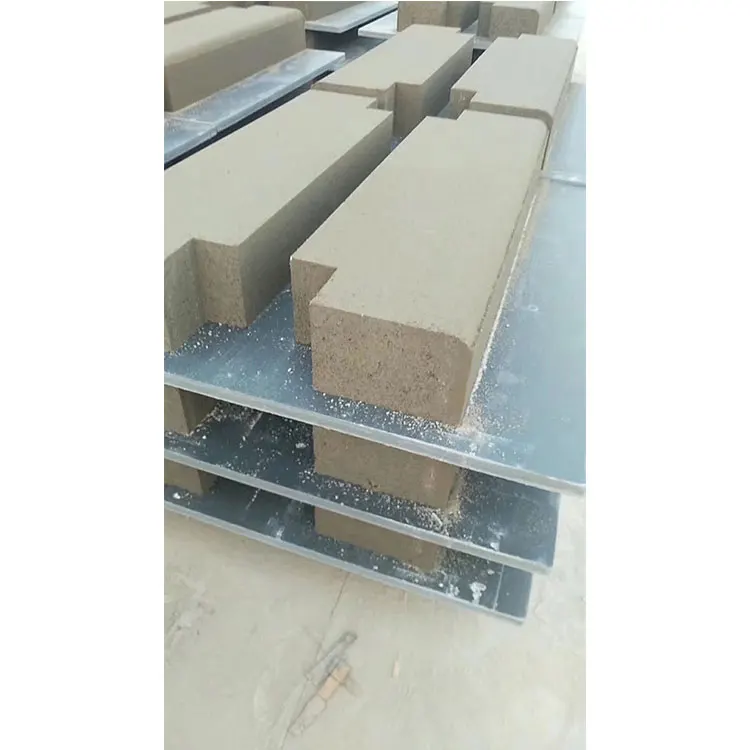
| Load-bearing hollow block production | Crushed stone, river sand, and Portland cement blends |
| Interlocking road paver manufacturing | Granite dust, basalt fines, and cementitious binder |
| Solid concrete brick for masonry walls | Quarry dust and locally graded sand with cement |
| Porous permeable paver for urban drainage | Coarse aggregate with minimal fine sand fraction |
| Kerbstone and heavy-duty pavement units | High-strength mix with angular aggregate and low water-cement ratio |
Why the Molding Cycle Number Alone Misleads Buyers About QT4-15A Automatic Block Machine Output
Cycle time is meaningless without the block format it assumes.
I once worked with a Middle East contractor who received a QT4-15A quotation stating a 15–20 second cycle. Their project schedule assumed that number applied to the 200 mm hollow blocks their site needed. In reality, a 200 mm hollow block takes longer to compact and cure on the pallet than a thin paving stone. The daily output they planned for was never going to materialize because the cycle figure was quoted without naming the format. [NEED_CITE: relationship between block height, vibration time, and demolding strength in hydraulic press operations]. This is not dishonesty — it is incomplete specification — and it happens constantly in block machinery procurement.
Matching Vibration Force to Your Aggregate Profile
The QT4-15A automatic block machine delivers 35.5 KN of exciting force through a platform vibration system running at 4600 r/min. These numbers matter because different aggregates respond to vibration differently. Angular crushed stone interlocks quickly under high-frequency vibration, while rounded river sand requires sustained shaking to achieve the same compaction density. If the vibration parameters are not tuned to your specific material, you get blocks that are either under-compacted on the top face or over-vibrated to the point of segregation. Our approach is to request your aggregate sample data before finalizing the vibration settings.
Pallet Dimensions as a System Constraint, Not a Catalogue Choice
The 900 × 500 mm pallet on the QT4-15A determines how many blocks fit per cycle, but it also dictates your curing yard layout, forklift tine spacing, and stacking rack geometry. [NEED_CITE: pallet handling logistics in concrete block curing operations]. We have seen buyers receive machines with pallets that their existing forklifts could not lift, forcing an unplanned equipment purchase before the first block could leave the press. Before we confirm the pallet specification, we ask about your curing area dimensions and the handling equipment already on site.
Reading the Spec Sheet for What It Actually Controls Production Quality
The 16 MPa rated hydraulic pressure works together with the 35.5 KN vibration to compress the concrete mix into the mould cavity. Higher pressure alone does not guarantee a stronger block — it must be balanced with adequate vibration to distribute the material evenly across the 900 × 500 mm pallet area. The 25.7 kW total power budget covers the vibration motors, hydraulic pump, conveyor drive, and batching system simultaneously. When a buyer compares two machines by looking only at pressure or only at power, they miss how those systems interact during the actual 15–20 second press cycle. The electro-mechanical PLC control coordinates these stages, and its display language must be confirmed before the machine leaves the factory.
The Hidden Cost of Skipping Mix Design Verification
When a block machine arrives configured for a standard quartz sand mix and the buyer’s local quarry only produces high-clay river sand, the vibration time must increase and the water content must adjust. Without prior mix design work, the operator discovers this on commissioning day — the blocks stick to the mould, the cycle stretches beyond the quoted range, and daily output drops. [NEED_CITE: effect of clay content in aggregate on concrete block demolding and cycle time]. The machine is not defective; it was simply not matched to the material it would actually process.
Why Buyers Specify the QT4-15A Through This Channel
Block machinery is our single focus, so the QT4-15A machine, its moulds, pallets, and handling equipment are specified as one integrated system rather than sourced from separate suppliers. The configuration is set against your actual mix design and target block format, not a catalogue default. Mould design covers the formats your market actually sells, and custom mould drawings are available. The automation level is selectable — a buyer can start with the semi-automatic stations and add the stacker and cubing system later. Installation support includes on-site commissioning with operator training so the team understands the PLC parameters from day one.
Documentation & Verification
- Line layout drawing with capacity calculation stating the exact block format used for the cycle time
- Mould drawing pack confirming dimensions match your market’s standard hollow block and paver sizes
- Hydraulic and electrical schematic matching the 25.7 kW total power configuration
- Voltage and PLC display language confirmation record signed before production starts
- Factory test record showing actual cycle time run on a material profile similar to yours
- Pallet specification sheet with 900 × 500 × 25 mm dimensions and material grade
Installation, Commissioning & Support
- Foundation plan reflecting the 7100 × 1700 mm machine footprint and dynamic vibration loads
- Dedicated 380 V three-phase circuit sized for 25.7 kW continuous draw with local voltage adaptation
- Complete line dismantled and loaded into a single 20-foot container for straightforward site reassembly
- Commissioning includes cycle time verification against your specific block format and mix design
- Operator training covers PLC parameter adjustment for different mould changes and material variations
- Wear parts list with hydraulic seals and mould liner reorder schedule provided at handover
What We Need to Size the QT4-15A Correctly for Your Project
To prepare a configuration that reflects your actual production conditions, we need the target block format and dimensions your market requires, the aggregate type available from your local quarry, and your site’s voltage and frequency standard. If you already have forklifts and curing racks, share those specifications so the pallet size integrates with your existing handling setup.
Frequently Asked Questions
Q: How is the daily output calculated for different block formats on the QT4-15A?
A: The 15–20 second molding cycle range applies differently depending on block height, material density, and required compaction. A thin interlocking paver may achieve the shorter end of that range, while a 200 mm hollow block requires the longer end. We calculate daily output per specific format, stating the assumption clearly in the capacity sheet so your production plan matches reality.
Q: Can the 16 MPa hydraulic pressure be adjusted for different local aggregate strengths?
A: The hydraulic system on the QT4-15A allows pressure adjustment within its rated range. Softer aggregates like lightweight expanded clay need less pressure to avoid crushing, while hard basalt requires the full 16 MPa to achieve adequate interlock. The correct setting depends on your material test results, which we review before finalizing the machine configuration.
Q: What is the mould change procedure and does it require special tools?
A: The QT4-15A uses exchangeable moulds designed for format changes between hollow blocks, solid bricks, and pavers. The changeover involves releasing the mould clamps, lifting the current mould, and seating the replacement. We specify the tools and time estimate for your particular mould set, and operator training covers the procedure so the shift does not lose an entire production run to a format switch.
Q: How does the 900 × 500 mm pallet size affect blocks per cycle for standard pavers?
A: The pallet area determines how many cavities fit in a single press stroke. For a standard 200 × 100 mm interlocking paver, the 900 × 500 mm pallet accommodates a specific cavity count that defines your per-cycle yield. We confirm the cavity layout in the mould drawing before production so the blocks-per-cycle figure aligns with your daily target.
Q: Is the voltage and control panel language customized before the machine ships?
A: The QT4-15A ships with the voltage, frequency, and PLC display language confirmed for the destination country before production begins. This avoids the common problem where a machine arrives and the operator cannot read the control screen, or the local electrician must rewire the cabinet before first startup. We document the confirmed electrical specification in writing prior to factory testing.