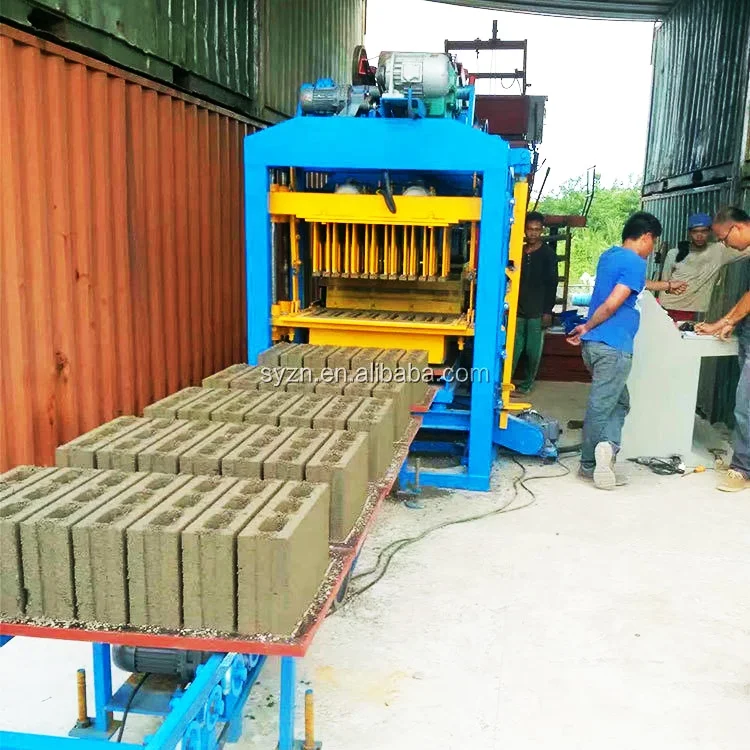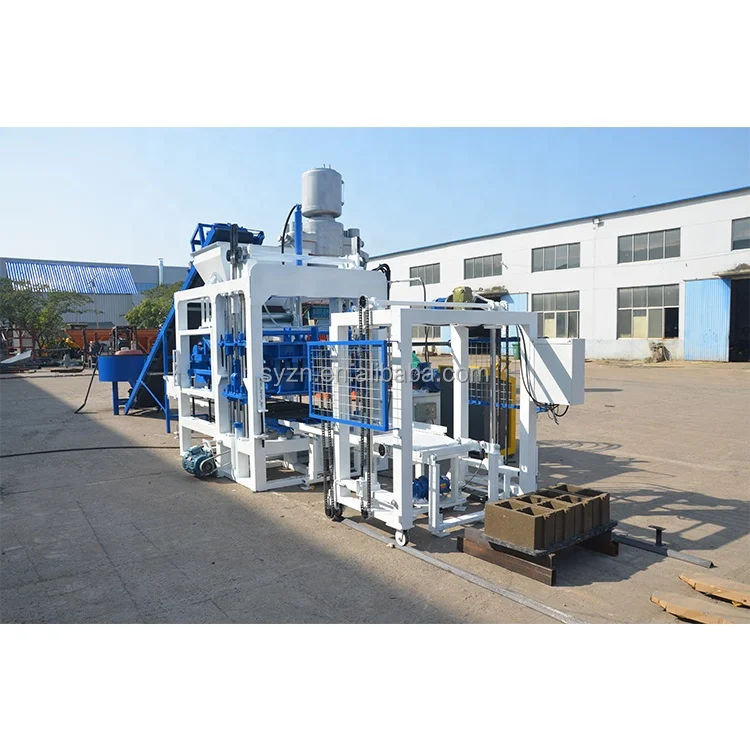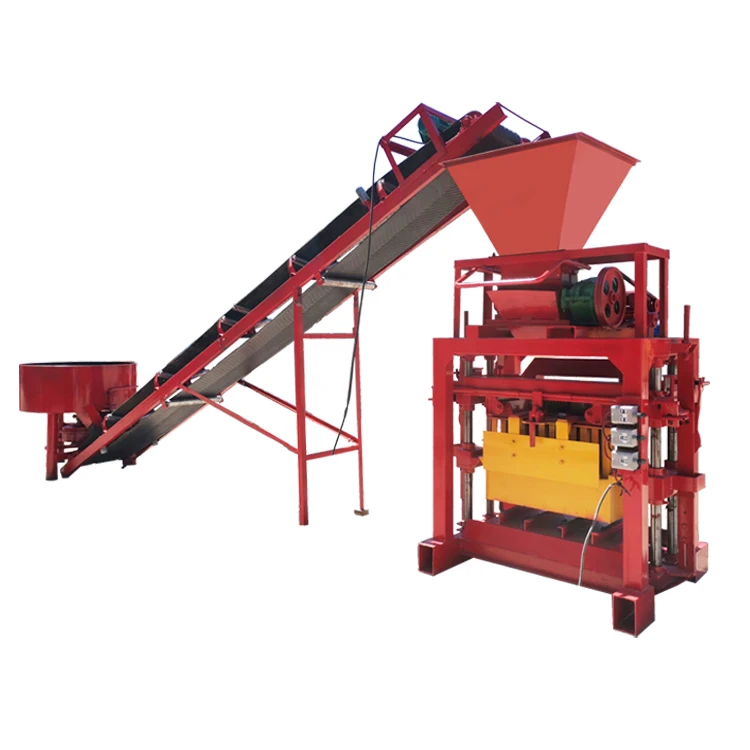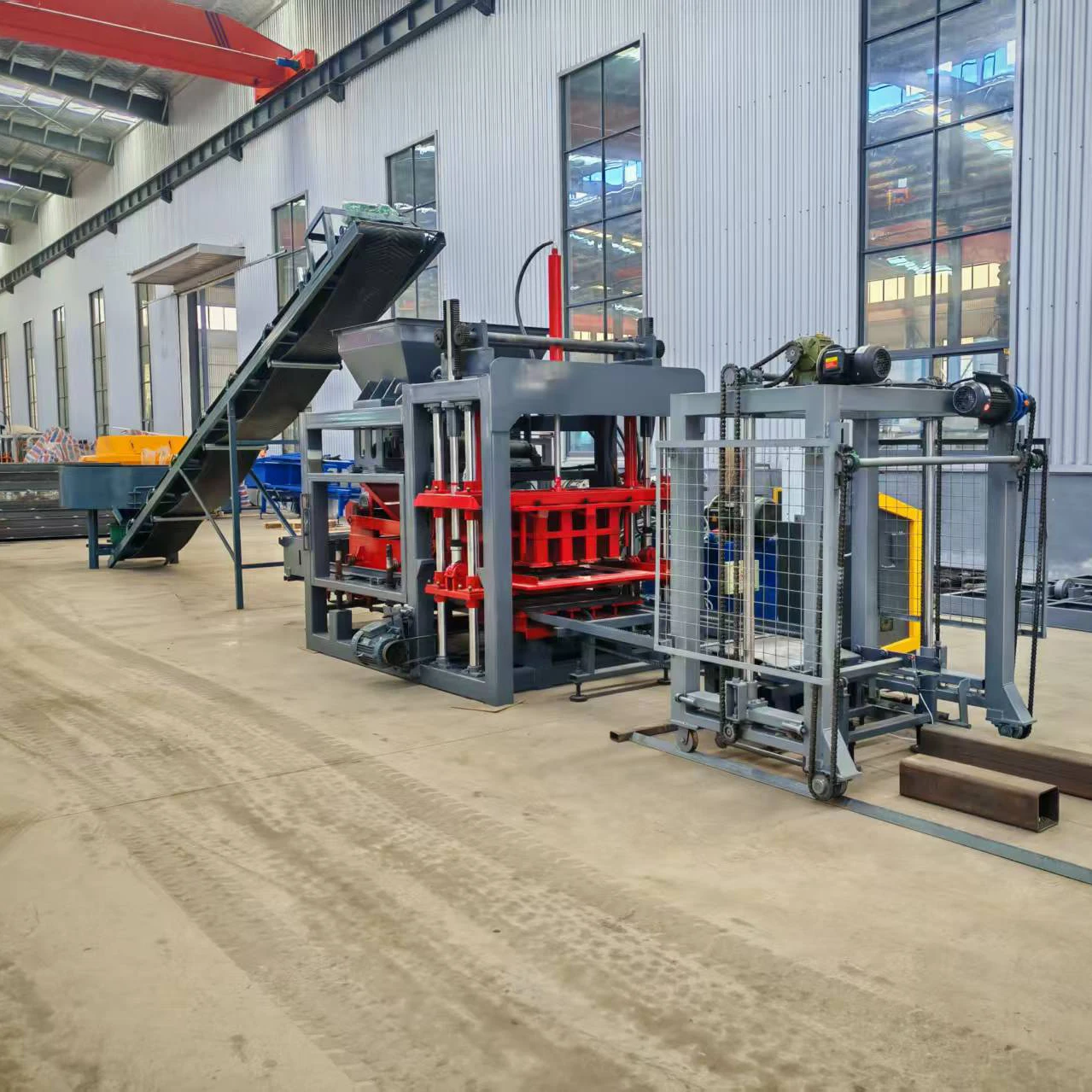
Description
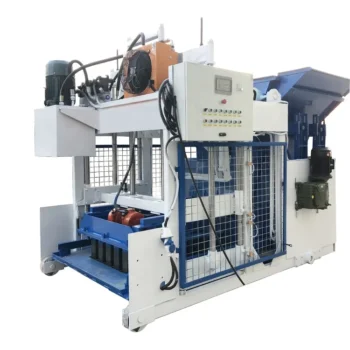
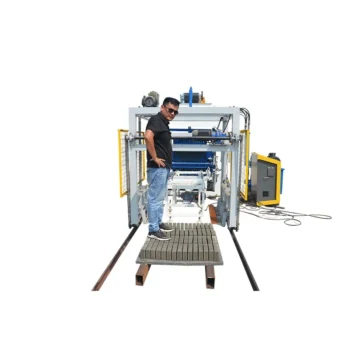
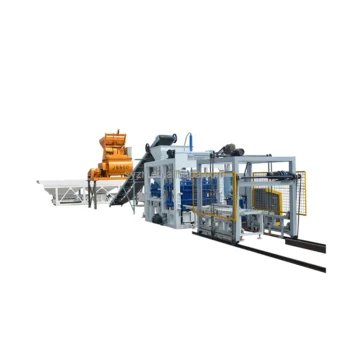
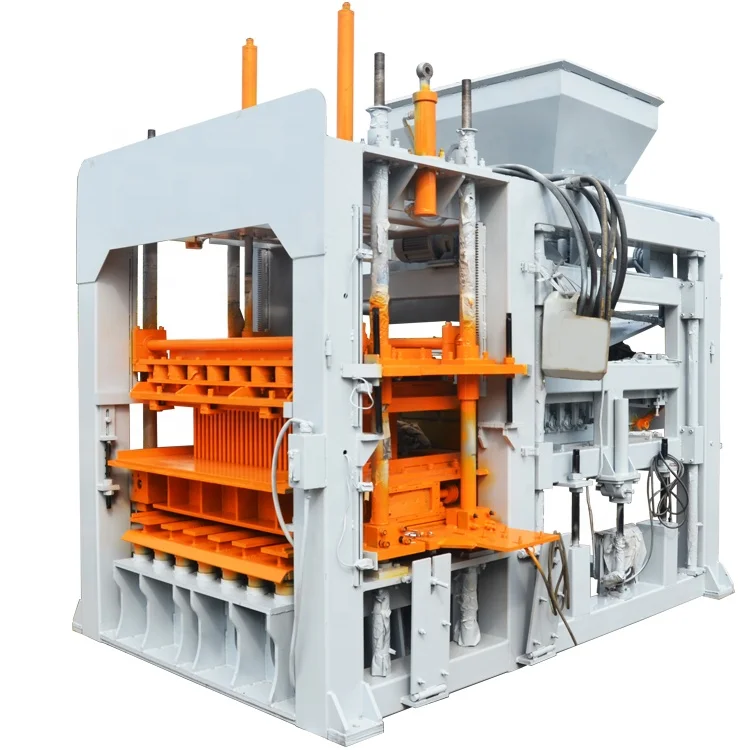
Configuration matched to your block format and local aggregate — rather than quoting a single cycles-per-hour figure, the QT4-15A is specified against the actual hollow block, paver or interlocking brick your market sells, with vibration force and hydraulic pressure tuned to your mix design.
Technical Specifications
| Parameter | Value |
|---|---|
| Model | QT4-15A |
| Product Type | Fully Automatic Concrete Block Making Machine |
| Overall Dimensions (L×W×H) | 4100 × 1600 × 2600 mm |
| Rated Pressure | 16–21 MPa |
| Main Vibration Form | Platform Vibration |
| Vibration Frequency | 4200 r/min |
| Vibration Force | 55 kN |
| Pallet Size | 880 × 550 mm |
| Molding Cycle | 25–30 s (basis to be confirmed by block format, material and thickness) |
| Overall Power | 18.45 kW |
| Total Mass | 4 T |
| Demolding Method | Hydraulic |
| Recommended Factory Area | 300 m² |
| Automation Level | Fully automatic |
| Warranty | 1 year (whole machine, excluding spare parts) |
Application Suitability
| Application | Material or Output |
|---|---|
| Hollow block production for wall construction | Crushed stone, sand, cement, fly ash |
| Solid block manufacturing for load-bearing structures | Gravel, sand, cement, slag |
| Paving block and colored paver production | Fine aggregate, cement, pigment |
| Interlocking brick and curbstone forming | Crushed stone, dust, cement mix |
| On-site block production for housing projects | Locally sourced aggregate and cement |
What "25–30 Second Cycle Time" Actually Means for Your Output
A cycle time without a block format attached is not a capacity figure — it is a starting point for a conversation.
I have watched buyers sign off on a concrete block making machine specifications sheet showing a 25-second cycle, then arrive at commissioning expecting the same throughput for 200 mm hollow blocks as for 60 mm pavers. The molding cycle on the QT4-15A varies with block height, cavity count, mix workability and the vibration duration your aggregate demands. A lightweight volcanic scoria mix will need a different vibration profile than river gravel, and the cycle stretches accordingly. Without pinning the format first, daily output projections remain guesswork [NEED_CITE: block format impact on realistic cycle time in hydraulic vibration presses].
Matching Vibration Force to Your Aggregate and Block Density
The 55 kN platform vibration must be evaluated against the specific aggregate you source locally. Dense river gravel transmits vibration energy differently from porous crushed stone or fly ash blends. If the force is too low for a stiff mix, block corners break during demolding; if too high for a fine sand mix, the surface tears. We set the vibration amplitude and duration to your confirmed mix design before the machine leaves the factory, not after it arrives on your floor.
Pallet Size and What It Decides Beyond the Press
An 880 × 550 mm pallet determines more than how many blocks fit per cycle. It governs your curing rack dimensions, forklift tine spacing, and the footprint of your wet-side handling area. Buyers who select pallet size from a catalogue default often discover that their existing racks need replacing or their forklift cannot lift a loaded pallet without modification. We cross-check the pallet specification against your site layout before confirming the concrete block making machine specifications for your order.
Reading the Numbers That Actually Matter
The rated pressure of 16–21 MPa works in combination with vibration to achieve target block density. Higher pressure compresses the mix, but without sufficient vibration the material will not flow into mould corners — the result is blocks with strong cores but fragile edges. The 4200 r/min vibration frequency suits medium-fine aggregate; coarser gravel may need frequency adjustment at the variable-frequency drive. Hydraulic demolding ensures the block lifts cleanly from the mould cavity without mechanical shock that causes micro-cracking. These three parameters — pressure, vibration force, and demolding method — must be balanced as a set for each block format [NEED_CITE: relationship between hydraulic pressure and vibration in concrete block density].
The Cost of Skipping Format Confirmation Before Order
When vibration force and mould cavity count are selected without reference to the buyer’s actual product mix, the consequences show up within the first production week. Blocks crack during curing because the compaction density was wrong for the aggregate. Pallet handling bottlenecks appear because the curing yard was never measured against the pallet footprint. Mould changeovers take longer than expected because the quick-release system was never specified for the format count the buyer actually needs [NEED_CITE: common causes of output shortfall in new block plants].
Why Buyers Specify Through This Page
Block machinery is our single focus, so the QT4-15A press, mould, pallet and handling equipment are configured as one matched system rather than assembled from separate catalogues. Each configuration is set against the buyer’s confirmed mix design and target block format, not a generic default. Mould design covers the formats your local market actually buys, with custom drawings available for non-standard shapes. Automation level is selectable so you can start at the output tier that fits your current volume. Documentation includes a line layout with capacity calculated per block format, not a single unqualified throughput number.
Documentation & Verification
- Line layout drawing with capacity stated per confirmed block format and mix design
- Mould drawing pack showing cavity count, dimensions and cycle time for each format
- Pallet specification sheet matched to your curing rack spacing and forklift capacity
- Voltage, frequency and control language confirmation signed before production begins
- Factory test record run on your aggregate sample before dispatch approval
Installation, Commissioning & Support
- Foundation plan sized for 4100 × 1600 mm footprint and 4 T operating mass
- Dedicated power circuit confirmed for 18.45 kW total draw at your local voltage
- Machine shipped in dismantled sections with reassembly guide for site crew
- Vibration parameters tuned to your confirmed aggregate during on-site commissioning
- Operator training covering mould change procedure and daily maintenance checkpoints
- Wear parts list with hydraulic seal and vibration spring replacement intervals
What We Need Before Quoting Your Configuration
Send us the block format your market sells most — dimensions, cavity count and target compressive strength. Include a sample or description of your local aggregate and the cement type you use. Tell us your existing curing area dimensions and the forklift model on site so we can confirm the 880 × 550 mm pallet fits your handling chain. Finally, confirm your plant voltage, frequency and the language you need on the control display.
Frequently Asked Questions
Q: How is daily output calculated for the QT4-15A, and which format is assumed?
A: Daily output is calculated per block format, not as a single number. The 25–30 second molding cycle changes with block height, cavity count and mix type. We provide a capacity sheet that states output for each confirmed format — for example, hollow blocks versus pavers — so you can plan production against actual market demand.
Q: What pallet size does the QT4-15A use, and how does it affect my curing area?
A: The standard pallet is 880 × 550 mm. Before confirming your order, we check this against your curing rack dimensions and forklift tine spacing. A mismatch here means replacing racks or modifying handling equipment after the machine arrives, which delays production start.
Q: Can I change moulds quickly on the QT4-15A between different block formats?
A: The QT4-15A supports mould changes between formats, but realistic changeover time depends on the mould mounting system selected. We specify the changeover method based on how many formats you will run and how often you switch, so the flexibility you pay for actually works on your production schedule.
Q: What voltage and control language options are available for export?
A: Voltage and frequency must match your plant supply exactly — this is confirmed before production starts, not at shipping. The control display language is also agreed at order stage. Getting either wrong delays commissioning by weeks while replacement components are sourced.
Q: Which block formats and moulds can I run on this machine?
A: The QT4-15A produces hollow blocks, solid blocks, pavers, interlocking bricks, curbstones and colored pavers. Moulds are designed for the specific formats your market sells, and custom moulds can be engineered from your drawings if standard sizes do not match local construction standards.