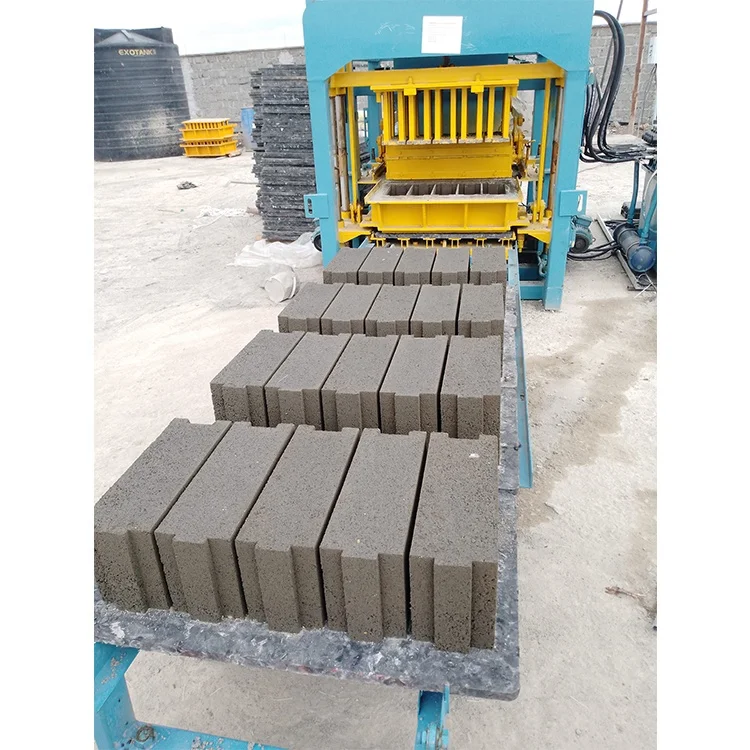
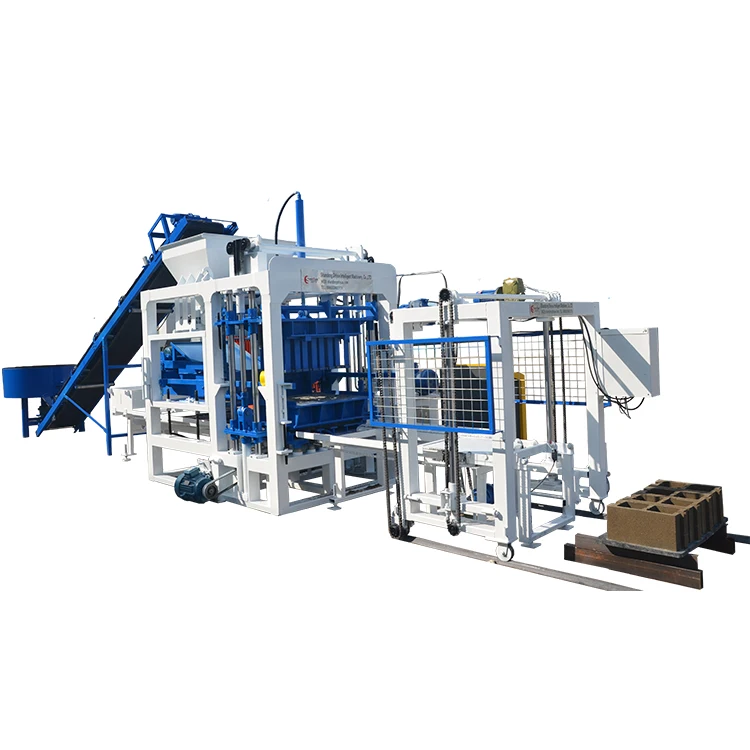
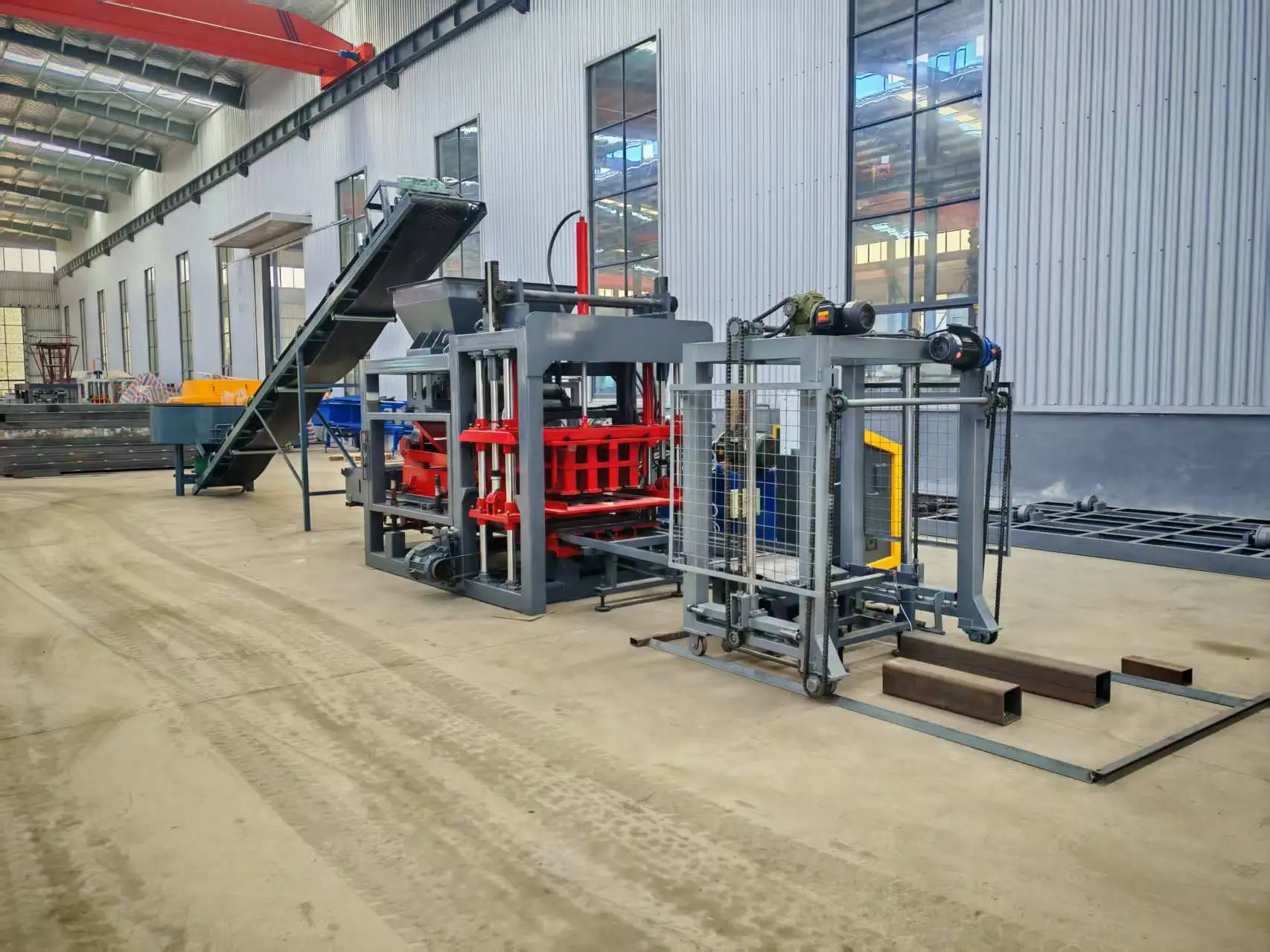
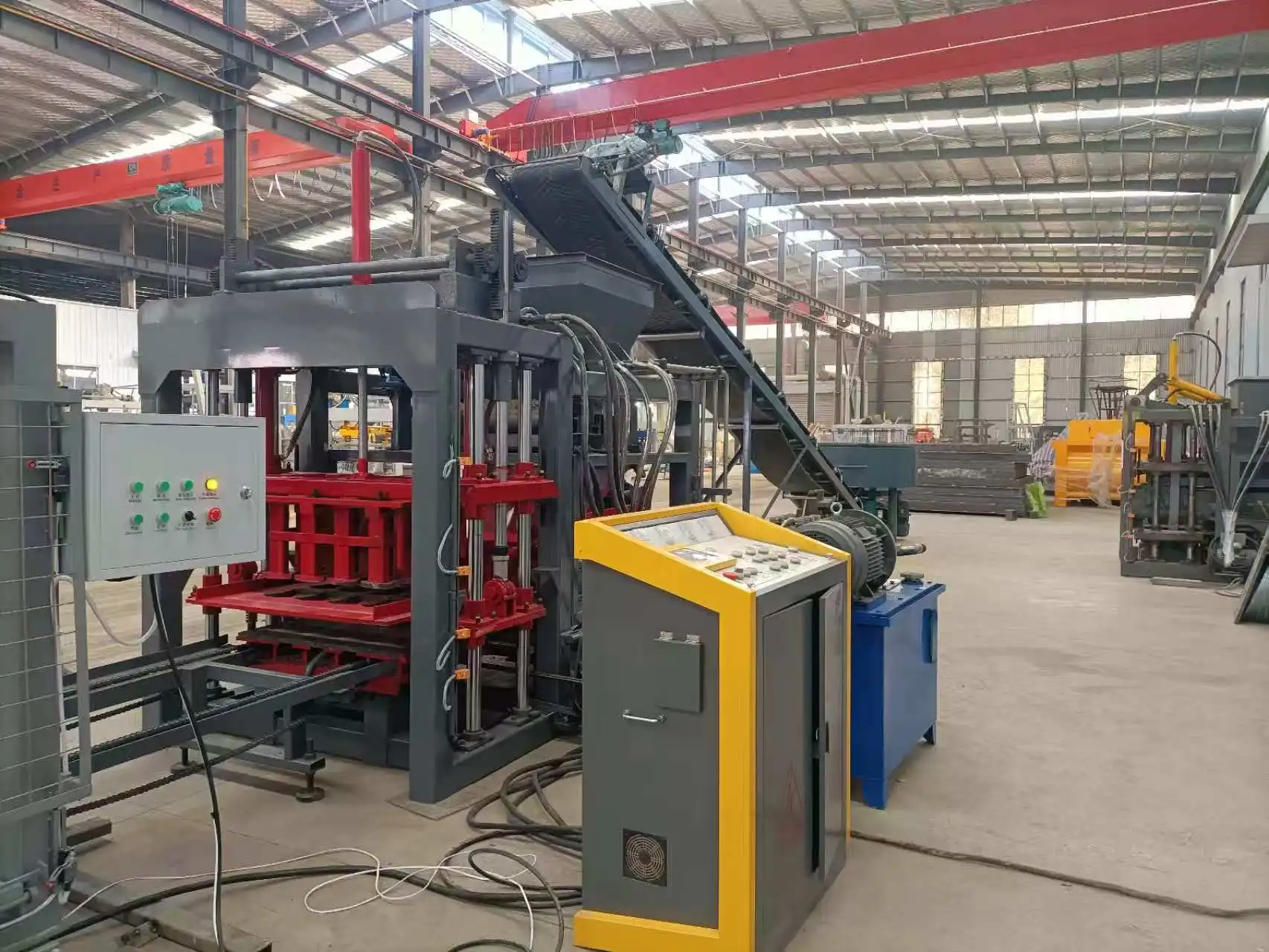
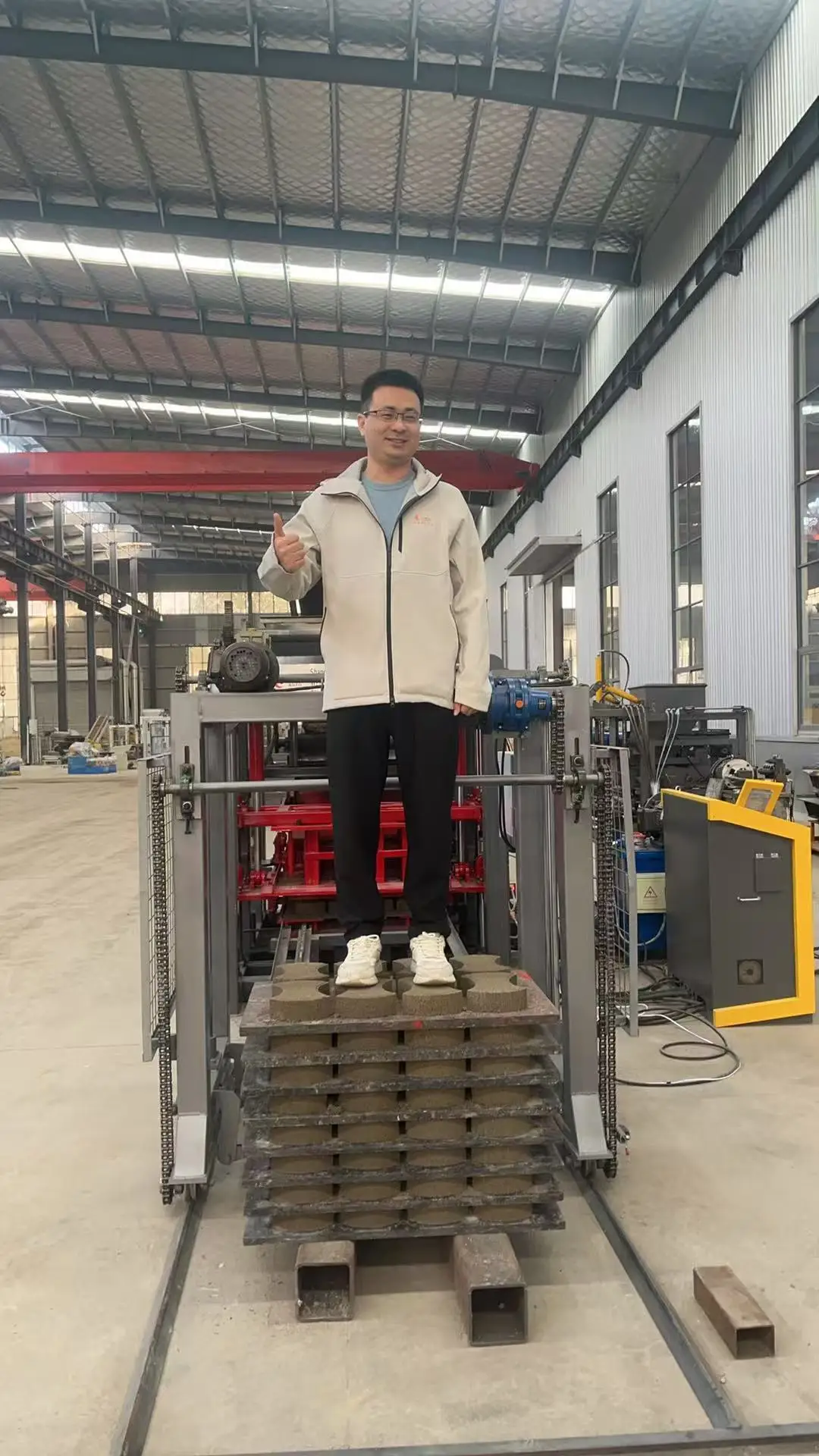

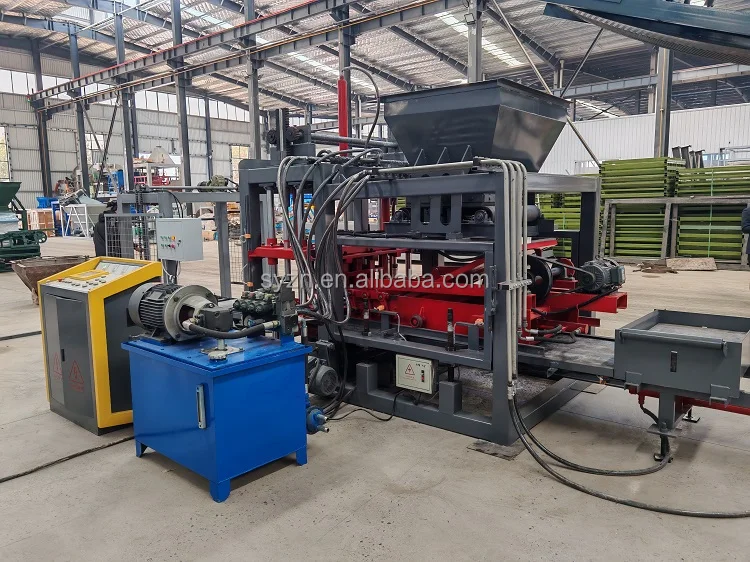
Description
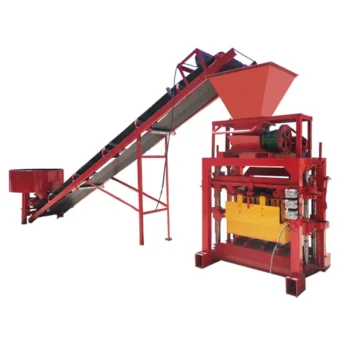
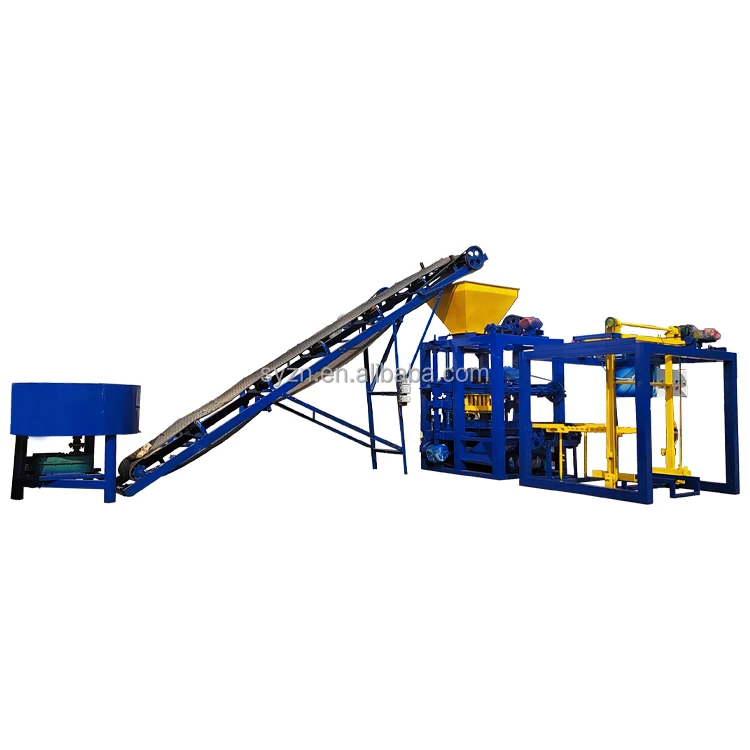
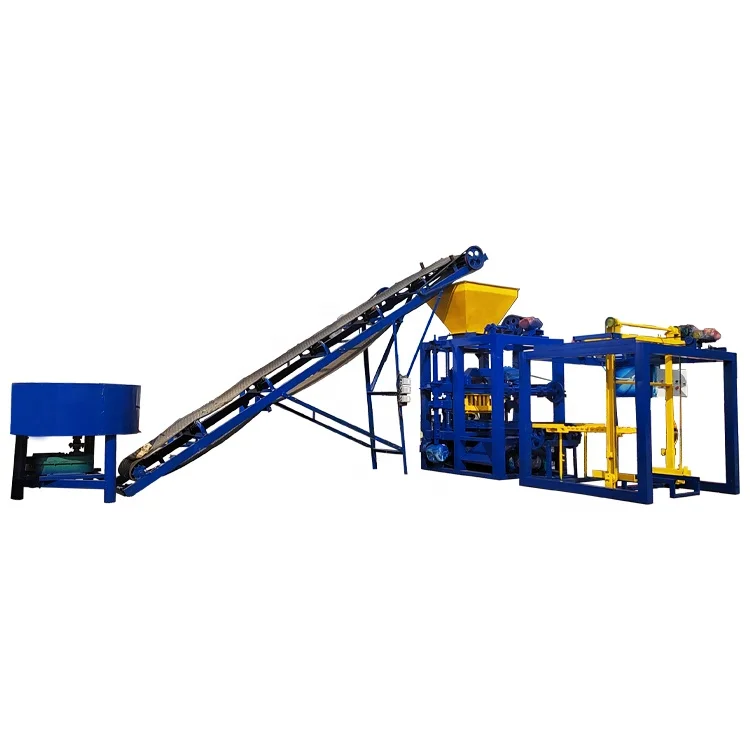
Configuration set against the buyer’s actual mix design, local aggregate and target block format — the QT4-15 automatic concrete block making machine is specified around your production reality, not a catalogue default, so vibration force, hydraulic pressure and pallet dimensions are confirmed before build.
Technical Specifications
| Parameter | Value |
|---|---|
| Product Type | Automatic Concrete Block Making Machine |
| Model | QT4-15 |
| Overall Dimensions (L×W×H) | 4100×1600×2600 mm |
| Rated Pressure | 16–21 MPa |
| Vibration Force | 55 kN |
| Vibration Frequency | 4200 r/min |
| Main Vibration Form | Platform Vibration |
| Pallet Size | 880×550 mm |
| Molding Cycle | 25–30 s (basis not stated in source — confirm block format / material / thickness) |
| Overall Power | 18.45 kW |
| Total Mass | 4 T |
| Demolding Method | Hydraulic |
| Factory Area Required | 300 m² |
| Applied Products | Concrete blocks, hollow/solid blocks, pavers, interlocking blocks, curbstone, colored pavers |
| Raw Material | Crushed stone, sand, cement, dust, fly ash, gravel, slag |
| Automation Level | Fully automatic (extent of pallet handling / stacking to be confirmed) |
| Mould Format | Multiple formats supported; custom mould to buyer drawings |
| Warranty | 1 year |
Application Suitability
| Application | Material or Output |
|---|---|
| Hollow block production for wall construction | Crushed stone, sand, cement, fly ash blends |
| Solid block manufacturing for load-bearing structures | Gravel, cement, stone dust mixes |
| Paving block and colored paver runs | Fine aggregate with cement and pigment additives |
| Interlocking brick production for landscaping | Sand, cement, slag combinations |
| Kerbstone forming for road and curb projects | Coarse aggregate with high cement content |
| On-site block production for housing projects | Locally sourced sand, gravel and cement |
What "25–30 Second Cycle Time" Actually Means for Your Output
The molding cycle figure on any automatic concrete block making machine specifications sheet is meaningless without the block format it assumes.
I have watched buyers in West Africa and South Asia sign off on a QT4-15 based on a cycle time that was measured on a small solid paver, only to find their actual hollow block format pushes the cycle well beyond the quoted range. The vibration duration, hydraulic press stroke and demolding sequence all stretch when the cavity volume increases. Without a format-specific cycle confirmation, daily output projections fall apart before the first shift ends. [NEED_CITE: block format impact on cycle time and daily output]
Matching Vibration Force to Your Local Aggregate
Platform vibration at 55 kN and 4200 r/min delivers compaction energy through the pallet into the mould cavity. That energy must overcome the internal friction of your specific mix — volcanic ash in East Africa behaves differently from river sand in South Asia, and the vibration parameters must be set accordingly. When the force is too low for a sticky aggregate, blocks leave the mould with weak edges and inconsistent density. When it is too high for a dry mix, the material segregates before full compaction. The QT4-15 vibration system is configurable, but the correct setting depends entirely on your raw material profile.
Pallet Size and the Curing Area Question
The 880×550 mm pallet on the QT4-15 determines how many blocks are produced per cycle and how they move through curing. Before confirming this pallet dimension, your existing curing rack spacing and forklift tine width must be checked. I have seen plants where the pallet size was selected without this cross-reference, forcing the buyer to either rebuild curing racks or handle pallets manually with incompatible equipment. [NEED_CITE: pallet sizing relative to curing infrastructure and material handling]
Pressure, Vibration and the Density Balance
The rated pressure range of 16–21 MPa works in tandem with the 55 kN vibration force to achieve target block density. Higher hydraulic pressure compresses the mix while vibration eliminates air voids — both must be balanced for the specific cement-to-aggregate ratio you are running. If pressure dominates, blocks may crack during demolding. If vibration dominates without sufficient pressure, the block holds shape but lacks compressive strength. The QT4-15 hydraulic demolding system releases the block after this combined compaction phase, and the pressure setting must be locked in during commissioning based on your mix trial results.
The Real Cost of Skipping Format-Level Confirmation
When automatic concrete block making machine specifications are taken at face value without format-level detail, the consequences surface during the first production week. Buyers discover that mould change takes longer than expected, cutting into the format flexibility they paid for. Pallets arrive in a size that does not fit the curing racks already built on-site. The PLC display arrives in a language the operators cannot read, delaying commissioning while translations are sourced. Each of these issues is preventable with a specification conversation that happens before the machine enters production. [NEED_CITE: common commissioning delays from unconfirmed specifications]
Why This QT4-15 Configuration Approach Works
The QT4-15 is specified as a matched system — machine, mould, pallet and handling equipment are selected together rather than assembled from separate supplier catalogues. Mould design is available for the exact formats your market sells, including custom drawings when standard options do not cover your requirements. Automation level is selectable, allowing a buyer to start with semi-automatic pallet handling and add automatic stacking later as production volume justifies the investment. The configuration is set against your actual mix design and local aggregate, so the vibration and pressure settings are relevant to what you will actually produce. Installation and commissioning support includes operator training on your specific block formats, and mould wear parts are listed before shipment so replacements are available when first needed.
Documentation & Verification
- Line layout and capacity calculation stating the block format assumed for each output figure
- Mould drawing and format list including custom options matched to your market demand
- Pallet specification cross-referenced with your curing rack dimensions and forklift capacity
- Voltage, frequency and PLC display language confirmation document signed before production begins
- Factory test record on your specified block format and mix design before dispatch
- Hydraulic and electrical schematic for on-site maintenance reference
Installation, Commissioning & Support
- Foundation prepared to support the 4 T total mass and 4100×1600 mm footprint with level tolerance confirmed
- Power supply matching confirmed voltage and frequency with dedicated circuit for the 18.45 kW total load
- Machine arrives dismantled for container loading; reassembly and alignment completed on-site during commissioning
- First production run uses your local aggregate and mix design to set vibration force and hydraulic pressure parameters
- Operator training covers mould change procedure, PLC operation and daily maintenance on the QT4-15 platform
- Wear parts and mould list provided at delivery so replacement components can be ordered before first changeout
What We Need to Move Forward
To build a QT4-15 configuration that fits your production environment, share your target block formats with dimensions, your local aggregate type and source, and the daily output you need per format. Confirm your site voltage, frequency and preferred PLC display language so the control system is configured before the machine ships.
Frequently Asked Questions
Q: How is output capacity calculated, and which block format is assumed for the QT4-15 cycle time?
A: The 25–30 second molding cycle must be tied to a specific block format, mix design and thickness to produce a meaningful daily output figure. We calculate capacity by stating the exact format assumed — for example, a 400×200×200 mm hollow block — and then apply shift hours and pallet cycle count. Without that format basis, the cycle time is an incomplete reference point.
Q: Which mould formats are available, and how long does a mould change actually take?
A: The QT4-15 supports hollow block, solid block, paver, interlocking brick and kerbstone formats, with custom mould design available to buyer drawings. Mould change time depends on the format switch and operator familiarity — we confirm the expected changeover duration during commissioning and train your team on the procedure so format flexibility is real, not theoretical.
Q: How are vibration force and hydraulic pressure matched to my local aggregate and mix design?
A: The 55 kN vibration force and 16–21 MPa pressure range are adjusted during commissioning based on trial runs with your actual raw material. Sticky volcanic ash requires different settings than dry river sand. We run test cycles on your mix and lock in the parameters that deliver consistent block strength and clean demolding.
Q: What voltage, frequency and PLC language will the machine be configured for before shipment?
A: These three items are confirmed in writing before the QT4-15 enters production. Voltage and frequency are set to match your site supply, and the PLC display language is selected from available options so operators can read the interface from day one without waiting for translation support on-site.
Q: How is pallet size selected to work with my existing curing racks and forklift?
A: The standard 880×550 mm pallet is verified against your curing rack spacing and forklift tine width before order confirmation. If your existing infrastructure requires a different dimension, pallet size is adjusted so the QT4-15 output integrates with your handling equipment without requiring facility modifications.