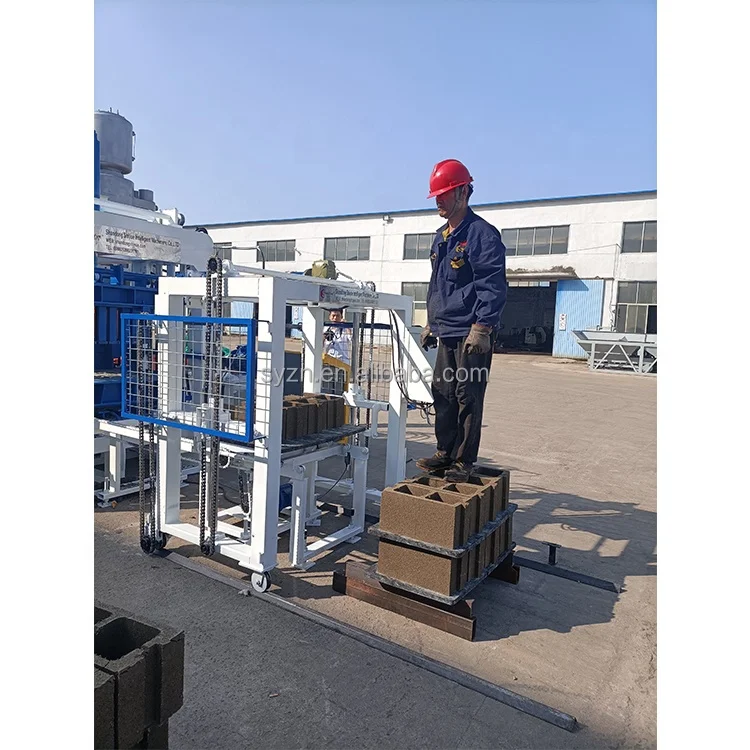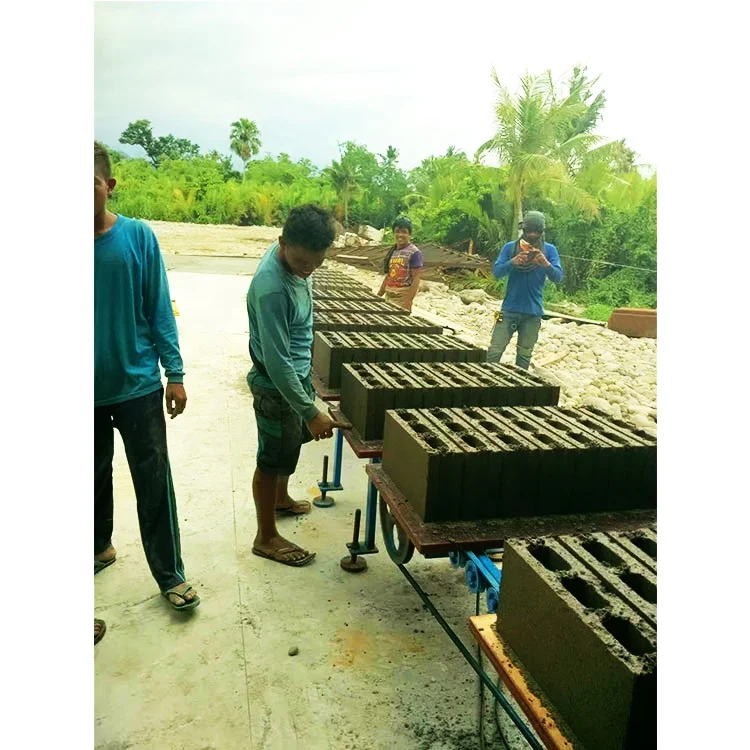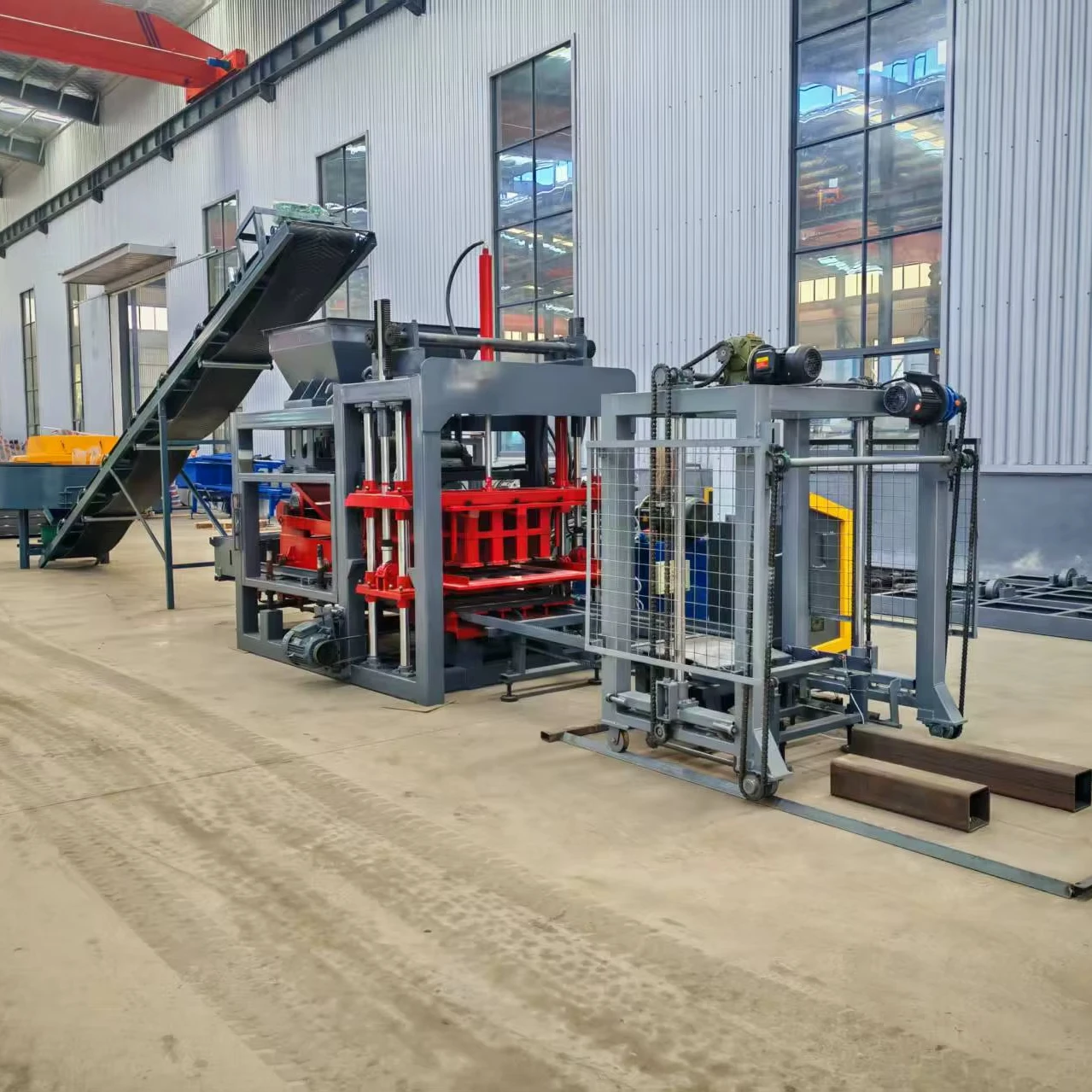
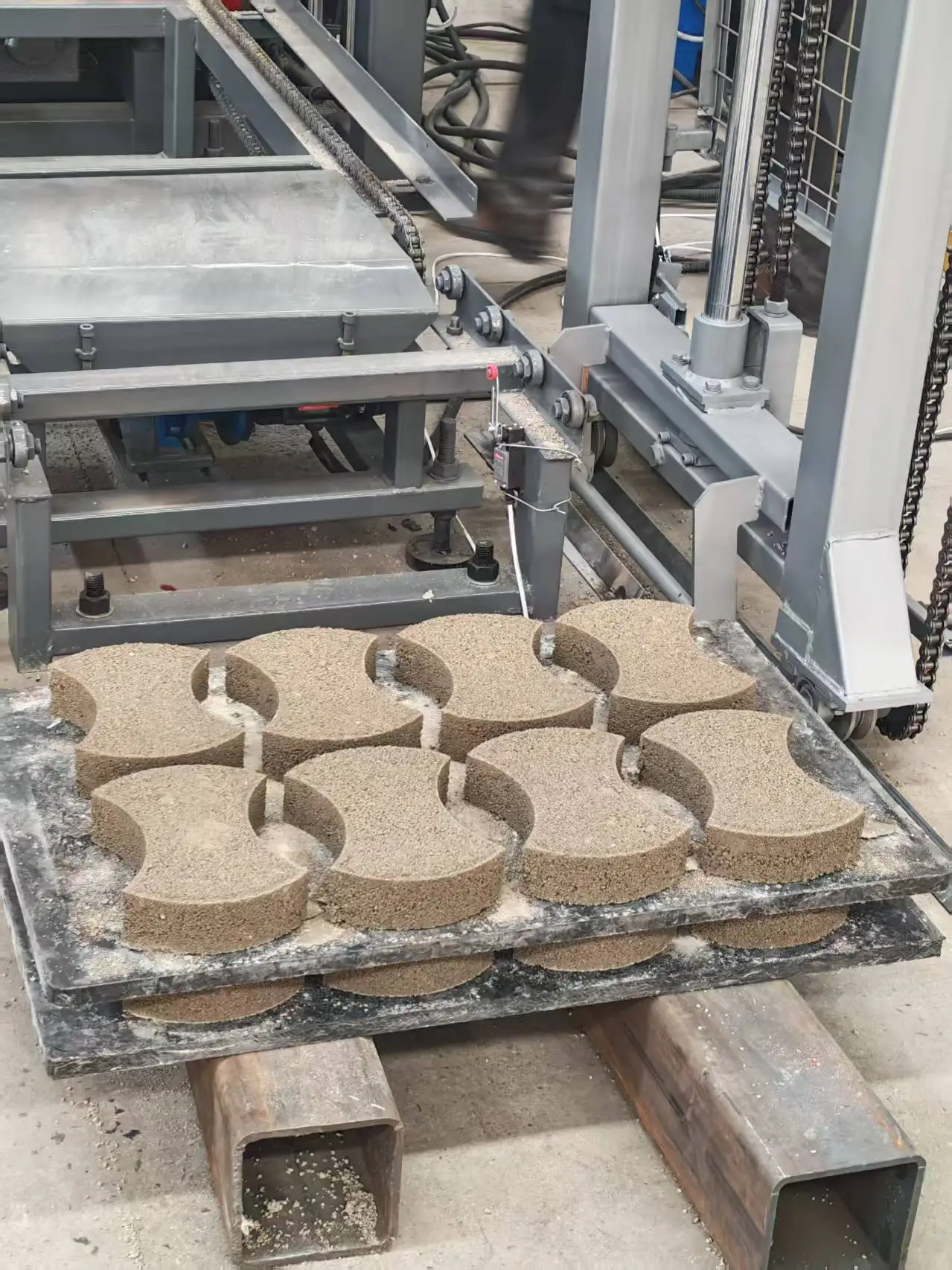
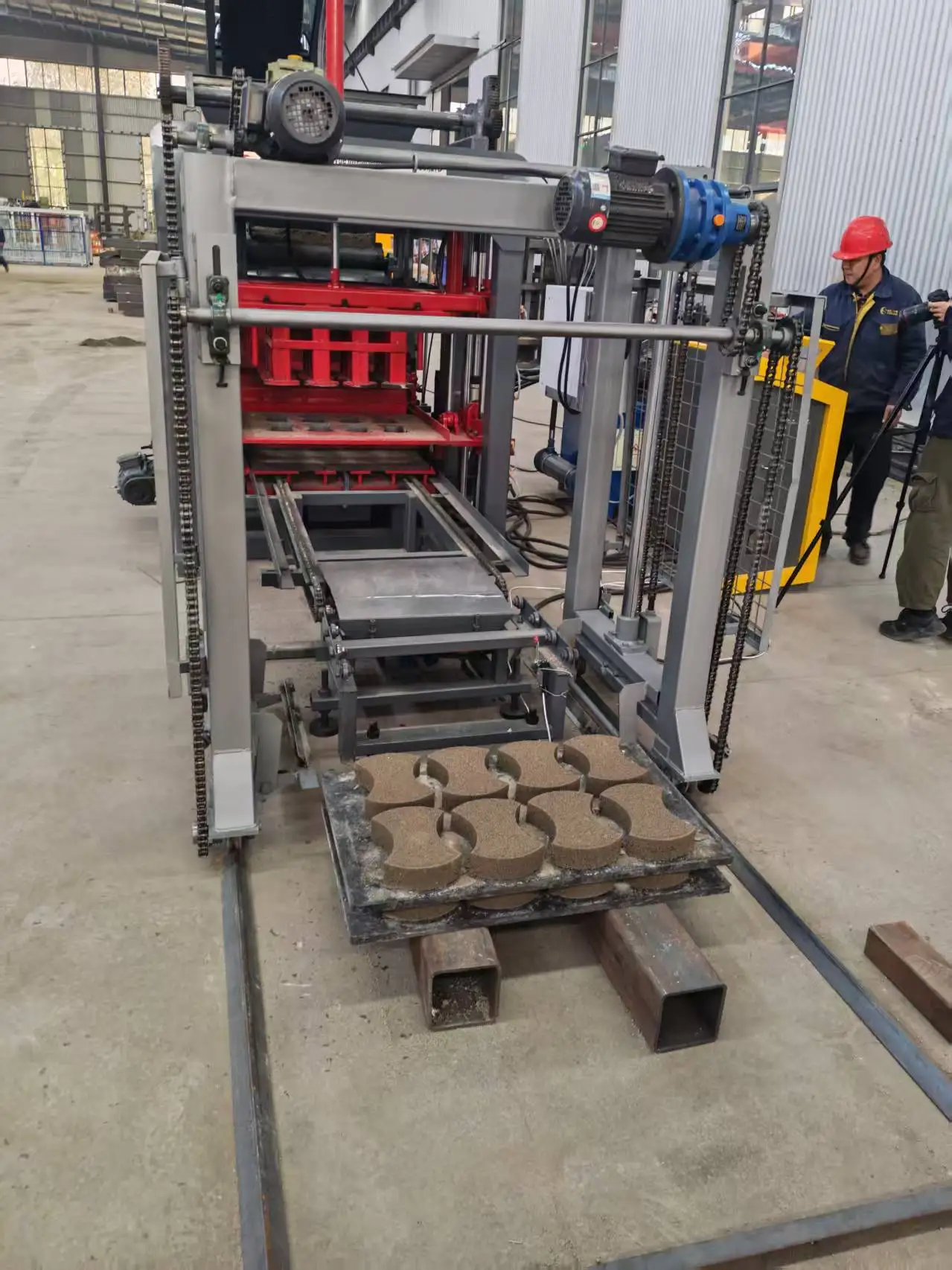
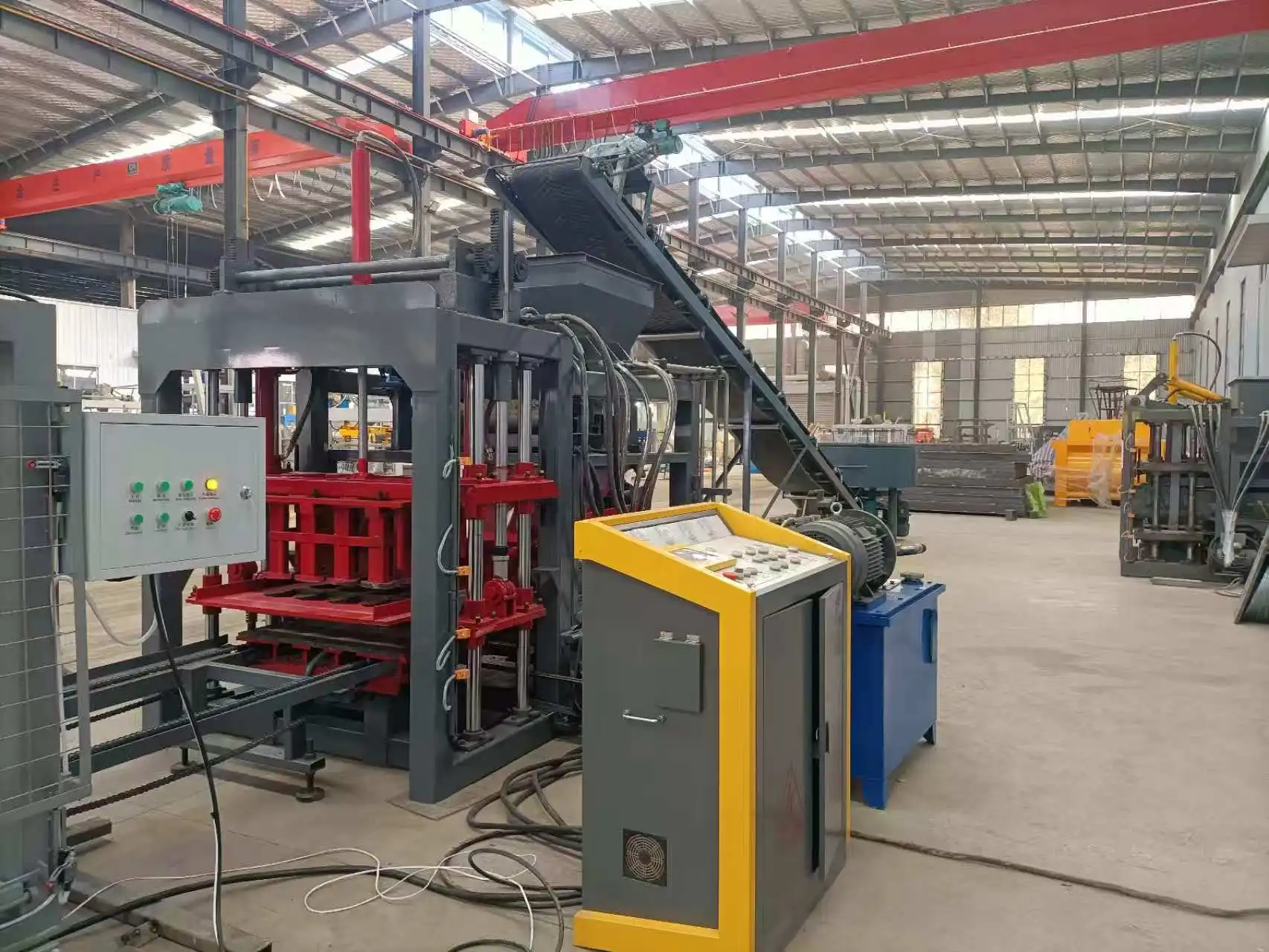
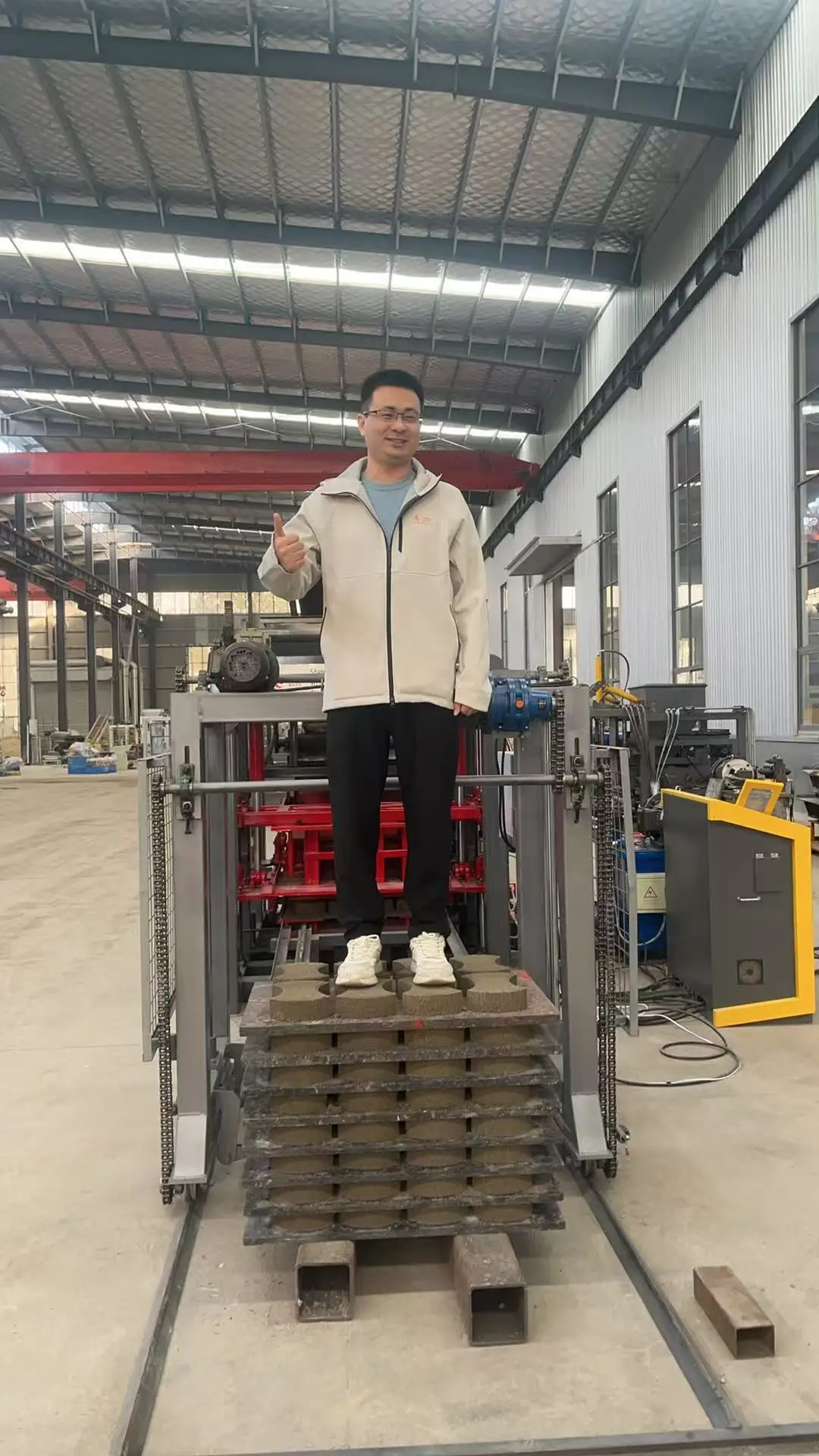
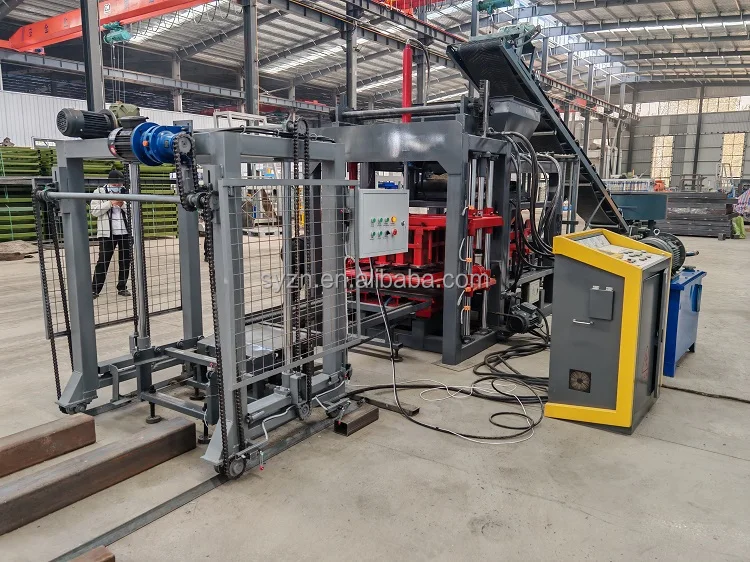
Description
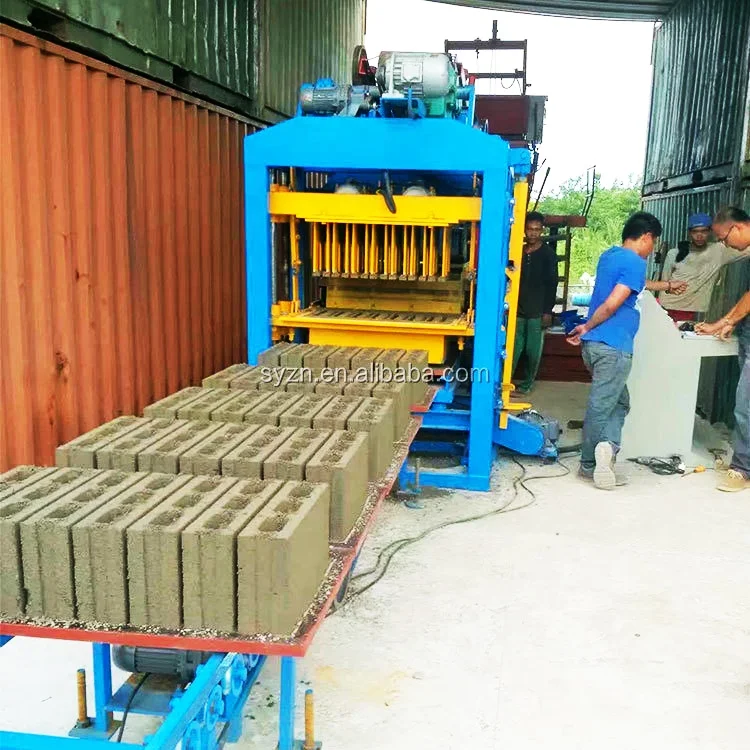
Matched System Engineering — machine, mould, pallet, and handling specified together against your actual block format and local mix, not assembled from catalogue defaults.
Technical Specifications
| Parameter | Value |
|---|---|
| Product Type | Full Automatic Block Making Machine |
| Model | QT4-15 |
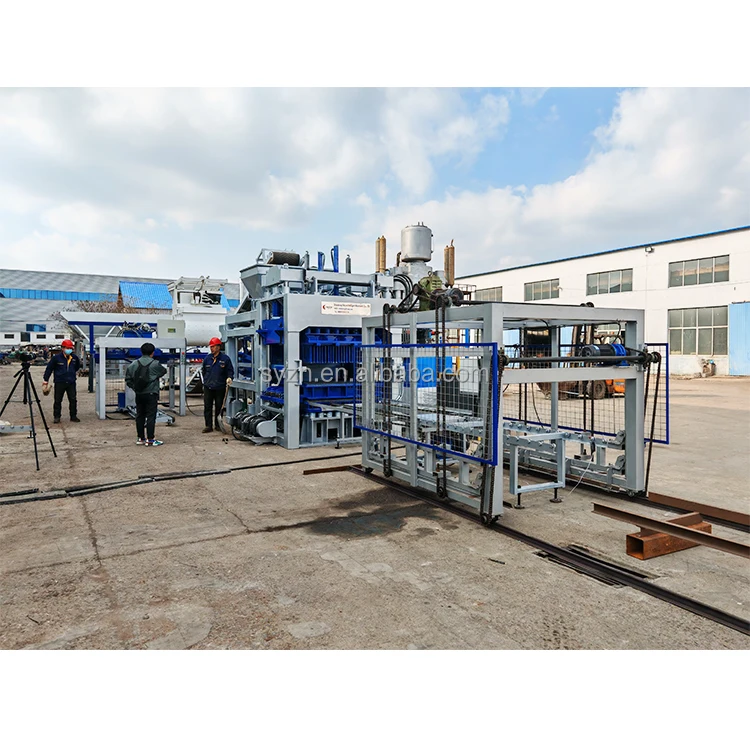
| Overall Dimensions | 7100 × 1600 × 2610 mm |
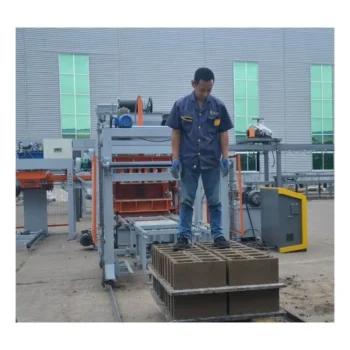
| Host Machine Dimensions | 2800 × 1800 × 2550 mm |
| Rated Pressure | 16 MPa |
| Main Vibration Form | Platform Vibration |
| Vibration Frequency | 4600 r/min |
| Vibration Force | 40 KN |
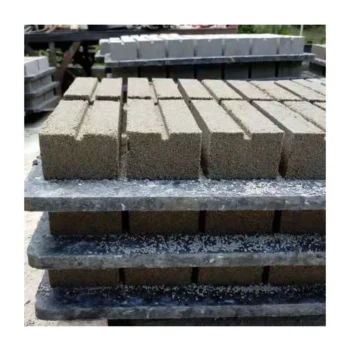
| Pallet Size | 950 × 550 × 20/25 mm |
| Molding Cycle | 15–25 s (basis to be confirmed by block format, material, and thickness) |
| Overall Power | 27.5 kW |
| Host Machine Power | 19.2 kW |
| Total Mass | 5 T |
| General Water Consumption | 4 T/day |
| Motor Brand | Siemens or ABB (buyer selectable) |
| Control System | Original Siemens PLC with independently developed machine control program |
| Hydraulic System | Double proportional hydraulic valve, Calyca or Youken brand |
| Automation Level | Full automatic |
| Hollow Brick Capacity | 720–960 pcs/h (based on 390×190×190 mm, 4 pcs/mold, 15–20 s cycle) |
| Porous Brick Capacity | 2520–3360 pcs/h (based on 240×115×90 mm, 14 pcs/mold, 15–20 s cycle) |
| Standard Brick Capacity | 5930–6720 pcs/h (based on 240×115×53 mm, 28 pcs/mold, 15–17 s cycle) |
| Warranty | 1 year for the whole machine (excluding spare parts) |
Application Suitability
| Application | Material or Output |
|---|---|
| Hollow block production | Crushed stone, sand, and cement mixes targeting 390×190×190 mm cavity formats |
| Porous brick manufacturing | Fly ash or clay-blended aggregates for 240×115×90 mm perforated formats |
| Standard solid brick runs | Fine sand and cement blends for 240×115×53 mm dense masonry units |
| Paving and interlocking formats | High-strength concrete mixes with pigment additives for surface-grade pavers |
| Road brick and kerbstone | Coarse aggregate blends compacted under full hydraulic and vibration load |
Why "Pieces per Hour" Means Nothing Without the Mould Size
The cycle time and block format behind every capacity figure must be stated, or the number is meaningless for your daily planning.
Many quotations list a single hourly output figure without naming the block format or the mould cavity count that produced it. Buyers then compare machines on that inflated number and sign a contract expecting daily volumes the press physically cannot deliver on the product their market actually buys. I have watched a site manager in Southeast Asia re-plan an entire curing yard around an output figure that assumed a solid brick format the plant never intended to produce [NEED_CITE: block format assumptions in equipment quotations].
This is where the QT4-15 block machine specifications become useful: each capacity tier names the exact block size, the number of cavities per mould, and the cycle window. Hollow blocks at 4 pcs/mold run a different rhythm than standard bricks at 28 pcs/mold, and the hydraulic and vibration load on the mix changes accordingly. When you know the format, you can calculate real daily output against your shift length and curing rack count.
Format-by-Format Capacity Breakdown
The hollow brick output of 720–960 pcs/h assumes the 390×190×190 mm format with four cavities per mould and a cycle between 15 and 20 seconds. Porous bricks at 240×115×90 mm pack 14 cavities into the same mould footprint, shifting output to 2520–3360 pcs/h on a comparable cycle. Standard bricks at 240×115×53 mm fill 28 cavities per press, reaching 5930–6720 pcs/h at a slightly faster 15–17 second cycle. These QT4-15 block machine specifications let you match the machine to the format your market actually orders, instead of sizing your investment around a catalogue headline number.
Mould Selection and Changeover Reality
Every block format requires its own mould, and the time to swap one out directly cuts into your shift. The host machine dimensions of 2800×1800×2550 mm and the 950×550 mm pallet footprint define the maximum mould envelope, so custom formats must be engineered within those limits. A buyer who plans to run three formats across a single shift needs to know the changeover procedure before the machine arrives, not after. I once spent four hours on-site helping a crew work through their first mould swap because the manual procedure did not match the actual bolt pattern they received [NEED_CITE: mould changeover procedures and operator training]. Specifying the format list and mould drawing upfront removes that kind of friction.
How Pressure, Vibration, and Mix Design Intersect
The rated pressure of 16 MPa and the 40 KN vibration force at 4600 r/min do not work in isolation. Hydraulic pressure compacts the mix vertically while platform vibration settles the aggregate particles into a dense matrix; if either is mismatched to your local sand, cement ratio, or moisture content, block strength drops. A mix with high clay content absorbs vibration differently than clean crushed stone, so the QT4-15 block machine specifications must be read alongside your actual material profile. The double proportional hydraulic valve modulates pressing force smoothly, which helps when tuning pressure for a new mix. The Siemens PLC stores cycle parameters per format, so once you dial in the correct press and vibration profile for a given aggregate source, that recipe is reproducible batch after batch.
The Cost of Skipping Configuration Details
Leaving voltage, frequency, and PLC display language unconfirmed before production creates problems that only surface when the container arrives at your port. A control screen in a language the operator cannot read adds days to commissioning. Similarly, specifying pallet thickness without checking your existing forklift fork dimensions or curing rack spacing means pallets may not travel through your plant as planned [NEED_CITE: pallet handling and curing yard compatibility]. These are not engineering failures — they are specification gaps that cost real production days.
Why This Configuration Approach Works
Block machinery is the single focus here, so the machine, mould, pallet, and handling line are specified as one matched system. Every configuration is set against the buyer’s actual mix design and local aggregate, not pulled from a catalogue default. Mould design covers the formats your market sells, with custom drawings available for non-standard sizes. Automation level is selectable, meaning a buyer can start semi-automatic and add stacking or cubing later. Installation support includes operator training, so the crew running the machine on day one understands the PLC interface and the maintenance schedule.
Documentation & Verification
- Line layout and capacity calculation stating each block format and assumed cycle time
- Machine specification sheet with hydraulic pressure, vibration force, and pallet dimensions
- Mould drawing and format list confirming included and custom cavity designs
- Voltage and PLC control language confirmation documented before production
- Factory test record on your specified block format before dispatch
- Operation and maintenance manual with wear parts and mould replacement list
Installation, Commissioning & Support
- Foundation must accommodate 7100 × 1600 mm overall footprint with level tolerance per layout drawing
- Dedicated power circuit rated for 27.5 kW total load with confirmed voltage and frequency
- Host machine ships complete with hydraulic station; site assembly limited to connection and leveling
- First-run commissioning includes pressure and vibration tuning to match your local aggregate mix
- Operator training covers PLC format selection, mould change procedure, and daily inspection points
- Wear parts list and mould catalog provided for first replacement planning
What to Include in Your Inquiry
To receive a configuration that matches your plant, share the block formats your market demands along with target daily output per format. Provide your local aggregate type and cement source so the mix design can inform the vibration and pressure settings. Confirm your site voltage, frequency, and preferred PLC display language so the control system ships ready for your operators.
Frequently Asked Questions
Q: How is daily output calculated for each block format?
A: Each capacity figure in the QT4-15 block machine specifications names the block size, cavity count, and cycle time window. Daily output is derived by multiplying hourly capacity by your planned shift hours, then deducting time for pallet changes, mould swaps, and scheduled stops. We provide a capacity calculation sheet that states the format assumed for every figure.
Q: Is the vibration force matched to my local aggregate?
A: The 40 KN vibration force and 16 MPa hydraulic pressure are baseline settings. Before production, we review your local sand or crushed stone profile and cement ratio. The double proportional valve allows fine adjustment so compaction matches your mix, preventing weak blocks or surface cracking caused by over- or under-pressing.
Q: Does the pallet size fit my existing curing area and forklift?
A: The QT4-15 uses 950 × 550 × 20/25 mm pallets. We confirm this dimension against your curing rack spacing, forklift fork width, and yard layout before finalizing the order. If your existing infrastructure uses a different pallet standard, we discuss whether adaptation or pallet replacement is the practical path.
Q: How long does a mould change take on this machine?
A: Changeover time depends on the mould mounting system and operator familiarity. On a first swap, expect the crew to take longer while they learn the bolt sequence and alignment procedure. After training, a practiced team reduces this to a fraction of a shift. We provide the mould drawing and change procedure before the machine ships.
Q: What voltage, frequency, and PLC language are confirmed before shipment?
A: These are documented during the quotation stage, not after. Your site voltage, frequency, and the language for the Siemens PLC display are confirmed in writing before production begins, so the control system is ready for your operators the moment commissioning starts.