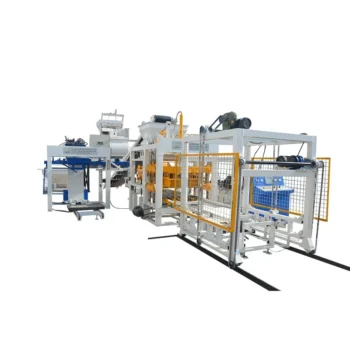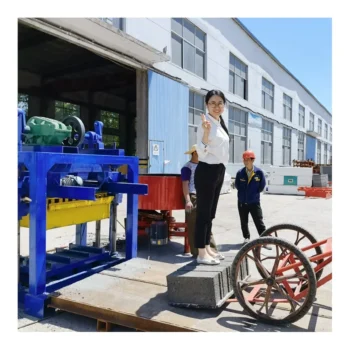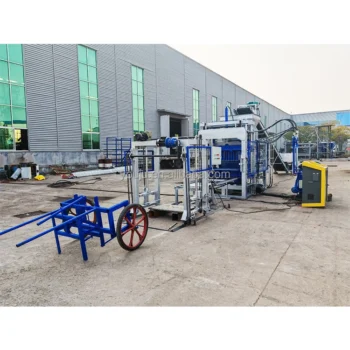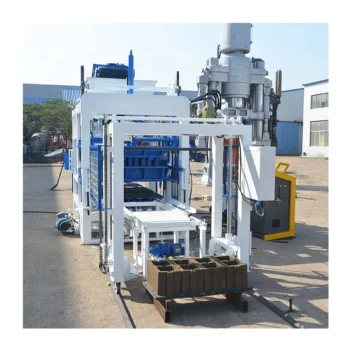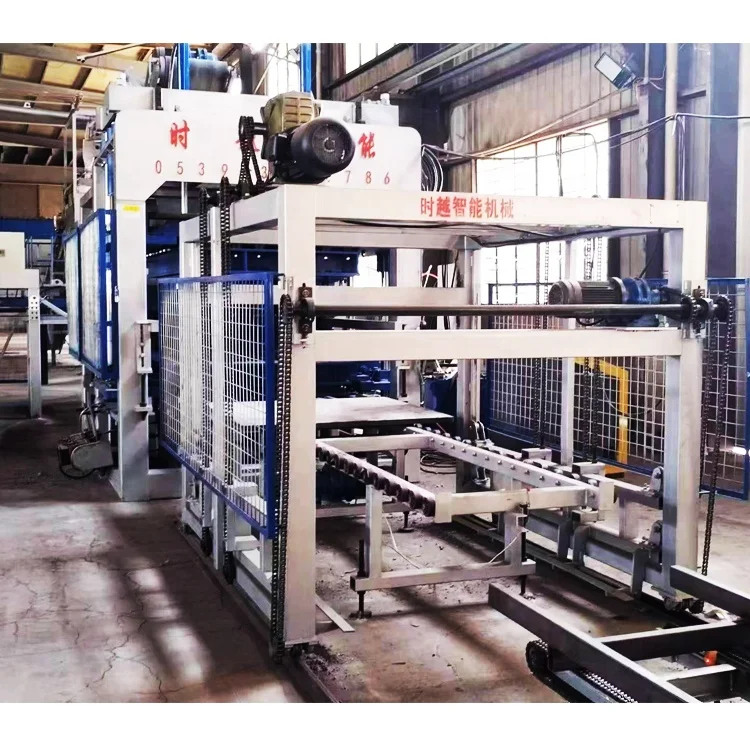
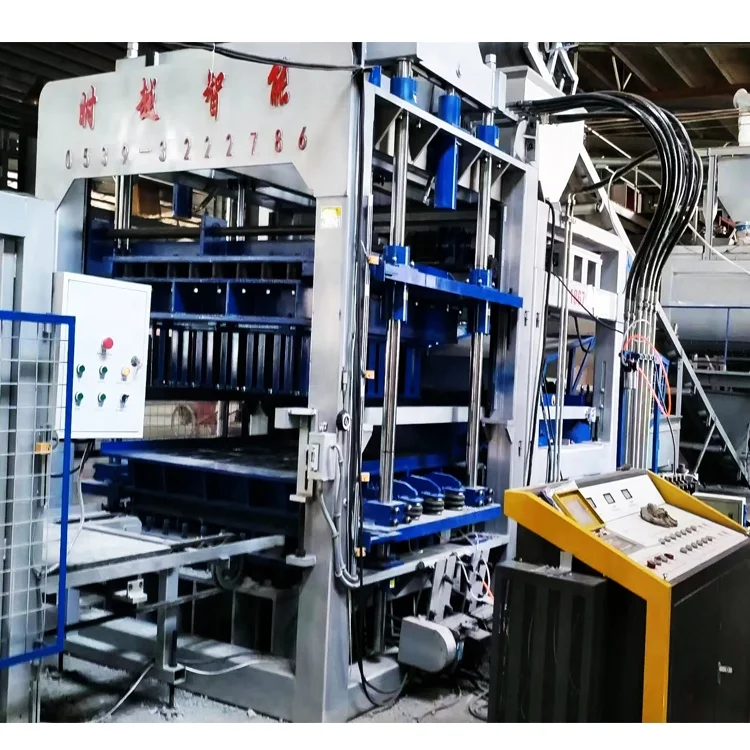
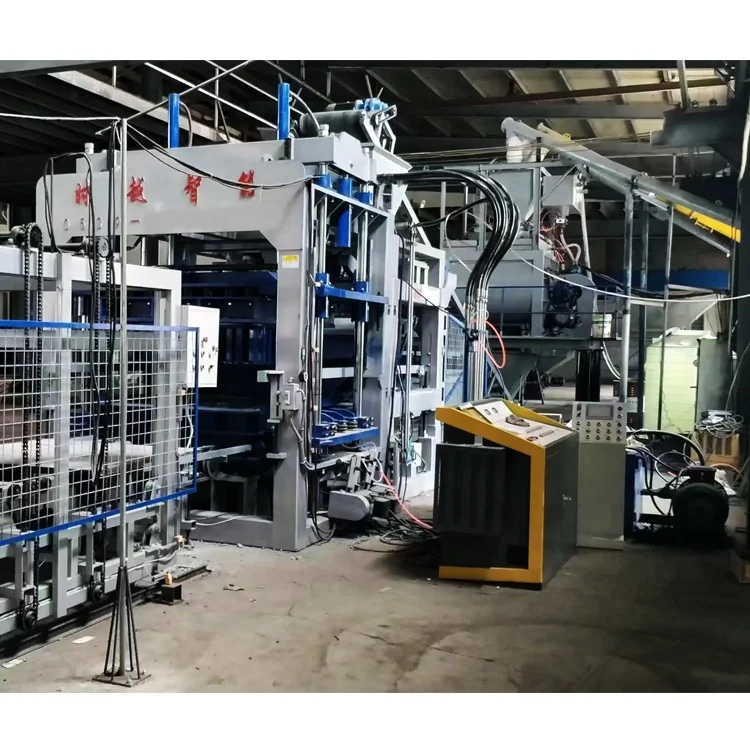
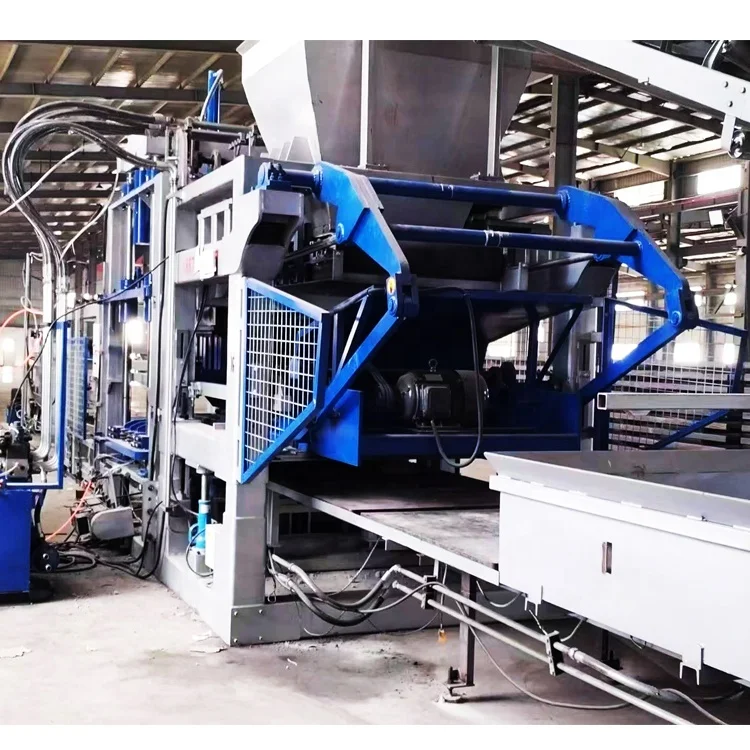
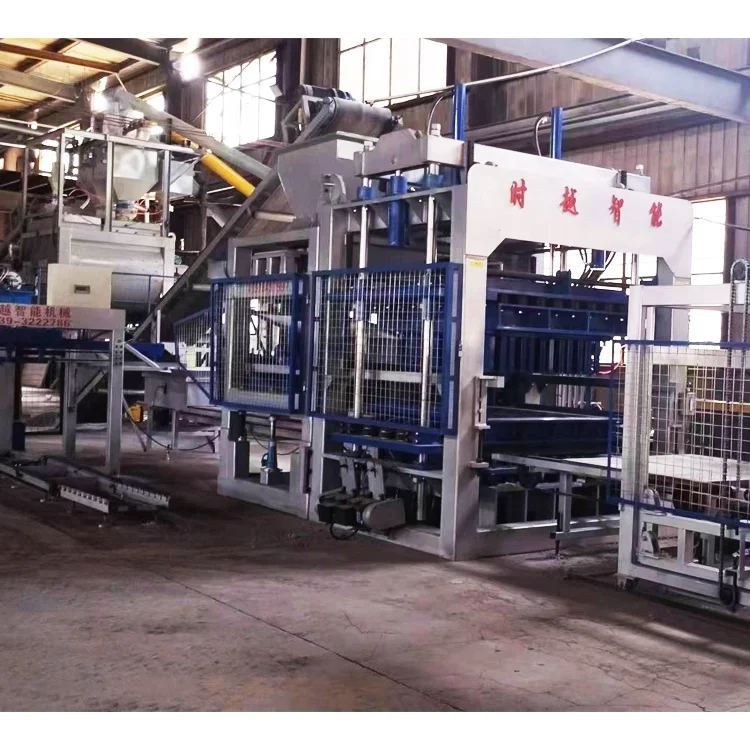
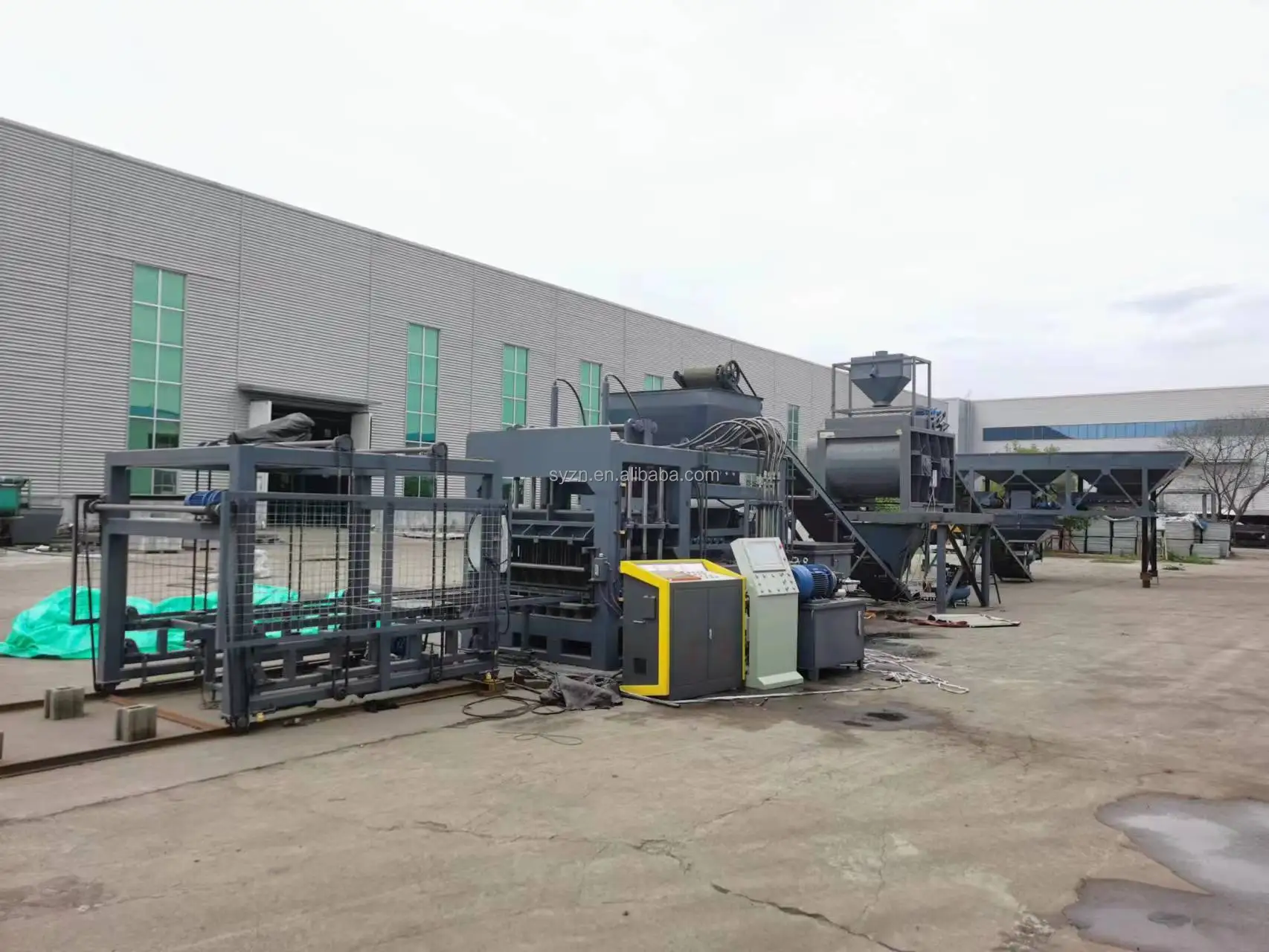
Description
Format-matched capacity — The QT15-15 stationary block making machine is configured around the buyer’s actual block format and local aggregate, with every output figure stating the exact mould and cycle assumed.
Technical Specifications
| Parameter | Value |
|---|---|
| Model | QT15-15 |
| Product Type | Stationary Concrete Block Making Machine |
| Overall Dimensions (L×W×H) | 9350×2520×2950 mm |
| Net Weight | 15 T |
| Rated Power | 45.7 kW |
| Voltage | 380 V or custom (frequency to be confirmed for target market) |
| Hydraulic Pressure | 21 MPa |
| Pallet Size | 1350×850×40 mm |
| Control System | PLC (brand and language options to be confirmed) |
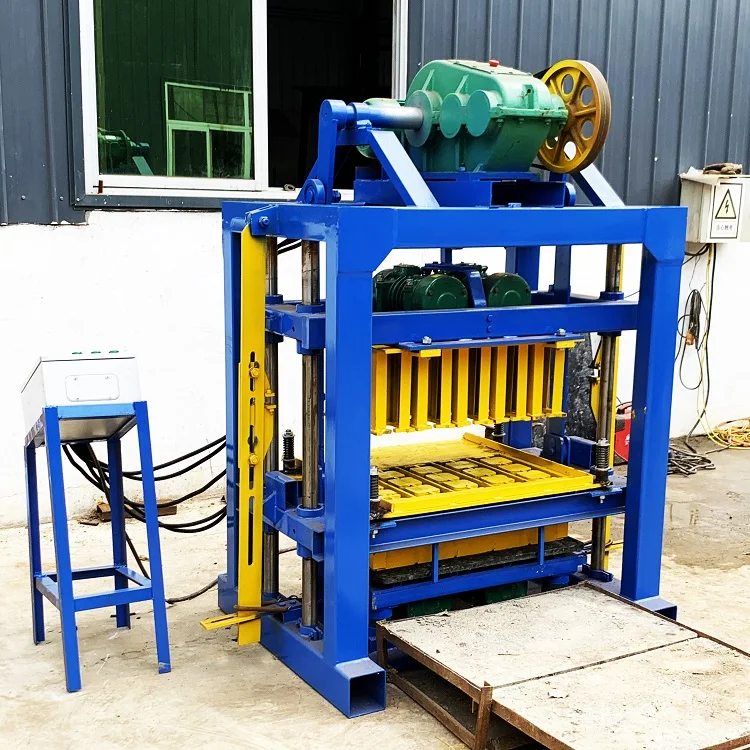
| Vibration System | Four external vibration motors with airbag pressure adjustment |
| Material Feeder | European design with turning arm cylinder |
| Upper Mould Synchronization | Dual-side synchronous gear, four-point stabilization |
| Automation Level | Configurable (manual / semi-automatic / fully automatic stacking to be confirmed) |
| Mould Change Time | To be confirmed per mould format |
| Output Capacity | 3,600 pcs/h based on 400×200×200 mm hollow block (15 pcs/mould) |
| Output Capacity | 4,320 pcs/h based on 400×150×200 mm hollow block (16 pcs/mould) |
| Output Capacity | 14,000 pcs/h based on 240×115×53 mm solid brick (62 pcs/mould) |
| Daily Output | 28,800 pcs/day (400×200×200 mm), 34,560 pcs/day (400×150×200 mm), 112,000 pcs/day (240×115×53 mm), assuming an 8-hour shift |
| Cycle Time per Format | To be confirmed |
| Color Options | Custom per buyer request |
| Warranty | 1 year |
| Assembly State | To be confirmed (fully assembled or SKD for container loading) |
| Standards | ISO 9001:2008, CE |
Application Suitability
| Application | Material or Output |
|---|---|
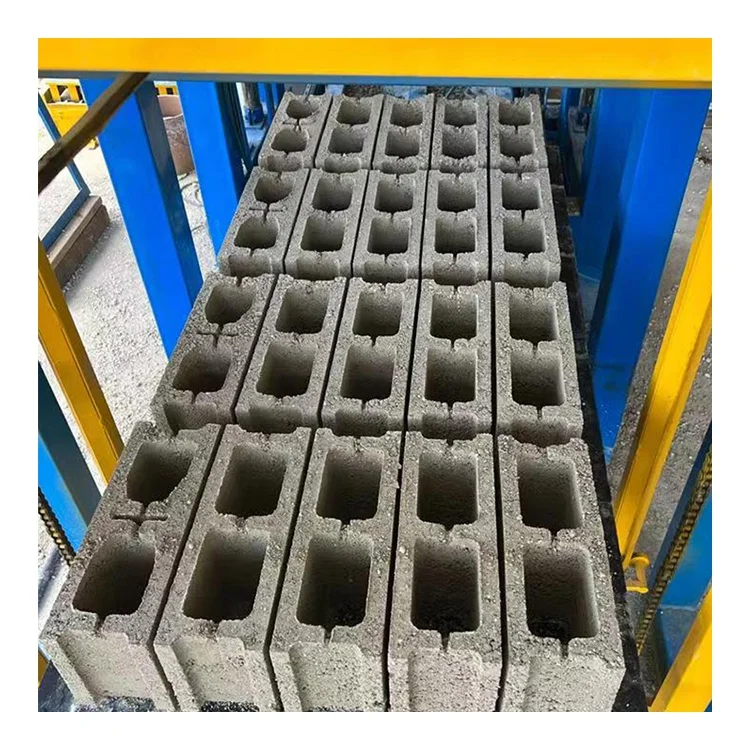
| Hollow block production for building walls | Crushed stone, sand, cement, and fly ash mixes |
| Solid brick manufacturing for load-bearing structures | Dense aggregate and cement blends |
| Interlocking brick production for paving and landscaping | Fine aggregate with pigment integration |
| Paving block manufacturing for roads and walkways | High-strength concrete mixes with surface textures |
| On-site block production for housing developments | Locally sourced aggregate matched to project specifications |
What "3,600 Pieces per Hour" Actually Means for the QT15-15 Block Machine Specifications
Capacity is meaningless without the block format attached to it.
A headline figure of 3,600 pieces per hour sounds reliable until you discover it was measured on a 400×200×200 mm hollow block. Switch the mould to a 240×115×53 mm solid brick and the same QT15-15 stationary block making machine capacity by format jumps to 14,000 pieces per hour — but the cycle time, material feed, and vibration profile all change. I have seen buyers sign contracts on a single number and then spend months chasing a daily output that was never achievable on the format their market actually buys. The QT15-15 block machine specifications must always be read alongside the specific mould and block dimensions. [NEED_CITE: common causes of block machine output shortfall in export markets]
Matching Vibration Force to Local Aggregate and Mix Design
The four external vibration motors on this stationary block making machine use airbag pressure adjustment rather than a fixed factory setting. This matters because a mix with high clay content, common in West African laterite soils, absorbs vibration differently from clean crushed granite. When vibration force is not tuned to the actual aggregate, blocks come off the pallet with inconsistent density and break during handling. The airbag system allows the operator to adjust pressure on site after test runs with local materials, which is the only way to lock in a repeatable result.
Synchronizing the Upper Mould for Uniform Block Density
The dual-side synchronous gear with four-point stabilization on the upper mould prevents the head from tilting during the compaction stroke. On a pallet measuring 1350×850 mm, even a slight tilt means blocks on one side receive less hydraulic pressure than those on the other. The QT15-15 stationary block making machine capacity by format depends on every cavity filling and compacting evenly; a tilted upper mould increases reject rates and shortens mould life. This mechanical synchronization is a direct answer to the inconsistent block strength that buyers report when vibration and pressure are not balanced across the full pallet area. [NEED_CITE: upper mould synchronization impact on block density uniformity]
Reading the Specs That Determine Real Daily Output
The 21 MPa hydraulic pressure works together with the vibration motors to achieve final compaction. Pressure alone compresses the mix; vibration liquefies it momentarily so the particles settle into a dense matrix. If the hydraulic pressure is set too high for a given mix, the block sticks to the mould; too low, and it crumbles on stripping. The European-design material feeder with its turning arm cylinder must distribute concrete into the mould cavity within the cycle time, or the press sits idle waiting for a full charge. The pallet size of 1350×850×40 mm must also match the curing racks and forklift the buyer already operates, otherwise a pallet mismatch creates a bottleneck downstream of the press itself.
The Hidden Cost of an Unconfirmed Automation Level
When the automation level is not specified before production, the machine may arrive with manual pallet handling while the buyer expected automatic stacking and cubing. That gap means hiring additional labour to move and stack blocks by hand at the end of every cycle, which erodes the output advantage the buyer paid for. Voltage and frequency confirmation is equally critical; a 380 V machine wired for 50 Hz will run at the wrong motor speed on a 60 Hz supply, altering vibration frequency and cycle timing. These are not commissioning surprises — they are specification gaps that should be closed before the machine enters production. [NEED_CITE: voltage and frequency mismatch consequences in industrial machinery exports]
Why Sizing This Stationary Block Machine Here Reduces Specification Risk
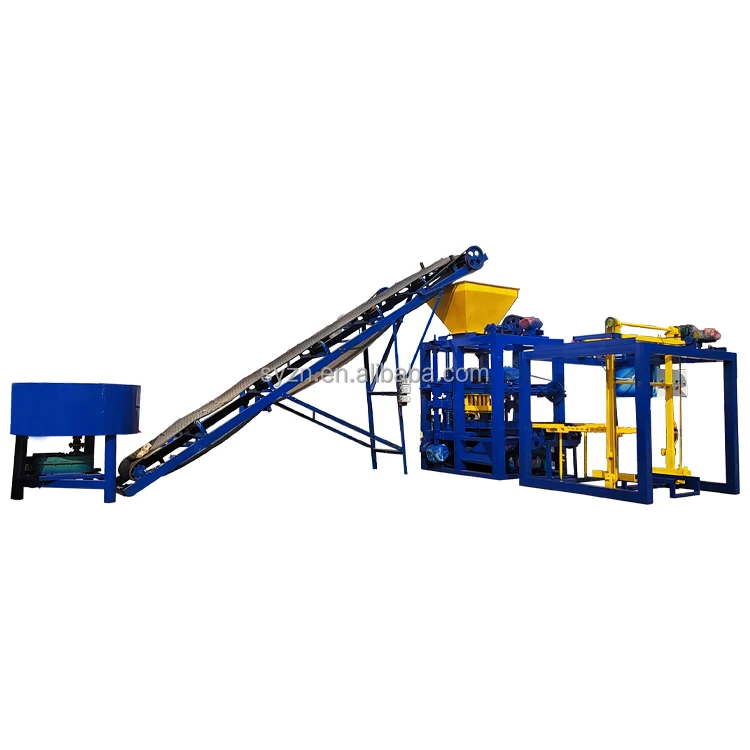
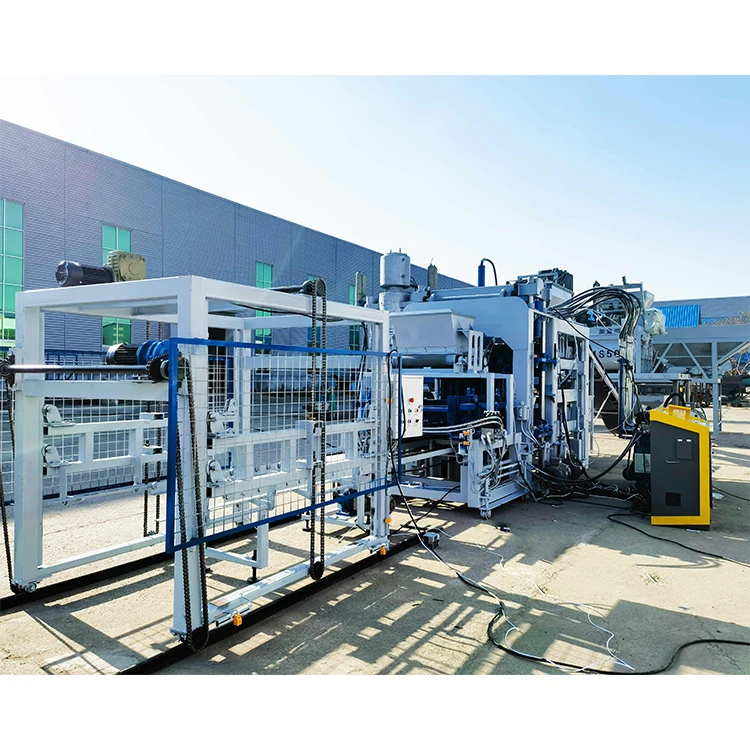
Block machinery is the single focus of this supply chain, so the QT15-15 is specified as a matched system of press, mould, pallet, and handling equipment rather than assembled from separate vendors. Every capacity calculation states the block format assumed, removing the ambiguity that causes buyers to overestimate daily output. Mould design covers the formats the buyer’s market actually sells, with custom drawings available when a standard catalogue mould does not fit. The automation level is selectable, allowing a buyer to start semi-automatic and add stacking later without replacing the press. Voltage, frequency, and PLC display language are confirmed in writing before production begins, so commissioning is not delayed by a language mismatch on the control screen. [NEED_CITE: machinery documentation standards for export compliance]
Documentation & Verification
- Line layout drawing showing QT15-15 placement with capacity stated per block format
- Mould drawing and format list confirming included moulds and cycle time per format
- Hydraulic and electrical schematic for the 21 MPa system and 45.7 kW power circuit
- Voltage and PLC display language confirmation sheet signed before production
- Factory test record on buyer’s specified block format before dispatch
- Wear parts and mould list with part numbers for first replacement planning
Installation, Commissioning & Support
- Foundation plan for the 9350×2520 mm footprint with anchor bolt positions
- Dedicated power circuit for the 45.7 kW rated load at confirmed voltage and frequency
- Assembly guidance depending on SKD or fully assembled shipment state
- On-site vibration tuning using buyer’s local aggregate and mix design
- Operator training on PLC interface in confirmed display language
- Wear parts supply schedule for hydraulic seals and mould liners
What to Prepare Before Requesting a Quotation
Provide the exact block formats your market sells, with dimensions and target daily output per format. Share a sample or description of your local aggregate and cement type so the vibration and hydraulic settings can be matched to your mix. Confirm your site voltage, frequency, and preferred PLC display language, along with the curing rack and forklift specifications you plan to use with the 1350×850 mm pallet.
Frequently Asked Questions
Q: How is QT15-15 capacity verified per block format, and what shift length is assumed?
A: Every output figure states the exact block dimensions and pieces per mould used in the calculation. The daily output of 28,800 pieces for a 400×200×200 mm hollow block assumes an 8-hour shift. If your operation runs a different shift length, the daily figure scales accordingly, but the hourly rate per format remains the reference point for sizing.
Q: Which mould formats are available for the 1350×850 mm pallet?
A: Standard moulds include hollow blocks, solid bricks, interlocking bricks, and paving blocks sized to fit the pallet area. Custom moulds can be designed to buyer drawings. Mould change time depends on the format and automation level selected, and is confirmed before production so you know the realistic downtime between product runs.
Q: How do I confirm voltage, frequency, and PLC language match my market?
A: These are confirmed in writing during the quotation stage, before production starts. You provide your local supply voltage, frequency, and preferred display language, and the confirmation sheet is signed off so the control panel and motors are built to your specification, avoiding commissioning delays on arrival.
Q: Can vibration force be tuned to my local aggregate?
A: Yes. The four external vibration motors use airbag pressure adjustment, which allows on-site tuning after test runs with your actual mix. This is essential when local aggregate differs from the factory test material, ensuring block density and strength meet your market standard rather than a catalogue default.
Q: What supporting equipment must match the QT15-15 cycle time?
A: The mixer output, pallet feeder speed, and stacking system must all keep pace with the press cycle so the machine is never left waiting. The line layout document specifies each station’s required throughput based on your chosen block format, ensuring no single station becomes a bottleneck.