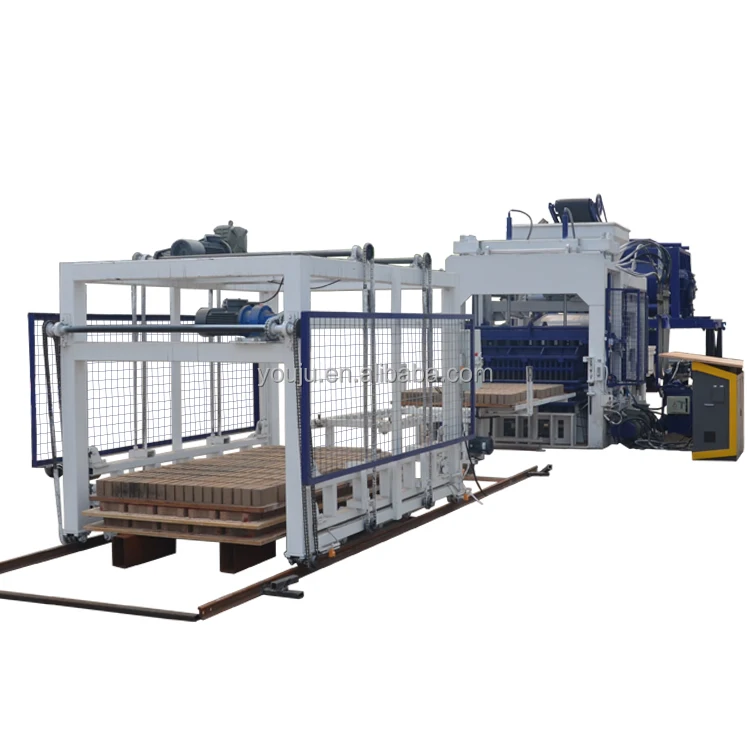
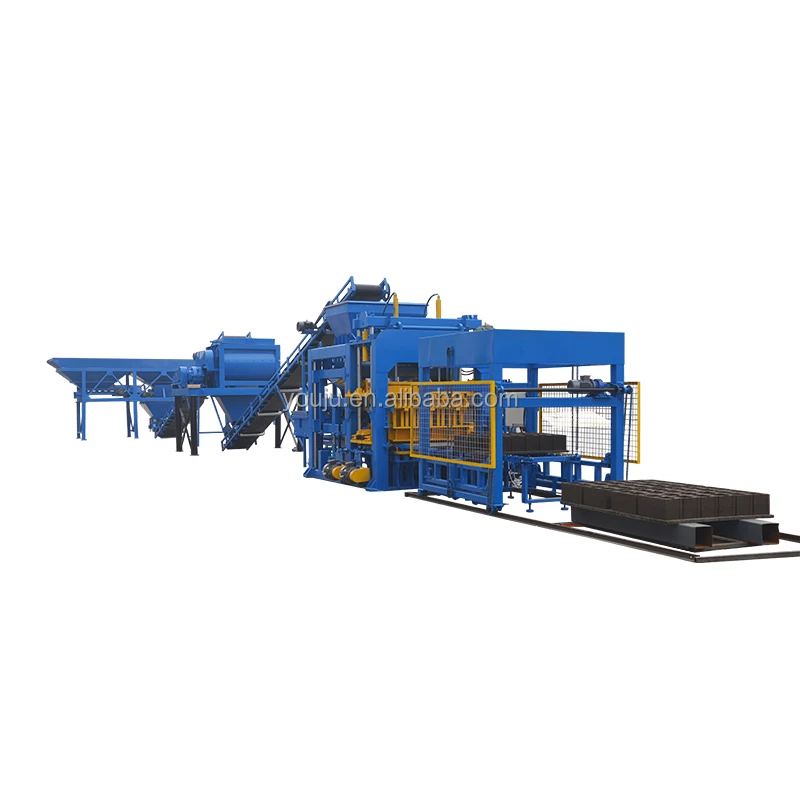
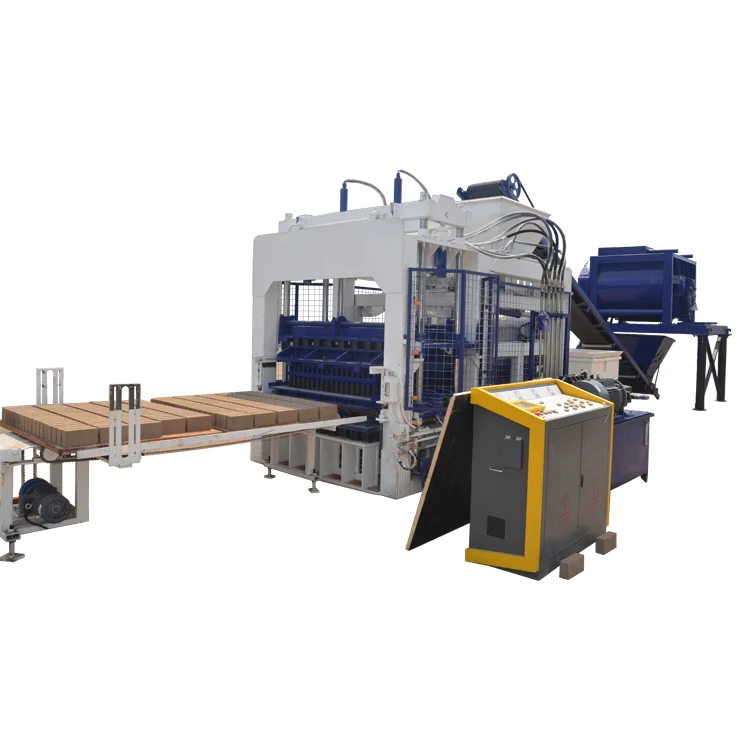
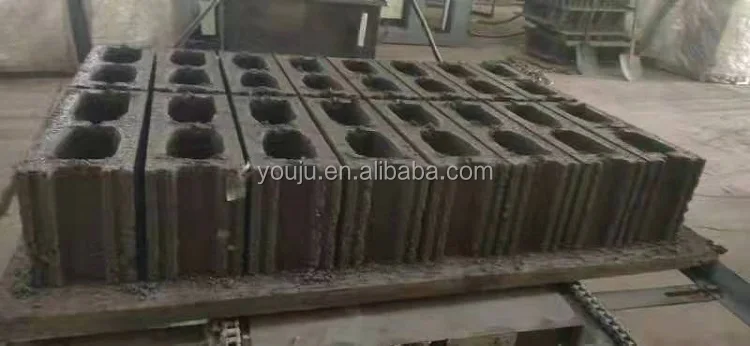
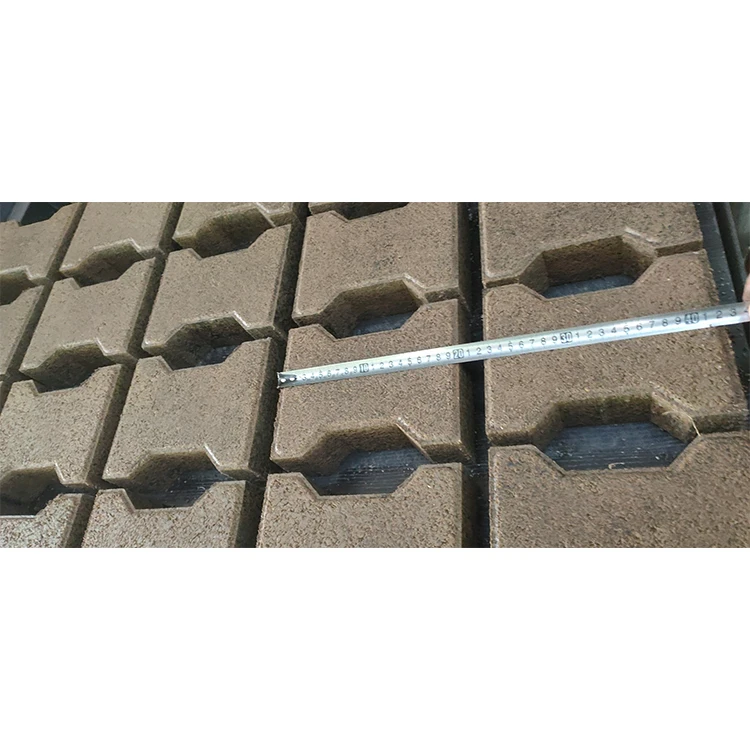

Description
Configuration matched to format — The QT12-15 is specified around the block format your market actually sells, with capacity calculations stated per format rather than a single catalogue figure, so daily planning reflects the hollow block, paver, or solid brick you intend to produce.
Technical Specifications
| Parameter | Value |
|---|---|
| Model | QT12-15 |
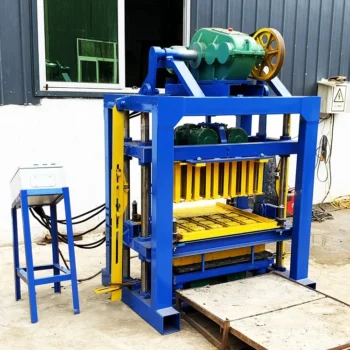
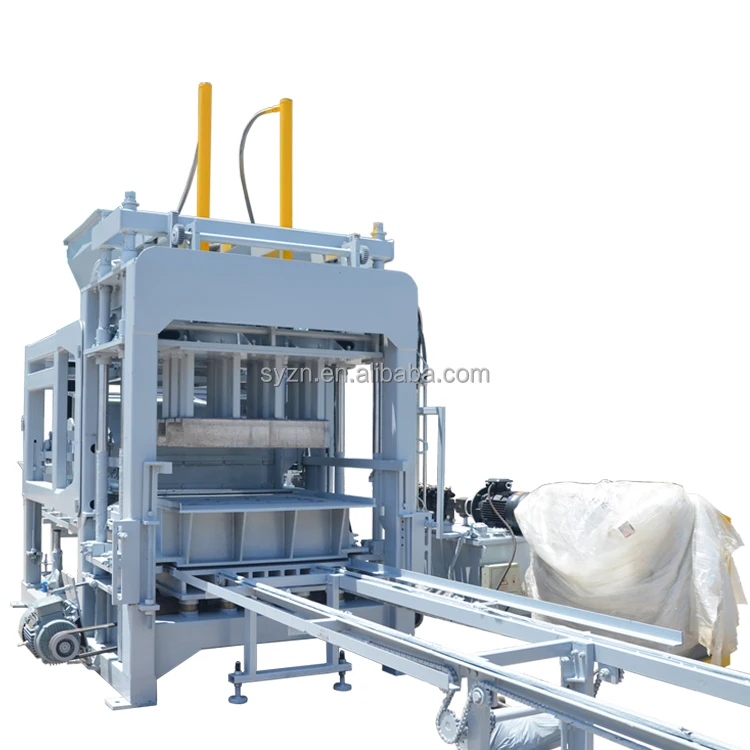
| Product Type | Stationary Automatic Concrete Block Making Machine |
| Overall Dimensions | 7500×2500×3020 mm |
| Total Mass | 12 T |
| Vibration Frequency | 0–60 Hz |
| Vibration Force | 100 kN |
| Main Vibration Form | Platform vibration with synchronous vertical vibration, frequency conversion and braking |
| Vibration Sources | Double vibration sources (synthetic output) |
| Moulding Mode | Automatic loading, vibration moulding |
| Moulding Cycle | 15–20 s (basis not stated in source — confirm block format and material) |
| Demoulding Method | Hydraulic |
| Pallet Size | 1220×900 mm |
| Overall Power | 53 kW (source lists "53W" — verify against manufacturer catalog) |
| Control System | PLC with human-machine interface dialogue system |
| Feeding System | Semi-closed screen reticular rotational forced feeding unit |
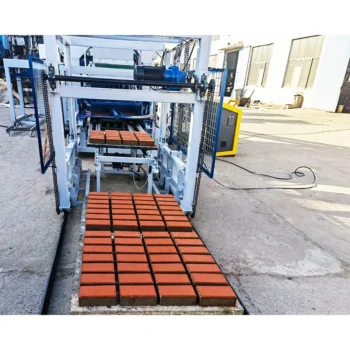
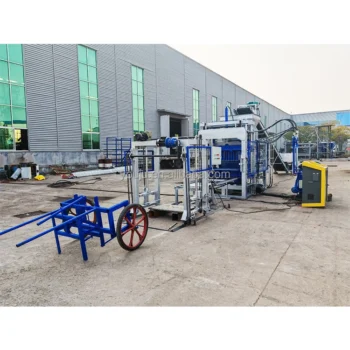
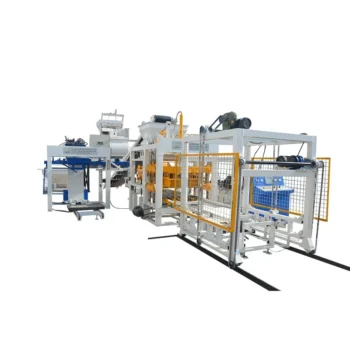
| Automation Level | Fully automatic (automatic raw material feeding and immediate stacking) |
| Recommended Factory Area | 1200 m² |
| General Water Consumption | 12 T/day |
| Productivity — Hollow Bricks (400×200×200 mm) | 12 pcs/mould, cycle 20–25 s, 1,728–2,160 pcs/h |
| Productivity — Porous Bricks (240×115×90 mm) | 27 pcs/mould, cycle 15–20 s, 4,860–6,480 pcs/h |
| Productivity — Standard Bricks (240×115×53 mm) | 62 pcs/mould, cycle 15–17 s, 12,700–14,400 pcs/h |
| Applied Products | Concrete blocks, hollow blocks, solid blocks, pavers, interlocking blocks, kerbstone, colored pavers |
| Raw Materials | Crushed stone, sand, cement, stone dust, fly ash, gravel, slag and other aggregates |
| Warranty | 1 year (excluding spare parts) |
| Payment Terms | 30% T/T deposit, 70% balance before delivery |
Application Suitability
| Application | Material or Output |
|---|---|
| High-volume hollow block production | Crushed stone, sand, cement, and fly ash mixes for 400×200×200 mm cavity blocks used in structural walls |
| Interlocking paver manufacturing | Fine aggregate and cement blends for colored and standard paving blocks in commercial and residential hardscaping |
| Solid brick production for load-bearing walls | Dense aggregate mixes with high cement content for standard 240×115×53 mm bricks |
| Kerbstone and roadside unit casting | Coarse aggregate and stone dust combinations for heavy-duty kerbstones and drainage channel blocks |
| Fly ash brick production for housing projects | Fly ash, sand, and lime or cement blends for lightweight porous bricks in large-scale residential developments |
What "12,700 Bricks per Hour" Actually Means for Your Plant
Output figures only hold when the block format, mix design, and cycle time are all named together.
A capacity number pulled from a catalogue without its underlying format assumption leads to a daily production plan that falls short the moment the machine starts running. I have seen buyers base their entire shift schedule on a standard brick output figure, only to find the machine spends most of its time pressing hollow blocks at a much slower cycle. The QT12-15 concrete block machine specifications above list three distinct output tiers, each tied to a specific block dimension and cycle range, so the number you plan against is the one that matches the product your market actually buys [NEED_CITE: block format impact on daily production planning].
Matching Mould Selection to Market Demand
The block format drives every downstream decision in the plant. The QT12-15 supports mould changes across hollow block, porous brick, standard brick, paver, interlocking brick, and kerbstone formats, but the cycle time and pallet coverage differ substantially between them. A plant switching between two formats daily needs a realistic mould change time estimate written into the production schedule, not a figure that assumes a dedicated single-format run. The mould drawing and format list confirm which formats ship with the machine and which require custom design to your drawings, so the QT12-15 concrete block machine specifications you receive match the products your local construction codes require.
Pallet Size and the Curing Area Connection
The 1220×900 mm pallet size determines how many blocks cure per rack, how the forklift moves them, and how much floor space the curing zone occupies. A pallet dimension chosen without checking the buyer’s existing curing area layout forces either a costly area reconfiguration or a daily handling bottleneck. This is where the QT12-15 concrete block machine specifications must be read alongside the plant floor plan. The pallet material — wood, bamboo, or composite — also affects weight per loaded pallet and the forklift capacity required, which is why pallet specification is confirmed before the machine enters production [NEED_CITE: pallet material selection and curing logistics].
How Vibration Force and Hydraulic Pressure Shape Block Density
The 100 kN vibration force working through the double vibration source platform does not operate in isolation. Hydraulic demoulding pressure must be balanced against that vibration output and the specific aggregate particle size in the buyer’s mix. When the vibration force is high but the hydraulic hold is insufficient for a coarse aggregate blend, the block leaves the mould with lower density and fails compressive strength tests after curing. The semi-closed screen reticular rotational forced feeding unit distributes material across the mould box at a consistent rate, which matters when the mix includes fly ash or stone dust that flows differently from clean sand. Frequency conversion across the 0–60 Hz range allows the operator to adjust vibration intensity for different formats — a paver needs a different frequency profile than a hollow block to achieve target surface finish and internal compaction. The 53 kW total power rating covers the vibration motors, hydraulic pump, feeding system, and PLC control running simultaneously, which should be confirmed against the plant’s available electrical supply before the machine ships [NEED_CITE: vibration force and hydraulic pressure matching in block forming].
When the Mix Design Does Not Match the Machine
A machine configured for a fine sand mix that the buyer cannot source locally produces blocks with inconsistent strength from the first day. The vibration force and feeding speed were set against a material profile that does not exist at the job site, and adjusting the machine to handle a coarser or more abrasive local aggregate takes time that was not in the commissioning schedule. I once spent two weeks stabilizing output on a high-capacity press because the buyer’s local aggregate was significantly coarser than the trial mix — the vibration force was not reaching the material effectively, and block density dropped until we recalibrated. This is why the raw material report should be reviewed before the QT12-15 concrete block machine specifications are finalized, not after the machine arrives.
Why the Line Configuration Matters More Than the Press Alone
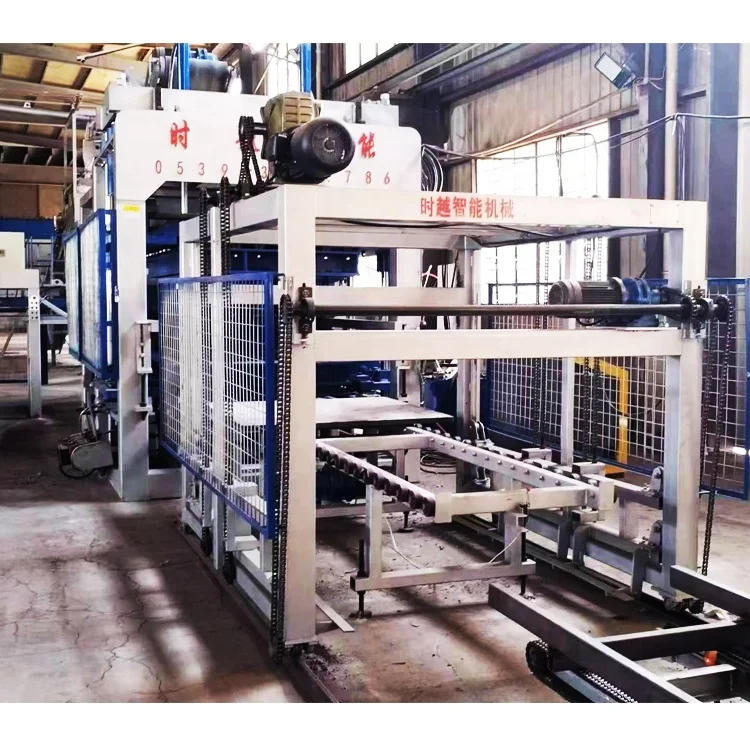
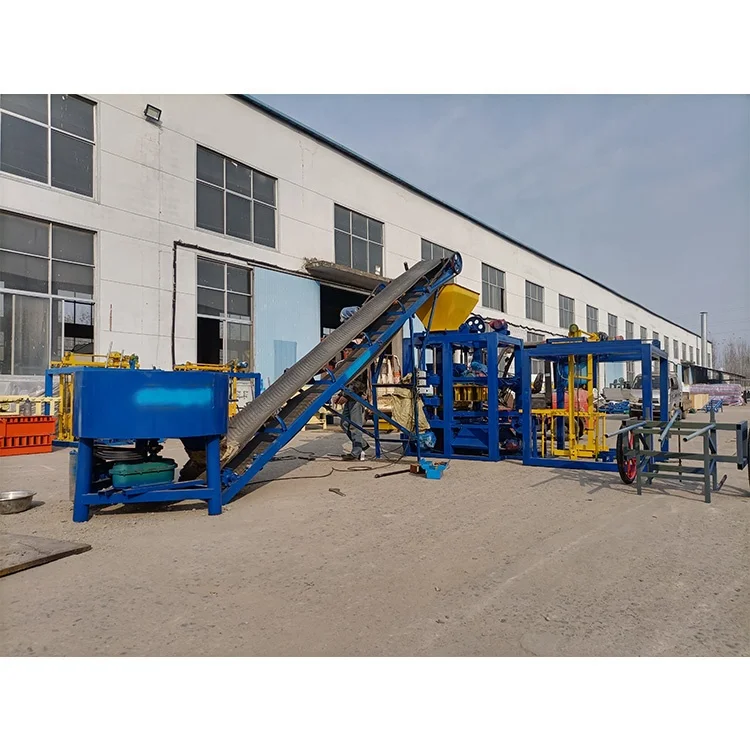
Block machinery performs as a system. The press cycle is only productive if the raw material feeding, pallet feeding, stacking, and curing rack handling keep pace. A gap at any station leaves the press idle and the stated cycle time meaningless. The QT12-15 is specified as a fully automatic line with automatic raw material feeding and immediate stacking, but the quotation should confirm which stations are included and which are left for manual operation. When pallet handling and stacking are excluded from the scope, the daily output drops because the press waits for a worker to clear the previous pallet — a detail that only surfaces during commissioning if it was not addressed during the proposal stage.
What Verification Before Shipment Prevents
- Line layout and capacity calculation stating the block format assumed for each output figure, so your shift planning uses the correct number.
- Mould drawing and format list confirming included and custom-available formats against your local construction standards.
- Voltage, frequency, and PLC display language confirmation before production begins, avoiding commissioning delays at your site [NEED_CITE: voltage and PLC language verification before international equipment shipment].
- Pallet specification document matching pallet dimensions and material to your existing curing rack spacing and forklift load capacity.
- Hydraulic and electrical schematic for your maintenance team to reference during routine service and troubleshooting.
- Factory test record on your confirmed mix design and target block format before the machine is dismantled for shipment.
Installation, Commissioning & Support
- Foundation design must support the 12 T total mass and vibration load across the 7500×2500 mm footprint with adequate curing area clearance.
- Electrical supply must deliver 53 kW at confirmed voltage and frequency with a dedicated circuit and appropriate breaker rating.
- PLC human-machine interface language set before dispatch to match your operator team, reducing commissioning time on site.
- Vibration frequency range and hydraulic demoulding pressure calibrated during installation against your confirmed local aggregate and mix design.
- Mould change procedure trained with your team including tool requirements and alignment steps for each block format.
- Wear parts list covering vibration platform components, hydraulic seals, and mould-box liners with recommended replacement intervals.
Preparing Your Inquiry
To move from a general specification sheet to a configuration that matches your plant, the useful starting points are the block format your market sells most, the local aggregate type and particle size distribution, and the daily output target tied to that specific format. Voltage and frequency at your site, along with the preferred PLC display language, should be stated early so the control system is built to your requirements. If you are adding formats to an existing line, the current pallet size and curing rack dimensions determine whether the standard 1220×900 mm pallet works or needs adjustment.
Frequently Asked Questions
Q: How is the QT12-15 capacity verified against a specific block format?
A: Each output figure in the QT12-15 concrete block machine specifications is tied to a named block dimension and cycle time range — for example, hollow bricks at 400×200×200 mm with a 20–25 second cycle. The capacity calculation document states the format assumed so your daily production plan uses the number that matches your product, not a generic catalogue peak.
Q: How is the machine set up for my local aggregate rather than a default mix?
A: The raw material report is reviewed before final configuration. Vibration frequency range, feeding unit speed, and hydraulic demoulding pressure are adjusted to suit your aggregate particle size and mix design. This prevents the density and strength issues that appear when a machine runs a mix it was not calibrated for.
Q: What mould formats are available and how does a change affect the shift?
A: Standard formats include hollow block, porous brick, standard brick, paver, interlocking brick, and kerbstone. Custom moulds are designed to your drawings. The mould drawing and format list confirm which ship with the machine, and mould change time should be factored into your production schedule if you run multiple formats per shift.
Q: Are pallet handling and stacking included in the line scope?
A: The QT12-15 is specified as fully automatic with automatic raw material feeding and immediate stacking. The quotation should explicitly list each station — feeding, pallet handling, stacking, and curing rack handling — so no part of the output flow is left to manual labor without your agreement.
Q: What electrical and control details must be confirmed before production?
A: Voltage, frequency, and PLC display language are confirmed before the machine enters production. This prevents a situation where the control panel displays in a language your operators cannot read or the motor wiring does not match your site supply, both of which delay commissioning after the machine arrives.