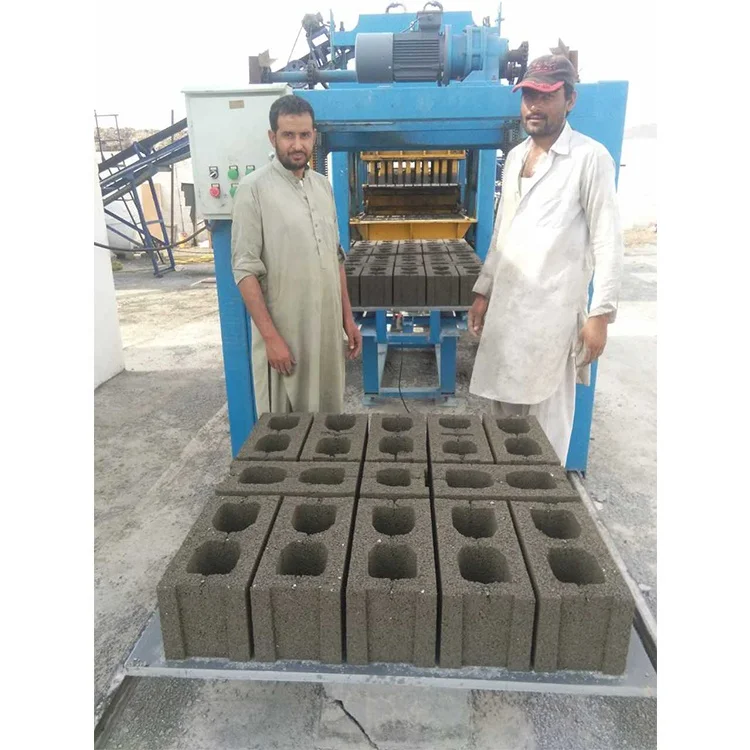
Description
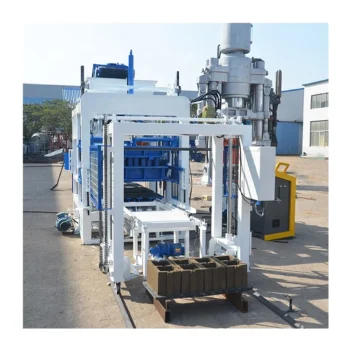
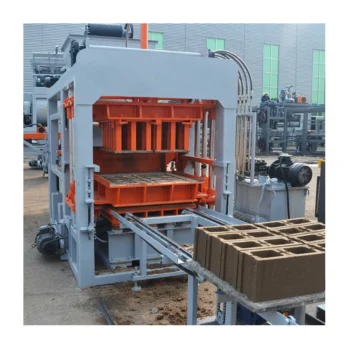
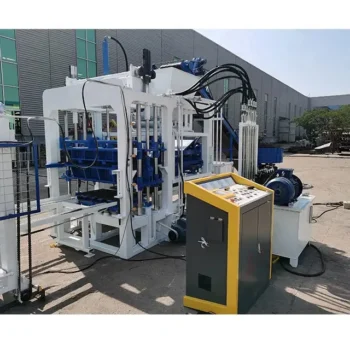
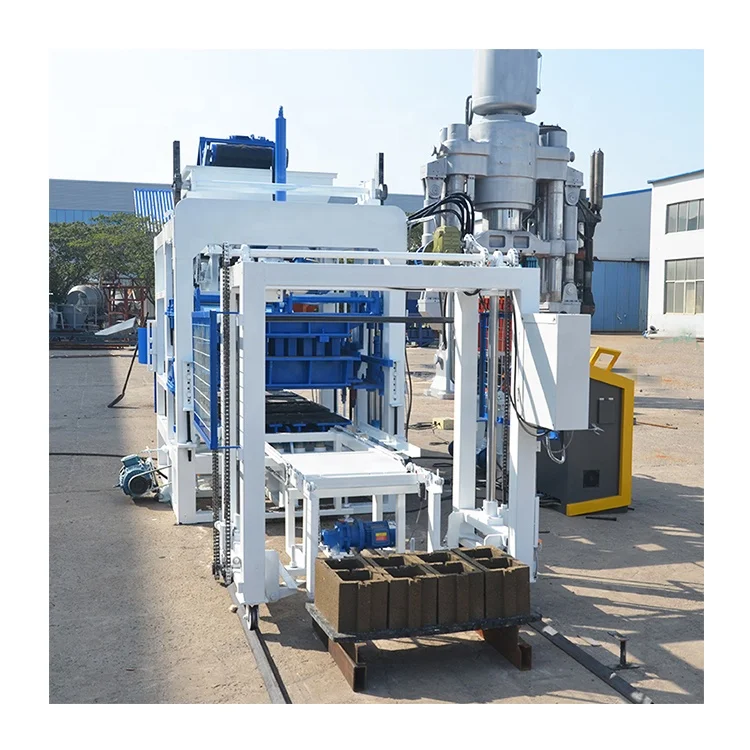
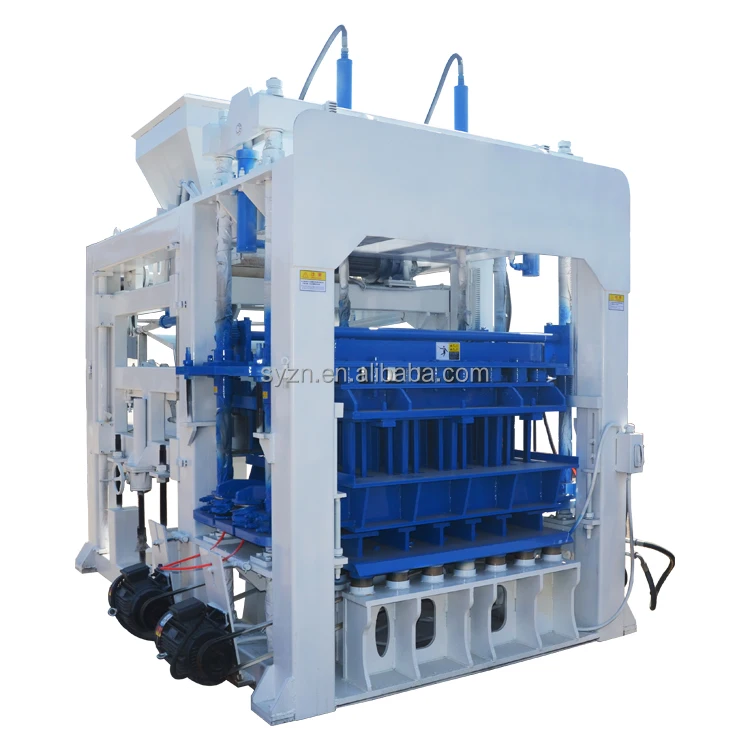
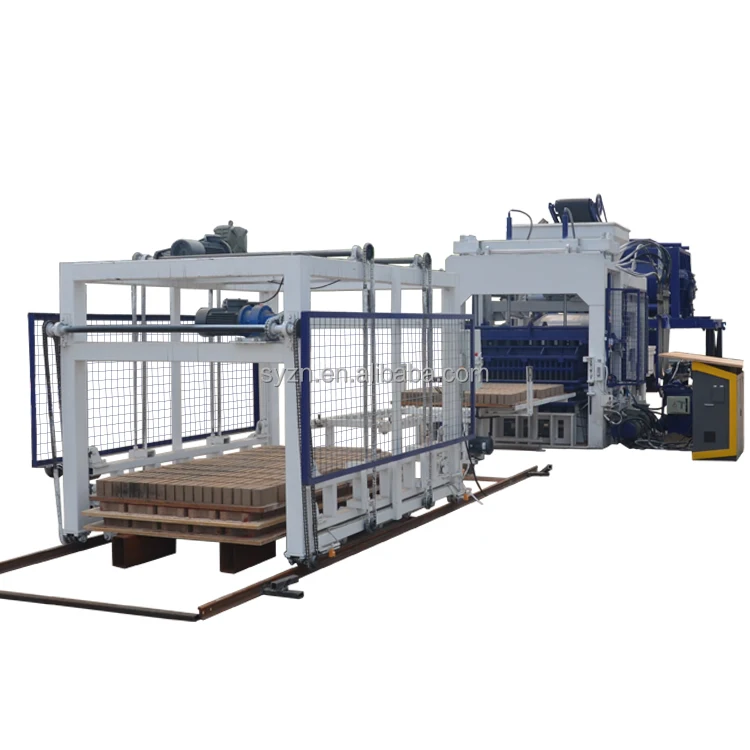
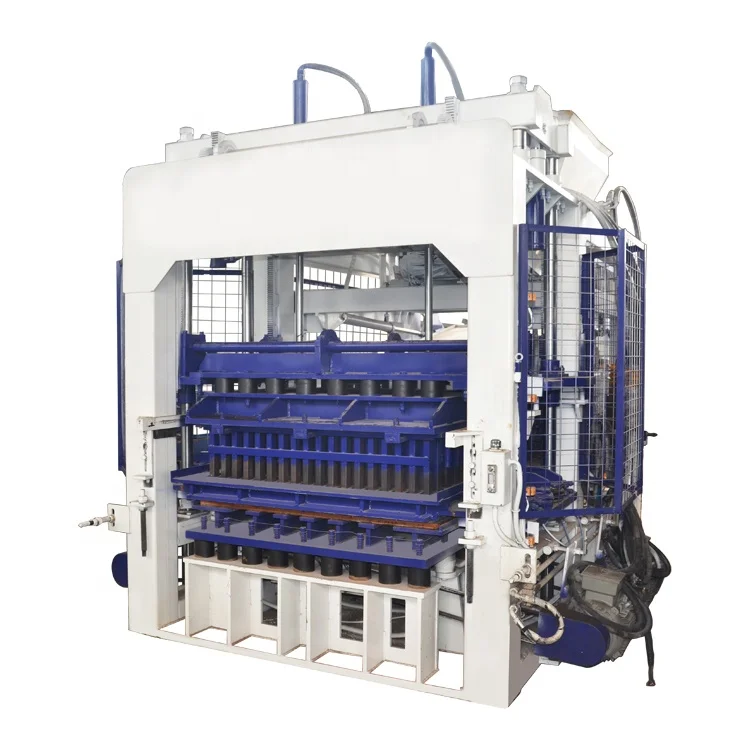
Matched System Sizing — We configure the QT12-15 block machine, moulds, and pallets as one integrated unit based on your local aggregate and target formats, rather than supplying mismatched components from separate sources.
Technical Specifications
| Parameter | Value |
|---|---|
| Model | QT12-15 |
| Product Type | Automatic Hydraulic Block Making Machine |
| Control System | PLC aptitude control with human-machine interface dialogue system |
| Vibration System | Vertically synchronous vibration, frequency conversion and braking, double vibration sources |
| Hydraulic System | Computer control flow pressure, special hydraulic loading unit |
| Feeding System | Semi-closed screen reticular rotational feeding unit, forced feeding |
| Structure | Super-strong steel structure with imported original parts |
| Automation Level | Automatic, mass production capable |
| Mould Capacity (Hollow 400×200×200 mm) | 12 pcs/mould, 15–20 s cycle, 17,280–23,040 pcs/8 hr |
| Mould Capacity (Hollow 400×150×200 mm) | 14 pcs/mould, 15–20 s cycle, 20,160–26,880 pcs/8 hr |
| Mould Capacity (Solid 240×115×53 mm) | 52 pcs/mould, 15–20 s cycle, 74,880–99,840 pcs/8 hr |
| Mould Capacity (Rectangular Paver 200×100×60 mm) | 35 pcs/mould, 20–25 s cycle, 40,320–50,400 pcs/8 hr |
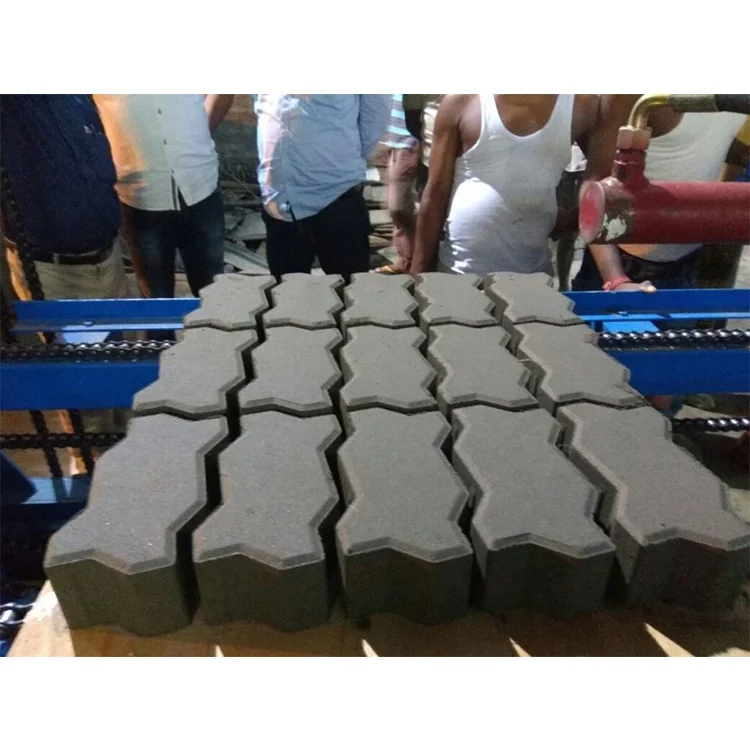
| Mould Capacity (Zigzag Paver 225×112.5×60 mm) | 27 pcs/mould, 20–25 s cycle, 31,104–38,880 pcs/8 hr |
| Voltage & Frequency | Configurable based on site requirements (basis to be confirmed) |
| Rated Power | Subject to final configuration (basis to be confirmed) |
| Pallet Size | Matched to curing area and handling equipment (basis to be confirmed) |
Application Suitability
| Application | Material or Output |
|---|---|
| Hollow Block Production | Crushed stone, river sand, cement, and fly ash for load-bearing masonry |
| Solid Brick Manufacturing | High-density concrete mixes for structural infill and partition walls |
| Paving Block Production | Coarse aggregate and pigment blends for pedestrian and vehicular surfaces |
| Interlocking Brick Formation | Zero-slump concrete for retaining walls and erosion control structures |
| Large-Scale Block Plants | Multi-format daily runs requiring consistent density across block types |
Why "High Output" Means Nothing Without the Block Format Attached
A capacity figure only becomes useful when tied to the exact dimensions and cycle time of the block you intend to sell.
I learned this the hard way during a commissioning project in the Middle East. We calibrated a large automatic press for river sand, but the buyer was using local volcanic scoria. The vibration frequency couldn’t compact the lighter aggregate properly, and actual daily output dropped to roughly half the nameplate rating. The entire construction site stalled waiting for blocks. The QT12-15 automatic block machine specifications mean very little if the cycle time is measured on a format your market doesn’t buy [NEED_CITE: concrete block aggregate compatibility and compaction requirements]. Buyers often see a headline number and assume it applies universally across every mould they plan to run.
Matching Cycle Time to Your Actual Product Mix
The QT12-15 operates on a 15–20 second cycle for standard hollow and solid formats, while pavers and interlocking bricks require a longer 20–25 second cycle due to higher compaction demands. This difference matters because a plant running primarily paving blocks will see a lower hourly throughput than one producing hollow blocks, even on the same machine. Understanding the QT12-15 automatic block machine specifications in this context prevents unrealistic production scheduling and helps you plan curing rack turnover accurately.
Vibration and Hydraulic Pressure as a Matched Pair
Block density depends on how well the vibration force and hydraulic pressure work together on your specific mix design. The double vibration source system with frequency conversion braking delivers vertically synchronous compaction, while the computer-controlled hydraulic flow pressure adjusts to the material’s resistance. If the pressure is too low for a dense aggregate, blocks emerge weak; if too high for a lightweight mix, the material fractures internally. This balance must be set during commissioning against your actual raw materials [NEED_CITE: hydraulic pressure and vibration force matching in block presses].
Reading the Specification Sheet Beyond the Headline Numbers
The semi-closed screen reticular feeding unit ensures material enters the mould cavity at a consistent rate, which directly affects block-to-block density uniformity across a production run. The PLC human-machine interface allows operators to adjust feed timing, vibration duration, and pressure curves directly, reducing the trial-and-error that wastes material during format changeovers. The super-strong steel structure absorbs the repeated stress cycles, maintaining mould alignment over extended production runs. These QT12-15 automatic block machine specifications determine whether the press holds tolerance over a full shift or drifts into inconsistent block dimensions.
The Cost of Ignoring Pallet Size and Mould Change Time
Pallet size chosen without regard to the curing area dimensions and forklift capacity already on site forces manual handling that bottlenecks the entire line. Similarly, if a mould change consumes most of a shift, the format flexibility you paid for effectively disappears. These mismatches do not show up in the brochure but surface immediately when the plant starts running [NEED_CITE: pallet handling and curing logistics in block production]. Buyers who overlook these details often find their actual daily output constrained not by the press itself, but by the supporting logistics around it.
Why Buyers Specify With Us
We treat the block machine, moulds, pallets, and handling equipment as a single matched system rather than assembling components from separate suppliers. Every configuration is set against the buyer’s actual mix design and local aggregate, not a catalogue default. Mould design covers the formats your market actually sells, including custom drawings when standard options don’t fit. The automation level is selectable, allowing a plant to start semi-automatic and add stacking or cubing later. Installation includes on-site commissioning and operator training so the crew can run independently from day one.
Documentation & Verification
- Line layout and capacity calculation stating the exact block format assumed for every output figure
- Machine specification sheet with confirmed voltage, frequency, and PLC display language
- Mould drawing and format list covering every block type included in your order
- Hydraulic and electrical schematic showing the specific valve and control configuration shipped
- Factory test record with your chosen mould installed and running before dispatch
- Operation and maintenance manual with wear parts list and recommended replacement intervals
Installation, Commissioning & Support
- Foundation plan sized to the QT12-15’s steel structure footprint and vibration load
- Dedicated electrical circuit matching confirmed voltage and frequency for the hydraulic and vibration motors
- Machine dismantling for container loading with reassembly guidance at destination
- On-site commissioning with vibration frequency and hydraulic pressure calibrated to local aggregate
- Operator training on PLC dialogue interface for parameter adjustment and fault diagnosis
- Mould and hydraulic wear parts list with reorder codes for first replacement planning
Preparing Your Technical Inquiry
When requesting a proposal for the QT12-15, specify your primary block formats, target daily output per format, and the local aggregate you plan to use. Include your site voltage and frequency, the PLC display language your operators require, and details on your existing curing area and forklift fleet. This information allows us to configure the press, moulds, and pallet system as a coherent line rather than a standalone machine.
Frequently Asked Questions
Q: How do I calculate real daily output for my specific block format?
A: Start with the cycle time for your chosen format — for example, 15–20 seconds for a 400×200×200 mm hollow block at 12 pieces per mould. Multiply the pieces per cycle by the number of cycles achievable in your planned shift length, then apply a realistic operational efficiency factor to account for mould changes and pallet handling pauses.
Q: What pallet size does this press require, and how do I match it to my curing setup?
A: Pallet size must align with both the mould cavity layout and your existing curing rack spacing and forklift capacity. We confirm pallet dimensions and material during the configuration stage so that blocks move from press to curing area without manual re-stacking or handling bottlenecks.
Q: How long does a typical mould change take on the QT12-15?
A: Mould change duration depends on the quick-release mechanism specified and the operator’s familiarity with the procedure. We confirm the expected changeover time for your selected mould set during the proposal stage so that format flexibility is not lost to extended downtime.
Q: Can the vibration and hydraulic settings be adjusted for my local raw material?
A: Yes. The double vibration source and computer-controlled hydraulic pressure are calibrated during commissioning against your actual aggregate and mix design. Running the press at catalogue default settings on unfamiliar material is the most common cause of density and strength inconsistency.