

Description
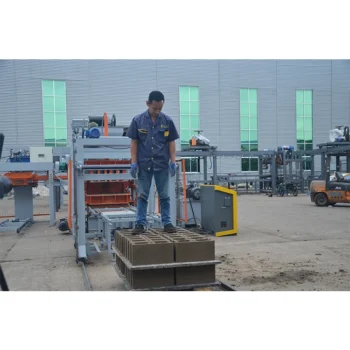
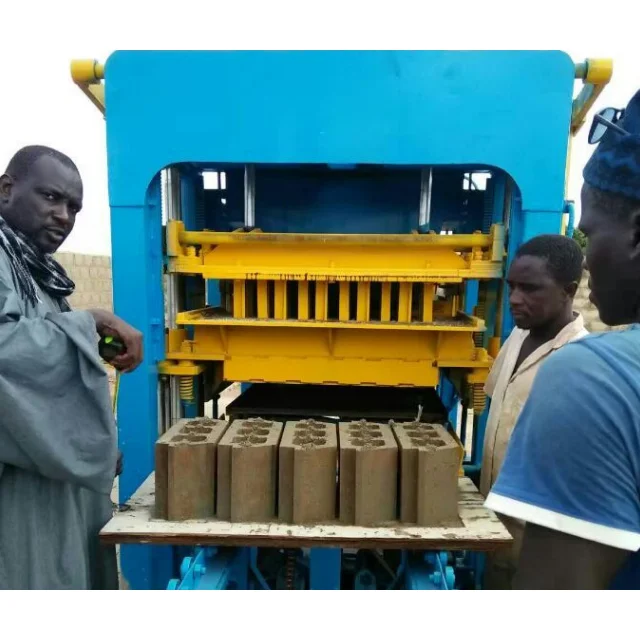
Pallet Size Matched — the QT4-15 ships with 1020 x 570 mm pallets confirmed against your curing rack spacing and forklift fork width before production starts.
Technical Specifications
| Parameter | Value |
|---|---|
| Model | QT4-15 |
| Product Type | Automatic Concrete Block Making Machine |
| Overall Dimensions (L×W×H) | 7100 x 1600 x 2610 mm |
| Rated Pressure | 16 MPa |
| Vibration Form | Platform Vibration |
| Pallet Size | 1020 x 570 mm |
| Molding Cycle | 15–25 s (basis not stated in source — confirm block format / material / thickness) |
| Overall Power | 27.5 kW |
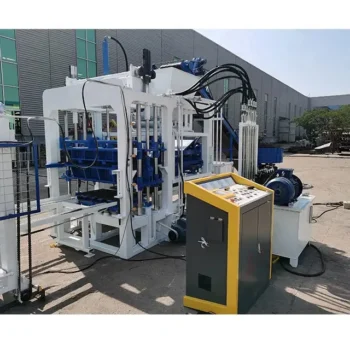
| Control System | PLC (electronic console) |
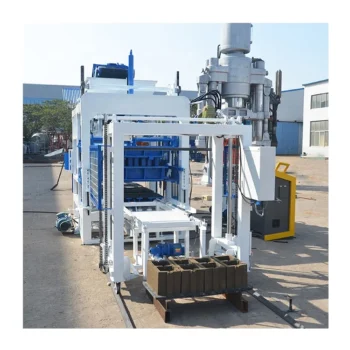
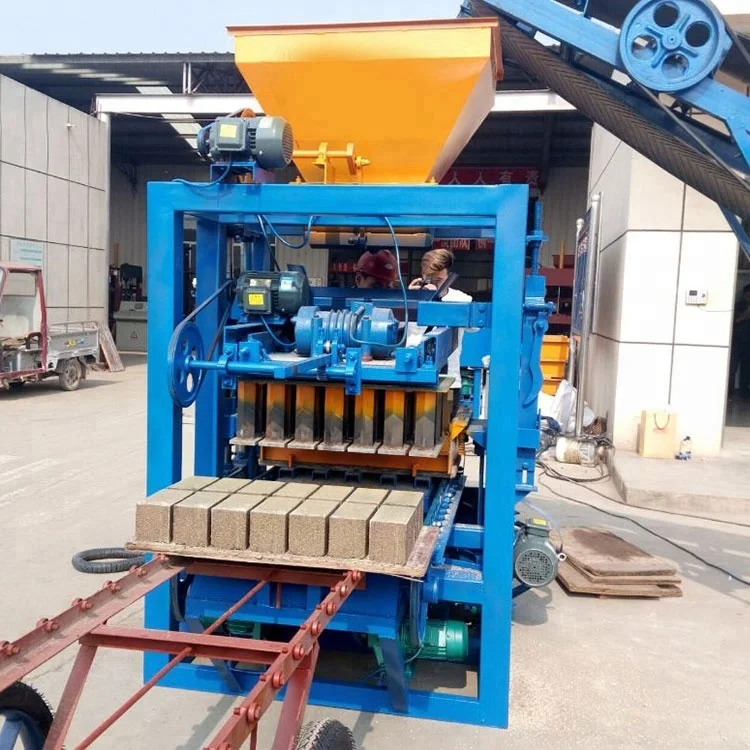
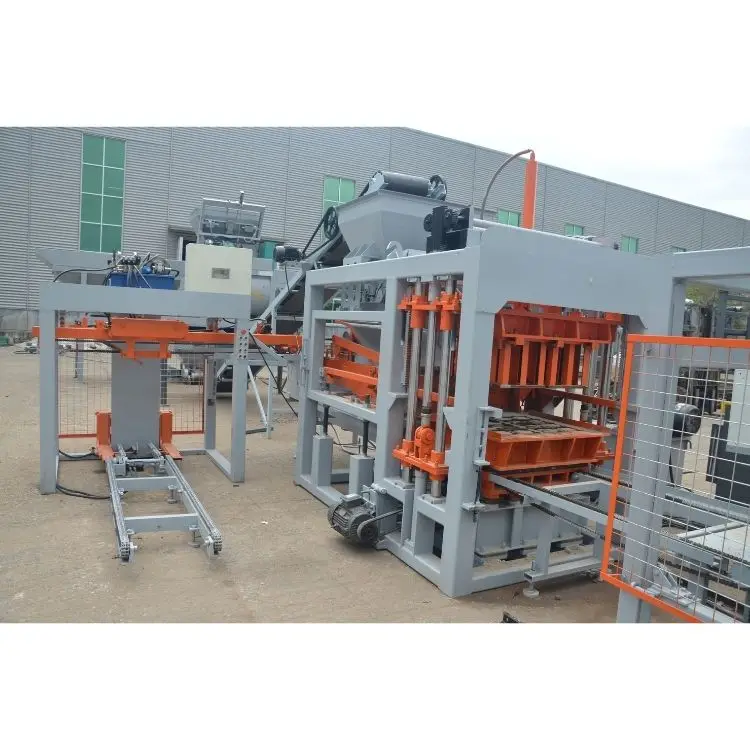
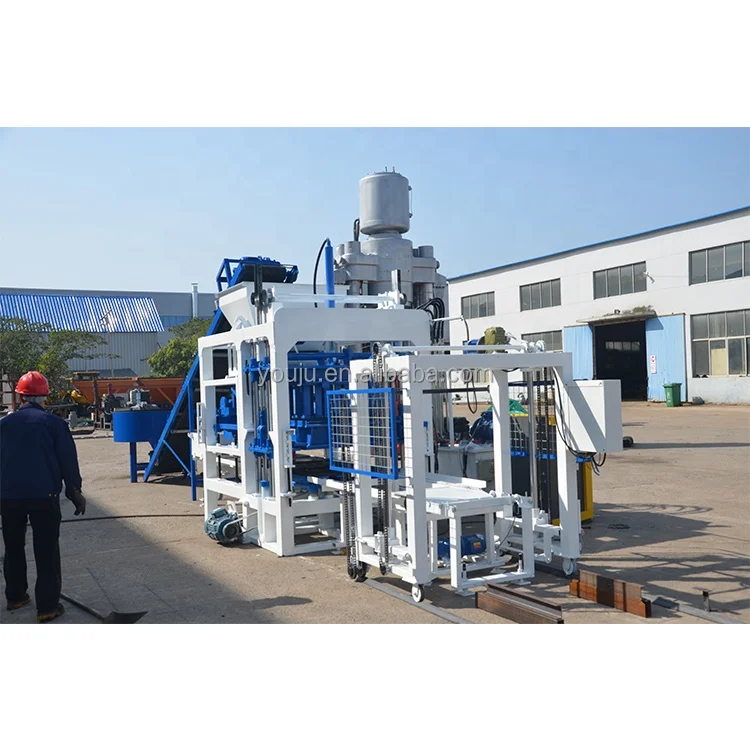
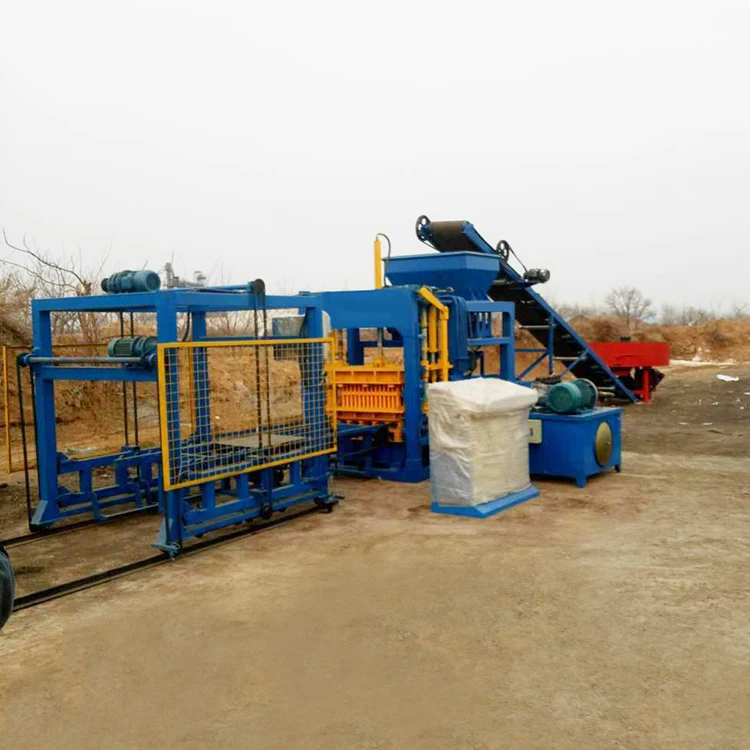
| Automation Level | Automatic with pallet feeder, block receiver, material feeder, hydraulic station |
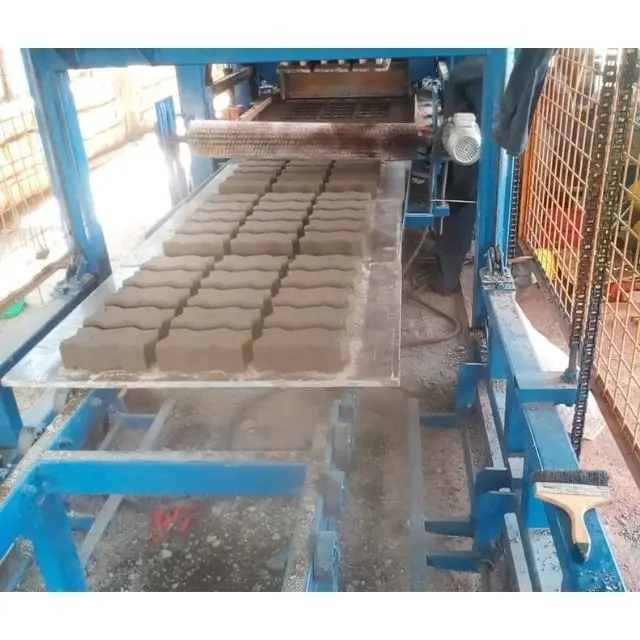
| Mould Format Options | Interlocking, hollow block, paving block |
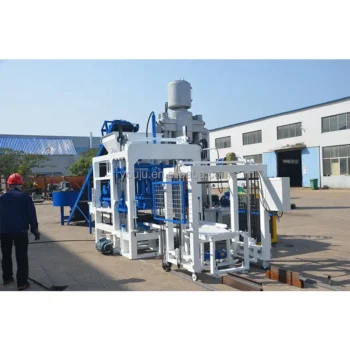
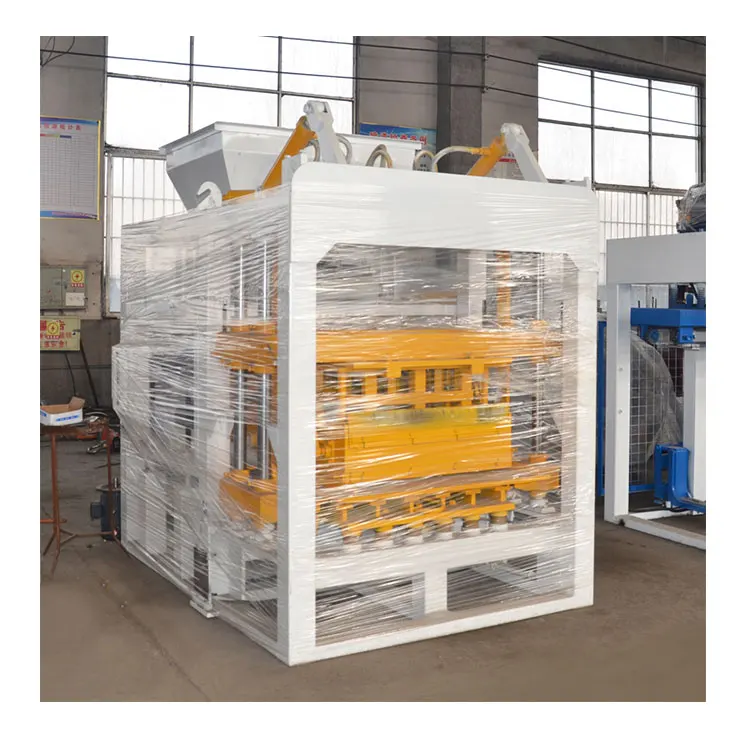
| Assembly State | Factory-assembled mainframe; separate mixer, pallet conveyor, block conveyor |
Application Suitability
| Application | Material or Output |
|---|---|
| Hollow block production for load-bearing walls | Crushed stone, cement, sand aggregate mixes |
| Interlocking brick manufacturing for paving | Fine aggregate with cement binder |
| Paving block production for walkways and yards | Coarse aggregate, cement, pigment blends |
| Solid block runs for partition walls | Standard concrete mix with local aggregate |
Why Cycle Time Without a Block Format Tells You Nothing
A 15-second cycle on a thin paving block is not the same machine as a 25-second cycle on a deep hollow block.
I have watched buyers sign off on a QT4-15 automatic block making machine specifications sheet quoting cycles per hour, then arrive at the plant to find their actual hollow block output running well below what they budgeted for. The reason is straightforward: a 390 mm hollow block draws more material, needs longer vibration to compact the core walls, and requires a slower demould to avoid cracking. The cycle range exists for a reason, but without the format stamped next to it, the number is a guess. [NEED_CITE: effect of block geometry on vibration dwell time in hydraulic block presses]
The honest approach is to state cycle time per mould format, so your daily output calculation reflects the product your market actually orders.
Matching Mould Format to Your Local Market
Every block market has a dominant format. In some regions it is the 400 mm hollow block for perimeter walls; in others, interlocking pavers dominate landscaping contracts. The QT4-15 accepts moulds for all three major formats, but the machine must be configured around the one that drives your revenue. Platform vibration intensity and hydraulic pressure interact differently with a tall hollow block cavity versus a shallow paver profile, so the vibration dwell and press sequence are adjusted during commissioning to suit your primary format first, then verified across secondary formats.
What Pallet Size Really Decides
The 1020 x 570 mm pallet dimension is not an arbitrary frame size. It determines how many blocks sit on each pallet, how the pallets stack in your curing yard, and whether your existing forklift can handle them loaded. A pallet that is too wide for your rack spacing means rebuilding the curing area. A pallet material that warps under wet block weight means uneven curing and rejected product. Confirming pallet size and material against your site before the QT4-15 ships avoids a costly mismatch that only appears on day one of production. [NEED_CITE: pallet deflection standards for concrete block curing]
Reading the Specs That Actually Matter on Site
The 16 MPa rated hydraulic pressure works together with platform vibration to compact the concrete mix into the mould. Higher pressure alone does not guarantee block density; the vibration must liquefy the mix enough for the pressure to consolidate it. If your local aggregate has high fines or clay content, the vibration frequency and amplitude need adjustment or the blocks will show surface voids. The 27.5 kW overall power covers the hydraulic pump, vibration motors, and conveyor drives running simultaneously — undersized supply cabling causes voltage drop that shortens motor life. The PLC electronic console sequences the entire cycle from material feed through demoulding, so the operator monitors rather than manually times each stage.
What Happens When the Mix Design Is Ignored
I once configured a machine for a buyer who quoted a standard sand-cement ratio from a catalogue. When the machine arrived, their local river sand carried a clay content that absorbed extra water and changed the compaction behaviour entirely. Blocks cracked during demoulding, and the production team spent weeks adjusting parameters by trial and error. The QT4-15 automatic block making machine specifications should be set against a trial batch of your actual aggregate, not a default recipe. Skipping the sample test is the single most common reason a block line underperforms in its first month. [NEED_CITE: impact of aggregate clay content on concrete block compressive strength]
Why Buyers Choose This Configuration Path
Block machinery is the single focus of this workshop, so the QT4-15 is specified as a matched system — press, mould, pallet, and handling — rather than assembled from separate vendors. Mould design covers the formats your market sells, with custom drawings accepted for non-standard profiles. The automation level is selectable: a buyer can begin with the automatic pallet feeder and block receiver, then add a stacking system later as volume grows. Voltage, frequency, and PLC display language are confirmed in writing before production, so the machine arrives ready to commission rather than waiting for an electrician to sort out a mismatch.
Documentation & Verification
- Line layout with capacity calculation stating the block format assumed for each cycle time
- Mould drawing and format list provided for approval before production begins
- Voltage, frequency, and PLC language confirmed in writing prior to shipment
- Factory test record with your specified mould installed and blocks photographed
- Hydraulic and electrical schematic matching the as-built configuration
Installation, Commissioning & Support
- Foundation plan drawn for the 7100 x 1600 mm footprint and 27.5 kW power draw
- Dedicated circuit sizing confirmed for the 16 MPa hydraulic pump start-up current
- Mainframe arrives factory-assembled; mixer and conveyors bolt on at site
- Commissioning includes vibration tuning against your local aggregate sample
- Operator training covers PLC cycle sequence and mould change procedure
- Wear parts list with reorder codes for hydraulic seals and vibration pads
What to Prepare Before Requesting a Quote
Send the block format and dimensions your market sells most, along with a sample of your local aggregate. Confirm your site voltage, frequency, and the language your operators read on a control screen. If you have an existing curing yard or forklift, share the rack spacing and fork width so pallet size is locked in early.
Frequently Asked Questions
Q: How is cycle time measured and which block format does the 15–25 second range assume?
A: The 15–25 second molding cycle covers the full material feed, vibration, press, and demould sequence. The actual time depends on block height, cavity depth, and mix workability. A shallow paving block completes faster than a deep hollow block. We state the cycle time per format once your primary product is confirmed, so your output projection is realistic.
Q: What pallet size and material should I choose for my curing yard and forklift?
A: The standard 1020 x 570 mm pallet fits the QT4-15 press area. Material choice — steel, bamboo, or composite — depends on your curing environment and handling method. We confirm pallet dimensions against your rack spacing and forklift capacity before production to avoid yard modifications after delivery.
Q: How do I confirm voltage, frequency and PLC language match my site before shipment?
A: We require written confirmation of your site supply specifications and preferred PLC display language before the machine enters production. The electrical schematic and control panel photographs are shared for your approval so there are no surprises during commissioning.
Q: What is the realistic mould change time from hollow block to paving block on the QT4-15?
A: Mould change involves unbolting the current mould box, lifting it clear, positioning the new mould, and re-securing the vibration table interface. The time depends on your crew’s familiarity and whether you have a crane or hoist available. We document the step-by-step procedure and supply the correct lifting points on each mould frame.
Q: Can the machine be configured for my local aggregate rather than a default recipe?
A: Yes. We request a sample of your local aggregate and run a trial batch to observe compaction behaviour, surface finish, and demoulding characteristics. The vibration parameters and hydraulic press sequence on the QT4-15 are then set to match your material, not a generic catalogue mix.