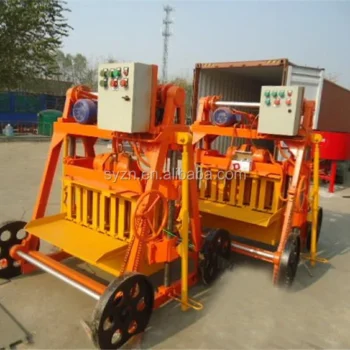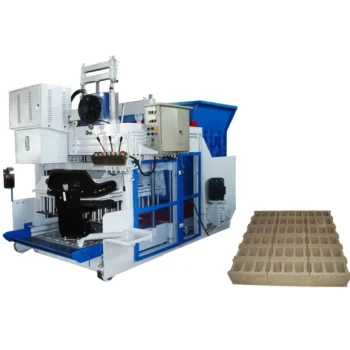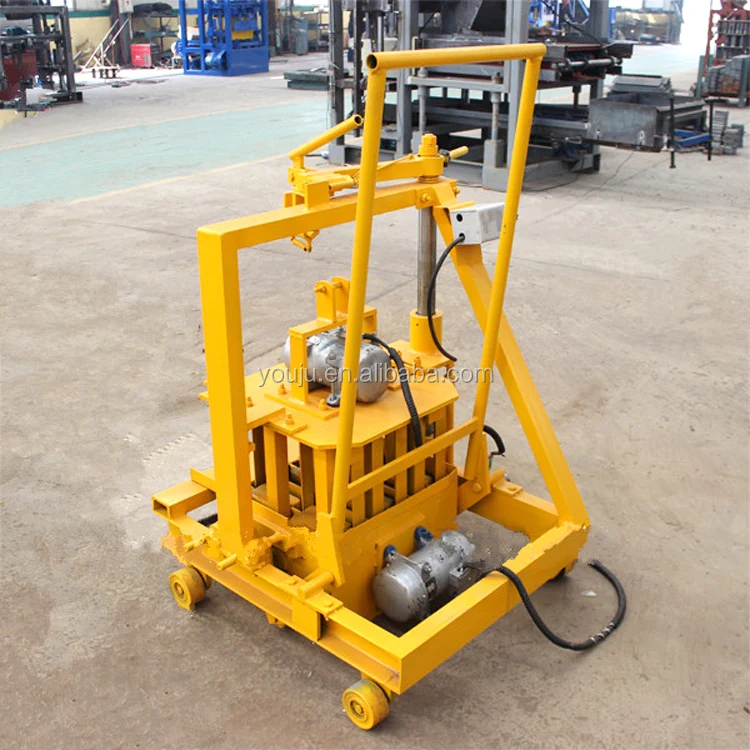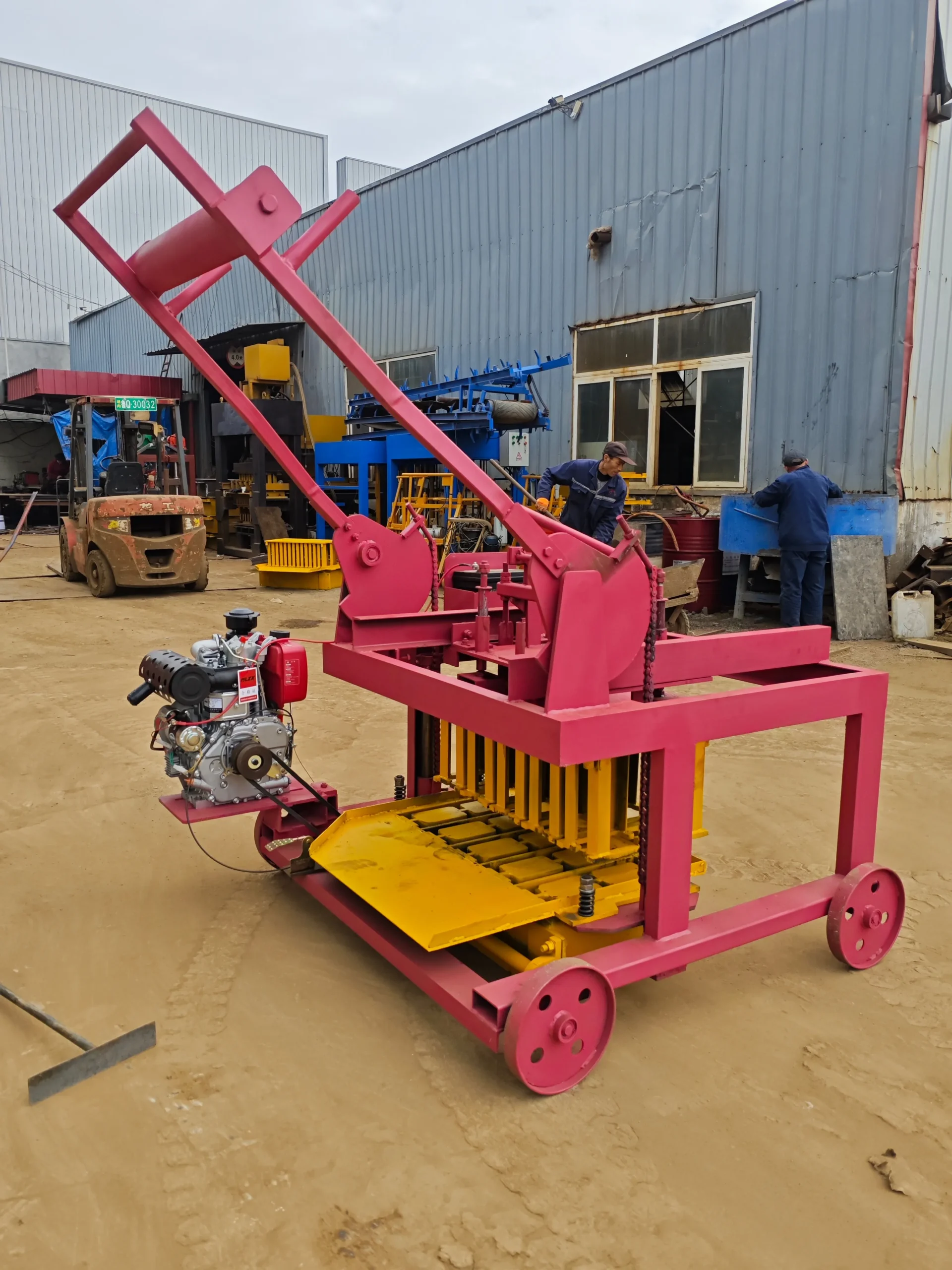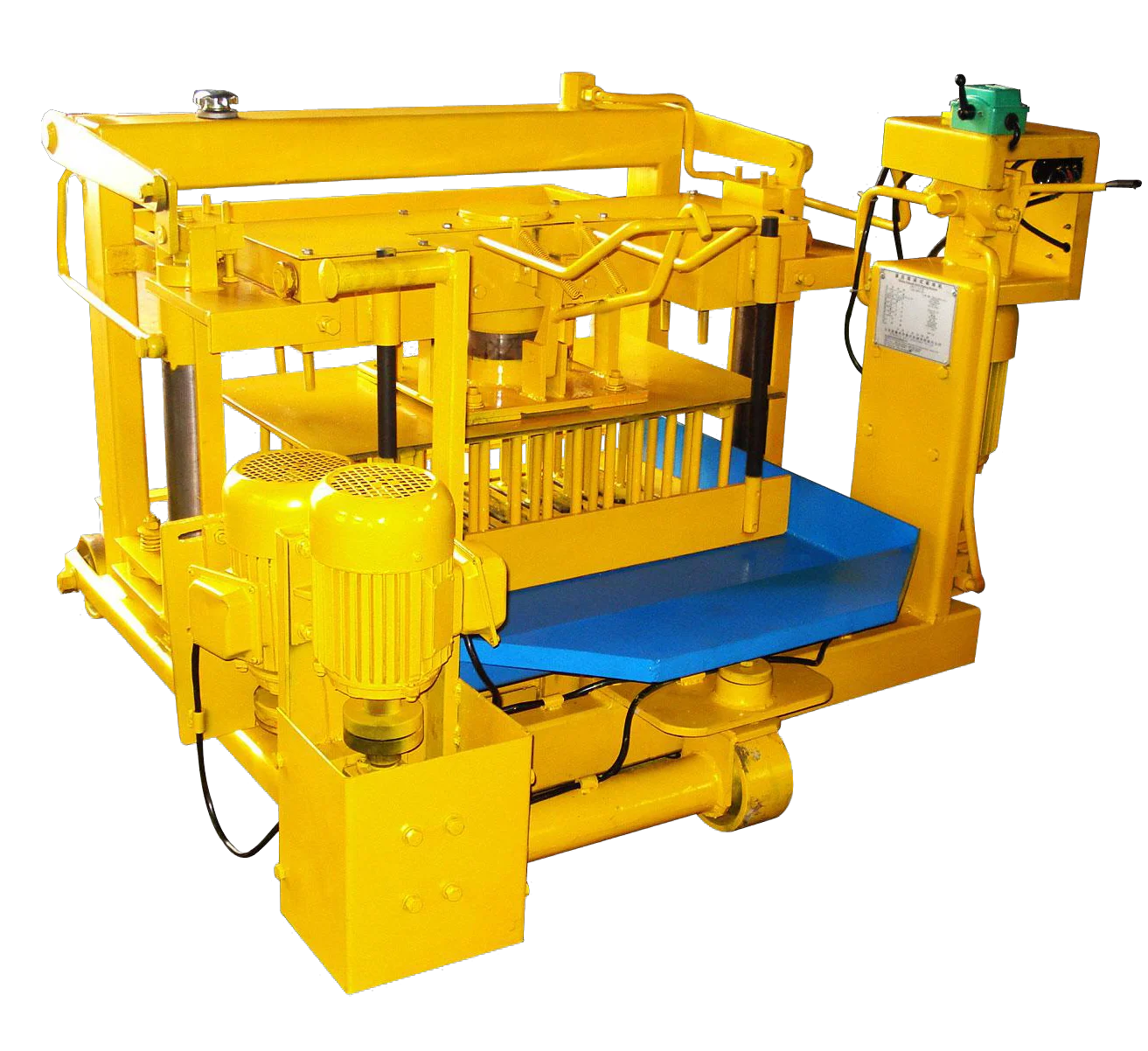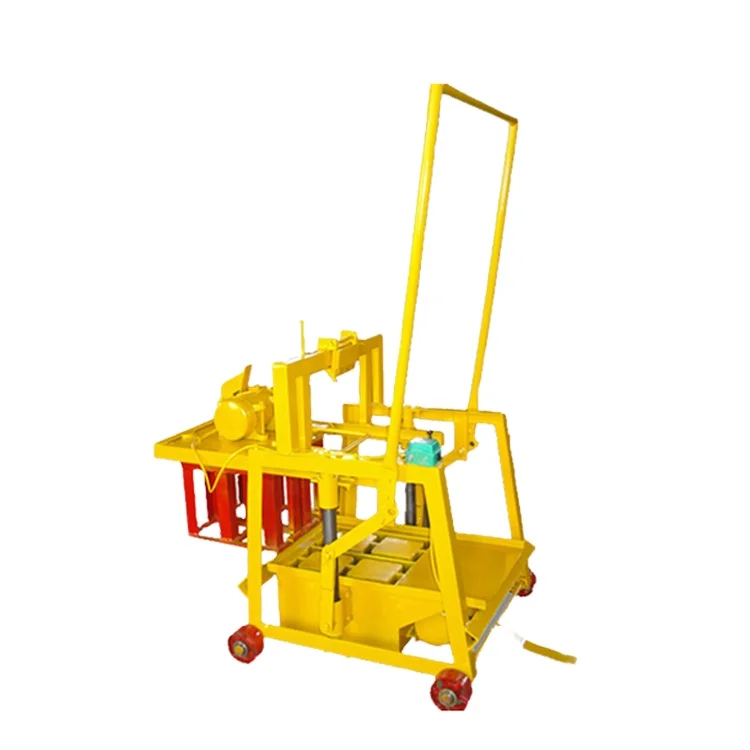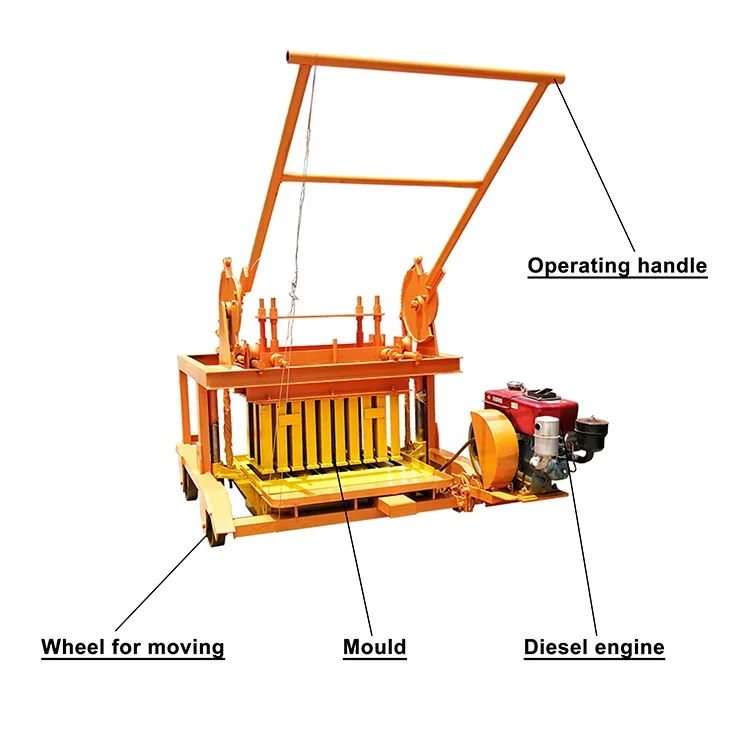
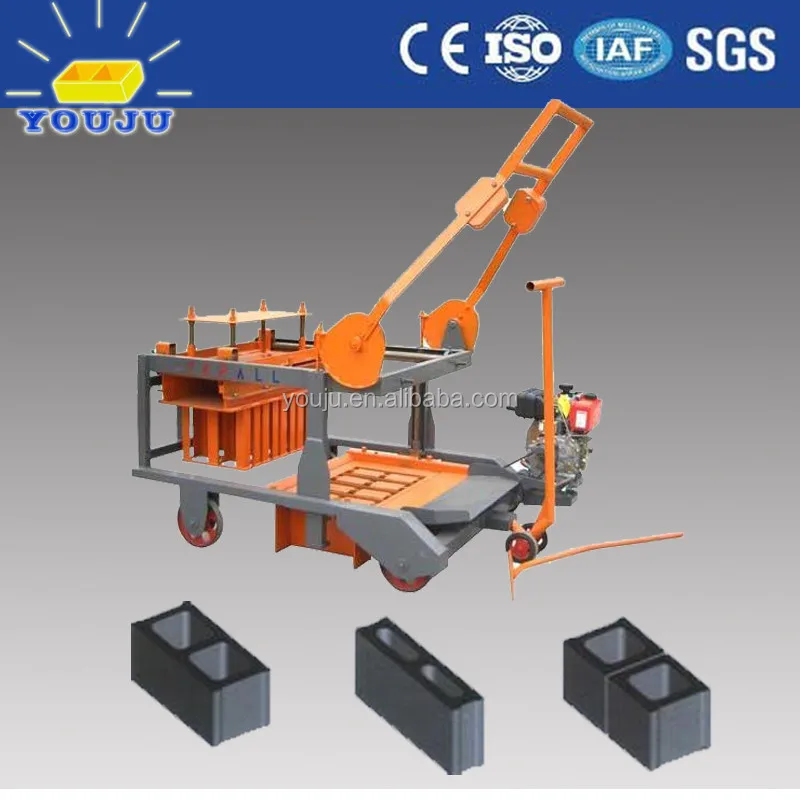
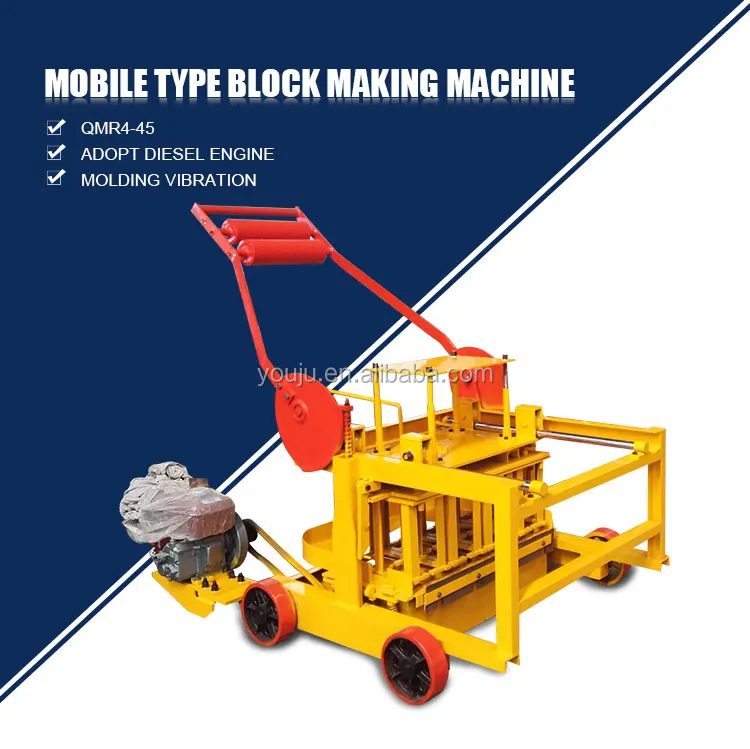
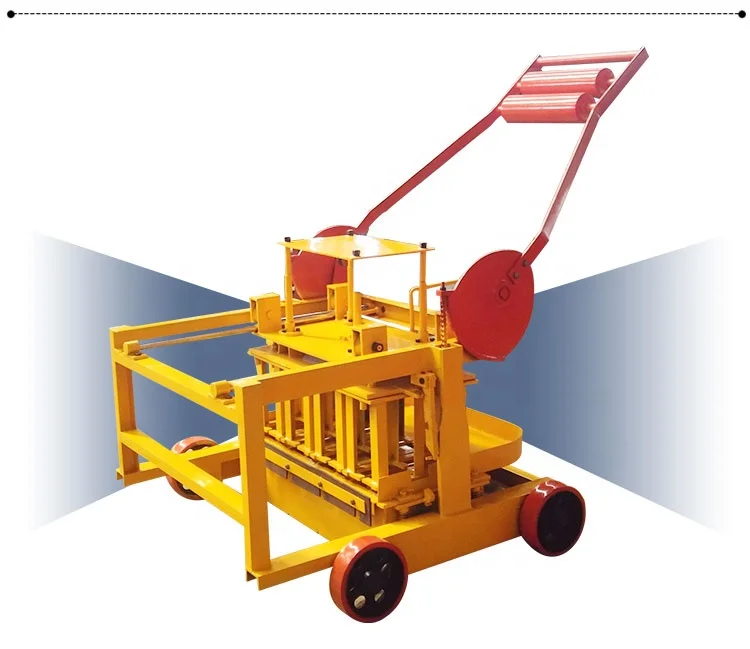
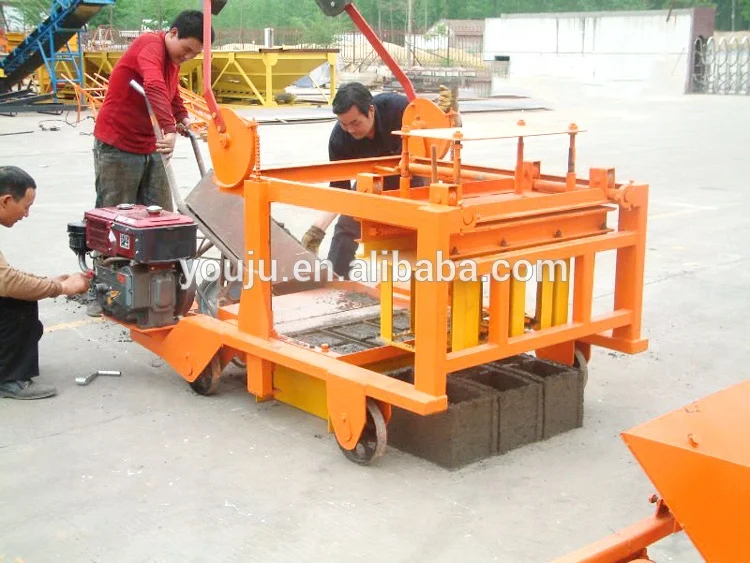
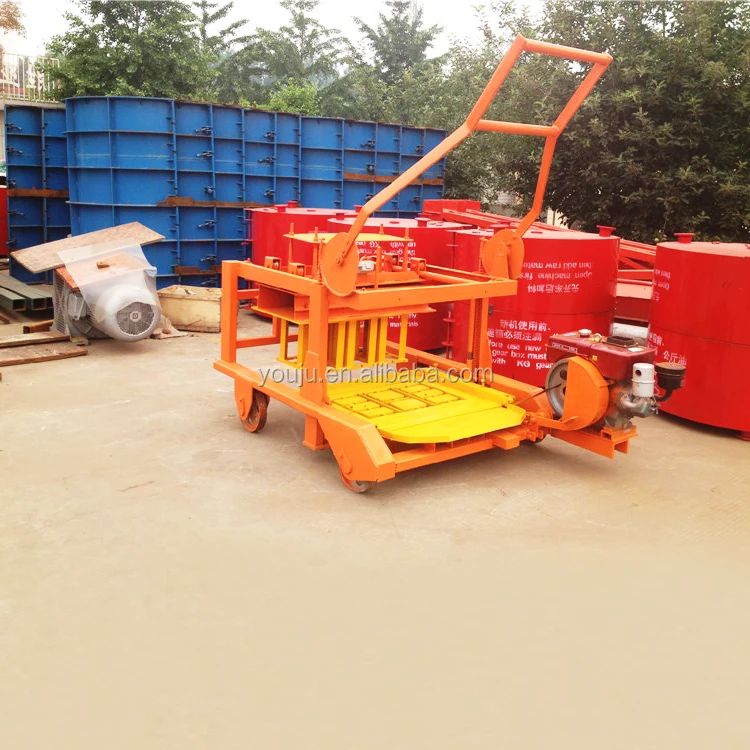
Description
Mould Matched to Market — every QMR4-45 hollow block machine is configured against the buyer’s wall-thickness demand and local aggregate before the quotation is finalised, so quoted output aligns with what your site actually sells.
Technical Specifications
| Parameter | Value |
|---|---|
| Model | QMR4-45 |
| Product Type | Mobile Diesel Concrete Block Making Machine |
| Rated Power | 6 kW |
| Diesel Engine Option | 6 kW / 6–8 HP |
| Voltage Options | 220 V or 380 V, or configurable to local supply |
| Overall Dimensions (L×W×H) | 2420 × 1320 × 1650 mm |
| Net Weight | 810 kg |
| Pallet Requirement | None — egg-laying design |
| Moulding Cycle | 40–45 s (basis: hollow block format; confirm per mould) |
| Daily Output (400×200×200 mm) | 3000 pcs / 8-hour shift, 4 pcs per mould, 40–45 s cycle |
| Daily Output (400×150×200 mm) | 3500 pcs / 8-hour shift, 5 pcs per mould, 40–45 s cycle |
| Daily Output (400×120×200 mm) | 4500 pcs / 8-hour shift, 6 pcs per mould, 40–45 s cycle |
| Standard Mould Formats | Hollow block: 400×200×200, 400×150×200, 400×120×200 mm |
| Automation Level | Manual / egg-laying (mobile, no pallet required) |
| Operating Environment | Sites where electrical supply is limited or unreliable |
| Warranty | One-year guarantee for the whole machine |
Application Suitability
| Application | Material or Output |
|---|---|
| On-site hollow block production without fixed plant | Concrete mix from crushed stone, sand, cement and water |
| Housing project block supply in multiple wall thicknesses | 120 mm, 150 mm and 200 mm hollow block formats |
| Low-investment startup block yard | Egg-laying operation on levelled ground, no pallet logistics |
| Remote construction sites with unstable grid power | Diesel engine driven hydraulic system |
| Contractor self-production of masonry units | Hollow blocks for load-bearing and partition walls |
What "3000 Blocks a Day" Leaves Out When the Format Is Missing
Output only means something when the block size, mould cavity count and cycle time are all stated together.
A mobile block machine specifications sheet that quotes a single daily figure without naming the format it assumes will leave a site manager short on the thinner wall blocks the market actually orders. I watched this happen on a Nairobi housing project where the contractor planned around one headline number, only to discover the 120 mm hollow blocks — the format the architect specified — were not part of the capacity calculation. The QMR4-45 mobile block machine specifications on this page tie every output number to a named mould, cavity count and cycle window so there is no guessing at the gate [NEED_CITE: hollow block format demand by East African market].
Matching Block Format to What the Local Market Buys
The three hollow block sizes the QMR4-45 ships with — 400×200×200 mm, 400×150×200 mm and 400×120×200 mm — cover the most common load-bearing and partition wall specifications across sub-Saharan and South Asian building codes. A buyer sourcing a mobile block machine specifications package must confirm which wall thicknesses the local market orders most, because that determines which mould runs the longest each shift and which output figure applies to daily planning.
Diesel or Electric: Deciding Before the Machine Ships
Sites that face load-shedding or have no three-phase connection benefit from the 6–8 HP diesel engine option, which drives the hydraulic pump independently of the grid. Where stable 380 V power exists, the electric motor reduces fuel cost per block and simplifies daily maintenance. Declaring the power source during the inquiry prevents a machine arriving with the wrong drive package [NEED_CITE: voltage and frequency standards by export market].
Reading the Specs That Shape Actual Output
The 40–45 second moulding cycle governs how many times the mould can fill, vibrate and release in an hour, but cycle time shifts with mix stiffness and block height. Vibration force and hydraulic pressure must be matched to the buyer’s local aggregate — high-clay sand demands more force to reach target compaction, and undersizing either parameter leads to low block strength. The egg-laying design removes pallet cost entirely, but the curing area still needs levelled, swept ground with enough space for 8–10 hours of wet blocks before they can be moved. Mould change between formats involves swapping the mould box and adjusting the feed shoe travel; planning format runs in batches rather than switching every hour keeps the shift productive. The 810 kg machine weight keeps the unit mobile on a flat concrete slab yet heavy enough to resist walking during vibration.
The Cost of Skipping the Aggregate Conversation
Ordering a machine configured for clean river sand when the only available aggregate is pit sand with high clay content forces the operator to run wetter mixes that produce blocks crumbling at the corners. I spent a full week in Machakos re-tuning vibration timing and pressure on a mobile egg-laying unit because nobody had asked about the local sand before the machine left the factory. The blocks eventually passed, but the delay cost the contractor a penalty on the first delivery [NEED_CITE: impact of clay content on concrete block compressive strength].
Why Sourcing This Machine Through a Block-Line Specialist Matters
The QMR4-45 is specified as part of a single matched system — machine, mould and handling — rather than assembled from unrelated catalogue items. Configuration is set against the buyer’s actual mix design and target block format, not a default sheet. Moulds are designed and supplied for the formats the buyer’s market sells, with custom drawings available for non-standard sizes. The automation level is selectable, allowing a buyer to start with manual egg-laying and add pallet-based semi-automatic operation later. Installation support includes operator training so the crew understands mix stiffness, cycle timing and daily greasing from the first shift [NEED_CITE: CE machinery directive requirements for mobile block equipment].
Documentation & Verification
- Capacity calculation sheet stating block format, cavity count and cycle for each output figure
- Mould drawing and format list confirming hollow block sizes included in the quote
- Voltage and control language confirmation recorded before production begins
- Factory test record run on the buyer’s specified block format before dispatch
- Wear parts and mould availability list for first replacement planning
- Hydraulic and electrical schematic for on-site maintenance reference
Installation, Commissioning & Support
- Levelled concrete slab at least 100 mm thick recommended to absorb 810 kg vibration load
- 380 V three-phase or 220 V single-phase supply confirmed; dedicated breaker sized to 6 kW draw
- Diesel option requires level fuel platform and exhaust clearance around the 6–8 HP engine
- Mould box bolts torqued to spec during first commissioning to prevent walk during 40–45 s cycles
- Operator training covers mix stiffness judgment, feed shoe adjustment and daily grease points
- Spare mould wear plates and hydraulic seals listed and shipped with first order
What to Prepare Before Requesting a Quotation
Share the hollow block sizes your market orders most, the daily volume you need to sustain, and the type of sand and aggregate available within hauling distance. Confirm the voltage and frequency at the site, whether three-phase power is stable or a diesel drive is required, and the curing area dimensions you can allocate. This information lets the mobile block machine specifications be finalised against real conditions rather than catalogue assumptions.
Frequently Asked Questions
Q: How is daily output calculated and which block format does each figure assume?
A: Each output figure is tied to a specific hollow block size, mould cavity count and a 40–45 second cycle across an eight-hour shift. The 400×200×200 mm block yields 3000 pieces using a four-cavity mould, the 150 mm version yields 3500 with five cavities, and the 120 mm version yields 4500 with six cavities.
Q: What hollow block sizes can the QMR4-45 produce and how long does a mould change take?
A: Standard formats are 400×200×200 mm, 400×150×200 mm and 400×120×200 mm. Mould change involves unbolting the mould box and adjusting feed shoe travel. Operators typically plan format runs in full batches to minimise changeover within a single shift.
Q: Is the diesel engine option necessary and what are the electrical requirements if using the motor?
A: The 6–8 HP diesel engine suits sites with unreliable grid power or no three-phase connection. Where stable 220 V or 380 V supply exists, the electric motor lowers running cost. Declaring the local voltage and frequency at inquiry stage ensures the correct drive is fitted before shipment.
Q: What local aggregate and mix design work with this egg-laying machine to achieve target strength?
A: The machine handles standard concrete mixes of crushed stone, sand, cement and water. High-clay pit sand requires adjusted vibration timing and pressure to reach target compaction. Providing a sample of the local aggregate before order allows the factory to confirm vibration force and hydraulic settings matched to that material.
Q: What ground preparation is needed since no pallets are used?
A: The egg-laying design deposits blocks directly on a levelled, swept concrete slab. Allow enough curing area for eight to ten hours of wet production before blocks can be moved. The slab must be flat to prevent block distortion and thick enough to handle the vibration of the 810 kg machine.