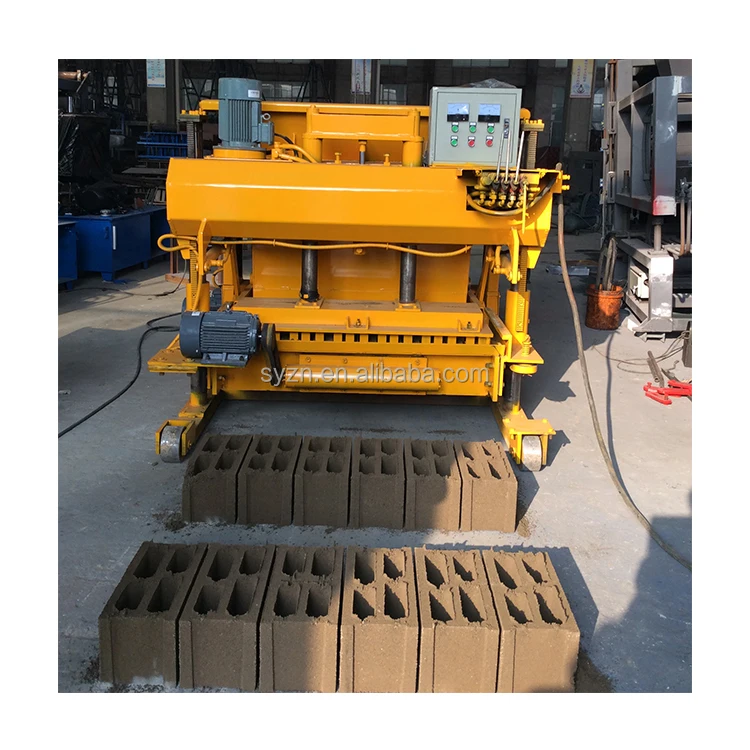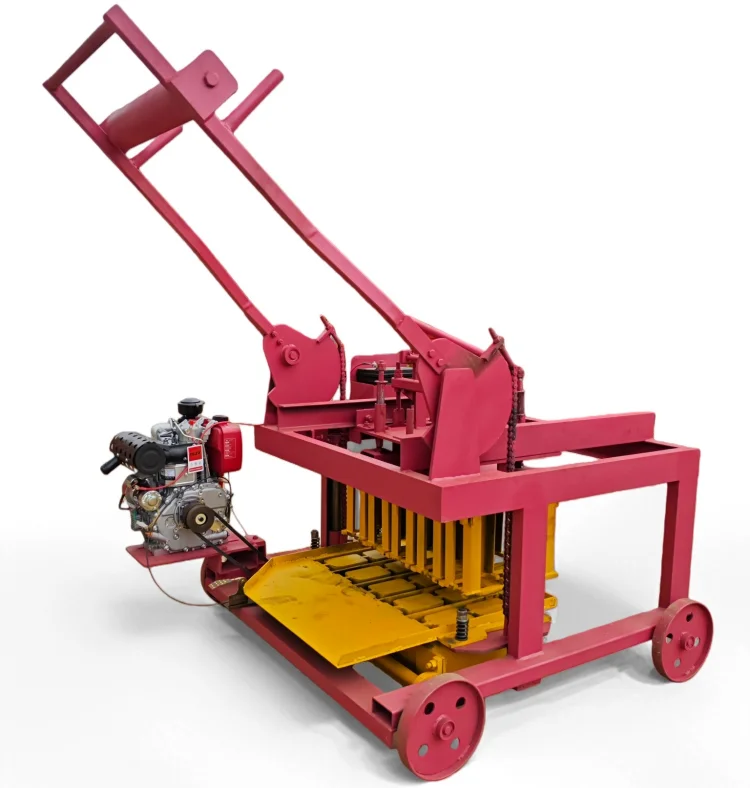


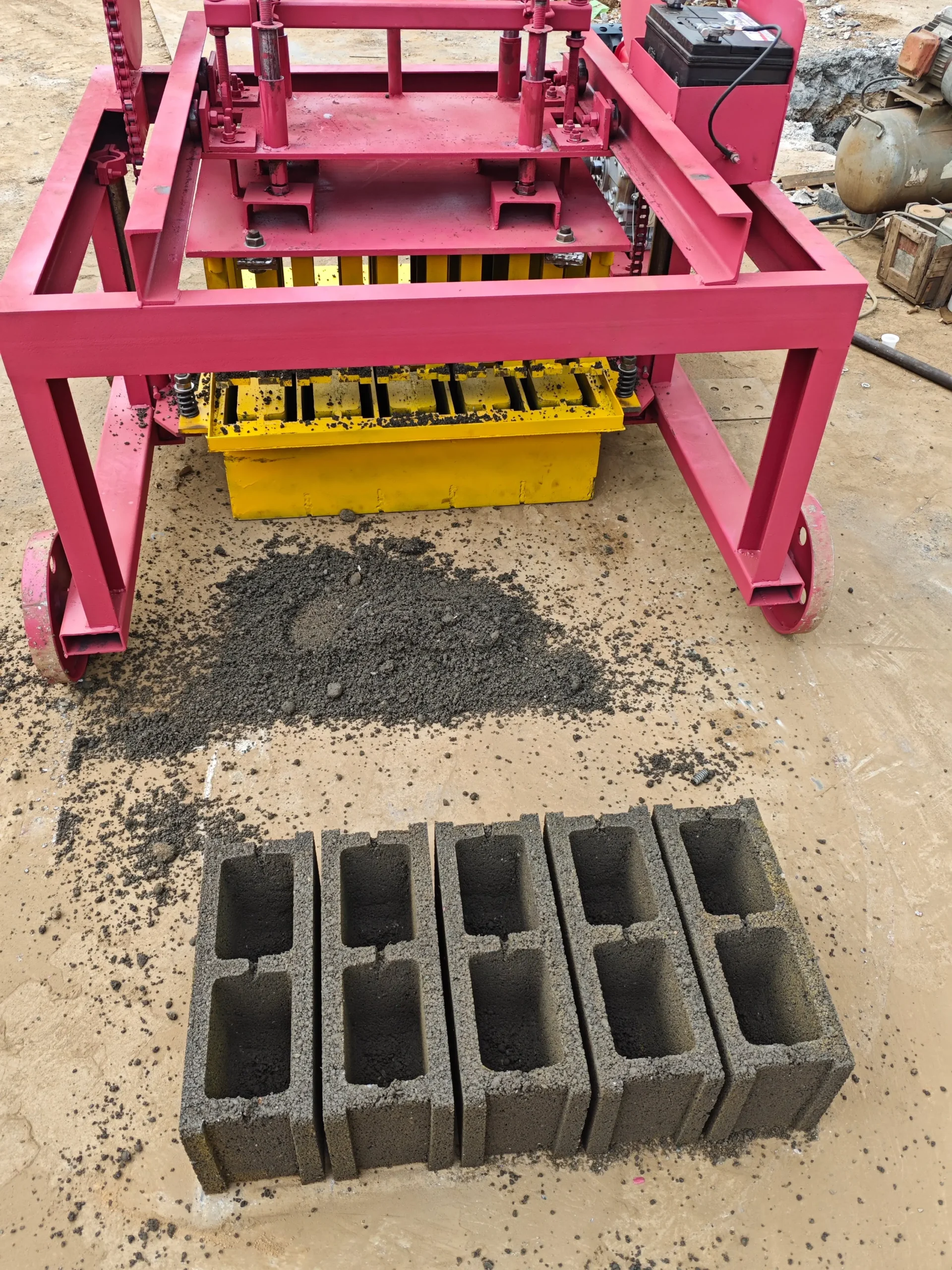


Description
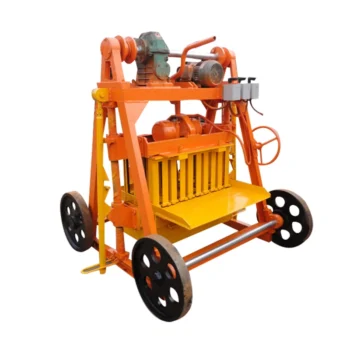
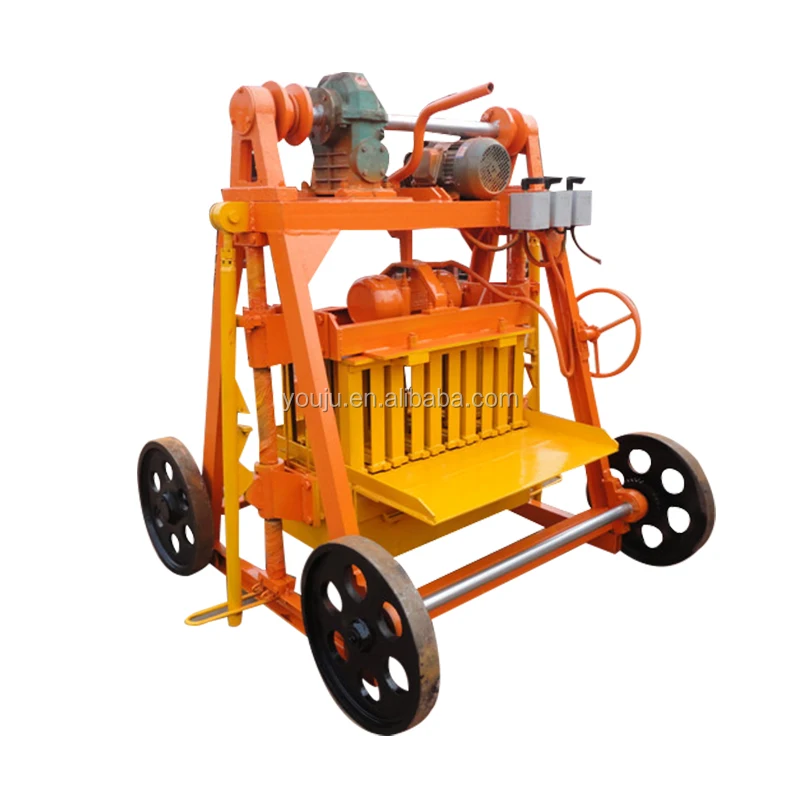
Matched mobile production unit — vibration force, diesel power, and pallet-free egg-laying specified together so cycle time translates to honest daily output once your block format and mould cavity count are confirmed.
Technical Specifications
| Parameter | Value |
|---|---|
| Model | QMR4-45 |
| Product Type | Mobile Block Making Machine |
| Power Source | Diesel |
| Rated Power | 8 hp |
| Molding Cycle | 45 s per cycle |
| Molding Form | Vibration and Pressure |
| Vibration Force | 60 KN |
| Total Weight | 800 kg |
| Overall Dimensions | 2420 × 1320 × 1650 mm |
| Pallet Requirement | No pallet needed (egg-laying) |
| Block Formats | Paver brick, hollow block, concrete block, solid brick, fly ash brick |
| Basic Equipment Included | JZC350 Diesel Concrete Mixer or JQ350 Diesel Concrete Mixer (Electric Generating Unit); Trolley |
| Automation Level | Manual / Semi-automatic |
| Output Capacity | (basis not stated in source — confirm block format / material / thickness) |
Application Suitability
| Application | Material or Output |
|---|---|
| On-site hollow block production for housing projects | Crushed stone, sand, cement, water |
| First-stage block plant for entrepreneurs | Local aggregate, fly ash, cement blends |
| Paver and interlocking brick runs | Fine aggregate, pigment, cement |
| Remote site production without grid power | Any standard concrete mix powered by diesel |
What "45 Seconds per Cycle" Actually Means for Your Output
Cycle time only becomes daily capacity when the block format and mould cavity layout are locked in.
Many mobile block making machine specifications quote a cycle figure without telling you which block size it applies to. A 45-second cycle on a single-cavity hollow block mould produces far fewer pieces per shift than the same cycle on a multi-cavity paver mould. I have watched buyers sign off on a machine expecting a certain daily tonnage, only to discover the quoted cycle assumed a format they never intended to sell [NEED_CITE: block format assumptions in capacity quotations]. The QMR4-45 Mobile Block Making Machine cycle of 45 s is the starting point for a capacity conversation, not the final answer.
Pallet-Free Egg-Laying and What It Saves
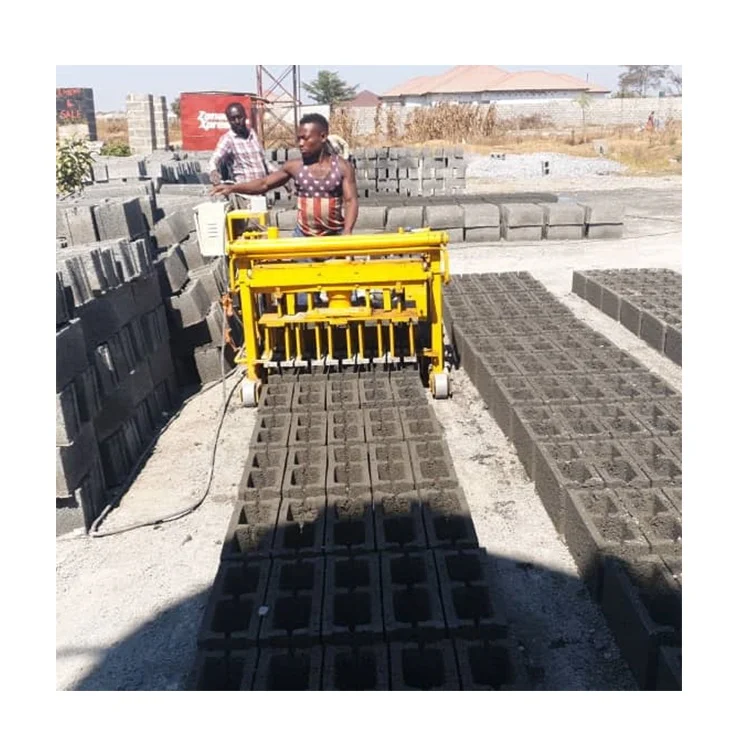
Egg-laying operation means the QMR4-45 deposits blocks directly onto the ground or a prepared curing slab, then moves forward under its own trolley. No pallets to purchase, no pallet return loop to staff, no curing rack investment. For a contractor producing hollow blocks on a housing project site, this removes an entire logistics layer. The trade-off is that the curing area must be flat, level, and large enough to hold a full day’s output until the blocks gain enough green strength to be moved.
Diesel Power for Sites Beyond the Grid
The 8 hp diesel source keeps the mobile block making machine independent of grid reliability. In regions where three-phase supply is absent or load-shedding is routine, the JZC350 diesel mixer pairs with the press so the whole batch plant runs on fuel. If the site does have stable electricity, the alternative JQ350 electric generating unit option can be selected, but voltage and frequency must be confirmed before the machine leaves the factory [NEED_CITE: voltage and frequency standards by export market]. Getting this wrong means the mixer motor burns out on the first shift.
How Vibration Force and Pressure Interact on a Small Press
The 60 KN vibration force works together with mechanical pressure to compact the mix inside the mould box. On a mobile egg-laying machine, there is no massive hydraulic station — the pressure comes from the machine weight and the vibration table design. This is adequate for standard hollow and solid blocks, but the mix must be calibrated to the available force. A high percentage of fine aggregate or a very dry mix may not consolidate fully, resulting in blocks that crumble at the edges. Conversely, a mix that is too wet will slump the moment the mould lifts. The only reliable way to find the right balance is to run a trial batch with your actual local aggregate before committing to production targets.
What Happens When Mould Change Is an Afterthought
The QMR4-45 can produce hollow blocks, solid bricks, pavers, and fly ash bricks on a single frame, but format flexibility only matters if the mould swap does not eat half a shift. Buyers sometimes focus on the list of available moulds without asking how they mount, how many bolts must be undone, and whether the vibration table needs re-levelling afterwards [NEED_CITE: mould change procedures for mobile egg-laying block machines]. If the answer is a two-hour job, the machine will spend most of its life making one format regardless of what the brochure promises.
Why This Machine Fits the Purchase Decision
Block machinery is the single production focus here, so the QMR4-45 press, its mixer, trolley, and moulds are specified as one matched unit rather than assembled from unrelated suppliers. Configuration starts from your actual mix design and target block format, not a catalogue default. Moulds are designed and supplied for the formats your local market buys, including custom drawings when standard sizes do not match. The automation level — manual or semi-automatic — is selectable, so you can begin with low capital outlay and add conveyor or stacking modules later. Installation support and operator training are included so the first week of production is not spent troubleshooting.
Documentation & Verification
- Capacity calculation sheet stating daily output per block format with assumed mould cavity count
- Mould drawing and format list showing every block size included in your order
- Factory test record run on a mix close to your local aggregate before dispatch
- Voltage, frequency, and control language confirmation if the JQ350 electric unit is chosen
- Operation and maintenance manual with illustrated wear parts list
- Packing photographs and customs documentation support for your destination port
Installation, Commissioning & Support
- Level, compacted ground slab required for egg-laying curing across the 2420 × 1320 mm machine footprint
- Diesel fuel supply for the 8 hp engine and JZC350 mixer; no electrical connection needed in diesel configuration
- Machine shipped partially assembled; trolley wheels and vibration table bolted on site
- First-day commissioning includes mould alignment check and 45 s cycle verification
- Operator training covers mix consistency judgement, mould change sequence, and daily greasing points
- Wear parts list with mould liner and vibration spring lead times provided at order
What to Share Before Requesting a Quotation
Send the exact block format and dimensions you intend to sell, along with a sample or description of your local aggregate. State whether grid power is available or if the diesel configuration is required. Confirm the curing area dimensions you can allocate on site so the egg-laying layout can be planned around the QMR4-45 Mobile Block Making Machine travel path.
Frequently Asked Questions
Q: What is the realistic daily output of the QMR4-45 for my specific block format?
A: The 45-second molding cycle is the baseline, but daily output depends on how many cavities your chosen mould has and how many effective working hours you plan. We calculate capacity per block format — hollow, solid, or paver — and provide a written sheet showing pieces per shift based on your confirmed mould layout.
Q: How do I match vibration force to my local aggregate?
A: The 60 KN vibration force must compact your specific mix to target density. Send us a sample of your aggregate and cement source so we can run a trial on our test floor. We then adjust mix moisture and ratio until block strength meets your local standard before the machine ships.
Q: How long does a mould change take on this mobile unit?
A: Mould change involves unbolting the current mould box, lifting it off the vibration table, and securing the replacement. The exact time depends on mould size and whether locating pins are used. We provide a step-by-step procedure with your machine so your crew can rehearse the swap before production starts.
Q: Should I choose the diesel mixer or the electric generating unit?
A: If your site has reliable three-phase power, the JQ350 electric unit reduces fuel cost. If grid supply is absent or unstable, the JZC350 diesel mixer keeps production running independently. Tell us your site power situation and we will recommend the matching configuration for the QMR4-45.
Q: What curing area do I need if no pallets are used?
A: Egg-laying means blocks cure on the ground where they are deposited. You need a flat, compacted slab large enough to hold one day’s output without blocking the machine’s travel path. We calculate the required area based on your confirmed daily capacity and block dimensions.