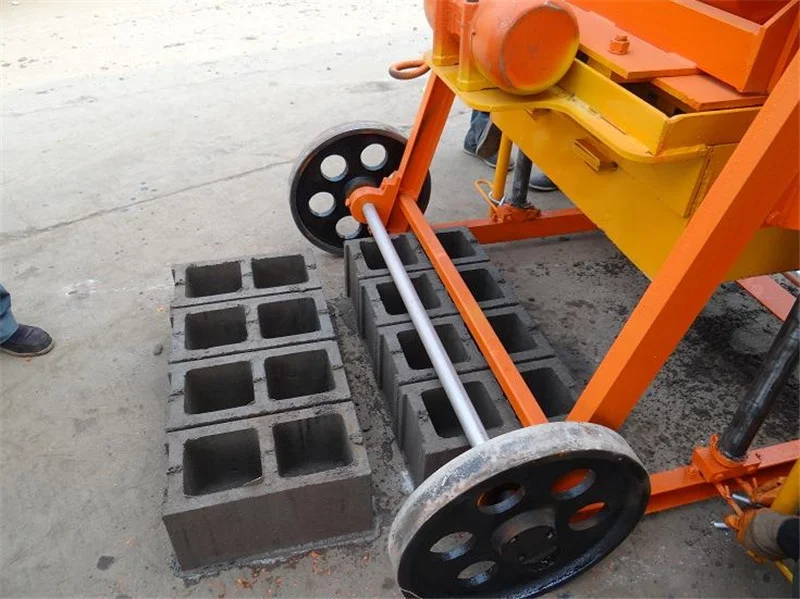
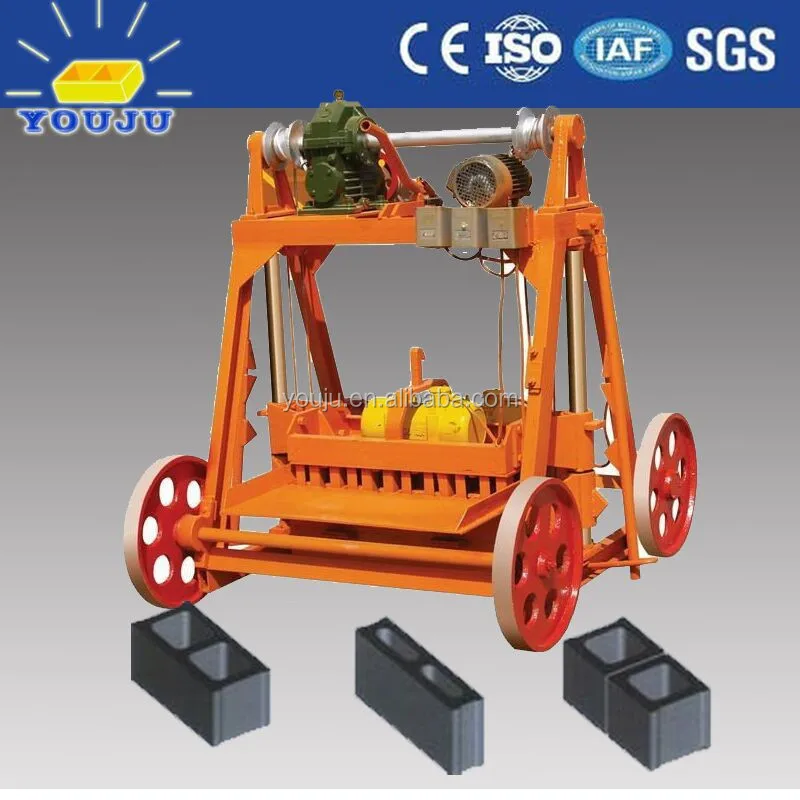
Description
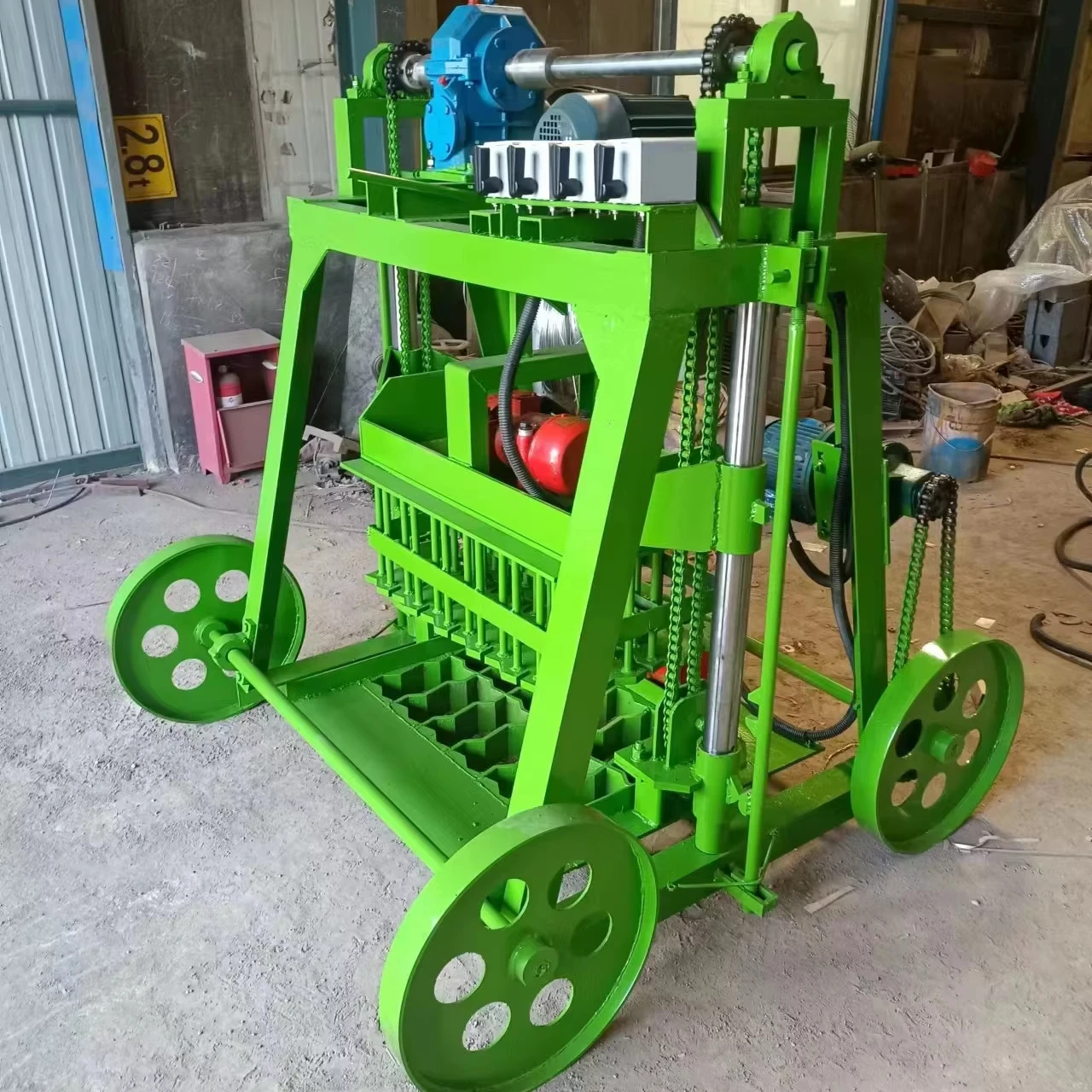
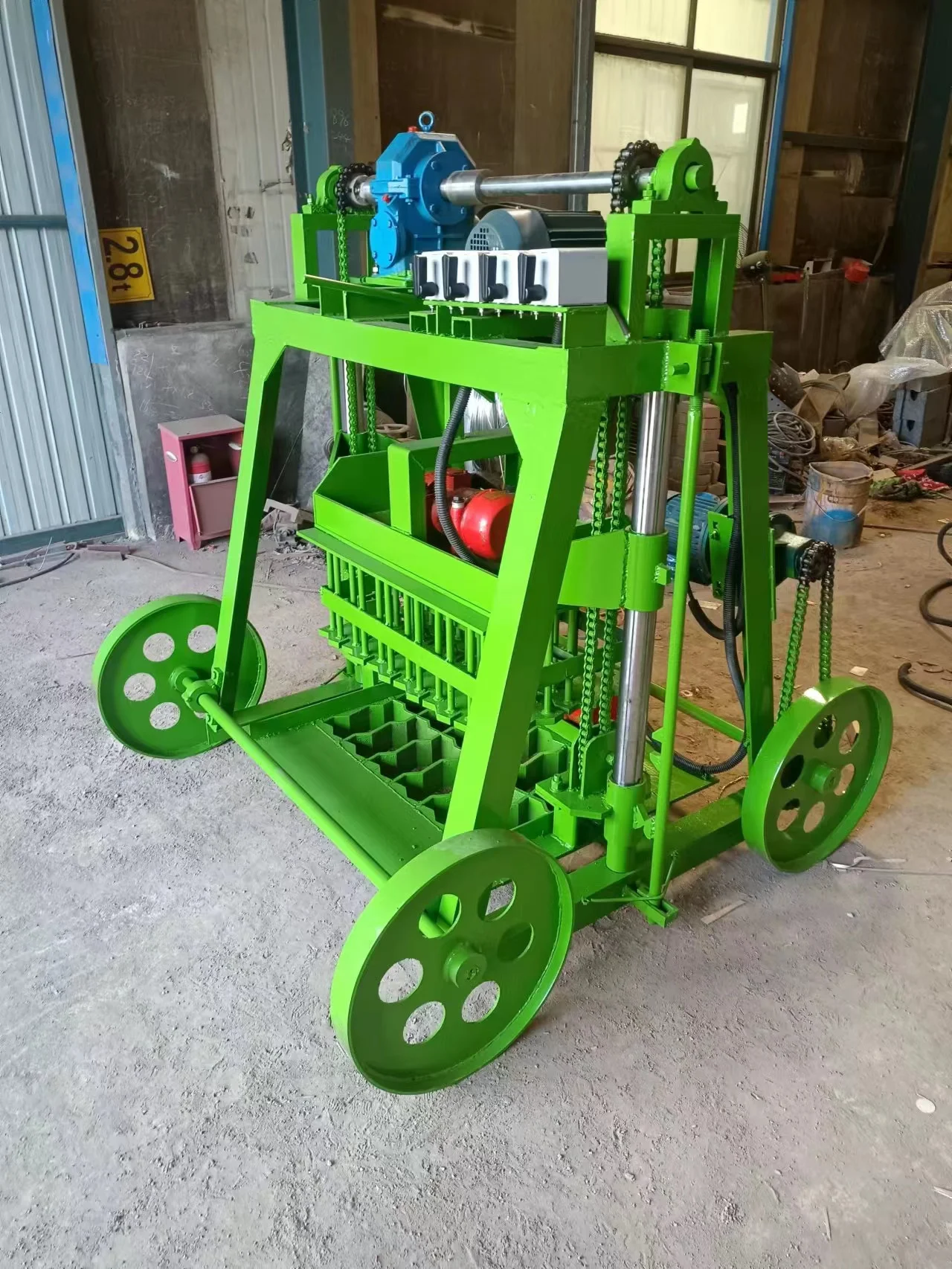
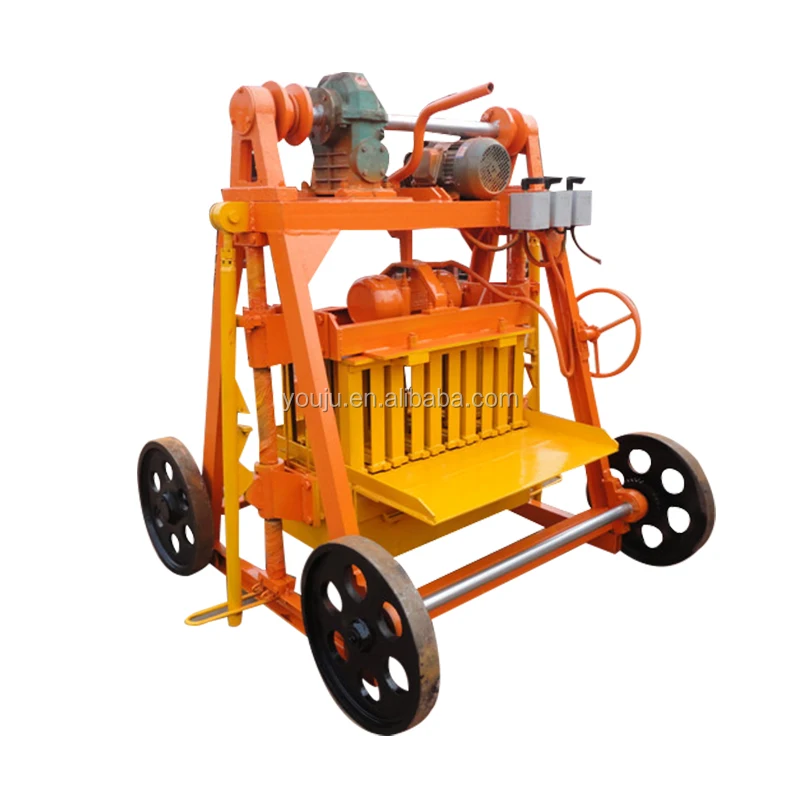
Block Machinery as a Single Focus — the QMJ4-45 mobile block machine, its moulds, pallets, and handling equipment are specified as one matched system against the buyer’s local aggregate and target block format, not pulled from a generic catalogue.
Technical Specifications
| Parameter | Value |
|---|---|
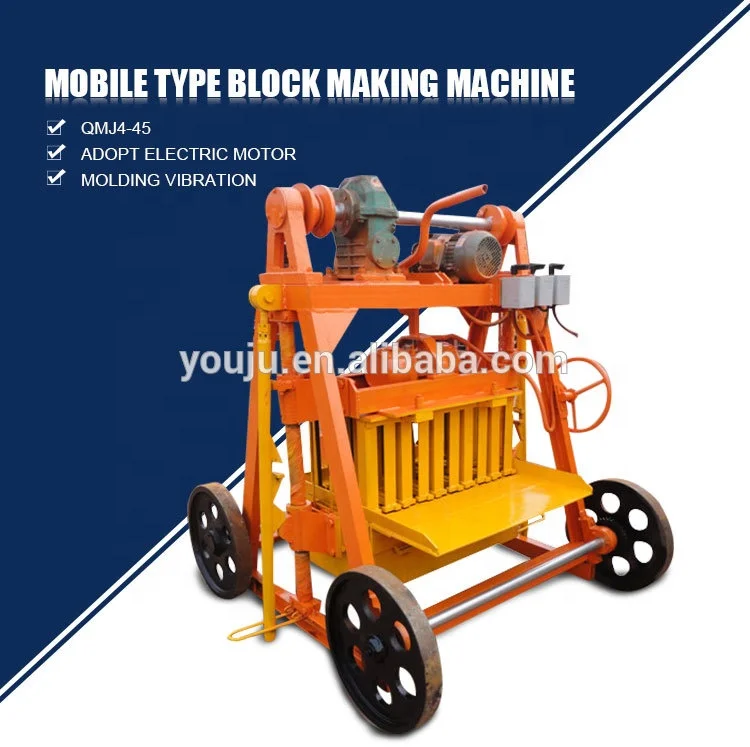
| Model | QMJ4-45 |
| Product Type | Mobile Concrete Block Making Machine |
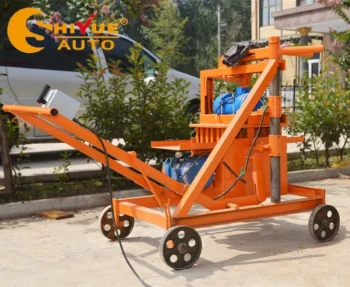
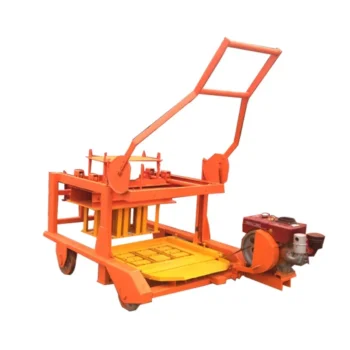
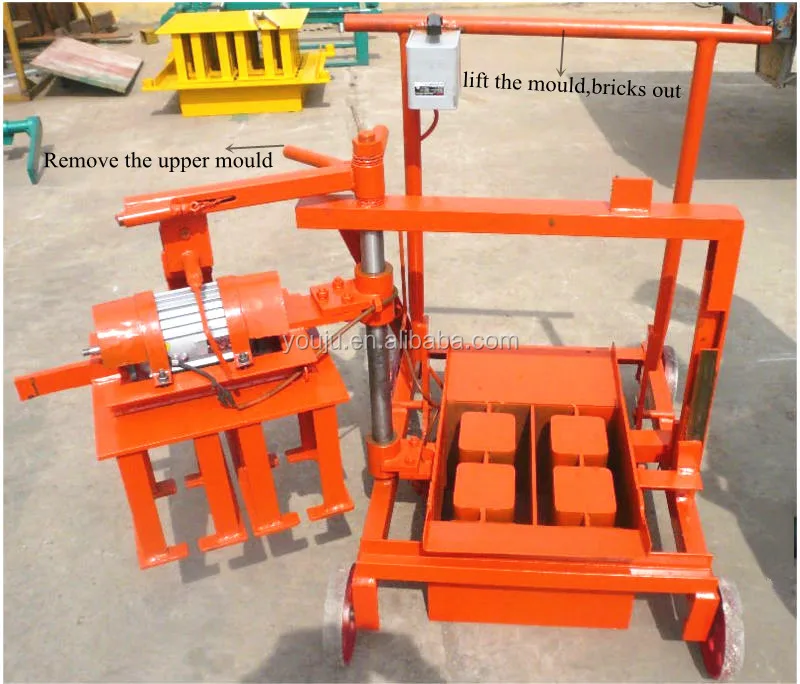
| Machine Configuration | Egg-laying mobile unit, produces directly on ground |
| Vibration System | Twice vibrations of molding core (upgraded from single vibration) |
| Mobility | Moves around the working site without fixed installation |
| Mould Changeability | Various block types via mould change |
| Custom Mould Availability | Available by buyer drawings |
| Automation Level | Manual |
| Assembly State | Fully assembled, mobile unit |
| Pallet Requirement | Not applicable (egg-laying type) |
| Output Capacity | Dependent on block format, mix design, and material thickness (basis to be confirmed) |
| Cycle Time per Format | Dependent on block format (basis to be confirmed) |
| Hydraulic Pressure | To be confirmed with manufacturer |
| Vibration Force | To be confirmed with manufacturer |
| Rated Power | To be confirmed with manufacturer |
| Voltage & Frequency | To be confirmed with manufacturer |
| Overall Dimensions | To be confirmed with manufacturer |
| Net Weight | To be confirmed with manufacturer |
| Certification | CE (referenced at company level — verify for this model) |
Application Suitability
| Application | Material or Output |
|---|---|
| On-site concrete block production | Crushed stone, river sand, cement, and water mixes laid directly on prepared ground |
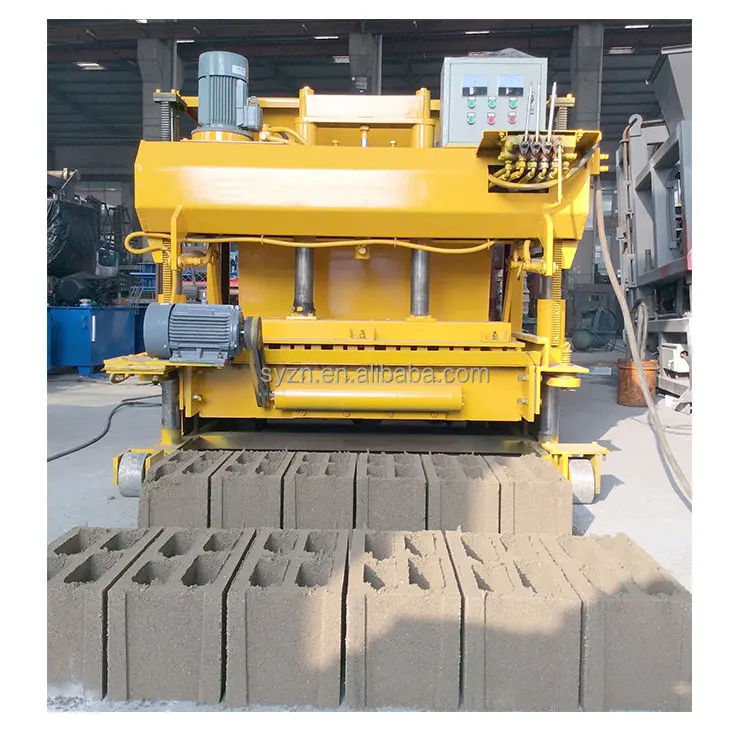
| Small-scale startup block production | Hollow blocks, solid blocks, and paving blocks at low initial investment |
| Construction contractor project sites | Building blocks produced at the job site without a fixed plant setup |
| First block plant for entrepreneurs | Entry-level egg-laying production with room to scale to semi-automatic lines |
What "Cycles per Hour" Leaves Out About QMJ4-45 Mobile Block Machine Specifications
Every realistic output number must be tied to a specific block format, wall thickness, and local aggregate — a single cycles-per-hour figure tells you almost nothing.
Suppliers often quote a peak cycle count and let the buyer assume it applies to every block they plan to make. On a project in Saudi Arabia, I watched a contractor order a machine based on that one number, only to find their local river sand had such high clay content that blocks crumbled before curing. The machine was fine; the specification conversation never happened [NEED_CITE: aggregate testing and mix design matching for concrete block production]. When you evaluate QMJ4-45 mobile block machine specifications, the first question should be which block format the capacity figure assumes, what the local sand and aggregate look like, and whether the vibration force is matched to that mix.
Matching the Block Format to the Market You Actually Sell
The QMJ4-45 mobile block machine is built around mould changeability, allowing a single unit to produce hollow blocks, solid blocks, paving blocks, and other formats depending on the mould fitted. The critical step is confirming which formats your local construction market demands before the machine ships, because mould lead times and changeover procedures differ. Custom moulds can be fabricated to buyer drawings, meaning you are not limited to a supplier’s standard catalogue. This flexibility matters most for contractors who supply their own job sites and need to switch between wall blocks and pavers within the same project phase.
The Egg-Laying Advantage and Its Ground Preparation Requirements
Because the QMJ4-45 is an egg-laying machine, it deposits blocks directly on the ground and moves forward, eliminating the need for pallets and the secondary transport damage that pallet-based systems often cause. This design drastically simplifies the production setup — no pallet feeding station, no pallet return conveyor, no pallet storage rack. However, it places the burden on ground preparation. The working surface must be level, firm, and clean to ensure block dimensional consistency. The curing area requirement scales with daily output, since blocks remain where they were laid until they reach sufficient strength for handling [NEED_CITE: ground preparation standards for mobile egg-laying block machines].
Vibration Force, Mix Design, and Block Density
The twice-vibration molding core system on the QMJ4-45 is an upgrade from single-vibration designs, aiming to produce higher block density and more even strength distribution through the block cross-section. In practice, vibration force must be matched to the specific aggregate gradation and cement ratio in your mix — too little vibration leaves voids and weak blocks, while excessive vibration can cause segregation where cement paste rises and aggregate settles. Hydraulic pressure, vibration frequency, and cycle time together determine the final block compressive strength. Requesting a factory test with your actual local material sample before shipment is the most reliable way to confirm the machine produces blocks meeting your market’s strength requirement.
The Hidden Cost of Skipping the Material Conversation
When a buyer orders based on a catalogue specification sheet without submitting a local aggregate sample, the machine arrives configured for a mix the buyer cannot source. I have seen this play out on Middle Eastern sites where imported washed sand cost several times the local unwashed alternative, forcing either a material budget overrun or a block quality compromise. Mould wear accelerates when the aggregate is harder or more abrasive than the configuration assumed, and replacement moulds may carry multi-week lead times if not planned upfront [NEED_CITE: mould wear rates and replacement lead times for concrete block machines]. The cost of a material sample shipment before ordering is negligible compared to the cost of reconfiguring a machine after it arrives.
Why Source This QMJ4-45 Configuration Here
Block machinery is the single focus of this supply operation, which means the QMJ4-45 mobile block machine is not sold as a standalone press but specified alongside the moulds, handling approach, and curing layout as one matched system. Configuration is set against the buyer’s actual mix design and target block format rather than a default catalogue setting. Mould design and supply cover the formats the buyer’s local market sells, with custom drawings accepted. Automation level is selectable across the broader product range, so a buyer starting with this manual mobile unit has a clear upgrade path to semi-automatic or fully automatic lines as production volume grows. Installation guidance and operator training are included, addressing the common gap between machine arrival and actual productive output.
Documentation & Verification
- Capacity calculation document stating the specific block format assumed for every output figure
- Mould drawing and format list confirming which block types the quoted moulds produce
- Voltage, frequency, and control language confirmation sheet signed before production begins
- Factory test record using the buyer’s submitted local aggregate sample
- Wear parts and mould availability list with lead times for first replacement order
Installation, Commissioning & Support
- Machine ships fully assembled; confirm ground bearing capacity at your working site before arrival
- Verify local voltage and frequency match the confirmed electrical configuration to avoid rewiring delays
- Curing area layout must accommodate blocks laid directly on ground with adequate spacing for airflow
- First production run should use submitted mix design parameters to validate block strength on-site
- Mould change procedure training included; confirm available formats and changeover tools before commissioning
- Wear parts list provided with recommended first-order quantities based on your aggregate abrasiveness
What to Include in Your QMJ4-45 Inquiry
To receive a configuration proposal that reflects your actual production conditions, share the block formats your market demands with target daily output per format, a sample or lab report of your local sand and aggregate, and your site’s voltage and frequency. If you already have a curing area or forklift on-site, include those dimensions so the layout accounts for them. Specify the control interface language your operators need to avoid delays at commissioning.
Frequently Asked Questions
Q: What is the realistic daily output of the QMJ4-45 for each block format I need?
A: Output depends entirely on which block format you produce, the wall thickness, your mix design, and operator workflow. We provide a capacity calculation document that states output per specific format rather than a single general number. Share your target formats and we will return realistic daily figures based on confirmed cycle times for each one.
Q: How do I match the machine’s vibration force to my local aggregate and mix design?
A: Send us a sample of your local sand and aggregate along with your target block strength. We configure the vibration parameters and run a factory test with your material before shipment. This ensures the twice-vibration system produces blocks meeting your compressive strength requirement without segregation or excess voids.
Q: What mould formats are available, and how long does a mould change take on-site?
A: Standard moulds cover hollow blocks, solid blocks, and paving blocks. Custom moulds are built to your drawings for formats your local market requires. Mould change on the QMJ4-45 is a manual procedure; we provide the changeover procedure and tools, and confirm timing during operator training so format switching fits your production schedule.
Q: Can the QMJ4-45 run on my local voltage and frequency, and is the control interface in my language?
A: Voltage and frequency are confirmed before production begins, and the control interface language is specified at the same stage. This confirmation step prevents commissioning delays that occur when electrical specifications are assumed rather than verified against your site’s actual power supply.
Q: What is the curing area requirement since this machine lays blocks directly on the ground?
A: The curing area must be level, firm, and large enough to hold blocks for the required curing period before they can be moved. Area size depends on your daily output and local climate conditions affecting cure time. We include curing layout guidance in the line proposal so the working site is prepared before the machine arrives.