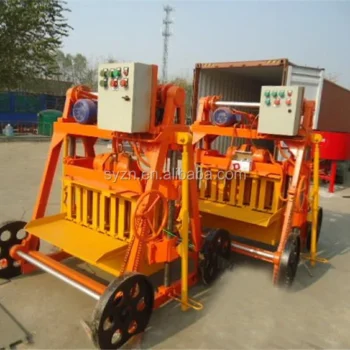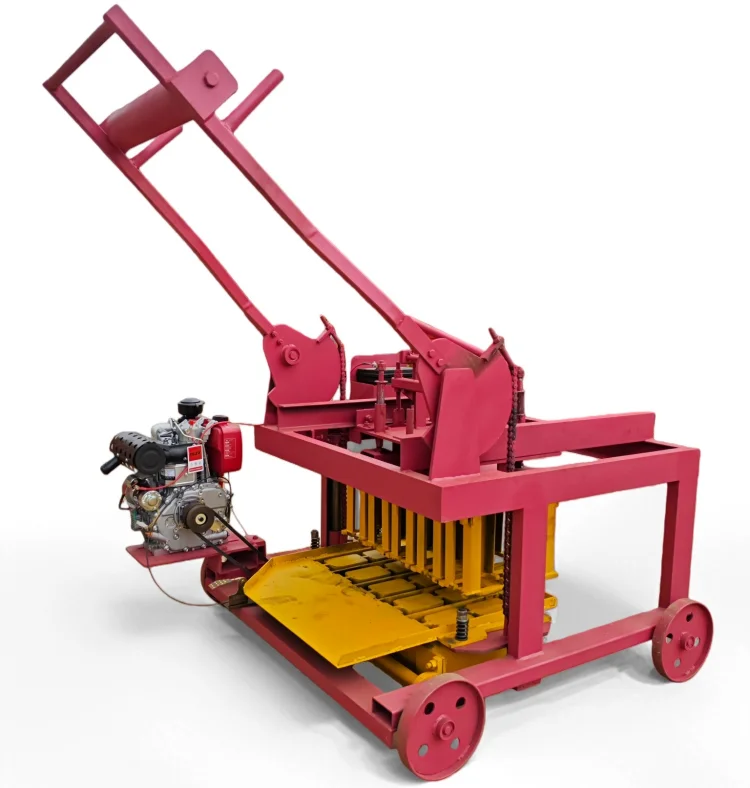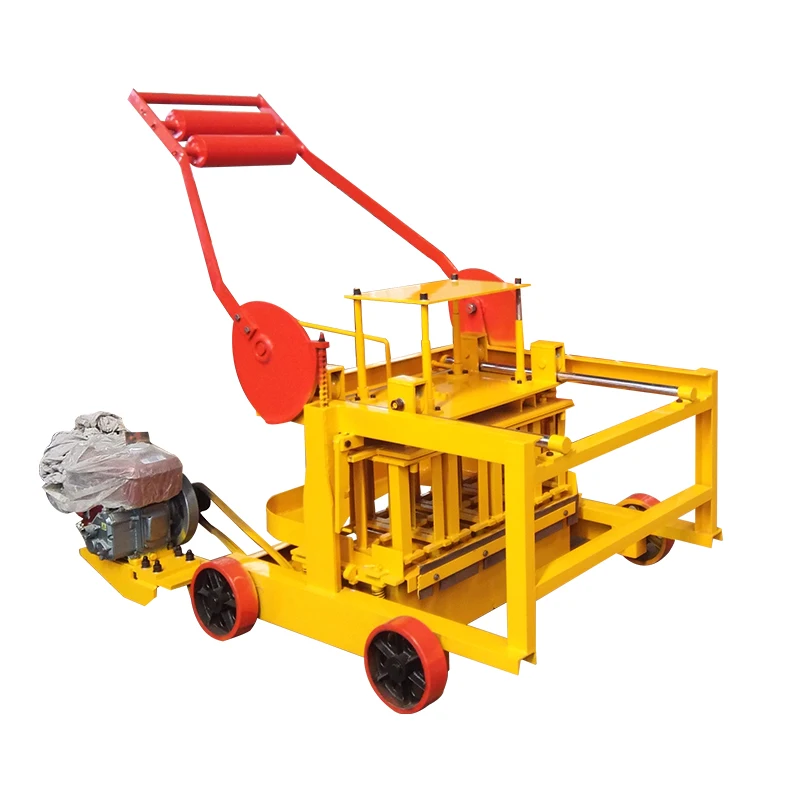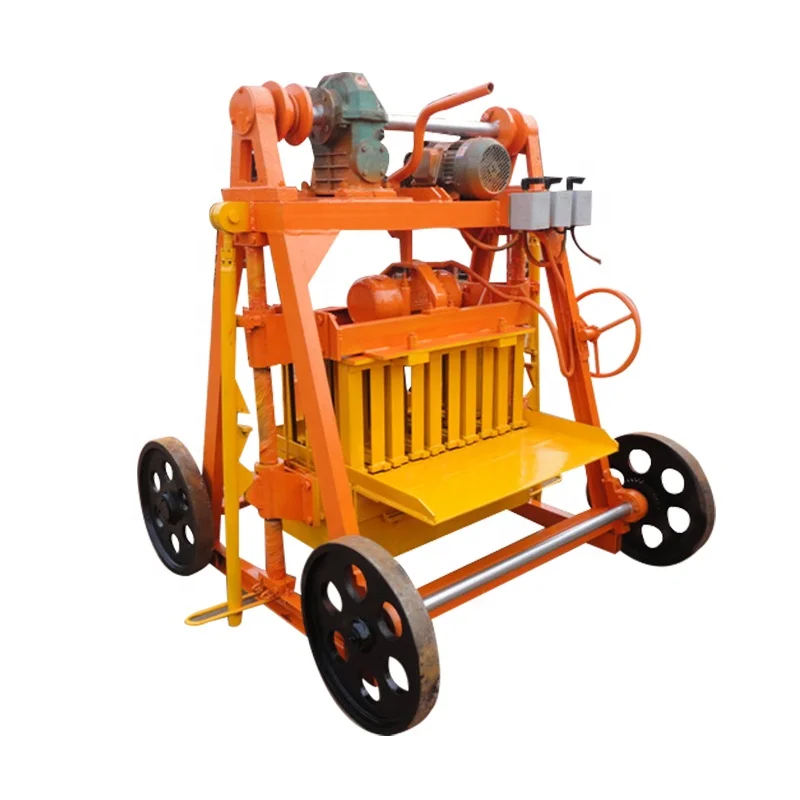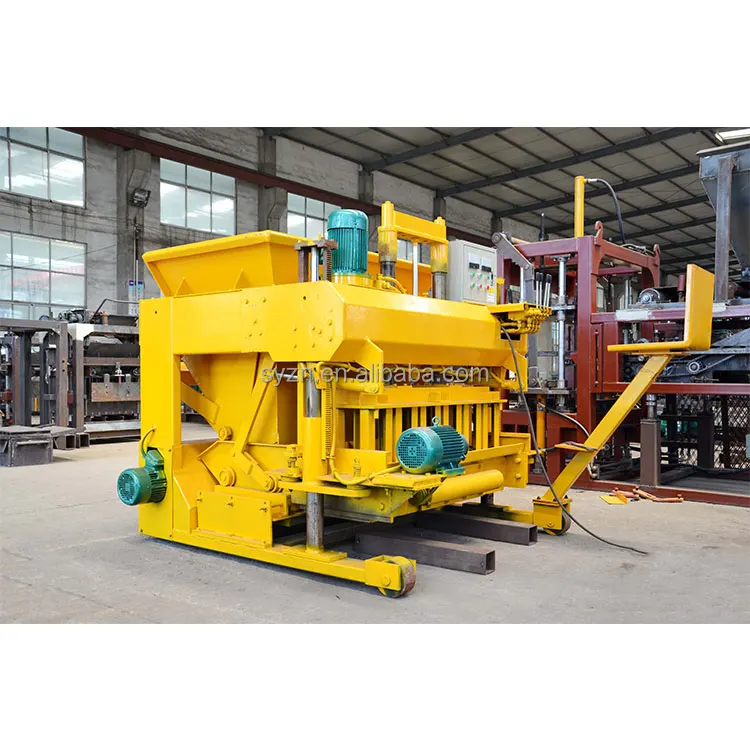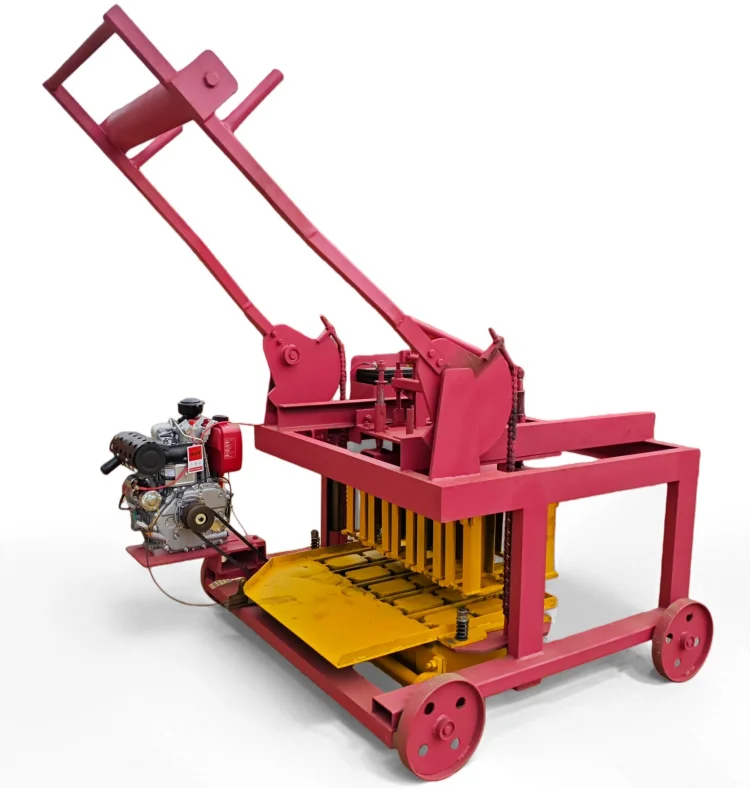
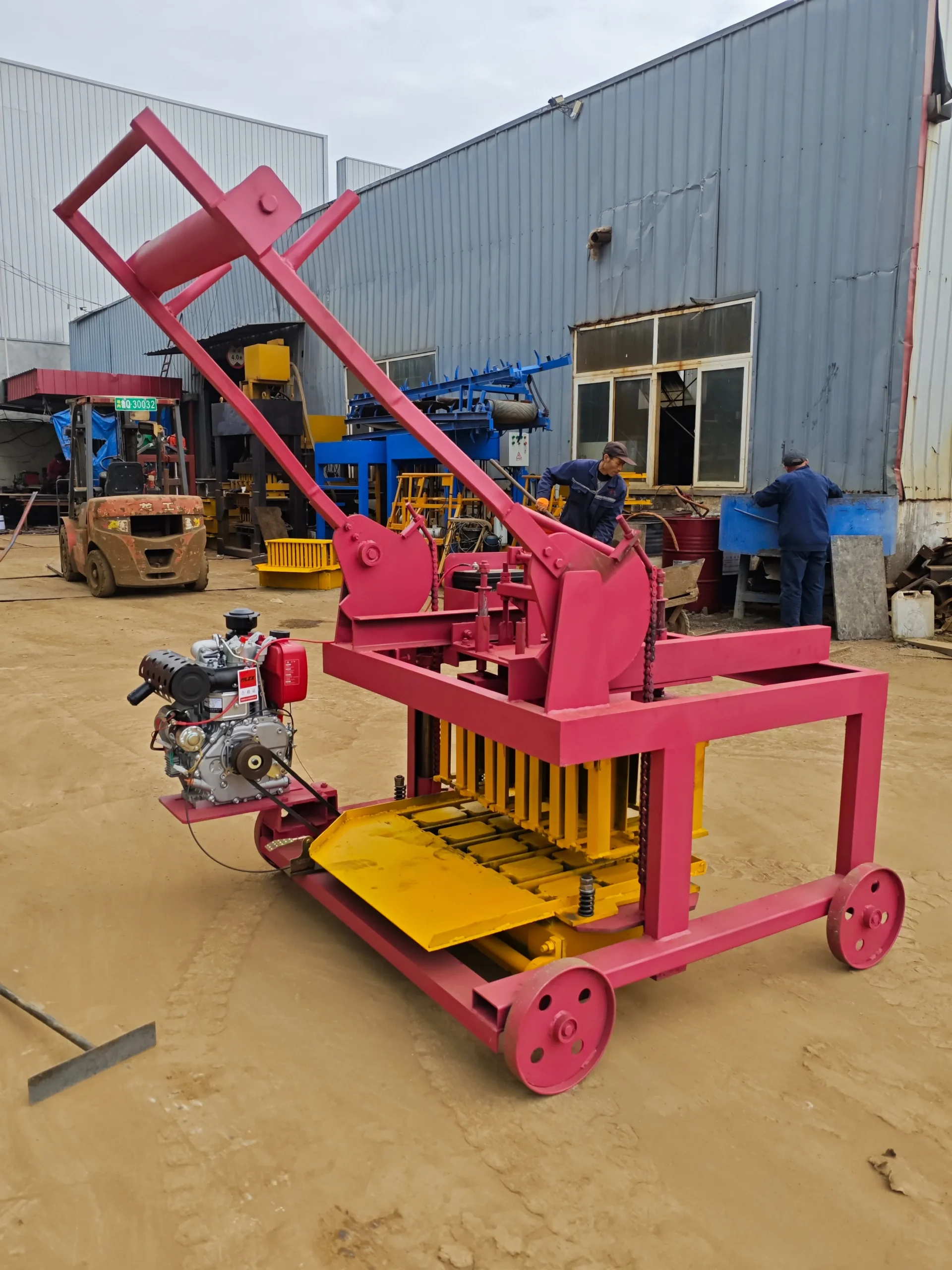


Description
Mould-First Sizing — cycle time and daily output are calculated per block format and local aggregate, not quoted from a generic catalogue sheet.
Technical Specifications
| Parameter | Value |
|---|---|
| Model | QMR4-45 |
| Product Type | Mobile Block Making Machine |
| Power Source | Diesel (Electric option available) |
| Engine Power | 8 hp |
| Molding Cycle | 45 s (basis not stated in source — confirm block format / material / thickness) |
| Molding Form | Vibration and Pressure |
| Vibration Force | 60 kN |
| Total Weight | 800 kg |
| Overall Dimensions | 2420 × 1320 × 1650 mm |
| Pallet Requirement | No pallet required (egg-laying type) |
| Compatible Products | Hollow block, solid brick, paver brick, fly ash brick |
| Automation Level | Manual / semi-automatic |
| Basic Equipment Included | JZC350 or JQ350 Diesel Concrete Mixer, Trolley |
Application Suitability
| Application | Material or Output |
|---|---|
| Remote-site hollow block production | Crushed stone, river sand, cement — no fixed plant infrastructure needed |
| On-site paver brick manufacturing | Fine aggregate and cement for interlocking or rectangular pavers |
| Project-based solid brick runs | Fly ash or local sand blended with cement for load-bearing walls |
| Small-scale housing development blocks | Lightweight aggregate or stone dust mixes for partition and external walls |
What "45-Second Cycle" Leaves Out About Mobile Block Machine Specifications
A molding cycle quoted without naming the block format will always mislead on daily output.
When suppliers list a single cycle time for a mobile block making machine, buyers assume that number applies equally to a 400 mm hollow block and a thin paver brick. In practice, a solid brick demands longer vibration and higher compaction than a hollow block of the same footprint, and a paver requires a different pressure profile altogether. I have watched crews arrive on a project site expecting a certain daily tally, only to discover the quoted cycle was measured on the lightest format in the catalogue. [NEED_CITE: how block format and wall thickness affect vibration dwell time]
Mould Selection Defines Real Output
The QMR4-45 mobile block making machine is designed around interchangeable moulds, and each format shifts the effective cycle. A hollow block with two or three cores needs less fill material and shorter vibration than a fully solid brick, so the number of pieces laid per shift will differ noticeably between the two. Before committing to an order, buyers should request a capacity sheet that states the assumed block dimensions and mix for every output figure. This avoids the gap between brochure numbers and what the crew actually stacks at the end of the day.
Vibration Force and Local Aggregate
Sixty kilonewtons of vibration force is enough to compact a wide range of mixes, but the result depends on what is locally available. River sand with high clay content absorbs energy differently than crushed granite dust, and a mix that works in one region can produce crumbly edges in another. [NEED_CITE: effect of fine aggregate grading on block compressive strength] I always ask buyers to ship a sample of their aggregate so we can run a trial press before the machine leaves the factory — that single step has prevented more on-site disappointments than any specification sheet.
Reading the Numbers That Matter
The 8 hp diesel engine gives the QMR4-45 independence from grid power, which is exactly what remote project sites require. The 800 kg total weight keeps the machine within towing range of a standard site vehicle while still providing enough mass to resist walking during vibration. Molding form combines mechanical vibration with pressure, meaning block density comes from both forces acting together rather than vibration alone. Buyers comparing mobile block making machine specifications should check whether a quoted vibration figure refers to peak or sustained force, as the gap between the two can affect compaction consistency.
The Cost of Skipping a Mix Trial
Shipping a mobile egg-laying machine without verifying the buyer’s aggregate leads to problems that only appear once the mixer is running on site. Blocks may crack during curing, edges may spall when the mould lifts, or the crew may compensate by adding excess cement, driving up material cost. [NEED_CITE: cement over-dosage as a response to poor aggregate grading] These issues are not machine faults — they are mismatches between the vibration setting and the raw material, and they are far more expensive to fix overseas than to prevent before dispatch.
Why Source the QMR4-45 Through This Line
Block machinery is our single focus, so the machine, mould, and mixer are specified as one matched system rather than assembled from separate vendors. Every configuration is set against the buyer’s actual mix design and target block format, not a default catalogue entry. Mould design covers the formats the local market actually sells, with custom drawings available when standard options do not fit. The QMR4-45 ships with a diesel concrete mixer and trolley as standard supporting equipment, so the production loop is complete from batch to placement. Documentation includes a capacity calculation that names the block format behind each output figure. [NEED_CITE: CE machinery directive requirements for mobile block equipment]
Documentation & Verification
- Capacity calculation sheet stating block format assumed for each daily output figure
- Mould drawing and format list confirming included brick types and change procedure
- Engine specification and fuel consumption data for diesel-powered configuration
- Factory test record using buyer-supplied aggregate sample before dispatch
- Operation and maintenance manual in the buyer’s preferred control language
- Wear parts list with recommended first-replacement quantities
Installation, Commissioning & Support
- Level concrete strip or compacted hardstanding required under the 2420 × 1320 mm footprint
- Diesel fuel supply and basic tool kit for daily engine maintenance on the 8 hp unit
- Machine arrives assembled; only the mixer and trolley require connection on site
- First-run parameter setting covers vibration duration and pressure matched to local mix
- Operator training on mould change, daily greasing points, and belt tension checks
- Spare mould springs and vibration rubbers shipped with the initial order
What to Share When You Open an Inquiry
To size the QMR4-45 correctly for your project, we need to know the block formats your market demands, the daily volume you plan to sustain, and a sample or lab report of the aggregate you will use. If your site has grid power available, tell us the local voltage and frequency so we can quote the electric option instead of the diesel engine. Sharing these details early shortens the configuration cycle and ensures the machine arrives ready to produce from the first day.
Frequently Asked Questions
Q: What is the realistic daily output for hollow blocks versus solid bricks?
A: The 45-second cycle listed in mobile block making machine specifications is a baseline that shifts with block format. Hollow blocks with open cores need less fill and shorter vibration, so daily output is higher. Solid bricks demand longer compaction. Request a capacity sheet that states the assumed format before comparing suppliers.
Q: How does local aggregate affect block strength with 60 kN vibration force?
A: Aggregate grading and clay content change how vibration energy transfers through the mix. High-clay river sand may require longer vibration or a cement adjustment. A trial press with the buyer’s actual material confirms the right settings before the machine ships.
Q: What mould formats are available and how long does a change take?
A: Standard moulds cover hollow blocks, solid bricks, and pavers in common local dimensions. Custom moulds can be built to buyer drawings. Mould change is a manual procedure involving a few fasteners; exact time depends on operator familiarity and is confirmed during training.
Q: Is diesel or electric power better suited for my site?
A: Diesel suits remote sites without stable grid access and eliminates the need for a transformer or generator. Electric reduces fuel cost and noise where grid power is reliable. Voltage and frequency must be confirmed before production to avoid commissioning delays.
Q: Which spare parts should I order with the first machine?
A: A first-order spare parts list typically includes vibration rubbers, mould springs, and mixer belt sections. We supply a wear parts document matched to the QMR4-45 configuration so buyers can plan the first replacement cycle without waiting for overseas shipping.