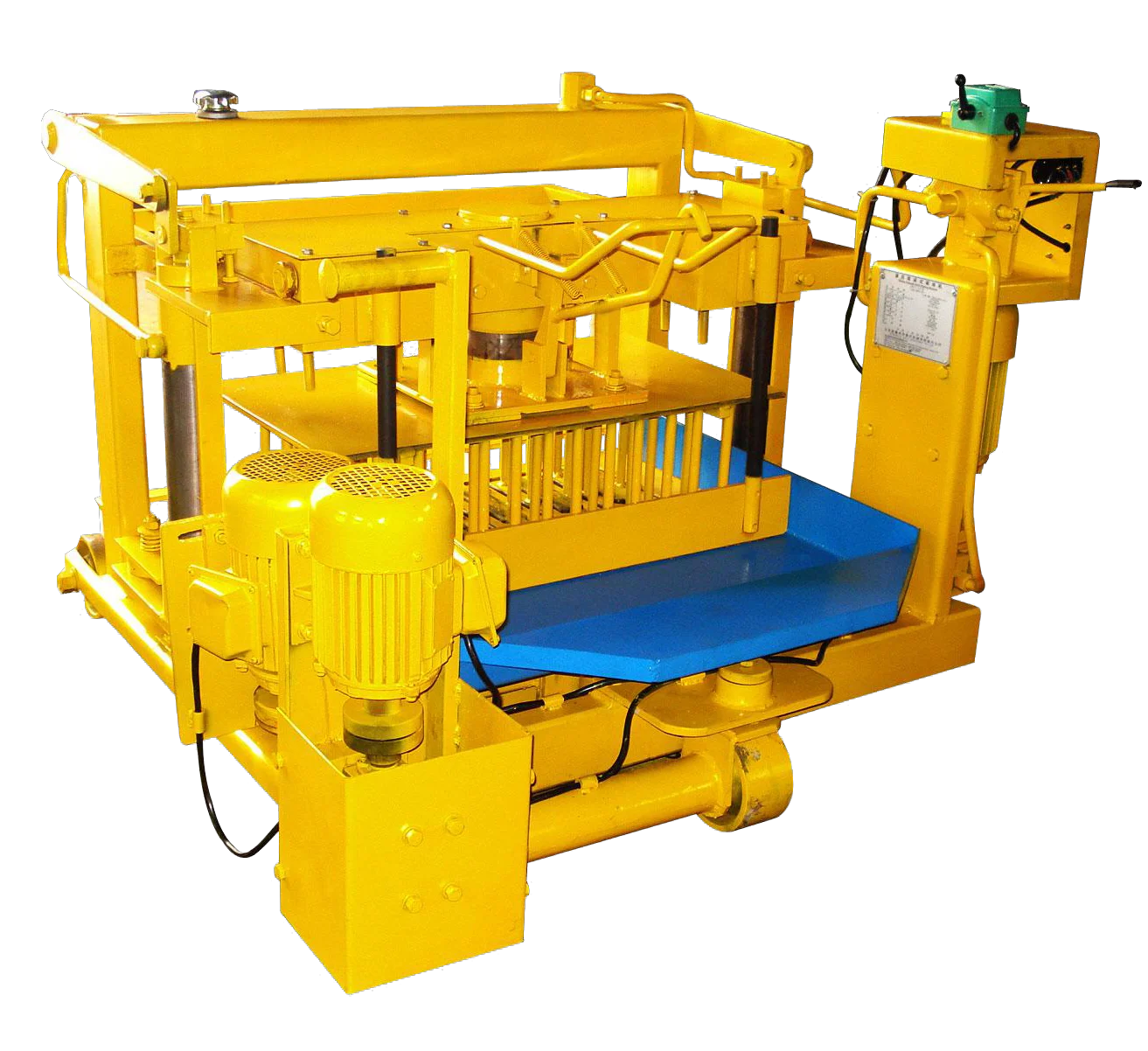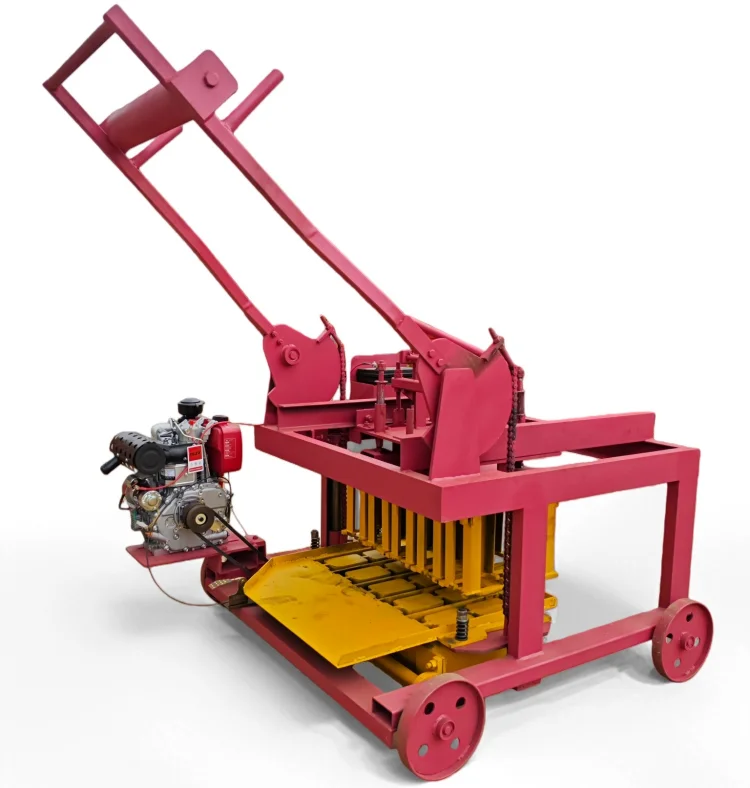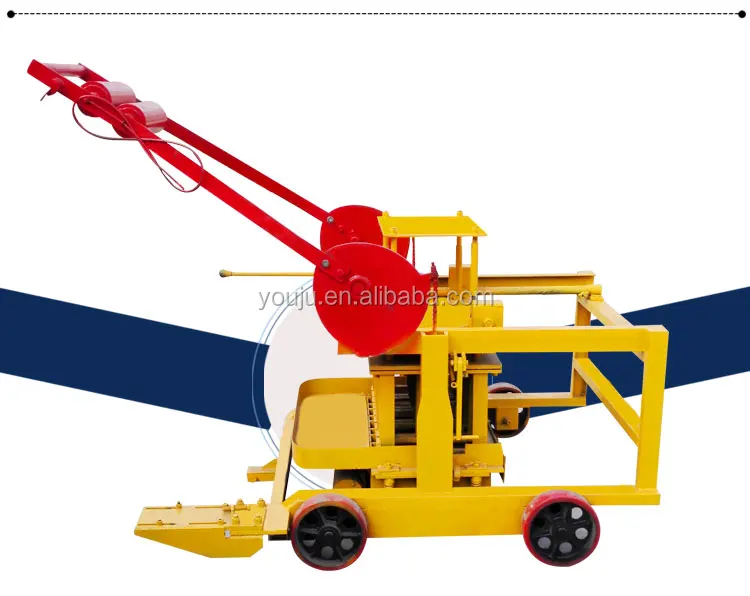

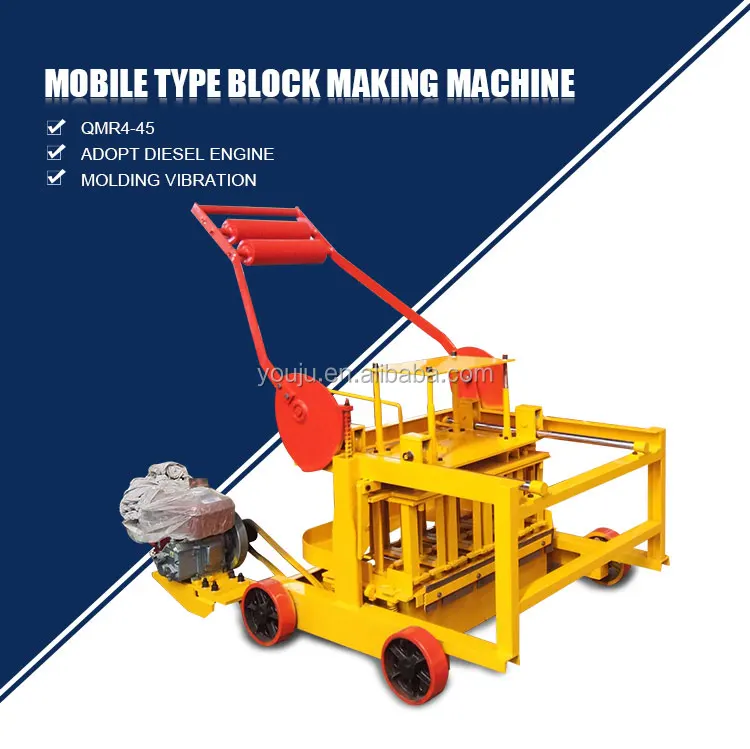



Description
Matched System Sizing — every QMR4-45 configuration starts from the buyer’s actual block format, local aggregate sample, and site power condition rather than a catalogue default.
Technical Specifications
| Parameter | Value |
|---|---|
| Model | QMR4-45 |
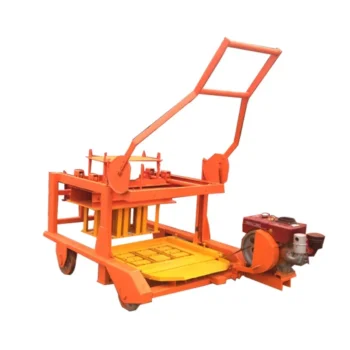
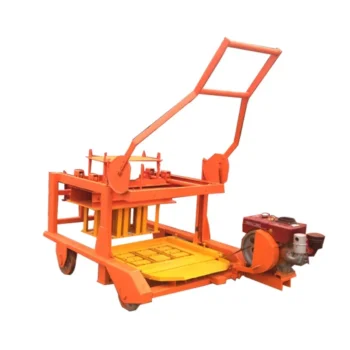
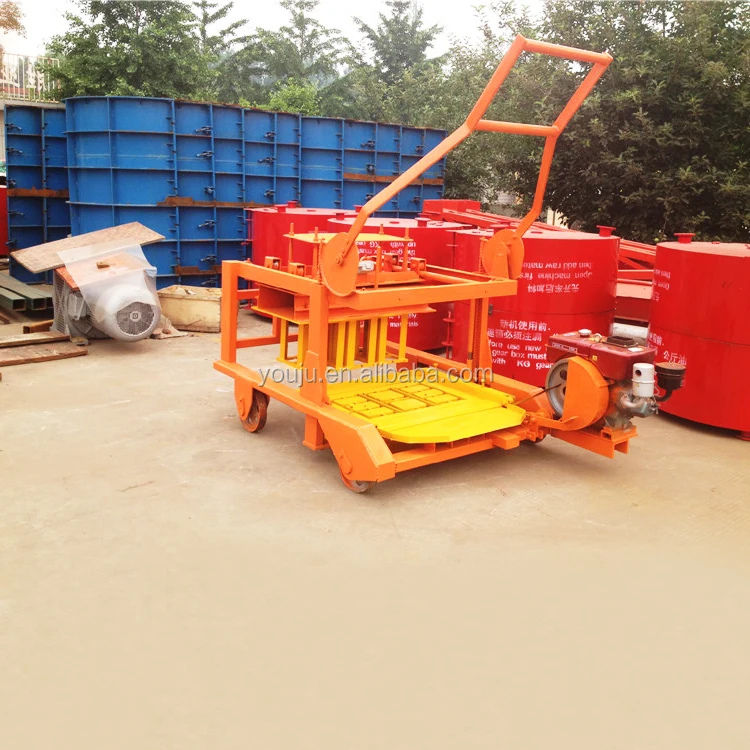
| Product Type | Diesel Engine Egg Laying Block Making Machine |
| Overall Dimensions (L×W×H) | 2420×1320×1650 mm |
| Net Weight | 810 kg |
| Rated Power | 6 kW |
| Diesel Engine | 6 kW or 6-8 HP |
| Voltage & Frequency | 220V or 380V (frequency to be confirmed per site) |
| Moulding Cycle | 40-45 s |
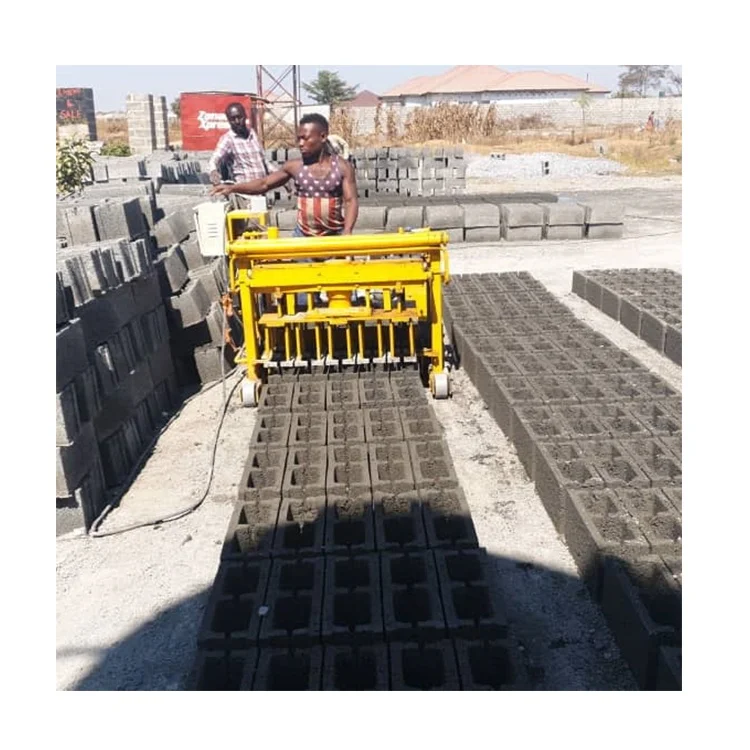
| Pallet Requirement | No pallet — egg laying type, produces directly on concrete floor |
| Daily Output (400×200×200 mm hollow, 4 pcs/mould) | 3000 pcs/day based on 8-hour shift |
| Daily Output (400×150×200 mm hollow, 5 pcs/mould) | 3500 pcs/day based on 8-hour shift |
| Daily Output (400×120×200 mm hollow, 6 pcs/mould) | 4500 pcs/day based on 8-hour shift |
| Mould Formats Included | 400×200×200 / 400×150×200 / 400×120×200 mm hollow blocks |
| Automation Level | Manual operation with diesel hydraulic assist |
| Assembly State | Single unit, mobile egg laying type |
| Warranty | One year guarantee for the whole machine |
| Hydraulic Pressure | Not stated in source — confirm with supplier |
| Vibration Force | Not stated in source — confirm with supplier |
| Mould Change Time | Not stated in source — confirm with supplier |
| Control System | Not stated in source — confirm with supplier |
Application Suitability
| Application | Material or Output |
|---|---|
| On-site hollow block production for housing projects | Crushed stone, sand, cement, water mixed to local aggregate grading |
| Remote construction sites without reliable grid power | Diesel-powered operation independent of electrical infrastructure |
| First-stage block plant for entrepreneurs | Hollow blocks in three standard sizes from a single machine footprint |
| Contractor self-supply on development sites | 400×200×200 mm, 400×150×200 mm, 400×120×200 mm hollow formats |
What "3000 Blocks per Day" Leaves Out About the QMR4-45 Diesel Egg Laying Block Machine
Output figures only mean something when tied to a specific block format and cycle time.
The most common complaint I hear from buyers who purchased mobile block machines elsewhere is that daily production never matched the brochure number. The reason is almost always the same: the quoted capacity assumed the smallest block in the mould range, while the buyer’s market actually demands the largest hollow format. With the QMR4-45, the difference between 400×120×200 mm and 400×200×200 mm hollow blocks is 1500 pieces per eight-hour shift. That gap compounds across a month of production and completely changes the economics of a block project [NEED_CITE: block format impact on daily output calculations]. I once spent three days on-site in West Africa adjusting parameters after a customer’s local red soil proved too cohesive for the standard mix assumptions — the machine was fine, but the output projection had been based on a sand-and-gravel mix the buyer simply could not source.
Diesel Power Where Grid Supply Cannot Reach
The QMR4-45 diesel egg laying block machine runs on a 6-8 HP diesel engine driving the hydraulic system, which makes it functional on sites where three-phase electricity is either unavailable or too unstable to sustain consistent vibration cycles. This matters in regions where voltage fluctuation damages electric motors within weeks of commissioning. The diesel configuration removes the dependency on grid infrastructure entirely, letting contractors begin block production the same week the machine arrives on site.
Egg Laying Design and What It Removes From the Cost Sheet
Because this machine lays blocks directly onto a prepared concrete floor and moves forward after each cycle, there is no pallet requirement. That eliminates pallet purchase cost, pallet storage space, and the labour of cycling pallets through a curing rack system. For a first-time block producer working on a tight site, the simplified logistics chain means fewer things can go wrong during the first production week [NEED_CITE: pallet handling costs in small-scale block production].
Reading the Specs That Actually Shape Your Output
The moulding cycle of 40-45 seconds sets the ceiling for how many blocks the QMR4-45 can press in a shift, but cycle time alone does not determine daily volume. The number of cavities per mould — four for 400×200×200 mm blocks, five for 400×150×200 mm, six for 400×120×200 mm — multiplies against the cycle count to produce the daily totals listed in the specification table. Hydraulic pressure and vibration force together determine whether the compacted block holds its shape when the mould lifts, and these values must match the buyer’s specific mix design. A mix with high clay content requires different vibration characteristics than a clean crushed-stone mix, which is why testing the local aggregate before finalising machine settings prevents weeks of inconsistent block strength [NEED_CITE: vibration force and mix design matching for concrete block consistency]. The net weight of 810 kg keeps the machine stable during vibration without requiring a bolted foundation, yet still allows it to be repositioned across a site as production areas shift.
The Hidden Cost of Skipping the Aggregate Sample
I have watched buyers lose an entire production season because they ordered a mobile block machine based on a catalogue capacity figure without anyone asking what raw material they planned to use. When the local soil turns out to be high in fines or organic content, the mould sticks, the block edges crumble on demoulding, and the daily output drops to a fraction of the projection. The diesel engine keeps running, the operator keeps cycling the machine, but the saleable block count at the end of the day tells a different story [NEED_CITE: impact of local aggregate variation on block machine output]. Sending a 20 kg sample of the intended aggregate before the machine leaves the factory lets us adjust vibration timing and recommend a mix ratio that matches what is actually available on the buyer’s site.
Why Sourcing the QMR4-45 Through a Block-Line Specialist Matters
Block machinery is the only product category this workshop builds, so the QMR4-45 is specified as part of a matched system rather than assembled from unrelated component suppliers. Machine configuration is set against the buyer’s actual mix design and target block format, not a catalogue default that assumes ideal conditions. Mould design covers the formats the buyer’s local market actually purchases, including custom drawings when standard sizes do not match regional building codes. The automation level is selectable, meaning a buyer can begin with manual pallet handling on the diesel unit and transition to a semi-automatic stationary line later without replacing the entire operation. Installation support includes operator training on the specific mix and mould combination the buyer will run, not generic machine operation [NEED_CITE: matched block machine system specification versus component assembly].
Documentation & Verification
- Machine specification sheet stating output per hollow block format with cycle time assumptions
- Mould drawing and format list confirming the three included hollow block dimensions
- Factory test record run on the buyer’s target block size before dispatch
- Voltage and frequency confirmation document matching the buyer’s site electrical supply
- Operation and maintenance manual with diesel engine service intervals and hydraulic fluid specifications
- Packing photographs and customs documentation support for the destination port
Installation, Commissioning & Support
- Site requires a level concrete floor of sufficient area to accommodate the 2420×1320 mm machine footprint plus block curing space
- Diesel engine first-fill oil, fuel filter, and hydraulic filter confirmed before commissioning
- Single-unit assembly state means the 810 kg machine can be offloaded and positioned without heavy cranage
- Mould alignment and vibration timing set on-site against the buyer’s actual aggregate sample
- Operator training covers mould change procedure across all three hollow block formats
- Wear parts list provided with hydraulic seal and mould liner replacement intervals
Preparing Your QMR4-45 Diesel Egg Laying Block Machine Specifications Inquiry
To get an accurate configuration proposal, share the specific hollow block format your market requires, the raw materials available on your site including a representative aggregate sample, and your local voltage and frequency if any electrical accessories are involved. Let us know the concrete floor area you have prepared for production and curing, and whether you plan to run single-shift or double-shift operation. These details determine which moulds ship with the machine and what cycle settings the factory test will validate.
Frequently Asked Questions
Q: How is daily output calculated and which block format does the 3000 pcs/day figure assume?
A: The 3000 pieces per day figure is based on producing 400×200×200 mm hollow blocks with four cavities per mould, running a 40-45 second moulding cycle across an eight-hour shift. Switching to the 400×120×200 mm format with six cavities per mould raises the calculated output to 4500 pieces per day under the same shift length. Always confirm which block format the output figure references before comparing machines.
Q: What site preparation does the egg laying machine require before production begins?
A: The QMR4-45 produces blocks directly on a concrete floor, so the surface must be level, cured, and clean of debris across the entire production and curing area. The floor finish should be smooth enough to allow the machine to move forward after each cycle without catching. No pallets or curing racks are needed, but adequate space for blocks to cure in place must be reserved around the machine path.
Q: Can the diesel engine be replaced with an electric motor if grid power becomes available later?
A: The machine is designed around the diesel hydraulic power unit, and converting to electric drive involves replacing the engine, pump coupling, and control wiring. This is technically possible but should be discussed at the inquiry stage so the factory can advise whether a dual-configuration build or a future conversion kit is the more practical route for your site timeline.
Q: What mix design works best with the QMR4-45 to achieve consistent block strength?
A: Consistent block strength depends on matching vibration force and cycle timing to the buyer’s specific aggregate grading and cement ratio. High-clay or high-fines materials require different settings than clean crushed stone. Sending a representative sample of the intended aggregate to the factory before shipment allows the moulding parameters to be adjusted for the actual material available on site.
Q: How long does a mould change take, and are custom mould sizes available?
A: The QMR4-45 supports three standard hollow block formats, and mould change time depends on operator familiarity with the procedure. Custom mould sizes beyond the standard 400×200×200, 400×150×200, and 400×120×200 mm dimensions can be manufactured to buyer drawings, subject to confirmation that the requested format fits within the machine’s moulding envelope and vibration table capacity.