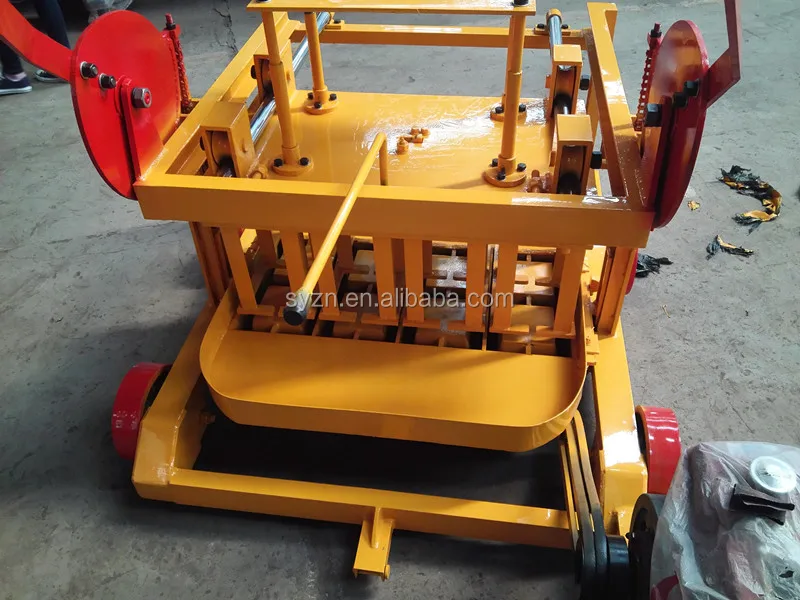

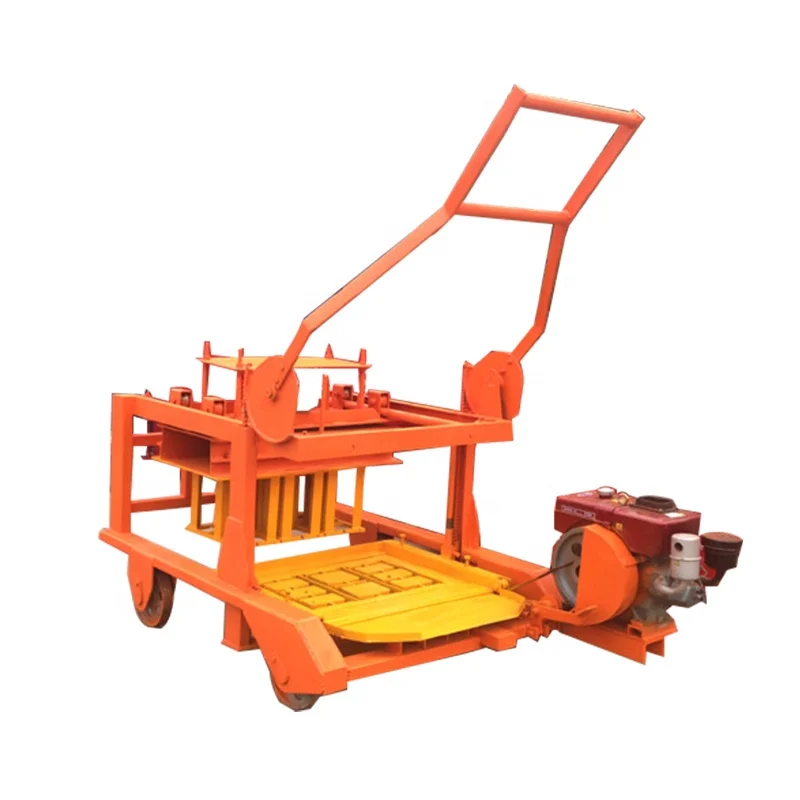
Description
Honest capacity matched to your block format — every output figure we quote for the QMR 4-45 is tied to a specific brick dimension and cycle time, not a single headline number that hides what was actually assumed during testing.
Technical Specifications
| Parameter | Value |
|---|---|
| Model | QMR 4-45 |
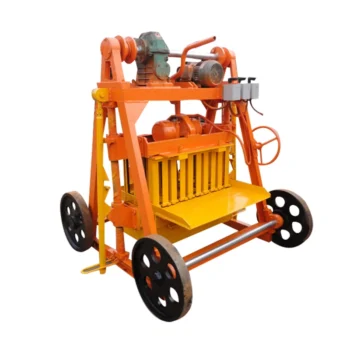
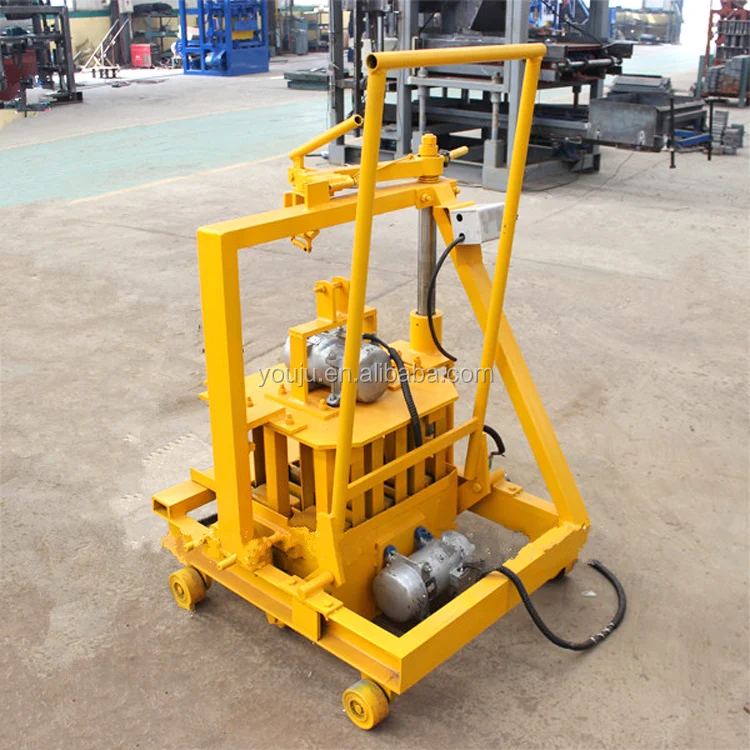
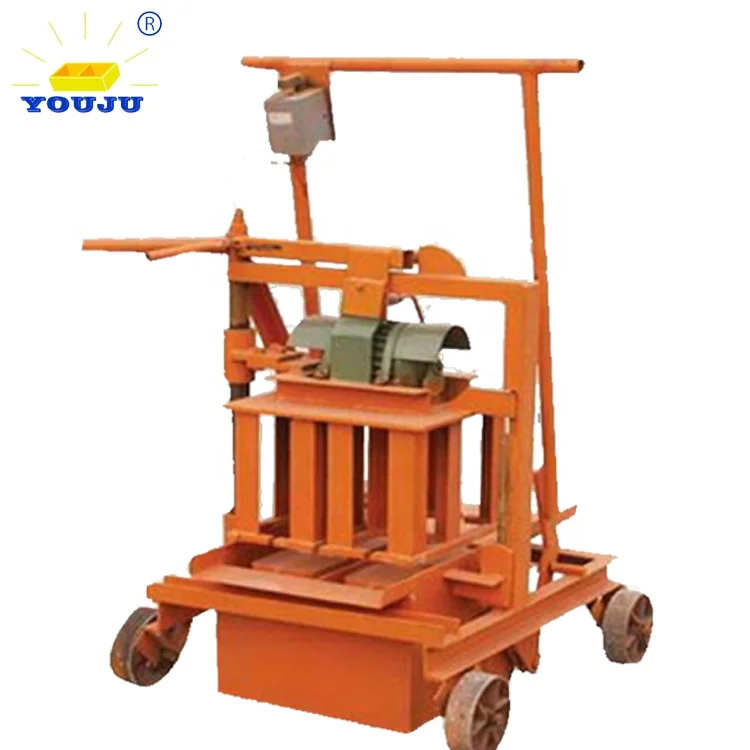
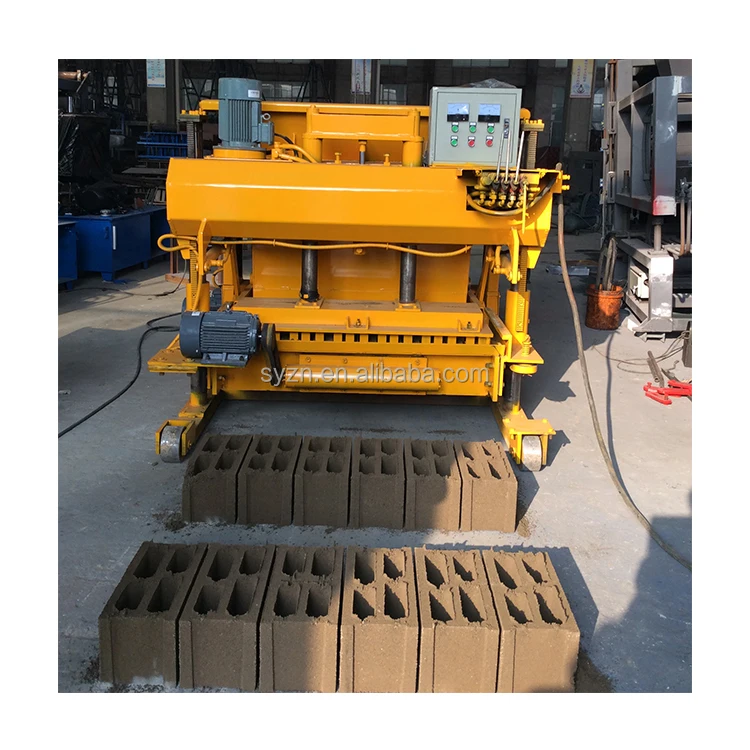
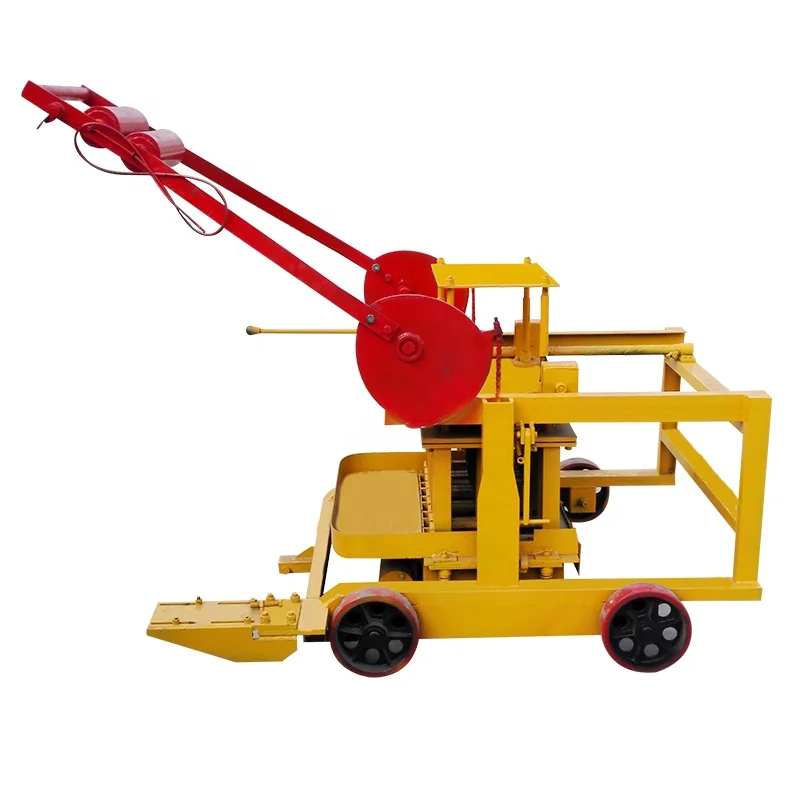
| Product Type | Mobile Clay Interlocking Brick Making Machine |
| Power Source | Diesel engine or Electric motor (dual option) |
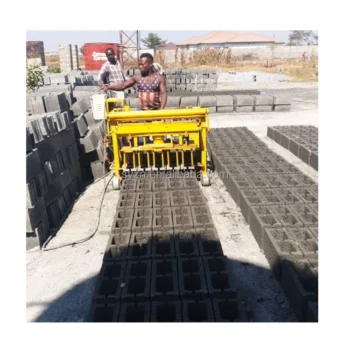
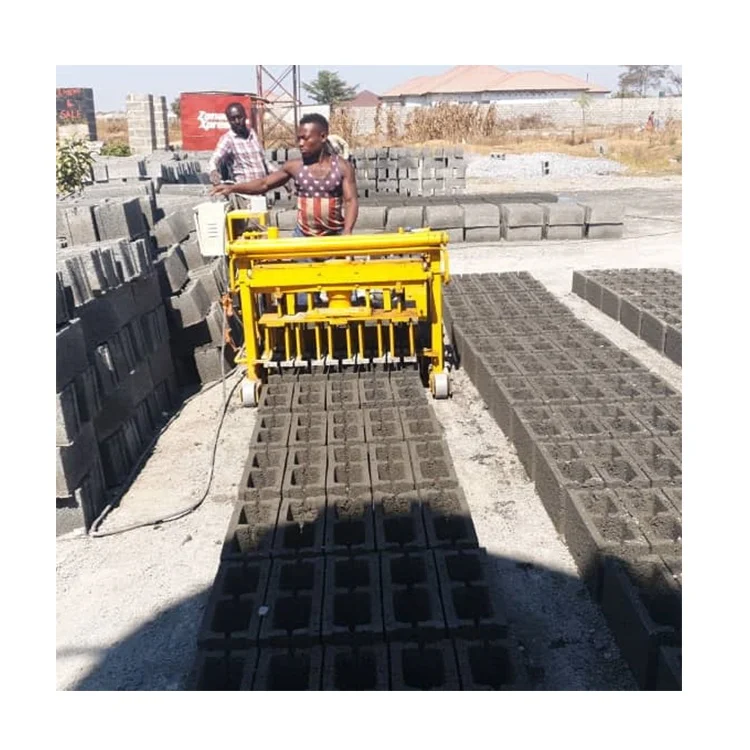
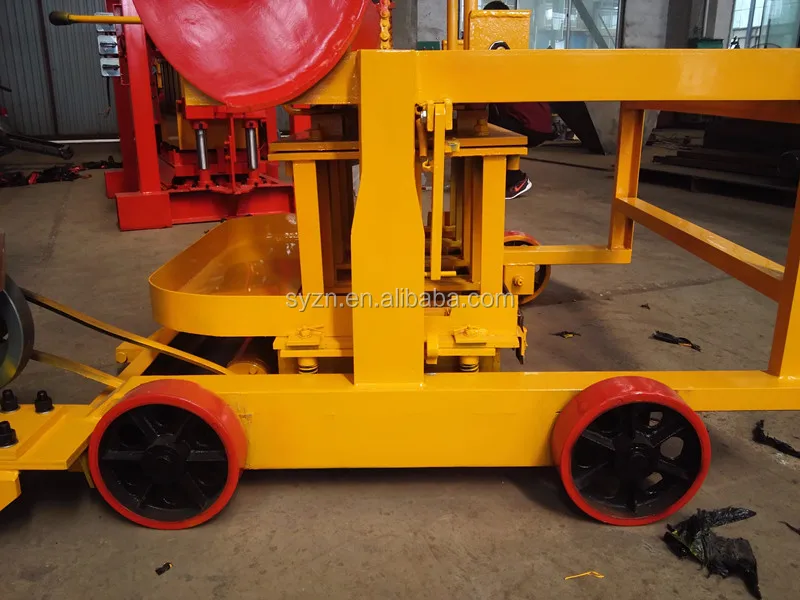
| Pallet Requirement | No pallet required (egg-laying / mobile type) |
| Concrete Floor Requirement | No concrete floor required |
| Pressure System | Hydraulic pressure supplied by diesel engine |
| Cycle Time | 30–45 s (basis not stated in source — confirm block format / material / thickness) |
| Output — Hollow Brick 400×200×200 mm | 4 pcs/mould, approx. 320 pcs/h, approx. 2,600 pcs/8 hr |
| Output — Hollow Brick 400×150×200 mm | 5 pcs/mould, approx. 400 pcs/h, approx. 3,200 pcs/8 hr |
| Output — Hollow Brick 400×100×200 mm | 7 pcs/mould, approx. 560 pcs/h, approx. 4,480 pcs/8 hr |
| Automation Level | Manual / semi-automatic (mobile egg-laying operation) |
| Mould Change | Supports different block specifications via mould change |
| Rated Power | To be verified against manufacturer catalog |
| Voltage & Frequency | To be verified against manufacturer catalog |
| Overall Dimensions (L×W×H) | To be verified against manufacturer catalog |
| Net Weight | To be verified against manufacturer catalog |
Application Suitability
| Application | Material or Output |
|---|---|
| On-site hollow block production at cement yards with limited grid electricity | Crushed stone, sand, cement, and local aggregate blends |
| Remote or off-grid construction sites running diesel power | Clay and soil mixes for interlocking brick formats |
| Small-scale block plants producing multiple formats | Hollow bricks, interlocking bricks, and paving bricks across three standard sizes |
| Contractors producing blocks locally for housing projects | Site-sourced aggregate with cement binder, laid directly on prepared ground |
| Entrepreneurs launching a first block plant with low infrastructure | Standard concrete mixes using locally available sand and gravel |
What "Pieces per Hour" Actually Means for Mobile Block Machine Specifications
Capacity only matters when you know which block format it was measured on.
Many mobile block machine specifications quote a single hourly output that assumes the smallest or lightest format in the mould range. When the buyer switches to the larger hollow block their market actually demands, real output drops and the project schedule slips. I have watched contractors in East Africa plan entire housing phases around a headline number, only to find the machine produces noticeably fewer blocks per shift once the 400×200×200 mm mould is mounted. The QMR 4-45 lists output separately for each of its three standard hollow brick sizes so you can plan against the format your buyers order most [NEED_CITE: block format demand patterns by regional market].
Mould Selection Drives the Real Daily Tonnage
The QMR 4-45 ships with mould options for 400×200×200 mm, 400×150×200 mm, and 400×100×200 mm hollow bricks. Each format changes the number of cavities per press cycle and therefore the hourly throughput. Choosing the correct mobile block machine specifications starts with knowing which of these dimensions your local hardware distributors stock and which your building codes require. A machine configured for the wrong format will sit idle while you source a new mould, and the downtime erases any advantage the press itself offered.
Diesel Versus Electric on Unreliable Grids
The dual power option — diesel engine or electric motor — is not a cosmetic choice. On sites where grid voltage sags during afternoon peaks, an electric motor can stall mid-cycle and leave partially compacted blocks in the mould. The diesel variant keeps hydraulic pressure stable regardless of local grid conditions. Buyers in regions with frequent load-shedding typically specify diesel as the primary source and keep an electric motor as a backup for periods when fuel cost spikes [NEED_CITE: diesel versus electric operating cost considerations for small block plants].
Reading the Numbers Behind the Press
Hydraulic pressure and cycle time together determine whether a clay interlocking brick holds its edge after demoulding. The 30–45 second cycle range on the QMR 4-45 reflects the variation between a thin 100 mm brick and a full 200 mm hollow block — thicker formats need longer vibration and pressure dwell to reach uniform density. The egg-laying design means the machine deposits blocks directly on the ground, so the curing area layout must match the walking path of the unit. Pallet-free operation eliminates one consumable cost, but it also means ground preparation — a level, compacted surface — becomes part of your setup routine rather than something a pallet conveyor handles for you.
When a Wrong Specification Costs More Than the Machine
A buyer who selects a mould format without checking local building codes may produce bricks that inspectors reject on site. Similarly, ordering an electric variant without confirming the local frequency can leave the control panel unresponsive at first startup. I once spent four days on a Kenyan site re-tuning a clay interlocking brick press because the local red soil had a much higher plasticity index than the standard test sample we used at the factory. The blocks cracked on demoulding until we adjusted the moisture window and pressure dwell. Sending a raw material sample before the order is placed avoids that kind of delay entirely [NEED_CITE: effect of soil plasticity on interlocking brick demoulding success].
Why Source This Machine Through a Format-Matched Approach
Block machinery is the single product focus here, which means the QMR 4-45 is specified as a matched system — machine, mould, and ground-laying workflow considered together rather than assembled from separate suppliers. Configuration is set against the buyer’s actual mix design and target block format, not pulled from a catalogue default. Mould design covers the formats the buyer’s market sells, with custom drawings available when standard sizes do not match local demand. Capacity calculations state the block format assumed for every output figure, so there is no ambiguity when comparing tenders. Documentation arrives with the machine: hydraulic and electrical schematics, mould drawings, and a factory test record run on the format you specified.
Documentation & Verification
- Line layout showing egg-laying path and curing area matched to your chosen block format
- Mould drawing and format list confirming exact brick dimensions your market requires
- Hydraulic and electrical schematic for the diesel or electric variant you selected
- Factory test record run on your specified hollow brick size before dispatch
- Voltage and control language confirmation sheet signed off before crating
Installation, Commissioning & Support
- Ground preparation guide specifying level tolerance for pallet-free egg-laying operation
- Diesel engine or electric motor commissioning checklist matched to your power source choice
- Mould change procedure with tool list so format swaps stay within a single shift
- Operator training covering hydraulic pressure adjustment for local clay or concrete mixes
- Wear parts list identifying hydraulic seals and mould liner replacements for first reorder
What to Share Before Requesting a Quote
Tell us which hollow brick or interlocking brick format your market orders most, along with the daily output your project schedule requires. Share the raw materials you plan to use — ideally a soil or aggregate sample — so the mix can be tested against the QMR 4-45 hydraulic pressure range before the machine is built. Confirm whether your site has reliable grid electricity or whether the diesel variant is the practical choice.
Frequently Asked Questions
Q: How is output capacity verified, and which block format does each figure assume?
A: Every capacity figure for the QMR 4-45 is stated per block format — 400×200×200 mm, 400×150×200 mm, and 400×100×200 mm — with the corresponding cavity count and cycle time. There is no single headline number. We provide a written capacity calculation sheet that names the exact format assumed so you can plan shifts against your real product mix.
Q: Diesel vs. electric — how do I choose based on site conditions?
A: If your site experiences frequent voltage drops or load-shedding, the diesel variant maintains stable hydraulic pressure throughout the shift. The electric variant suits yards with a dedicated transformer and reliable supply. We confirm voltage and frequency before production so the motor and control panel match your local grid on arrival.
Q: Which block formats and moulds are available, and how long does a mould change take?
A: Standard moulds cover three hollow brick sizes. Custom moulds can be designed to buyer drawings for interlocking or paving formats. Mould change involves unbolting the mould box, lifting it clear, and seating the replacement — a procedure covered in the operator training and typically completed within a portion of one shift.
Q: How do local aggregate and mix design affect block strength on this machine?
A: Clay plasticity, sand grading, and cement ratio all influence whether blocks hold together after demoulding. We ask buyers to send a raw material sample so we can test the mix on the QMR 4-45 at factory stage and recommend moisture and pressure settings before the machine ships.
Q: What ground preparation does this mobile machine require since no pallets are used?
A: The QMR 4-45 lays blocks directly on a level, compacted surface. No concrete floor is required, but the ground must be firm enough to support the machine weight without settling. A curing area adjacent to the laying path should be planned so freshly pressed blocks are not disturbed during the initial set period.