

Description
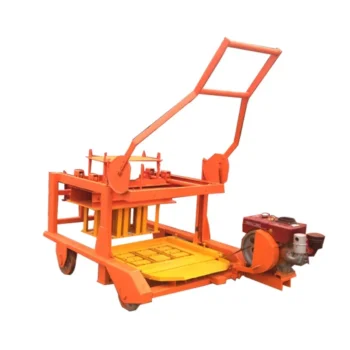
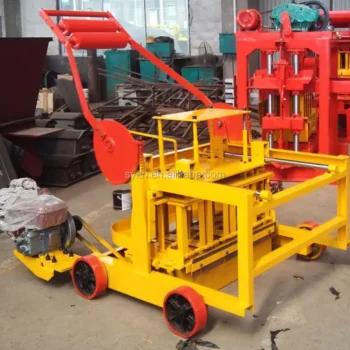
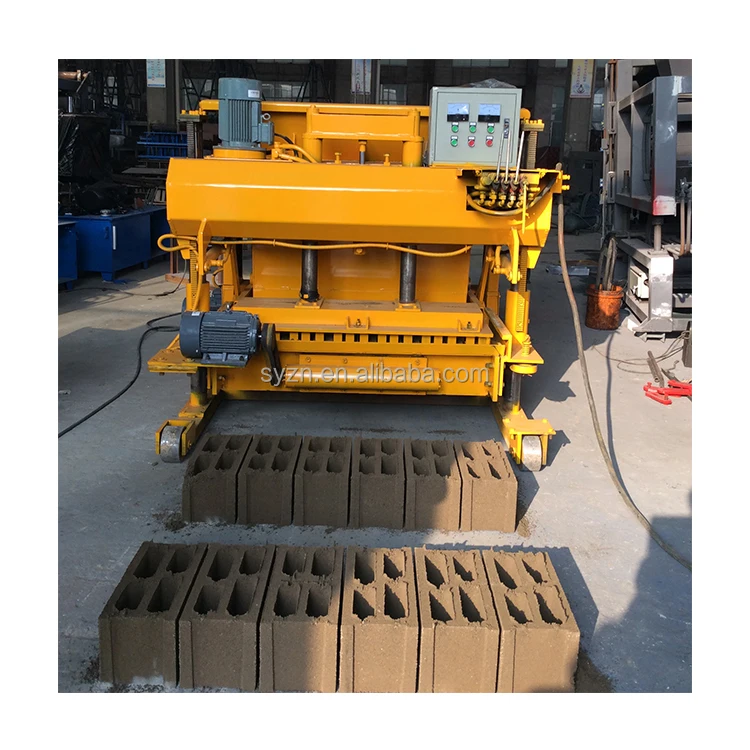
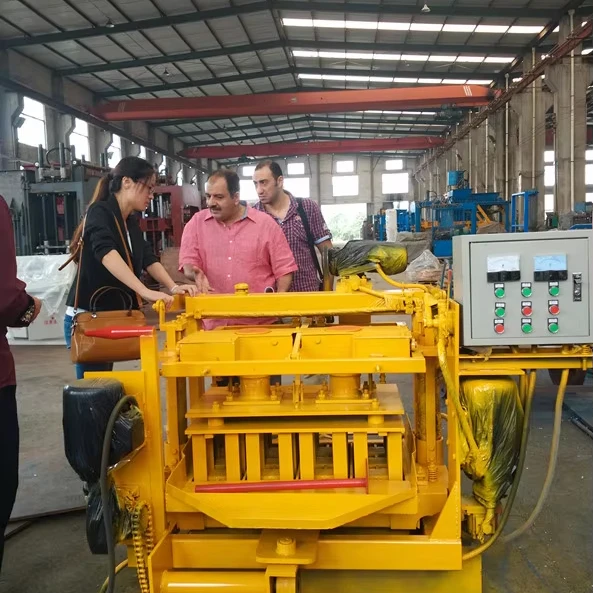
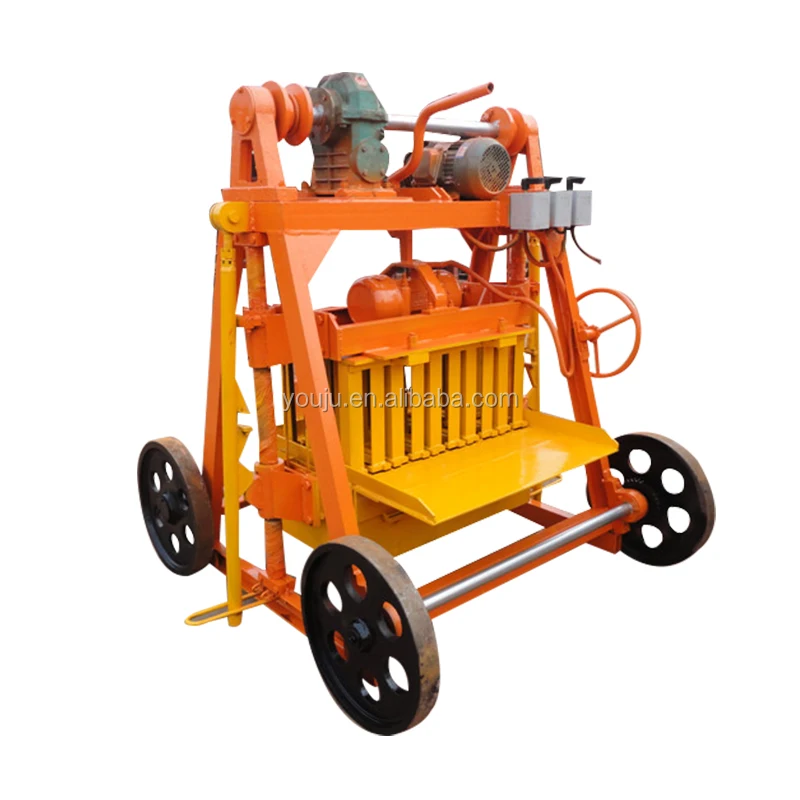
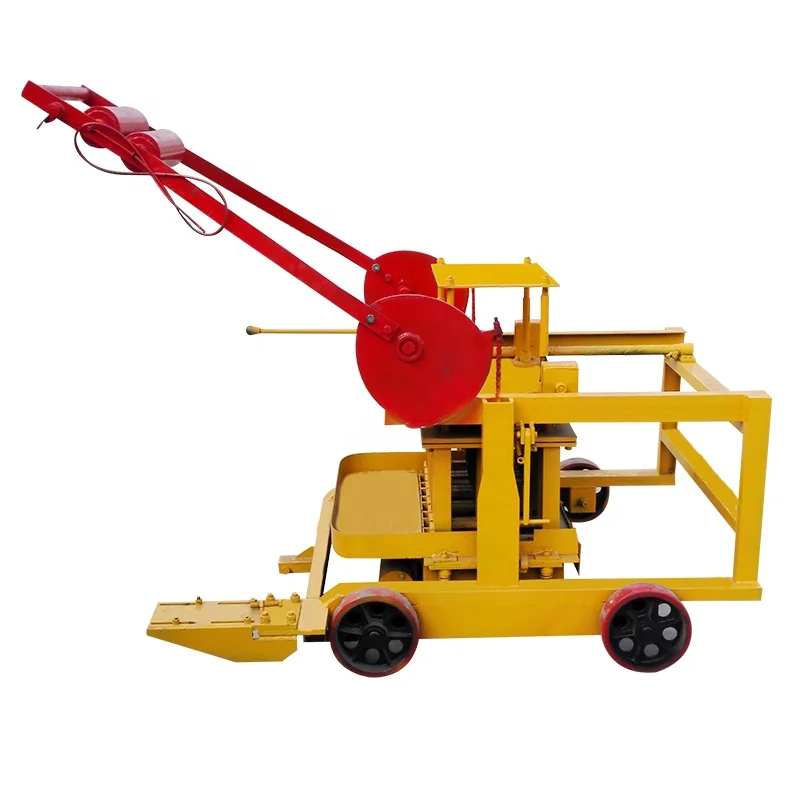
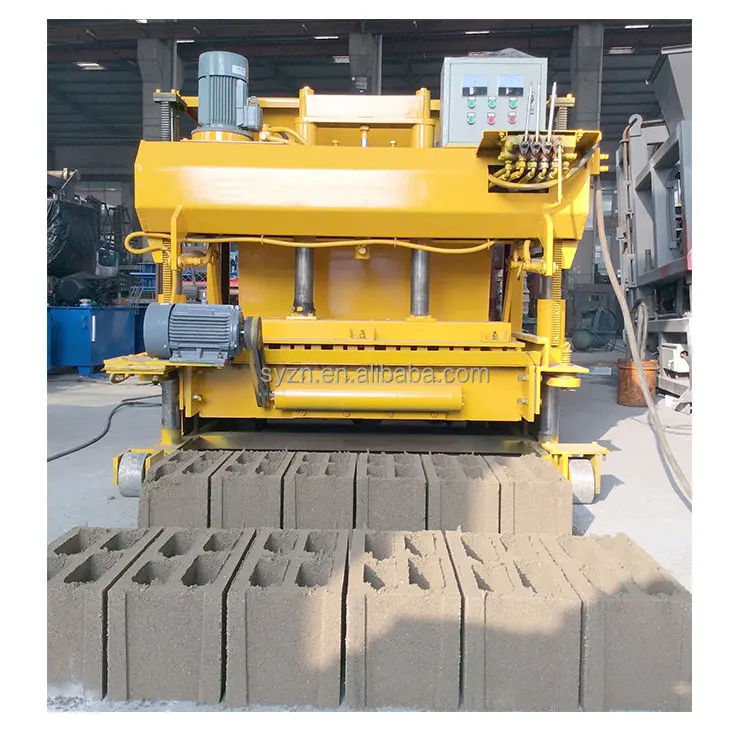
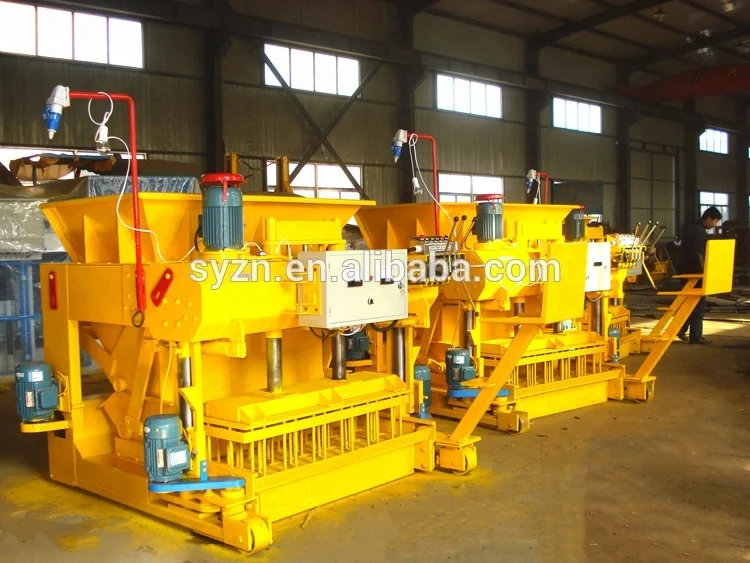
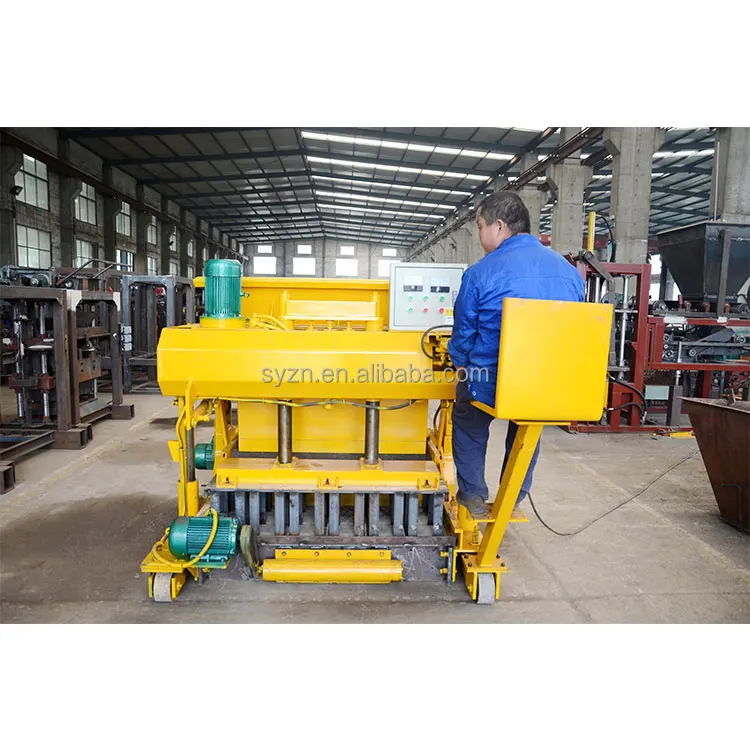
Single Focus Engineering — the QMY6-25 mobile block machine is specified as a matched system of press, mould, and hydraulic steering, built for contractors who produce concrete masonry units directly on their project sites.
Technical Specifications
| Parameter | Value |
|---|---|
| Model | QMY6-25 |
| Product Type | Mobile Cement Block Making Machine |
| Rated Power | 9.6 kW |
| Control System | Manual operation with hydraulic steering |
| Overall Dimensions | 2000 × 2100 × 1650 mm |
| Vibration Type | Three-dimensional excitation |
| Vibration Frequency | 3200 Hz |
| Cycle Time | 25–30 s |
| Output Capacity (400×200×200mm hollow block, 6 pcs/mould) | 1080 pcs/h, 8600 pcs per 8-hour shift |
| Output Capacity (400×150×200mm hollow block, 7 pcs/mould) | 1260 pcs/h, 10000 pcs per 8-hour shift |
| Output Capacity (400×120×200mm solid block, 9 pcs/mould) | 1620 pcs/h, 12960 pcs per 8-hour shift |
| Output Capacity (400×100×200mm solid block, 12 pcs/mould) | 1800 pcs/h, 14400 pcs per 8-hour shift |
| Moving Method | Automatic movement with hydraulic steering |
| Pallet Requirement | No pallet required (egg-laying type) |
| Operator Requirement | Single operator |
| Warranty | 1 year (excluding spare parts) |
Application Suitability
| Application | Material or Output |
|---|---|
| Housing project on-site hollow block production | Crushed stone, river sand, and cement mix laid directly on prepared ground |
| Remote infrastructure site solid block manufacturing | Local aggregate and cement with manual feeding for walls and foundations |
| Small-scale block plant start-up | Standard concrete masonry units without pallet or curing rack investment |
| Supplementary production alongside a fixed plant | Specific block formats produced on demand at secondary locations |
What "8600 Blocks per Shift" Actually Means on Your Job Site
The real daily output of the QMY6-25 mobile block machine depends entirely on which block format your market sells, not the headline cycle figure.
Every mobile block machine specifications sheet leads with an impressive shift number, but that figure assumes a particular block size, mould cavity count, and consistent material feed. On a housing project in Cambodia, I watched a contractor plan their entire pour schedule around a quoted capacity — only to discover the number assumed a solid block format while their site needed hollow blocks. The gap between expectation and reality stalled masonry crews for days. When evaluating how to choose the right unit, always cross-check the capacity line that matches your exact block dimensions and mould configuration [NEED_CITE: block format assumptions in mobile machine capacity quotations].
Format-by-Format Capacity Breakdown
The QMY6-25 publishes output data for four distinct block formats, each with its own mould cavity count and resulting hourly throughput. This matters because a contractor selling 400×200×200mm hollow blocks will see a very different daily tally than one running 400×100×200mm solid blocks on the same machine. Buyers evaluating mobile block machine specifications must anchor their purchase decision to the format that moves in their local market, not the highest number on the sheet.
Mould Selection and Format Changeover
Moulds determine which block the machine produces, and swapping between formats is where many small operations lose entire shifts. The QMY6-25 supports multiple mould formats, but the time and labour required for a changeover must be confirmed before committing to a multi-format production plan. On job sites where both hollow and solid blocks are needed in the same week, realistic scheduling requires knowing whether one operator can handle the swap alone and how long the press sits idle during the transition [NEED_CITE: mould changeover time on egg-laying block machines].
How Vibration and Pressure Shape Block Integrity
Three-dimensional excitation at 3200 Hz drives the concrete mix into the mould cavity from multiple vectors, which is critical when the local aggregate has irregular particle shapes or high fines content. The 9.6 kW rated power supports both the vibration system and the hydraulic steering, meaning the available energy must be balanced between compaction force and machine mobility. In my experience, the vibration frequency must be matched against the buyer’s actual mix design — river sand with high silt content absorbs vibration differently than clean crushed stone, and an unadjusted frequency leaves blocks that crumble at the edges before they even leave the curing zone. The 25–30 second cycle time gives the mix enough dwell under vibration to consolidate, but only if the moisture content and cement ratio are within the range the machine was configured for [NEED_CITE: vibration frequency and aggregate compatibility in concrete block production].
The Hidden Cost of Ignoring Ground Conditions
Egg-laying mobile machines eliminate the capital outlay for pallets and curing racks, but they demand flat, level, and sufficiently hardened ground to lay blocks directly. On soft or uneven terrain, freshly formed blocks tilt or crack under their own weight before initial set, and the machine’s hydraulic steering cannot compensate for a subgrade that sinks under load. Contractors who skip ground preparation end up with rejection rates that erase the pallet savings many times over. The curing area must also be large enough to accommodate the daily output footprint, since blocks remain in place until they gain enough strength to be moved [NEED_CITE: ground preparation standards for pallet-free mobile block production].
Why Buyers Source This Machine Through Shiyue
Block machinery as a single focus means the QMY6-25 is not a generic press bolted to an unrelated hydraulic system — the machine, mould, and steering are specified together. Configuration is set against the buyer’s actual mix design and local aggregate, not a catalogue default that assumes ideal materials. Mould design covers the formats the buyer’s market actually sells, with custom drawings available for non-standard local dimensions. The automation level is honest: a single-operator, manual-control machine that keeps capital requirements low while leaving a clear path to upgrade if production scales. Installation and commissioning support includes operator training so the crew on site understands the relationship between mix moisture, vibration, and block strength from the first day.
Documentation & Verification
- Machine specification sheet stating output per block format and assumed mould cavity count
- Mould drawing and format list matching your local block dimensions before production
- Hydraulic and electrical schematic with motor voltage and frequency confirmed for your country
- Factory test record run on material representative of your actual mix design
- Operation and maintenance manual in your required language with wear parts list
Installation, Commissioning & Support
- Requires a flat, compacted concrete or gravel pad of sufficient area for daily block output to cure in place
- Confirm 9.6 kW motor voltage and frequency match local supply before the machine leaves the factory
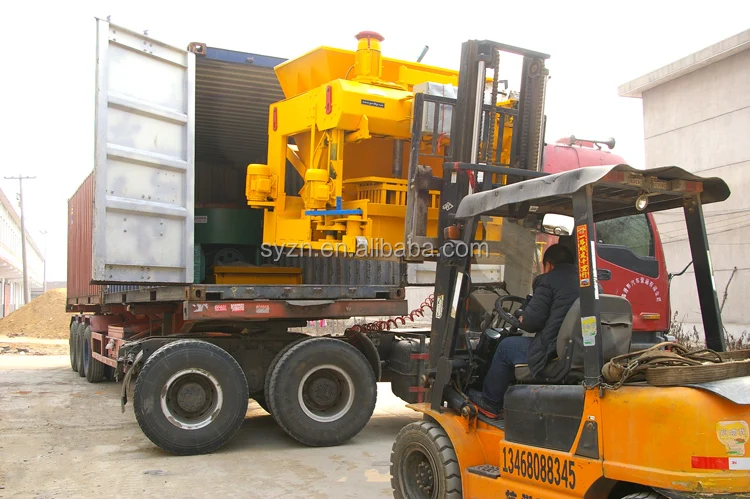
- Machine arrives fully assembled; hydraulic steering system requires fluid fill and bleed on site
- First production run supervised to set vibration duration and cycle timing against your specific aggregate
- Single-operator training covers mould change procedure, daily greasing points, and hydraulic hose inspection
Before You Request a Quote
To size the QMY6-25 accurately against your project, share the exact block formats your market requires, including dimensions and whether hollow or solid. Tell us about your local aggregate source — river sand, crushed stone, or a blend — and the cement type available, because the vibration profile must be matched to your material before the machine is configured. Confirm your site voltage and frequency, the ground conditions where blocks will be laid, and the daily output you need so we can calculate realistic shift capacity against your chosen format.
Frequently Asked Questions
Q: How do I verify the real daily output of the QMY6-25 for the specific block format I sell?
A: Request a capacity calculation document that names your exact block size, the mould cavity count, and the assumed cycle time. Compare this against the published figures — for example, 400×200×200mm hollow blocks yield 1080 pieces per hour with a 6-cavity mould, while 400×100×200mm solid blocks reach 1800 per hour with 12 cavities. Your actual output will track whichever format you run.
Q: Can the mould be changed on-site by one operator, and how long does a format changeover take?
A: The QMY6-25 is designed for single-operator use including hydraulic steering, but mould changeover involves unbolting the current mould, lifting it clear, and aligning the replacement. Confirm with the supplier whether a lifting aid is included or whether a second person is needed, and request a documented changeover time so you can plan format rotation into your weekly schedule realistically.
Q: What ground conditions and curing area layout does a pallet-free mobile machine require?
A: Egg-laying operation means blocks are deposited directly onto the ground, so the surface must be flat, level, and hard enough to prevent settling under wet block weight. A compacted gravel or concrete pad is typical. The curing area must be large enough to hold a full shift’s output in place, since blocks cannot be moved until initial set is achieved.
Q: How should I match the machine’s vibration profile to my local aggregate and mix design?
A: The 3200 Hz three-dimensional excitation must be evaluated against your aggregate gradation, fines content, and cement ratio. High-silt river sand, for instance, absorbs vibration differently than clean crushed stone. Request that the supplier configure the vibration parameters based on a sample of your actual material rather than a default setting, and plan a trial run before committing to full production.
Q: What mould formats are available for my market, and can custom moulds be designed to my drawings?
A: Standard moulds cover the four formats listed in the specifications, from 400×200×200mm hollow to 400×100×200mm solid blocks. If your market requires non-standard dimensions or special shapes such as interlocking or kerb profiles, custom mould design to buyer drawings is available. Confirm lead time and minimum order for any custom tooling before placing your machine order.