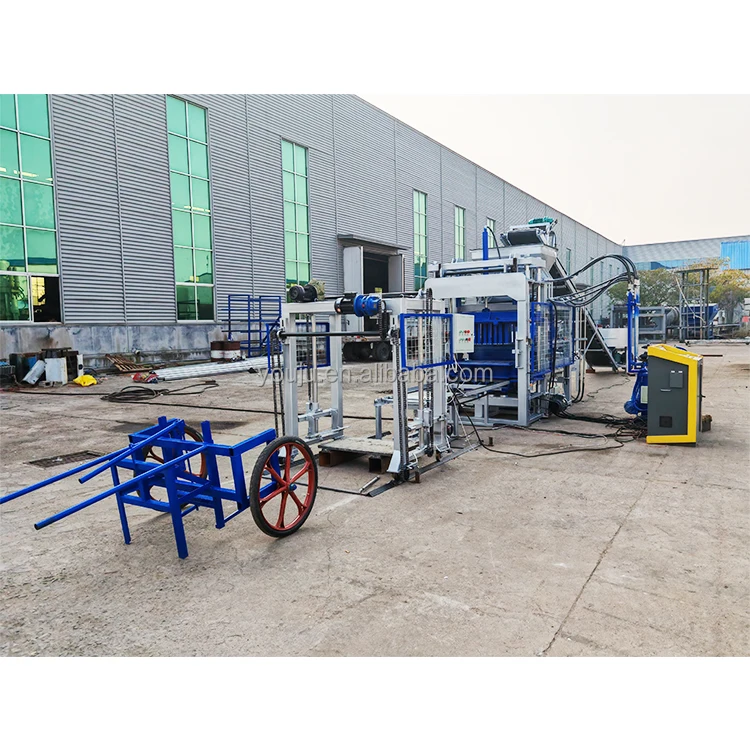
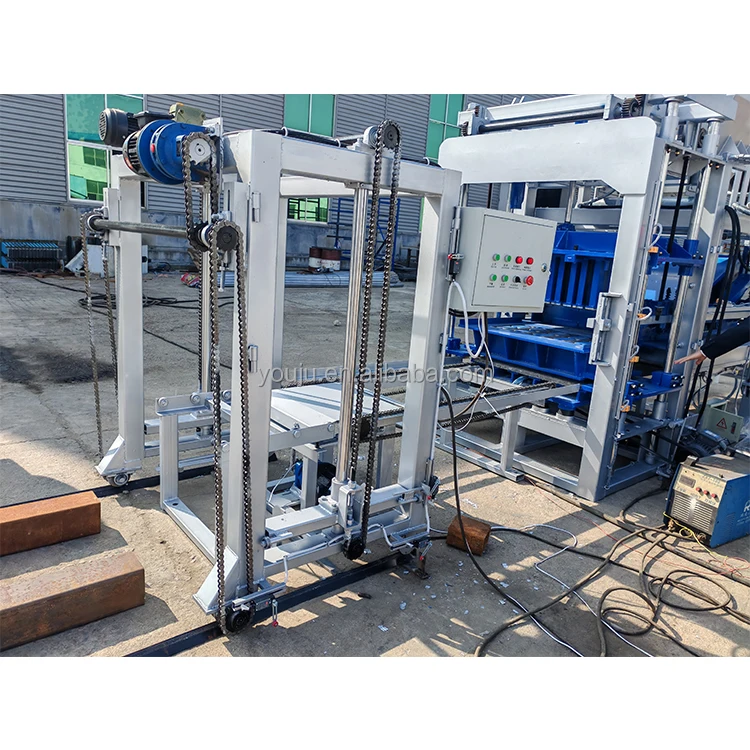
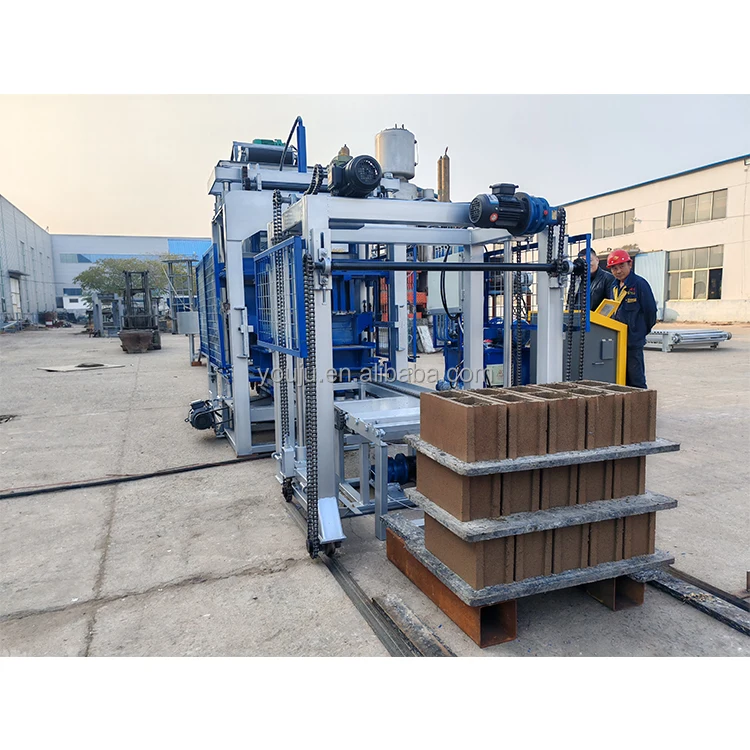
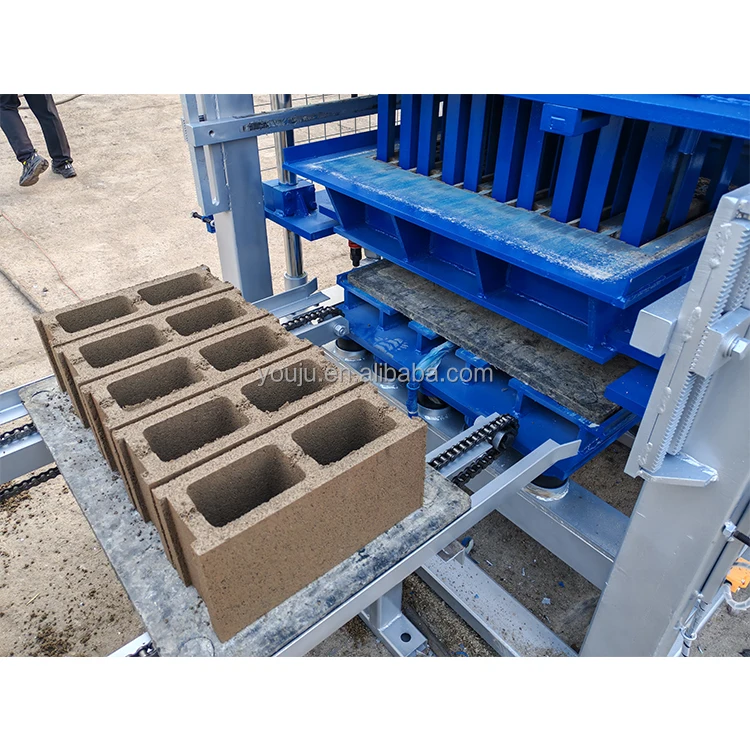
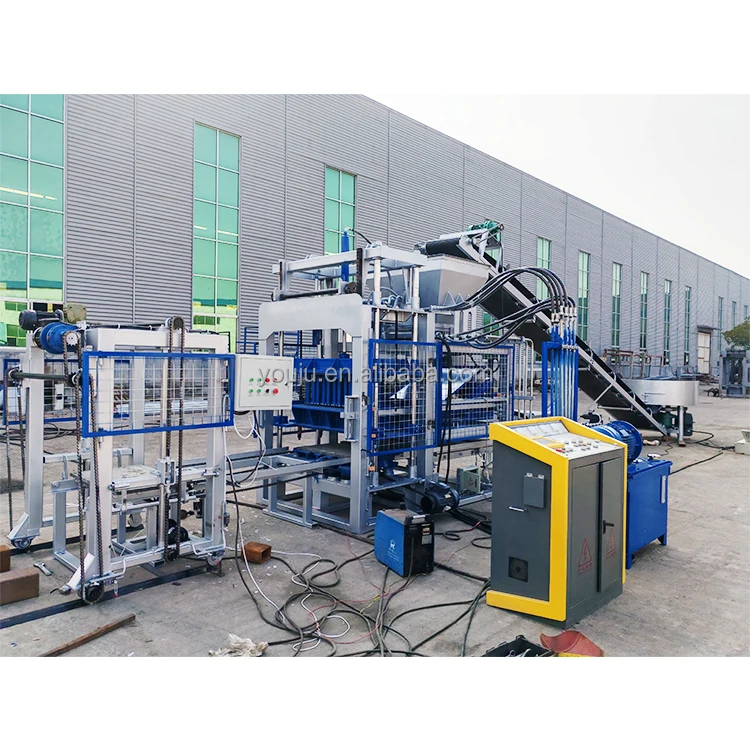
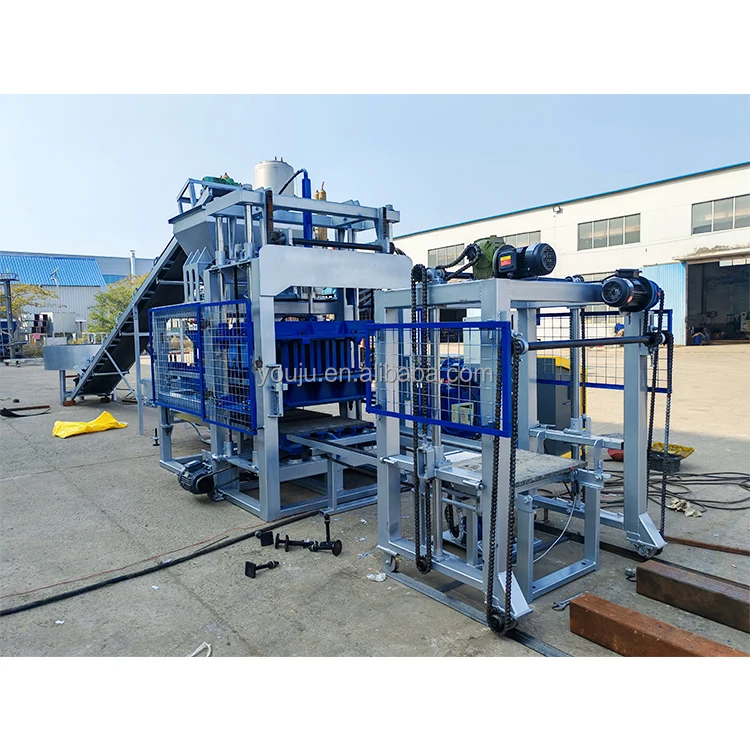
Description
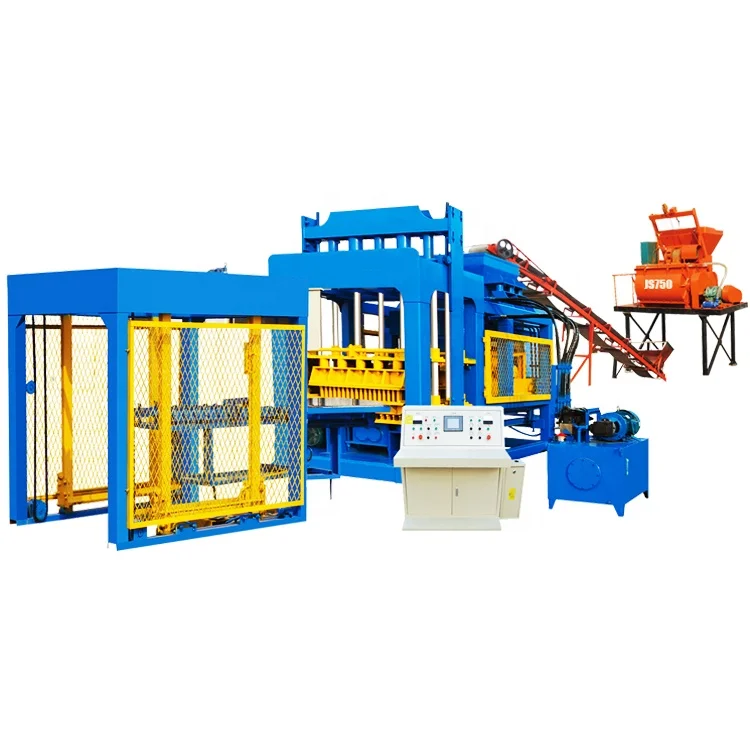
Pallet-First System Match — Every QT4-15 configuration starts from the block format your market actually buys, then we work back to the pallet size, vibration frequency, and hydraulic pressure needed to produce it consistently.
Technical Specifications
| Parameter | Value |
|---|---|
| Model | QT4-15 |
| Product Type | Hydraulic Block Making Machine |
| Molding Cycle | 15–30s |
| Vibration Type | Platform vibration |
| Vibration Frequency | 50–70 Hz |
| Pallet Size | 900 × 500 mm |
| Product Height Range | 50–220 mm |
| Demolding Method | Hydraulic |
| Control System | PLC controlled |
| Overall Power | 24.5 kW |
| Block Compressive Strength | More than 15 MPa |
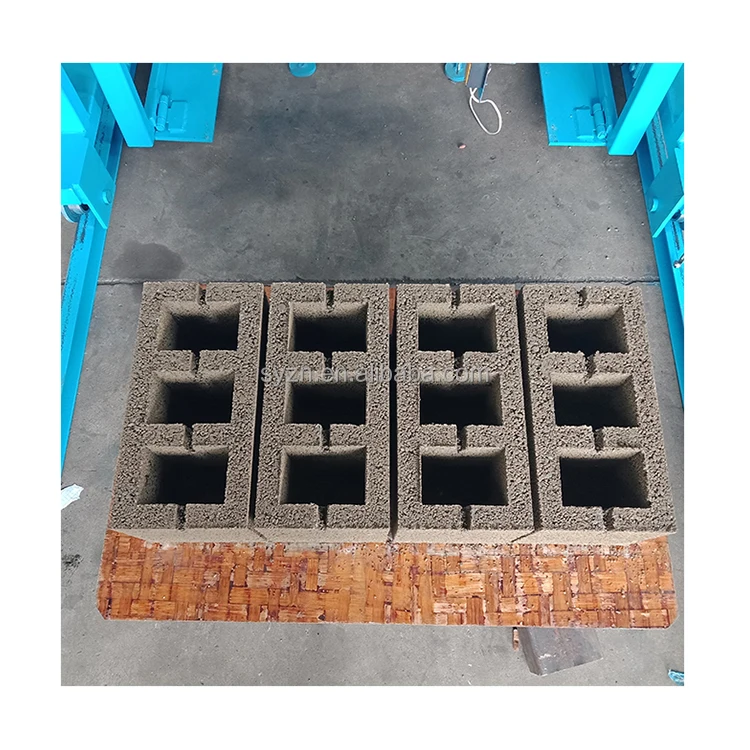
| Hollow Block Capacity | 900–1,200 pcs/h (based on 400×200×200 mm hollow block) |
| Hollow Block Capacity | 1,080–1,440 pcs/h (based on 400×150×200 mm hollow block) |
| Hollow Block Capacity | 1,440–1,920 pcs/h (based on 400×100×200 mm hollow block) |
| Paver Capacity | 2,880–3,840 pcs/h (based on 200×100×60 mm paver) |
| Solid Brick Capacity | 5,930–6,720 pcs/h (based on 240×115×53 mm solid brick) |
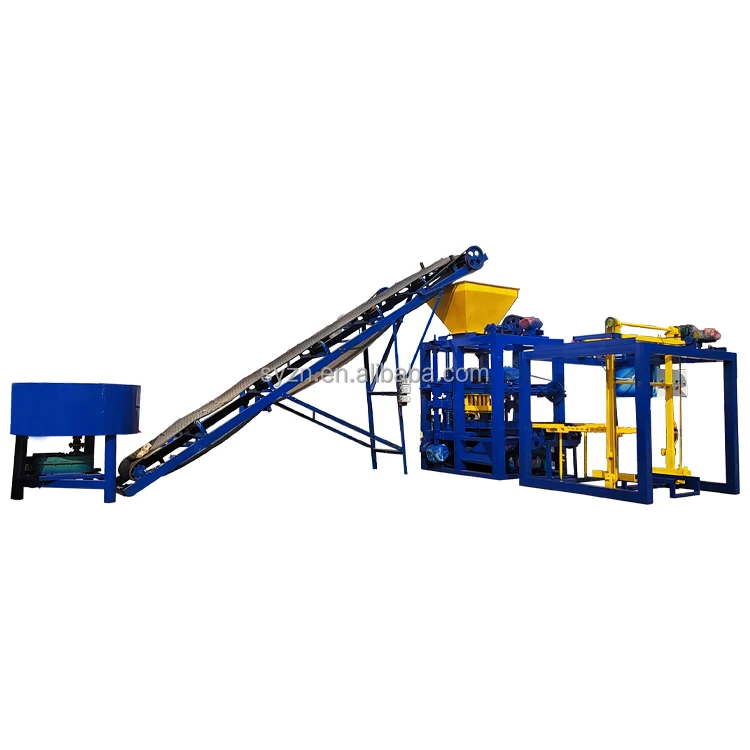
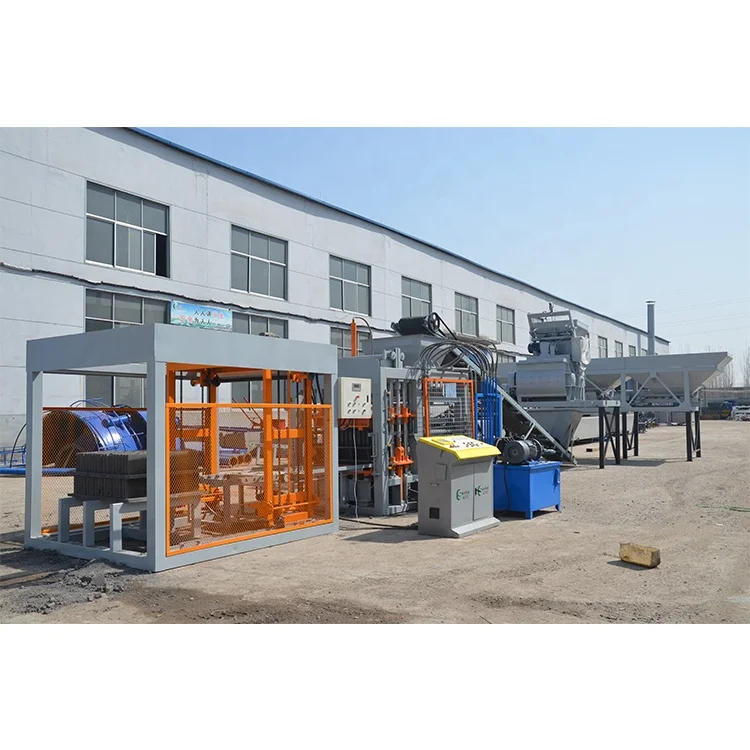
| Automation Level | Automatic (pallet feeding, material feeding, vibrating, demoulding) |
| Electrical & Hydraulic Components | Original imported or China famous brand |
| Standards | CE |
Application Suitability
| Application | Material or Output |
|---|---|
| Hollow block production for building walls | Flyash, slag, sand, crushed stone, cement, water |
| Interlocking paver manufacturing for roads and landscaping | Sand, crushed stone, cement, pigment |
| Solid brick production for masonry | Gangue, flyash, slag, cement |
| Porous and permeable brick for drainage systems | Coarse aggregate, cement, industrial residues |
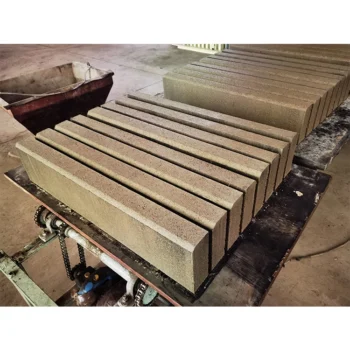
| Kerbstone and curb units for road edges | Crushed stone, sand, cement |
What "1,200 Pieces per Hour" Actually Means on the QT4-15 Block Machine Specifications
Cycle speed means nothing unless the block format behind that number is stated.
I have watched buyers receive a quotation that promises a certain hourly output, only to discover on commissioning day that the figure assumed a thin solid brick while their market needs 200 mm hollow blocks. The QT4-15 block machine specifications on this page list output per format so there is no gap between the number you plan around and the blocks you actually produce. A 400×200×200 mm hollow block exits at 900–1,200 pieces per hour, while a 200×100×60 mm paver reaches 2,880–3,840 pieces per hour on the same press. The difference is not a marketing choice — it is geometry. [NEED_CITE: relationship between block volume and press cycle output]
Matching Mould Formats to the 900 × 500 mm Pallet
The pallet size sets the upper boundary for every mould that can run on this press. A 900 × 500 mm pallet accommodates standard hollow block layouts as well as multi-cavity paver and solid brick moulds. Before we confirm a mould list, we need to know which block dimensions your local market moves fastest, because filling the pallet with a format that sells slowly wastes cycle time. The QT4-15 block machine specifications include a product height range of 50–220 mm, covering everything from thin pavers to full-height hollow blocks without a mechanical modification to the press frame.
Vibration Frequency and Block Density
Platform vibration at 50–70 Hz is the range where most concrete mixes achieve proper compaction without segregation. If the frequency is too low for a given aggregate gradation, the block leaves the mould under-dense and breaks during pallet transfer. Too high, and the fines migrate to the surface leaving voids inside. We set the vibration frequency and hydraulic pressure against the buyer’s actual mix design and local aggregate sample before the machine leaves the factory, rather than shipping a default setting and hoping it works. [NEED_CITE: concrete vibration frequency and aggregate gradation matching]
Reading the Specs That Matter Most
Four parameters on the QT4-15 deserve close attention before you sign off on a purchase order. The 15–30 second molding cycle is the window between one demoulding and the next; it varies with block height because taller blocks need longer vibration to fully compact. The 24.5 kW overall power covers the hydraulic pump, vibration motor, and conveyor drives — if your site transformer cannot supply this continuously, the PLC will fault under load. The hydraulic demolding method means the mould box lifts under controlled pressure, reducing corner damage on green blocks compared to mechanical cam stripping. Finally, the PLC-controlled system stores separate recipes for each mould, so an operator switching from hollow block to paver does not have to re-enter vibration time and pressure values manually.
The Cost of Skipping Format Confirmation
When a buyer does not confirm the target block format before production, the wrong mould set arrives in the container and the machine sits idle while a replacement is manufactured and shipped. I have seen projects lose weeks of curing time because the pallet size specified did not match the forklift tine spacing already in the yard. In other cases the voltage was assumed at 380 V / 50 Hz while the local grid runs 440 V / 60 Hz, burning out the vibration motor within the first shift. [NEED_CITE: voltage and frequency standards by export market] Every one of these issues is preventable if the conversation happens before the machine is built, not after it arrives.
Why Buyers Specify Through This Page
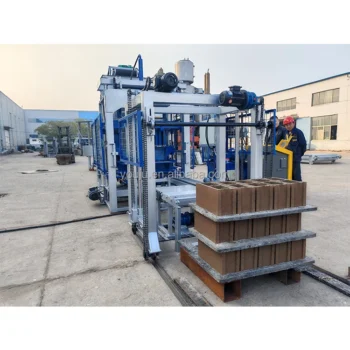
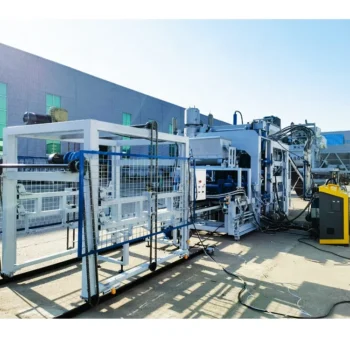
Block machinery is our single focus, so the QT4-15 is never sold as a standalone press — it is configured as a matched system of mould, pallet, and handling equipment. We set vibration frequency and hydraulic pressure against the buyer’s local aggregate and mix design, not a catalogue default. Mould design and supply covers the formats the buyer’s market actually sells, including custom drawings when a non-standard interlocking profile is needed. Automation level is selectable, meaning a buyer can start with the automatic pallet and material feed shown here and add stacking or cubing modules later. Installation and commissioning support includes operator training so the crew running the press on day one knows the mould change procedure and daily maintenance checkpoints.
Documentation & Verification
- Line layout drawing with capacity calculated per block format for the QT4-15
- Mould drawing and format list confirming which blocks fit the 900 × 500 mm pallet
- Factory test record showing cycle time and block weight on the buyer’s target format
- Voltage, frequency, and PLC display language confirmation sheet signed before production
- Hydraulic and electrical schematic for the buyer’s maintenance team
Installation, Commissioning & Support
- Foundation must support the 24.5 kW hydraulic station and vibration loads of the QT4-15
- Dedicated power circuit matching confirmed voltage and frequency before the machine is energized
- Platform vibration mounts inspected and re-torqued after the first week of operation
- PLC recipe parameters calibrated on-site using the buyer’s local aggregate and cement
- Mould change procedure demonstrated until the operator completes a swap within the target time
- Wear parts list supplied with recommended reorder intervals for hydraulic seals and vibration springs
What We Need to Size Your Line
Tell us which block format your market buys most, the daily volume you need to hit, and the aggregate materials available locally. Share your site voltage, frequency, and preferred PLC language so we can wire and program the QT4-15 before it ships. If you already have pallets, forklifts, or a curing rack system, send us the dimensions so the pallet specification on this press matches what you own.
Frequently Asked Questions
Q: How is the QT4-15 capacity calculated per block format, and what cycle time is assumed?
A: Each capacity figure on this page states the block dimensions behind it. The 900–1,200 pieces per hour figure assumes a 400×200×200 mm hollow block at the 15–30 second cycle range. Thinner formats fill more cavities per pallet, so their hourly count is higher on the same press. We provide a format-specific capacity sheet with every quotation.
Q: Which mould formats fit the 900 × 500 mm pallet, and what is the mould change procedure?
A: Hollow blocks up to 220 mm tall, standard pavers, solid bricks, and interlocking profiles all fit within the pallet boundary. The PLC stores a recipe for each mould, so after the physical swap the operator selects the matching program and the press adjusts vibration time and pressure automatically.
Q: How do you match vibration force and hydraulic pressure to local aggregate?
A: We ask for a sample of the buyer’s aggregate and the planned mix ratio. Based on particle size distribution and cement content, we set the vibration frequency within the 50–70 Hz range and adjust hydraulic tonnage so the block reaches the required density without surface cracking.
Q: What voltage, frequency, and PLC language options are available for my market?
A: The electrical system is configured to the buyer’s confirmed voltage and frequency before production begins. PLC display language is set during programming so operators read instructions in their working language from the first shift of commissioning.
Q: What is realistic daily output when running two or more block formats in one shift?
A: Every mould change takes the press offline for a set period, so a shift running three formats will produce fewer total blocks than a shift dedicated to one. We calculate daily output based on the buyer’s planned format mix and include changeover time in the capacity sheet.