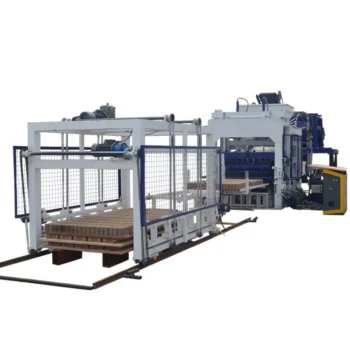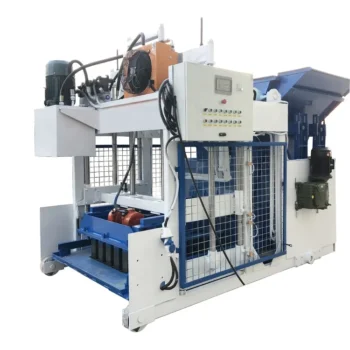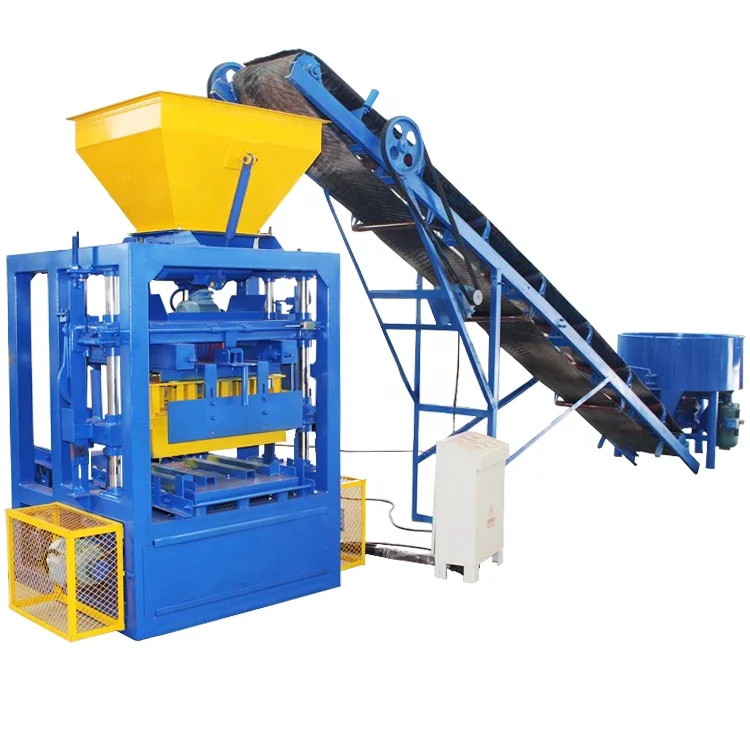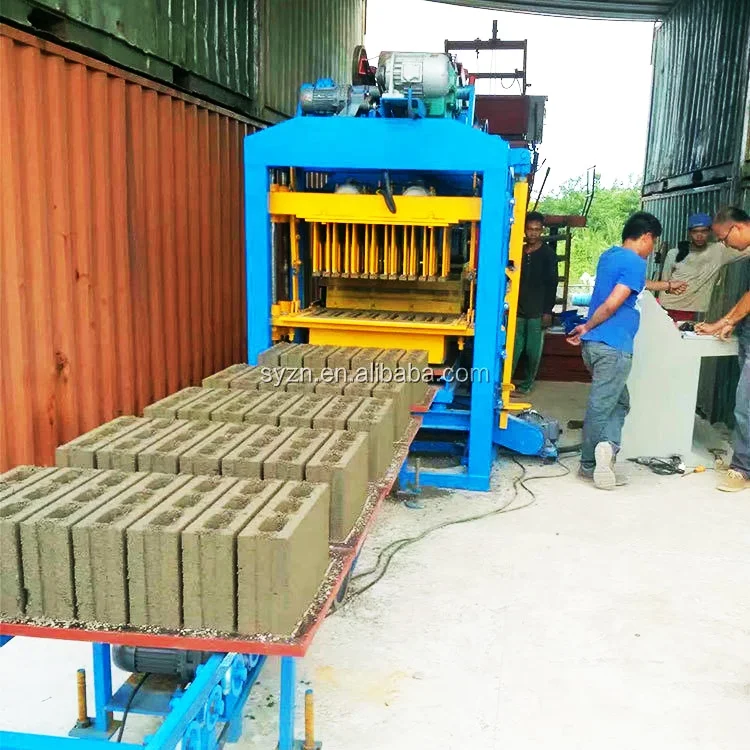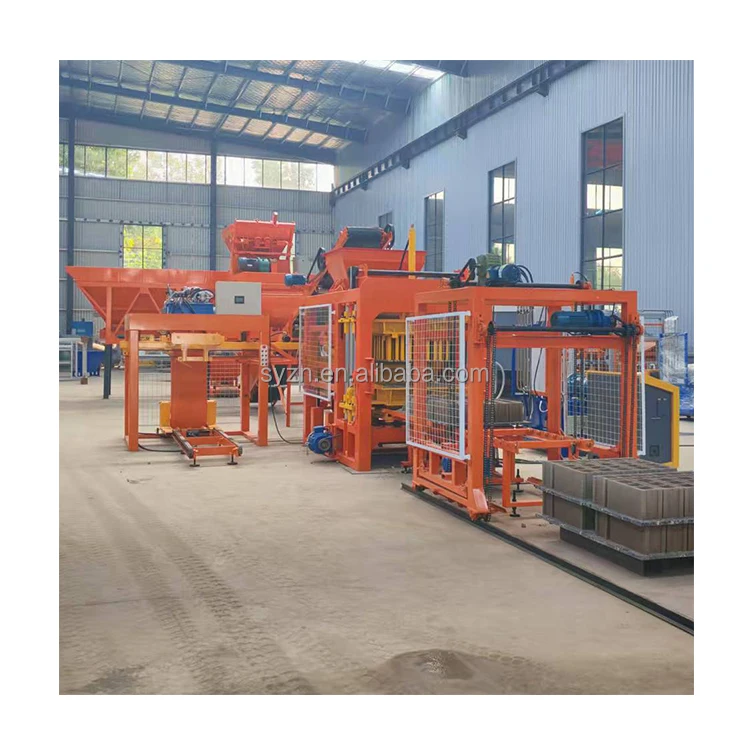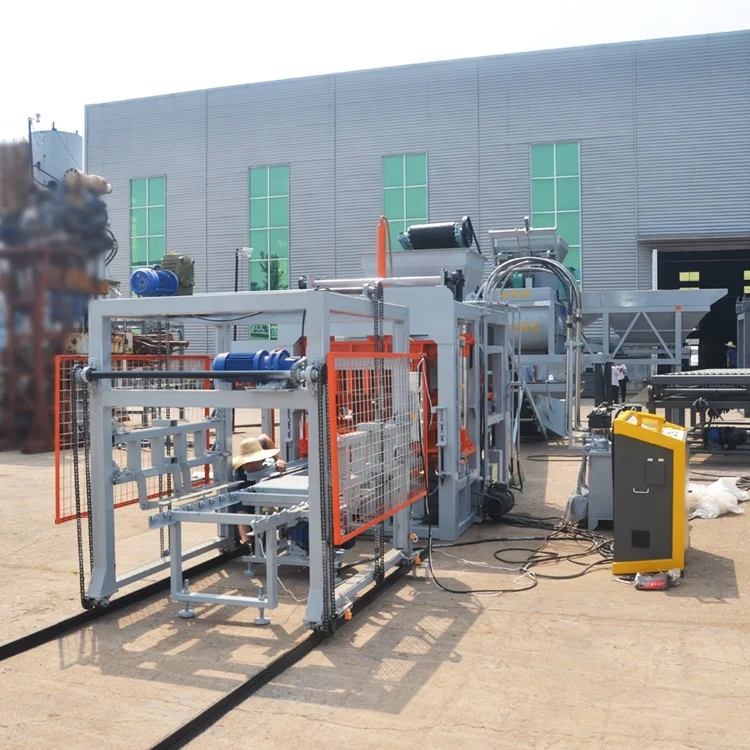
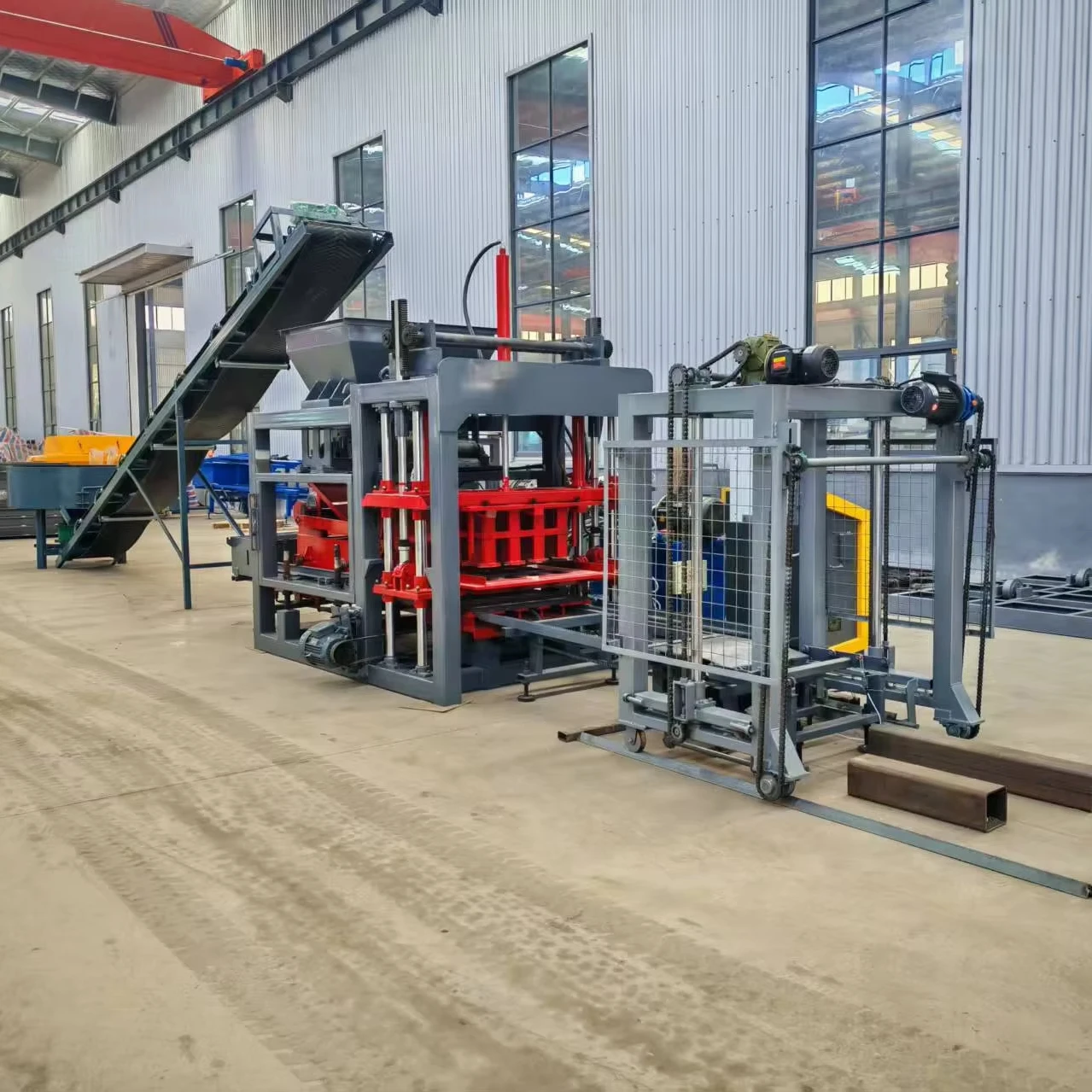
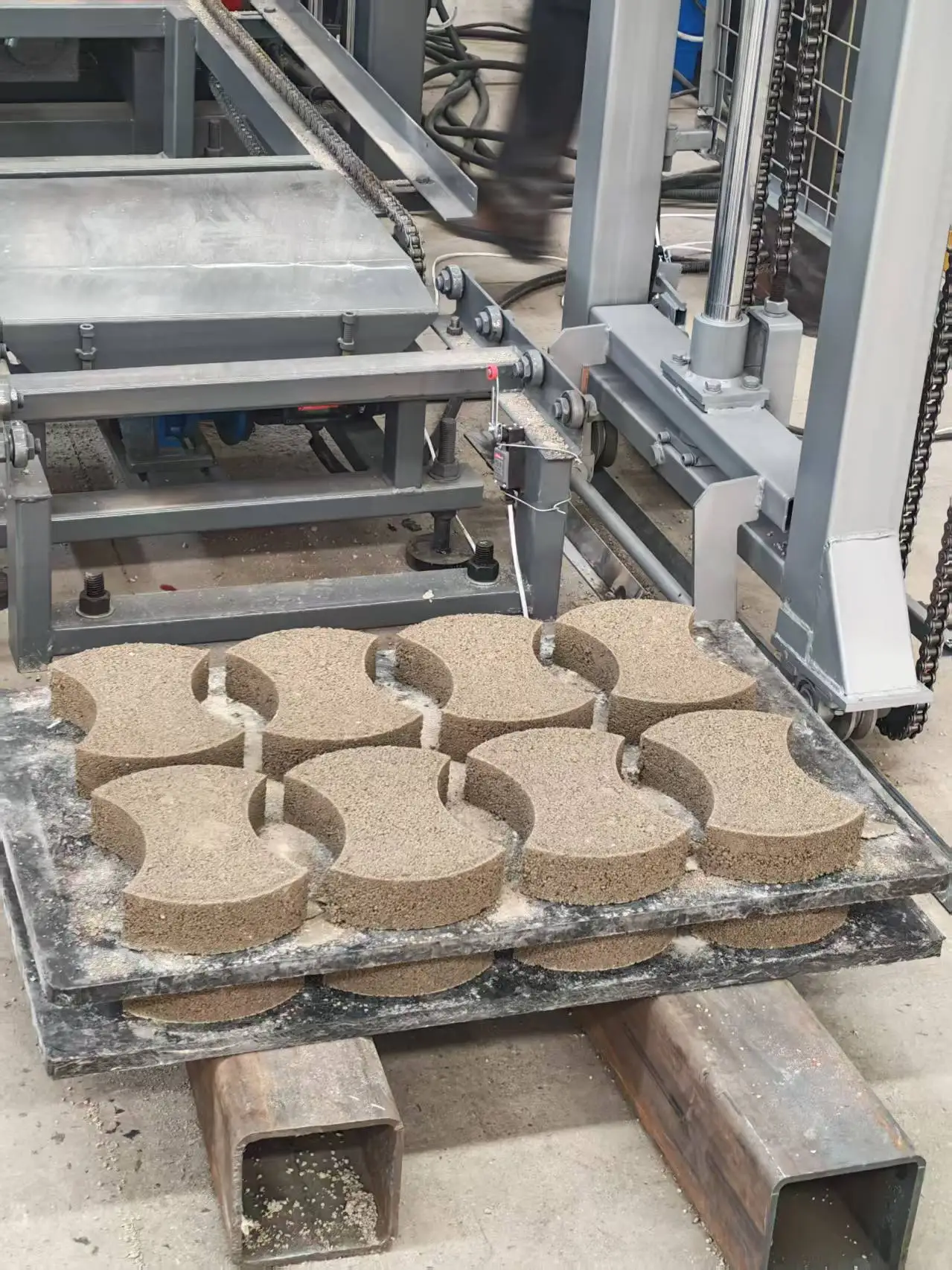

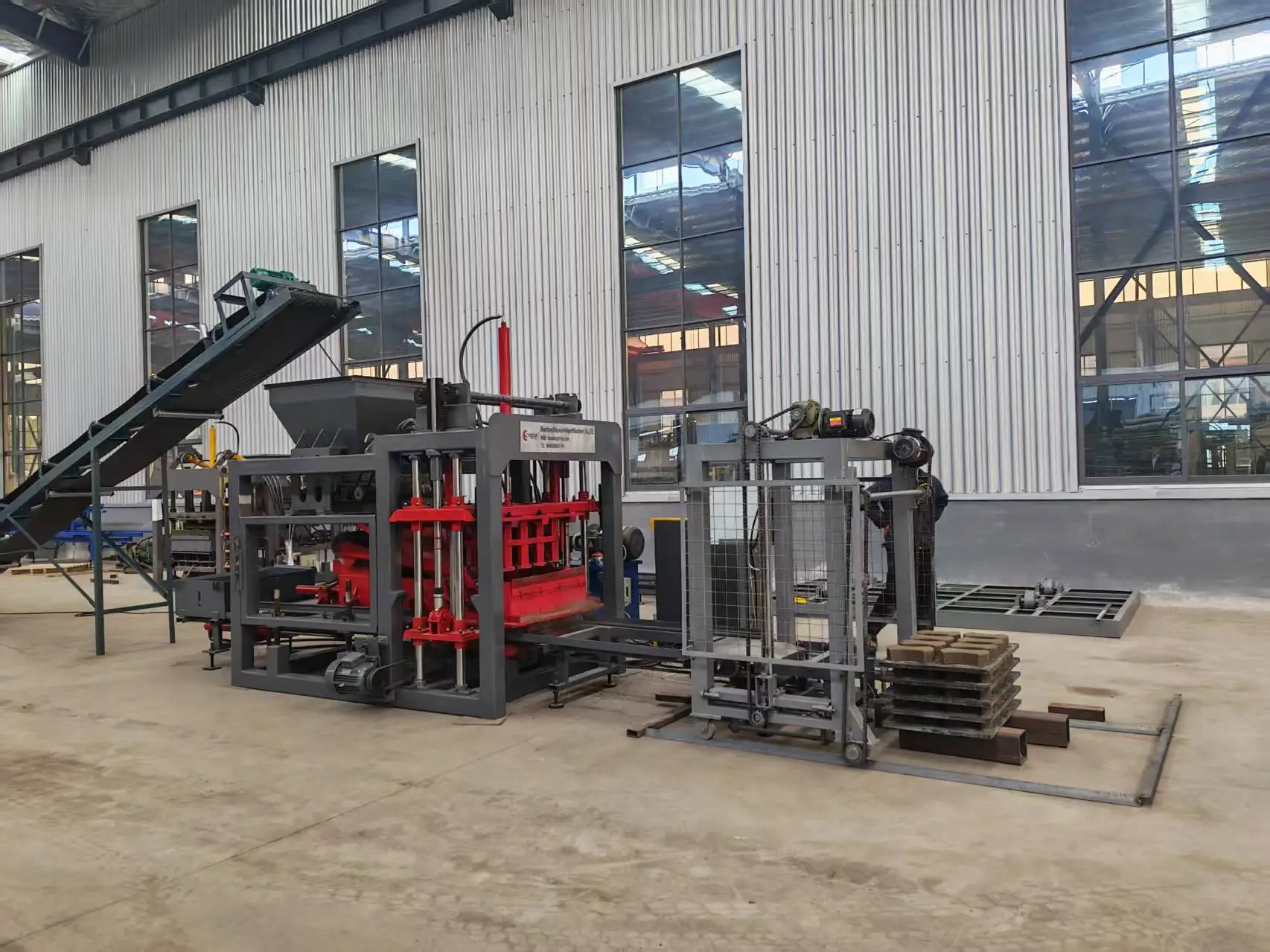
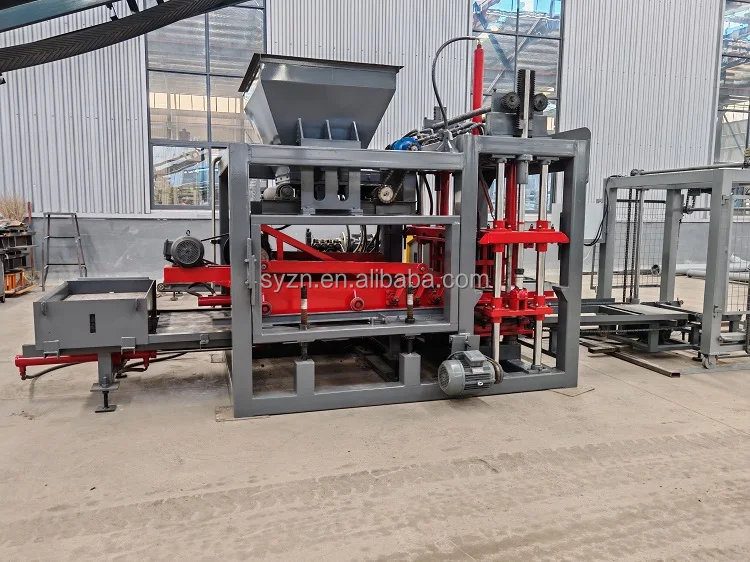
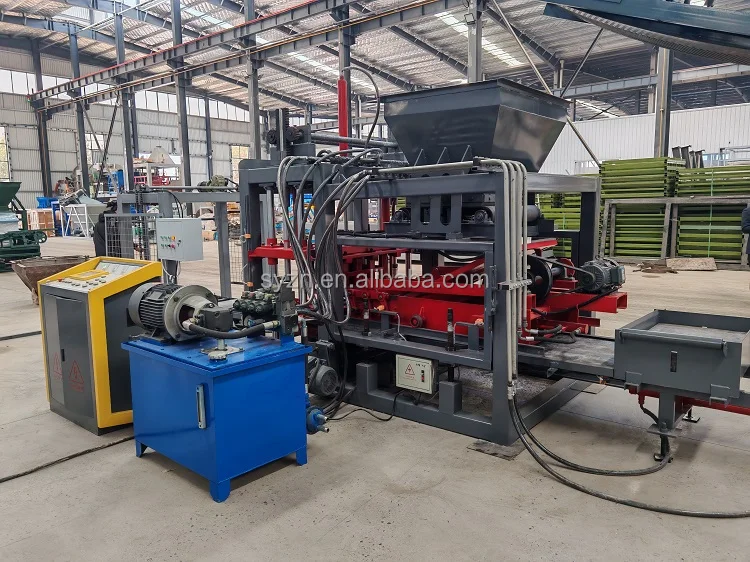
Description
Matched System Sizing — the QT4-18 block machine, pallets and moulds are specified together against your target block format so daily output matches the quotation.
Technical Specifications
| Parameter | Value |
|---|---|
| Model | QT4-18 |
| Product Type | Hydraulic Concrete Block Making Machine |
| Overall Dimensions (L×W×H) | 3900×1600×2300 mm |
| Molding Cycle | 15–25 s |
| Vibration Force (Exciting Power) | 40–50 kN |
| Total Power | 24 kW |
| Mixer Model | JQ350 |
| Pallet Size | 850×550×25 mm |
| Total Weight | 3 T |
| Applied Products | Paver, solid block, hollow block, curbstone |
| Raw Materials | Crushed stone, sand, cement, dust, fly ash |
| Automation Level | Semi-automatic |
| Output Capacity | 1200–1680 pcs/h (based on 400×200×200 mm hollow block, 4 pcs/mould, 15–20 s cycle) |
| Output Capacity | 1800–2400 pcs/h (based on 400×150×200 mm hollow block, 15–20 s cycle) |
| Output Capacity | 3240 pcs/h (based on 240×115×53 mm solid brick, 15–20 s cycle) |
| Daily Output (8 h) | 9600–13440 pcs (400×200×200 mm hollow block) |
| Daily Output (8 h) | 14400–19200 pcs (400×150×200 mm hollow block) |
| Daily Output (8 h) | 16200–19440 pcs (240×115×53 mm solid brick) |
| Stacking Method | Manual with trolley (automatic stacker available as optional line component) |
Application Suitability
| Application | Material or Output |
|---|---|
| Hollow block production for residential and commercial walls | Crushed stone, sand, cement and fly ash mixes forming 400×200×200 mm or 400×150×200 mm units |
| Solid brick manufacturing for load-bearing and partition masonry | Dense aggregate and cement blends pressed into 240×115×53 mm bricks |
| Paving block and curbstone production for roads and landscaping | High-strength mixes with fine and coarse aggregate in paver and kerb formats |
| Small-to-medium block plant start-ups | Semi-automatic operation suited to entrepreneurs entering the concrete product market |
| On-site block production for housing projects | Compact footprint allowing contractors to produce blocks locally using available aggregates |
What "Hydraulic Block Making Machine Specifications" Often Leave Out
Capacity figures only mean something when tied to a specific block format and cycle time.
I once worked with a buyer in Jamaica who ordered a hydraulic press pavement block machine based on a headline output number. The rated capacity assumed standard limestone aggregate, but the local quarry supplied volcanic pumice. The vibration frequency and hydraulic pressure had to be completely recalibrated, and daily output dropped by half. [NEED_CITE: aggregate density impact on block machine cycle time and compaction]. Every quotation should state which block size, mould cavity count and cycle time produced the stated number. The hydraulic block making machine specifications for the QT4-18 list output per format — hollow block, solid brick and paver — so there is no guesswork when your market demands a different size.
Format-by-Format Output Breakdown
The QT4-18 is a semi-automatic hydraulic concrete block making machine designed for buyers who need honest output data before committing capital. A single headline capacity figure hides what happens when you switch moulds. This machine states its cycle time at 15–25 seconds and ties each output number to a specific block dimension and cavity count. Whether you produce 400×200×200 mm hollow blocks at 1200–1680 pieces per hour or 240×115×53 mm solid bricks at 3240 pieces per hour, the hydraulic block making machine specifications give you a verifiable baseline.
Matching Vibration Force to Your Mix Design
Bed mould vertical vibration combined with upper mould compression vibration delivers uniform compaction across the pallet surface. The QT4-18 generates 40–50 kN of exciting power, which must be matched to the density and particle size of your local aggregate. A lightweight pumice mix absorbs vibration differently from dense crushed granite, and getting this wrong leads to inconsistent block strength. [NEED_CITE: vibration frequency tuning for varying aggregate types in concrete block production]. Confirming the right vibration profile before order ensures the machine arrives tuned to what you actually feed into the mixer.
Reading the Specs That Matter on the Shop Floor
The 850×550×25 mm pallet size is not a minor detail — it determines how many blocks cure per rack, which forklift tine spacing works, and whether existing curing shelves can be reused. The 24 kW total power draw tells your electrician the dedicated circuit rating required, while the JQ350 mixer capacity must keep pace with the press cycle so the machine is never starved of material. Semi-automatic operation means pallets are fed and stacked manually with a trolley, keeping the initial investment lower while leaving room to add an automatic stacker later. The 3 T total weight and 3900×1600×2300 mm footprint define the foundation slab and workshop clearance you need to prepare before the machine arrives.
The Hidden Cost of Ignoring Pallet and Voltage Details
Ordering a block machine without confirming pallet material and dimensions against your curing area leads to bottlenecks the moment production starts. If your forklift was set up for a different pallet width, every transfer becomes a manual workaround. Voltage and frequency left unconfirmed until the machine ships can delay commissioning for weeks while transformers or control components are sourced locally. [NEED_CITE: voltage and frequency standards by export market]. Mould change time is another frequent surprise — if it takes most of a shift to swap formats, the flexibility you paid for disappears from your production schedule.
Why Source This Machine Through a Matched-System Approach
Block machinery is our single focus, so the QT4-18 press, moulds, pallets and handling equipment are specified as one system rather than assembled from separate suppliers. Configuration is set against your actual mix design and local aggregate, not a catalogue default. Mould design covers the formats your market sells, with custom drawings available for non-standard sizes. The automation level starts at semi-automatic with a clear upgrade path to automatic stacking and cubing. Installation support includes operator training so your team can run the machine from day one.
Documentation & Verification
- Line layout and capacity calculation stating the exact block format assumed for each QT4-18 output figure
- Mould drawing and format list confirming included and optional block sizes for your market
- Pallet specification sheet with 850×550×25 mm dimensions and material grade for curing area planning
- Voltage, frequency and control language confirmation recorded before production begins
- Factory test record on your target block format before dispatch
- Hydraulic and electrical schematic for local maintenance reference
Installation, Commissioning & Support
- Foundation slab sized for the 3900×1600×2300 mm footprint and 3 T operating weight of the QT4-18
- Dedicated 24 kW power circuit confirmed for your local voltage and frequency before wiring begins
- Machine shipped in dismantled state with reassembly guide and on-site commissioning support
- First-run parameter setting covering vibration force, hydraulic pressure and cycle time for your mix
- Operator training on mould change procedure, pallet handling and daily maintenance routines
- Wear parts and mould replacement list provided with recommended reorder intervals
Before You Request a Quote
To size the QT4-18 accurately to your operation, share the block formats your market demands with target daily volumes for each. Provide a sample or description of your local aggregate so the vibration profile can be matched before the machine is built. Confirm your workshop voltage, frequency and preferred control language to avoid commissioning delays after arrival.
Frequently Asked Questions
Q: How is output capacity calculated and which block format does each figure assume?
A: Each output number for the QT4-18 is tied to a specific block dimension, mould cavity count and cycle time range. For example, 1200–1680 pieces per hour assumes a 400×200×200 mm hollow block with four cavities and a 15–20 second cycle. Daily output is calculated on an eight-hour shift. Always confirm which format the quoted figure references before comparing machines.
Q: What mould formats are available and how long does a mould change take?
A: The QT4-18 supports hollow block, solid brick, paver and curbstone moulds. Standard formats match common market sizes, and custom moulds can be produced to buyer drawings. Mould change duration depends on the clamping system and operator familiarity — confirm the expected changeover time during the proposal stage so it fits your production schedule.
Q: How do I match pallet size to my existing curing area and forklift?
A: The QT4-18 uses 850×550×25 mm pallets. Cross-check this against your curing rack shelf spacing, forklift tine width and stacking height. If your existing equipment was sized for a different pallet, factor in the cost of new racks or forks before the machine arrives.
Q: What voltage, frequency and control language options are confirmed before shipment?
A: Voltage, frequency and PLC display language must be confirmed during the quotation stage. The QT4-18 electrical system is configured to your site supply before production so the machine can be powered on immediately after installation without sourcing additional transformers or components locally.
Q: How do I verify that vibration force and hydraulic pressure suit my local aggregate?
A: Provide a sample or technical description of your local crushed stone, sand or fly ash. The 40–50 kN vibration force on the QT4-18 is matched to your mix density during configuration. A trial press run before shipment confirms block strength and surface finish meet your requirements. [NEED_CITE: block compressive strength testing standards for concrete masonry units].