

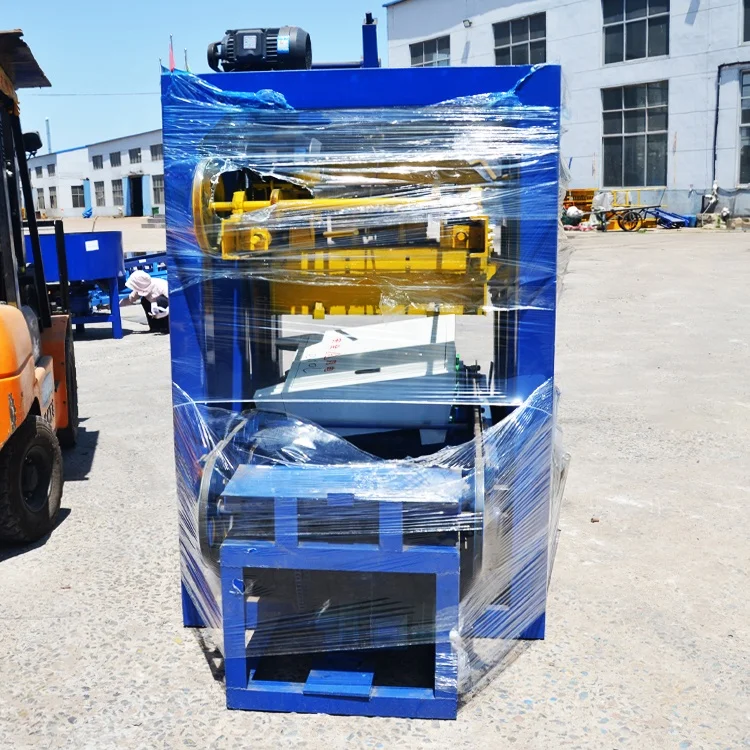
Description
Honest capacity per block format — every output figure on the QTJ4-26 states the exact block size and mould cavity count behind it, so your daily target is built on reality, not a catalogue guess.
Technical Specifications
| Parameter | Value |
|---|---|
| Model | QTJ4-26 |
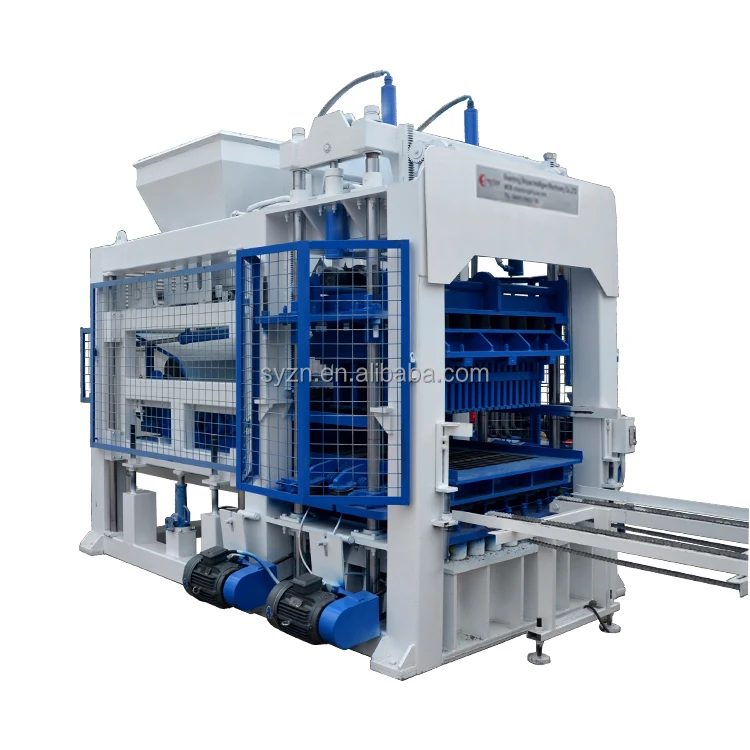
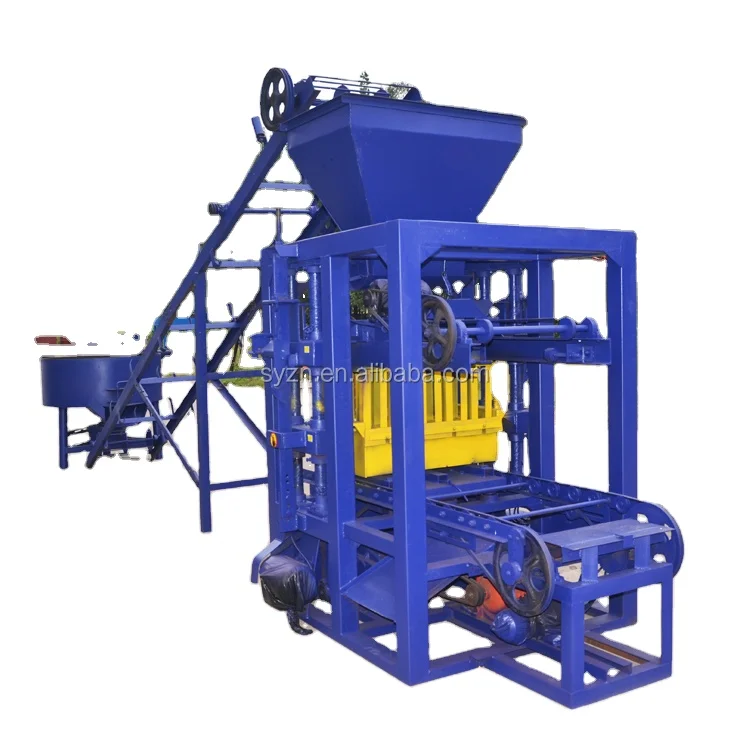
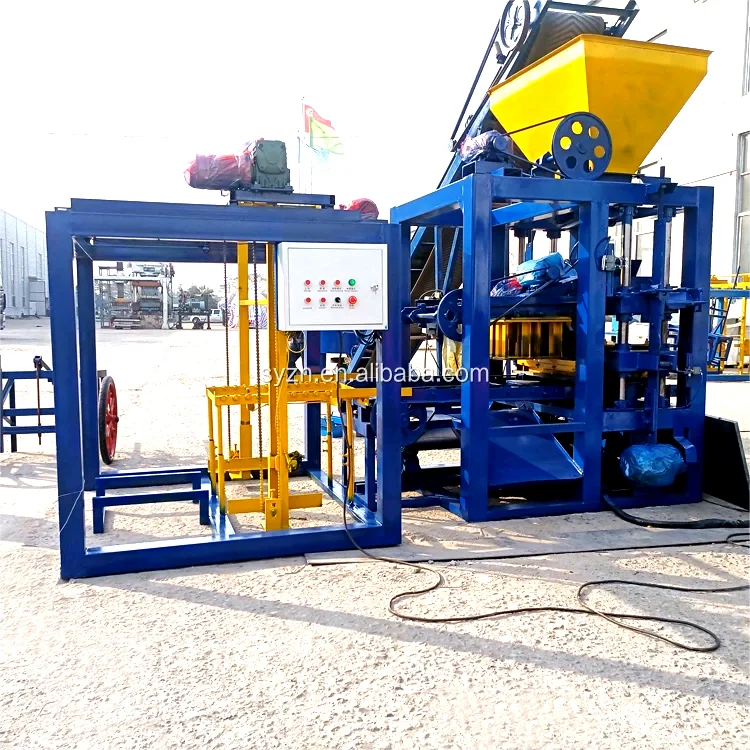
| Product Type | Semi-Automatic Concrete Block Making Machine |
| Overall Dimensions (L×W×H) | 2060×1730×2580 mm |
| Molding Cycle | 26 s |
| Vibration Frequency | 4200 r/min |
| Exciting Power (Vibration Force) | 35.5 kN |
| Rated Power | 14.25 kW |
| Mixer Model | JQ350 |
| Pallet Size | 850×450×20 mm |
| Net Weight | 1800 kg |
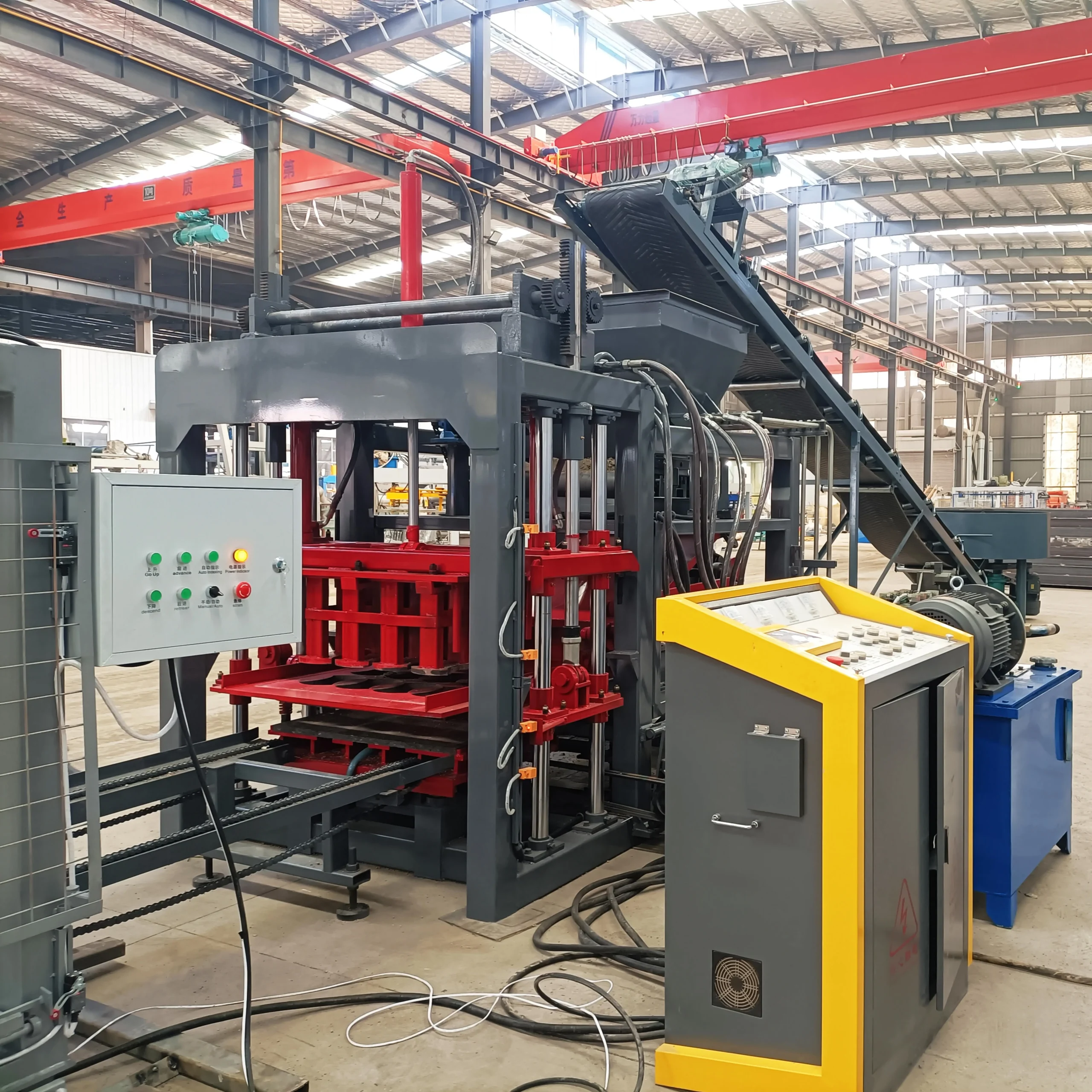
| Vibration Type | Dual vibrating motors under mould, direct vertical vibration with upper mould pressing |
| Automation Level | Semi-automatic, four guide pillars, automatic mould movement |
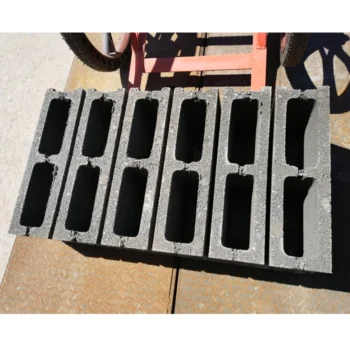
| Applied Products | Concrete hollow blocks (8 inch, 6 inch), solid bricks |
| Raw Materials | Crushed stones, sand, cement, dust, fly ash |
| Color Options | Red and Yellow |
Application Suitability
| Application | Material or Output |
|---|---|
| Hollow block production for masonry walls | Crushed stone, sand, cement, fly ash — 390×190×190 mm, 4 pcs/mould, 3800 pcs/8h |
| Alternative hollow block format for structural infill | Same aggregate base — 400×150×200 mm, 5 pcs/mould, 4800 pcs/8h |
| Solid brick production for paving and load-bearing work | Sand, cement, stone dust — 240×115×53 mm, 18 pcs/mould, 17000 pcs/8h |
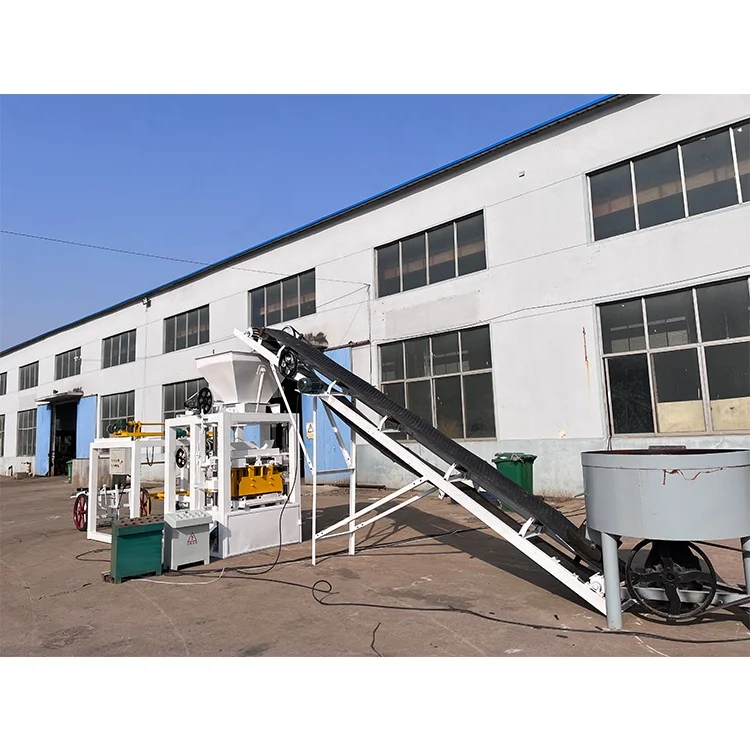
| On-site block manufacturing for housing projects | Local aggregates blended with cement on a compact semi-automatic line |
What the QTJ4-26 Block Machine Specifications Leave Out About Real Daily Output
Capacity numbers mean nothing unless they name the block format, mould cavity count, and shift length behind them.
Most quotations quote a single cycles-per-hour figure and leave it at that. The problem is that a 26-second cycle producing four 8-inch hollow blocks per mould delivers a very different daily total than the same cycle producing eighteen solid bricks. I have watched buyers receive machines that technically met the quoted cycle time but fell far short on actual block count because the format assumed in the quote was not the format the local market buys. The QTJ4-26 block machine specifications on this page tie every output number to a specific mould and block dimension [NEED_CITE: block format and cycle time relationship in semi-automatic production].
Matching Vibration Force to Your Local Aggregate
The QTJ4-26 runs dual vertical vibration motors delivering 35.5 kN of exciting power at 4200 r/min, combined with upper mould pressing. That combination determines how tightly the mix compacts before curing. If your local sand is coarse-graded or your stone dust has a high fines content, the vibration frequency and feed time may need adjustment to reach target block strength. A machine configured for a standard river-sand mix will underperform when fed a different aggregate profile, and no amount of cycle-speed tweaking fixes a density problem rooted in the mix itself.
Pallet Size and Curing Area Compatibility
The 850×450×20 mm pallet is the interface between the press and everything that happens after it. Before you confirm an order, measure your curing racks, your forklift fork width, and the floor space allocated for green-block storage. A pallet that does not match the existing handling setup forces you to replace racks or rent different forklifts — costs that never appear in the machine quotation but show up on day one of production. This is one of the most common oversights I see when buyers focus exclusively on the press [NEED_CITE: pallet handling compatibility in block plant layout].
Reading the Specs That Actually Matter
The 14.25 kW rated power covers both vibration motors, the mixer drive (JQ350), and the mould movement system. For a semi-automatic block machine in this output tier, that power draw is consistent with continuous single-shift operation on a standard industrial supply. The four guide pillars keep the upper and lower mould halves aligned through every cycle, which directly affects block dimensional consistency — a worn or misaligned guide pillar produces blocks with uneven wall thickness. The 26-second molding cycle is the mechanical baseline; actual throughput also depends on how quickly your operators load the mix, swap pallets, and move finished blocks to the curing area. When planning your QTJ4-26 block machine specifications for a business case, budget for the manual handling steps that sit between cycles.
The Cost of Skipping the Mix Design Conversation
Ordering a machine configured for a mix you cannot source locally is one of the most expensive mistakes in block production. The vibration force and feed timing are set at the factory against a specific aggregate profile. When the machine arrives and the local crushed stone has a different particle size distribution, blocks come out weak or cracked, and the operator blames the press. The fix usually involves adjusting the exciting frequency, modifying the布料 sequence, or reformulating the mix — all of which delay production and erode confidence in the equipment [NEED_CITE: aggregate variability and block strength correlation].
Why Buyers Specify Here
Block machinery is our single focus, so the QTJ4-26 is quoted as a matched system: press, mould, pallet, and mixer sized together rather than assembled from unrelated suppliers. We set the configuration against your actual local aggregate and target block format, not a default catalogue setting. Mould design covers the formats your market sells, and custom drawings are available when a local building code requires a non-standard dimension. The semi-automatic platform lets you start with manual pallet handling and add automation later as demand grows. Installation support includes operator training on the specific mix and block format you will run from day one.
Documentation & Verification
- Line layout drawing showing QTJ4-26 footprint with pallet flow and curing area dimensions
- Capacity calculation sheet stating block format and mould cavity count for every output figure
- Mould drawing with dimensional tolerances for each block format in your order
- Pallet specification confirming material, thickness, and compatibility with your handling equipment
- Voltage and control language confirmation documented before production begins
- Factory test record run on your specified block format before dispatch
Installation, Commissioning & Support
- Foundation slab must accommodate 2060×1730 mm footprint with level tolerance for the four guide pillars
- Dedicated circuit rated for 14.25 kW continuous draw, voltage and frequency confirmed before wiring
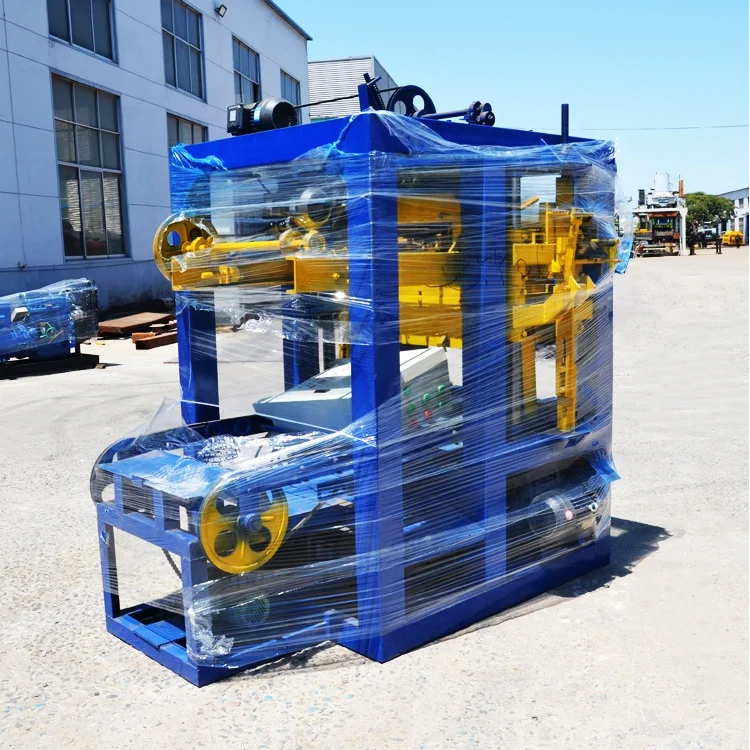
- Machine ships as a single assembled unit; mixer and pallet stack separated for container loading
- First-run commissioning includes vibration frequency and feed timing adjustment to your local aggregate
- Operator training covers mould changeover, daily guide pillar inspection, and JQ350 mixer maintenance
- Wear parts list with lead times for vibration motor bearings, mould liners, and pallet replacements
What to Prepare Before Requesting a Quote
To size the QTJ4-26 accurately for your operation, have the following ready: the exact block formats your market demands, including dimensions and any local strength standards; a sample or description of your available aggregate — sand source, stone dust grading, and whether fly ash is part of the mix; your target daily output per format and the number of shifts you plan to run; and the voltage, frequency, and control language your site requires. If you already have curing racks and a forklift, share the pallet dimensions those systems accept so the 850×450 mm pallet can be verified or adjusted before production starts.
Frequently Asked Questions
Q: How is the 3800 pcs/8h hollow block figure calculated?
A: That number assumes the 390×190×190 mm hollow block mould with four cavities, running a 26-second cycle continuously for an eight-hour shift with standard operational pauses. It does not apply to other block formats — each format on the QTJ4-26 has its own cavity count and resulting shift output, which we state individually in the capacity calculation.
Q: Can the mould be changed to a format my local market requires?
A: Yes. We supply moulds for standard hollow blocks, solid bricks, and custom formats drawn to your specifications. The QTJ4-26 uses four guide pillars and automatic mould movement, so changeover involves swapping the mould set and confirming vibration settings for the new block weight. We provide the mould drawing and cavity layout before manufacturing begins.
Q: Is the 850×450 mm pallet compatible with my existing curing racks?
A: That depends on your rack slot width and forklift fork spacing. We recommend measuring both before confirming your order. If the standard pallet does not match, we can adjust the pallet specification and recalibrate the mould to the new pallet surface area so block dimensions remain accurate.
Q: What vibration force is needed for target block strength with my local aggregate?
A: The QTJ4-26 delivers 35.5 kN at 4200 r/min, which is sufficient for most crushed stone and sand mixes in this output tier. However, coarse-graded or high-fines aggregates may require adjustments to vibration frequency and feed timing. We configure these settings against a sample of your actual raw material before the machine leaves the factory.
Q: Which voltage and control language should I confirm before shipment?
A: Voltage, frequency, and control panel language must match your site’s electrical supply and operator preference. We document these choices in writing before production starts to avoid commissioning delays. Common configurations include 380V/50Hz and 440V/60Hz, but the exact requirement depends on your local grid standard [NEED_CITE: voltage and frequency standards by export market].