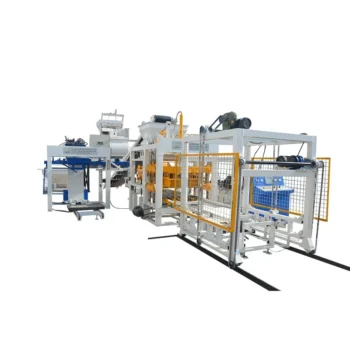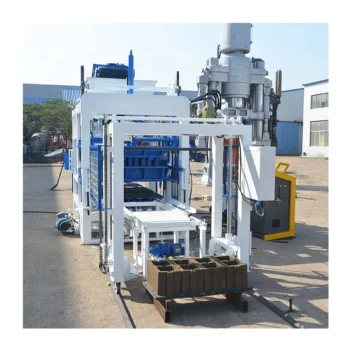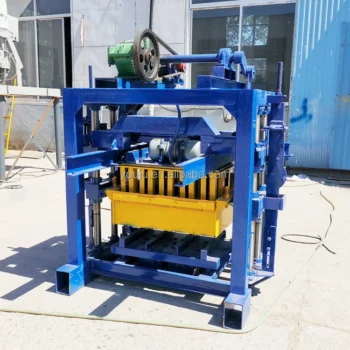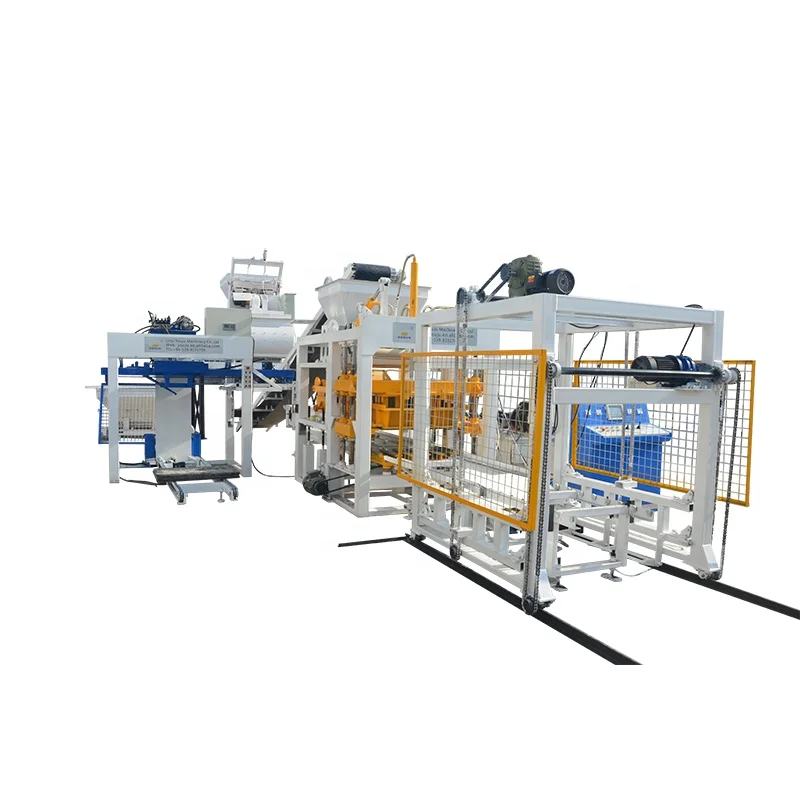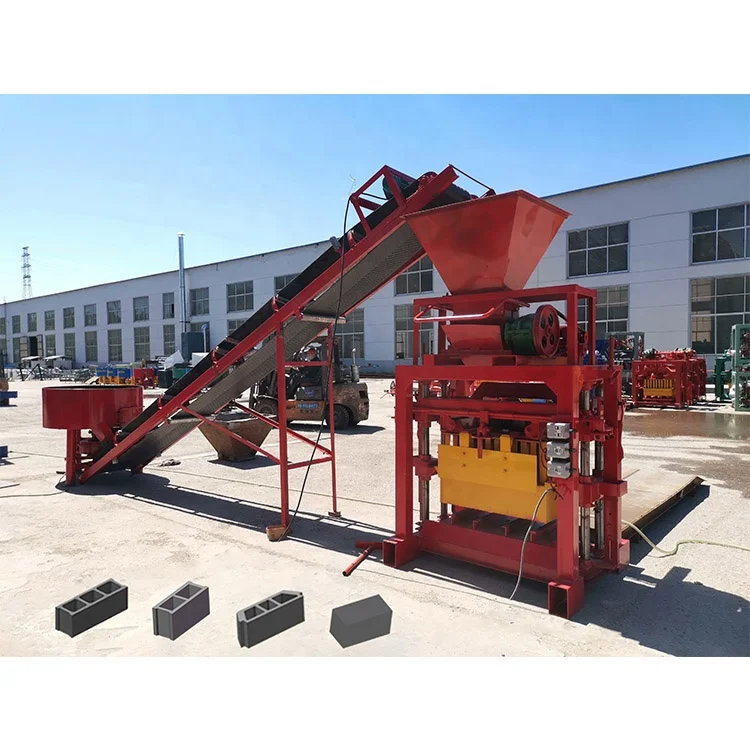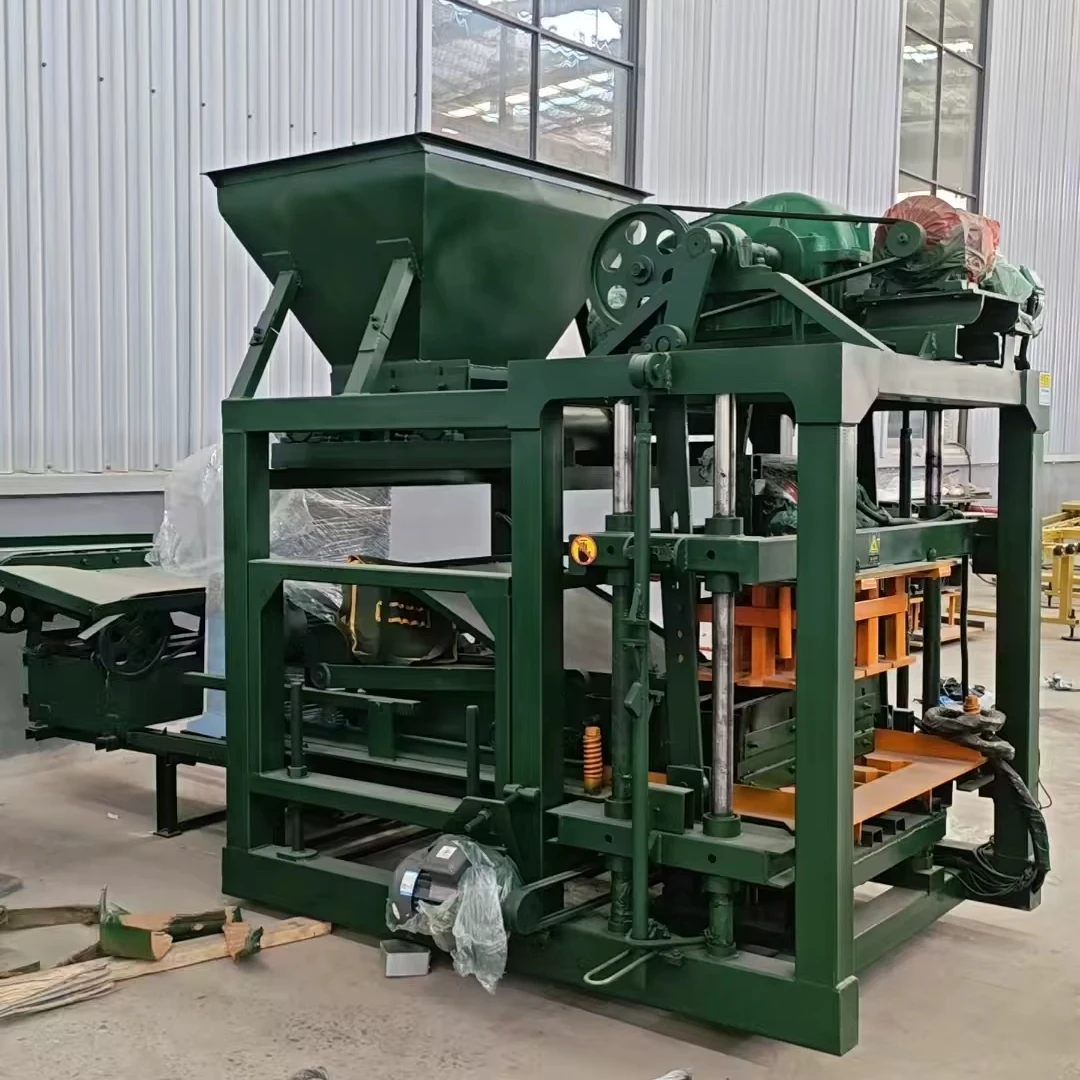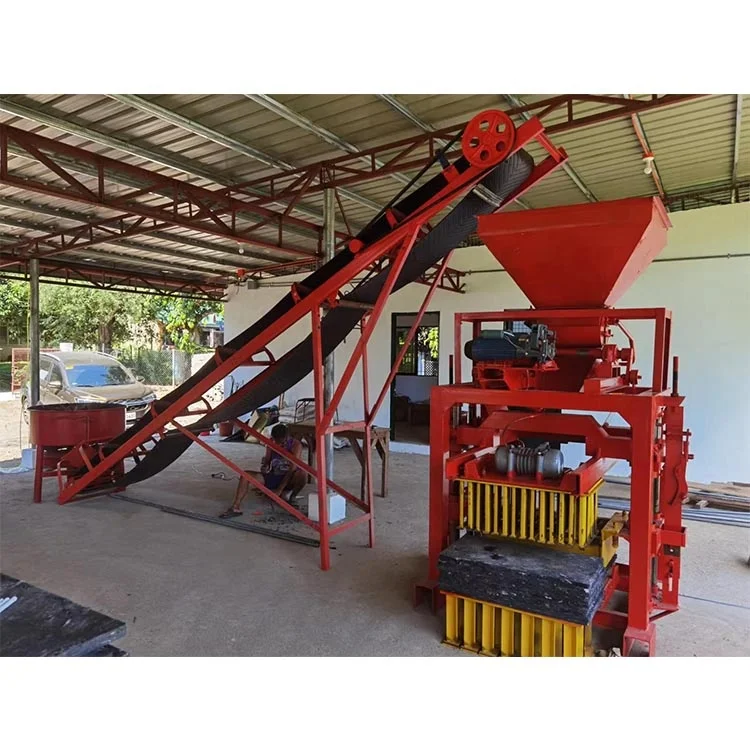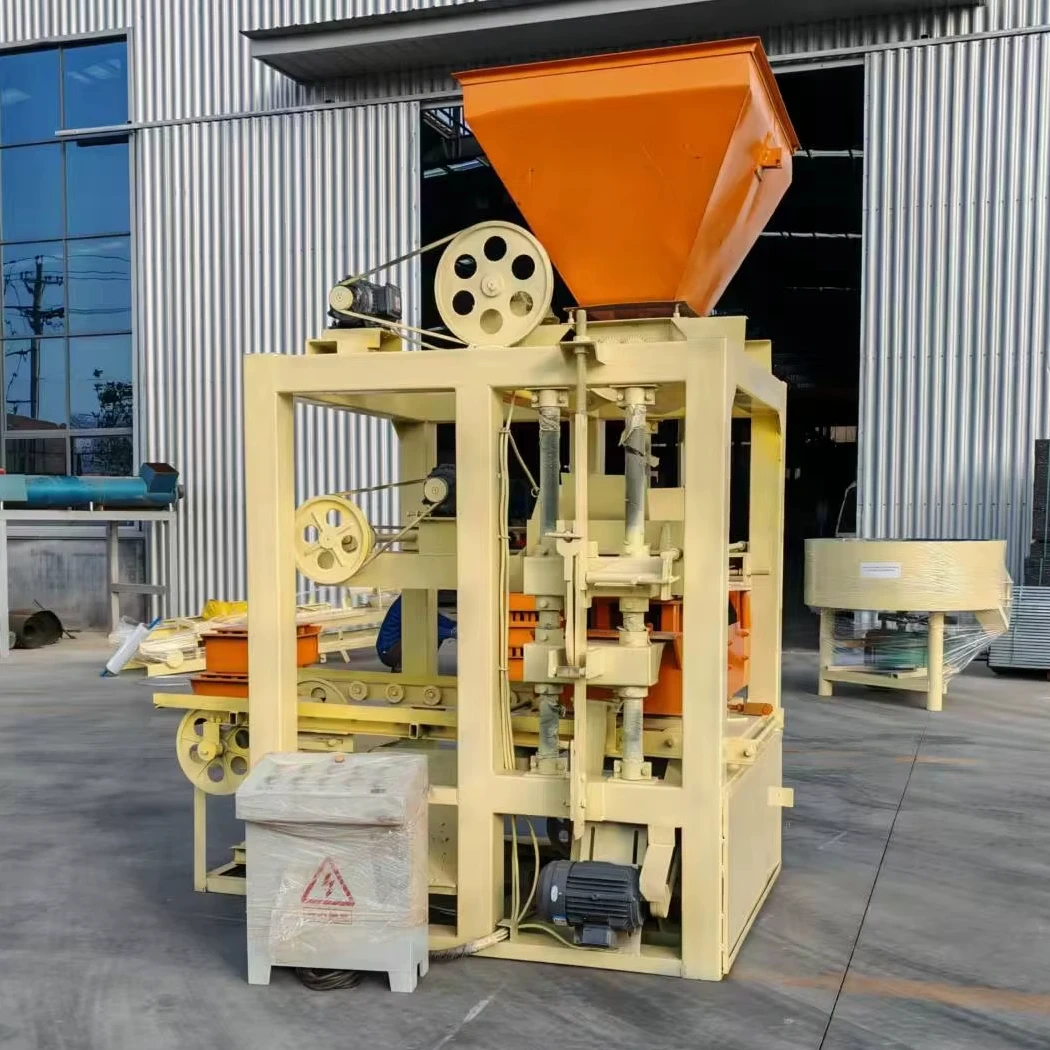
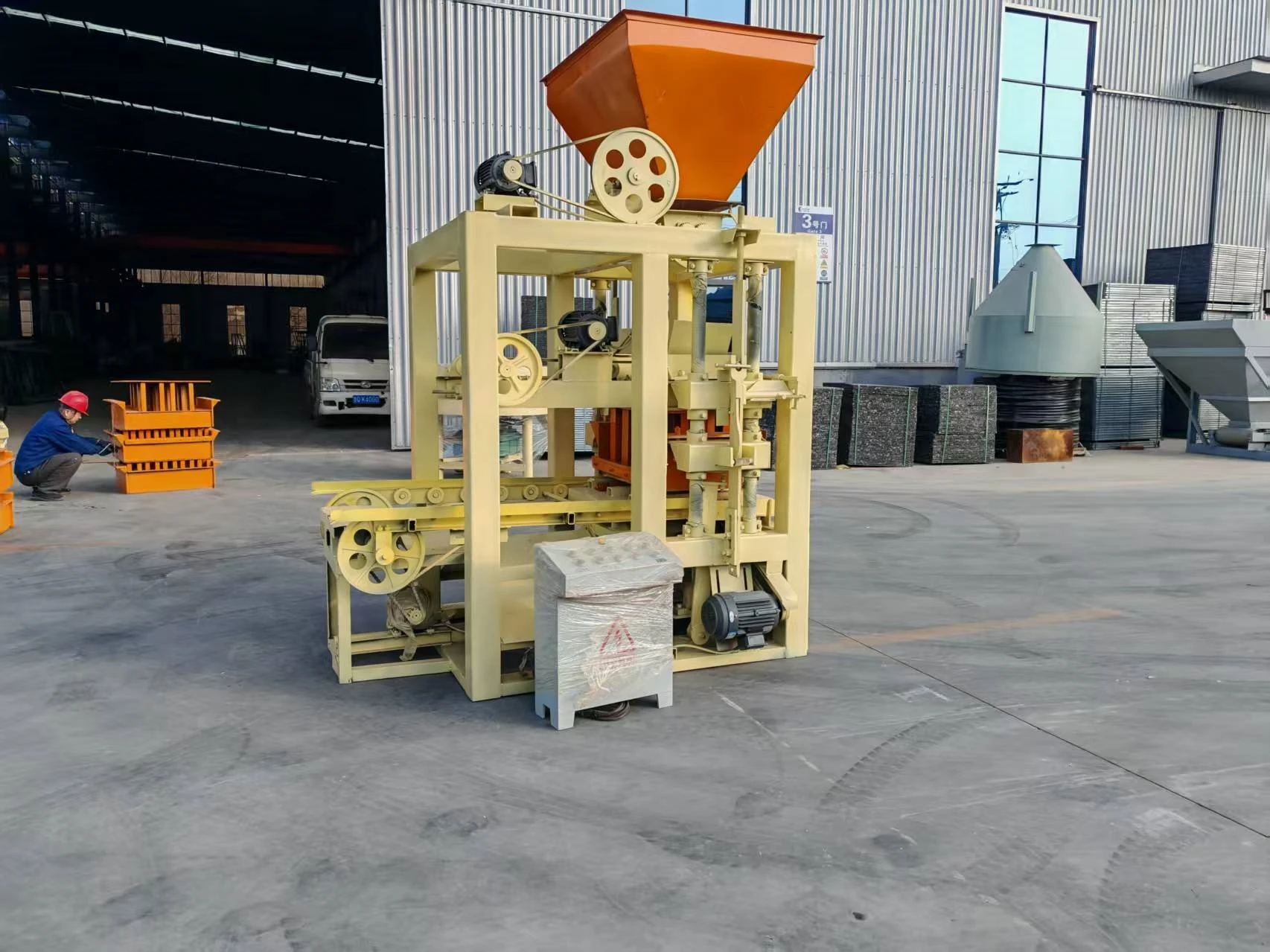
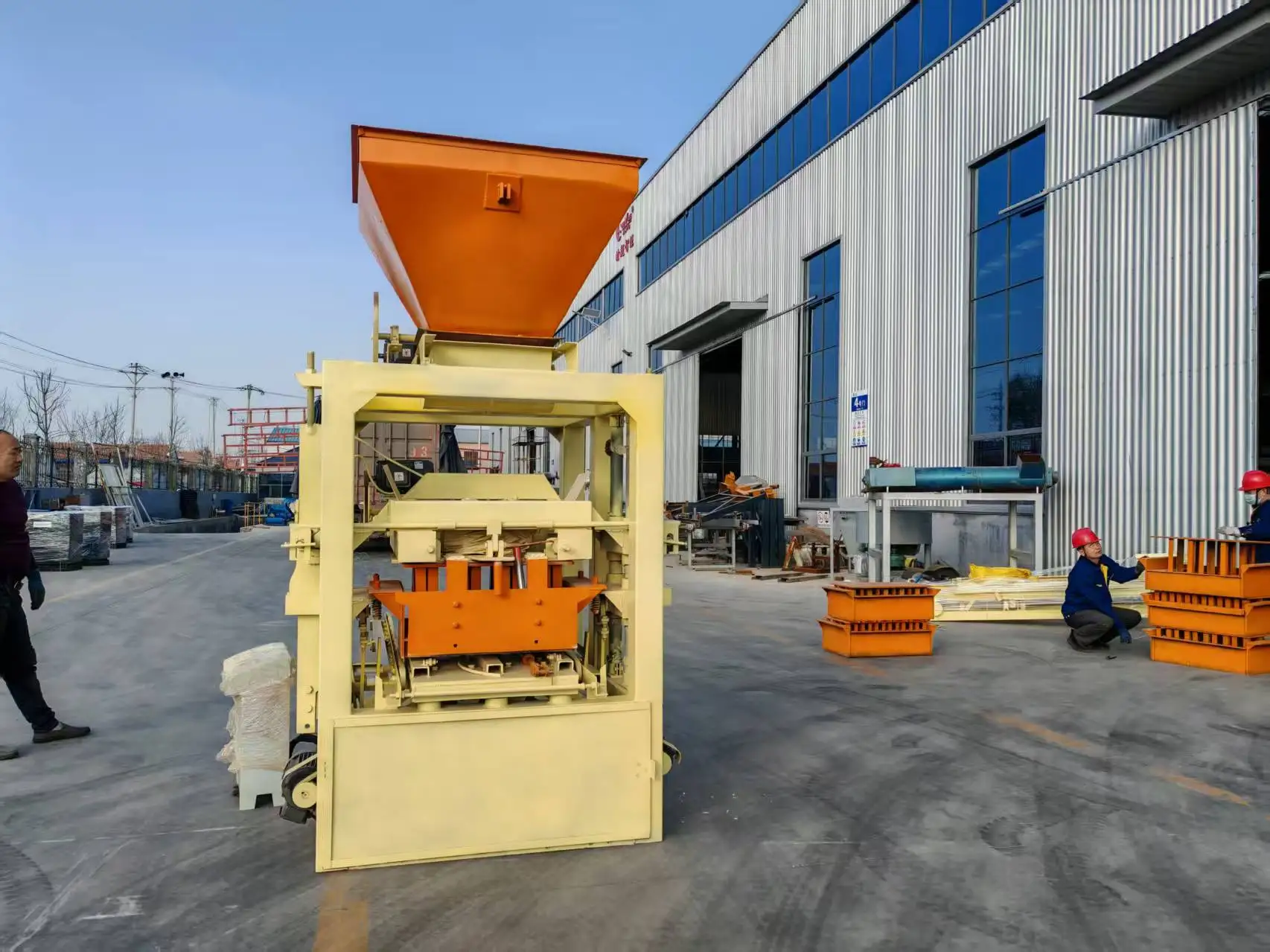
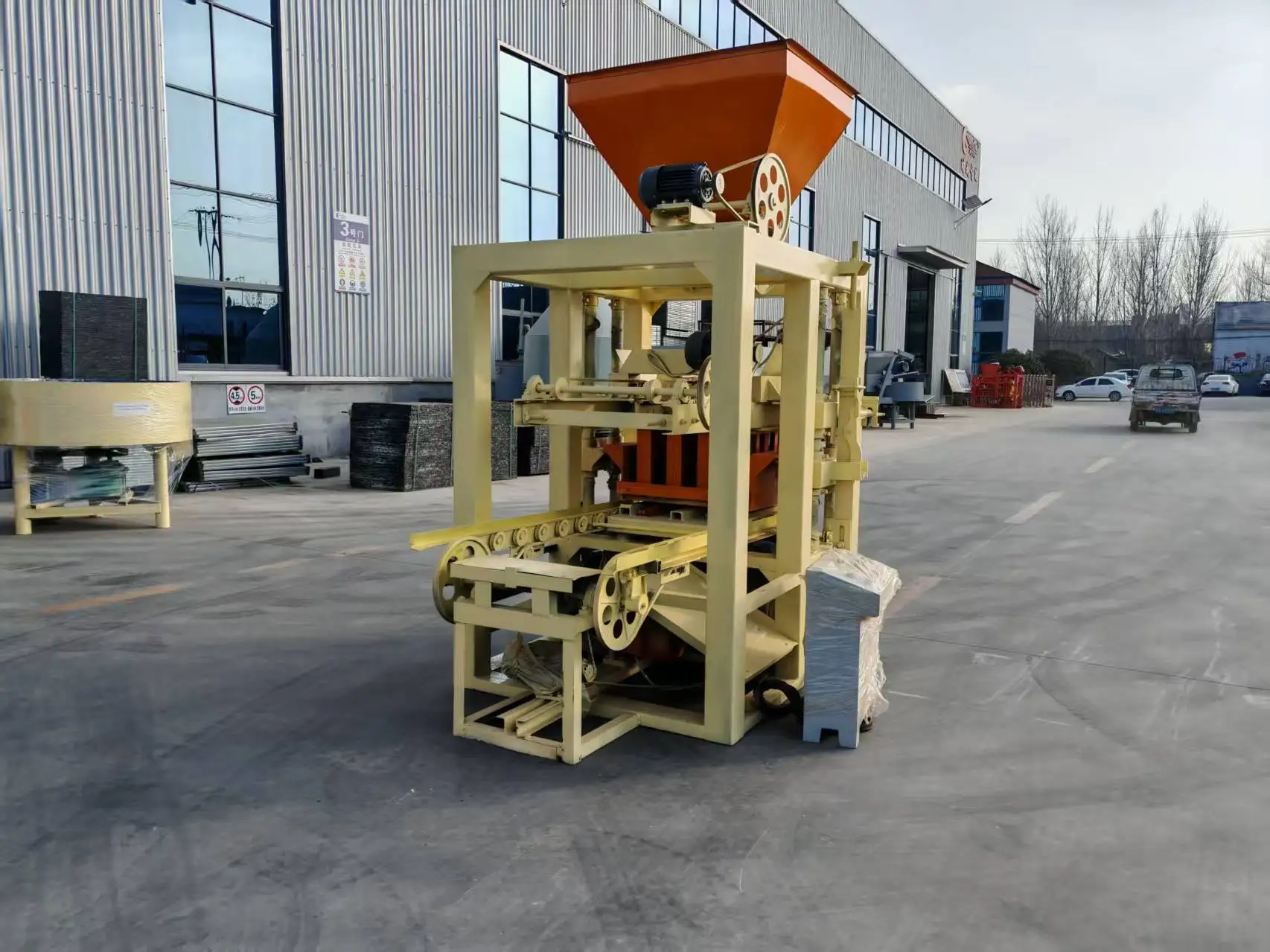
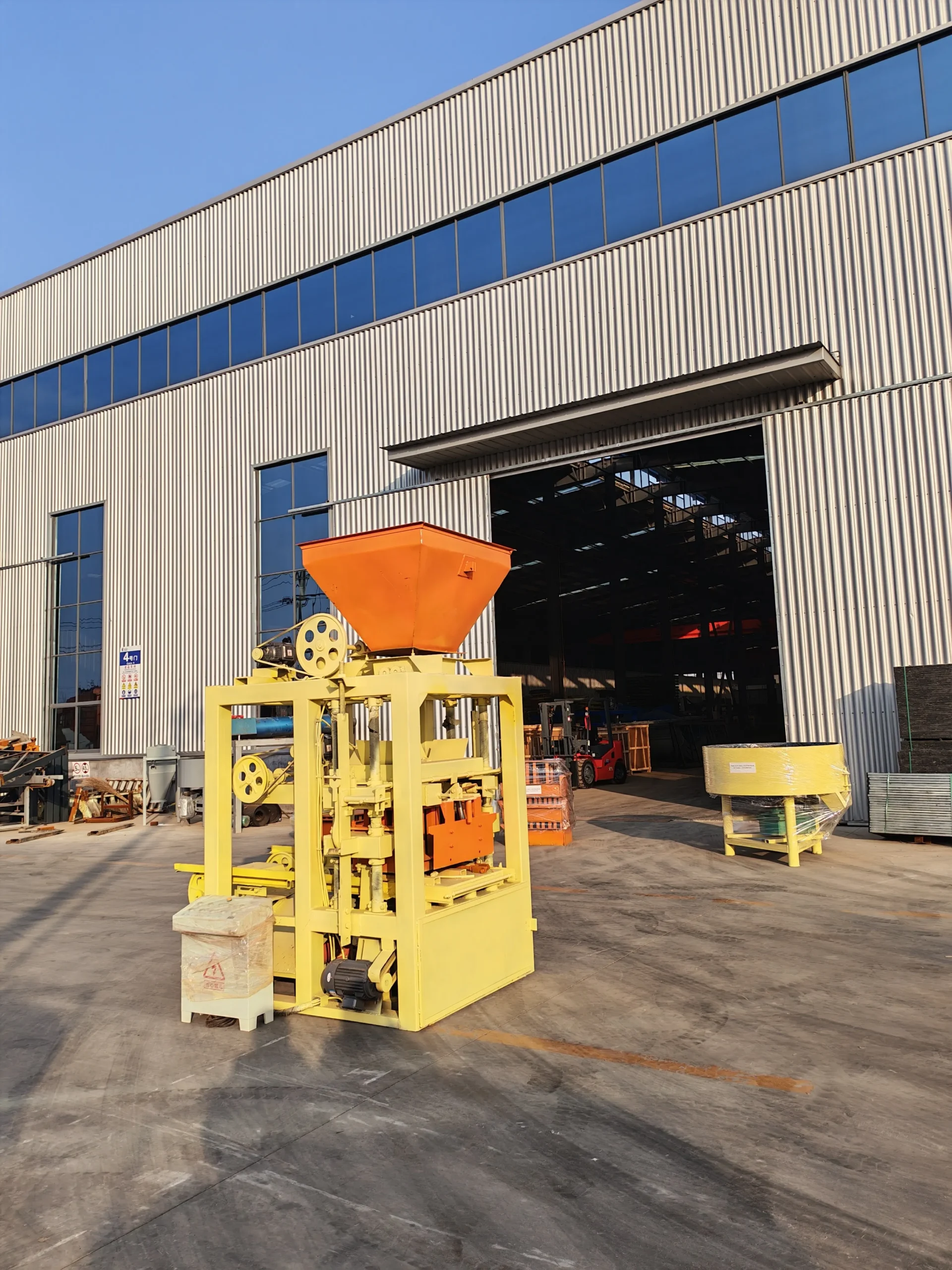
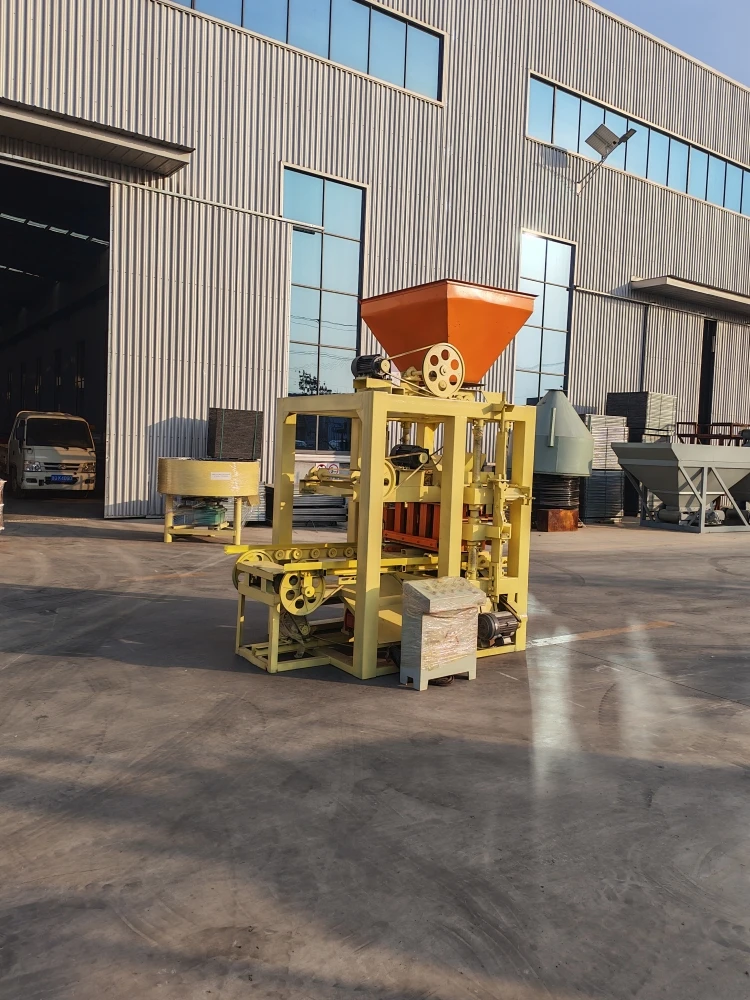
Description
Block Format First — Every cycle time and daily output figure for the QTJ4-24 semi-automatic block machine is calculated against a specific block format and local mix design, not a single catalogue number.
Technical Specifications
| Parameter | Value |
|---|---|
| Model | QTJ4-24 |
| Product Type | Semi-Automatic Cement Block Making Machine |
| Overall Dimensions (L×W×H) | 3600×1700×2560mm |
| Pallet Size | 850×450mm |
| Molding Cycle | 24–26s (basis not stated in source — confirm block format) |
| Overall Power | 11.95kW |
| Vibration Force | 45kN |
| Vibration Configuration | 2×3kW lower vibrators + 2×1.5kW upper vibrators |
| Reducer Type | 350-type (for mold lifting) |
| Material Distribution | Full-automatic spiral |
| Molding Method | Mechanical |
| Control System | PLC Controlled |
| Raw Materials | Cement, sand, stone |
| Automation Level | Semi-automatic |
| Total Mass | 2T |
| Block Formats | Hollow block, solid block, interlocking brick, paving brick |
| Voltage & Frequency | Configurable (basis to be confirmed) |
| PLC Language Options | Configurable (basis to be confirmed) |
| Warranty | 1 year (excluding spare parts) |
Application Suitability
| Application | Material or Output |
|---|---|
| Hollow block production for wall construction | Cement, crushed stone, sand mix |
| Solid block manufacturing for load-bearing structures | Cement, gravel, coarse aggregate |
| Interlocking brick for paving and landscaping | Cement, fine sand, stone dust |
| Paving brick for roads and walkways | Cement, sand, aggregate blend |
What a 24–26 Second Cycle Actually Means for Your Daily Output
A cycle time only matters when you know which block format it was measured on.
I have watched buyers sign off on a machine quoting a fast cycle, then discover on site that the number was measured on a small solid block — while their actual order book was for 400×200×200mm hollow blocks that take noticeably longer per cycle. The QTJ4-24 semi-automatic block machine specifications list a 24–26s molding cycle, but without a stated block format that figure is a starting point for discussion, not a guarantee. Hollow blocks require longer vibration and compaction than thin paving bricks, and a mix with high clay or moisture content extends the cycle further. Before we confirm a daily output number, we ask which exact block dimensions you intend to produce and what your local aggregate looks like. [NEED_CITE: block format impact on cycle time in mechanical presses]
Matching Vibration Force to Block Density Requirements
The QTJ4-24 generates 45kN of vibration force through a dual-level arrangement — two 3kW vibrators mounted below the mould and two 1.5kW vibrators above. This upper-and-lower configuration compacts the mix from both directions, which matters when you are targeting higher-density hollow blocks for load-bearing walls. If the vibration force is insufficient for a given aggregate size and cement ratio, the block leaves the press weak and prone to cracking during curing.
Mould Change and Format Flexibility on an 850×450 Pallet
The 850×450mm pallet accommodates multiple block formats, from standard hollow blocks to interlocking pavers. The 350-type reducer handles mould lifting during changeover, a mechanical choice that holds up better under repeated cycling than lighter gearboxes. Buyers who plan to run more than one format should confirm the mould change procedure and the tools required before the machine ships, because a changeover that takes most of a shift defeats the purpose of buying a multi-format press. [NEED_CITE: mould change procedures on semi-automatic mechanical presses]
Reading the Specs That Affect Your Real Production
The 11.95kW overall power draw tells you the electrical supply requirement — confirm your site voltage and frequency match, or the motors will overheat or underperform from day one. The full-automatic spiral material distribution feeds mix evenly across the pallet width, which directly influences whether blocks at the edge of the mould are as dense as those in the centre. The PLC control system manages cycle sequencing, but the display language must be confirmed before production begins — arriving at a site with a control panel the operator cannot read delays commissioning. The mechanical molding method means this QTJ4-24 semi-automatic block machine relies on motor-driven vibration rather than hydraulic pressure, keeping the initial investment lower while demanding more attention to mix consistency.
When the Wrong Pallet Size Costs You Twice
A pallet chosen without checking the buyer’s existing curing racks and forklift capacity creates problems the moment production starts. If the 850×450mm pallet does not fit the curing shelves already on site, the buyer either replaces the shelving or handles blocks manually off the pallet — negating the output advantage of the machine. Similarly, a forklift rated for narrower pallets cannot move loaded pallets to the curing yard safely. This mismatch is usually discovered after the machine arrives, when the cost of correction is highest. [NEED_CITE: pallet and curing area compatibility in block plants]
Why Buyers Source This Machine Here
Block machinery is the single production focus, meaning the press, moulds, pallets and handling equipment are specified as one system rather than sourced separately. The QTJ4-24 configuration starts from the buyer’s actual mix design and target block format, not a default catalogue setting. Moulds are designed and supplied for the formats the local market sells, with custom drawings available when standard options do not match. The semi-automatic automation level lets a buyer start with lower capital outlay and add handling automation later. Installation includes on-site commissioning with operator training so the crew understands vibration tuning and mould change procedures from day one.
Documentation & Verification
- Machine specification sheet listing every confirmed parameter for the QTJ4-24
- Capacity calculation document stating output per specific block format produced
- Mould drawing and format list showing exact block dimensions on the 850×450mm pallet
- Voltage, frequency and PLC display language written confirmation before production
- Factory test record captured on the buyer’s target block format prior to dispatch
Installation, Commissioning & Support
- Foundation must support 2T static mass plus dynamic vibration load across the 3600×1700mm footprint
- Dedicated electrical circuit sized for the 11.95kW total draw at confirmed voltage and frequency
- Machine ships partially assembled; on-site reassembly includes vibration motor alignment and pallet track leveling
- First-run commissioning covers cycle tuning against the buyer’s actual cement-to-aggregate ratio
- Operator training addresses mould change, spiral feeder adjustment and PLC fault code reading
- Wear parts list identifies vibration motor mounts and spiral blades for first replacement order
What We Need Before Quoting
To size the QTJ4-24 correctly, share the exact block formats and dimensions your market requires, along with your target daily output per format. We also need a local aggregate report — sand type, stone grading and clay content — so the vibration parameters can be set before the machine ships. Confirm your site voltage, frequency and the language your operators need on the PLC display.
Frequently Asked Questions
Q: What is the realistic daily output of the QTJ4-24 for hollow blocks versus paving blocks?
A: The 24–26s cycle time applies to a specific block format that must be confirmed. Hollow blocks like 400×200×200mm typically require longer vibration than thin paving bricks, so daily output differs between formats. We provide a capacity calculation sheet that states output per exact block dimension you intend to produce, based on your confirmed mix and working hours.
Q: Which mould formats fit the 850×450mm pallet, and how long does a changeover take?
A: Standard options include hollow, solid, interlocking and paving brick moulds for this pallet size. Changeover time depends on the mould locking mechanism and the operator’s familiarity with the procedure. We supply the mould change sequence during commissioning and can recommend quick-change fittings if your production plan involves frequent format switches.
Q: How should vibration force be matched to local aggregate for consistent block strength?
A: The 45kN vibration force from the dual-level system must be tuned to the aggregate grading and cement ratio in your mix. Coarse or angular stone generally needs higher vibration energy than fine sand. We request a material test report before finalizing machine settings so that block density and strength remain consistent across production batches.
Q: What voltage and PLC language options are confirmed before the machine ships?
A: Voltage and frequency are configured to match your site supply — typically three-phase at the local standard. The PLC display language is confirmed in writing before production begins so operators can read cycle status and fault codes without translation delays at commissioning.
Q: Which wear parts should be stocked for the first replacement cycle?
A: High-wear items include vibration motor mounts, spiral feeder blades and mould liner plates. We supply a wear parts list with part numbers specific to your QTJ4-24 configuration so you can order spares before the first replacement is due, avoiding unplanned downtime.