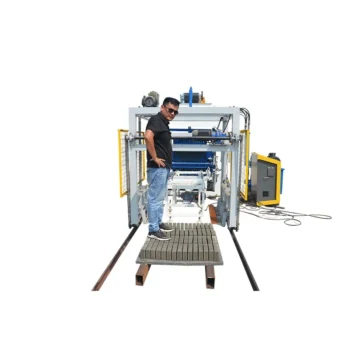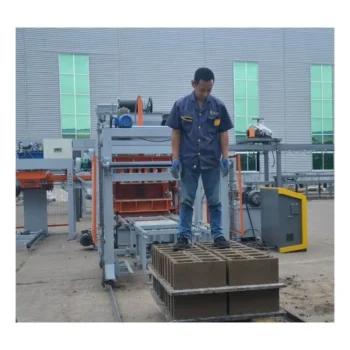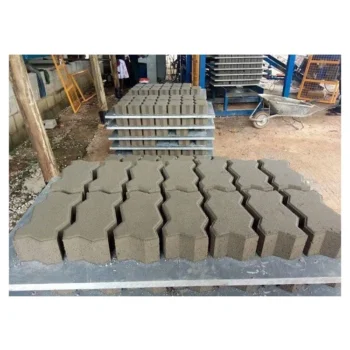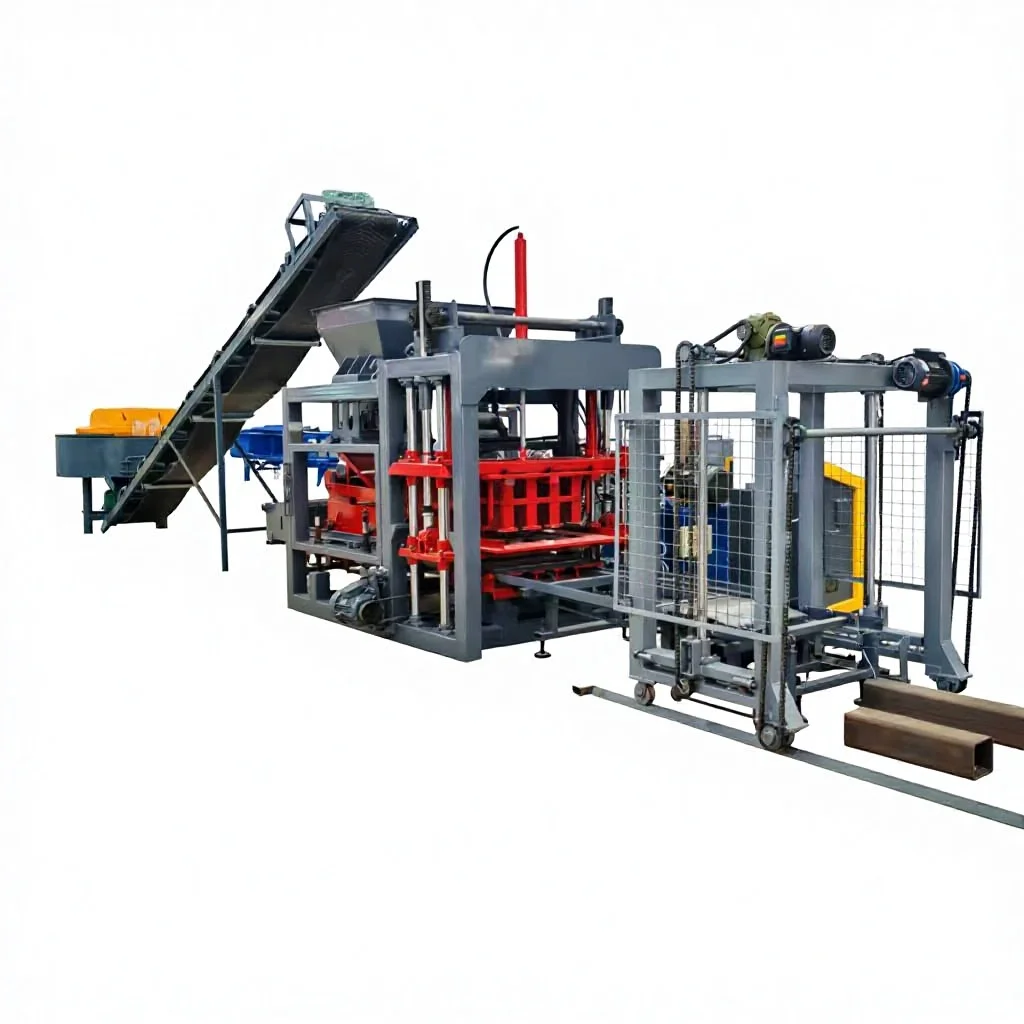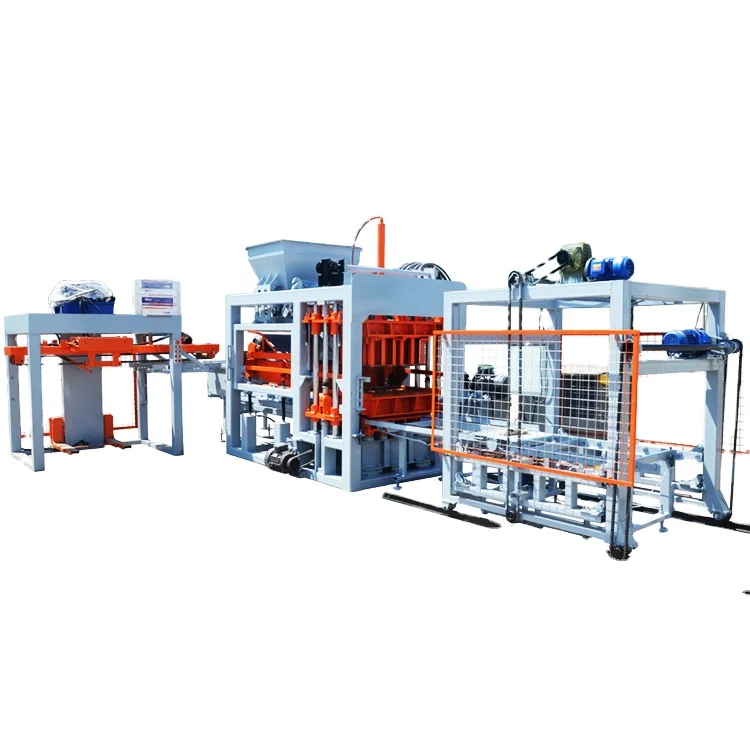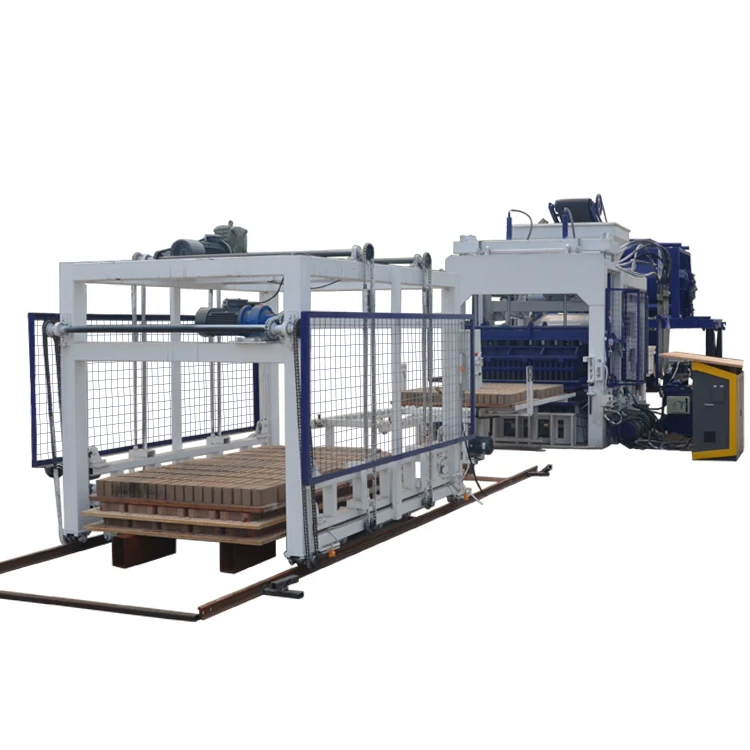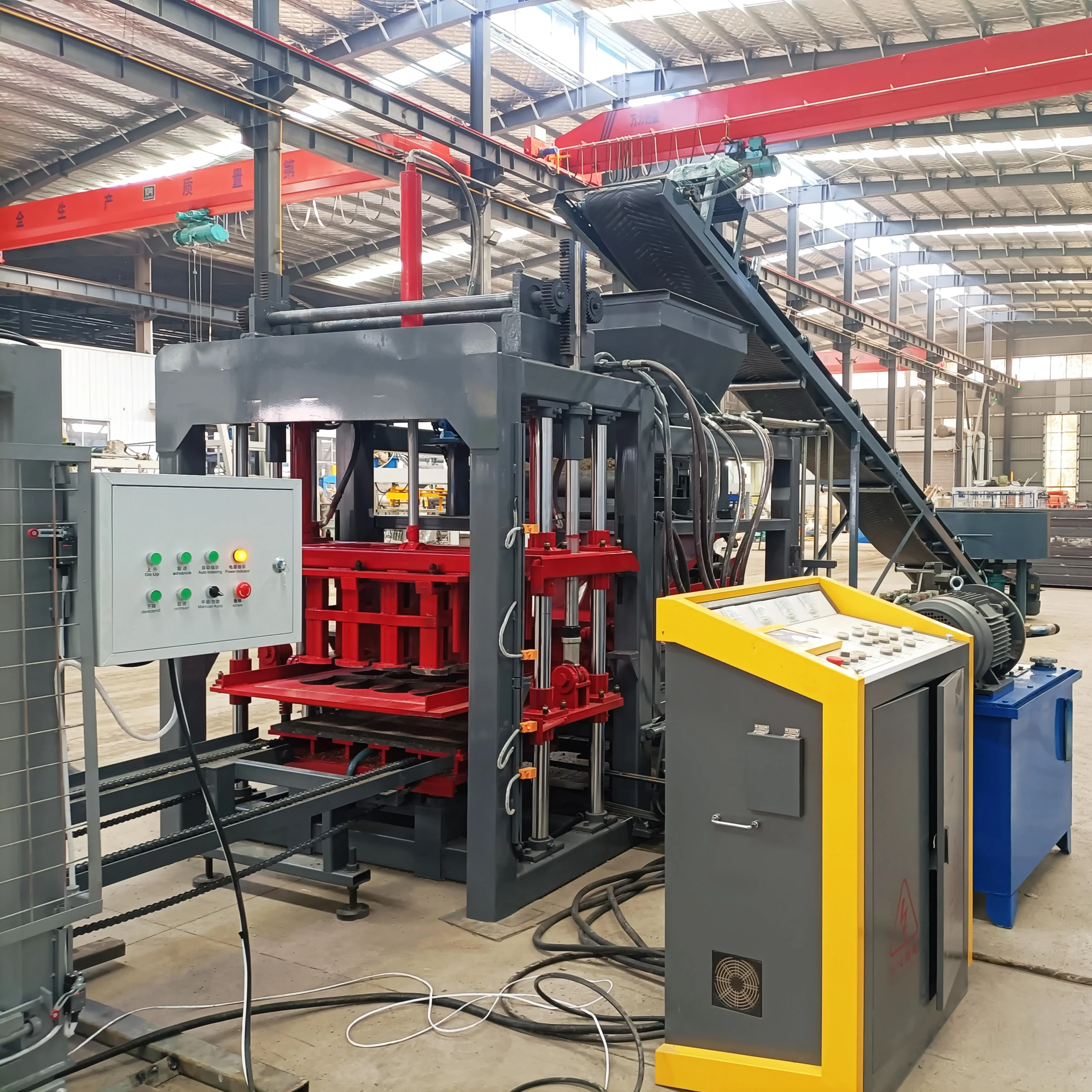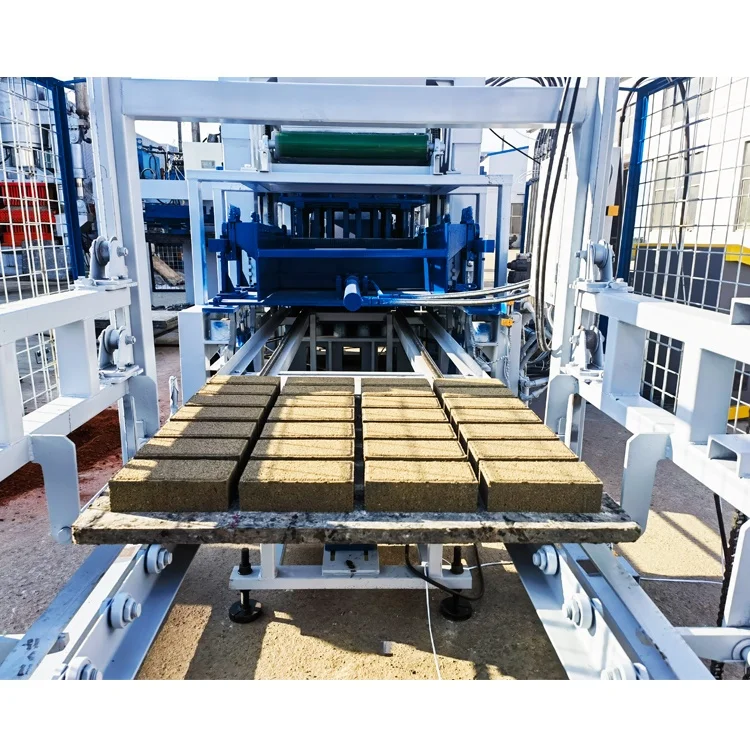
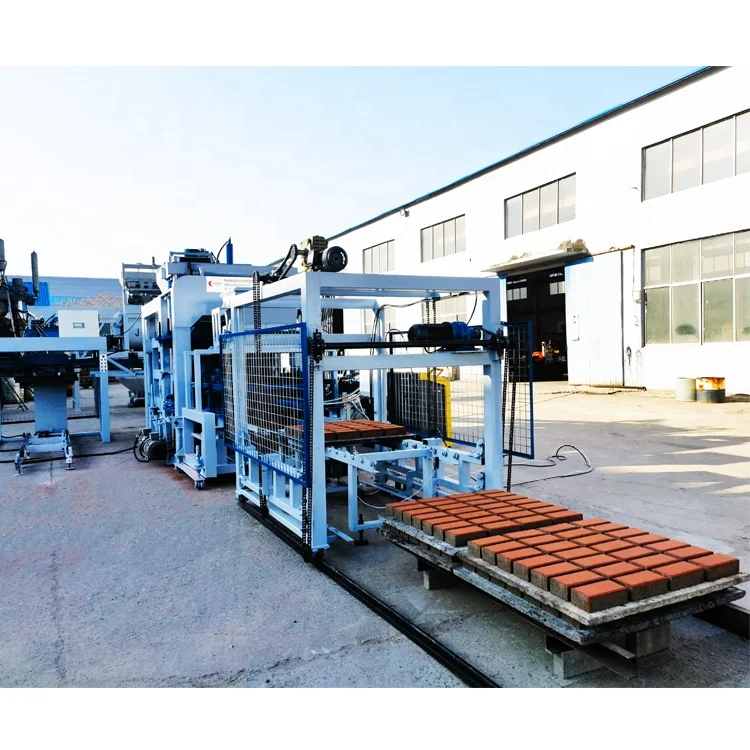
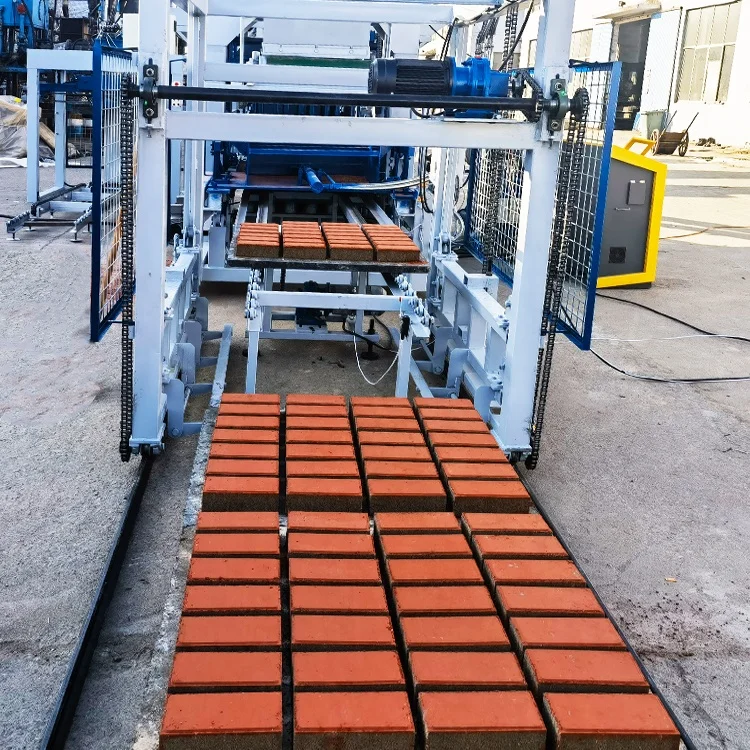
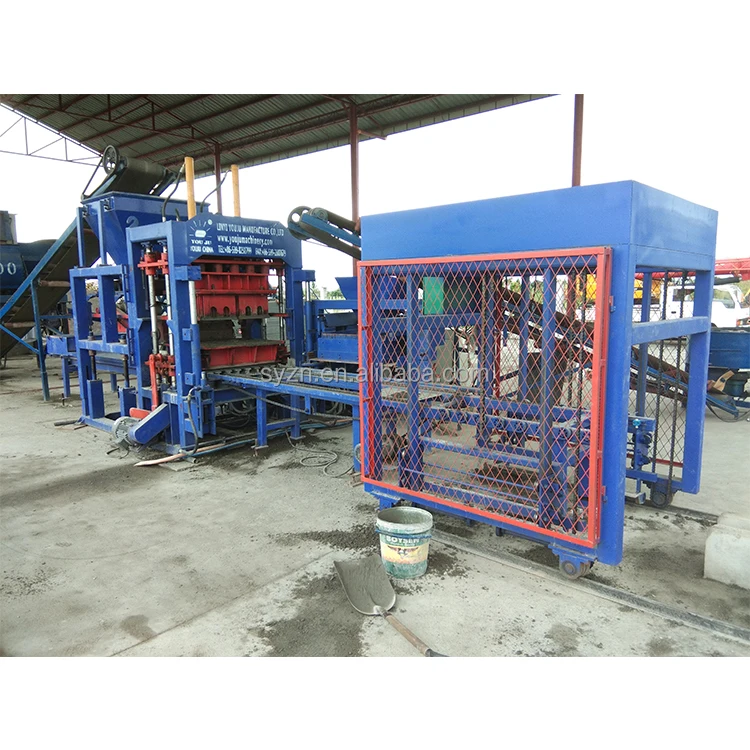
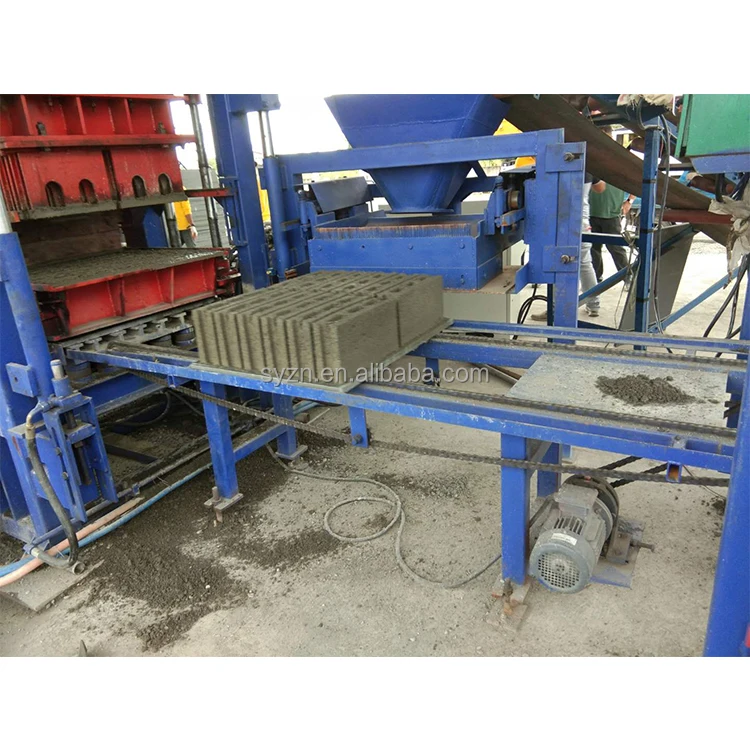
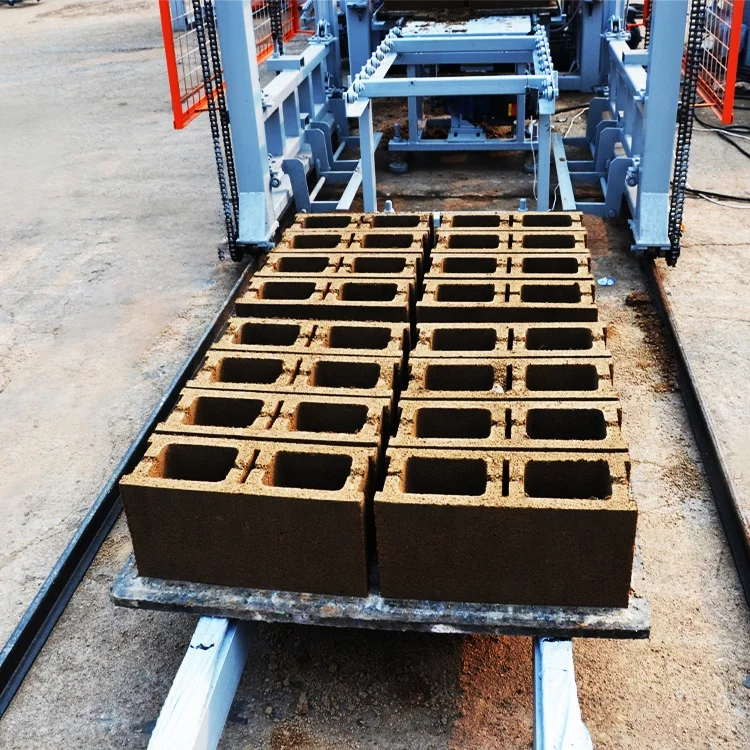
Description
Matched System — machine, mould and pallet specified together against your local aggregate and target block format, not pulled from separate catalogues.
Technical Specifications
| Parameter | Value |
|---|---|
| Model | QT612 |
| Product Type | Hydraulic Block Making Machine |
| Overall Dimensions (L×W×H) | 7350×1780×2950 mm |
| Rated Pressure | 16 MPa |
| Main Vibration | Platform vibration |
| Vibration Frequency | 4600 r/min |
| Pallet Size | 880×700 mm |
| Cycle Time (Hollow Brick 400×200×200 mm) | 12–15 s |
| Cycle Time (Porous Brick 240×115×90 mm) | 15–18 s |
| Cycle Time (Standard Brick 240×115×53 mm) | 14–17 s |
| Output Capacity (Hollow Brick 400×200×200 mm, 6 pcs/mould) | 1080 pcs/h, 8640 pcs/day |
| Output Capacity (Porous Brick 240×115×90 mm, 14 pcs/mould) | 2800 pcs/h, 22400 pcs/day |
| Output Capacity (Standard Brick 240×115×53 mm, 30 pcs/mould) | 6800 pcs/h, 54400 pcs/day |
| Overall Power | 30.5 kW |
| Mould Formats | Hollow brick, porous brick, standard solid brick, paving stone, interlocking block, kerbstone, grass block, slope block |
| Raw Materials | Crushed stone, sand, cement, coal fly ash, cinder, slag, gangue, gravel, perlite, industrial wastes |
| Automation Level | Automatic |
| Mould Change System | Mould replacement for different formats |
| Voltage & Frequency | Configurable to target market (basis to be confirmed) |
| Control System | PLC (brand and language to be confirmed) |
| Net Weight | (basis to be confirmed) |
| Standards | CE, SGS, ISO 9001 |
Application Suitability
| Application | Material or Output |
|---|---|
| Hollow block production for building walls | Crushed stone, sand, cement, fly ash blends |
| Interlocking paver manufacturing for squares and gardens | Aggregates with pigment layers for colour finish |
| Porous brick production for landscaping and city drainage | Permeable concrete mixes with graded gravel |
| Kerbstone and slope block for road and infrastructure projects | High-density concrete with coarse aggregate |
| Standard solid brick for housing and masonry contractors | Local sand, cinder or slag-based mixes |
What "8640 Blocks per Day" Actually Means for the QT612 Block Machine Specifications
Output figures are meaningless without the block format and mould cavity count stated beside them.
I have seen buyers compare two machines based on a single daily number, only to discover after delivery that the quoted figure assumed a small solid brick while their market actually buys 400×200×200 mm hollow blocks. The cycle time difference between those two formats is significant, and the daily volume drops accordingly. When we discuss how to choose QT612 brick machine configurations, the first question is always which format drives your revenue. [NEED_CITE: common discrepancies between quoted and actual block machine output in export markets]
Cycle Time by Format and What It Tells You
The QT612 block machine specifications list three distinct cycle times rather than one blanket number. A 12–15 second cycle applies to the 400×200×200 mm hollow brick with six cavities per mould, yielding 1080 pieces per hour. Switch to the 240×115×53 mm standard brick with thirty cavities and the cycle stretches to 14–17 seconds, but the hourly count rises to 6800 pieces because each press produces more units. This format-by-format breakdown is how realistic production planning actually works.
Matching Vibration and Pressure to Your Mix
Platform vibration at 4600 r/min works together with the 16 MPa rated hydraulic pressure to compact the concrete into the mould. The balance between these two forces determines whether the block holds its shape after demoulding and reaches the compressive strength your local standard requires. A mix high in fly ash behaves differently from one based on crushed granite, and the QT612 block machine specifications must be read alongside your actual material sample. We ask for that sample before finalising the pressure and vibration settings. [NEED_CITE: relationship between vibration frequency and compressive strength in concrete block production]
Reading the Core Parameters Beyond the Brochure
The 880×700 mm pallet size is not an arbitrary number — it dictates how many blocks sit on each board and must align with the curing racks and forklifts already on your site. A mismatch here means either rebuilding your curing area or handling pallets manually. The 30.5 kW overall power draw tells you the transformer capacity required on-site, and it should be confirmed against your local voltage and frequency before the electrical cabinet is wired. The mould change system uses physical mould replacement, so the time your crew needs to swap from hollow to paving format directly affects how many production hours remain in the shift. Automation level is listed as automatic, which covers the pressing cycle itself, but pallet feeding and stacking arrangements still need to be specified as part of the line layout.
The Cost of Skipping the Format Conversation
Buyers who skip the format-specific capacity discussion often find that the machine they ordered cannot meet daily contract volumes for their primary block type. The consequence is overtime shifts, rushed mould changes and inconsistent block density. When vibration force is not tuned to the local aggregate, surface cracks appear on the finished block, leading to rejected batches. These issues rarely show up during a factory test running on standard sand. [NEED_CITE: field reports of block density inconsistency caused by unadjusted vibration settings]
Why Source This Configuration Here
Every QT612 we configure starts with the buyer’s target block format and local material, not a default catalogue page. Mould drawings are produced for the exact dimensions your market sells, including custom profiles when standard sizes do not apply. The pallet specification is cross-checked against your existing curing racks so that no rework is needed after arrival. Documentation includes a capacity calculation sheet that states the assumed format for every output figure, leaving no room for surprise on commissioning day. Voltage, frequency and PLC display language are confirmed in writing before the electrical cabinet is assembled.
Documentation & Verification
- Line layout and capacity calculation stating the block format assumed for each output figure
- Mould drawing and format list confirming every block type included in the quotation
- Machine specification sheet with hydraulic pressure, vibration frequency, pallet size and cycle time per format
- Voltage, frequency and PLC display language confirmation record before production starts
- Factory test record run on your specified mix design where sample is available
Installation, Commissioning & Support
- Foundation drawing provided for the 7350×1780 mm footprint with anchor bolt positions marked
- 30.5 kW power requirement confirmed against local supply, dedicated circuit recommended
- Machine shipped in dismantled state with reassembly guided by numbered component markings
- Hydraulic pressure set to 16 MPa and vibration tuned to your aggregate during on-site commissioning
- Operator training covers mould change procedure and daily maintenance checkpoints
- Wear parts list with mould cavity inserts and hydraulic seals identified for first reorder
What We Need to Size Your Line
Send us the block formats your market buys most, the daily volume you need for each, and a sample or description of your local aggregate and sand. Let us know the voltage and frequency at your site, the language your operators read, and the dimensions of your existing curing area so we can confirm pallet compatibility.
Frequently Asked Questions
Q: How is QT612 output capacity calculated and which block format is assumed?
A: Each output figure in the QT612 block machine specifications is tied to a specific block dimension and mould cavity count. For example, 8640 pieces per day assumes the 400×200×200 mm hollow brick at six cavities per mould running standard shifts. If your primary product is a different size, the daily total will differ and must be recalculated.
Q: How do I match vibration force and hydraulic pressure to my local aggregate?
A: We request a sample of your local sand, crushed stone or industrial waste before finalising settings. The 4600 r/min platform vibration and 16 MPa pressure are starting points; they are adjusted based on how your specific mix compacts and demoulds during factory or on-site testing.
Q: What is the mould change time and how does it affect my production schedule?
A: The QT612 uses physical mould replacement to switch formats. Change time depends on crew familiarity and the number of format switches per shift. We include the procedure in operator training so your team can plan format runs to minimise mid-shift swaps.
Q: How do I confirm pallet size against my existing curing setup?
A: The standard pallet for this machine is 880×700 mm. We cross-check this against your curing rack spacing and forklift fork width before production. If your existing racks use a different dimension, we discuss whether pallet or rack adjustment is more practical.