Description
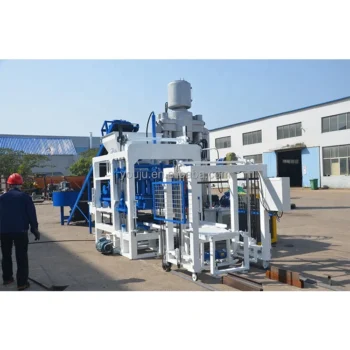
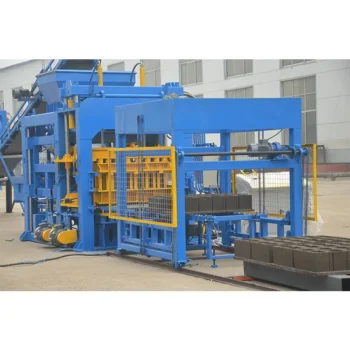
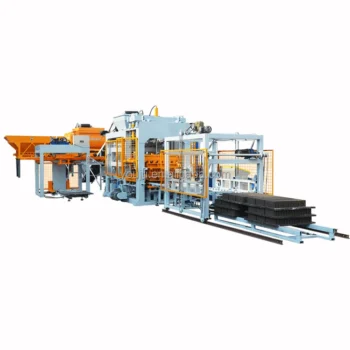
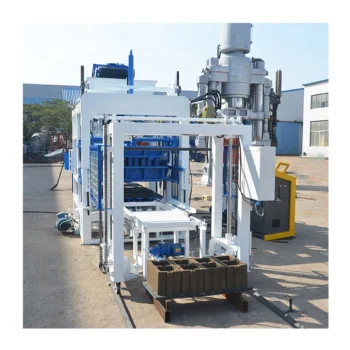
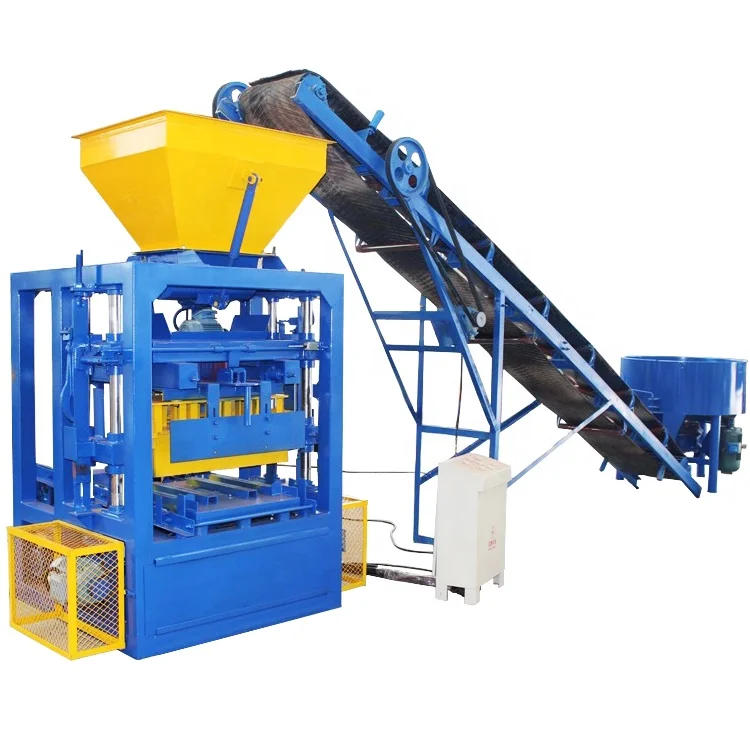
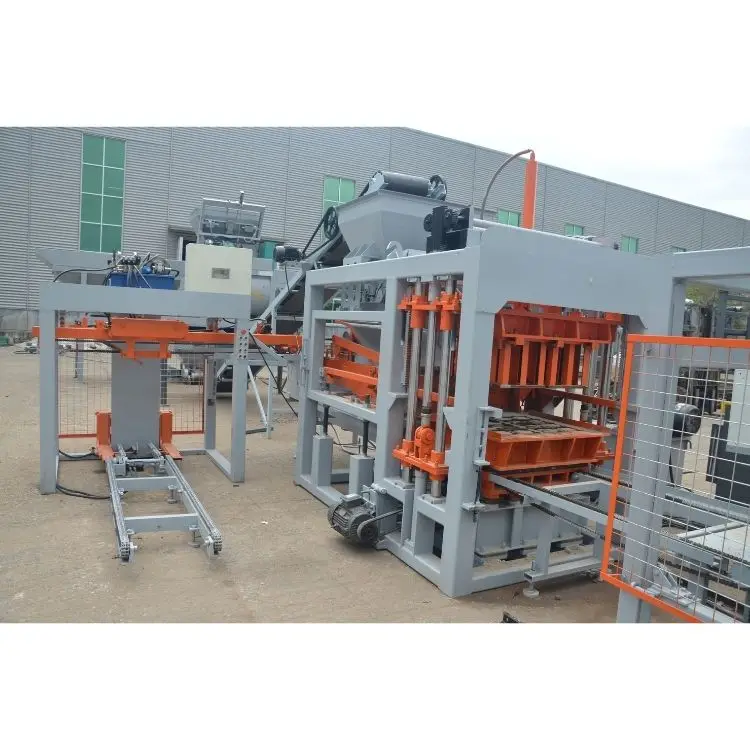
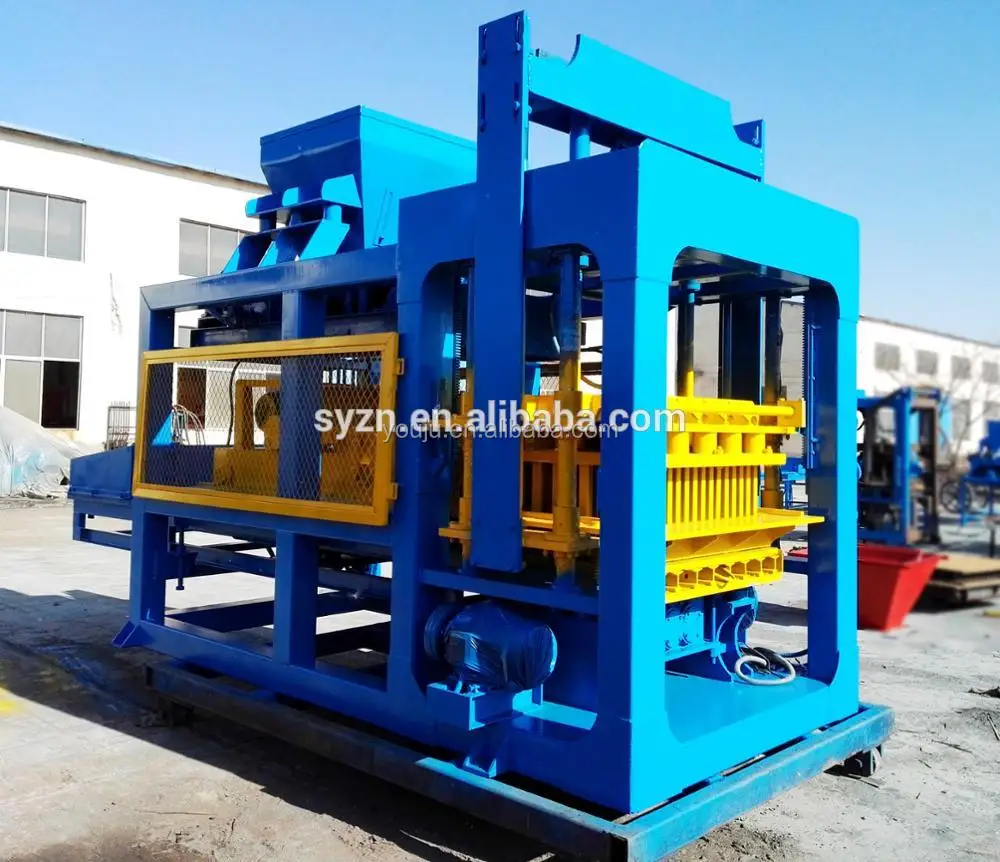
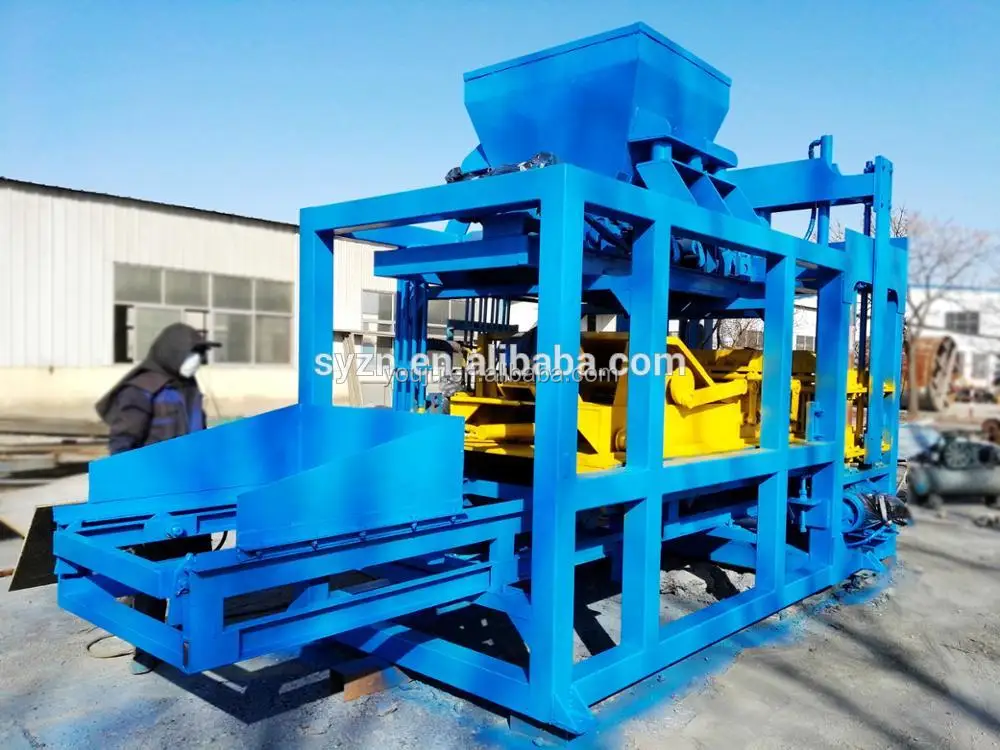
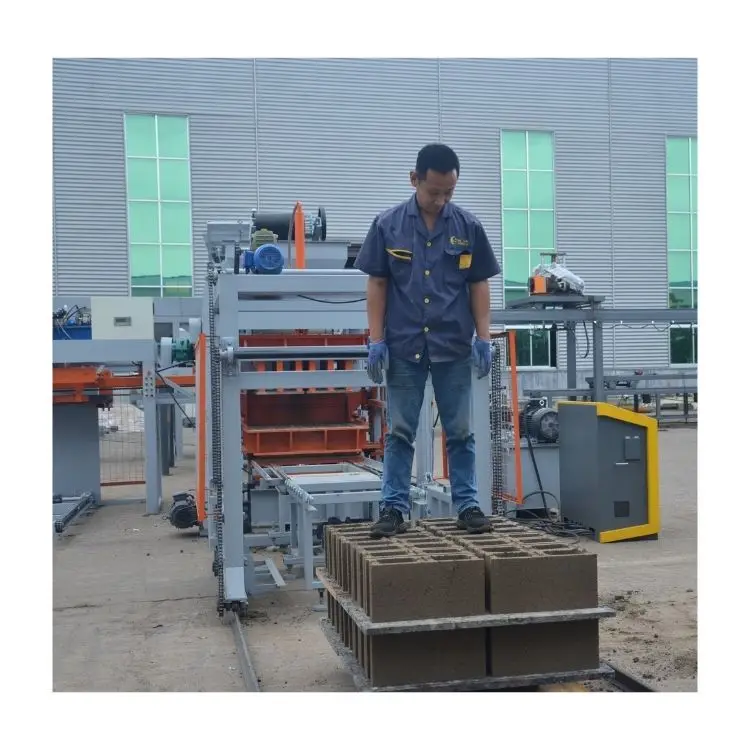
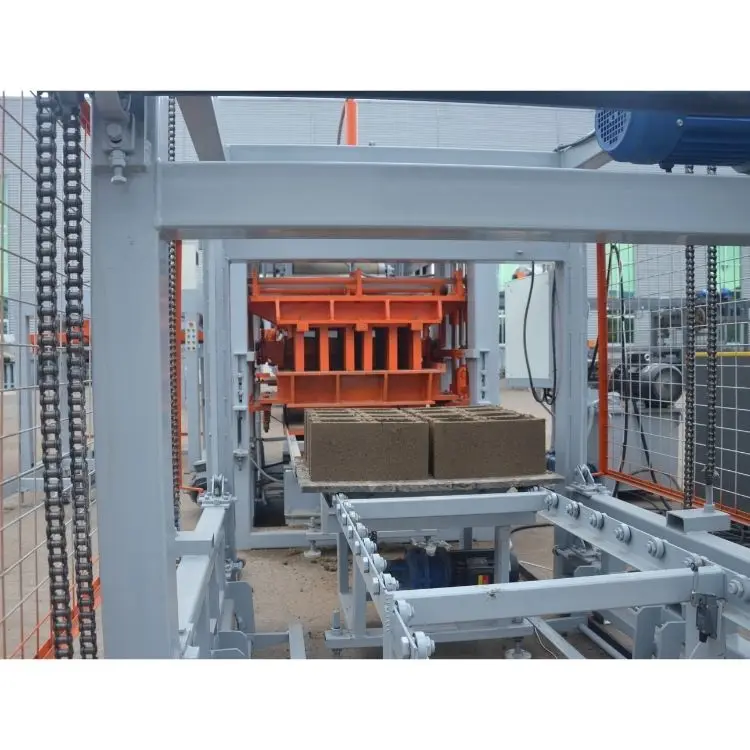
Block machinery as a single focus — the QT6-15 is specified with its mould, pallet and handling equipment as one matched system so capacity, block strength and curing workflow align from day one.
Technical Specifications
| Parameter | Value |
|---|---|
| Model | QT6-15 |
| Product Type | Automatic Concrete Block Making Machine |
| Molding Way | Vibration and hydraulic pressing |
| Rated Pressure | 21 MPa |
| Molding Cycle | 15s–20s (basis not stated in source — confirm block format / material / thickness) |
| Pallet Size | 900×700 mm |
| Main Machine Weight | 6,000 kg |
| Control System | PLC (voltage and language to be confirmed) |
| Automation Level | Fully automatic, configurable from simple to expanded line |
| Line Configuration Options | JS500 mixer, 8 m conveyor belt, automatic stacker, cement silo, screw conveyor, cement scale, batching machine, pallet loader, block and pallet separator |
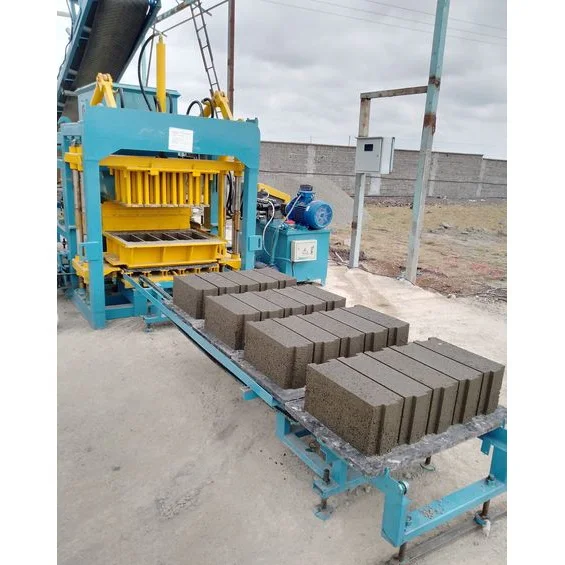
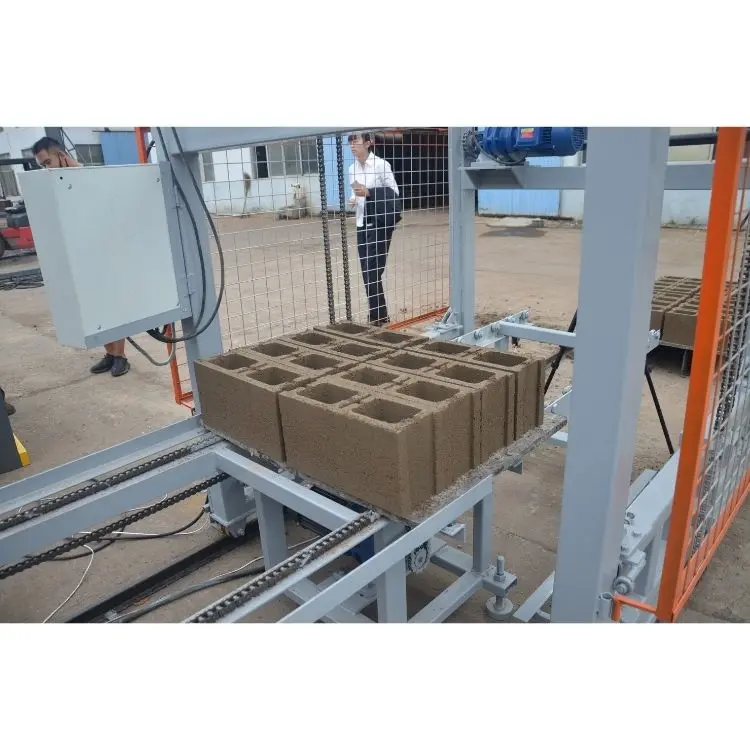
| Output — Hollow Block 400×200×200 mm | 6 pcs/pallet, 1,440 pcs/h, 11,520 pcs/8 h (theoretical) |
| Output — Paving Brick 200×100×60 mm | 21 pcs/pallet, 5,040 pcs/h, 40,320 pcs/8 h (theoretical) |
| Output — Solid Brick 240×115×53 mm | 32 pcs/pallet, 7,680 pcs/h, 61,440 pcs/8 h (theoretical) |
| Voltage & Frequency | Customizable to buyer’s local standard (value to be confirmed) |
| Warranty | 1 year (excluding wearing parts) |
| Assembly State | Top cylinder removed for container loading; reassembled on site |
Application Suitability
| Application | Material or Output |
|---|---|
| Hollow block production for walls and partitions | Concrete mixes of cement, sand, crushed stone and fly ash |
| Paving brick production for walkways and yards | Aggregates with stone powder and cement binder |
| Solid brick production for structural and infill work | Sand, slag and cement blends |
| Kerbstone and color pavement brick production | Pigmented concrete mixes with local aggregate |
| On-site production by construction contractors | Fly ash and locally sourced coarse aggregate |
What "11,520 Blocks per Shift" Actually Assumes
Quoted capacity only becomes real when the block format, mix design and cycle time are matched to your plant.
A mid-tier automatic block machine is often sold on a headline number that assumes the most favorable format — typically a small solid brick with a short cycle. If your market buys 400×200×200 mm hollow blocks, the pallet holds fewer pieces and the vibration time is longer, so daily output sits well below that headline. I once worked on a quotation where the buyer assumed the solid brick figure applied to their hollow block order; the gap between expectation and reality would have cost them an entire second machine. The QT6-15 automatic block machine specifications above break capacity down by format so your planning starts from a number you can actually produce. [NEED_CITE: how block format and cycle time determine real daily output]
Matching the Press to Your Block Format
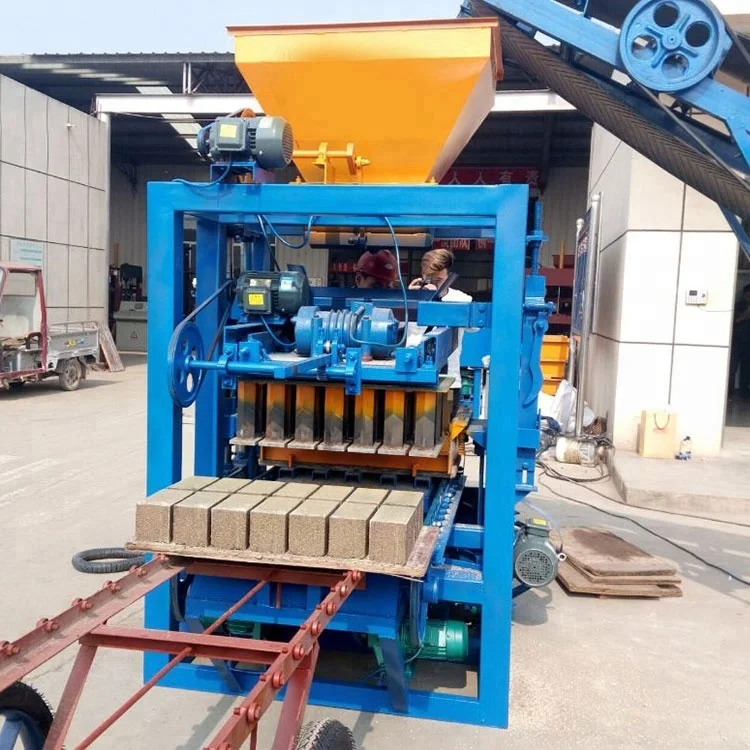
The QT6-15 presses hollow blocks, paving bricks, solid bricks and kerbstones on a single platform, but each format demands a different mould, pallet fill pattern and vibration profile. A 900×700 mm pallet holds six 400×200×200 mm hollow blocks or twenty-one 200×100×60 mm pavers, so the press fills and cycles at very different rates depending on which format is running. When you evaluate any automatic block machine, the first question is not "how many blocks per hour" but "how many of my blocks per hour."
Mould Change as a Daily Reality, Not a Brochure Feature
Swapping from hollow block to paving brick means lifting out one mould, aligning the new one, and resetting the PLC parameters for vibration force and press stroke. If the mould change takes most of a shift, the format flexibility you paid for disappears. On this automatic block machine, the mould mounting system is designed so a trained operator can complete a change within a reasonable window, but the exact time depends on how often your plant switches formats and whether you have a second mould ready on the shop floor. [NEED_CITE: typical mould change procedures on hydraulic block presses]
Reading the Numbers That Matter
The 21 MPa rated pressure and combined vibration-pressing action work together to compact the mix into a dense block. Higher pressure alone does not guarantee strength — if the vibration frequency is not matched to your aggregate size, the mix segregates and the block crumbles at the edges. The 15–20 second molding cycle listed above is a range, not a fixed value; a coarse local aggregate with large fly ash particles needs longer vibration to settle, which lengthens the cycle and reduces hourly output. The 6,000 kg main machine weight provides the mass needed to absorb vibration without transferring it to the foundation, so the press stays stable over long production runs. Pallet size at 900×700 mm must be checked against your existing curing racks and forklift fork width before the order is placed.
The Cost of Skipping the Material Sample
I learned this the hard way on a European project. A client ordered a QT6-15 based on a fly ash sample test we ran before shipment. When the machine arrived, their local aggregate turned out significantly coarser than the sample we had used. Daily production dropped to barely half of the quoted figure because the vibration profile was set for a finer mix. The blocks were sound, but the cycle time had to be extended to achieve adequate compaction. Since that job, I ask every buyer for a kilogram of their actual aggregate and cement before we finalize the PLC parameters and vibration settings. A two-day delay at the quoting stage prevents a two-week delay at commissioning. [NEED_CITE: effect of aggregate grading on block compaction cycle time]
Why Procurement Here Differs
Block machinery is our single product focus, which means the QT6-15 is never assembled from mismatched components sourced from different workshops. The press, mould, pallet and handling equipment are specified as one system so cycle times match across stations. Mould design covers the formats your market actually sells, and custom mould drawings are reviewed against your block dimensions before production. Automation level is selectable — you can start with a JS500 mixer and 8 m conveyor, then add an automatic stacker and pallet loader later without replacing the press. Installation support includes on-site reassembly of the top cylinder, commissioning with your actual mix, and operator training on mould change and PLC parameter adjustment.
Documentation & Verification
- Line layout and capacity calculation stating the block format and cycle time assumed for each output figure
- Mould drawing and format list confirming the exact block dimensions your market requires
- Pallet specification sheet with material grade and dimensions cross-checked against your curing racks
- Hydraulic and electrical schematic with confirmed voltage, frequency and PLC display language
- Factory test record run on a mix matched to your local aggregate sample
- Operation and maintenance manual covering mould change, vibration adjustment and daily greasing points
Installation, Commissioning & Support
- Foundation must support 6,000 kg main machine weight plus dynamic vibration loads with a level concrete pad
- Dedicated electrical circuit at confirmed voltage and frequency for the PLC and hydraulic pump motor
- Top cylinder removed for container loading and reassembled on site during installation
- First production run uses your local aggregate sample to set vibration time and press stroke parameters
- Operator training covers PLC navigation, mould change procedure and daily maintenance checks
- Wear parts list and mould inventory provided so first replacements are on hand before they are needed
Before You Request a Quote
To size the QT6-15 to your plant, we need the block format your market buys most, the daily output target for that specific format, and a sample or description of your local aggregate and cement type. Share your site voltage and frequency, the PLC display language your operators read, and the dimensions of any existing curing racks and forklifts so the 900×700 mm pallet can be verified against your handling equipment. If you are replacing an existing press, tell us the current mould formats and any bottlenecks you want to eliminate.
Frequently Asked Questions
Q: How is capacity calculated for each block format on the QT6-15?
A: Each output figure is based on the number of pieces per 900×700 mm pallet multiplied by the molding cycle for that specific format. The 15–20 second cycle range means output varies depending on your block thickness and mix. We provide a written capacity calculation that states the format, cycle time and shift length assumed, so your daily target is based on the product you actually produce rather than a catalogue default.
Q: Which mould formats are available, and how long does a mould change take?
A: Moulds cover hollow blocks, paving bricks, solid bricks, kerbstones and custom formats drawn to your specifications. Change time depends on operator experience and whether the replacement mould is staged nearby. We train your team on the mounting procedure and provide a mould change checklist so the press is back in production within a predictable window rather than consuming most of a shift.
Q: How do I match the machine to my local aggregate and mix design?
A: Send us a sample of your aggregate, sand and cement — or a detailed description of their grading and source. We run a test on that mix to determine the vibration time, pressure and moisture level needed for adequate block density. The PLC parameters are then set before shipment so the QT6-15 arrives configured for your material, not a generic default.
Q: Will the 900×700 mm pallet fit my existing curing racks and forklift?
A: That depends on your rack slot width and forklift fork dimensions. We ask for these measurements during the quotation stage and confirm pallet size in writing. If your existing equipment uses a different pallet dimension, we discuss whether adjusting the rack layout or selecting a different press model makes more sense for your operation.
Q: What documents arrive before shipment?
A: You receive a capacity calculation per block format, mould drawings, hydraulic and electrical schematics, the factory test record, a wear parts and mould list, and the operation manual. Voltage, frequency and PLC display language are confirmed in writing before production begins so there are no surprises during commissioning.