
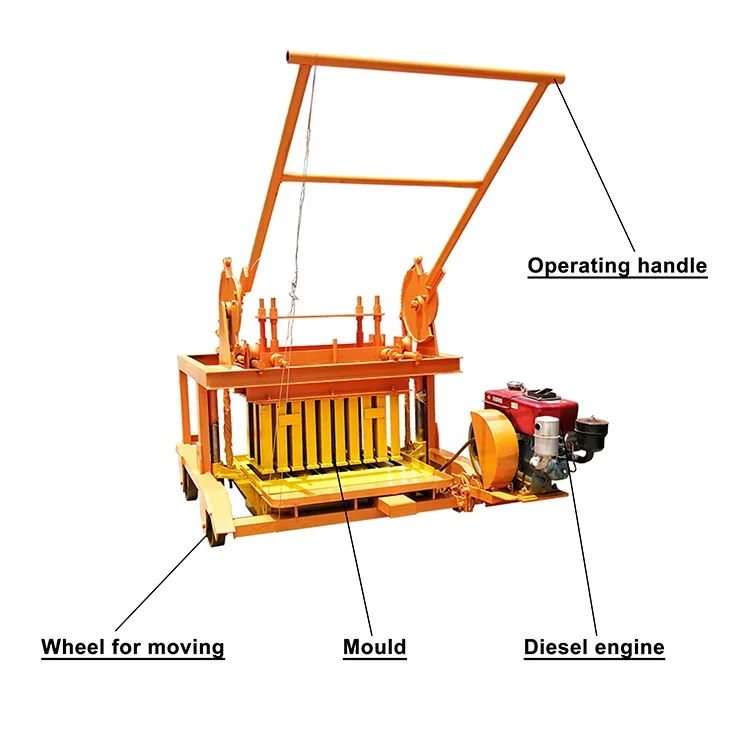
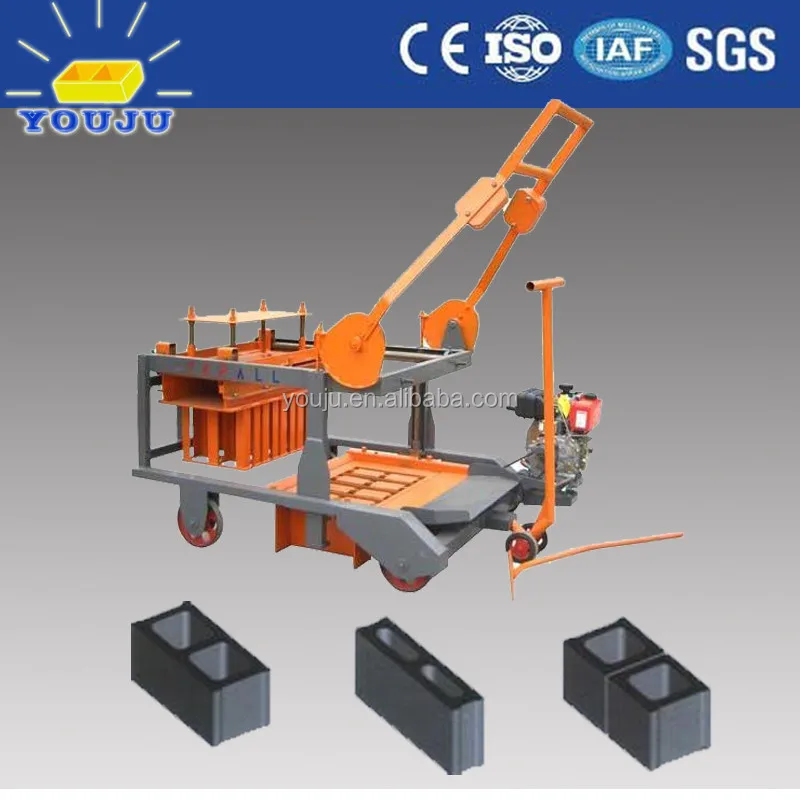
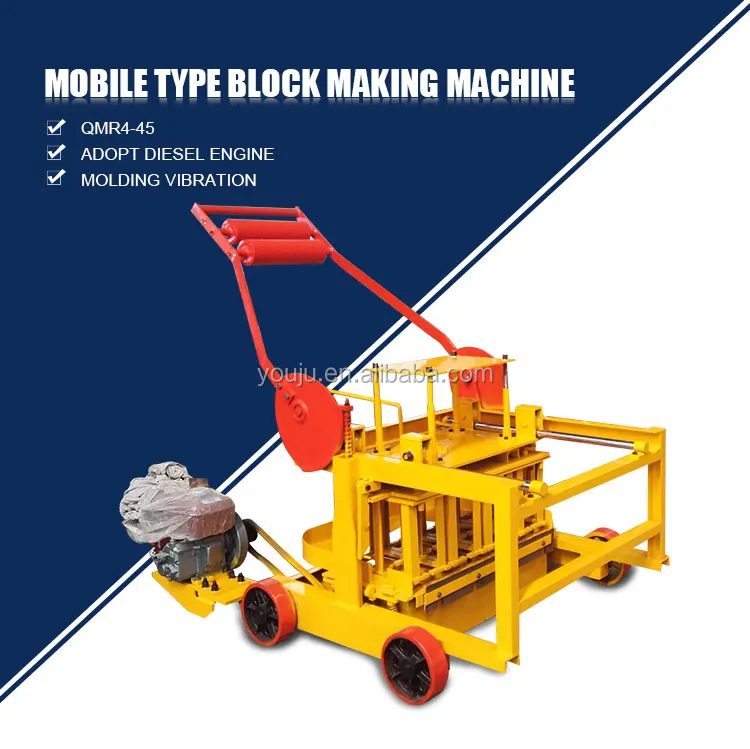
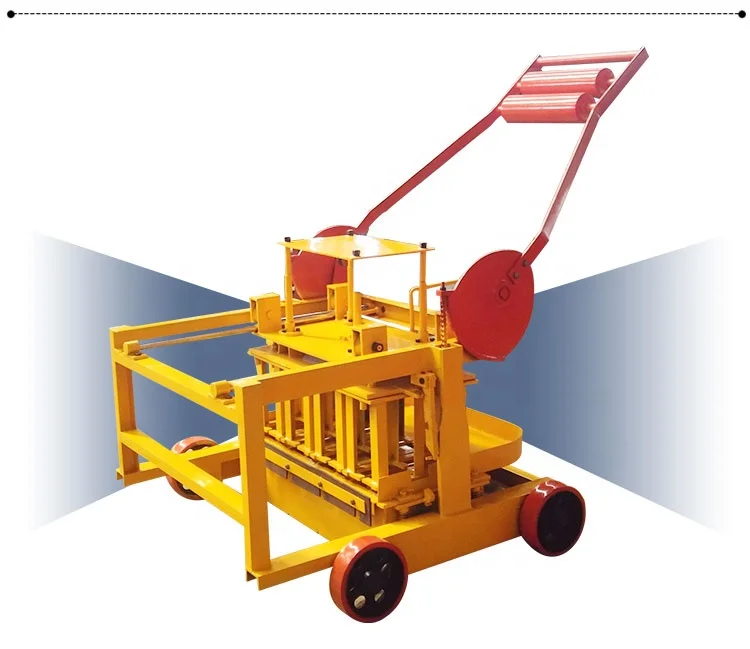
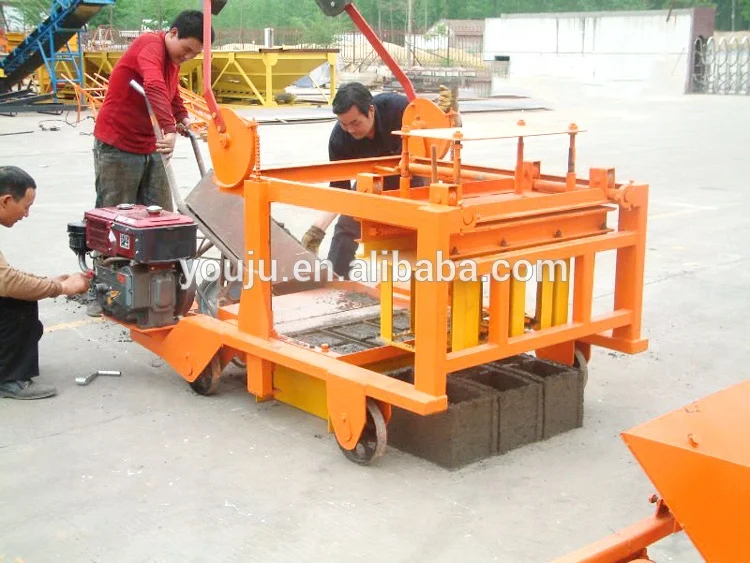
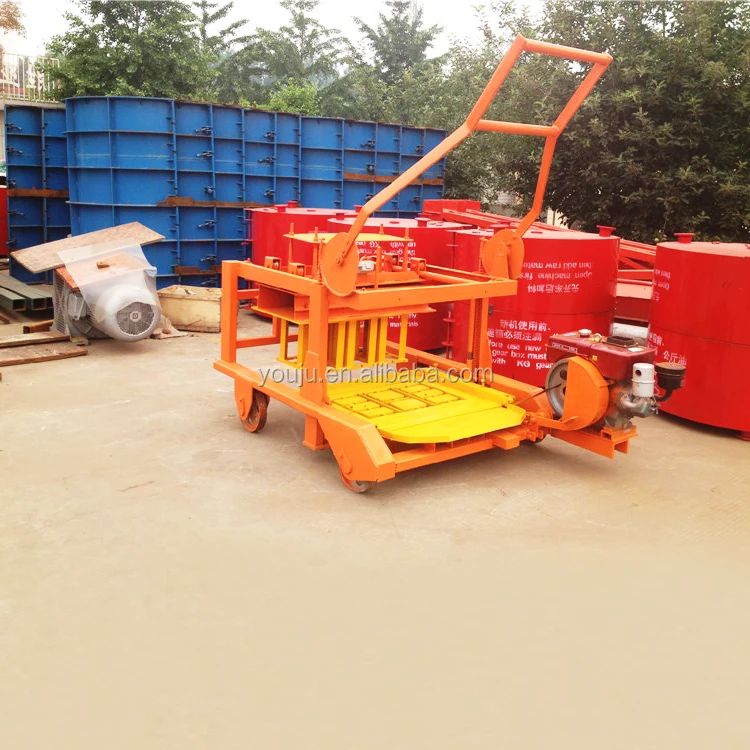
Description
Matched System Sizing — every capacity figure for the QMR4-45 is tied to a specific hollow block format, mould cavity count and shift length, so quoted and actual daily output align on your site.
Technical Specifications
| Parameter | Value |
|---|---|
| Model | QMR4-45 |
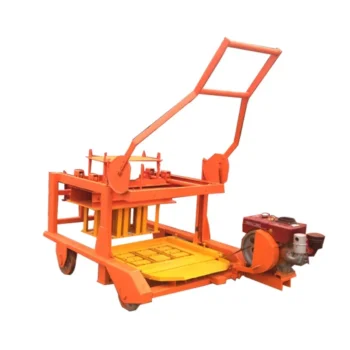
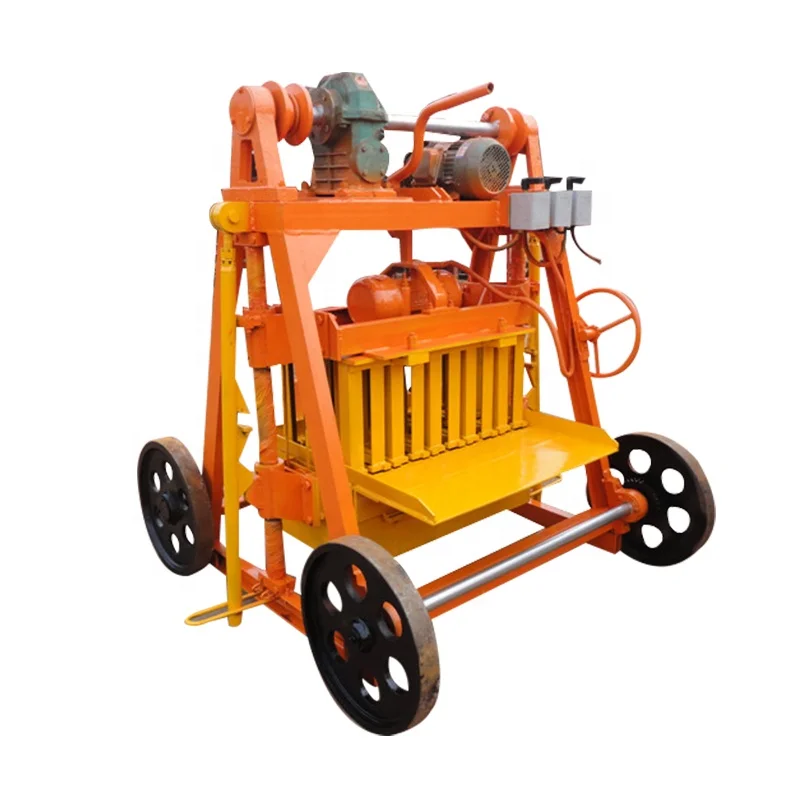
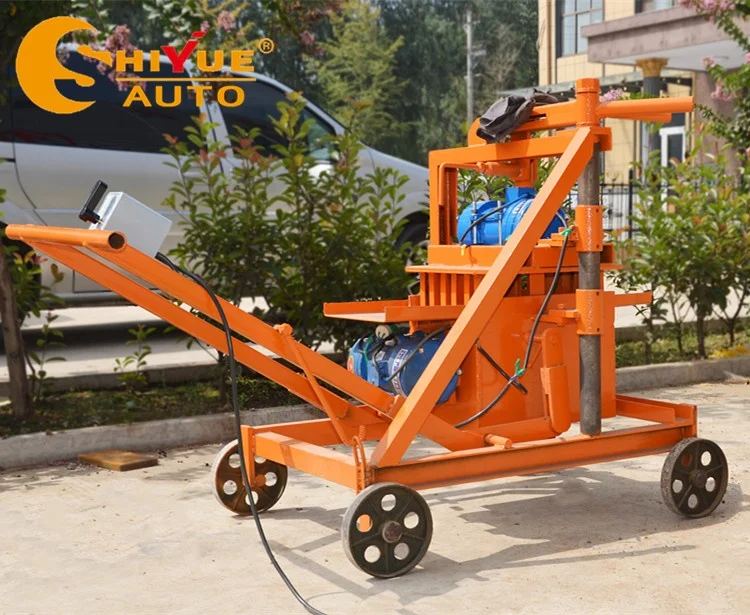
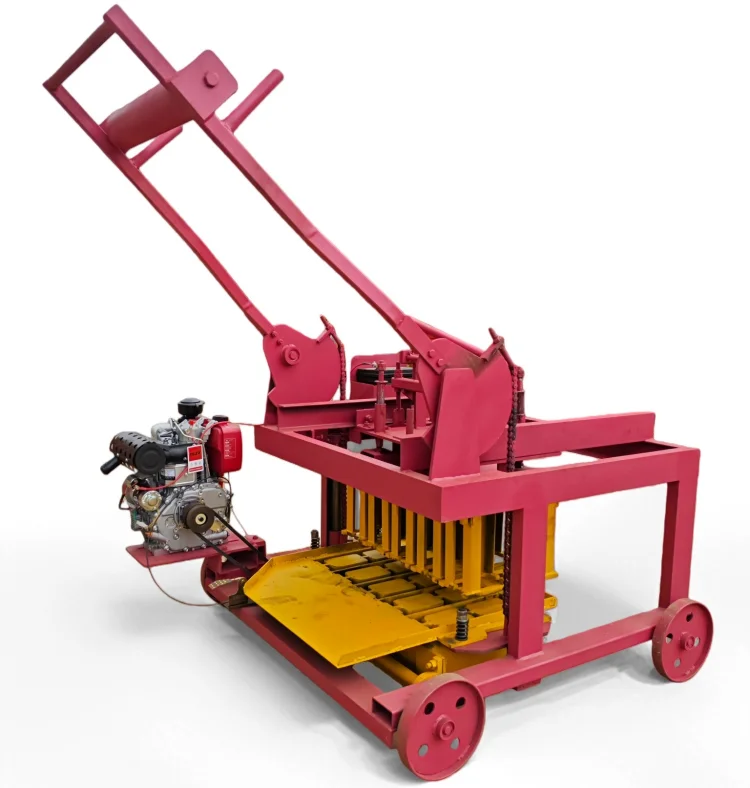
| Product Type | Mobile Egg Laying Block Making Machine |
| Rated Power | 6 kW (electric motor) / 6–8 HP (diesel engine) |
| Voltage & Frequency | 220 V or 380 V, frequency to be confirmed |
| Overall Dimensions (L×W×H) | 2420 × 1320 × 1650 mm |
| Net Weight | 810 kg |
| Power Source Options | Electric motor or diesel engine |
| Pallet Size | Not required (egg-laying mobile type) |
| Concrete Floor Requirement | Not required |
| Mould Format | Interchangeable; hollow, multi-cellular, paving, standard brick |
| Cycle Time | 40–45 s (basis not stated in source) |
| Output Capacity | 3000 pcs/day based on 400×200×200 mm hollow block, 4 pcs/mould, 8 h shift |
| Output Capacity | 3500 pcs/day based on 400×150×200 mm hollow block, 5 pcs/mould, 8 h shift |
| Output Capacity | 4500 pcs/day based on 400×120×200 mm hollow block, 6 pcs/mould, 8 h shift |
| Automation Level | Manual / low-automation egg-laying mobile type |
| Stacking Method | Blocks laid directly on ground; manual handling |
| Block Types Supported | Hollow block, multi-cellular brick, paving brick, standard brick |
| Warranty | One year for the whole machine |
| Standards | CE referenced via company certification; other standards to be confirmed |
Application Suitability
| Application | Material or Output |
|---|---|
| On-site contractor block production | Hollow and solid blocks from cement, sand, crushed stone and local aggregate |
| Housing project local supply | 400×200×200 mm and 400×150×200 mm hollow blocks laid on compacted ground |
| Small off-grid cement working sites | Paving and standard bricks using diesel engine power where electricity is unreliable |
| First low-investment block plant | Multiple block formats through interchangeable moulds before upgrading to a semi-automatic line |
What "3000 Blocks per Day" Actually Means for Your Site
Every output number here is locked to a block size, a mould and an eight-hour shift.
Capacity on a mobile block machine is often quoted as a single daily figure without naming the format behind it. A contractor expecting 4500 pieces of 8-inch hollow block will be disappointed if that headline assumed a smaller cavity. The egg-laying design removes pallet logistics, but it still demands a prepared surface and a mix design matched to your local sand or crushed stone. [NEED_CITE: impact of local aggregate grading on block density]
Format-Specific Output You Can Plan Around
The QMR4-45 produces hollow blocks in three standard formats with separate daily capacities. A 400×200×200 mm block uses a 4-cavity mould and yields 3000 pieces per eight-hour shift. A 400×150×200 mm block uses a 5-cavity mould for 3500 pieces. A 400×120×200 mm block uses a 6-cavity mould for 4500 pieces. The mobile block machine specifications make clear which format drives which number, so your production schedule starts from the block your market actually buys, not a catalogue average.
Mould Interchangeability on a Single Press
One press covers hollow block, multi-cellular brick, paving brick and standard brick through mould change. This lets a contractor add format variety without buying a second machine. Mould change time is not stated in source and must be confirmed before purchase so you know the real downtime between formats. [NEED_CITE: mould wear intervals in abrasive aggregate conditions]
Reading the Specs That Matter on Site
The rated power is 6 kW for the electric motor or 6–8 HP for the diesel engine, which determines whether your site needs a stable grid connection or can run off-grid. The overall dimensions of 2420 × 1320 × 1650 mm and net weight of 810 kg define transport and on-site positioning by a small loader or crane. The egg-laying design requires no pallets and no concrete floor, meaning blocks are laid directly on compacted ground — but the ground must be level and firm enough to prevent freshly pressed blocks from tilting. Voltage options of 220 V or 380 V must be confirmed alongside your local frequency before shipment, because a 50 Hz motor rewired for 60 Hz will run at a different speed and alter vibration characteristics. The cycle time of 40–45 s is stated without specifying the block format or mix design, so treat it as a starting point to verify during commissioning with your actual material. [NEED_CITE: frequency mismatch effects on electric motor vibration output]
The Cost of Skipping the Mix Trial
Arriving on site with a standard sand calibration while the contractor uses river sand mixed with clay is a common cause of collapsed block corners. A full morning of wasted output and broken blocks traces back to skipping the material test. When the local aggregate has different moisture absorption and particle shape from the factory test material, the vibration force and cycle time must be adjusted on site to achieve consistent compaction and clean demoulding. [NEED_CITE: effect of clay content on concrete block surface integrity]
Why Source This Machine Here
Block machinery is our single focus, which means the QMR4-45 is specified alongside its moulds and handling requirements as one system rather than assembled from separate suppliers. Configuration is set against your actual mix design and local aggregate, not a catalogue default. Mould design and supply covers the formats your market sells, including custom drawings if your buyers need a non-standard dimension. The automation level starts at manual egg-laying and leaves a clear upgrade path to a semi-automatic line when volume justifies it. Installation and commissioning support includes operator training so the crew knows how to read the mix and adjust the machine before the first production run.
Documentation & Verification
- Line layout stating the block format assumed for each output figure
- Mould drawing and format list with cavity counts per block size
- Voltage and frequency confirmation recorded before shipment
- Factory test record on your specified hollow block format
- Wear parts and mould list with first-replacement intervals
- Operation and maintenance manual in confirmed language
Installation, Commissioning & Support
- Position the 2420 × 1320 × 1650 mm machine on level compacted ground with clearance for block laying and manual handling
- Confirm 220 V or 380 V supply and frequency match the motor nameplate before first power-on
- Diesel engine option requires fuel storage and exhaust clearance at the production area
- First-run commissioning adjusts cycle time to your actual mix design and aggregate
- Operator training covers mould change procedure, daily inspection points and basic troubleshooting
- Wear parts stock plan based on mould cavity count and your local aggregate abrasiveness
Tell Us What Your Site Actually Needs
To size the QMR4-45 correctly, share the hollow block dimensions your market buys most, your local cement and aggregate source, and your daily target output per format. Let us know whether your site has reliable grid electricity at 220 V or 380 V, or whether the diesel engine option fits better. If you have an existing curing area or manual handling setup, describe it so the layout accounts for how blocks are moved after laying.
Frequently Asked Questions
Q: How is daily output verified per block format?
A: Each output figure is tied to a specific hollow block dimension, mould cavity count and an eight-hour shift. For example, 3000 pieces per day applies to the 400×200×200 mm format with a 4-cavity mould. The cycle time is verified during on-site commissioning using your actual mix, so the quoted capacity reflects real production conditions rather than a generic estimate.
Q: Which mould formats are available and how long does a change take?
A: The QMR4-45 accepts interchangeable moulds for hollow block, multi-cellular brick, paving brick and standard brick. Mould change time depends on the specific format pair and must be confirmed before purchase. Share the block sizes your market demands so we can supply the matching mould set and state the realistic changeover duration for your production schedule.
Q: How should the machine be configured for my local aggregate?
A: River sand, crushed stone and clay-blended materials each behave differently under vibration. Share your aggregate source and any clay or admixture content so the mix design can be matched to the machine’s vibration and compaction settings. A site trial during commissioning confirms block strength and surface quality before full production begins.
Q: Which power source fits my site conditions?
A: The electric motor runs at 6 kW on 220 V or 380 V, while the diesel engine option provides 6–8 HP for sites without reliable grid power. Confirm your local voltage and frequency before shipment so the motor is wound correctly. Diesel units require on-site fuel storage and regular engine maintenance alongside the block machine service schedule.
Q: What handling equipment do I still need with an egg-laying machine?
A: The QMR4-45 lays blocks directly on compacted ground without pallets, removing pallet purchase and curing-area pallet logistics. You still need a level production surface, manual handling tools for moving dried blocks to the curing or storage area, and a plan for how blocks are stacked after they gain initial set strength.

![QMY10-15 Mobile Block Machine – Technical Guide QMY10-15 Mobile Block Machine – Technical Guide QMY10-15 Mobile Block Machine Specifications QMY10-15 Mobile Block Machine Technical Guide ===== 关键决策说明 ===== - 记录ID 81396 数字和=28,28 mod 6 = 4,句式:[品类词] with [核心配置] – [站点修饰词] - 目标站 shiyuebrickmachine.com → 技术选型类 → 池:Specifications / Technical Guide / Model Selection - 第三层:28 mod 3 = 1 → Technical Guide 按句式4填入:Mobile Block Machine with Hydraulic Pressure – Technical Guide(62字符)](https://shiyuebrickmachine.com/wp-content/uploads/2026/04/H5d0ed98e7d244cb5a89c3f713b6c2eb82.webp)