Description
Mould-Matched Capacity — output figures for the QMJ4-45 are stated per block format with cycle time, so you know exactly what daily volume to expect before the machine arrives.
Technical Specifications
| Parameter | Value |
|---|---|
| Model | QMJ4-45 |
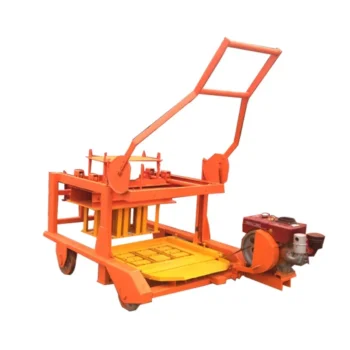
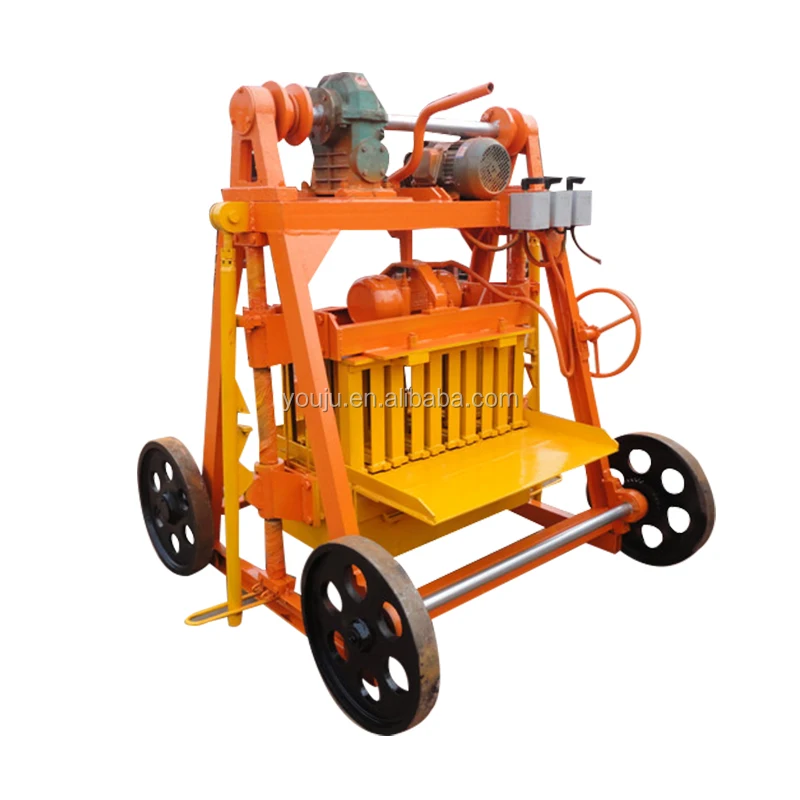
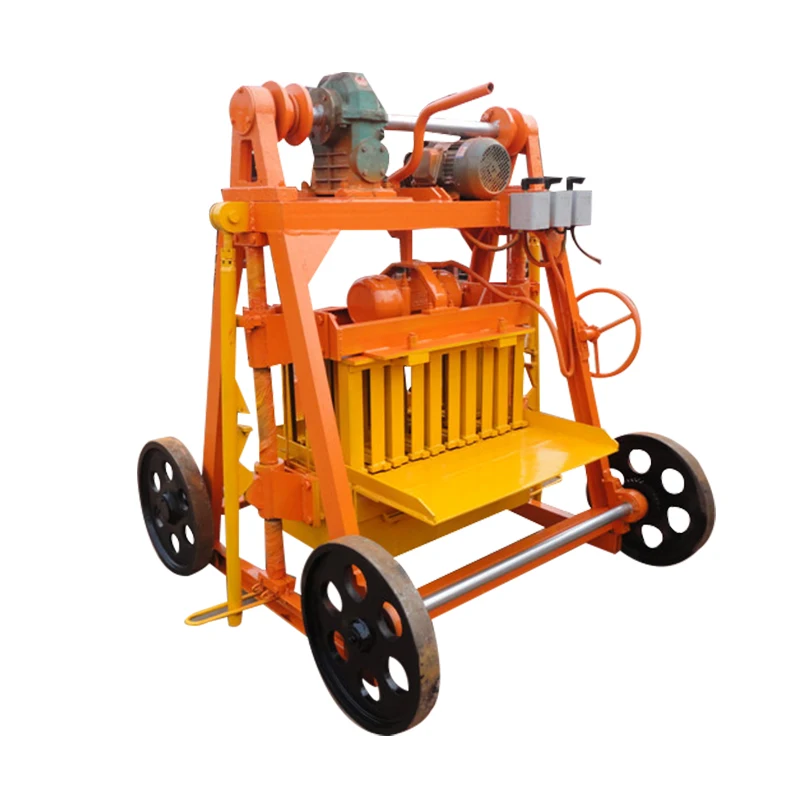
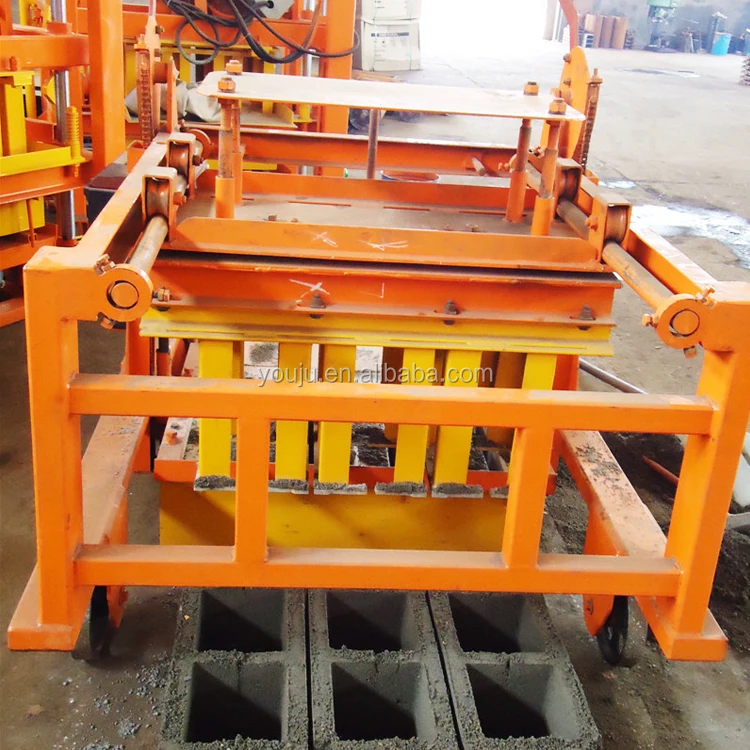
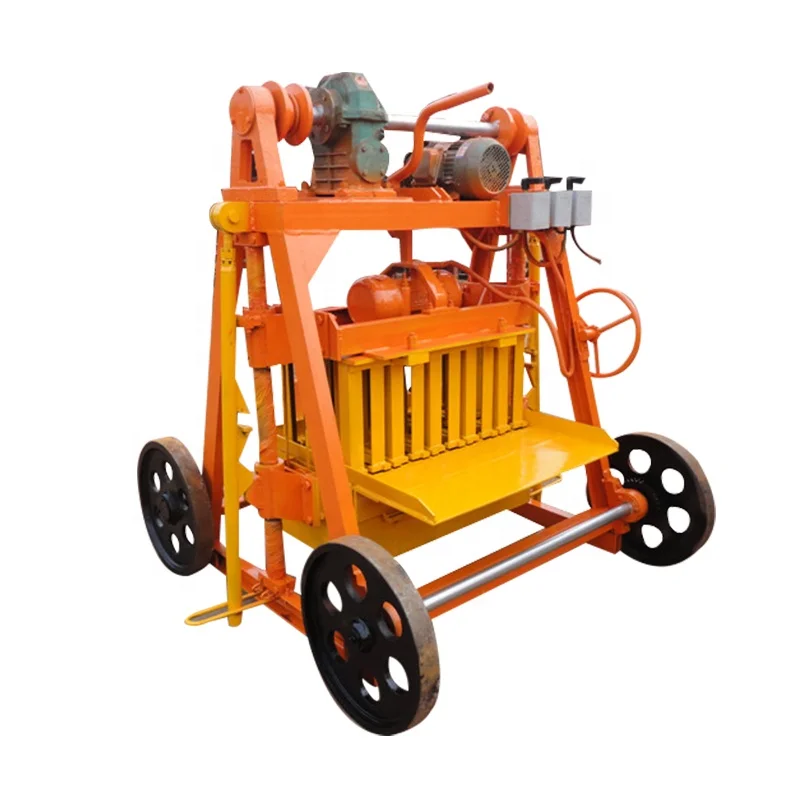
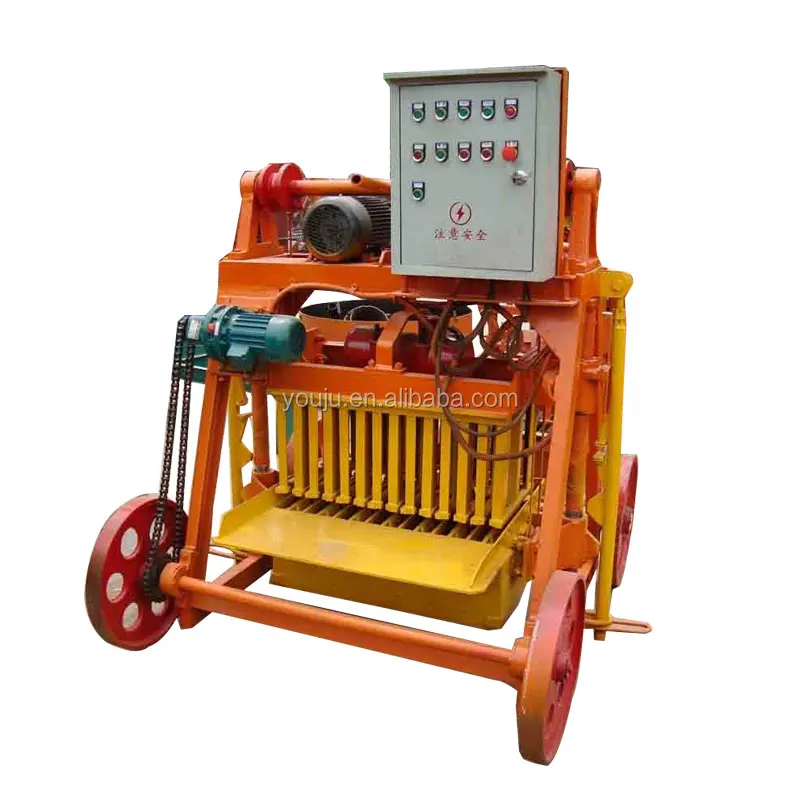
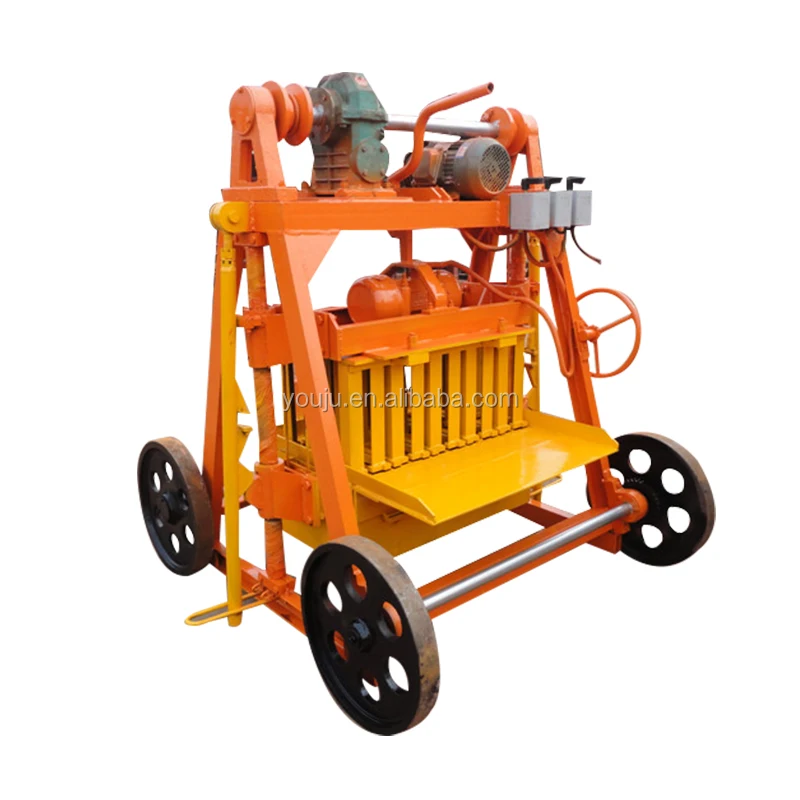
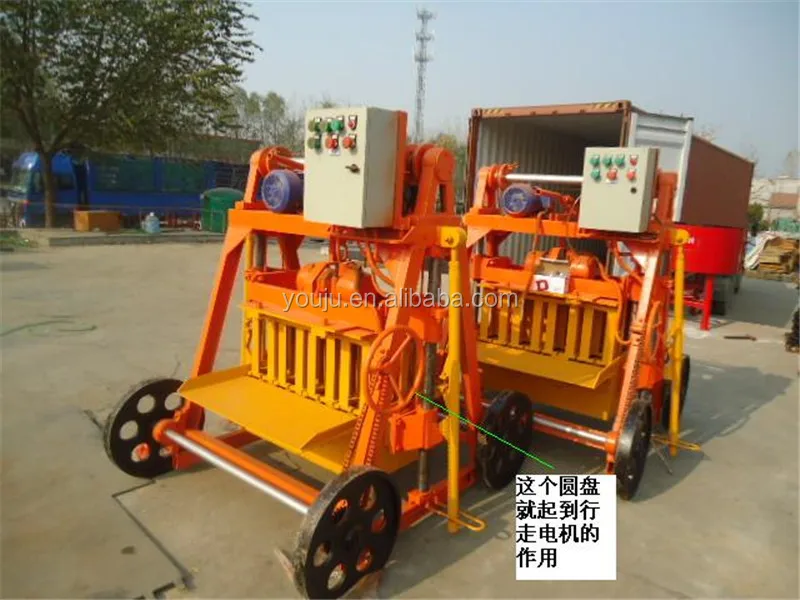
| Product Type | Mobile Egg Laying Concrete Block Making Machine |
| Molding Capacity | 4 pcs per mould |
| Molding Cycle | 45 s |
| Vibration Frequency | 2400 r/min |
| Output Capacity | 3000 pcs/day based on 400×200×200 mm hollow block; 3500 pcs/day based on 400×150×200 mm hollow block; 4500 pcs/day based on 400×120×200 mm hollow block |
| Forming Method | Mould vibration |
| Demolding Method | Manual |
| Turning Method | Manual |
| Total Power | 6 kW |
| Power Source | Diesel or petrol engine |
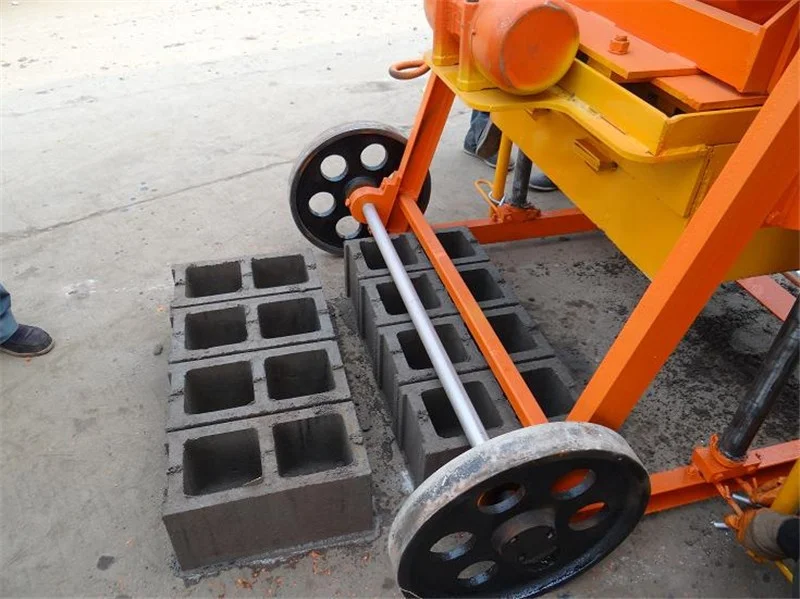
| Pallet Requirement | None (egg laying type) |
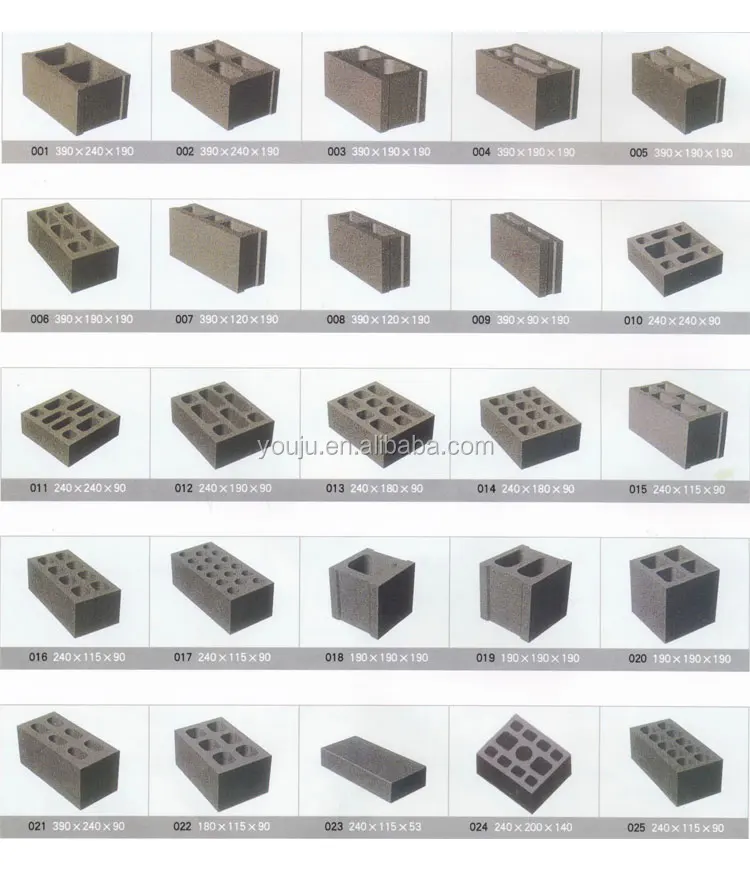
| Mould Formats Included | Hollow block (400×200×200 / 400×150×200 / 400×120×200 mm); multicellular, paving and standard brick formats available (basis to be confirmed) |
| Automation Level | Manual operation |
| Warranty | One year for the whole machine |
Application Suitability
| Application | Material or Output |
|---|---|
| On-site hollow block production for building contractors | Cement, sand, crushed stone or local aggregate — no fixed plant required |
| Small-scale block supply for housing projects | 400×200×200 mm and 400×150×200 mm hollow blocks laid directly on prepared ground |
| Off-grid or remote construction sites | Diesel or petrol engine operation where grid electricity is unavailable |
| First-time block plant entrepreneurs | Manual egg laying production with low initial investment and no pallet inventory |
What "3000 Blocks a Day" Actually Means When You Change the Mould
Daily output changes the moment you switch from a 200 mm wide block to a 120 mm wide block, and most quotations never mention which format their headline figure assumes.
I have watched buyers receive a mobile block machine only to find their actual daily volume is half what they budgeted for, because the capacity figure in the proforma invoice was based on a narrow block they do not even sell. With the QMJ4-45, the 3000 pcs/day figure applies only when producing 400×200×200 mm hollow blocks at a 45-second cycle. Switch to 400×150×200 mm and the realistic figure shifts to 3500 pcs/day; drop to 400×120×200 mm and it rises to 4500 pcs/day. If a supplier quotes a single number without naming the block format, that number is meaningless for your production plan [NEED_CITE: capacity calculation assumptions in block machinery quotations].
Block Format, Cycle Time and What the Ground Really Looks Like
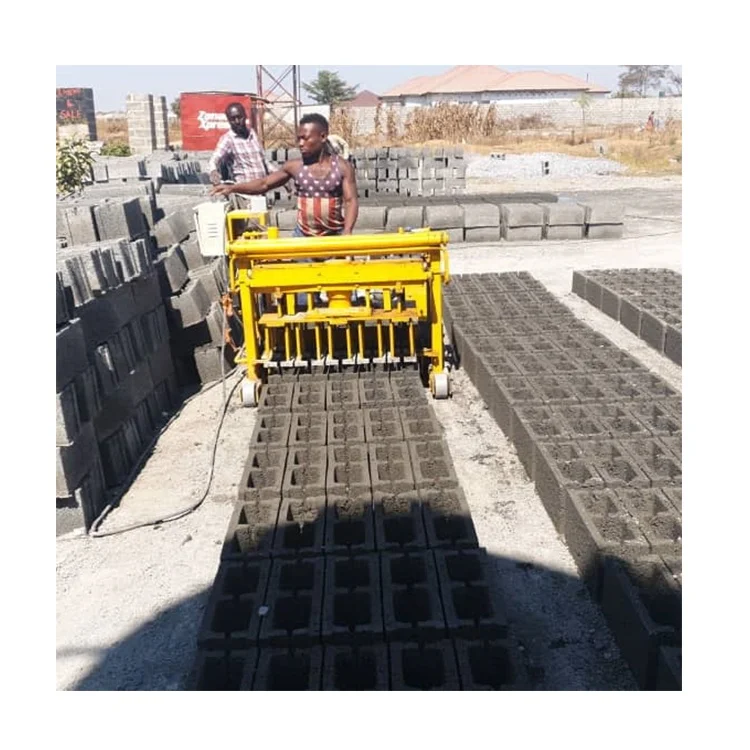
The QMJ4-45 lays blocks directly on a flat concrete floor or compacted earth — no pallets, no curing racks, no forklift ferrying boards back to the press. The operator pushes the machine forward after each cycle, and the freshly formed blocks stay in place until they cure. This removes the entire pallet return loop from your daily workflow, which matters when your site has limited space and no budget for pallet inventory. When evaluating mobile block machine specifications how to choose the right configuration, the ground condition at your site is as important as the press itself.
Mould Change and Format Flexibility on a Manual Machine
Swapping the mould on the QMJ4-45 is a manual job — unbolt the current mould, lift it off, lower the new one, bolt it down, and align. There is no quick-change cartridge system here. For a site producing a single block format day after day, this is not a problem. But if your contracts require hollow blocks one week and paving bricks the next, you need to factor in the downtime and the labour of two people handling a heavy steel mould. Confirm which formats are included in the initial shipment and which require a separate mould order [NEED_CITE: mould lead times and format compatibility for mobile egg laying machines].
Vibration, Pressure and Why Local Aggregate Matters
The QMJ4-45 uses mould vibration at 2400 r/min with a 6 kW total power draw to compact the concrete mix. Unlike stationary hydraulic presses, an egg laying machine relies on vibration alone — there is no hydraulic ram applying top pressure. This means block density depends heavily on your mix design and the grading of your local aggregate. During a commissioning trip for a similar egg laying unit, we spent days adjusting vibration frequency and moisture content because the client’s volcanic scoria absorbed water differently from the standard river sand used in factory testing. Expect to run sample batches with your actual materials before you commit to a production mix. The twice-vibration molding core is intended to distribute energy more evenly through the mould cavity, reducing density variation between the top and bottom of the block.
The Cost of Skipping the Ground Preparation Step
Egg laying machines are unforgiving about floor quality. If the ground is uneven, blocks crack at the base or lean during curing. If the surface is too soft, the machine sinks and the blocks deform under their own weight. I have seen contractors skip the floor screed to save time, then spend the next week breaking and remaking blocks that failed the drop test. Budget for a level concrete strip at least as long as your planned daily lay, and keep it clean of loose debris that would mark the block base.
Why Sourcing from a Block-Line Specialist Matters
Shandong Shiyue Intelligent Machinery focuses exclusively on block machines, moulds, pallets and handling equipment — not a mixed catalogue of unrelated construction gear. Every QMJ4-45 is configured against the buyer’s target block format, local aggregate and site conditions rather than shipped from a generic stock list. Mould design and supply covers the formats your market actually demands, with custom drawings when standard sizes do not apply. Documentation includes a capacity calculation that names the block format behind every output figure, a factory test record, and a wear parts list so you know what to reorder and when. The automation path is selectable: a buyer can start with manual egg laying and move to semi-automatic or full-line configurations later without replacing the entire investment.
Documentation & Verification
- Capacity calculation sheet stating the block format and cycle time behind each daily output figure
- Mould drawing and format list confirming which cavity sizes ship with the QMJ4-45
- Factory test record on your specified mix design before dispatch
- Voltage and control language confirmation document even for engine-powered units with auxiliary electrical components
- Operation and maintenance manual covering mould change, vibration motor service and daily inspection points
Installation, Commissioning & Support
- Site floor must be level and cured concrete; the QMJ4-45 lays blocks directly on the ground with no pallet system to install
- Diesel or petrol engine arrives pre-fitted; confirm fuel grade and oil specification before first start
- Total power draw is 6 kW — verify auxiliary electrical circuits if site lighting or a water pump shares the same generator
- Commissioning includes trial runs with your local aggregate to set vibration duration and moisture ratio
- Mould alignment and bolt torque checked on-site during initial production runs
- Wear parts list provided at delivery so spares can be ordered before the first replacement is due
What to Include in Your Inquiry
Send us your target block format and the daily volume you need to hit, along with a description of the aggregate you will use locally. Let us know whether your site has grid power available or if engine-only operation is required, and confirm the operating language for any control labels. If you already have curing space and a forklift, share the dimensions so we can advise on lay-out patterns and walking distances.
Frequently Asked Questions
Q: How is daily output calculated, and which block format does the figure assume?
A: The QMJ4-45 output is calculated from the moulding cycle of 45 seconds and the number of cavities per mould. The 3000 pcs/day figure applies only to 400×200×200 mm hollow blocks. For 400×150×200 mm blocks the figure is 3500 pcs/day, and for 400×120×200 mm it is 4500 pcs/day. Always confirm which format a quotation assumes before comparing machines.
Q: What mould formats are available, and how long does a mould change take?
A: Standard moulds cover hollow blocks in three widths plus multicellular, paving and standard bricks. Mould change is manual — unbolt, swap, re-align — and typically requires two operators. If your project needs frequent format changes, discuss quick-change options or consider a stationary press instead of a mobile egg laying machine.
Q: Is the diesel or petrol engine standard, and can the QMJ4-45 run on an electric motor?
A: The QMJ4-45 ships with a diesel or petrol engine as standard for off-grid sites. An electric motor configuration is available if your site has reliable grid power. Confirm your local voltage and frequency before production so the motor and any auxiliary wiring match your supply on arrival.
Q: What block strength can I expect with my local aggregate?
A: Block strength depends on your mix design, aggregate grading and compaction achieved at 2400 r/min vibration. Egg laying machines rely on vibration without top hydraulic pressure, so density is more sensitive to moisture content than on a stationary press. We recommend sample batches with your actual materials during commissioning to dial in the right ratio.
Q: What are the curing requirements when blocks are laid directly on the ground?
A: Blocks laid by the QMJ4-45 cure in place on the ground. The area must be sheltered from direct sun and rain for the initial set, and water curing should follow for several days depending on your climate. Plan your lay-out so that freshly produced blocks are not walked on or driven over during the curing period.