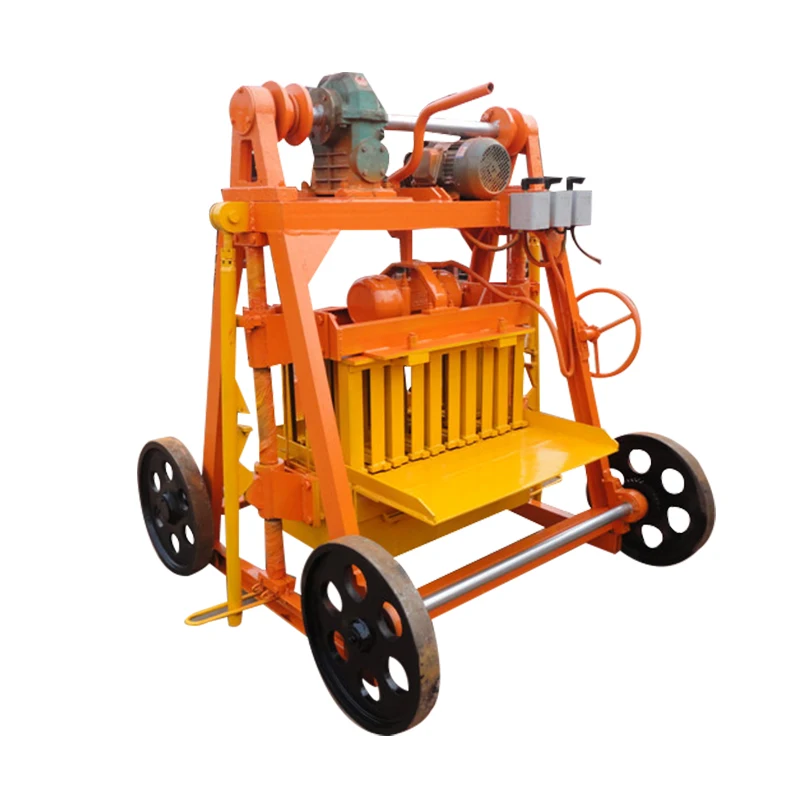
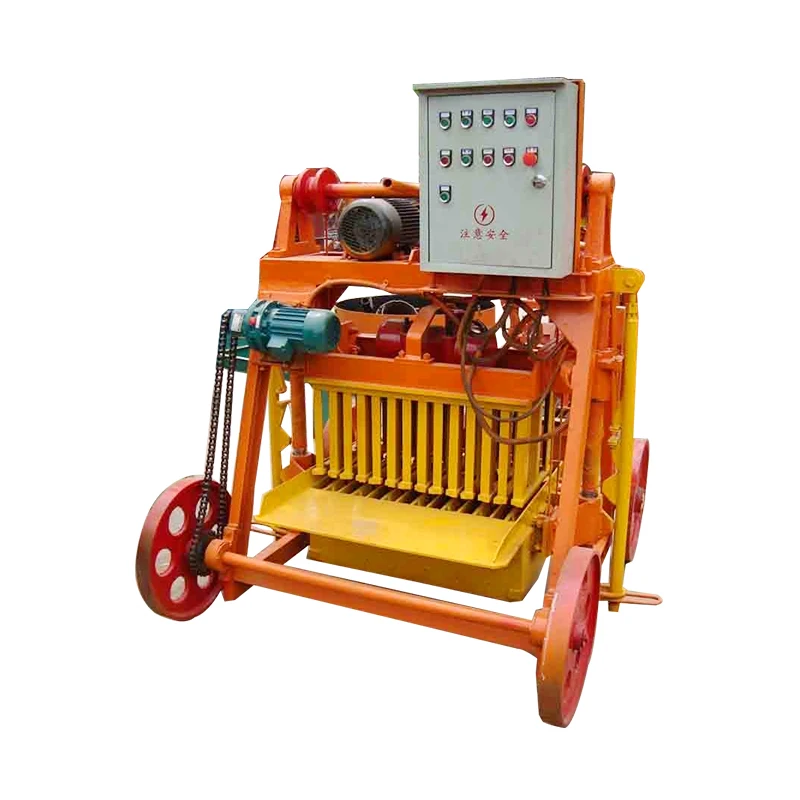
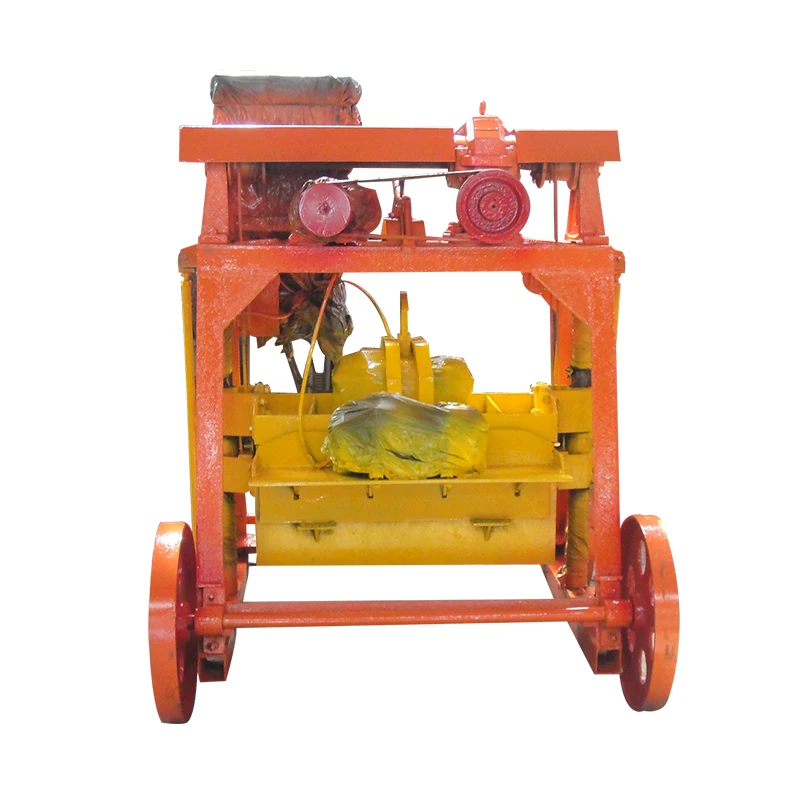
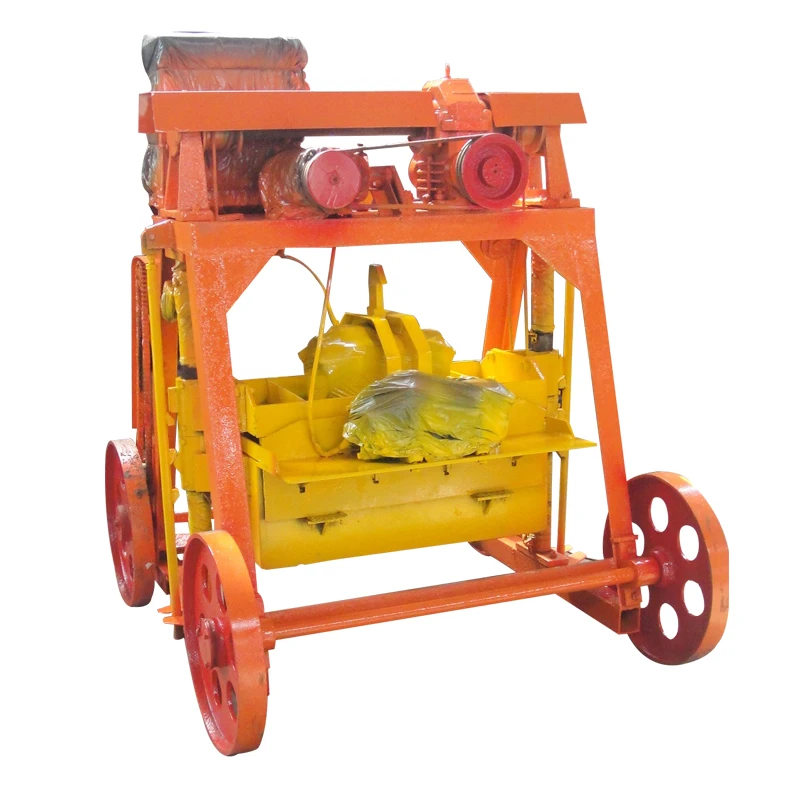
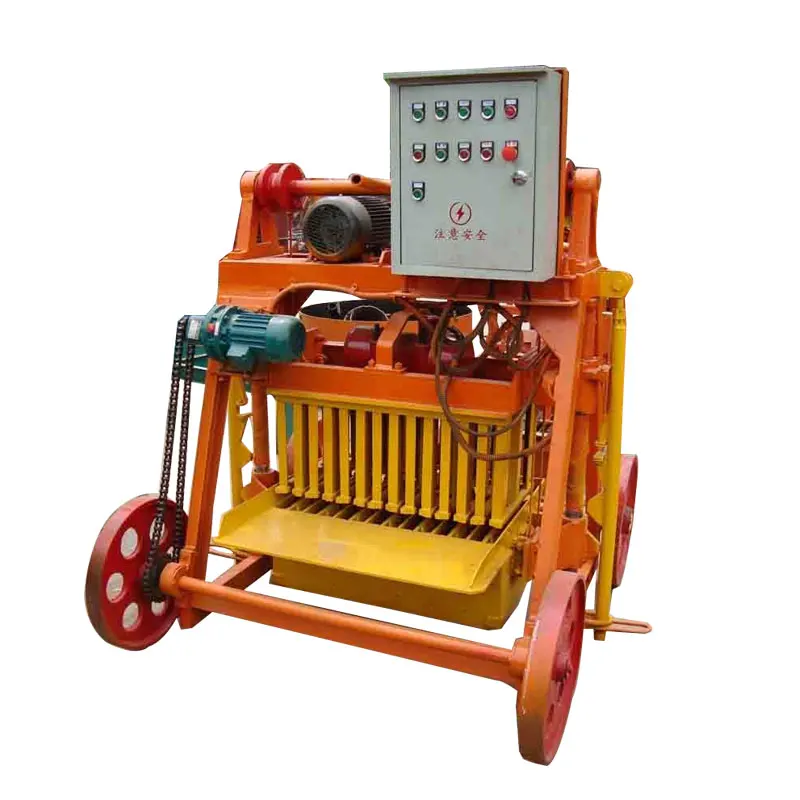

Description
Format-Matched Capacity — every output figure for the QMJ4-45 is tied to a specific block dimension, so your daily plan matches the blocks your market actually buys.
Technical Specifications
| Parameter | Value |
|---|---|
| Model | QMJ4-45 |
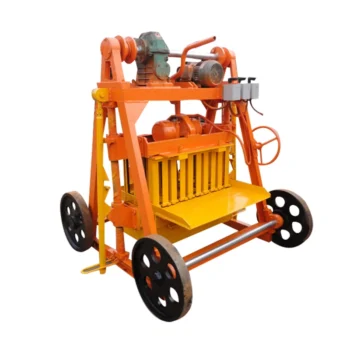
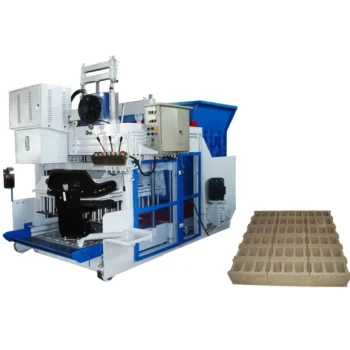
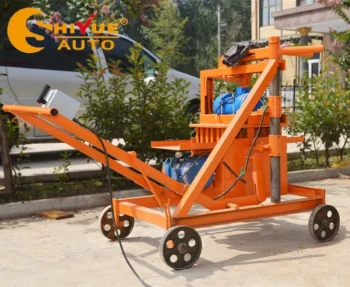
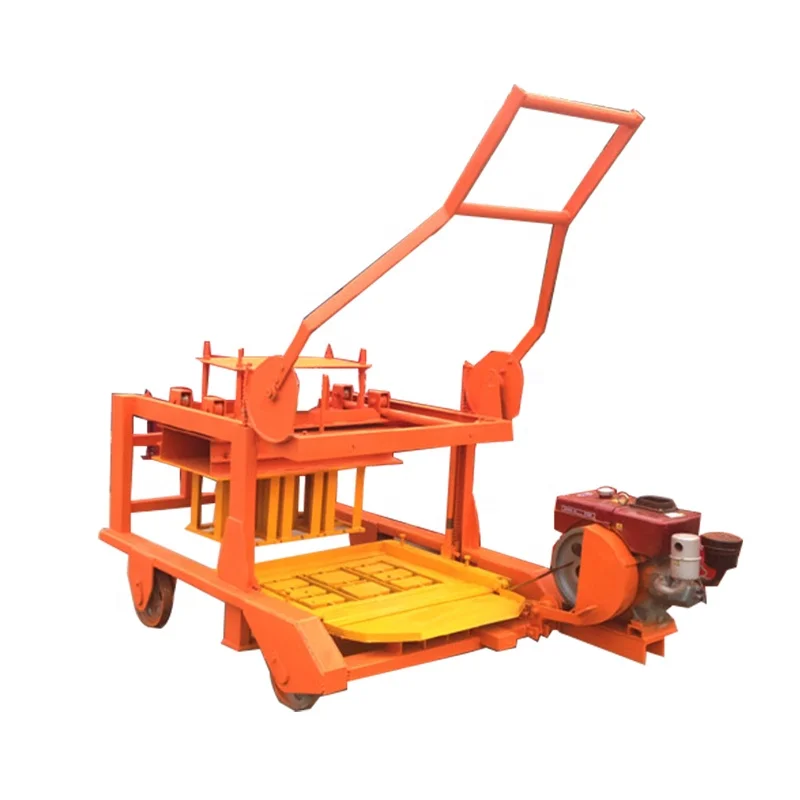
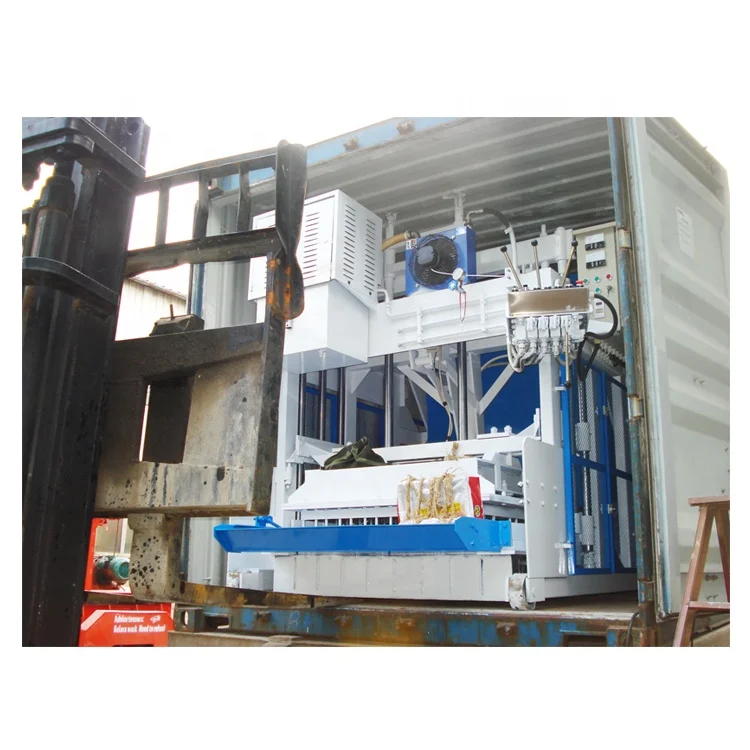
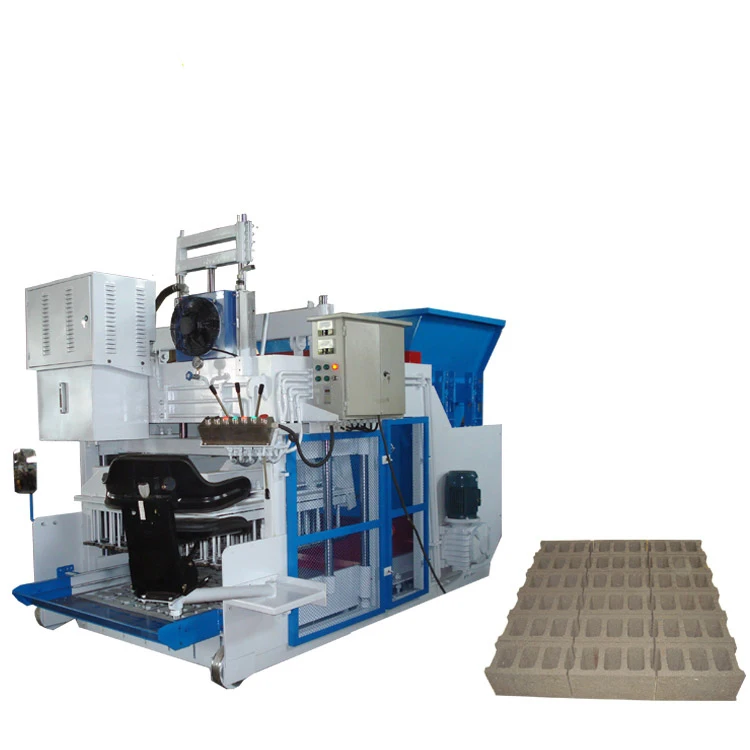
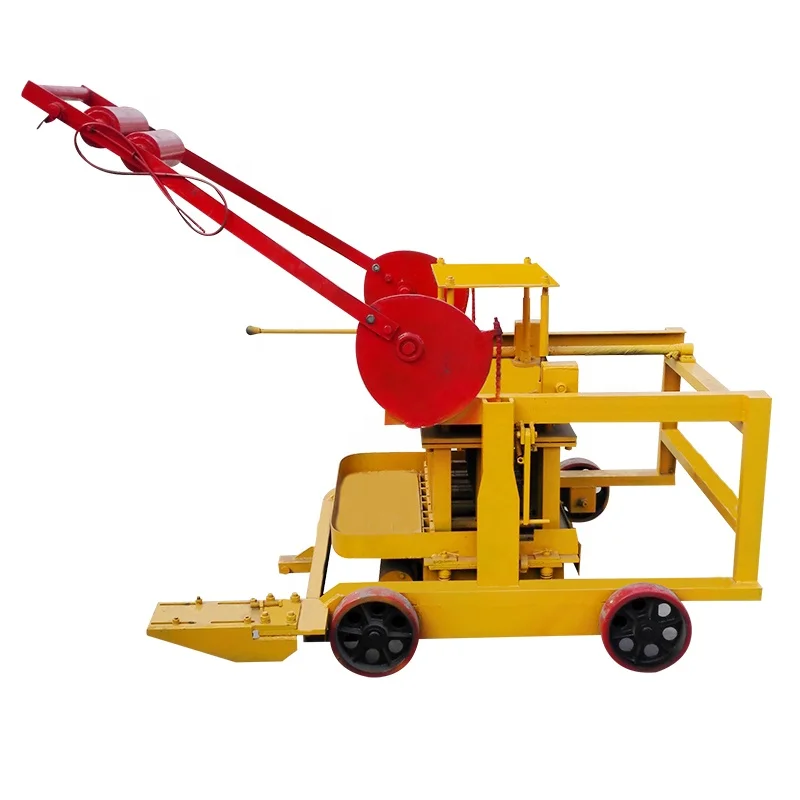
| Product Type | Mobile Egg Laying Block Making Machine |
| Vibration System | Twice vibrations of molding core |
| Moulding Cycle | 30-45s (basis not stated in source — confirm block format and material) |
| Output at 400×200×200mm | 4 pcs/mould, 320 pcs/hour, 2,600 pcs per 8-hour shift |
| Output at 400×150×200mm | 5 pcs/mould, 400 pcs/hour, 3,200 pcs per 8-hour shift |
| Output at 400×100×200mm | 7 pcs/mould, 560 pcs/hour, 4,480 pcs per 8-hour shift |
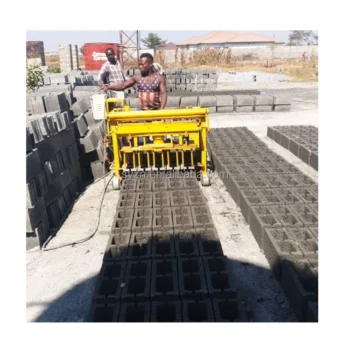
| Mobility | Egg-laying, produces directly on ground without pallets |
| Control | Manual operation |
| Mould Technology | Heat treatment and carburization |
| Steel Construction | High-quality structural steel |
| Certification | ISO9001:2000, CE |
| Technical Support | 24-hour online service, remote guidance and training |
Application Suitability
| Application | Material and Output Context |
|---|---|
| On-site hollow block production for building contractors | Crushed stone, sand, and cement mix laid directly on compacted ground |
| Housing project block supply in remote locations | Local aggregate and cement with mobile repositioning across the site |
| First-stage block plant for entrepreneurs | Low-investment entry producing solid and hollow formats before scaling to stationary lines |
| Paving and kerb production at construction yards | Interlocking and solid formats using site-available raw materials |
What "320 Blocks per Hour" Actually Means for Your Site
The cycle time only holds if your mix design, aggregate grading, and ground conditions all align with the machine’s vibration profile.
I have watched a QMJ4-45 mobile egg laying block machine produce well under half its rated output because the sand the contractor sourced locally carried a clay content far above what the vibration system could compact properly. The blocks looked formed when they left the mould, but crumbled before curing finished. That gap between catalogue capacity and site reality is where most first-time buyers lose money. Before you commit to a daily output figure, the mobile egg laying block machine specifications need to be read against your actual block format, your aggregate test report, and the ground surface you will lay on [NEED_CITE: local aggregate grading standards for concrete block production].
Matching Vibration Force to Your Mix Design
The QMJ4-45 uses a twice-vibration molding core rather than the single-vibration setup found on earlier egg-laying models. This dual vibration delivers denser compaction across the block cross-section, which matters when your local aggregate includes a wider range of particle sizes. For contractors working with river sand that varies in fineness modulus from batch to batch, the second vibration pass helps close voids that a single pass would leave open. Mobile egg laying block machine specifications mean little if the vibration force cannot handle your actual material.
Choosing the Right Block Format for Your Market
The output spread from 2,600 to 4,480 pieces per shift exists because the machine holds different mould counts per cycle depending on block thickness. A market that primarily buys 200mm hollow blocks will see the lower end of that range, while a project requiring 100mm partition blocks reaches the higher figure. The format your buyers actually order determines which capacity row applies to you, not the maximum number in the table [NEED_CITE: regional block format standards in Southeast Asian construction markets].
Reading the Moulding Cycle Honestly
The 30-45 second cycle range reflects variation across block formats and mix consistency. A dry mix with well-graded aggregate will release faster from the mould, while a wetter mix or a thicker block format pushes the cycle toward 45 seconds. When I commission these machines on site, I time the first twenty cycles with the buyer’s actual material before we set any daily production target. The mobile egg laying block machine specifications only become real numbers after that first test run.
How Ground Conditions Shape Your Output
Egg-laying machines deposit blocks directly onto the ground, which means your production surface is part of the system. A compacted, level concrete yard lets the machine move smoothly between rows and prevents freshly formed blocks from tilting. Soft or uneven soil causes the machine to shift during laying, producing blocks with uneven bases that fail stacking later. I always ask buyers to prepare the curing area before the machine arrives, because ground preparation delays are the most common reason on-site production starts late.
The Cost of Ignoring Format-Specific Capacity
When buyers quote themselves the highest output figure without checking which block format it assumes, they build project timelines around numbers the machine cannot deliver in their product mix. A contractor planning to produce 4,000 hollow blocks per day on the QMJ4-45 will fall short, because that figure belongs to the thinner 100mm format. The consequence is delayed masonry work, idle labour waiting for blocks, and pressure to run the machine beyond its cycle range, which damages block density [NEED_CITE: concrete block density requirements for load-bearing walls].
Why Source From a Format-Focused Supplier
Block machinery is our single focus, which means the QMJ4-45 arrives with mould, pallet guidance, and handling matched as one system rather than assembled from separate vendors. Every configuration is set against your actual mix design and local aggregate, not a catalogue default. Mould drawings are prepared for the formats your market sells, including custom dimensions if your local standard differs from the three sizes listed above. The automation level stays manual at this tier, but the machine sits on a clear upgrade path toward semi-automatic and fully automatic stationary lines as your volume grows. Installation includes on-site commissioning with operator training so your crew understands cycle timing from day one.
Documentation & Verification
- Line layout showing curing area dimensions matched to the QMJ4-45 laying pattern
- Capacity calculation stating which block format each output figure assumes
- Mould drawing and format list confirming dimensions against your local standard
- Voltage and frequency confirmation sheet before production begins
- Factory test record using a mix design close to your site material
- Operation and maintenance manual with mould change and wear part procedures
Installation, Commissioning & Support
- Compacted and level ground surface prepared across the full curing area before machine arrival
- Site power supply verified against the QMJ4-45 voltage and frequency requirements before dispatch
- Machine arrives assembled with mould installed, ready for test production on your ground surface
- First-cycle timing conducted with your local aggregate and cement to confirm realistic moulding cycle
- Operator training covers mix consistency recognition, mould change procedure, and daily greasing points
- Wear parts list and mould replacement schedule provided with initial spare recommendations
What to Prepare Before You Enquire
To size the QMJ4-45 correctly for your project, share the block format your market orders most, your local aggregate type and grading report, and the ground conditions at your intended production site. Include your available voltage and frequency so the electrical system is confirmed before the machine enters production. If you already operate a mixer or raw material feeder upstream, specify its output rate so the supply pace matches the egg-laying cycle without bottlenecks.
Frequently Asked Questions
Q: How do I verify realistic daily output for my specific block format?
A: The QMJ4-45 output varies by block size — 2,600 pieces per shift for 200mm hollow blocks up to 4,480 for 100mm blocks. Confirm which format your market actually orders, then use that row for planning. A site test with your actual mix during commissioning validates the cycle time before full production begins.
Q: What block formats and mould options are available for this machine?
A: Standard moulds cover 400×200×200mm, 400×150×200mm, and 400×100×200mm hollow and solid formats. Custom mould design is available to buyer drawings if your local construction standard requires different dimensions. Each mould undergoes heat treatment and carburization for extended service life with abrasive aggregates.
Q: How does local aggregate affect block strength and machine performance?
A: The twice-vibration system must match your mix design to produce consistent density. High clay content in sand reduces compaction quality regardless of vibration force. Share your aggregate test report before ordering so the vibration settings and mix recommendations align with your available materials.
Q: What are the site requirements for mobile egg-laying production?
A: You need a compacted, level concrete or hard-packed ground surface across the curing area, plus space for raw material storage near the production zone. The QMJ4-45 produces without pallets, so the ground itself becomes the curing bed. No fixed plant foundation is required.
Q: How long does mould change take when switching block formats?
A: Mould change on the QMJ4-45 is a manual process involving unbolting and repositioning the mould box on the vibration core. Plan for a portion of a shift when switching formats for the first time. Experienced operators reduce this time with practice, but format changes are best scheduled at shift boundaries rather than mid-run.