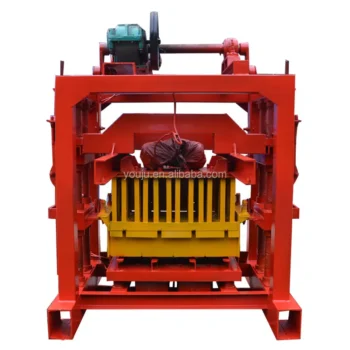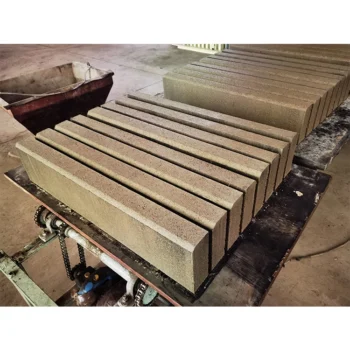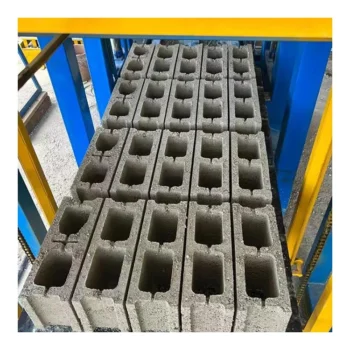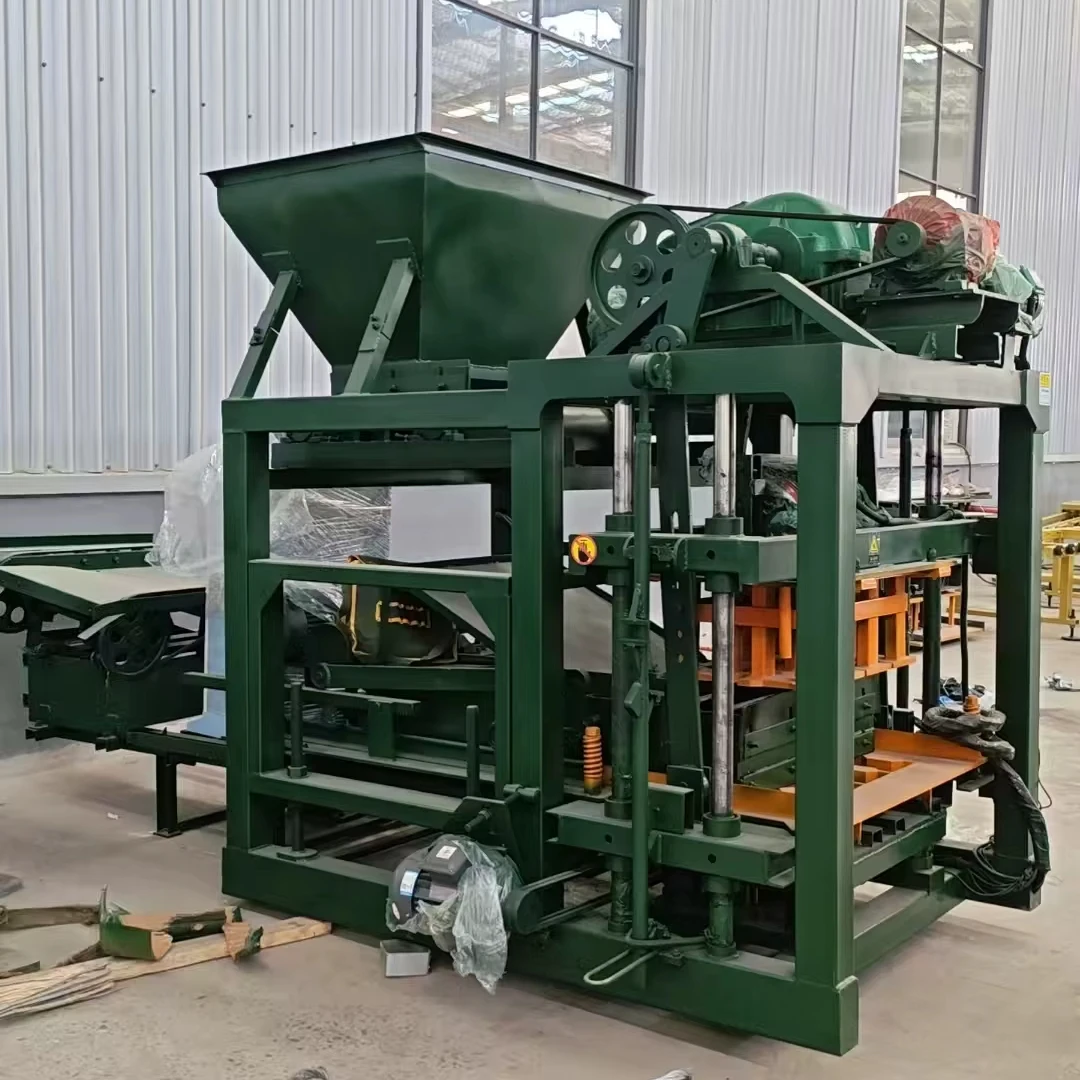
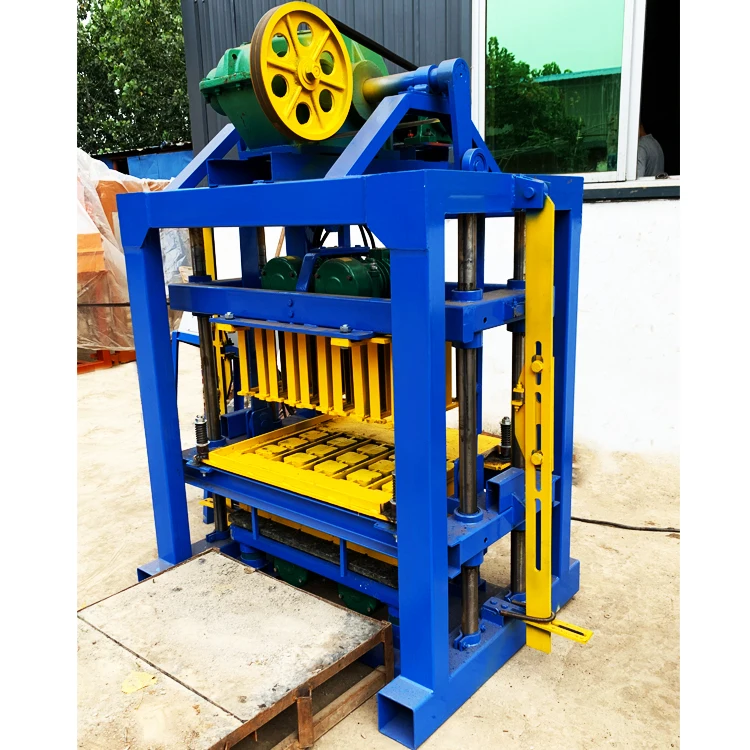
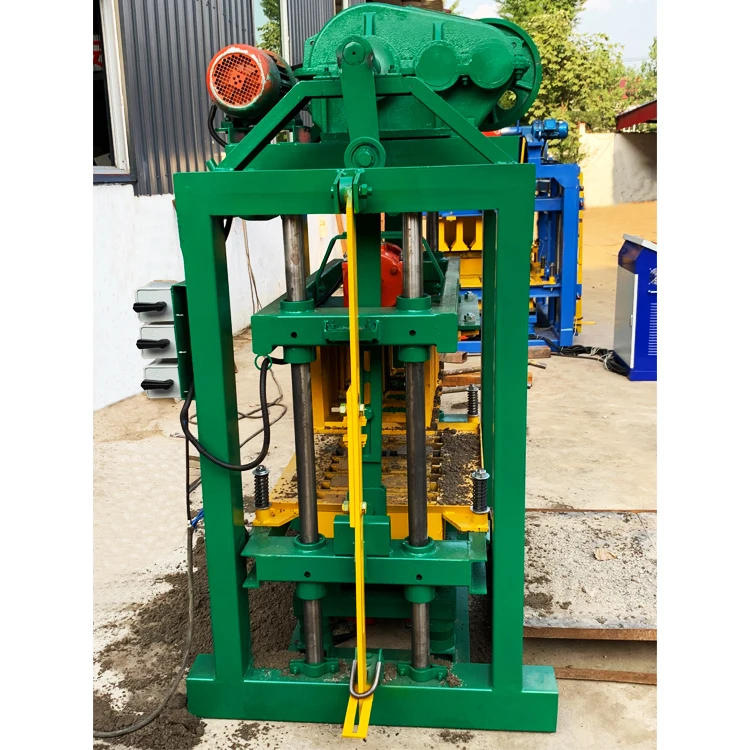
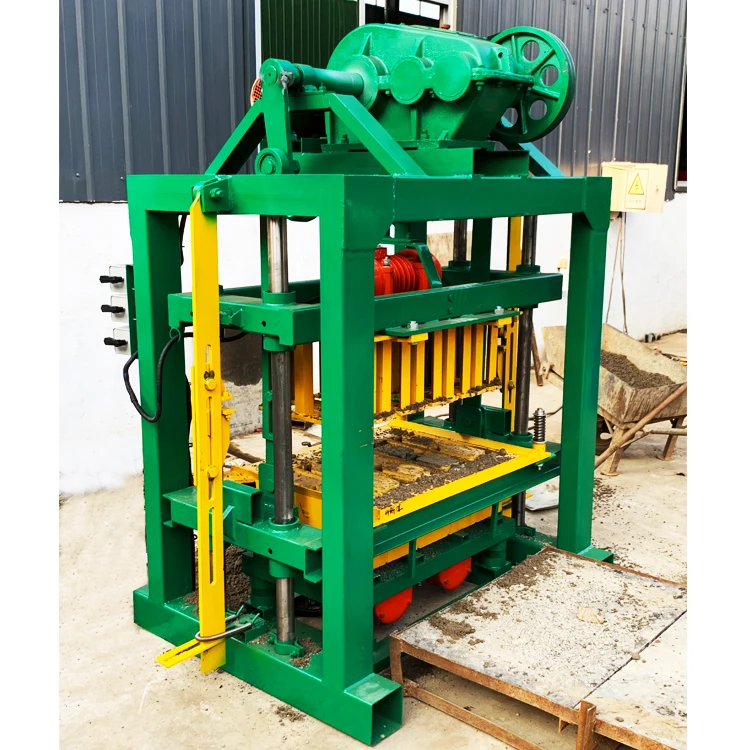
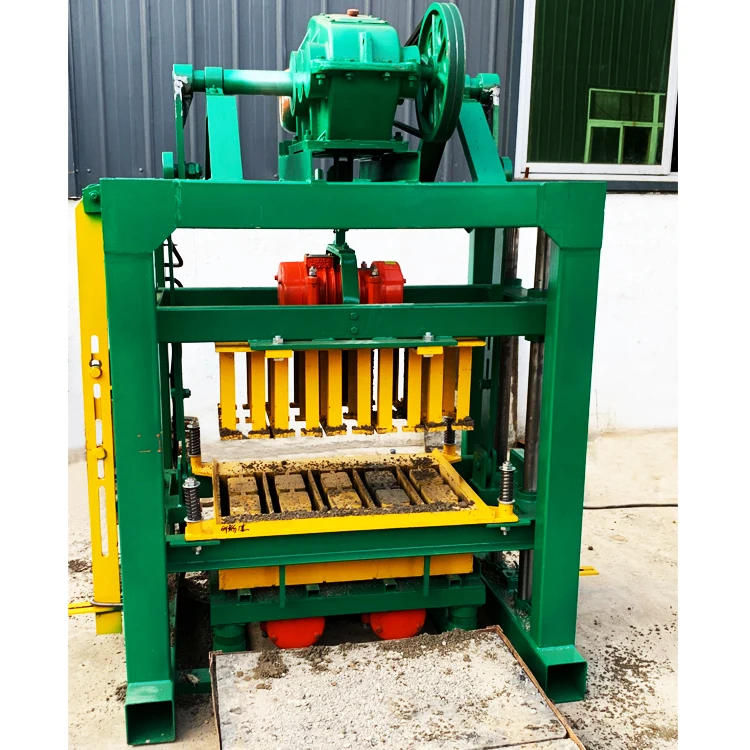
Description
Format-by-format capacity breakdown — every cycle time and mould count is stated against a specific block size so buyers calculate realistic daily output instead of relying on a single inflated figure.
Technical Specifications
| Parameter | Value |
|---|---|
| Model | QTJ4-40 |
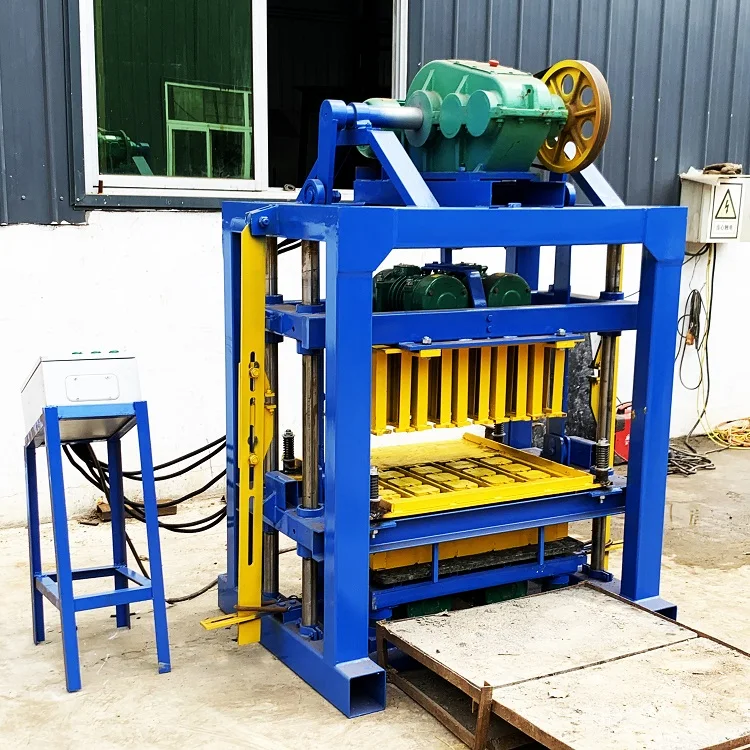
| Product Type | Interlocking Brick Machine |
| Category | Stationary block machine |
| Rated Power | 9.5 kW |
| Voltage & Frequency | 380V, configurable to buyer’s local supply (frequency to be confirmed before production) |
| Control System | Manual / semi-automatic operation |
| Overall Dimensions (L×W×H) | 1350 × 1460 × 1800 mm |
| Net Weight | 1 T |
| Pallet Size | 850 × 450 × 40 mm |
| Mould Format Options | 400 × 200 × 200 mm (4 pcs/mould); 400 × 240 × 200 mm (3 pcs/mould) |
| Cycle Time | 40 s |
| Vibration Frequency | 2800 r/min |
| Motor Brand | Siemens (German) |
| Automation Level | Manual pallet handling, semi-automatic vibration moulding |
| Stacking Method | Manual |
| Workshop Area Required | 200 m² |
| Labor Requirement | 3–5 workers |
| Color Options | Red or optional |
| Warranty | 1 year |
Application Suitability
| Application | Material or Output |
|---|---|
| Small-scale interlocking brick production | Cement, sand, gravel and fly ash mixes |
| Solid cement block manufacturing | Crushed stone aggregate with cement binder |
| On-site block production for contractors | Local aggregate and cement blends on project sites |
| Start-up block plant operations | Standard cementitious raw materials |
| Supplementary product line expansion | Interlocking and hollow block formats for existing manufacturers |
What "40 Seconds per Cycle" Actually Means for Your Daily Output
Cycle time only tells the full story when tied to a specific block format and mould cavity count.
Suppliers often quote a single output number that blends multiple block sizes together, making it impossible to verify against real production. The QTJ4-40 interlocking brick machine specifications list a 40-second cycle, but that figure behaves differently depending on whether you are pressing four cavities of 400×200×200 mm blocks or three cavities of 400×240×200 mm blocks. Without this format-by-format breakdown, a buyer planning production around interlocking bricks could find daily throughput falling noticeably short of what the quotation implied. [NEED_CITE: common discrepancy between quoted and actual block plant output]
How Mould Format Drives Real Output on the QTJ4-40
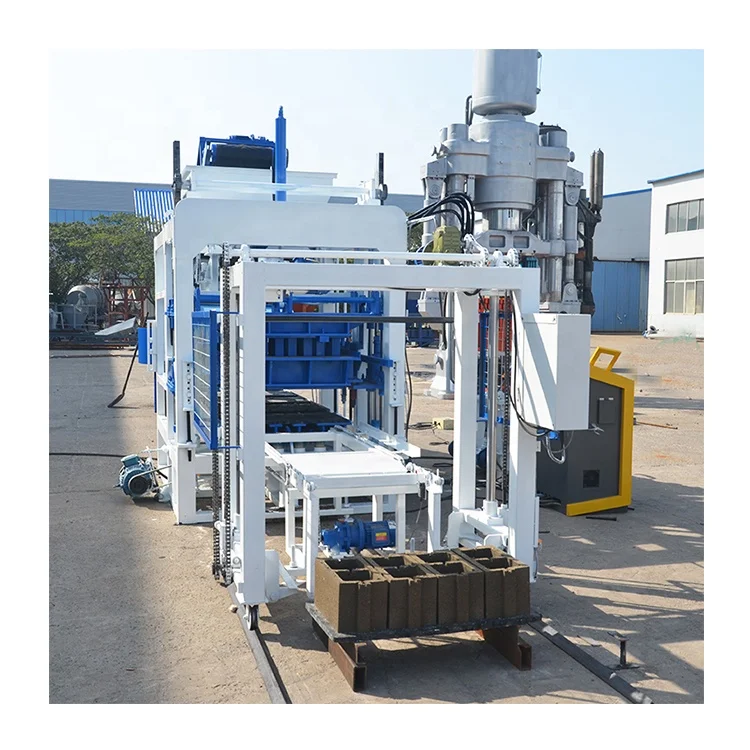
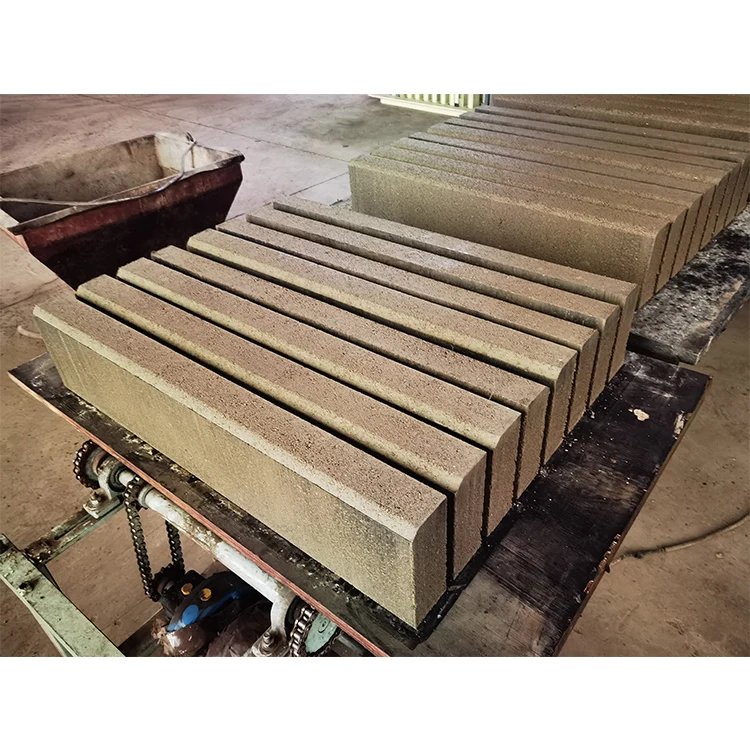
The QTJ4-40 interlocking brick machine runs two standard mould formats: a four-cavity mould producing 400×200×200 mm blocks and a three-cavity mould producing 400×240×200 mm blocks. At a 40-second cycle, the four-cavity setup yields more pieces per hour than the three-cavity arrangement. Buyers targeting interlocking brick markets should calculate their shift output using the cavity count that matches their intended product, not a blended average across formats.
Pallet Sizing and Its Effect on Downstream Handling
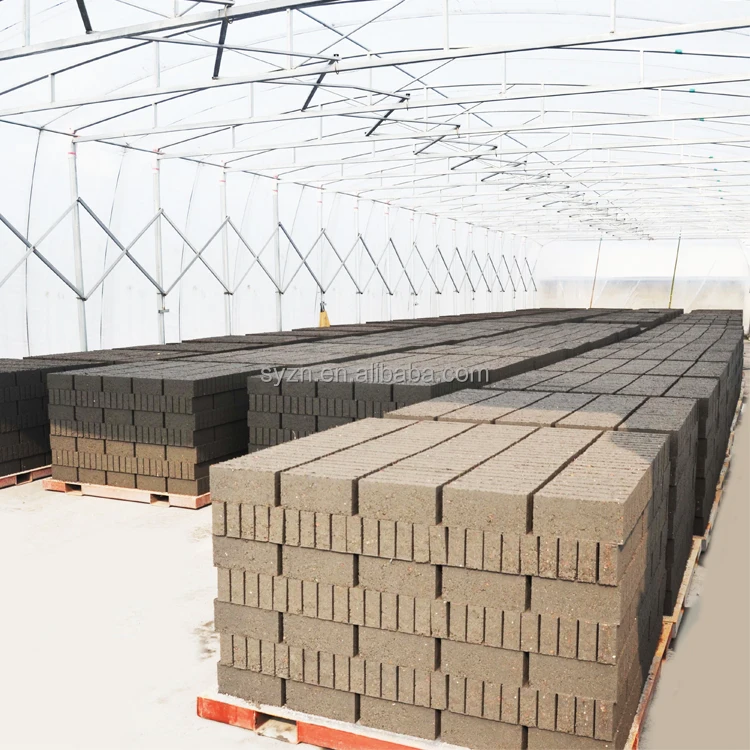
Pallet dimensions of 850 × 450 × 40 mm govern how many blocks can be cured per rack tier and which forklift class is needed to move loaded racks through the yard. A pallet chosen without checking the buyer’s existing curing area dimensions and forklift capacity creates bottlenecks after the press. The QTJ4-40’s pallet size should be cross-referenced against the curing yard layout and material handling equipment already on site before the order is finalized. [NEED_CITE: pallet-to-curing-yard compatibility in block production]
Vibration Frequency, Motor Origin and Block Density
A vibration frequency of 2800 r/min, driven by a Siemens motor, determines how tightly the aggregate particles consolidate during each cycle. Higher compaction directly influences block density and compressive strength — particularly important when the buyer’s local aggregate differs from the sand and gravel used in factory testing. The motor brand matters here because consistent rotational speed under load keeps vibration amplitude stable across long production runs.
Why Mould Change Time Can Cancel Out Format Flexibility
A machine that offers multiple mould formats is only flexible if the operator can swap moulds within a reasonable portion of a shift. When changeover procedures require extensive disassembly or specialized tools, a plant that planned to produce two block sizes per day ends up running only one. Buyers evaluating the QTJ4-40 should confirm the mould change procedure, required tools, and estimated changeover duration before assuming dual-format production is practical. [NEED_CITE: mould change downtime impact on small block plants]
What We Do Differently When Configuring Your Line
Block machinery is the single focus of our work in Linyi, so the QTJ4-40 is specified as one matched system — machine, mould, pallet and manual handling — rather than assembled from separate suppliers. Configuration is set against the buyer’s actual mix design and local aggregate, not a catalogue default. Mould design covers the exact interlocking profile and block dimensions the buyer’s market demands, including custom drawings where standard formats do not match. The automation level is selectable, meaning a buyer can begin with semi-automatic vibration moulding and manual pallet handling, then upgrade later as production volume grows.
Documentation & Verification
- Line layout and capacity calculation stating output per block format assumed
- Machine specification sheet with voltage and control language confirmed pre-production
- Mould drawing and format list matching buyer’s target interlocking profile
- Hydraulic and electrical schematic for on-site maintenance reference
- Factory test record run on buyer’s sample aggregate before dispatch
- Operation and maintenance manual with wear parts and mould replacement list
Installation, Commissioning & Support
- Workshop floor preparation for the 1350 × 1460 mm footprint and 9.5 kW power draw
- Dedicated 380V circuit with breaker rating matched to the Siemens motor start-up current
- On-site assembly guidance covering vibration platform leveling and mould alignment
- First-run parameter setting including vibration frequency check at 2800 r/min under load
- Operator training on manual pallet handling sequence and 40-second cycle rhythm
- Wear parts list covering vibration springs, mould liners and pallet surfaces
Before You Request a Quote
To size the QTJ4-40 interlocking brick machine accurately to your project, provide the specific block format and interlocking profile your market requires, the daily output target based on your shift length, and the local aggregate type you plan to use. Include your site voltage and frequency, along with the curing yard dimensions and forklift class already available, so pallet handling and stacking can be matched to your existing infrastructure.
Frequently Asked Questions
Q: How is daily output calculated from the 40 s cycle time for each mould format?
A: Daily output depends on the mould cavity count for the chosen block format. With the 400×200×200 mm mould producing four pieces per cycle and the 400×240×200 mm mould producing three, multiply pieces per cycle by cycles completed in your shift length, then subtract time allocated for pallet handling, material feeding breaks and any mould changeovers planned during the day.
Q: Can the voltage be configured to match my country’s electrical standard before shipment?
A: Yes. The QTJ4-40 interlocking brick machine ships from the factory at 380V by default, but voltage can be configured to the buyer’s local supply standard. Frequency must also be confirmed before production begins, because motor winding and vibration characteristics depend on both parameters. This confirmation should happen at the quotation stage, not after the machine is built.
Q: What block strength can the 2800 r/min vibration frequency achieve with my local aggregate?
A: Block compressive strength depends on the combination of vibration frequency, mix design and aggregate grading. The 2800 r/min vibration consolidates particles effectively, but final strength must be verified against the buyer’s specific cement-to-aggregate ratio and local material. We recommend sending a sample of your local aggregate for a pre-shipment trial run to confirm density and strength results. [NEED_CITE: relationship between vibration frequency and block compressive strength]
Q: What pallet size and material should I choose to match my curing area and forklift?
A: The QTJ4-40 uses 850 × 450 × 40 mm pallets, but the material — typically bamboo, PVC or steel — should be selected based on your climate, curing method and forklift tine spacing. Measure your curing rack tier height and forklift capacity before ordering, because a pallet that does not fit existing handling equipment forces unplanned capital spending on new yard infrastructure after the machine arrives.