Description
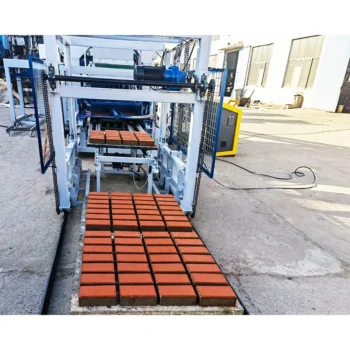
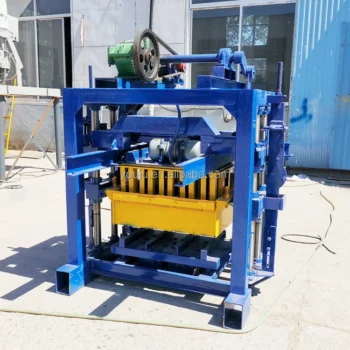
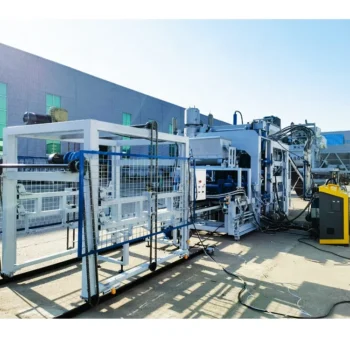
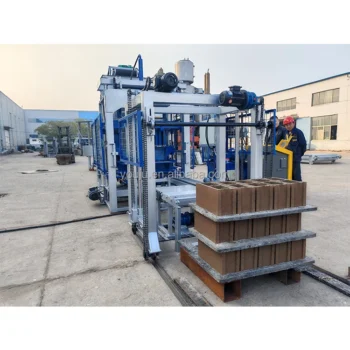
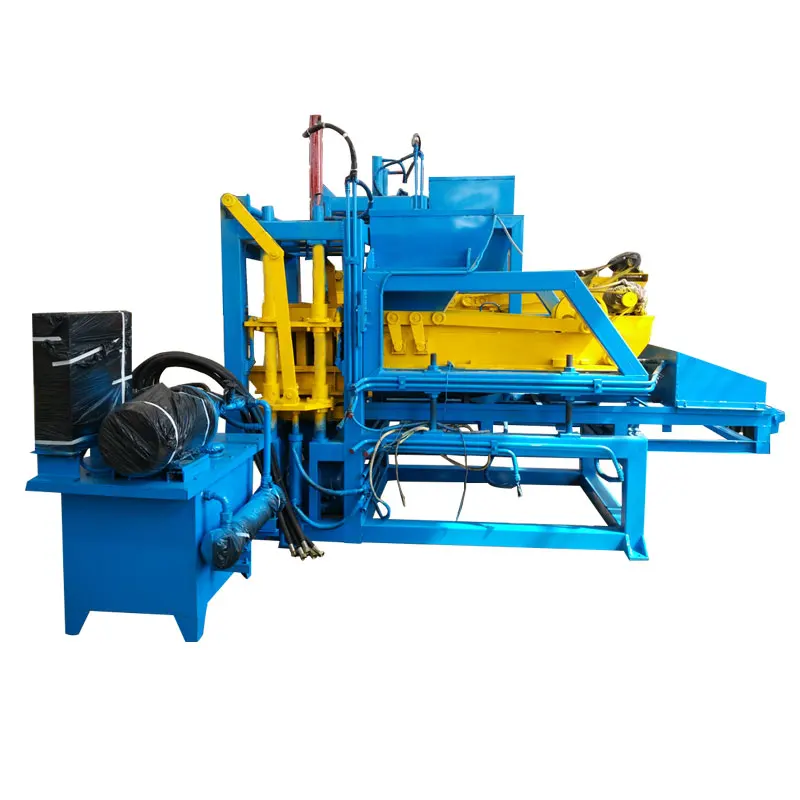
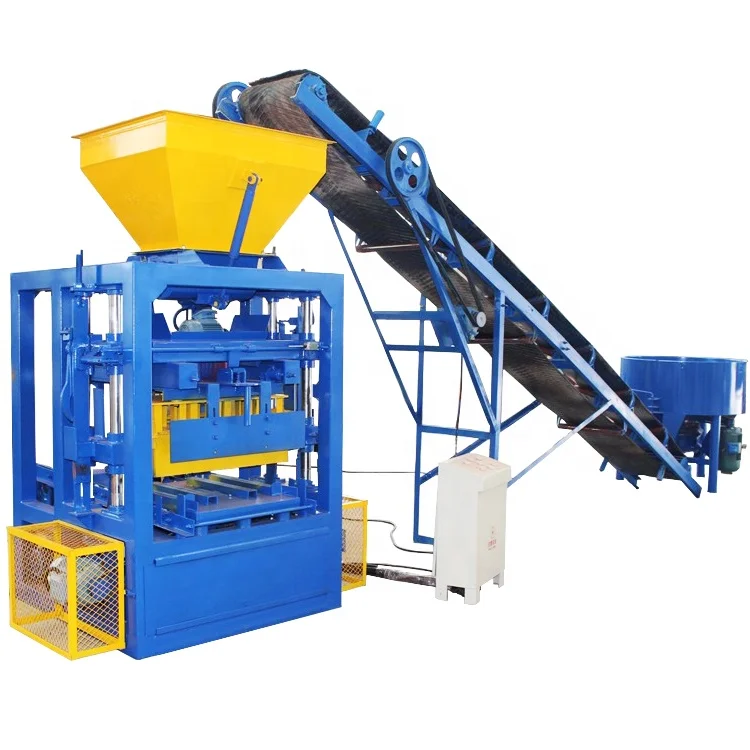
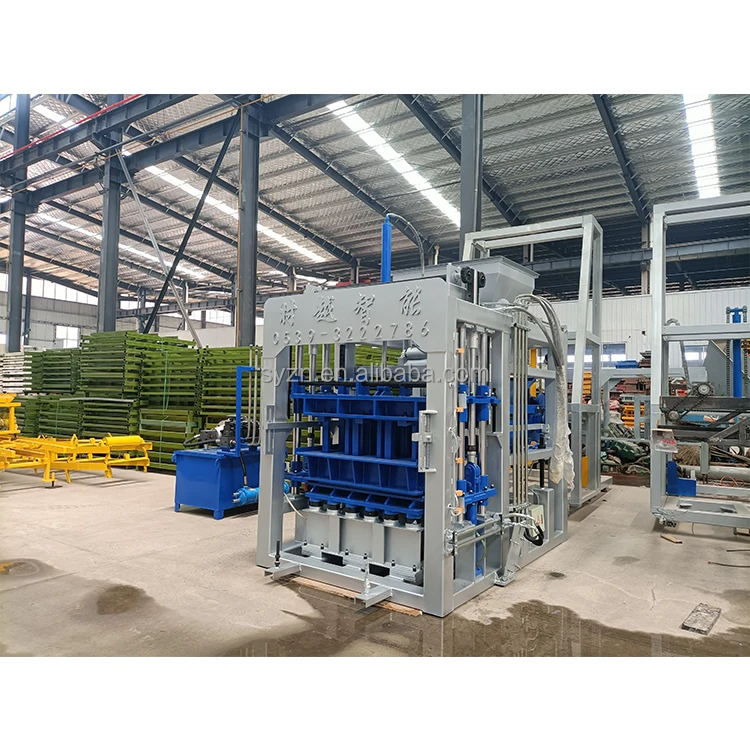
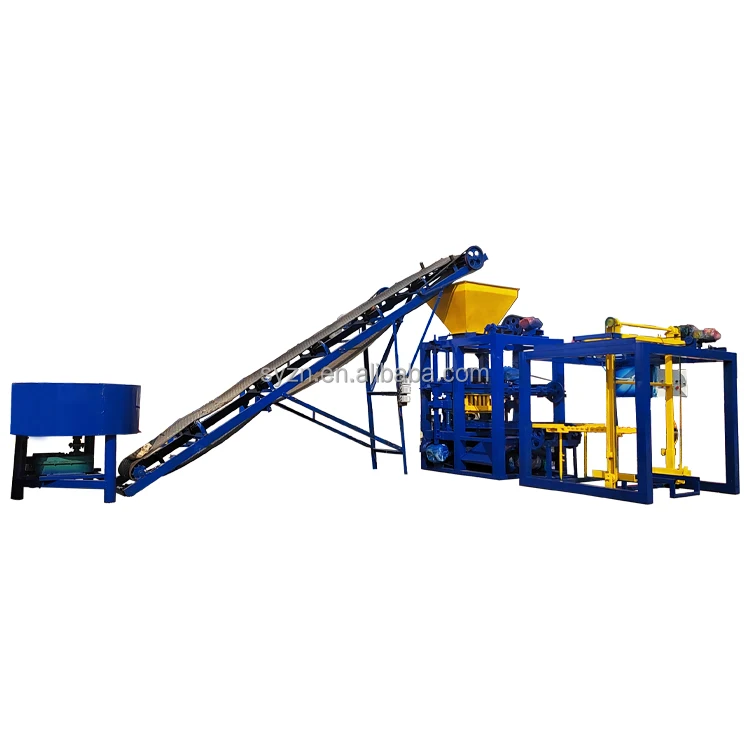
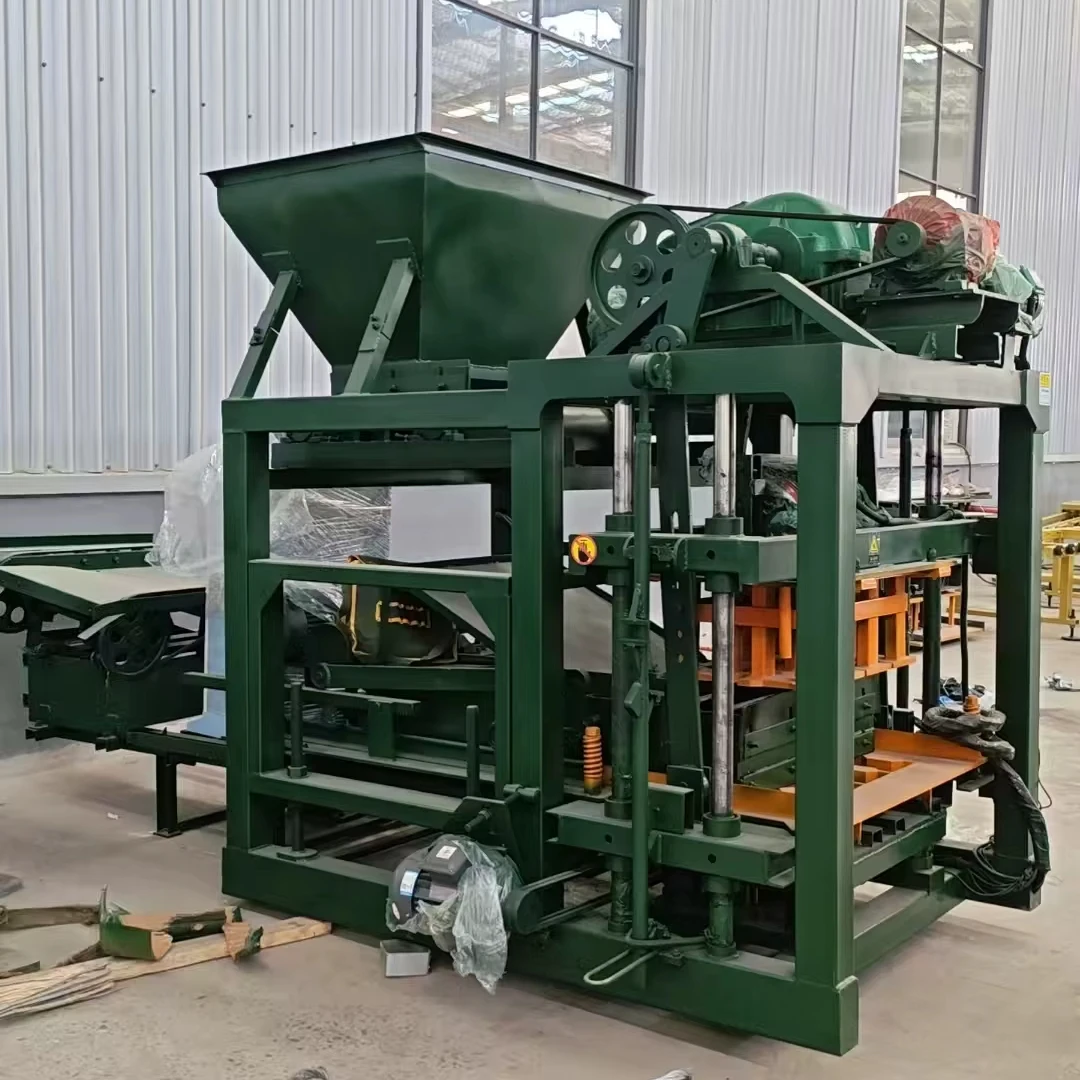
Mould-Matched Configuration — The QTJ4-25 block machine specifications are defined against your target block format and local aggregate, not a catalogue default that overpromises on day-one output.
Technical Specifications
| Parameter | Value |
|---|---|
| Model | QTJ4-25 |
| Product Type | Semi-Automatic Concrete Block Making Machine |
| Rated Power | 17.9 kW |
| Overall Dimensions (L×W×H) | 6400 × 1500 × 2700 mm |
| Net Weight | 2500 kg |
| Molding Cycle | 25 s (basis not stated in source) |
| Pallet Size | 850 × 550 × 20 mm |
| Vibration Frequency | 2800 r/min |
| Exciting Force | 60 kN |
| Hydraulic Pressure | To be confirmed based on mix design |
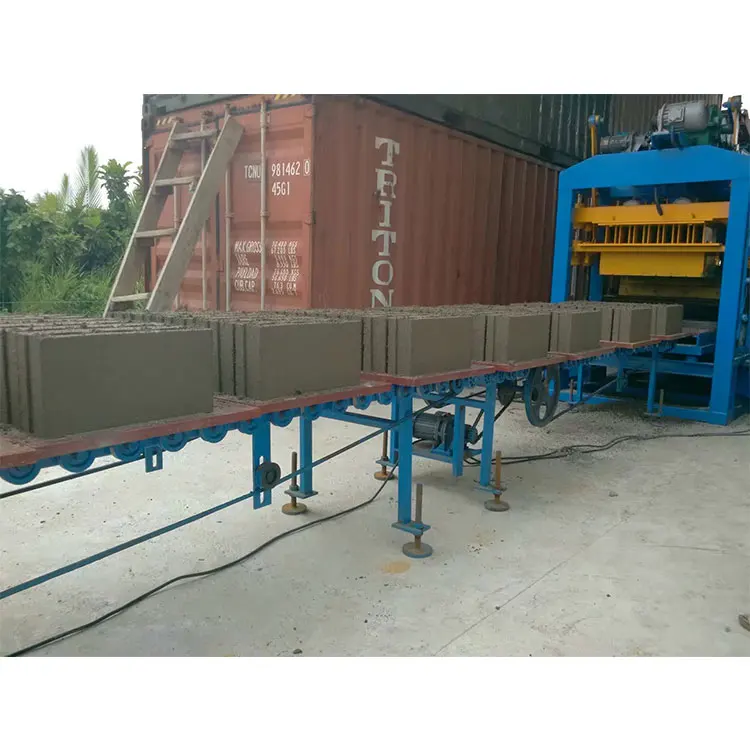
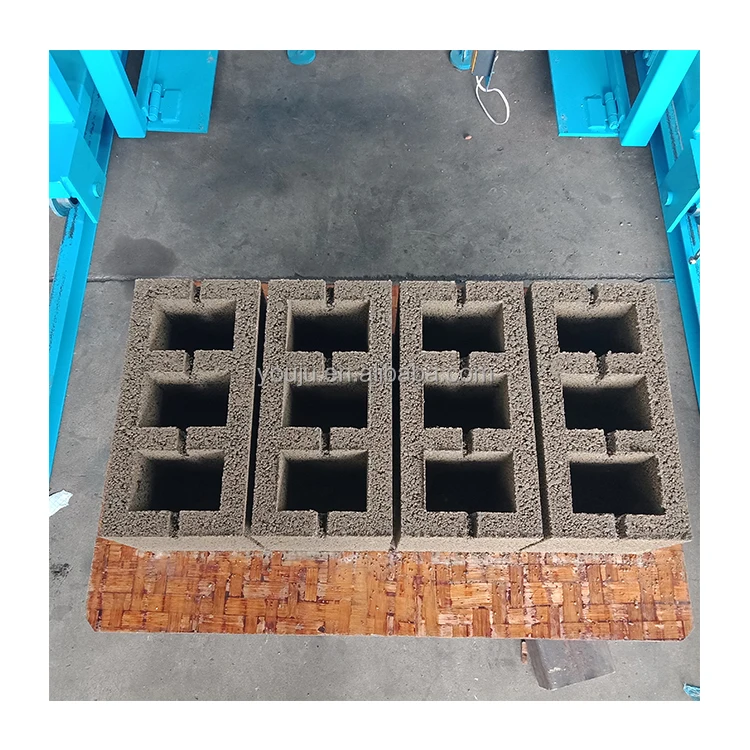
| Output Capacity | 960 pcs/h, 7680 pcs/day based on 400×200×200mm hollow block, 4 pcs/mould |
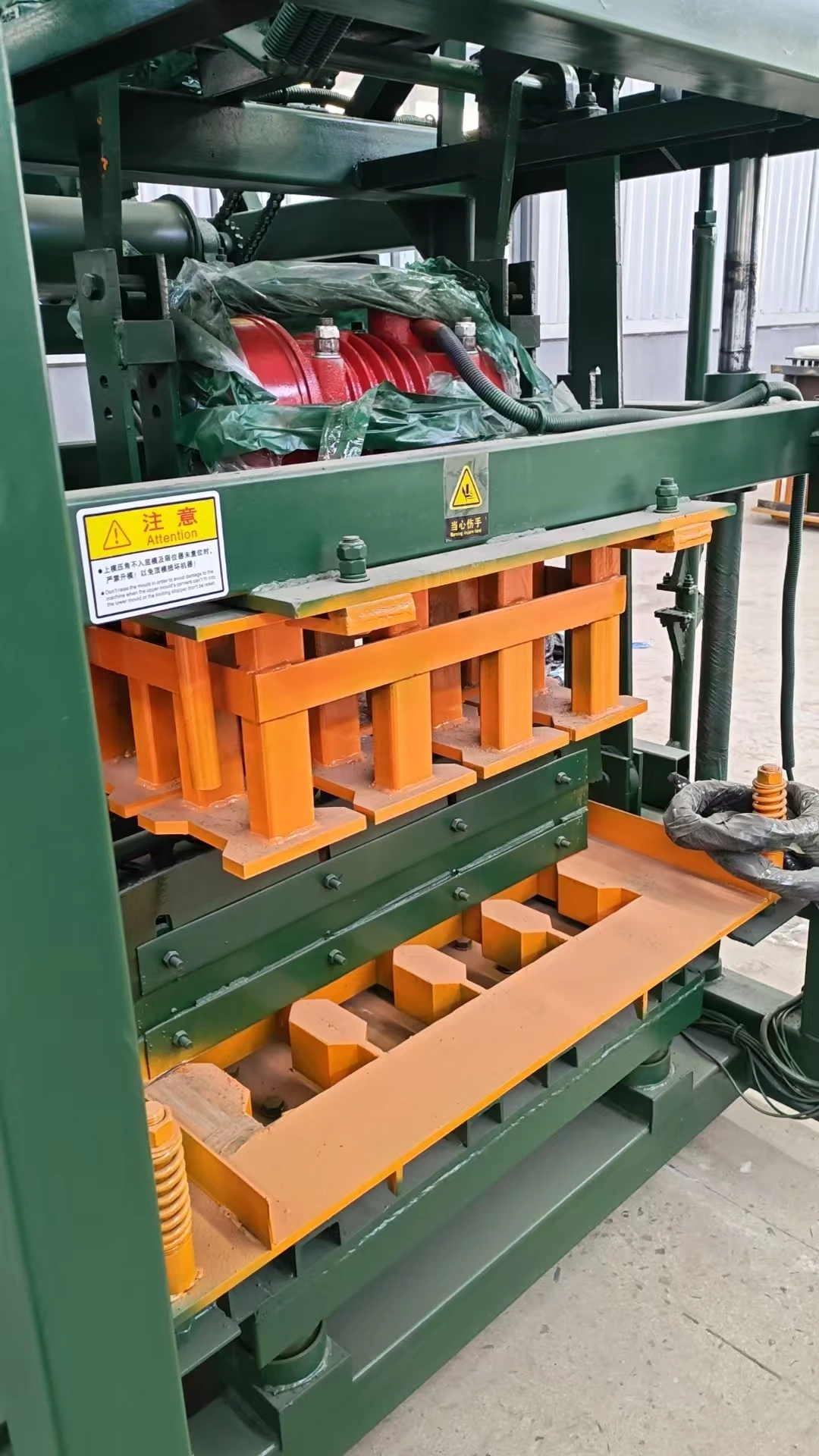
| Mould Format | Hollow, solid, paver, curbstone (multiple sizes including 8", 6", 5", 4") |
| Automation Level | Semi-automatic |
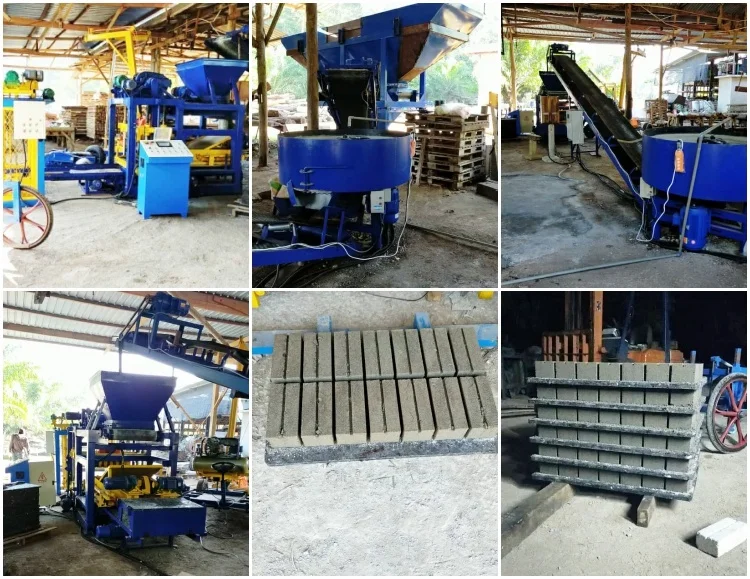
| Stacking Method | Manual — bricks placed on pallet, moved by trolley to drying area |
| Control System | Motor-driven (PLC / MCC not specified in source) |
| Voltage & Frequency | Configurable per site requirements |
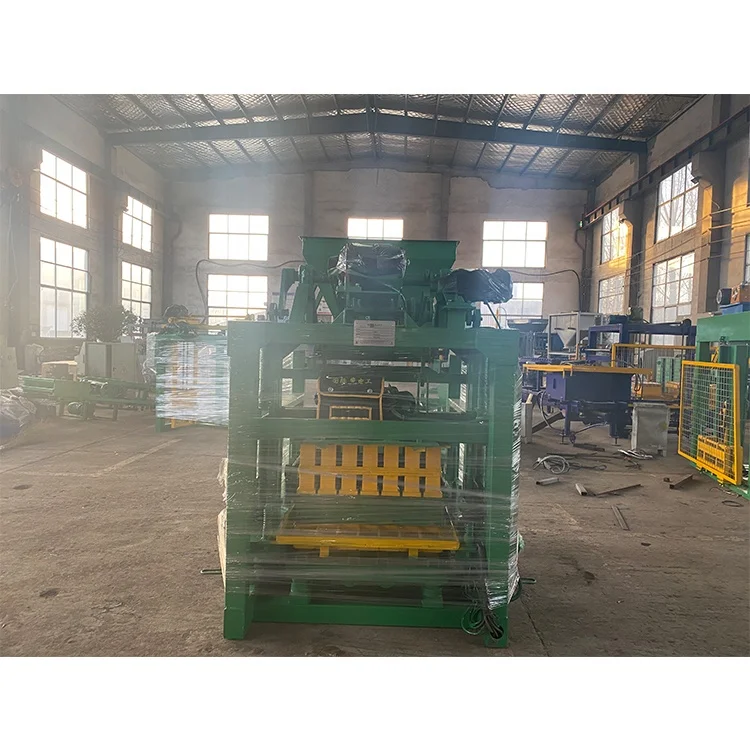
| Assembly State | Skid-mounted, requires on-site setup |
| Configuration Included | Host machine 1 set, block mould 1 set, JQ350 mixer |
Application Suitability
| Application | Material or Output |
|---|---|
| Hollow block production for residential wall construction | Crushed stone, river sand, cement, water |
| Solid block manufacturing for load-bearing structures | Coarse aggregate blend with cement binder |
| Paving block production for driveways and walkways | Fine aggregate with higher cement ratio for surface finish |
| Kerbstone forming for road and pavement edging | Dense mix design with larger aggregate gradation |
| Small-to-medium block plant startups | Variable format output depending on mould installed |
What the Quoted Capacity Figure Actually Assumes
Capacity numbers without a stated block format are the single biggest source of disappointment on site.
I have watched buyers sign for a machine based on a cycles-per-hour figure, only to discover that number assumed a 400×200×200mm hollow block while they needed 6-inch solid blocks — and their real daily output dropped significantly below expectation. The QTJ4-25 block machine specifications list 960 pieces per hour and 7,680 pieces per day, but that figure rests on a specific mould assumption: four 400×200×200mm hollow blocks per cycle at a 25-second molding cycle. Swap the mould for a smaller format and the piece count changes. [NEED_CITE: how block format assumptions affect real-world output in semi-automatic plants] Change the mix to a denser paver design and the cycle time shifts. This is why the capacity conversation must start with the exact block format you sell in your market, not a single headline number from a brochure.
Mould Selection Defines Your Actual Output
The QTJ4-25 accepts moulds for hollow blocks, solid blocks, paving blocks, and kerbstones across multiple inch sizes — 8", 6", 5", and 4". Each format occupies a different pallet area and demands a different vibration profile to achieve uniform density. A buyer producing 8-inch hollow blocks for wall construction will see a lower piece count per cycle than someone running 4-inch solid blocks, but the revenue per block and the market demand differ entirely. The right starting point is listing the formats your local construction market actually buys, then matching mould selection and cycle assumptions to each one.
Pallet Dimensions Must Match Your Existing Infrastructure
The machine runs on 850×550×20 mm pallets, and this dimension dictates more than just the mould footprint. [NEED_CITE: pallet size compatibility with curing area and material handling equipment] Your curing racks, forklift fork spacing, and drying floor layout all need to accommodate this pallet size before the machine arrives. A buyer who discovers a mismatch after delivery faces either reconfiguring the entire curing area or operating below the machine’s designed rhythm — both of which erase any capacity advantage the press itself could deliver.
Vibration Force and Mix Design Together Determine Block Strength
The 60 kN exciting force at 2,800 r/min works through bed-mould vertical vibration combined with upper-mould compression vibration. This dual action compacts the concrete mix into the mould cavity, and the resulting block density depends on how well the vibration parameters match the specific aggregate and cement ratio in use. A mix with high clay content from local laterite soil, for example, absorbs vibration differently than clean river sand. When vibration force and mix design are misaligned, blocks emerge with inconsistent strength across a single batch — and no amount of cycle speed compensates for product that fails a compression test.
The Cost of Skipping Format-Specific Validation
Buyers who order without confirming cycle time per format, pallet size against their curing area, and vibration settings against their local aggregate frequently discover that the machine’s theoretical flexibility becomes a daily frustration. Mould changes that should take minutes stretch across a significant portion of a shift because fasteners and alignment were never verified for the specific format. Pallets that do not fit existing racks force manual restacking. Blocks that crack during curing point back to a vibration frequency that was never tuned to the actual mix. [NEED_CITE: common commissioning issues from unconfirmed machine-to-site parameters] These are not machine defects — they are specification gaps that surface only after the equipment is bolted to the floor.
Why Buyers Source This Machine Through Shiyue
Shiyue focuses exclusively on block machinery, so the QTJ4-25 arrives with its mould, pallet, and handling specified as one matched system rather than assembled from unrelated suppliers. Every configuration is set against the buyer’s actual mix design and target block format, not a catalogue default. Mould design covers the formats the buyer’s market sells, including custom drawings when standard options do not fit. Automation level is selectable, meaning a plant can begin semi-automatic and add handling automation later. Installation support includes on-site commissioning and operator training so the team running the machine on day one understands the parameter settings tied to their specific product.
Documentation & Verification
- Line layout and capacity calculation stating the block format assumed for each output figure
- Mould drawing and format list confirming inch sizes and pallet area per cavity
- Pallet specification sheet with dimensions, material, and load rating for curing area planning
- Hydraulic and electrical schematic matching the confirmed voltage and control configuration
- Factory test record showing actual cycle times for each block format ordered before dispatch
Installation, Commissioning & Support
- Foundation pad sized for 6400×1500 mm footprint with anchor bolt template provided before arrival
- Dedicated power circuit for 17.9 kW rated load with voltage and frequency confirmed pre-production
- Skid-mounted assembly requiring on-site setup, alignment, and vibration bed leveling
- Commissioning run on buyer’s confirmed mix design with vibration frequency adjusted per format
- Operator training covering mould change procedure, pallet handling rhythm, and daily inspection points
- Wear parts and mould maintenance list provided with recommended replacement intervals
What to Prepare Before Requesting a Quote
Share the exact block formats you plan to produce, including dimensions and the daily volume target for each. Provide a sample or description of your local aggregate — sand type, stone gradation, and any clay content — so the vibration and hydraulic parameters can be set before production. Confirm your site voltage, frequency, and preferred control language. [NEED_CITE: export machinery electrical standards by destination market] If you already have curing racks or a forklift, share the pallet dimensions they accommodate so the 850×550 mm pallet specification can be cross-checked against your existing infrastructure.
Frequently Asked Questions
Q: What is the realistic daily output of the QTJ4-25 for each block format I plan to produce?
A: The quoted 7,680 pieces per day assumes 400×200×200mm hollow blocks at four per mould with a 25-second cycle. Output changes with every format swap. We provide a capacity calculation that states the piece count per hour for each specific mould you order, based on confirmed cycle times from factory testing on your mix design.
Q: How does vibration force interact with my local aggregate to affect block strength?
A: The 60 kN exciting force at 2,800 r/min compacts the mix, but density depends on how that vibration profile matches your aggregate gradation and cement ratio. A high-clay laterite soil behaves differently from clean river sand. We run a mix trial before production and adjust vibration parameters to achieve uniform strength across your specific material.
Q: What pallet size does the QTJ4-25 use, and how should I plan my curing area?
A: The machine uses 850×550×20 mm pallets. Your curing racks, forklift fork spacing, and drying floor layout must accommodate this size. Confirm these dimensions against your existing infrastructure before ordering so pallet handling flows smoothly from the press through curing and into dispatch without restacking.
Q: How long does a mould change take, and does it affect daily output significantly?
A: Mould change time varies by format and must be confirmed during commissioning. On a semi-automatic machine, the procedure involves unbolting the current mould, aligning the new one, and verifying vibration contact across the cavity. We include the change procedure in operator training and provide a format list so you can plan production runs to minimize mid-shift swaps.
Q: What voltage, frequency, and control language options are available?
A: These are configured per site requirements and must be confirmed before production begins. Voltage, frequency, and control display language vary by destination market and existing plant infrastructure. We verify all three against your site conditions during the order process to avoid commissioning delays after the machine arrives.