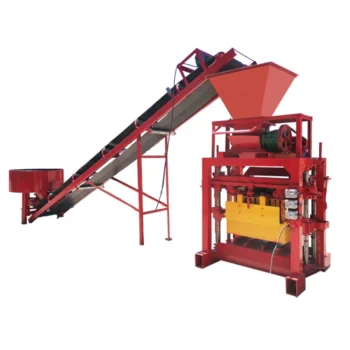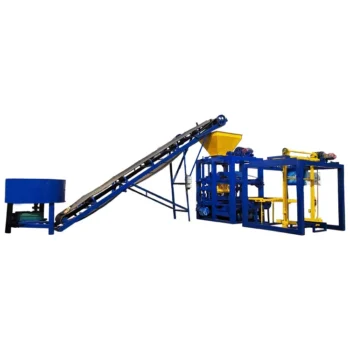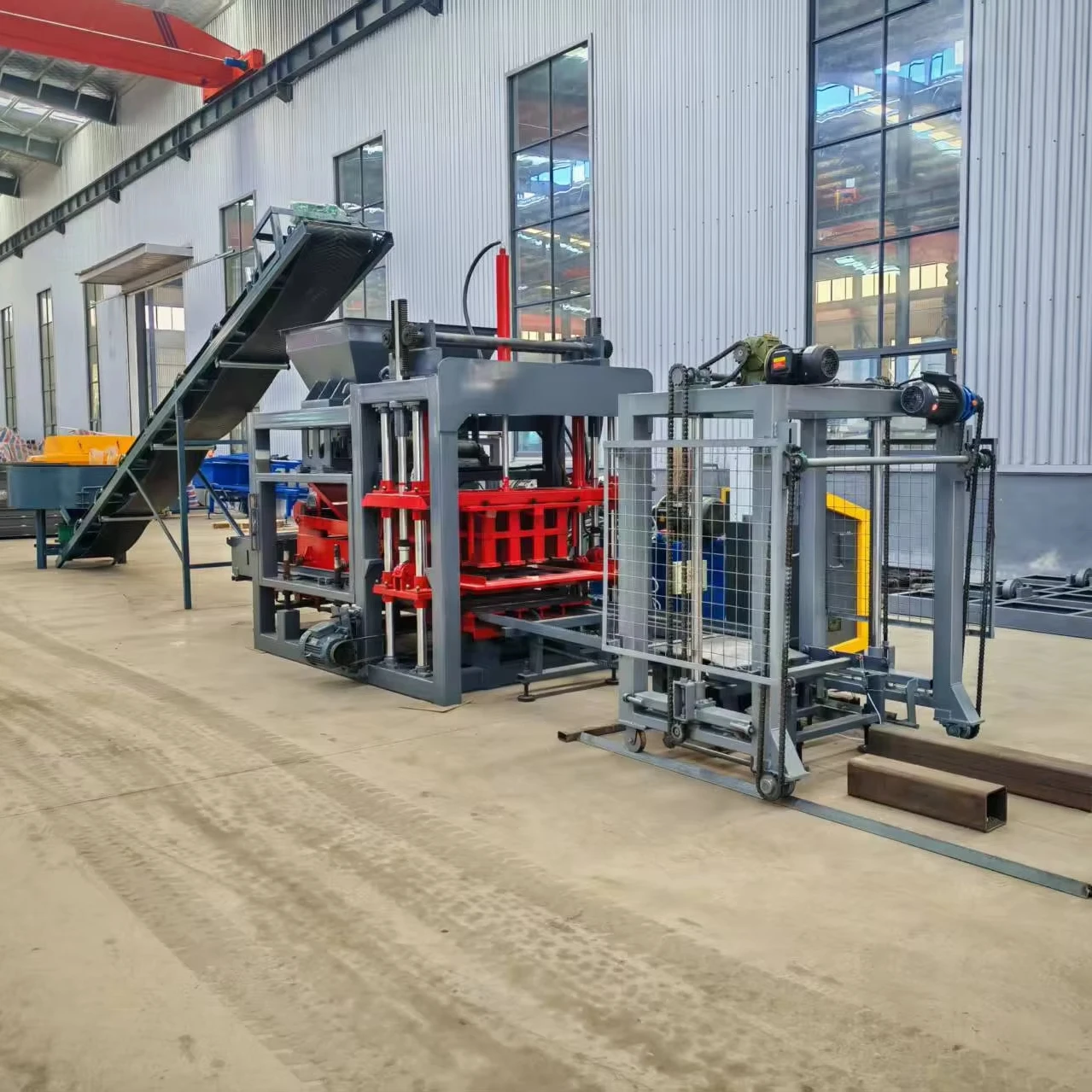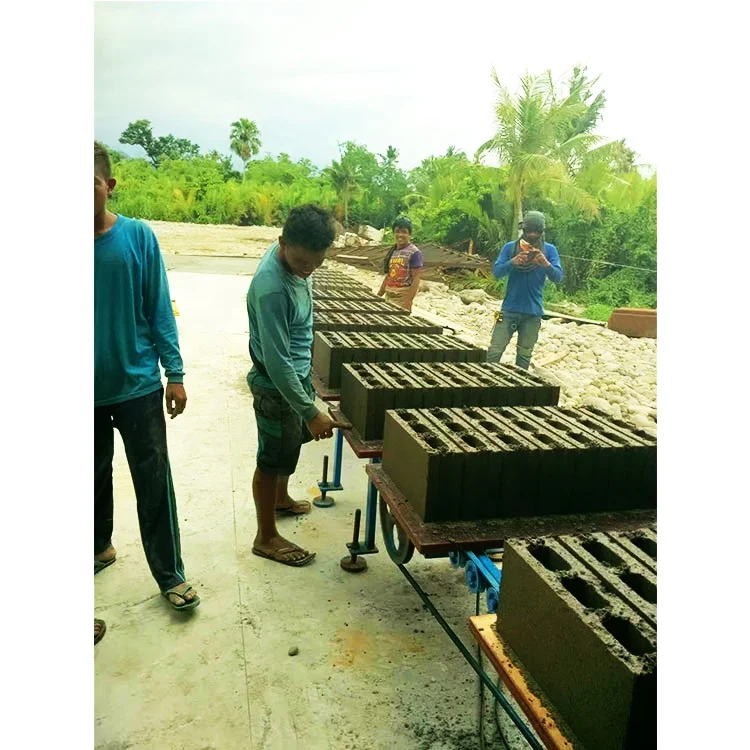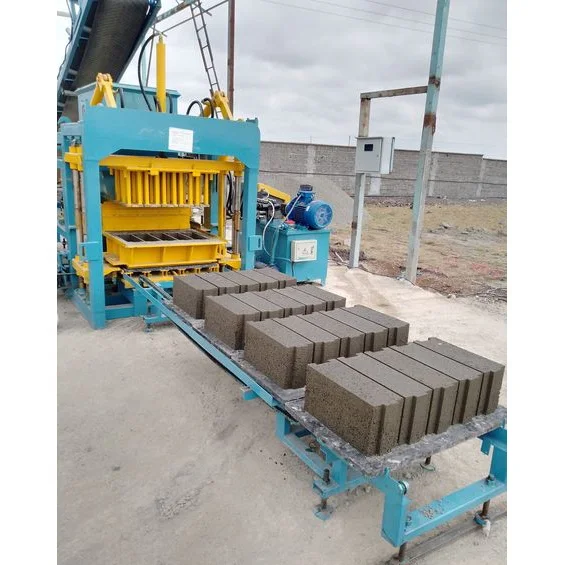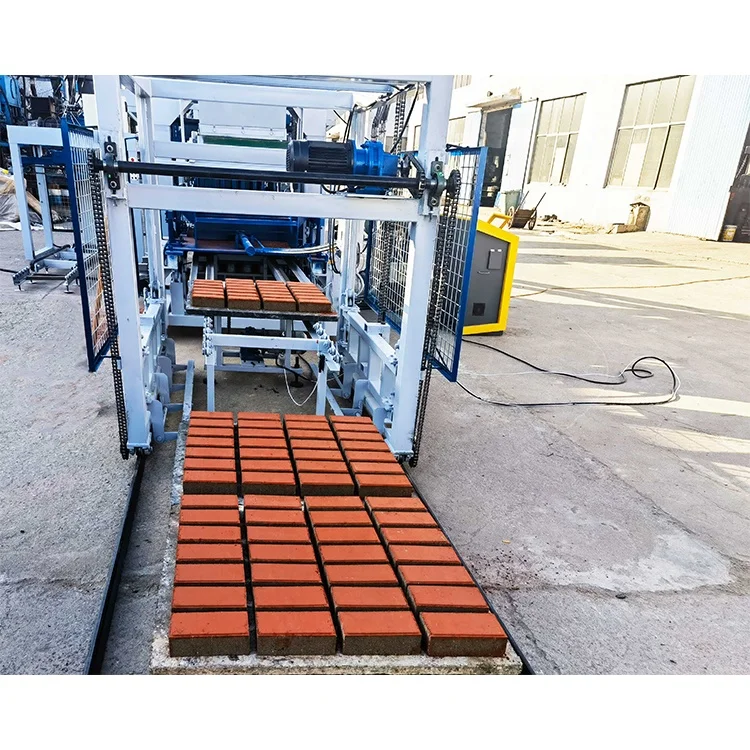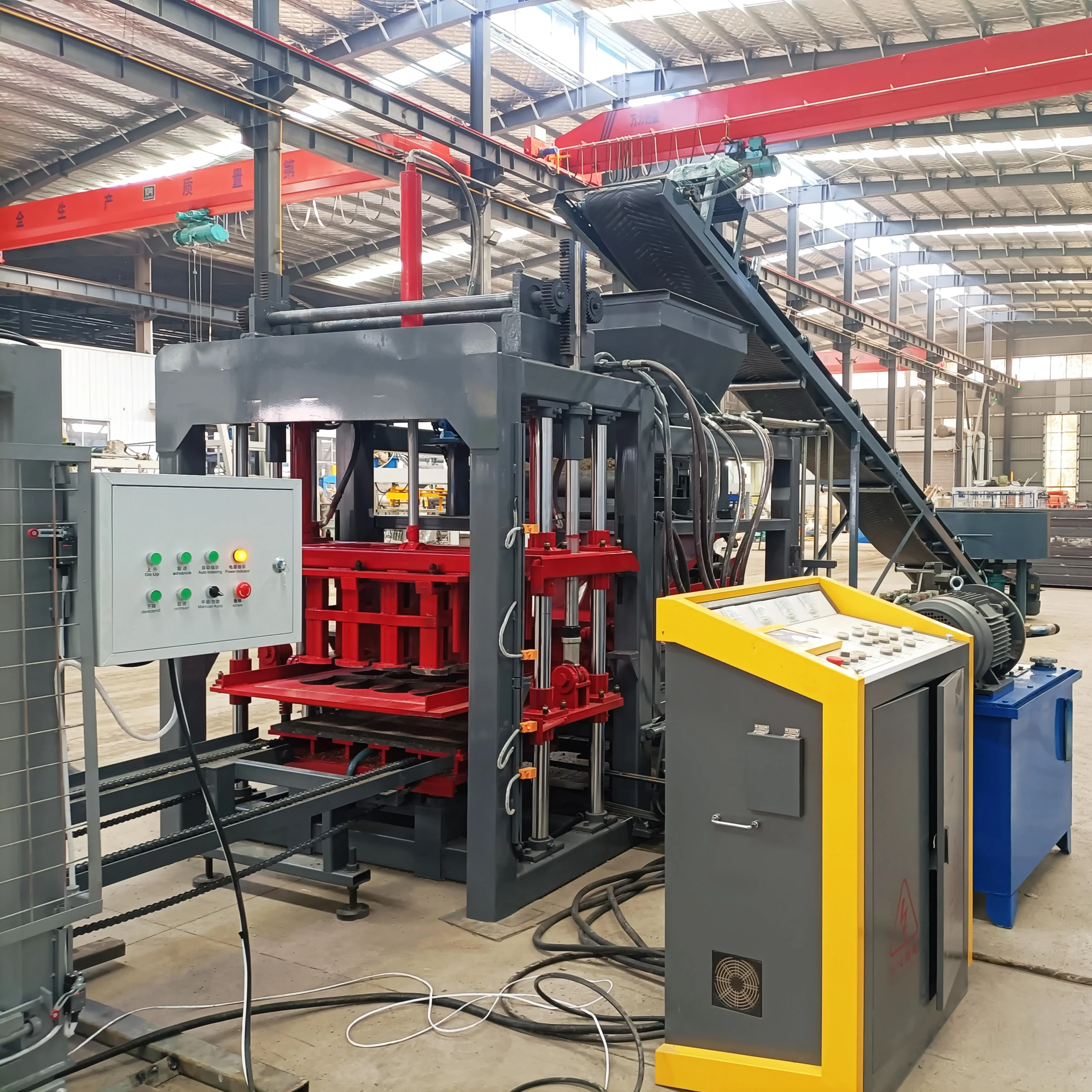
Description
Matched System Design — Every QT4-15A ship-out pairs the press, moulds, pallet size and handling equipment against your actual block format and local aggregate rather than a catalogue default.
Technical Specifications
| Parameter | Value |
|---|---|
| Model | QT4-15A |
| Product Type | Fully Automatic Concrete Brick Making Machine |
| Overall Dimensions (L×W×H) | 4100×1600×2600 mm |
| Rated Pressure | 16–21 MPa |
| Main Vibration Form | Platform Vibration |
| Vibration Frequency | 4200 r/min |
| Vibration Force | 55 kN |
| Pallet Size | 880×550 mm |
| Molding Cycle | 25–30 s (basis not stated in source — confirm block format / material / thickness) |
| Overall Power | 18.45 kW |
| Total Mass | 4 T |
| Demolding Method | Hydraulic |
| Applied Products | Hollow blocks, solid blocks, pavers, interlocking blocks, curbstone, colored pavers |
| Raw Materials | Crushed stone, sand, cement, dust, fly ash, gravel, slag |
| Automation Level | Fully automatic |
| Warranty | 1 year (whole machine, excluding spare parts) |
| Loading | 1×40HQ container (basic equipment) |
Application Suitability
| Application | Material or Output |
|---|---|
| Hollow block production | Crushed stone, sand, cement |
| Solid block production | Gravel, sand, cement |
| Paving block production | Crushed stone, fly ash, cement |
| Interlocking brick production | Sand, dust, cement |
| Curbstone production | Coarse aggregate, cement |
| Colored paver production | Fine aggregate, pigment, cement |
What the QT4-15A Brick Making Machine Specifications Leave Out About Daily Output
A cycle time figure without the block format attached is marketing, not engineering.
I have watched a site foreman stare at a stack of crumbling blocks while a machine stamped out cycles at the rated pace. The problem was not the press speed. The vibration force and hydraulic pressure had been configured for a standard gravel mix, while the site was using desert fine sand. The blocks left the mould before the cement had any chance to bond, and half the shift went to scrap. This is the gap between catalogue output and what actually ends up on the curing rack [NEED_CITE: common causes of low block strength in desert aggregate conditions].
Matching Vibration Force to Your Aggregate Profile
The QT4-15A brick making machine specifications list 55 kN of platform vibration at 4200 r/min. That number only matters if it is matched to the particle size distribution of the aggregate you actually buy. Fine sand needs higher frequency and lower amplitude to compact without pushing water to the surface. Coarse crushed stone needs the opposite. Before a QT4-15A configuration is locked in, a sample of the buyer’s aggregate is tested against the vibration profile so the resulting block density holds up to local building codes.
Pallet Size Is a Plant Decision, Not a Machine Decision
The standard pallet size on this press is 880×550 mm. That dimension dictates the curing rack spacing, the forklift tine width and the stacking pattern across your yard. If a buyer’s existing racks were built for a different pallet, switching the press pallet after delivery means rebuilding every rack or running two incompatible pallet streams through one plant. The pallet format must be confirmed against the curing layout before the QT4-15A enters production, not after.
Pressure, Vibration and the Density Equation
The 16–21 MPa hydraulic pressure range works with the 55 kN vibration force to compress the mix into the mould cavity. Hydraulic pressure alone would leave air pockets; vibration alone would segregate the fines from the coarse aggregate. Together they produce a uniform density throughout the block. When the ratio is wrong for the mix design, blocks crack during demoulding or crumble during stacking. The pressure range on the QT4-15A is adjustable, which is why the machine ships with a test run on the buyer’s specific material [NEED_CITE: relationship between hydraulic pressure and vibration in concrete block compaction].
The Cost of Skipping the Material Test
Buyers who select a block machine from a brochure without sending an aggregate sample typically discover the mismatch during commissioning. The machine runs, the moulds fill, but the blocks fail a simple drop test. Fixing this after arrival means re-engineering the vibration settings, sometimes replacing the eccentric block or adjusting the hydraulic circuit — work that should have been done at the factory. Every week of recalibration on site is a week of lost production that no quotation footnote warns about [NEED_CITE: typical commissioning delays caused by unverified aggregate compatibility].
Why This Configuration Approach Matters
Block machinery as a single focus means the QT4-15A, its moulds, pallets and handling equipment are specified as one matched system rather than assembled from separate suppliers. Each configuration is set against the buyer’s actual mix design, local aggregate and target block format instead of a catalogue default. Mould design covers the formats the buyer’s market sells, including custom drawings when the standard range does not match. Automation level is selectable so a plant can start semi-automatic and add stackers later. Installation includes operator training so the crew understands mould change procedures and daily maintenance from the first shift.
Documentation & Verification
- Line layout stating the exact block format assumed for each capacity figure on the QT4-15A
- Mould drawing and format list provided before order confirmation, including custom designs
- Pallet specification sheet confirming 880×550 mm size, material and rack compatibility
- Voltage, frequency and control language confirmation in writing before production begins
- Factory test record on the buyer’s submitted aggregate sample before dispatch
Installation, Commissioning & Support
- 300 m² factory area required for QT4-15A layout including curing and pallet circulation
- 18.45 kW total power draw must be confirmed against local three-phase supply capacity
- Machine ships in 1×40HQ container; on-site reassembly of hydraulic and vibration systems required
- First-run commissioning includes vibration frequency tuning to the buyer’s verified mix design
- Operator training covers 16–21 MPa pressure adjustment and mould change procedure
- Wear parts list with lead times provided for hydraulic seals and vibration eccentric blocks
What We Need From You to Build a Quotation
A credible quotation for the QT4-15A starts with the block format your market actually buys and the daily volume you need to fill. We also need a sample of your local aggregate, your existing pallet and curing rack dimensions, and the voltage and frequency at your site. Without these, any output figure we quote is a guess.
Frequently Asked Questions
Q: How is daily output calculated for my specific block format on the QT4-15A?
A: Output is calculated from the molding cycle time for the exact block format, pallet capacity per cycle, and working hours per shift. A 400×200×200 mm hollow block fills the 880×550 mm pallet differently than a 200×100×60 mm paver. We provide a capacity table listing each format separately so the daily figure matches what you actually produce.
Q: How do you match vibration force and hydraulic pressure to my local aggregate?
A: We ask for a sample of your aggregate and run it through a lab test against the QT4-15A vibration profile. Fine sand needs different frequency and amplitude settings than coarse gravel. The 16–21 MPa pressure range and 55 kN vibration force are then tuned so the resulting block meets your local strength standard.
Q: What pallet size do you recommend based on my curing area and forklift?
A: The standard QT4-15A pallet is 880×550 mm. Before we confirm the order, we check this against your curing rack spacing and forklift tine width. If your yard is set up for a different pallet dimension, we adjust the press feed system so the entire plant runs on one pallet format from day one.
Q: Can you produce custom moulds to my drawings for the QT4-15A?
A: Yes. If your market requires a block format outside the standard hollow, solid, paver, interlocking and curbstone range, we design the mould to your drawing or to a sketch you provide. Mould drawings are confirmed before the order so the cavity layout, draft angles and ejection method are agreed in advance.