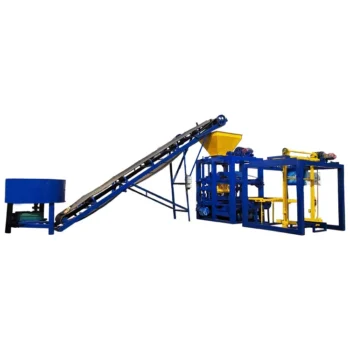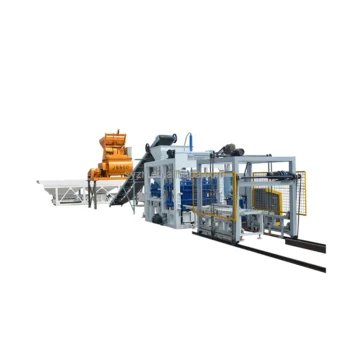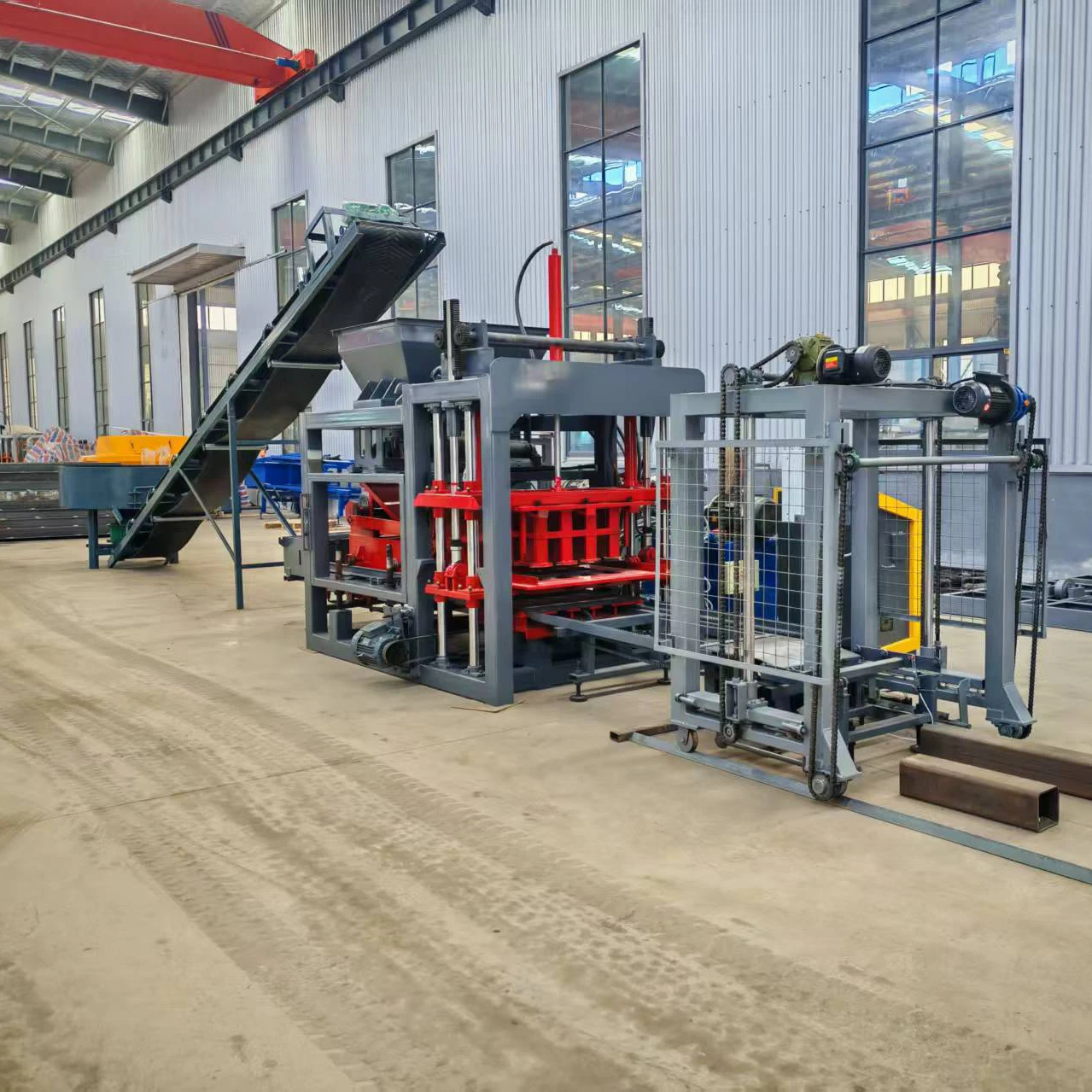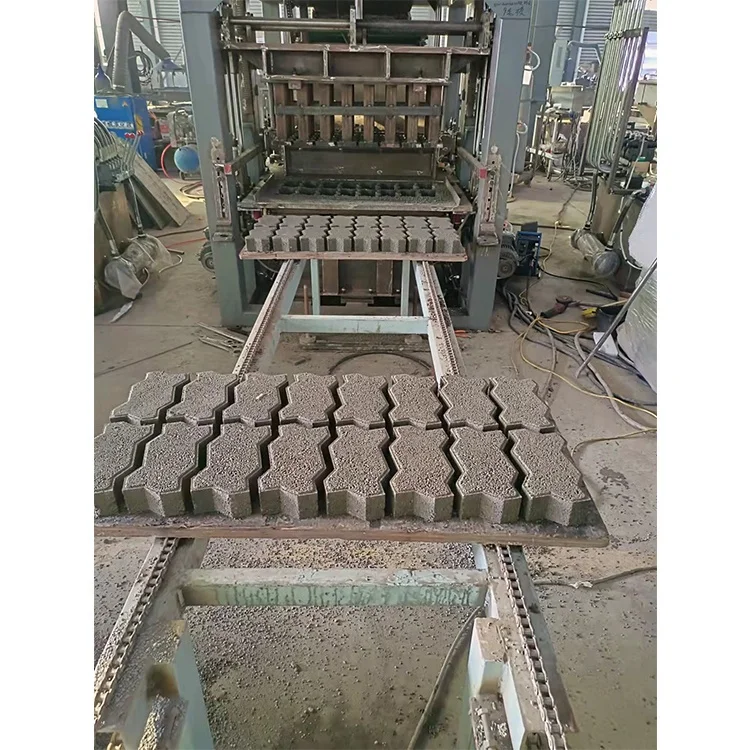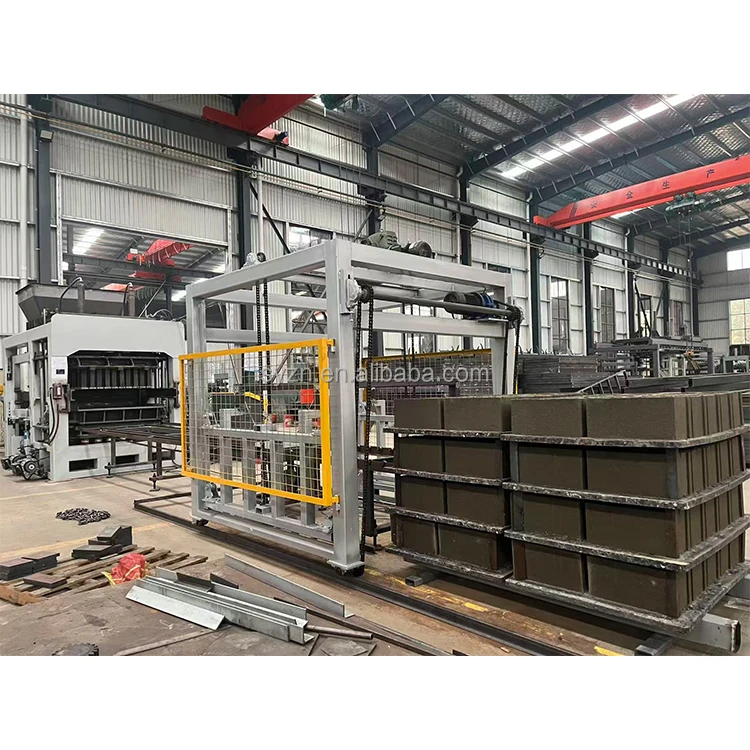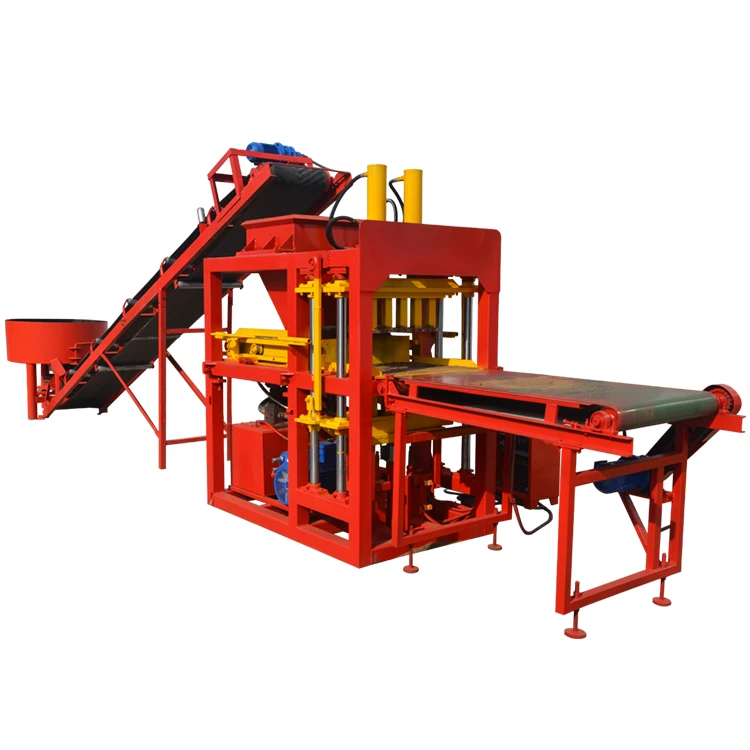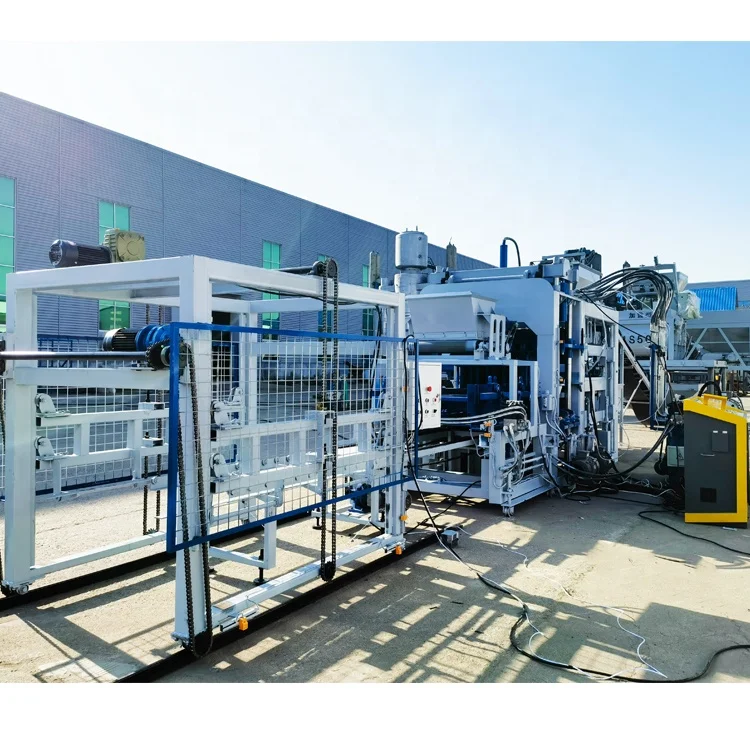
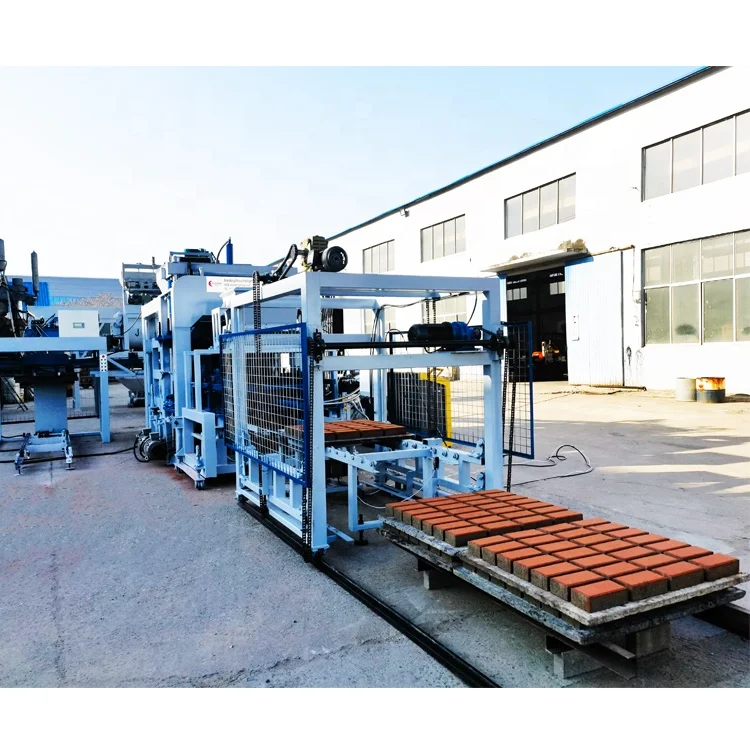
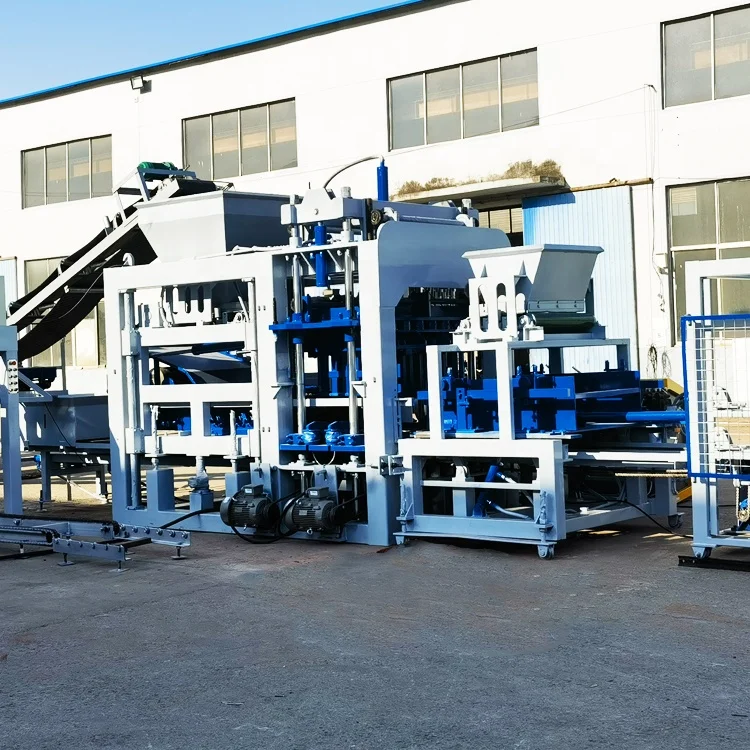
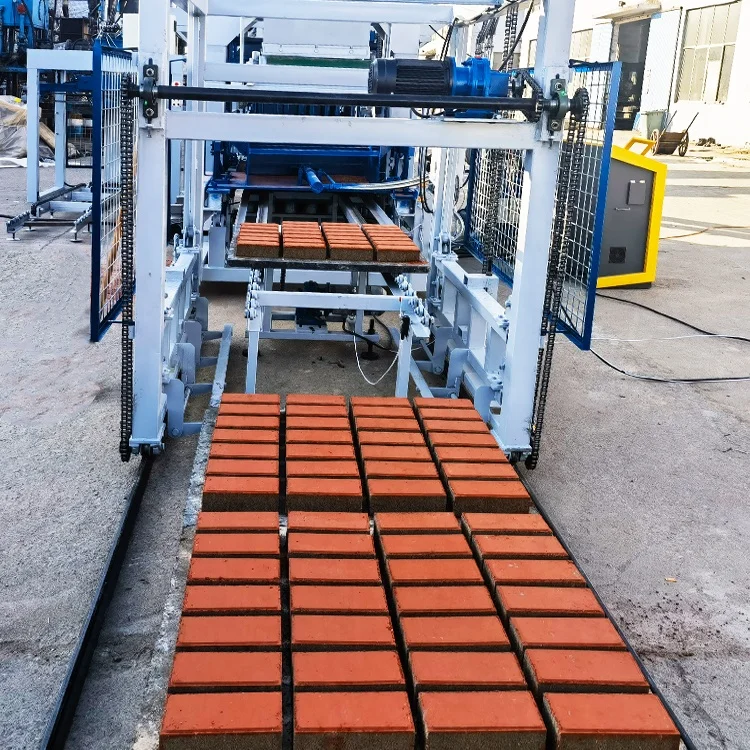
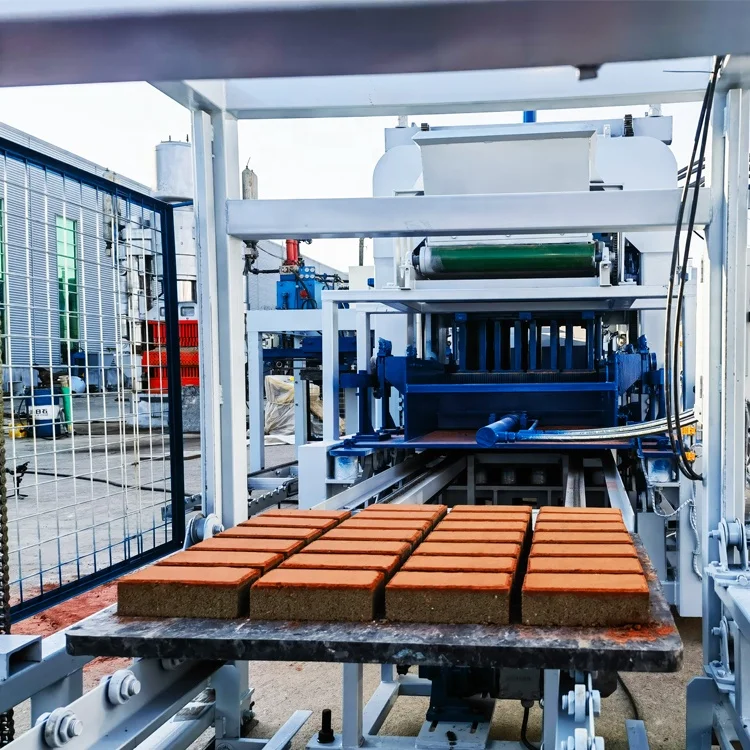

Description
Matched System Sizing — QT8-15 block making machine specifications are verified against your target block format and local aggregate, not pulled from a catalogue default.
Technical Specifications
| Parameter | Value |
|---|---|
| Model | QT8-15 |
| Product Type | Automatic Hydraulic Concrete Block Making Machine |
| Overall Dimensions (L×W×H) | 8300×1860×3000 mm |
| Molding Cycle | 15-20s (basis not stated in source — confirm block format / material / thickness) |
| Vibration Force | 55 kN |
| Rated Power | 37.2 kW (rated or peak not specified in source) |
| Mixer Model | JS750 |
| Pallet Size | 1020×900 mm |
| Net Weight | 8 T |
| Applied Products | Paver, solid block, hollow block, curbstone |
| Raw Materials | Crushed stones, sand, cement, dust, fly ash |
| Control System | PLC control system |
| Hydraulic Station | Included |
| Automation Level | Automatic |
| Included Equipment | Block making machine, hydraulic station, PLC control unit, pallet feeder, block mould, material feeder, block conveyor, block sweeper, spare parts and tools |
Application Suitability
| Application | Material or Output |
|---|---|
| Hollow block production | Crushed stone, sand, cement, fly ash blends for structural and partition walls |
| Paver manufacturing | Fine aggregate and cement mixes for pedestrian and light-traffic paving surfaces |
| Solid block forming | Dense aggregate and cement for load-bearing masonry units |
| Curbstone pressing | Coarse aggregate with high cement content for road and pavement edge restraints |
| On-site contractor production | Locally sourced aggregate for housing and development project block needs |
Why "15-20 Seconds" Means Nothing Without the Block Format
A cycle time only matters when tied to the exact block format, mould cavity count, and material you will actually run.
Every supplier quotes a QT8-15 block making machine specifications sheet showing a 15-20 second molding cycle, but that number changes drastically depending on whether you are pressing a 400×200×200 mm hollow block, a 60 mm thick interlocking paver, or a solid kerbstone. I have watched buyers sign contracts on cycle-time promises, only to find their daily output at commissioning sits well below the pro-forma invoice figure because the quoted cycle assumed a thin paver while the buyer’s market demands 200 mm hollow blocks. The discrepancy is not deception — it is an omission that happens when capacity is discussed without format. [NEED_CITE: typical variance in cycle time across block formats on hydraulic press machines]
Format-Dependent Capacity Verification
Before any QT8-15 block making machine specifications sheet becomes a quotation, the target block format and daily output requirement must drive the configuration. A 15-second cycle on a thin paver mould with eight cavities produces a very different daily volume than a 20-second cycle on a four-cavity hollow block mould. The realistic output is calculated per format, with the mould drawing and cavity count stated alongside the capacity figure so the buyer can verify the math before committing.
Mould Selection and Changeover Reality
The QT8-15 supports paver, solid block, hollow block, and curbstone formats on a single press, but format flexibility only has value if the mould change does not consume most of a shift. Mould drawings are confirmed against the buyer’s market demand before production, and the changeover procedure is documented so operators know the actual downtime involved when switching from hollow block to paver runs. [NEED_CITE: mould change procedure and typical downtime on hydraulic block presses]
Reading the Specs Behind the Press
The 55 kN vibration force works in tandem with the hydraulic station to compact the mix into the mould cavity. Vibration alone moves the aggregate into position, but hydraulic pressure locks it at density — if either is mismatched to the buyer’s mix design, block strength suffers. The JS750 mixer feeds material at a rate that must align with the press cycle; if the mixer delivers slower than the press consumes, the press waits and the quoted cycle time becomes irrelevant. The 1020×900 mm pallet size determines how many blocks sit on each board and must match the curing rack spacing and forklift tine width already in use at the buyer’s plant. The 37.2 kW rated power figure indicates the electrical supply requirement, which must be confirmed against local voltage and frequency before the motor windings are wound.
The Hidden Cost of Skipping Configuration Checks
When pallet size is chosen without regard to the buyer’s existing curing racks, the entire post-press handling flow breaks down — boards do not slide into rack slots, forklifts cannot clear the stack, and blocks cure unevenly. When voltage and PLC display language are not confirmed before production, the machine arrives and sits idle while transformers are sourced or the operator struggles with an interface in an unfamiliar language. These are not minor inconveniences; they delay commissioning by weeks and cost real money in idle labour and missed delivery deadlines. [NEED_CITE: common commissioning delays caused by unconfirmed electrical specifications]
Why Source This Machine Through a Format-First Process
The machine, mould, pallet, and handling equipment are specified as one matched system rather than assembled from separate suppliers. Configuration is set against the buyer’s actual mix design and local aggregate, not a catalogue default. Mould design covers the formats the buyer’s market sells, including custom drawings to buyer specifications. Automation level is selectable, allowing a buyer to start with the included automatic configuration and plan future handling upgrades. Installation support includes operator training so the crew can run the press, change moulds, and perform daily maintenance from the first week. [NEED_CITE: CE machinery directive requirements for industrial block making equipment]
Documentation & Verification
- Line layout and capacity calculation stating the block format assumed for each output figure
- Mould drawing and format list confirming every block type in your product range
- Hydraulic and electrical schematic with wear parts list for first replacement planning
- Voltage, frequency, and PLC display language confirmation signed before production begins
- Factory test record on your specified block format and mix before dispatch
- Operation and maintenance manual with mould change procedure and cycle references
Installation, Commissioning & Support
- Foundation plan sized to the 8300×1860 mm footprint and 8 T operating weight
- Dedicated electrical circuit sized for the 37.2 kW rated power at confirmed voltage and frequency
- Machine dismantled for container loading with reassembly sequence documented for site crew
- First-run parameter setting against buyer’s mix design and target block density
- Operator training covering PLC interface, mould change, and daily hydraulic checks
- Wear parts and mould list supplied for planning the first replacement order
What to Prepare Before Requesting a Quotation
Send the target block format with dimensions, the daily output you need to meet market demand, and a sample or analysis of the local aggregate you will use. Confirm your plant’s available voltage and frequency, the PLC display language your operators require, and the curing rack and forklift dimensions already on site. If you are adding formats to an existing product range, share the current line layout so the new press integrates without disrupting running production.
Frequently Asked Questions
Q: How is realistic daily output calculated for each block format on the QT8-15?
A: Output is calculated by multiplying the cycle time for a specific block format by the number of mould cavities, then adjusting for realistic operating hours and pallet turnover. The capacity sheet states the assumed block format, dimensions, and cavity count beside every output figure so you can verify the calculation against your actual product.
Q: What mould formats are available and how long does a mould change take?
A: Moulds are available for hollow block, solid block, paver, and curbstone formats, with custom designs to buyer drawings. The mould change procedure is documented with estimated downtime so you can plan production schedules around format switches rather than losing an entire shift to changeover.
Q: How is the machine configured to match local aggregate and mix design?
A: The vibration force, hydraulic pressure, and mixer feed rate are adjusted based on a sample or analysis of your local aggregate and proposed mix. This ensures block strength meets your market standard without forcing a costly material substitution after the machine arrives.
Q: What pallet size and material are specified for this machine?
A: The standard pallet size is 1020×900 mm, but material and thickness are confirmed against your curing rack slot width and forklift tine spacing. Specifying pallets against existing handling equipment avoids mismatches that disrupt the entire post-press curing and stacking flow.
Q: What voltage, frequency, and PLC language options are confirmed before shipment?
A: Voltage and frequency are confirmed to match your plant supply before motor windings are produced, and the PLC display language is set to your operators’ preference. Confirming these details before production prevents commissioning delays caused by electrical incompatibility or unreadable control interfaces.