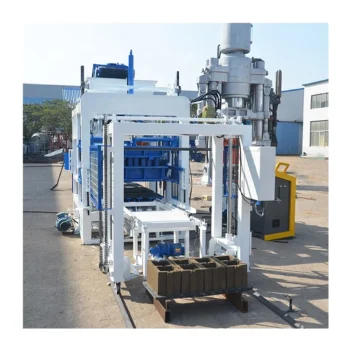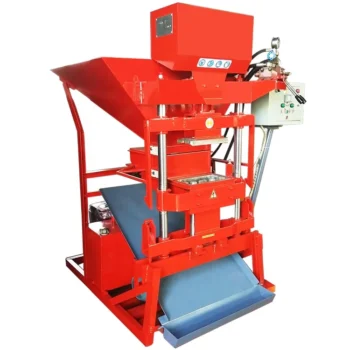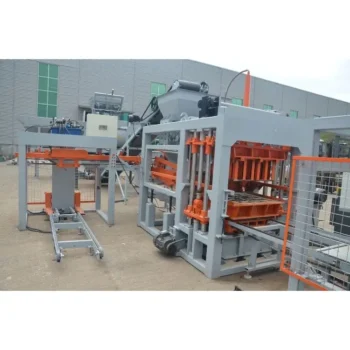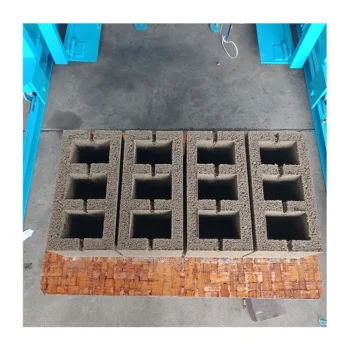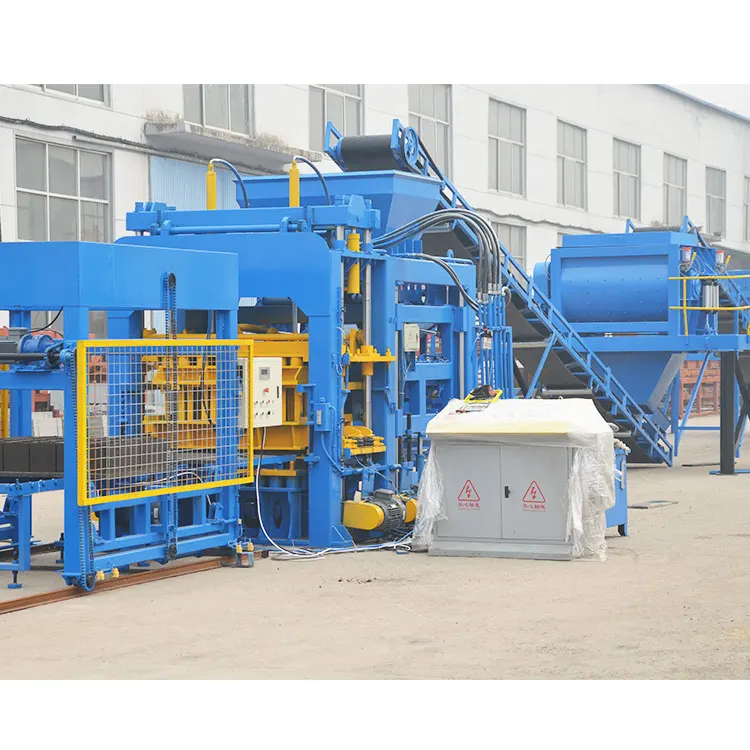
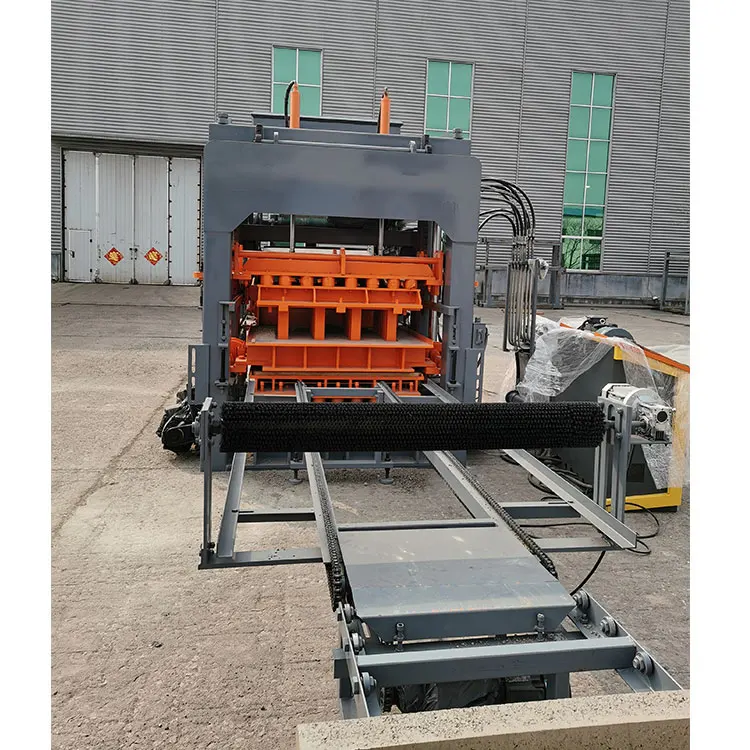
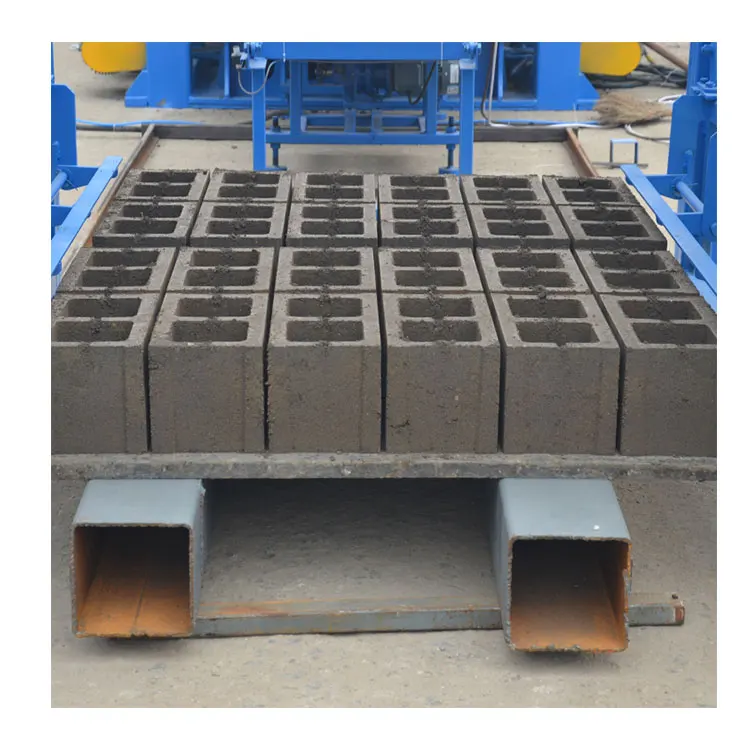
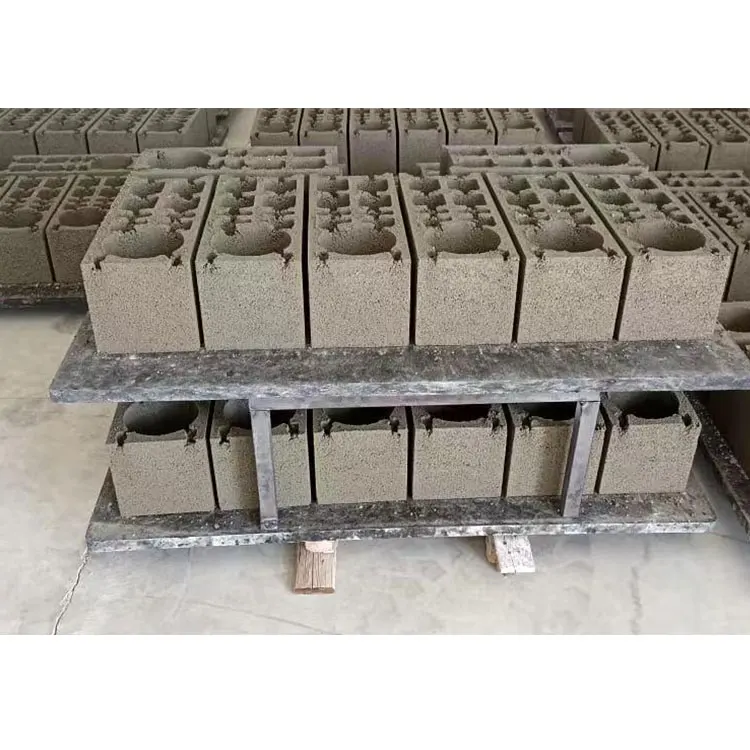
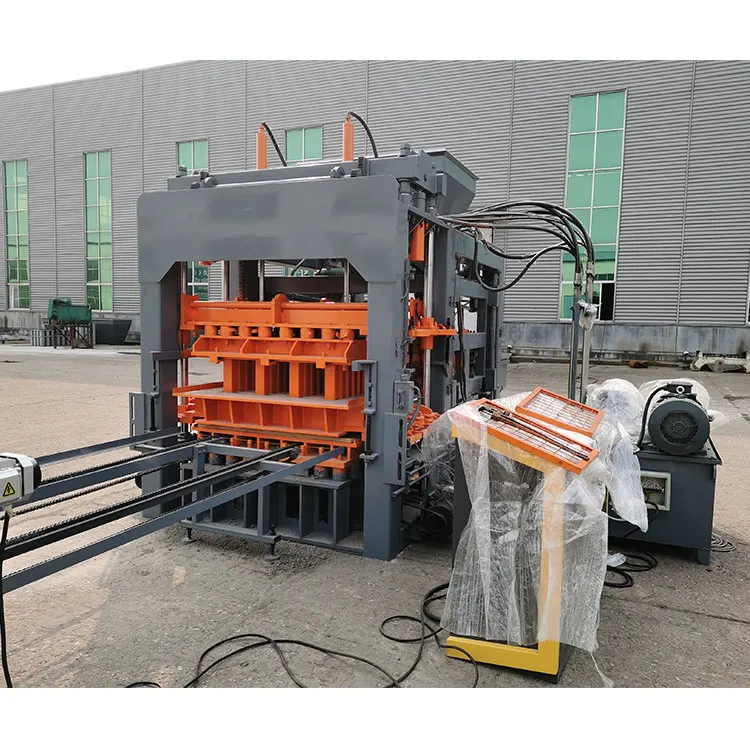
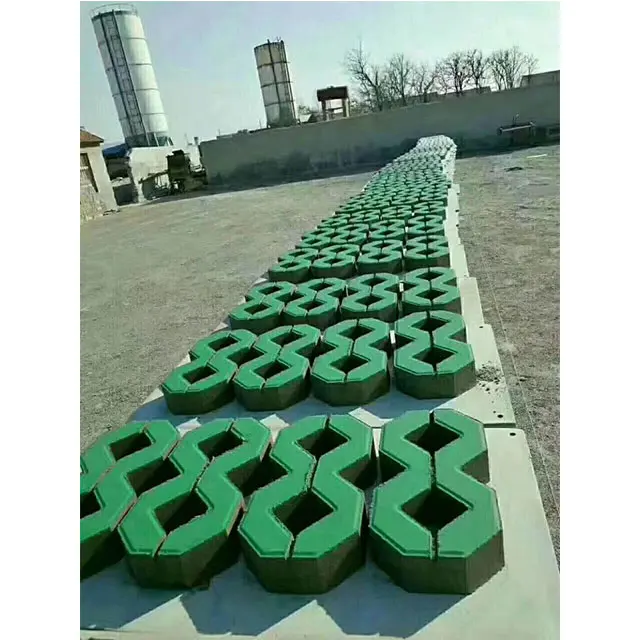
Description
Format-matched configuration — every QT12-15 capacity figure is calculated against the buyer’s actual block size and local aggregate, not quoted as a single generic cycles-per-hour number.
Technical Specifications
| Parameter | Value |
|---|---|
| Model | QT12-15 |
| Product Type | Automatic Hydraulic Block Making Machine |
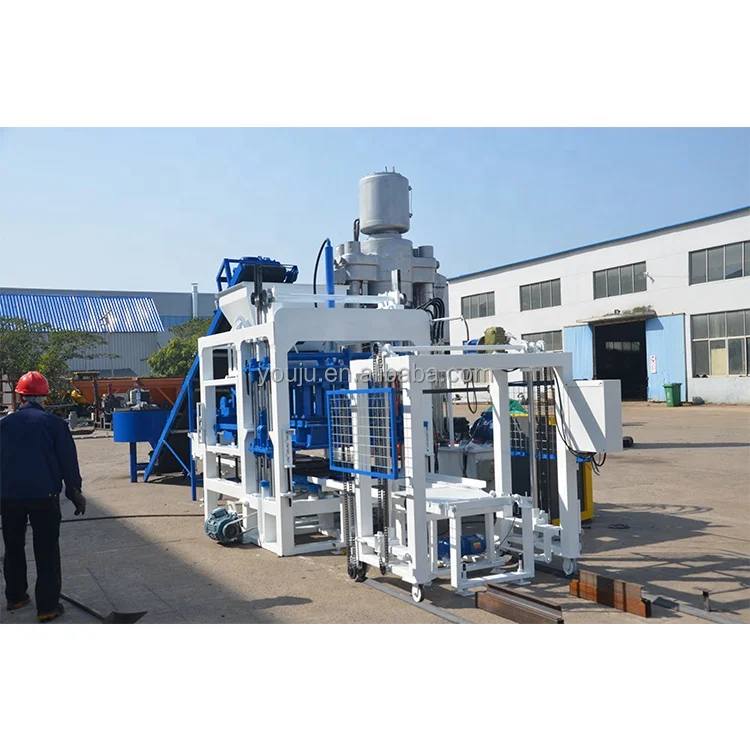
| Overall Dimensions (L×W×H) | 9350 × 2520 × 2950 mm |
| Rated Pressure | 21 MPa |
| Main Vibration Form | Platform Vibration |
| Vibration Frequency | 2800–4500 r/min |
| Vibration Acceleration | 15–20 g |
| Exciting Force | 120 kN |
| Fixed Brick Height Range | 50–200 mm |
| Pallet Size | 1350 × 850 mm |
| Molding Cycle | 15–25 s |
| Storage Hopper Volume | 0.4 m³ |
| Feeding Device Volume | 0.31 m³ |
| Total Power | 50.7 kW |
| Total Weight | 12000 kg |
| Control System | PLC controlled (mechanical-hydraulic synthesis) |
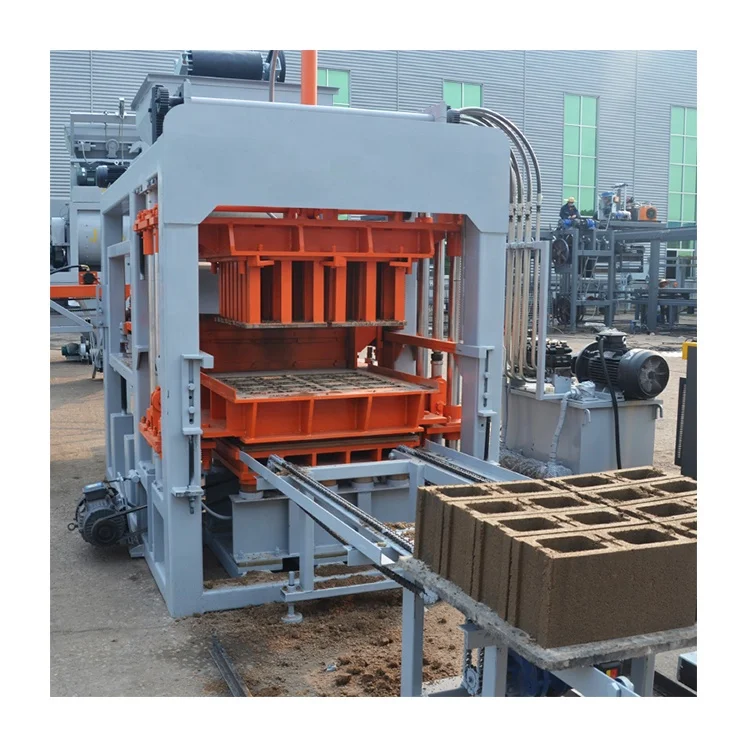
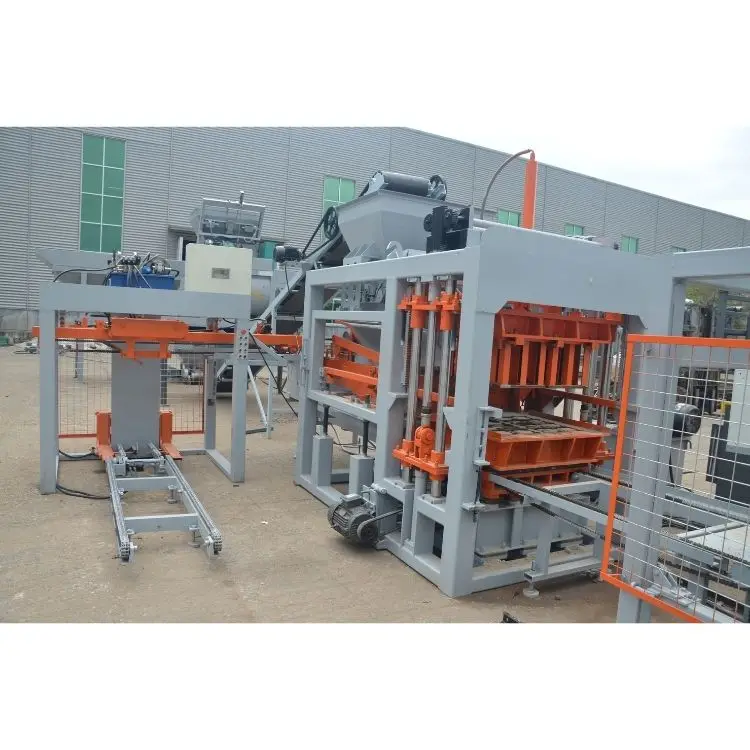
| Structure | Gantry frame type, super steel, shock resistant |
| Feeding Device | Net wave swing type |
| Mould Type | Cartridge type welding mould, manganese steel (carburizing and quenching) |
| Automation Level | Automatic |
| Block Compressive Strength | ≥15 MPa |
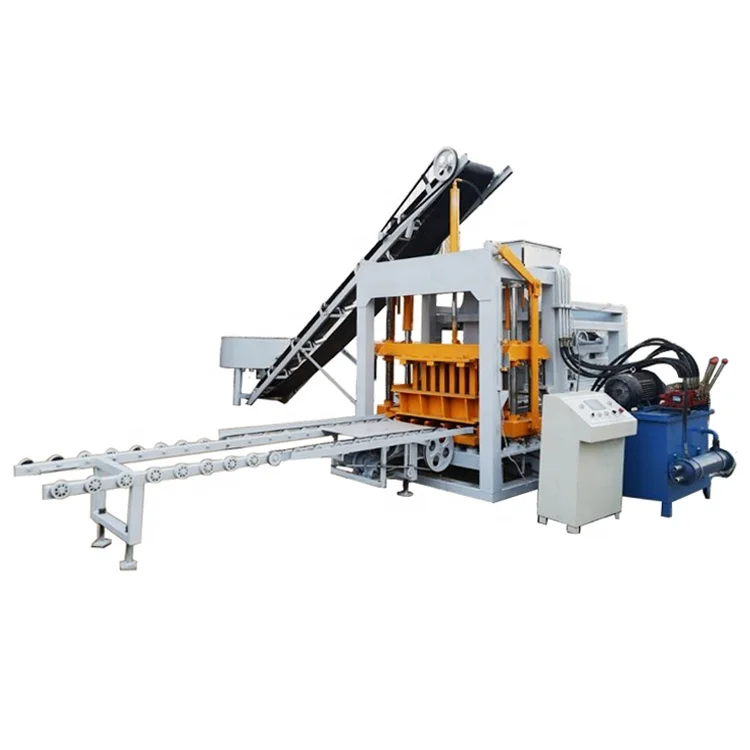
| Suggested Line Configuration | PL1200 batching machine, JS500 or JS750 mixer, 8m conveyor belt, stacker |
| Output Capacity — Hollow Block | 1720–2160 pcs/h (basis: 390×190×190 mm, 12 pcs/mould) |
| Output Capacity — Porous Block | 5040–6300 pcs/h (basis: 240×115×90 mm, 35 pcs/mould) |
| Output Capacity — Standard Block | 13100–14800 pcs/h (basis: 240×115×53 mm, 62 pcs/mould) |
| Voltage & Frequency | configurable (basis to be confirmed before ordering) |
| PLC Display Language | configurable (basis to be confirmed before ordering) |
Application Suitability
| Application | Material or Output |
|---|---|
| Hollow block production for structural walls | Crushed stone, fly ash, cement aggregate mixes |
| Porous block manufacturing | Lightweight aggregate, perlite, cement blends |
| Standard solid brick production | River sand, quarry dust, cement compositions |
| Paving block and interlocking brick | High-strength aggregate with fine sand filler |
| Kerbstone and heavy-duty formats | Coarse aggregate with adjusted vibration profiles |
What "15–25 Seconds Cycle Time" Leaves Out About the QT12-15 Automatic Block Machine
Cycle time only means something when tied to a specific block format, mix design, and local aggregate.
A 15-second cycle sounds impressive on a brochure, but that figure assumes a standard mix with well-graded river sand and optimal moisture content. When a buyer switches to volcanic scoria, crushed coral, or locally sourced laterite, the material flows differently into the mould cavity, and compaction takes longer. [NEED_CITE: aggregate density variation and its effect on concrete block molding cycle time] I have watched buyers receive a machine rated for a certain hourly output, only to find their daily hollow block count drops well below expectation once they feed real local material into the hopper. The QT12-15 automatic block machine specifications must be locked against the buyer’s actual mix before capacity is confirmed, not after the machine arrives on site.
Matching Mould Format to Market Demand
The QT12-15 automatic block machine supports a mould height range of 50–200 mm, covering hollow blocks, porous blocks, standard bricks, and paving formats. Each format change requires a different cartridge-type welding mould, and the per-format output varies considerably — from roughly 12 hollow blocks per cycle to over 60 standard bricks. Buyers who need to serve multiple market segments must confirm which moulds are included in the initial shipment and which require separate procurement, because format flexibility on paper means little if the physical moulds are not on the factory floor.
Pallet Size and the Curing Area Question
The 1350 × 850 mm pallet dimension is not arbitrary — it is tied to the mould cavity layout and the vibration platform geometry. [NEED_CITE: pallet size selection for concrete block curing and handling systems] However, this pallet size must also match the buyer’s existing curing racks, forklift tine width, and stacking area. A buyer who has already invested in a curing system built for a different pallet dimension will face costly modifications or dual inventory. Confirming pallet compatibility before production begins avoids a situation where freshly pressed blocks have nowhere to go.
How Pressure and Vibration Shape Block Density
The 21 MPa rated hydraulic pressure works together with the 120 kN exciting force and 15–20 g vibration acceleration to compact the mix into a dense, uniform block. Higher vibration acceleration helps fine particles settle into voids, while hydraulic pressure holds the mould halves together against the outward force of compaction. The net wave swing feeding device distributes material across the mould cavity before each press cycle, reducing density variation between the top and bottom of each block. Block compressive strength of ≥15 MPa is achievable when these three forces — feed uniformity, vibration, and pressure — are balanced for the specific aggregate in use. The gantry frame structure absorbs the repeated shock loading across the 15–25 second molding cycle, maintaining alignment over extended production runs.
The Cost of Skipping the Mix Design Conversation
When a machine is configured for a catalogue-default mix that the buyer cannot source locally, the consequences compound. [NEED_CITE: concrete block mix design and local aggregate sourcing challenges] Blocks may crack during curing, fail compressive strength tests, or show surface defects that make them unsellable in the local market. The buyer then faces a choice between importing expensive raw material or re-engineering the mix without manufacturer support — both paths delay production and erode the project’s financial model.
Why Procurement Starts With Format and Ends With Documentation
The QT12-15 is configured against the buyer’s stated block format, target daily output per format, and confirmed local aggregate — not assembled from a standard catalogue page. Mould drawings are reviewed before production to ensure every block size the buyer’s market requires is covered. The pallet specification, voltage, frequency, and PLC display language are confirmed in writing before the machine enters assembly, so commissioning is not delayed by mismatches that could have been caught on paper. Every capacity figure in the quotation states which block format it assumes, eliminating the gap between quoted cycles and real daily output.
Documentation & Verification
- Line layout drawing with capacity stated per block format and assumed cycle time
- Mould drawing pack covering every format in the buyer’s product range
- Hydraulic and electrical schematic matching the confirmed voltage and frequency
- Factory test record run on the buyer’s specified pallet size and block height
- Packing photographs showing dismantling state and container loading arrangement
Installation, Commissioning & Support
- Foundation plan sized to the 9350 × 2520 mm footprint and 12000 kg operating weight
- Power supply confirmation for 50.7 kW total load with dedicated circuit requirements
- On-site reassembly of gantry frame, vibration platform, and hydraulic manifold
- PLC parameter tuning against local aggregate and confirmed block format cycle times
- Operator training covering mould change procedure and daily maintenance checkpoints
- Wear parts list with reorder intervals for manganese steel mould and hydraulic seals
What to Include in Your Inquiry
To size the QT12-15 automatic block machine to your project, share the specific block formats your market sells, the daily output target for each format, and a sample or description of your local aggregate. Confirm your site voltage and frequency, the PLC display language your operators need, and whether your existing curing racks and forklifts are compatible with a 1350 × 850 mm pallet. If you are adding this machine to an existing line, describe the upstream batching and mixing equipment already in place.
Frequently Asked Questions
Q: How is capacity calculated per block format on the QT12-15?
A: Each output figure is tied to a specific block size, mould cavity count, and assumed cycle time range of 15–25 seconds. Hollow blocks at 390×190×190 mm yield 12 pieces per cycle, while standard bricks at 240×115×53 mm yield 62. The actual cycle time depends on your aggregate and mix, so we confirm capacity against your material before quoting.
Q: What mould formats can the QT12-15 run, and how long does a change take?
A: The machine accepts cartridge-type welding moulds for hollow, porous, standard, paving, and interlocking formats within the 50–200 mm height range. Mould change time depends on operator familiarity and whether the hydraulic clamps and alignment pins are well maintained. We include a format list and changeover procedure with every shipment.
Q: How should I check pallet size against my existing curing setup?
A: The QT12-15 uses a 1350 × 850 mm pallet. Before ordering, measure your curing rack spacing, forklift tine width, and stacking area to confirm compatibility. If your current system uses a different dimension, we discuss whether adjustment is possible or whether a separate pallet inventory is needed.
Q: What mix design assumptions does the QT12-15 configuration rely on?
A: The machine is configured against the buyer’s actual local aggregate — whether river sand, crushed stone, fly ash, or lightweight material. We ask for a sample or description before locking in vibration frequency, feed timing, and pressure settings. Running a mix the machine was not set up for will affect block strength and cycle time.
Q: Which electrical and control details must be confirmed before production?
A: Voltage, frequency, and PLC display language must be confirmed in writing before the QT12-15 enters assembly. Mismatched electrical specifications delay commissioning and may require on-site rewiring. We include a voltage and control language confirmation sheet in the documentation package for every order.