
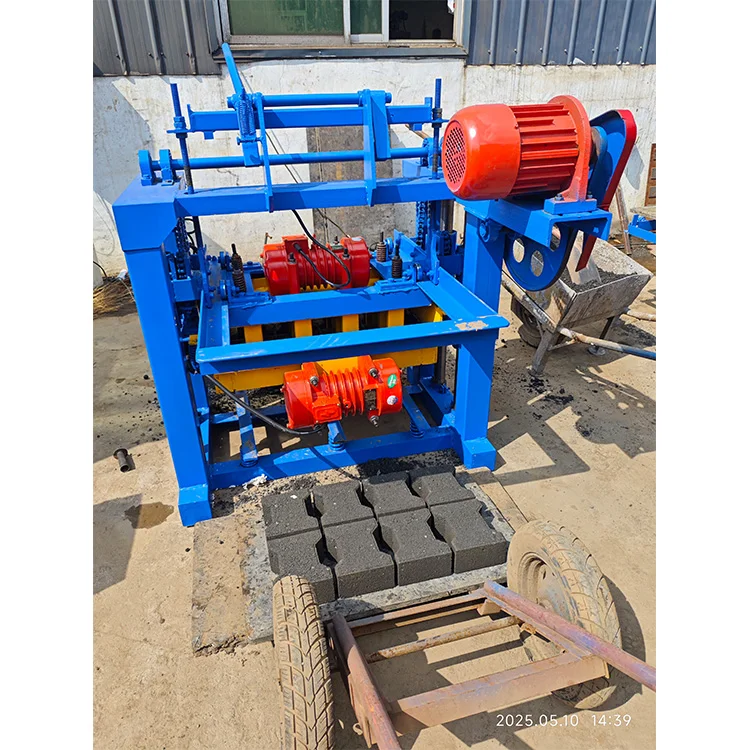

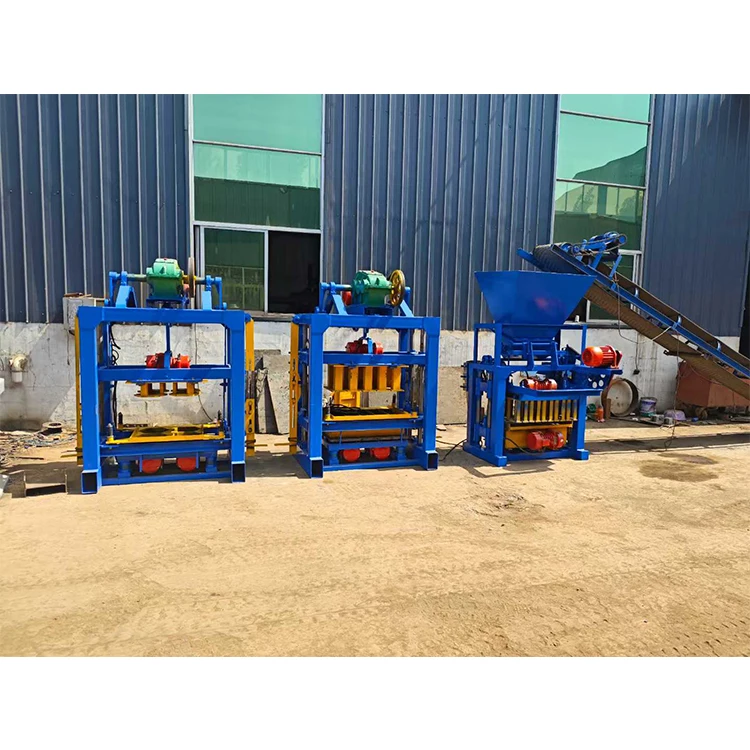
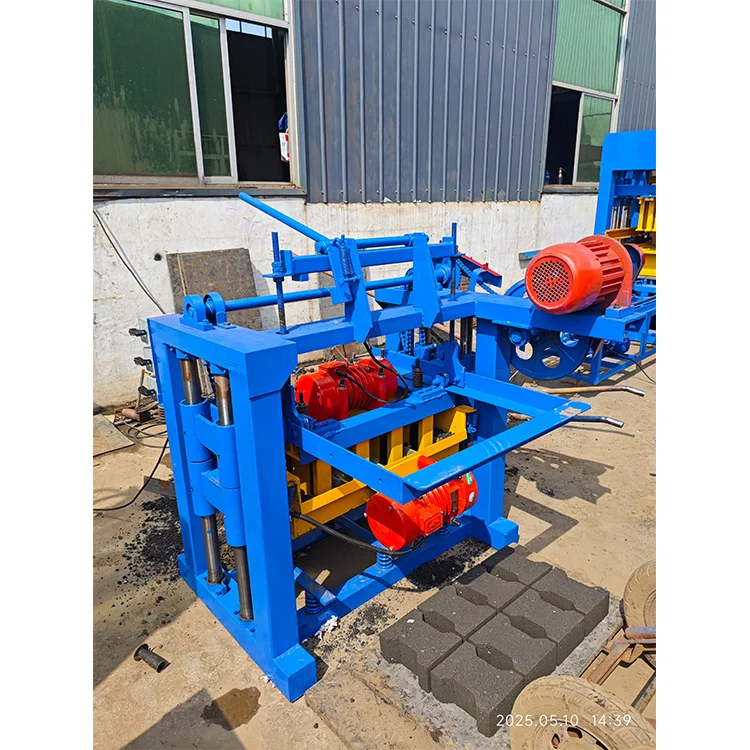
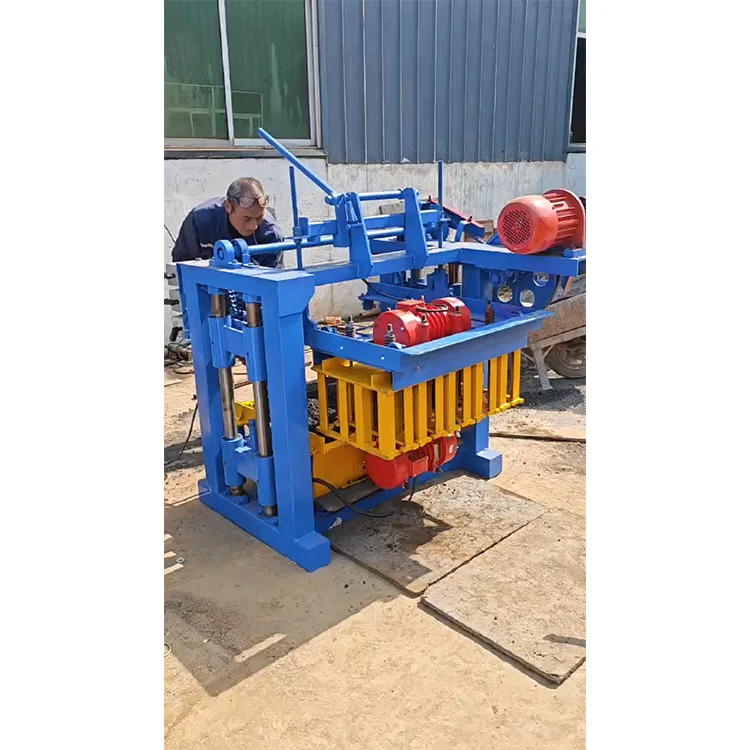
Description
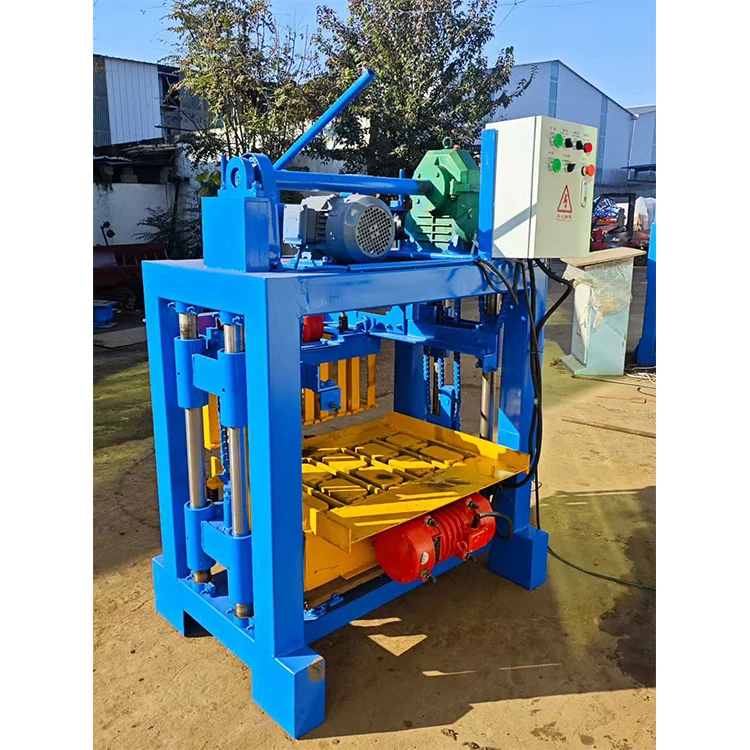
Block machinery as a single focus — the QTJ4-40 is specified as a matched system where machine, mould, pallet and vibration parameters are aligned to the buyer’s actual block format rather than pulled from a generic catalogue.
Technical Specifications
| Parameter | Value |
|---|---|
| Model | QTJ4-40 |
| Product Type | Semi-Automatic Hydraulic Block Making Machine |
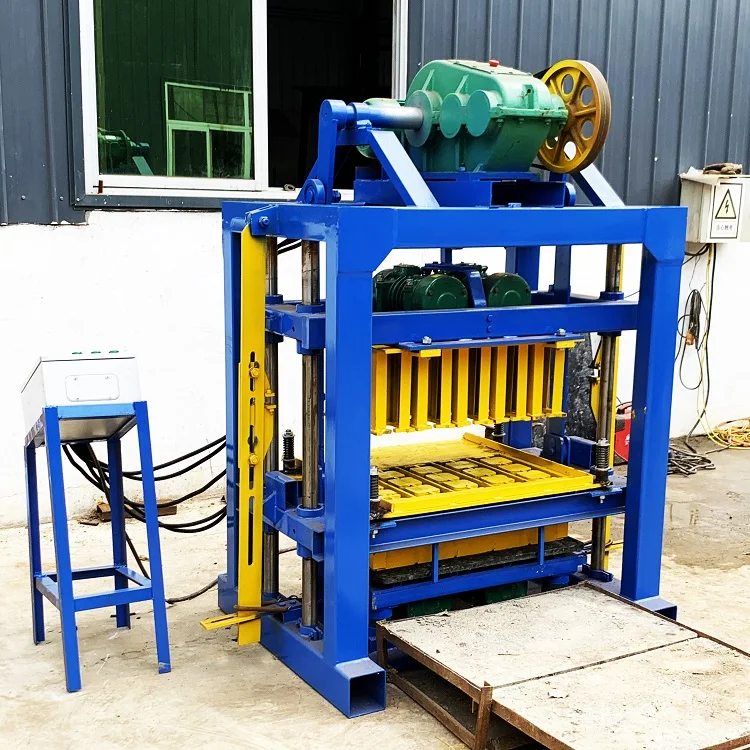
| Overall Dimensions (L×W×H) | 1350×1460×1800 mm |
| Rated Power | 10.4 kW |
| Molding Cycle | 40 s |
| Net Weight | 1.2 T |
| Pallet Size | 850×450×20 mm |
| Vibration System | Bed mould vertical vibration with upper mould compression vibration |
| Automation Level | Semi-automatic |
| Voltage | Customized to local voltage (basis to be confirmed before production) |
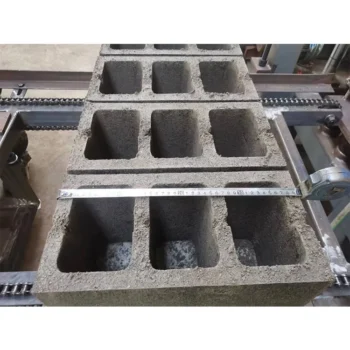
| Output — Hollow 400×200×200 mm | 4 pcs/mould, 360 pcs/hour, 2880 pcs/day (based on 400×200×200 mm hollow block) |
| Output — Hollow 400×150×200 mm | 5 pcs/mould, 450 pcs/hour, 3600 pcs/day (based on 400×150×200 mm hollow block) |
| Output — Paver 225×112.5×60 mm | 9 pcs/mould, 800 pcs/hour, 6400 pcs/day (based on 225×112.5×60 mm paver) |
| Raw Materials | Concrete, sand, cement, fly ash, lime, gypsum |
| Mould Compatibility | Hollow, solid, paver — 8 inch, 6 inch, 5 inch, 4 inch formats |
| Standards | CE declaration where applicable |
Application Suitability
| Application | Material or Output |
|---|---|
| Hollow block production for masonry walls | Crushed stone, river sand, cement — 400×200×200 mm and 400×150×200 mm formats |
| Solid block manufacturing for load-bearing structures | Concrete and fly ash mixes in 8 inch, 6 inch, 5 inch, 4 inch widths |
| Paving block production for walkways and driveways | Cement and fine aggregate at 225×112.5×60 mm format |
| On-site block production for housing projects | Locally sourced sand and gravel with portable pallet handling |
| Small to medium concrete product plants adding formats | Switching between hollow, solid, and paver on a single machine |
What "Cycles per Hour" Leaves Out About Semi-Automatic Block Making Machine Specifications
Output only means something when the block format is named next to it.
Many quotations state a single hourly cycle figure without clarifying whether that number assumes a hollow block, a paver, or a solid brick. I have watched contractors arrive at a site expecting a machine to produce thousands of pavers daily, only to discover the quoted capacity referred to a large hollow block format. The cycle stays the same at 40 seconds, but the pieces per mould shift from 4 to 9 depending on format — a gap that changes daily planning entirely. [NEED_CITE: common misalignment between quoted capacity and actual block format in buyer specifications]
How Cycle Time and Mould Count Define Your Real Daily Volume
The QTJ4-40 runs a 40-second molding cycle regardless of which block format sits in the press. What changes is the piece count per stroke. A 400×200×200 mm hollow mould yields 4 pieces per cycle, while the same pallet area fitted with a 225×112.5×60 mm paver mould delivers 9 pieces. That difference is why the semi-automatic block making machine specifications must always pair a cycle figure with a specific block drawing, not a blanket throughput claim.
Matching Pallet Size to Your Curing Area Before You Order
The pallet measures 850×450×20 mm, which dictates how your curing racks, floor space, and forklift need to be arranged. I have seen projects where the buyer purchased a machine without checking pallet dimensions, then found the existing curing rack slots were 50 mm too narrow. The pallet specification should be confirmed against the buyer’s current handling equipment so that no rework is needed after the machine arrives. [NEED_CITE: pallet and curing rack alignment in block plant layout]
Vibration, Pressure, and What Local Aggregate Demands
Bed mould vertical vibration combined with upper mould compression vibration determines how densely the concrete is compacted inside the mould. The vibration force and hydraulic pressure must be matched to the buyer’s mix design and local aggregate. On a project in East Africa, a high-clay river sand produced blocks that crumbled at the edges until we adjusted vibration time and cement ratio. The same QTJ4-40 then produced blocks that passed compressive strength requirements. This is why requesting an aggregate sample before finalizing the semi-automatic block making machine specifications is a non-negotiable step.
The Cost of Skipping Format Confirmation
When a buyer signs off on a quotation that lists only "2000–2500 pcs per 8 hours" without specifying which block size that assumes, the delivered machine may arrive with a mould that does not match the product the local market actually buys. Mould replacements add lead time and expense, and the original pallet may not suit the replacement format. Confirming block format, pieces per mould, and pallet dimensions before production starts avoids a chain of downstream corrections. [NEED_CITE: mould change frequency and its effect on daily output in semi-automatic plants]
Why Buyers Source This Machine Here
Block machinery is the single focus of this production line, so the QTJ4-40 is specified as one matched system — machine, mould, pallet, and handling — rather than assembled from separate suppliers. Mould design covers the formats the buyer’s market sells, including custom drawings when standard sizes do not fit. Configuration is set against the buyer’s actual mix design and local aggregate, not a catalogue default. The semi-automatic architecture allows a future move toward higher automation without replacing the press itself. Installation and commissioning support includes operator training at the buyer’s site.
Documentation & Verification
- Line layout with capacity calculation stating the block format assumed for each output figure
- Mould drawing and format list confirming pieces per mould before shipment
- Pallet specification matched to buyer’s curing rack dimensions and forklift capacity
- Voltage, frequency, and control language confirmation documented before production
- Factory test record run on the buyer’s specified block format
- Operation and maintenance manual with wear parts and mould replacement list
Installation, Commissioning & Support
- Foundation pad leveled to 1350×1460 mm footprint with anchor bolt provisions for the 1.2 T frame
- Dedicated 10.4 kW power circuit with voltage and frequency confirmed before wiring begins
- Machine shipped as a single assembled unit; pallet feeder and vibration table aligned on-site
- First production run supervised to set 40-second cycle against the buyer’s chosen block format
- Operator training covers mould change procedure across 8 inch, 6 inch, 5 inch, and 4 inch formats
- Wear parts list provided with hydraulic seal and vibration motor service intervals
What to Prepare Before Requesting a Quotation
Share your target block format with dimensions, the daily volume you need for that format, and the type of aggregate available locally. Confirm the voltage and frequency at your site along with the preferred control panel language. If you already have curing racks or a forklift, provide the pallet slot dimensions so the 850×450×20 mm pallet can be verified against them.
Frequently Asked Questions
Q: How is daily output calculated for each block format on the QTJ4-40?
A: Daily output is based on the 40-second molding cycle multiplied by the pieces per mould for that specific format. For a 400×200×200 mm hollow block the mould holds 4 pieces, giving 360 per hour and 2880 over an 8-hour shift. A paver mould at 225×112.5×60 mm holds 9 pieces, raising hourly output to 800 and daily output to 6400 under the same cycle.
Q: Which pallet size works with the QTJ4-40, and how do I check compatibility?
A: The machine uses an 850×450×20 mm pallet. Before ordering, measure the slot width on your existing curing racks and the fork dimensions on your forklift. If the rack slots or fork spacing differ, the pallet material or dimensions can be adjusted during the specification phase so that handling equipment does not need replacing after delivery.
Q: How long does a mould change take, and which formats are available?
A: Mould change time depends on how many bolts and alignment pins the format requires. The QTJ4-40 accepts hollow, solid, and paver moulds in 8 inch, 6 inch, 5 inch, and 4 inch widths. Buyers planning frequent format switches should confirm the change procedure during commissioning so operators can complete the swap without extended downtime.
Q: What voltage and control language are confirmed before the machine ships?
A: Voltage and frequency are customized to the buyer’s local power supply and documented before production begins. The control panel language is confirmed at the same stage. This prevents commissioning delays caused by mismatched electrical standards or an interface the operator cannot read.
![QTJ4-40 Stationary Block Machine | Technical Guide 记录ID 81529 数字之和:8+1+5+2+9 = 25 第二层:25 mod 6 = 1 → [站点修饰词] [品类词] for [应用或物料] 第三层:25 mod 3 = 1 → Technical Guide 第一层(shiyuebrickmachine.com 技术选型类):Specifications / Technical Guide / Model Selection Stationary Block Machine for Hollow Block – Technical Guide](https://shiyuebrickmachine.com/wp-content/uploads/2026/04/A8b5eb9f52e6b4e8685dfd7f71a6b2a873.webp)