![QTJ4-40 Stationary Block Machine | Technical Guide 记录ID 81529 数字之和:8+1+5+2+9 = 25 第二层:25 mod 6 = 1 → [站点修饰词] [品类词] for [应用或物料] 第三层:25 mod 3 = 1 → Technical Guide 第一层(shiyuebrickmachine.com 技术选型类):Specifications / Technical Guide / Model Selection Stationary Block Machine for Hollow Block – Technical Guide](https://shiyuebrickmachine.com/wp-content/uploads/2026/04/A8b5eb9f52e6b4e8685dfd7f71a6b2a873.webp)
![QTJ4-40 Stationary Block Machine | Technical Guide 记录ID 81529 数字之和:8+1+5+2+9 = 25 第二层:25 mod 6 = 1 → [站点修饰词] [品类词] for [应用或物料] 第三层:25 mod 3 = 1 → Technical Guide 第一层(shiyuebrickmachine.com 技术选型类):Specifications / Technical Guide / Model Selection Stationary Block Machine for Hollow Block – Technical Guide - Image 2](https://shiyuebrickmachine.com/wp-content/uploads/2026/04/A241bce4f493844599912da735118e185u.webp)
![QTJ4-40 Stationary Block Machine | Technical Guide 记录ID 81529 数字之和:8+1+5+2+9 = 25 第二层:25 mod 6 = 1 → [站点修饰词] [品类词] for [应用或物料] 第三层:25 mod 3 = 1 → Technical Guide 第一层(shiyuebrickmachine.com 技术选型类):Specifications / Technical Guide / Model Selection Stationary Block Machine for Hollow Block – Technical Guide - Image 3](https://shiyuebrickmachine.com/wp-content/uploads/2026/04/A75d482cf948b4224a3537f9a2936e97bF.webp)
![QTJ4-40 Stationary Block Machine | Technical Guide 记录ID 81529 数字之和:8+1+5+2+9 = 25 第二层:25 mod 6 = 1 → [站点修饰词] [品类词] for [应用或物料] 第三层:25 mod 3 = 1 → Technical Guide 第一层(shiyuebrickmachine.com 技术选型类):Specifications / Technical Guide / Model Selection Stationary Block Machine for Hollow Block – Technical Guide - Image 4](https://shiyuebrickmachine.com/wp-content/uploads/2026/04/A98b434771bbe43529d4806ad2d740285D.webp)
![QTJ4-40 Stationary Block Machine | Technical Guide 记录ID 81529 数字之和:8+1+5+2+9 = 25 第二层:25 mod 6 = 1 → [站点修饰词] [品类词] for [应用或物料] 第三层:25 mod 3 = 1 → Technical Guide 第一层(shiyuebrickmachine.com 技术选型类):Specifications / Technical Guide / Model Selection Stationary Block Machine for Hollow Block – Technical Guide - Image 5](https://shiyuebrickmachine.com/wp-content/uploads/2026/04/Ad2526ada56ea4488862cfc5ab34fdddfj.webp)
![QTJ4-40 Stationary Block Machine | Technical Guide 记录ID 81529 数字之和:8+1+5+2+9 = 25 第二层:25 mod 6 = 1 → [站点修饰词] [品类词] for [应用或物料] 第三层:25 mod 3 = 1 → Technical Guide 第一层(shiyuebrickmachine.com 技术选型类):Specifications / Technical Guide / Model Selection Stationary Block Machine for Hollow Block – Technical Guide - Image 6](https://shiyuebrickmachine.com/wp-content/uploads/2026/04/Abb2b91e4f87d46b88088233a1f7c99d1m.webp)
Description
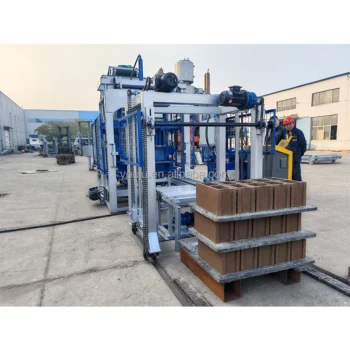
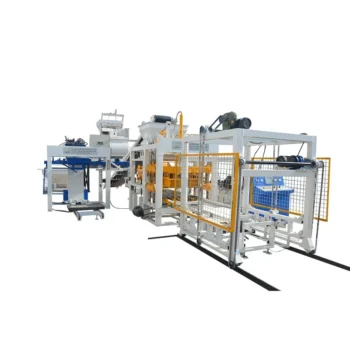
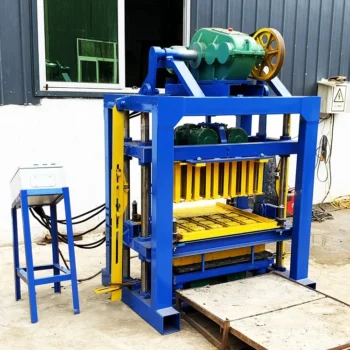
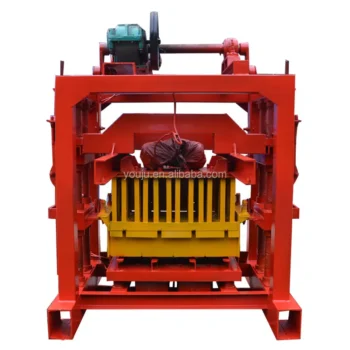
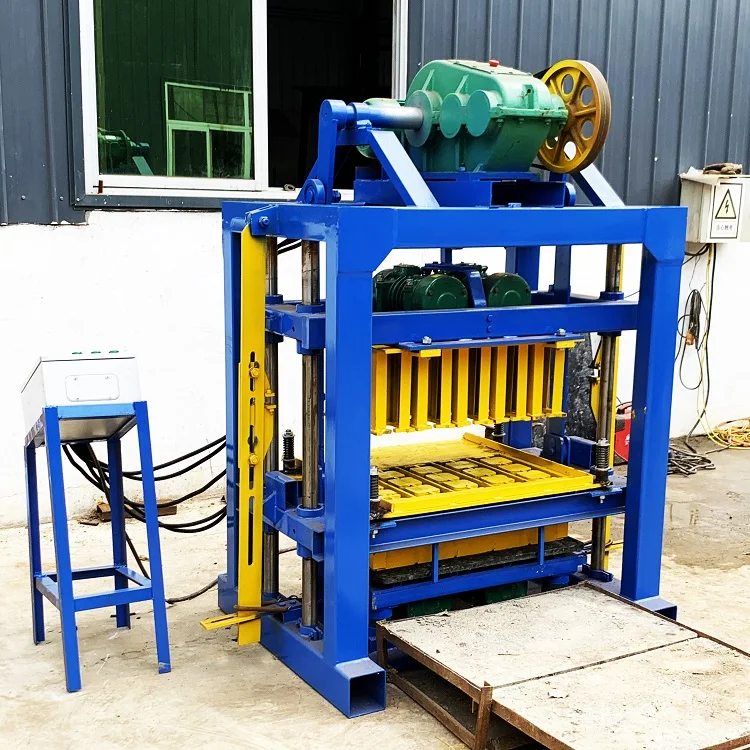
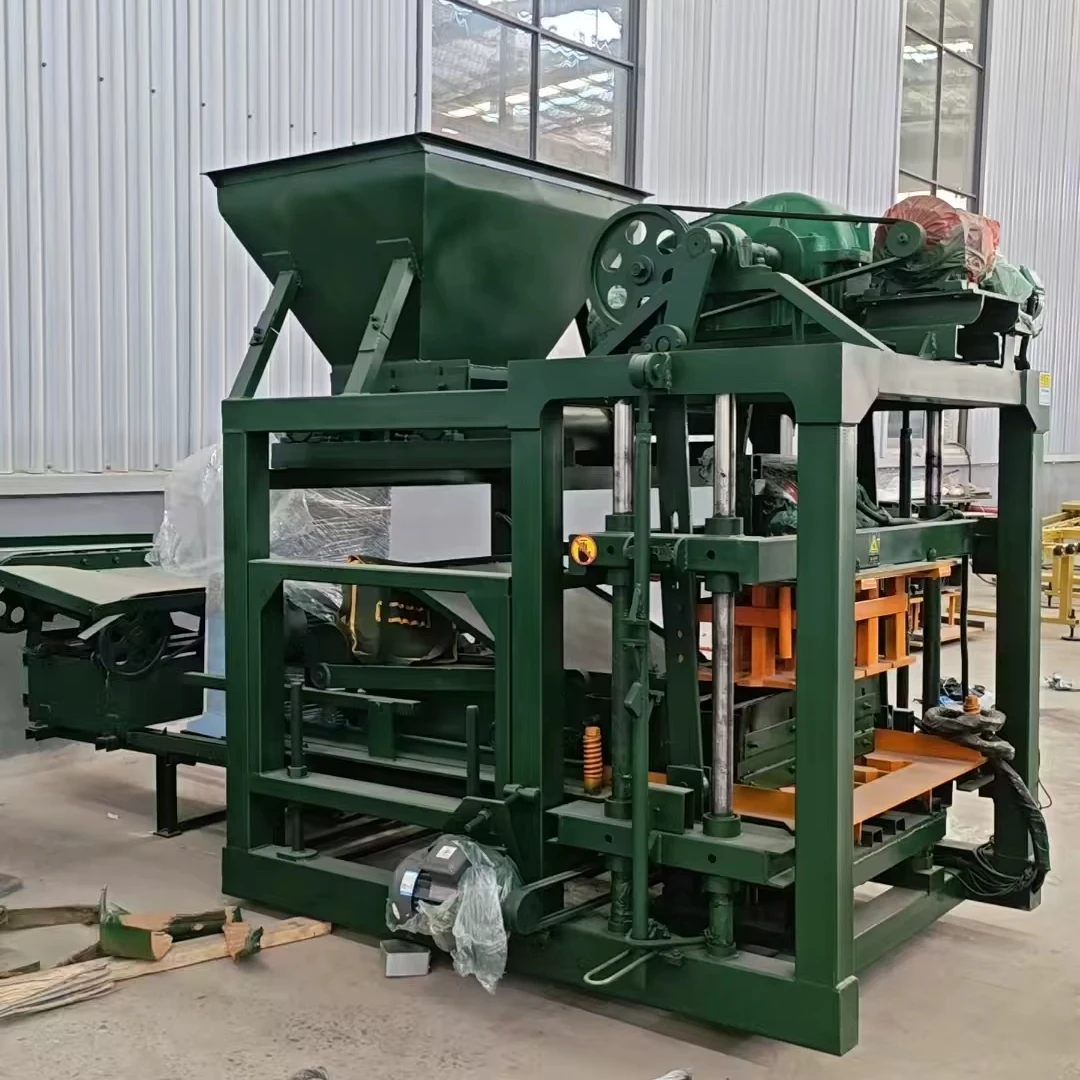
Matched System Supply — The QTJ4-40 block machine, JQ350 mixer and 850×450 mm pallets are specified together so mix consistency, moulding cycle and curing layout align from the first production day.
Technical Specifications
| Parameter | Value |
|---|---|
| Model | QTJ4-40 |
| Product Type | Stationary Concrete Block Making Machine |
| Rated Power | 10.4 kW |
| Overall Dimensions (L×W×H) | 1350×1460×1800 mm |
| Net Weight | 1200 kg |
| Moulding Cycle | 40 s |
| Output Capacity | 2400 pcs/hour, 19200 pcs/day (basis: 400×200×200mm hollow block, 5 pcs/mould) |
| Pallet Size | 850×450×20 mm |
| Vibration Frequency | 2800 r/min |
| Control System | Electrical and mechanical interlocking control |
| Automation Level | Semi-manual (table vibration feeding, fluctuation vibration moulding, manual mould lifting) |
| Standard Mould Format | Hollow block (400×200×200mm) |
| Configuration Included | Host machine 1 set, block mould 1 set, JQ350 mixer |
| Assembly State | Requires on-site installation and leveling on precast cement ground |
Application Suitability
| Application | Material or Output |
|---|---|
| Small-scale hollow block plant | Cement, crushed stone or river sand, water |
| On-site production for housing projects | Locally sourced aggregate with cement binder |
| First block plant for entrepreneurs | 400×200×200mm hollow block at semi-manual pace |
| Supplementary format for existing producers | Hollow block added to a solid or paving range |
What "2400 Pieces per Hour" Leaves Out About QTJ4-40 Block Machine Specifications
The 2,400 pieces per hour figure only holds when you are running 400×200×200mm hollow blocks with five cavities per mould and a consistent 40-second cycle.
Capacity claims that omit the block format behind the number set buyers up for disappointment. I once shipped a semi-manual press to a West African site where the buyer expected the same throughput on 150mm solid blocks as the quoted hollow block figure. The cycle stretched, the daily count dropped, and the project schedule slipped before we recalculated the layout. When you review QTJ4-40 block machine specifications, every output number must be traced back to the exact mould and block dimension it assumes. [NEED_CITE: capacity calculation methods for concrete block presses]
Matching the Mould to the Block You Actually Sell
The host machine ships with one hollow block mould sized at 400×200×200mm, producing five pieces per cycle. If your market moves a different dimension, the mould must be redesigned and the cycle time re-verified. A taller or wider block changes fill depth, vibration transmission and demoulding force. Before confirming the order, ask for a mould drawing that matches your target format and a written cycle estimate for that specific cavity layout.
Pallet Size, Curing Area and Forklift Compatibility
The 850×450×20 mm pallet is the physical link between press output and your curing yard. Every pallet loaded must travel from the machine table to the rack and later to the dispatch area. If your forklift tines are wider than the pallet or your rack spacing assumes a different dimension, pallets pile up on the floor and blocks cure unevenly. Confirm pallet material — timber, bamboo or PVC — against your local humidity and curing duration before production begins. [NEED_CITE: pallet material selection for block curing environments]
How Vibration and Mix Design Interact on a Semi-Manual Press
The QTJ4-40 uses table vibration at 2,800 r/min combined with fluctuation vibration during moulding to compact the mix. Vibration energy only translates into block strength when the mix moisture, aggregate grading and cement ratio suit the frequency. A mix that is too dry will not flow into cavity corners; a mix that is too wet will collapse on demoulding. Early in my career I sent a unit out with standard river sand settings, only to learn the buyer was using volcanic pumice. The entire parameter set had to be reworked on site, costing weeks of delay. Always send a sample of your local aggregate for a trial run before the machine leaves the factory.
The Cost of Skipping Voltage and Language Confirmation
A 10.4 kW motor and interlocking control panel must match the voltage, frequency and phase available at your site. If the panel arrives wired for a supply that does not exist locally, commissioning halts until a transformer or rewire is arranged. Control labels and wiring diagrams in a language the operators cannot read lead to incorrect settings and premature wear. State your site voltage and preferred panel language during the quotation stage, not after the crate is opened. [NEED_CITE: industrial voltage and frequency standards by region]
Why Source the Press, Mixer and Pallets Together
Ordering the QTJ4-40 as a standalone press and adding a random mixer or second-hand pallets creates mismatched cycle times and inconsistent mix quality. The included JQ350 mixer is sized to feed the 40-second moulding cycle without forcing the operator to wait or rush. Pallets specified at the same time as the press are cut to the exact 850×450 mm table, eliminating edge overhang that damages block corners during stripping.
Documentation & Verification
- Capacity calculation sheet stating 400×200×200mm hollow block and five-cavity mould basis
- Pallet specification confirming 850×450×20 mm size and material grade
- Mould drawing with cavity layout and format list for the ordered block type
- Electrical schematic with voltage, frequency and control language confirmed per order
- Factory test record showing moulding cycle and block dimensions before dispatch
- Operation and maintenance manual with wear parts list for the specific mould supplied
Installation, Commissioning & Support
- Precast cement ground required; 1350×1460 mm footprint must be leveled before host machine placement
- Dedicated 10.4 kW circuit with confirmed voltage and frequency matching the motor nameplate
- Machine arrives dismantled; on-site assembly includes table mounting, mixer positioning and wiring
- First run verifies 40-second cycle, block dimensions and vibration response to your mix
- Operator training covers manual mould lifting, pallet handling and daily lubrication points
- Wear parts list identifies mould liners and vibration springs to stock from day one
What to Include in Your Enquiry
Tell us the exact block dimensions and daily volume you need, along with the aggregate and cement types available in your area. Share your site voltage, frequency and the language your operators read so the control panel is built correctly. If you already have curing racks or a forklift, send their dimensions so pallets are sized to match before the machine enters production.
Frequently Asked Questions
Q: How is the 19,200 pcs/day figure calculated, and does it change with a different block format?
A: The figure assumes continuous production of 400×200×200mm hollow blocks, five per mould, at a 40-second cycle over an eight-hour shift. Switching to a larger or solid block increases fill depth and cycle time, reducing the daily count. A revised capacity calculation is issued for each new format before the mould is manufactured.
Q: What pallet size does the QTJ4-40 use, and how does it affect my curing area layout?
A: The standard pallet is 850×450×20 mm. Your curing rack spacing, forklift tine width and yard layout must accommodate this dimension. If your existing equipment is sized differently, we adjust pallet specifications or recommend rack modifications before dispatch to avoid handling bottlenecks.
Q: Is the machine configured for my local aggregate, or a generic default?
A: Every machine leaves the factory configured to a mix design we test with your sample aggregate. Vibration frequency, moisture range and cycle time are set against that specific material. If you cannot send a sample, we provide baseline settings and schedule a site visit to recalibrate once local material is available.
Q: What voltage and control language options are available?
A: The motor and control panel can be wired for common industrial voltages and frequencies. Panel labels, wiring diagrams and the operation manual are produced in the language you confirm during the order stage. This is verified before production begins to prevent commissioning delays on site.
Q: Which spare parts and mould wear items should I stock from day one?
A: The wear parts list supplied with the machine identifies mould liners, vibration springs and pallet guides specific to your ordered format. Stocking these items locally avoids production stops when the first replacements are due, especially in markets where shipping lead times are measured in weeks.