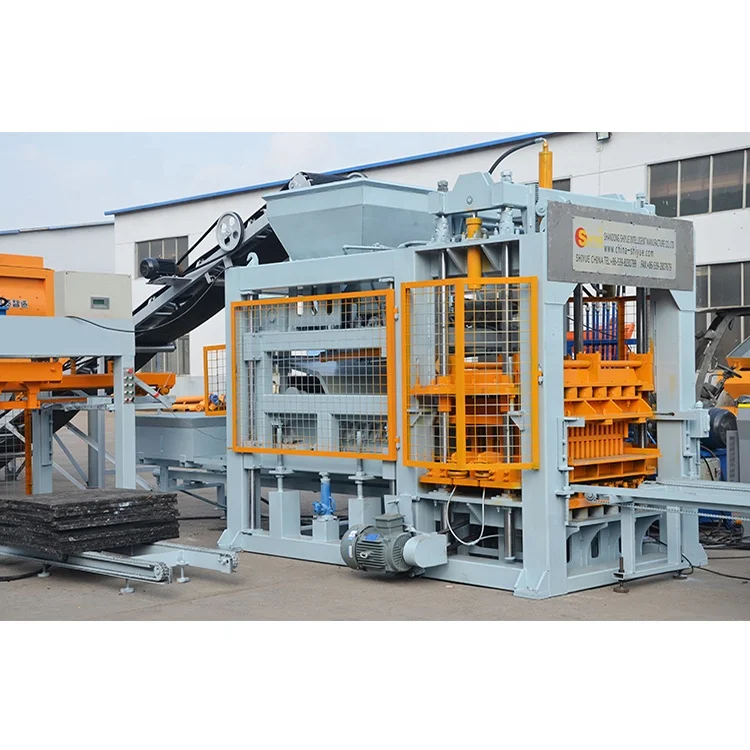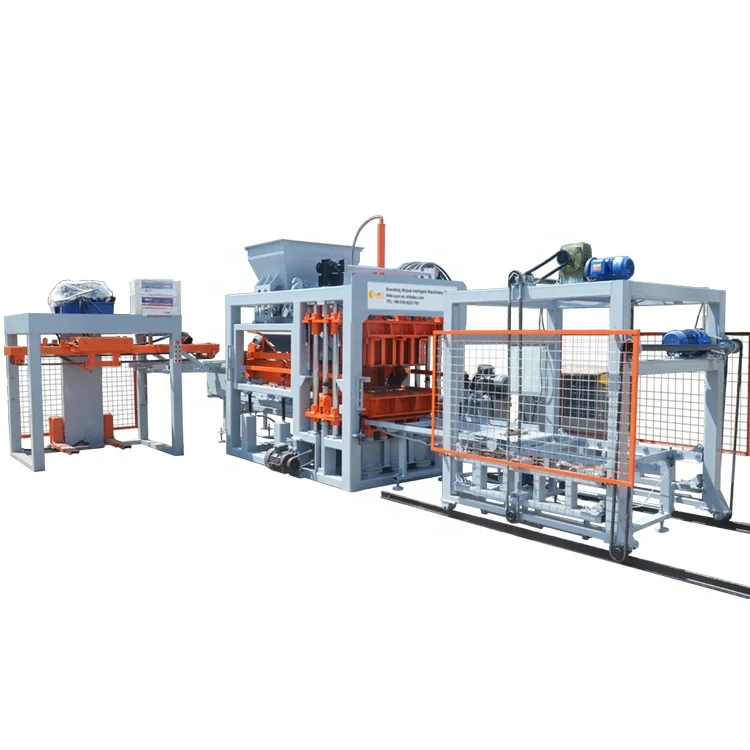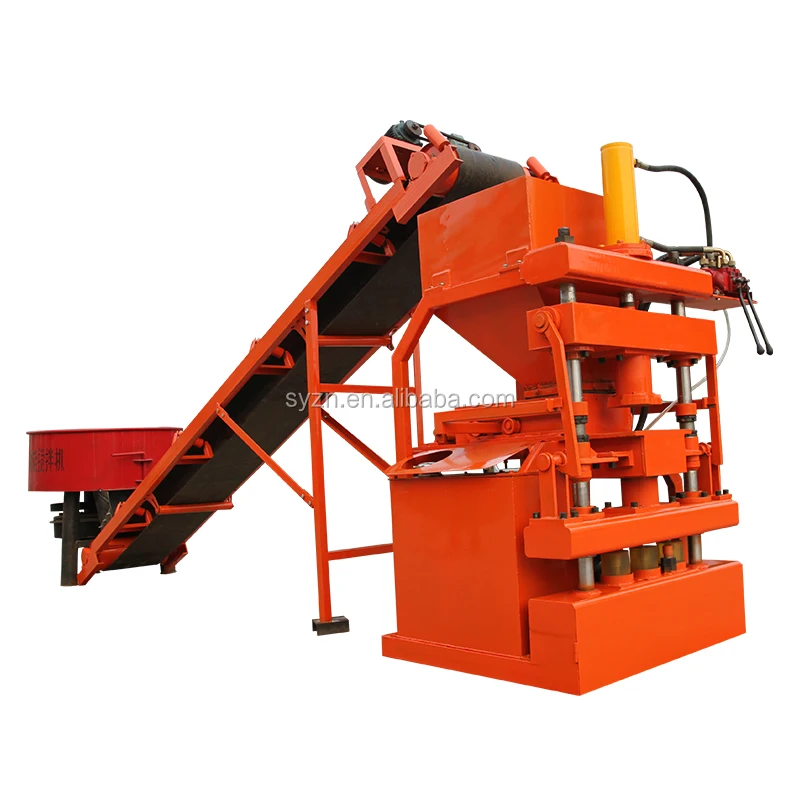
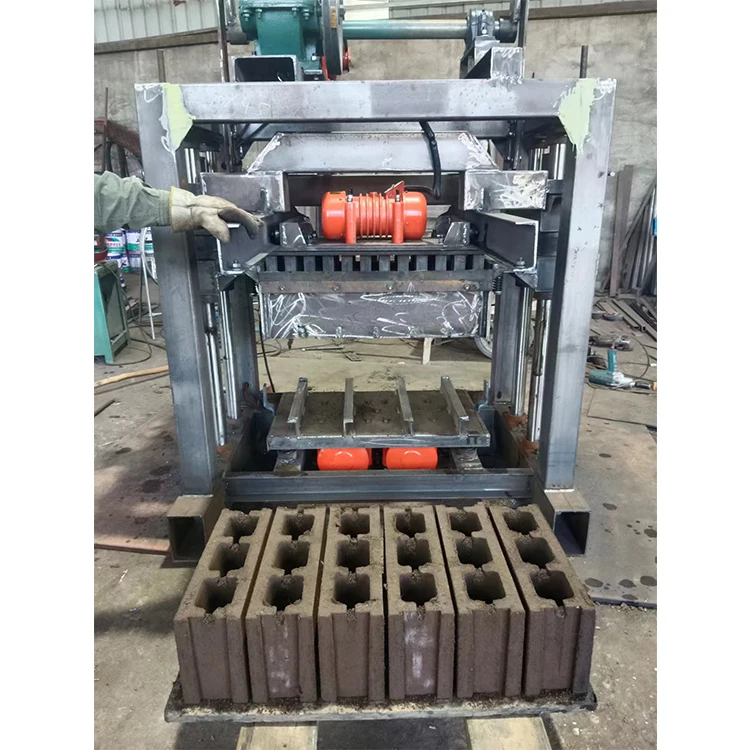

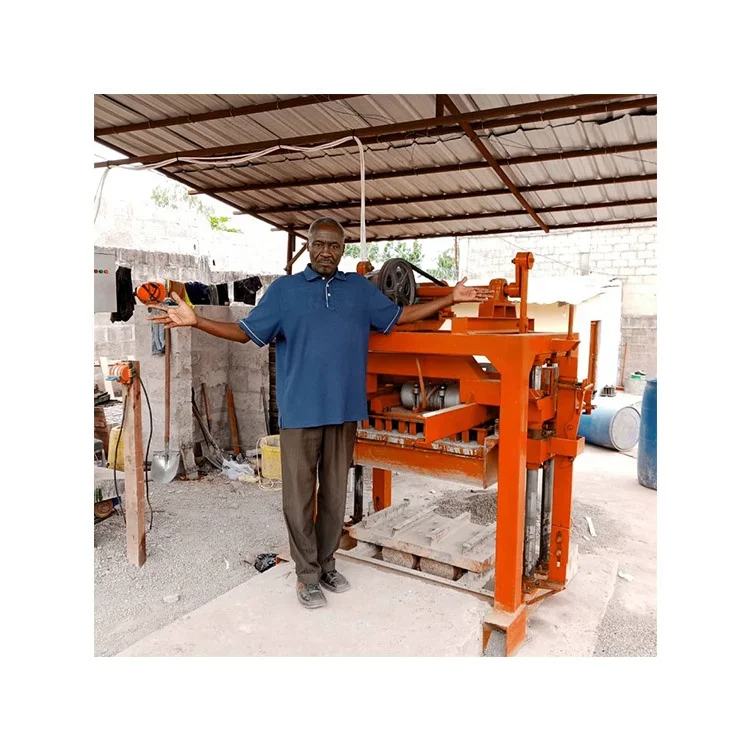
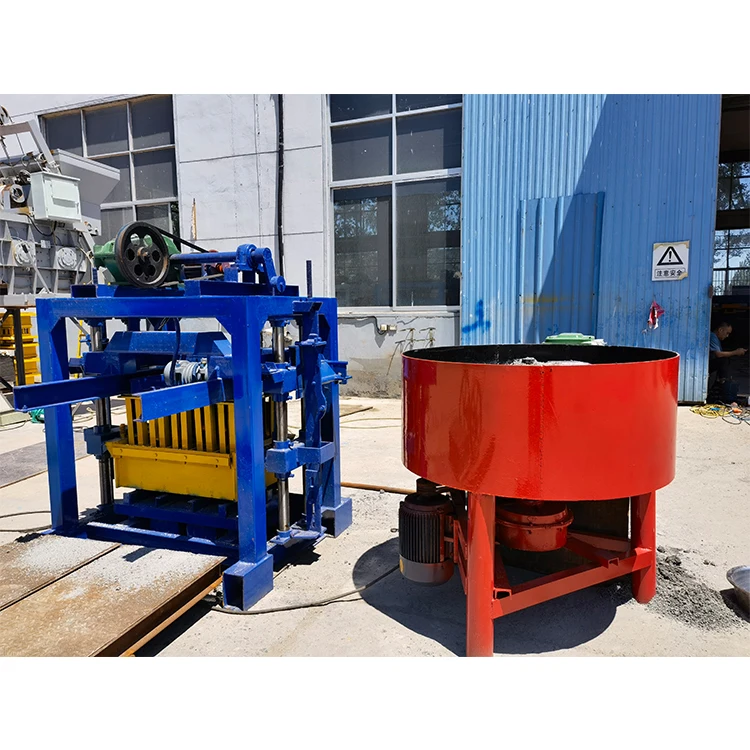
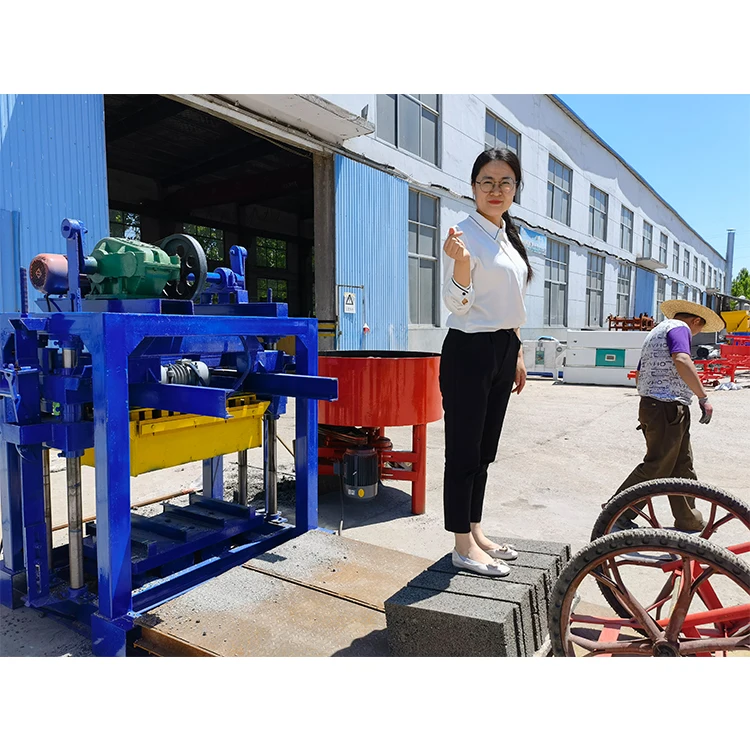

Description
Honest Output by Format — Every capacity figure for the QTJ4-40 is calculated against a named block size and cavity count, so you know the daily volume before the machine arrives.
Technical Specifications
| Parameter | Value |
|---|---|
| Model | QTJ4-40 |
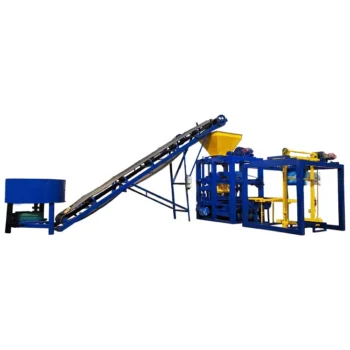
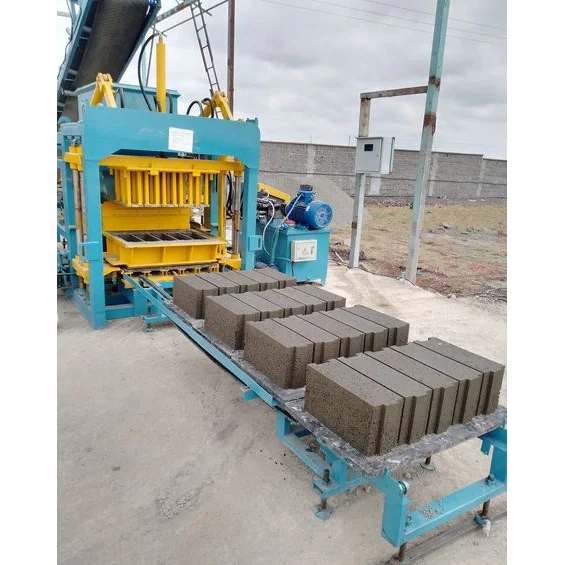
| Product Type | Semi-Automatic Concrete Block Making Machine |
| Machine Power | 10.4 kW |
| Molding Cycle | 40 s |
| Vibration System | Bed mould vertical vibration + upper mould compression vibration |
| Mould Operation | Top die push-pull with automatic scraper |
| Pallet Size | 850 × 450 mm |
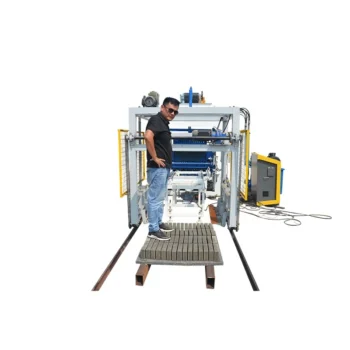
| Overall Dimensions (L×W×H) | 1350 × 1460 × 1800 mm |
| Machine Weight | 1 T |
| Automation Level | Semi-automatic |
| Voltage | Configured to buyer’s local supply |
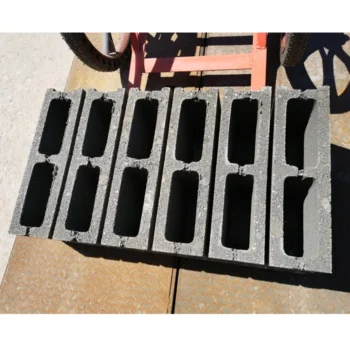
| Theoretical Output (400×200×200 mm hollow, 4 pcs/mould) | 360 pcs/h, 2800 pcs/day (basis: 400×200×200 mm hollow block) |
| Theoretical Output (400×150×200 mm hollow, 5 pcs/mould) | 450 pcs/h, 3600 pcs/day (basis: 400×150×200 mm hollow block) |
| Theoretical Output (225×112.5×60 mm solid, 9 pcs/mould) | 800 pcs/h, 6400 pcs/day (basis: 225×112.5×60 mm solid brick) |
Application Suitability
| Application | Material or Output |
|---|---|
| Small to medium hollow block plants | Concrete, sand, cement, fly ash mixes for 400×200×200 mm and 400×150×200 mm formats |
| Solid brick production for local masonry | Cement and fine aggregate blends for 225×112.5×60 mm wall bricks |
| On-site block production for contractors | Locally sourced crushed stone, river sand and cement on construction sites |
| First plant for entrepreneurs | Low-capital entry into paving block or solid brick manufacturing |
What "2800 Pieces per Day" Actually Means for the QTJ4-40
Capacity numbers only hold up when the block format, mould cavity count and cycle time are stated together.
Catalogue sheets often quote a single headline figure, leaving buyers to assume it applies to whatever block they plan to produce. In reality, switching from a 400×200×200 mm hollow block to a smaller solid brick can triple the hourly piece count on the same machine. I once worked with a buyer in Bangladesh who ordered a semi-automatic block machine expecting a flat daily output across all formats, only to discover the number he budgeted against was based on a brick size his market did not buy. The QTJ4-40 block machine specifications here list each output figure against its exact block dimensions and mould cavity count, removing that guesswork before you commit [NEED_CITE: common causes of capacity shortfalls in concrete block production].
Matching the QTJ4-40 to Your Block Format
The QTJ4-40 semi-automatic block machine is built around a 40-second moulding cycle. That cycle time is fixed, so the only variable that changes your hourly output is the number of cavities in the mould. A four-cavity mould for 400×200×200 mm hollow blocks yields 360 pieces per hour, while a nine-cavity mould for 225×112.5×60 mm solid bricks reaches 800 pieces per hour. Knowing which formats sell in your local market is the first step to sizing this machine correctly.
Mould Selection and Format Flexibility
Every QTJ4-40 block machine specifications sheet should include a mould format list showing cavity count per block size. The top die push-pull mechanism with an automatic scraper helps align the squeeze head precisely, which matters when you switch between a tall hollow block mould and a shallow paving block mould. Moulds can be supplied to standard formats or built from buyer drawings, so the machine adapts to your product range rather than the other way around.
Pallet Size, Vibration Force and Block Density
The 850 × 450 mm pallet defines the maximum mould footprint and must match the curing racks and forklifts already on your site. The dual vibration system — vertical vibration through the bed mould combined with compression vibration from the upper mould — works to compact the concrete mix evenly across the pallet surface. Block strength depends on whether that vibration force is matched to your specific aggregate gradation and cement content [NEED_CITE: relationship between vibration force and concrete block compressive strength].
The Cost of Ignoring Pallet and Voltage Details
Ordering a block machine without confirming pallet dimensions against your curing area means pallets may not fit existing racks, forcing a rebuild of the drying zone before production starts. Voltage and frequency left unconfirmed until after production can delay commissioning by weeks if the motor and control panel do not match the local grid. These are the quiet delays that never appear in a quotation but cost real time on a project site [NEED_CITE: electrical compatibility requirements for imported industrial machinery].
Why Source the QTJ4-40 Here
Block machinery is the single focus of this operation, so the QTJ4-40 is specified as a matched system — machine, mould, pallet and handling are selected together rather than assembled from separate suppliers. Configuration is set against the buyer’s actual mix design and local aggregate, not a catalogue default. Mould design covers the formats your market sells, with custom drawings accepted. The automation level is selectable, letting a buyer start semi-automatic and add automatic stacking later. Installation support includes operator training so the crew can run the machine independently from the first week.
Documentation & Verification
- Line layout and capacity calculation stating the block format assumed for each output tier
- Mould drawing and format list confirming cavity count per block size
- Pallet specification sheet matched to curing area and forklift capacity
- Voltage, frequency and control language confirmation before production
- Factory test record on buyer’s block format before dispatch
- Operation and maintenance manual with wear parts list
Installation, Commissioning & Support
- Foundation plan based on 1350 × 1460 × 1800 mm footprint and 1 T operating weight
- Dedicated 10.4 kW circuit with voltage and frequency matched to local grid
- Machine shipped as a single unit with mould and pallet crated separately
- On-site commissioning includes cycle timing verification on buyer’s block format
- Operator training covers mould change procedure and daily vibration system checks
- Wear parts and mould availability confirmed at point of order
Before You Request a Quote
To size the QTJ4-40 block machine specifications to your project, share the block formats your market demands along with target daily volume per format. Provide a sample or description of your local aggregate so the mix can be validated before the mould is built. Confirm your site voltage, frequency and preferred control panel language so the electrical package is correct from day one.
Frequently Asked Questions
Q: How is capacity calculated and which block format does each figure assume?
A: Each output figure is tied to a specific block dimension and mould cavity count. The 360 pcs/h rate assumes a 400×200×200 mm hollow block with four cavities, while the 800 pcs/h rate assumes a 225×112.5×60 mm solid brick with nine cavities. The 40-second cycle remains constant across formats.
Q: Can I run my local aggregate and mix design on the QTJ4-40?
A: The machine processes concrete, sand, cement, fly ash, lime and gypsum mixes. However, block strength depends on matching the vibration force to your specific aggregate gradation. Providing a sample of your local material allows the mix and machine settings to be validated before production.
Q: What pallet size does this machine use, and how does it affect my curing layout?
A: The QTJ4-40 uses an 850 × 450 mm pallet. This dimension determines your curing rack spacing and forklift handling requirements. Confirming pallet compatibility with your existing infrastructure before ordering avoids costly curing area modifications after delivery.
Q: How long does a mould change take, and can I order custom moulds?
A: The top die push-pull mechanism with automatic scraper aids alignment during changeover. Standard and custom moulds are available to buyer drawings. Exact changeover time depends on operator familiarity and is covered during on-site training after installation.