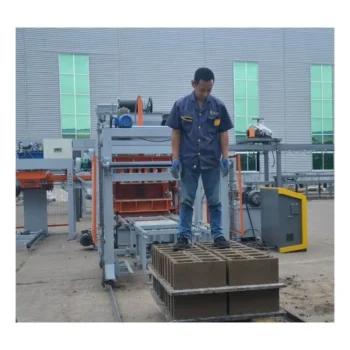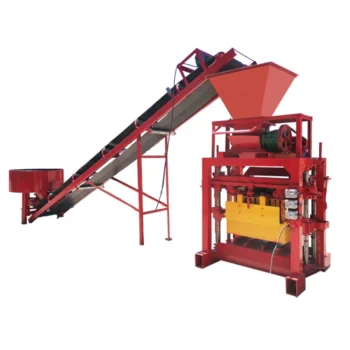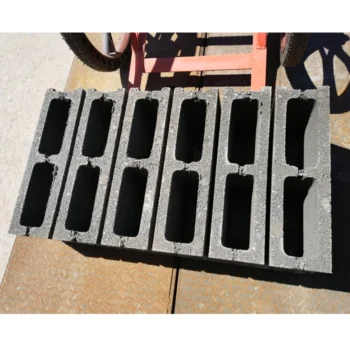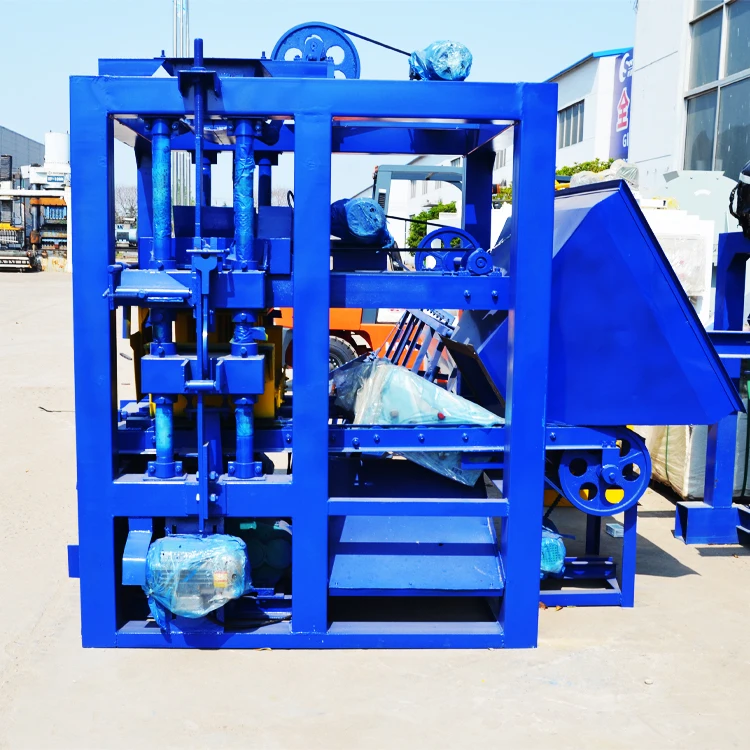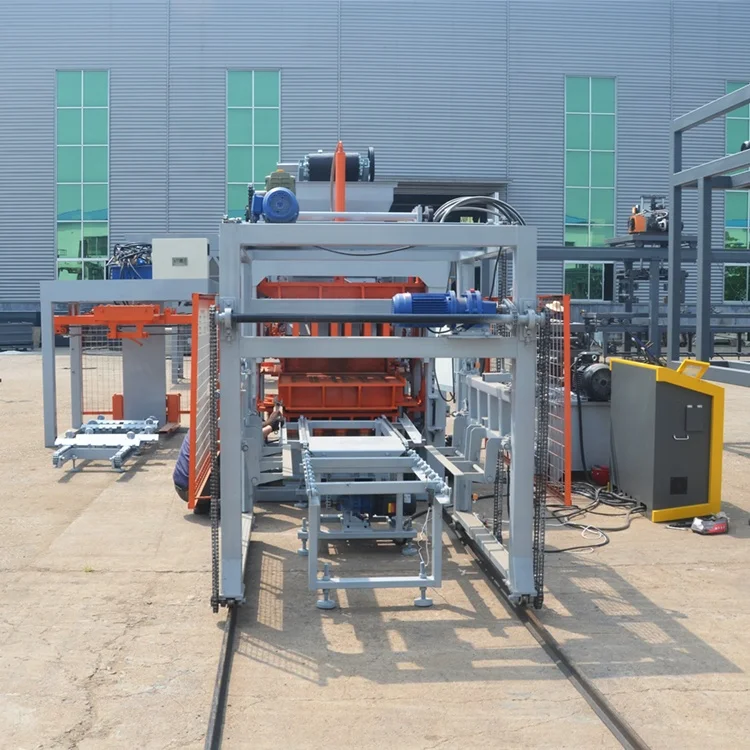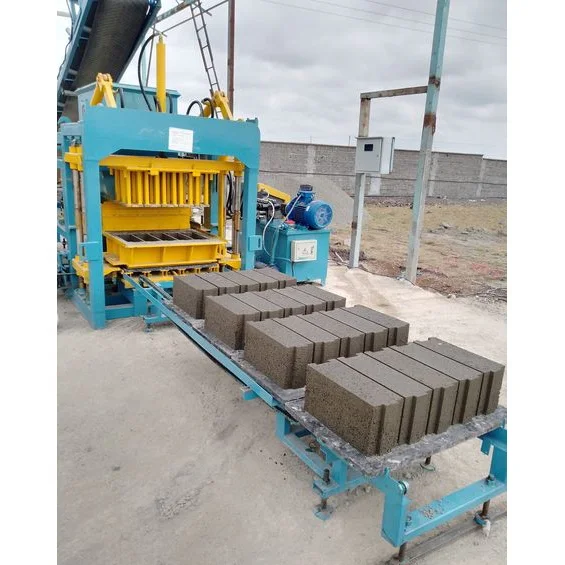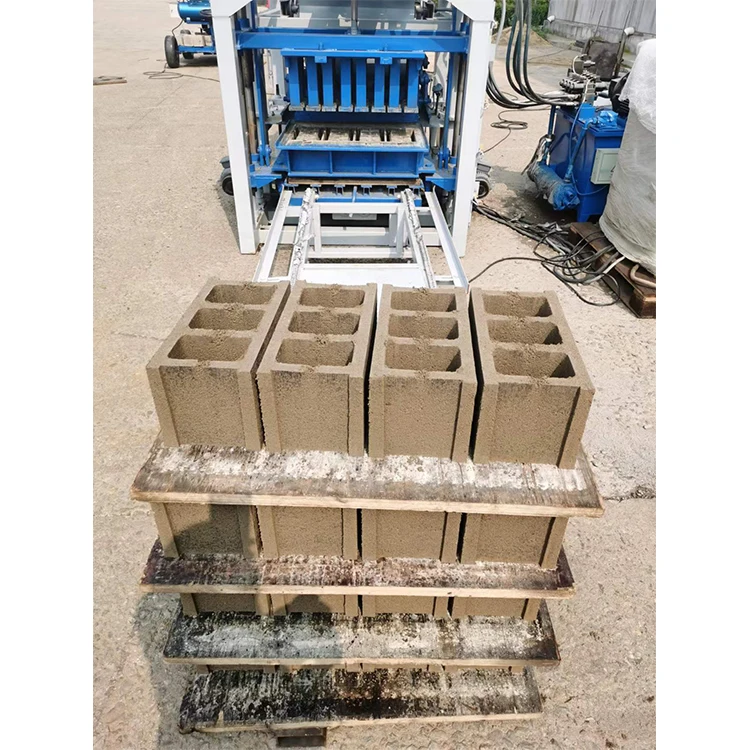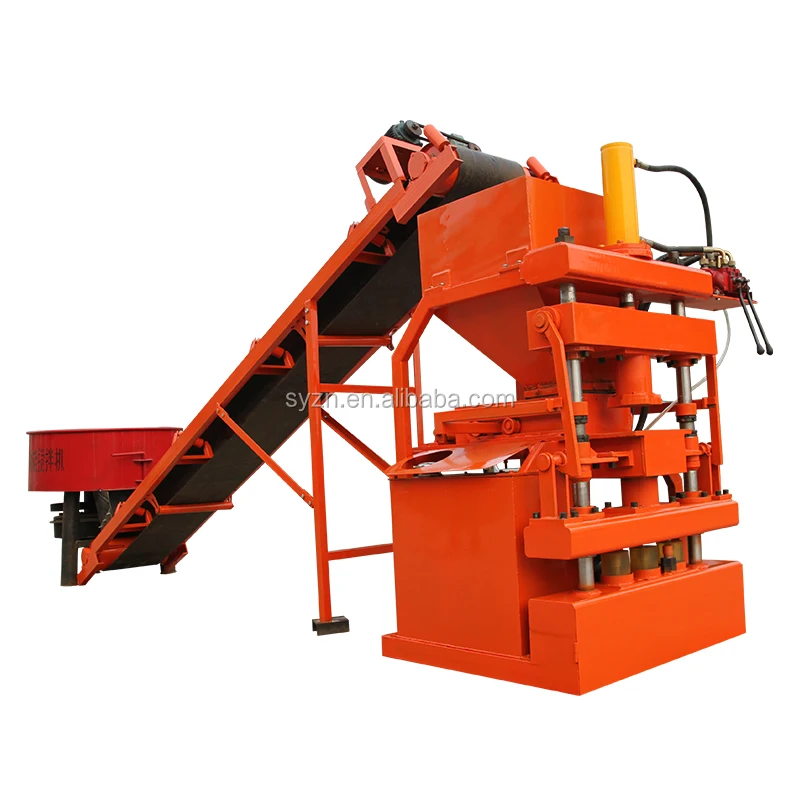
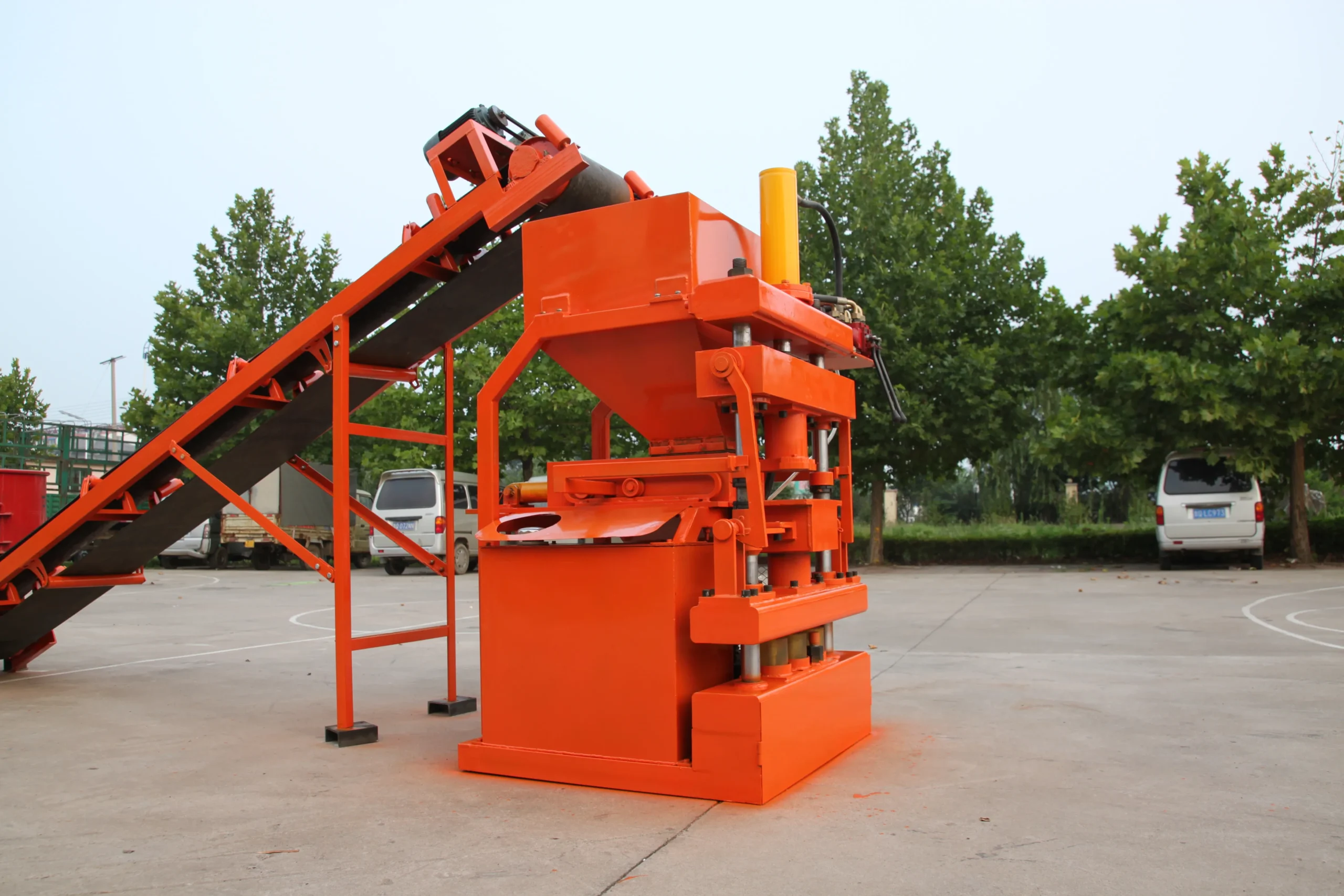


Description
Honest Capacity Per Format — The LY1-10 is specified against the block format you actually sell, with cycle time and daily output stated per mould rather than a single inflated number, so buyers know exactly what to expect before the machine ships.
Technical Specifications
| Parameter | Value |
|---|---|
| Model | LY1-10 |
| Product Type | Semi-Automatic Clay Brick Making Machine |
| Rated Power | 1.5 kW |
| Voltage & Frequency | Configurable to local supply (basis to be confirmed) |
| Control System | Semi-automatic operation (PLC or relay basis to be confirmed) |
| Overall Dimensions (L×W×H) | 1300 × 1800 × 2400 mm |
| Net Weight | 400 kg |
| Vibration Type | Bed mould vertical vibration + upper mould compression vibration |
| Mould Format | 300 × 150 × 100 mm (1 pcs/mould) |
| Cycle Time | 45 s |
| Output Capacity | 360 pcs/h, 2880 pcs/day (based on 300 × 150 × 100 mm solid block, 1 pcs/mould) |
| Raw Materials | Concrete, sand, cement, fly ash, lime, gypsum |
| Automation Level | Semi-automatic |
| Stacking Method | Manual (basis to be confirmed) |
| CE Declaration | Available per company documentation |
Application Suitability
| Application | Material or Output |
|---|---|
| Small-scale solid brick production for local builders | Concrete, sand, cement mixes |
| On-site block production for housing projects | Fly ash, lime, gypsum blends |
| First brick plant for entrepreneurs entering the market | Locally sourced aggregate with cement binder |
| Building material distributors adding brick formats | Standard and custom mould-compatible mixes |
What "360 Pieces per Hour" Actually Means for Your Output
Capacity figures only hold when the block format, mix design, and vibration parameters are all matched to your local conditions.
Many buyers discover that the number on the brochure assumed a block size their market does not buy, or a mix their local quarry cannot supply. A semi-automatic clay brick making machine specifications sheet that omits the format behind the output figure leaves the buyer guessing at real daily throughput. I once watched a buyer in South America run high-plasticity clay through a machine set for concrete aggregate — the moulds stuck, blocks cracked on release, and the quoted capacity dropped by half before lunch [NEED_CITE: clay mix design and vibration parameter matching for brick presses]. The fix took two weeks on-site adjusting moisture content and vibration force.
Mould Format and Cycle Time: The Real Output Determinants
The LY1-10 runs a 45-second moulding cycle producing one 300 × 150 × 100 mm solid block per stroke. At that rate, semi-automatic clay brick making machine specifications indicate 360 pieces per hour under continuous operation. If your market demands a different format — say a wider paving block or a thinner partition brick — the cycle time and pieces-per-mould will shift, and so will your daily total. That is why the capacity calculation must state which format it assumes before the order is placed.
Vibration Matching to Your Mix, Not a Catalogue Default
The dual vibration system combines bed mould vertical vibration with upper mould compression vibration to consolidate the mix from both directions. This matters because different raw materials respond differently to vibration frequency and amplitude. A fly ash and lime mix needs different energy input than a coarse concrete aggregate blend. When the vibration force does not match the buyer’s mix design, block density varies from batch to batch, and compressive strength testing reveals inconsistency that only shows up after the blocks have cured [NEED_CITE: vibration force and hydraulic pressure matching to block mix design].
Reading the Numbers That Matter on the Spec Sheet
The 1.5 kW rated power reflects the semi-automatic nature of the LY1-10 — the operator handles pallet feeding and stacking manually, which keeps electrical demand modest compared to fully automatic lines. The 1300 × 1800 × 2400 mm footprint means the machine fits inside a standard workshop bay without requiring a dedicated building, though curing area and pallet storage still need planning. The 400 kg net weight allows transport on a flatbed truck rather than requiring a crane-rigged container, which matters for remote project sites. Voltage and frequency must be confirmed before production, because arriving with a 380V motor on a 220V site delays commissioning by weeks while a replacement motor ships. The semi-automatic control system reduces the electrical complexity but still requires confirmation of display language and relay or PLC configuration to match the operator’s capability.
The Hidden Cost of Skipping the Mix Test
Buyers who skip sending a soil or aggregate sample before ordering often face mould sticking, block cracking, or density variation once the machine runs locally. High-plasticity clay behaves nothing like the standard concrete test mix used at the factory, and adjusting vibration parameters after arrival costs far more in lost production time than a two-week soil analysis would have. Pallet size is another silent mismatch — if the pallet specified does not match the curing racks and forklift already on site, the buyer ends up replacing an entire handling system they did not budget for [NEED_CITE: pallet sizing and curing area compatibility for block plants].
Why Sourcing Here Reduces Specification Risk
Block machinery is the single focus of this operation, so the machine, mould, pallet, and handling are specified as one matched system rather than assembled from separate suppliers. Configuration is set against the buyer’s actual mix design, local aggregate, and target block format instead of a catalogue default. Mould design covers the formats the buyer’s market sells, including custom drawings when standard formats do not match local demand. The automation level is selectable, meaning a buyer can start with the semi-automatic LY1-10 and add pallet handling or stacking automation later as production volume grows. Installation support includes operator training so the crew understands vibration adjustment and mould change procedures from day one.
Documentation & Verification
- Line layout with capacity calculation stating the 300 × 150 × 100 mm format assumed
- Mould drawing and format list confirming compatible block types
- Machine specification sheet with vibration type and rated power detailed
- Voltage and control language confirmation document before production begins
- Factory test record on your mix design before dispatch
- CE declaration documentation where applicable to your import market
Installation, Commissioning & Support
- Foundation pad level and load-bearing checked against the 400 kg machine weight
- Electrical supply verified for the 1.5 kW motor at confirmed voltage and frequency
- Machine arrives assembled; operator training covers mould change and vibration adjustment
- First production run supervised to match cycle time against your specific block format
- Wear parts list provided with mould and vibration component replacement intervals
- Manual pallet handling workflow mapped to your curing rack layout and forklift reach
What to Include in Your Inquiry
Send your target block format with dimensions, the raw materials available locally including a soil or aggregate sample, and your expected daily production volume. Confirm your site voltage, frequency, and the language your operators need on the control display. If you have existing curing racks or forklifts, include their dimensions so pallet size can be matched before the machine ships.
Frequently Asked Questions
Q: How is the capacity figure calculated, and which block format does it assume?
A: The 360 pieces per hour and 2880 pieces per day figures are based on a 300 × 150 × 100 mm solid block at one piece per mould with a 45-second cycle. If your market requires a different format, the pieces-per-mould and cycle time change, so the daily output must be recalculated for your specific block size before ordering.
Q: What mould formats are available, and how long does a mould change take?
A: The standard mould produces 300 × 150 × 100 mm solid blocks. Custom mould designs are available to buyer drawings for formats the local market demands. Mould change time is not published as a fixed figure — it depends on the format complexity and should be confirmed during the specification stage.
Q: Can the machine be configured for my local raw materials and mix design?
A: Yes. The LY1-10 handles concrete, sand, cement, fly ash, lime, and gypsum mixes. The vibration system is adjusted to match the buyer’s specific aggregate and binder combination, but this requires a material sample sent before production so the settings are correct at delivery.
Q: What pallet size is required, and does it match my existing curing area?
A: Pallet size is determined during configuration based on the mould format and the buyer’s existing curing racks and forklift capacity. This must be confirmed before production to avoid a mismatch between the machine output and the site handling infrastructure already in place.