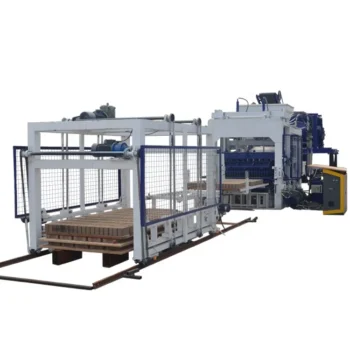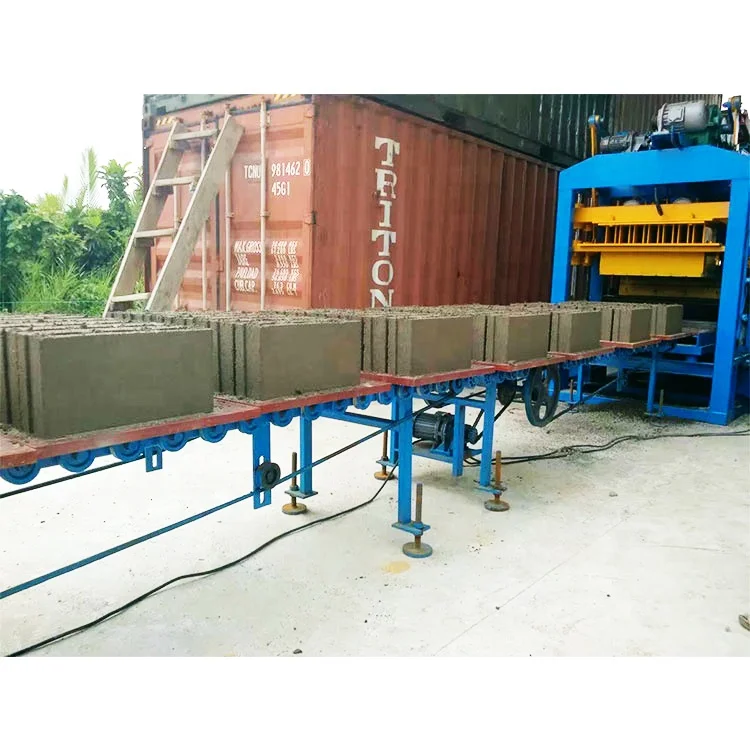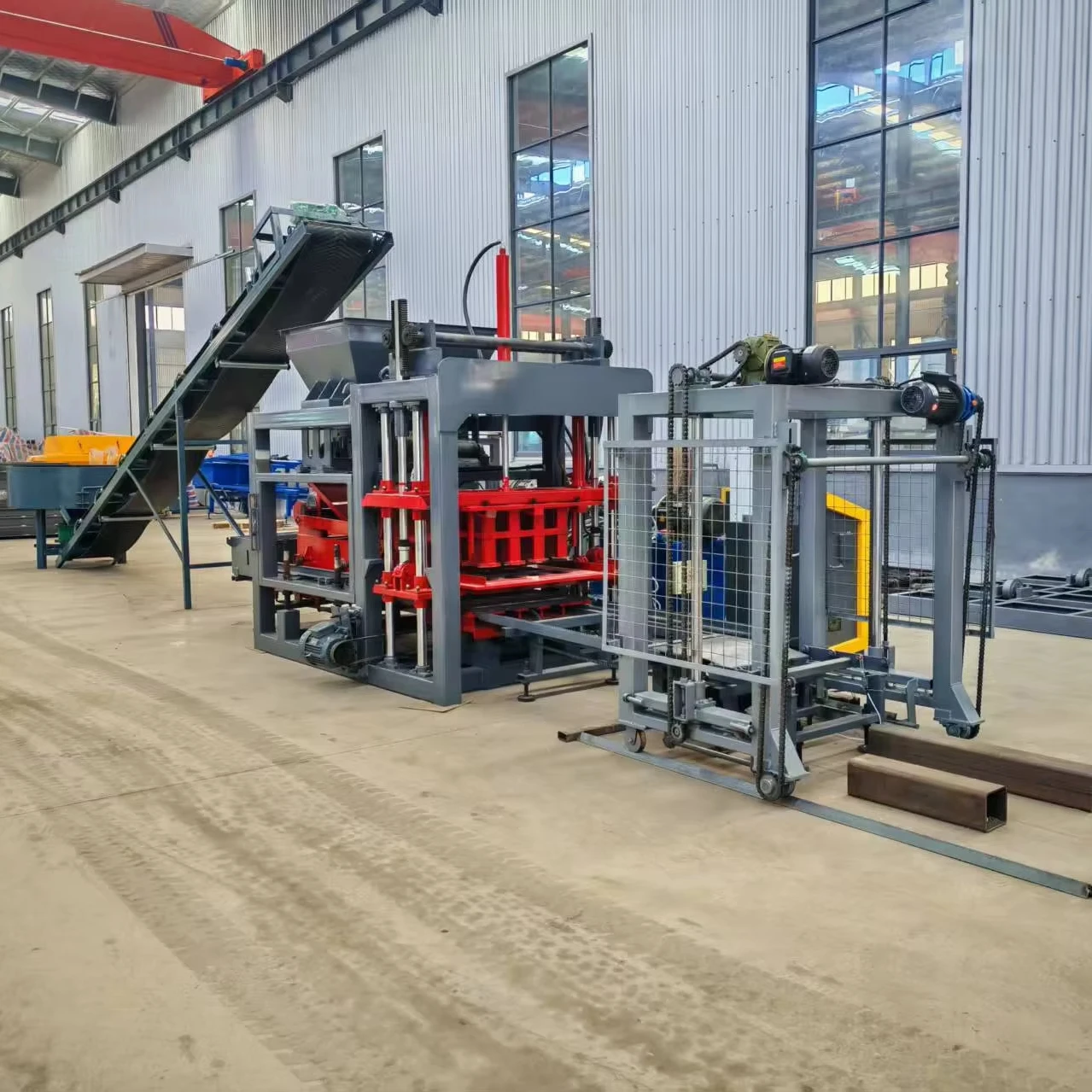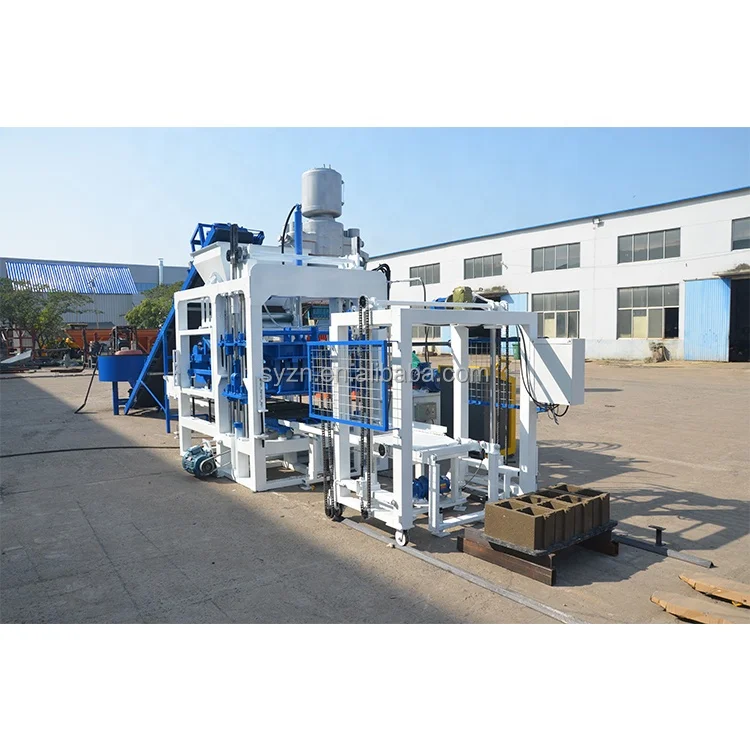



Description
Honest Capacity by Format — The QTJ4-26 block machine output is stated per specific hollow block and solid brick dimension, so you size the press against the product your market actually buys.
Technical Specifications
| Parameter | Value |
|---|---|
| Model | QTJ4-26 |
| Product Type | Concrete Block Making Machine |
| Overall Dimensions (L×W×H) | 2060×1730×2580 mm |
| Net Weight | 1800 kg |
| Molding Cycle | 26 s |
| Vibration Frequency | 4200 r/min |
| Vibration Force (Exciting Power) | 35.5 kN |
| Total Power | 14.25 kW |
| Mixer Model | JQ350 |
| Pallet Size | 850×450×20 mm |
| Guide System | Four guide pillars |
| Mould Movement | Automatic |
| Vibration Type | Dual vibrating motors under mould, direct vertical vibration with upper mould pressing |
| Output: Hollow Block 390×190×190 mm | 480 pcs/h, 3800 pcs/8hr (basis: 4 pcs/mould) |
| Output: Hollow Block 400×150×200 mm | 600 pcs/h, 4800 pcs/8hr (basis: 5 pcs/mould) |
| Output: Solid Brick 240×115×53 mm | 2100 pcs/h, 17000 pcs/8hr (basis: 18 pcs/mould) |
| Applicable Products | Concrete hollow blocks (8 inch, 6 inch), solid bricks |
| Raw Materials | Crushed stones, sand, cement, dust, fly ash |
| Automation Level | Semi-automatic |
| Voltage & Frequency | (basis to be confirmed with buyer’s local supply) |
| Control System | (basis to be confirmed — PLC or relay logic) |
Application Suitability
| Application | Material or Output |
|---|---|
| Small-to-medium hollow block plant | 8-inch and 6-inch concrete hollow blocks from crushed stone, sand and cement |
| Solid brick production | Standard 240×115×53 mm solid bricks using fly ash or dust as partial aggregate |
| On-site block production for contractors | Hollow blocks and solid bricks produced at the construction site from locally sourced aggregate |
| First block plant for entrepreneurs | Entry-level semi-automatic line producing multiple formats on an 850×450 mm pallet |
What "4800 Blocks a Day" Actually Means on the QTJ4-26 Block Machine
The headline capacity only holds true if your block format, mould cavity count and local aggregate all match the test assumptions behind the number.
I spent four days on a site in Indonesia where a semi-automatic block press rated at a respectable daily output delivered barely half once the local volcanic ash and oversized aggregate went into the mixer. The vibration time, pressure and cycle had to be rebuilt from scratch. [NEED_CITE: impact of local aggregate grading on block machine cycle time and density]. When the QTJ4-26 block machine specifications list 4800 hollow blocks per 8-hour shift, that figure is tied to the 400×150×200 mm format with 5 cavities per mould. Switch to the larger 390×190×190 mm block with 4 cavities and the same machine produces 3800 pieces in the same shift. A buyer who only sees the higher number and plans a contract around it will miss delivery targets before the first week is out.
Matching the Mould to the Format Your Market Buys
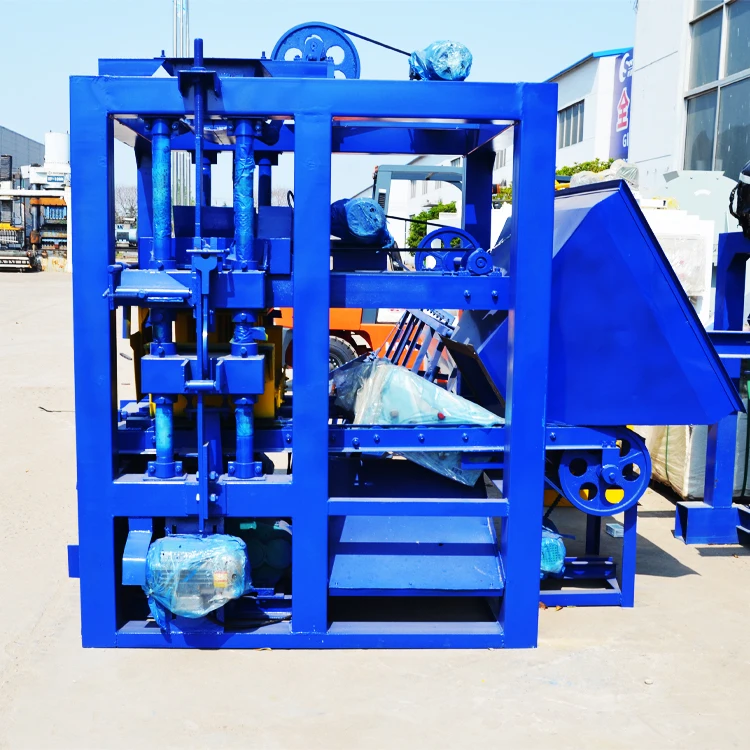
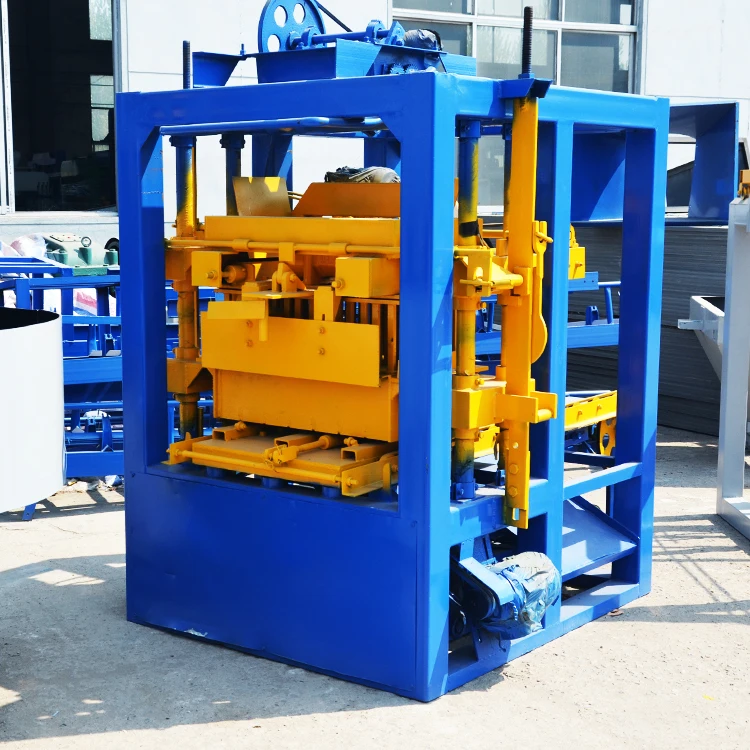
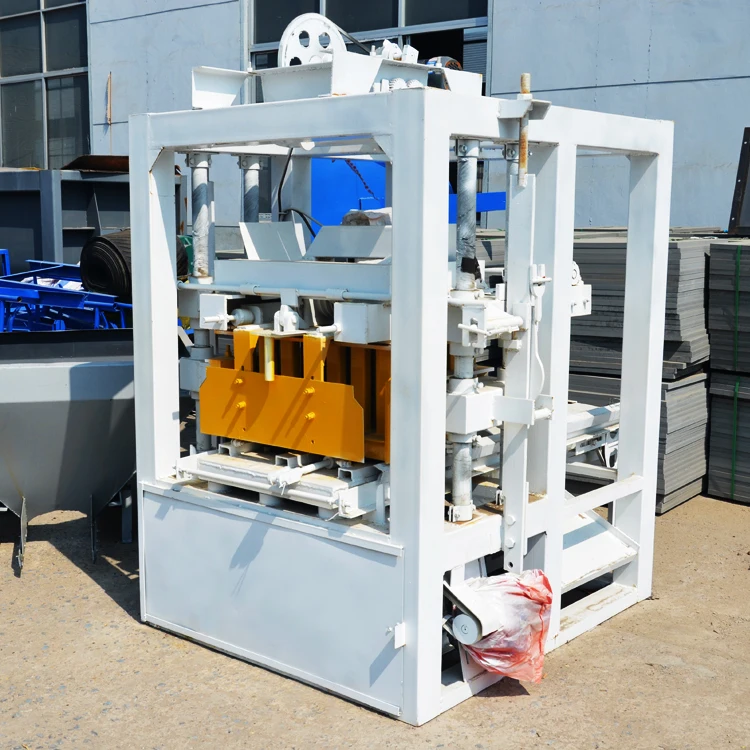
The QTJ4-26 block machine produces hollow blocks and solid bricks by swapping moulds on a four-guide-pillar frame. The automatic mould travel keeps alignment consistent across formats, which matters when you run a 6-inch hollow block in the morning and switch to solid brick after lunch. The 26-second molding cycle is the mechanical baseline; actual cycle time on your floor will depend on how quickly your operator feeds the pallet and clears the finished block.
Pallet Size Decides Your Curing Layout Before the Machine Arrives
An 850×450×20 mm pallet is the interface between the press and everything downstream. If your curing racks were built for a different pallet dimension from a previous machine, every wet block will need manual re-stacking before it enters the curing area. [NEED_CITE: pallet dimension compatibility with curing rack systems in block plants]. Confirm the pallet material — timber, bamboo or composite — against the humidity and forklift capacity at your site before the QTJ4-26 block machine enters production.
How Vibration Force and Upper Press Shape Block Density
The dual vibrating motors under the mould deliver 35.5 kN of exciting power at 4200 r/min in a direct vertical path. Combined with upper mould pressing, this compresses the mix from both directions during the 26-second cycle. For a hollow block with thin walls, the vertical vibration must fluidize the mix enough to fill the cavity corners without over-vibrating and collapsing the web. The 14.25 kW total power across the press and JQ350 mixer sets the energy envelope; if your local aggregate is heavier or more abrasive than standard river sand, the vibration settings will need adjustment during commissioning to maintain uniform density across every pallet.
When the Wrong Mix Reaches the Mould
A block machine configured for a standard sand-and-cement mix will struggle the first time fly ash or crusher dust dominates the batch. The finer particles change how the mix flows under vibration and alter the water demand. I have watched a fresh block crumble off the pallet because the vibration time was set for a coarser aggregate than what the batch plant actually delivered. [NEED_CITE: effect of fly ash replacement ratio on concrete block compaction]. The semi-automatic nature of the QTJ4-26 block machine means the operator controls the feed — so any mismatch between the quoted mix design and the real material shows up immediately in block strength and surface finish.
Why a Matched Line Matters More Than the Press Alone
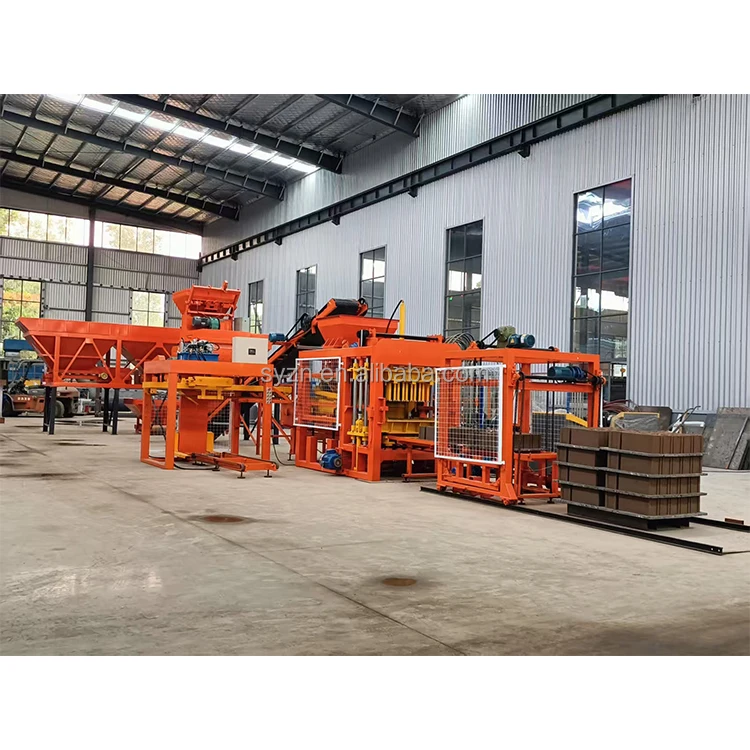
The QTJ4-26 block machine is specified here as part of a line that includes the JQ350 mixer and pallet handling, not as a standalone press dropped into an unknown layout. Configuration is set against the buyer’s actual mix design, local aggregate and target block format rather than a catalogue default. Mould design covers the hollow block and solid brick dimensions the buyer’s market sells, with custom drawings available when a local format falls outside the standard range. Voltage, frequency and control language are confirmed before production so commissioning is not delayed by a mismatch at the panel. Pallet size and material are checked against the curing area and forklift already on site. Installation support includes operator training on mould change and vibration adjustment for the specific aggregate in use.
Documentation & Verification
- Capacity calculation sheet stating the block format and cavity count behind every output figure
- Mould drawing and format list for each hollow block and solid brick the line will produce
- Pallet specification confirming 850×450×20 mm dimensions and material grade
- Electrical schematic with voltage and frequency matched to the buyer’s confirmed site supply
- Factory test record run on the buyer’s target block format before dispatch
Installation, Commissioning & Support
- Foundation pad sized for the 2060×1730 mm footprint and 1800 kg static load plus dynamic vibration
- Dedicated power circuit rated for the 14.25 kW total draw including the JQ350 mixer motor
- Semi-automatic pallet feed and block clearance workflow established during on-site commissioning
- Vibration time and frequency tuned to the buyer’s local aggregate during first production run
- Mould change procedure trained with the operator on the specific formats in the buyer’s product range
- Wear parts list provided for the mould liner, vibration motor bearings and guide pillar bushings
What to Share With Your Inquiry
To size the QTJ4-26 block machine correctly, send the specific hollow block and solid brick dimensions your market requires along with your target daily output for each format. Include a sample or description of your local aggregate — whether crushed stone, river sand, fly ash or crusher dust — and the voltage and frequency at your site. If you already have curing racks and a forklift, share the pallet dimensions they accept so the pallet specification is locked before production begins.
Frequently Asked Questions
Q: How is the QTJ4-26 output capacity calculated per block format?
A: Each output figure is based on a specific block dimension and cavity count per mould. The 4800 hollow blocks per 8-hour shift assumes the 400×150×200 mm format with 5 cavities, while the 3800 figure uses the 390×190×190 mm format with 4 cavities. Solid brick output of 17000 pieces uses 18 cavities. The 26-second molding cycle is the mechanical baseline for all formats.
Q: Which block formats can the QTJ4-26 produce and what about mould change?
A: The machine produces 8-inch and 6-inch concrete hollow blocks and standard 240×115×53 mm solid bricks by swapping moulds on the four-guide-pillar frame. The automatic mould travel assists alignment during changeover. Mould change time depends on operator familiarity and must be confirmed during commissioning — plan for it when scheduling a multi-format production day.
Q: How should vibration force match my local aggregate for consistent block strength?
A: The dual vibrating motors deliver 35.5 kN at 4200 r/min with upper mould pressing. If your aggregate is finer — such as fly ash or crusher dust — the vibration duration may need to be shortened to prevent over-compaction and surface cracking. Coarser crushed stone may require longer vibration. Settings are tuned during on-site commissioning against your actual mix.
Q: What pallet size does the QTJ4-26 require and how does it affect layout?
A: The machine uses an 850×450×20 mm pallet. This dimension must match your existing curing rack slots and forklift tine spacing. Pallet material — timber, bamboo or composite — should be selected based on your local humidity and the weight of a wet block load. Confirming this before production avoids manual re-stacking at the curing area entrance.
Q: What documentation comes with the machine for commissioning?
A: Documentation includes a capacity calculation per block format, mould drawings, pallet specification, electrical schematic matched to your confirmed voltage, factory test record on your target format, and an operation and maintenance manual. A wear parts and mould availability list is provided so replacements can be planned before the first changeover is due.