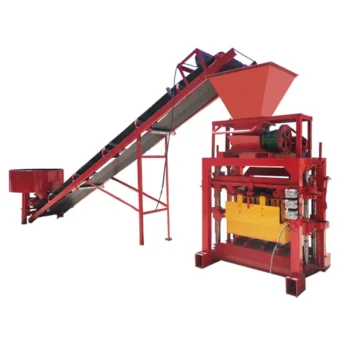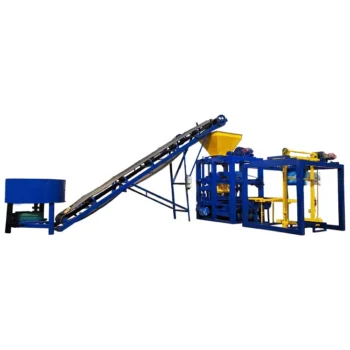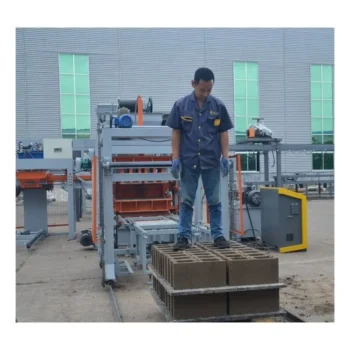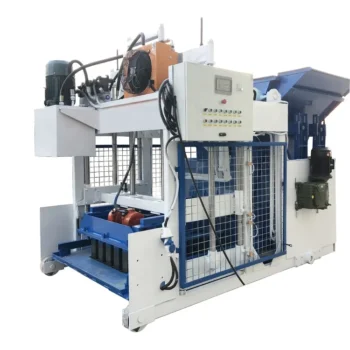
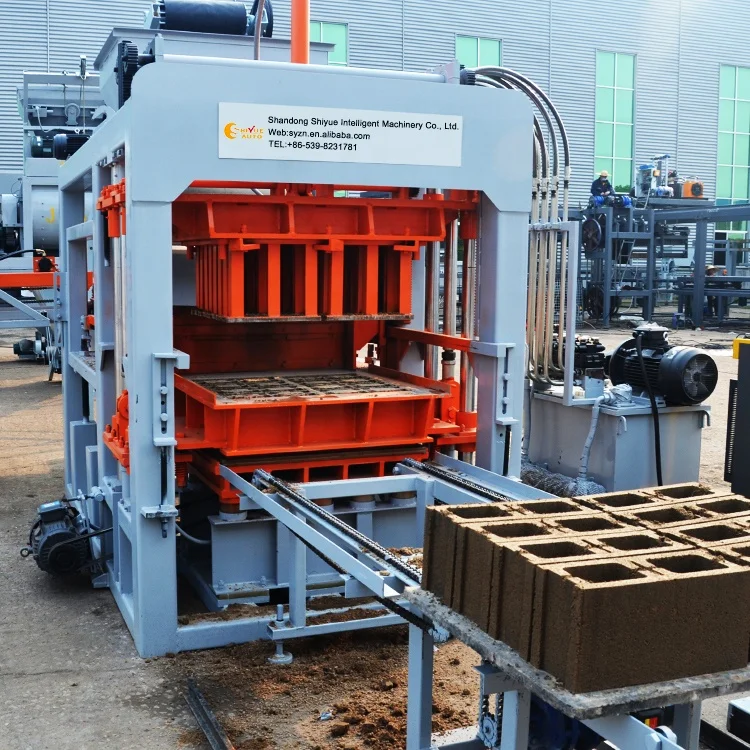
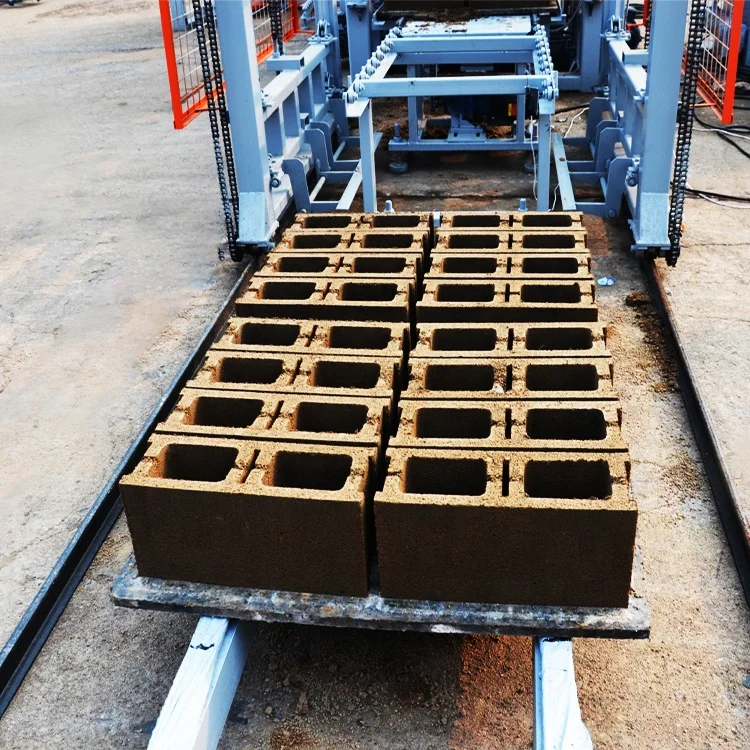
Description
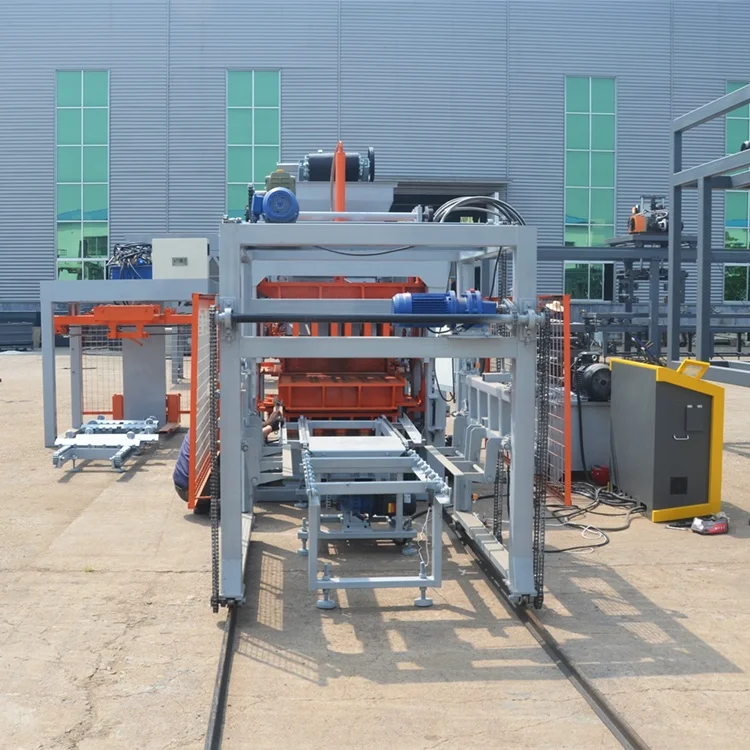
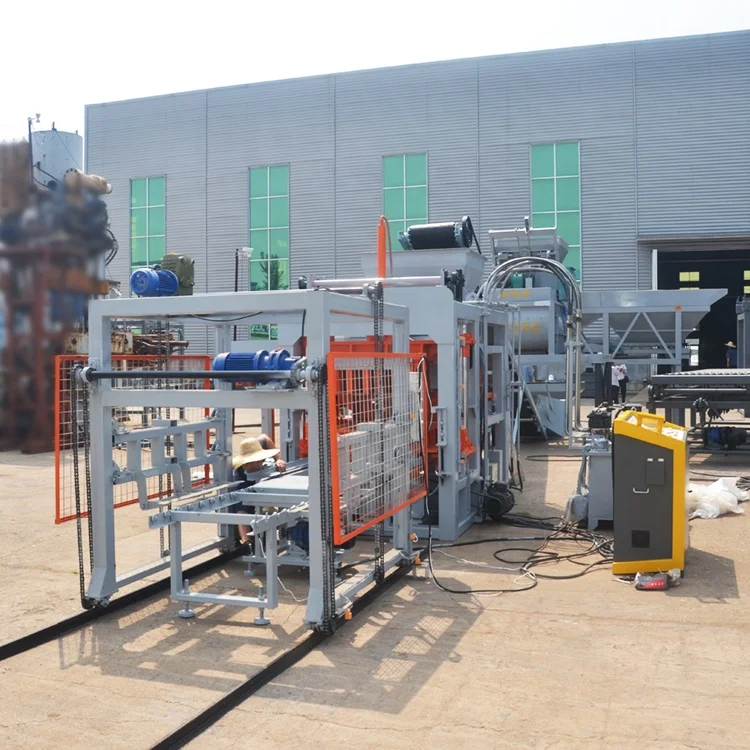
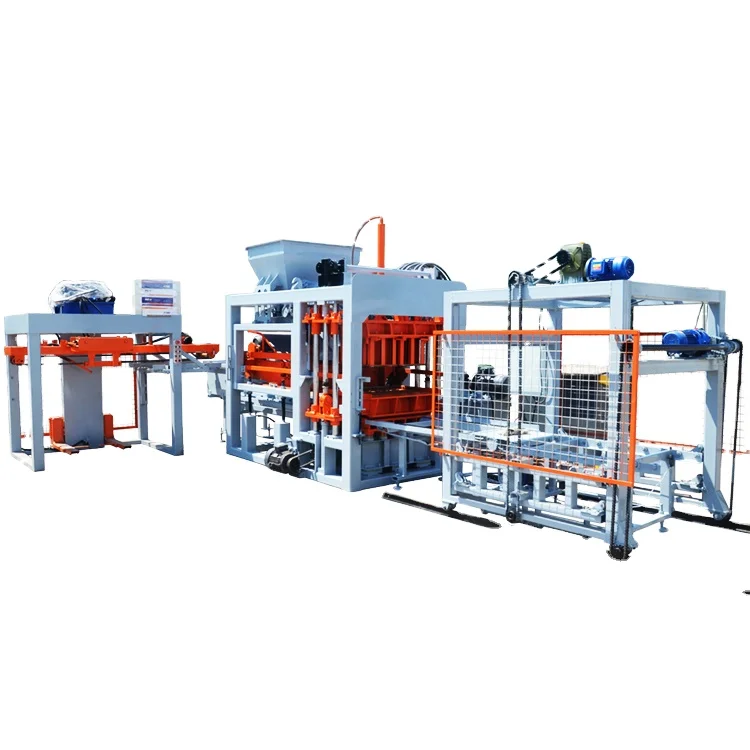
Mould format matched to your actual sales mix — output capacity on this QT6-15 is calculated per block size and cycle time, not reduced to a single headline figure that ignores format changeovers.
Technical Specifications
| Parameter | Value |
|---|---|
| Model | QT6-15 |
| Product Type | Hollow Block Making Machine |
| Overall Dimensions | 8200 × 1700 × 2950 mm |
| Total Mass | 7 T |
| Overall Power | 37 kW |
| Vibration Form | Platform Vibration |
| Vibration Frequency | 0–60 Hz |
| Vibration Force | 45 kN |
| Moulding Mode | Automatic load, vibration moulding |
| Moulding Cycle | 15–20 s (20–25 s for paving formats) |
| Pallet Size | 880 × 850 mm |
| Control System | PLC with touch screen |
| Hydraulic System | Independent integrated hydraulic station |
| Demolding Method | Hydraulic |
| Block Compressive Strength | More than 15 MPa |
| Recommended Factory Area | 1200 m² |
| Output: Hollow Block 400×200×200 mm | 6 pcs/mould, 1080–1440 pcs/hour, 8640–11520 pcs/8 hr |
| Output: Hollow Block 400×150×200 mm | 8 pcs/mould, 1440–1920 pcs/hour, 11520–15360 pcs/8 hr |
| Output: Solid Brick 240×115×53 mm | 32 pcs/mould, 5760–7680 pcs/hour, 46080–61440 pcs/8 hr |
| Output: Rectangular Paver 200×100×60 mm | 21 pcs/mould, 2160–2880 pcs/hour (20–25 s cycle), 17280–23040 pcs/8 hr |
| Output: Zigzag Paver 225×112.5×60 mm | 15 pcs/mould, 2160–2880 pcs/hour (20–25 s cycle), 17280–23040 pcs/8 hr |
| Voltage & Frequency | Basis not stated in source — confirm with buyer’s local standard |
| PLC Display Language | Basis not stated in source — confirm buyer requirement |
| Hydraulic Pressure | Basis not stated in source — confirm against manufacturer catalog |
| Mould Change Time | Basis not stated in source — confirm against manufacturer catalog |
Application Suitability
| Application | Material or Output |
|---|---|
| Hollow block production for housing and commercial walls | Cement, crushed stone, sand, waste ash |
| Solid brick manufacturing for load-bearing masonry | Cement, slag, local aggregate blends |
| Rectangular paving brick for roads and walkways | Cement, fine aggregate, pigments |
| Zigzag interlocking paver for driveways and yards | Cement, graded sand, crushed stone |
| On-site block production for development projects | Locally sourced aggregate with reduced cement dosage |
What "1080 Pieces per Hour" Actually Means on the QT6-15
Every capacity figure on this page is tied to a specific block format and moulding cycle, because a single number without that context is how projects run into delays.
I have sat through commissioning meetings where the buyer signed a contract on a headline cycle rate, then watched real output fall to half when the block format changed or the local sand carried more clay than the factory test assumed. The hollow block making machine specifications you evaluate should always name the block dimensions, the cycle seconds, and the mould cavity count behind each hourly rate. Without those three numbers together, you cannot plan curing racks, pallet circulation, or shift staffing. [NEED_CITE: block output calculation standards by format and cycle time]
Platform Vibration Tuned to Your Mix Design
The QT6-15 uses platform vibration adjustable from 0 to 60 Hz with a rated force of 45 kN. This is the parameter that determines whether your local aggregate compacts fully before the hydraulic head finishes its stroke. A high-clay river sand needs a different frequency window than washed crushed granite, and getting this wrong shows up as inconsistent block strength across the pallet.
Mould Selection and Cycle Time by Format
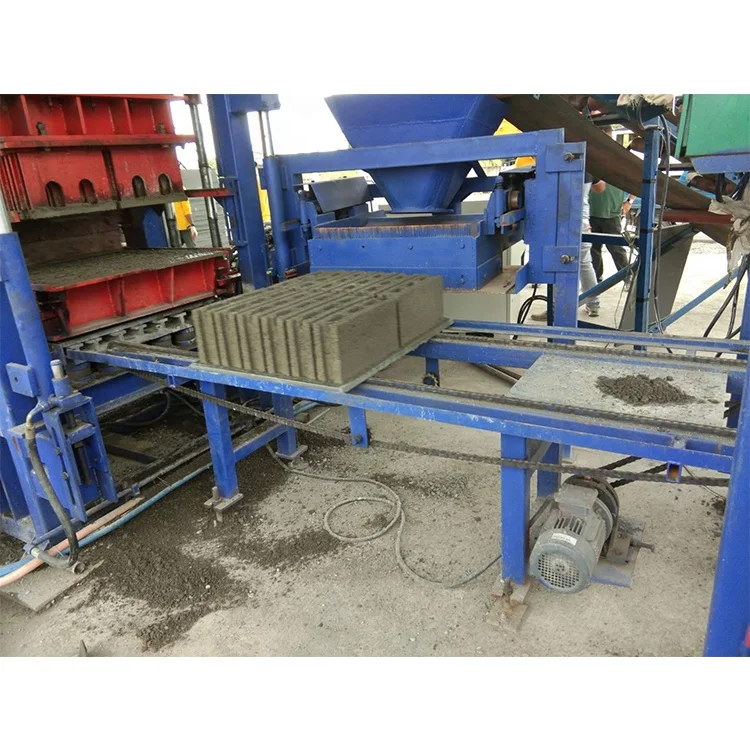
Hollow block making machine specifications mean little without the matching mould inventory. The QT6-15 covers cavity counts from 6 per mould on the 400×200×200 mm hollow block up to 32 per mould on the 240×115×53 mm solid brick. Paving formats like the 200×100×60 mm rectangular brick run on a longer 20–25 second cycle because surface finish tolerance is tighter. A technical buyer planning daily output needs these per-format numbers to size the curing yard and pallet return loop. [NEED_CITE: paving block cycle time versus surface finish requirements]
Reading the Specs That Matter on Site
The independent integrated hydraulic station sits isolated from the main press vibration, which keeps seal wear and valve response consistent across a full shift. The 880×850 mm pallet size must be cross-checked against whatever curing racks and forklifts the buyer already has — ordering a machine whose pallets do not match existing handling equipment causes bottlenecks that no amount of press speed can fix. The PLC touch screen controls the moulding sequence, but the display language and electrical voltage must be confirmed before the machine enters production, not after it arrives at the port. The 45 kN vibration force and hydraulic pressure work together: vibration settles the mix into the mould cavity while hydraulic pressure sets the final density, and both must match the buyer’s actual mix proportions.
When the Wrong Configuration Reaches the Site
A pallet size chosen without regard to the curing area means blocks are stacked by hand before they gain initial set strength. Voltage and frequency confirmed too late delay commissioning by weeks while transformers or motor rewinds are arranged. A mould change procedure that takes most of a shift cancels out the format flexibility the buyer paid for in the first place. [NEED_CITE: common commissioning delays from unconfirmed voltage and frequency]
Why This Machine Is Configured Before It Is Quoted
Block machinery is the single production focus here, so the press, mould, pallet, and handling equipment are specified as one system rather than assembled from unrelated suppliers. The hollow block making machine specifications are set against the buyer’s confirmed mix design and target block format, not a catalogue default. Mould design covers the formats the buyer’s local market actually sells, with custom drawings when standard cavities do not match. Automation level is selectable, meaning a semi-automatic start can be upgraded later without replacing the press. Installation support includes operator training so the crew understands mould change procedure and cycle adjustment from day one.
Documentation & Verification
- Line layout drawing with capacity calculation stated per block format and cycle time
- Mould drawing and format list confirming included cavities and change procedure
- Pallet specification sheet cross-referenced to buyer’s curing area dimensions
- Voltage, frequency, and PLC display language confirmation recorded before production
- Factory test record run on buyer’s specified block format before dispatch
- Operation and maintenance manual with wear parts and mould replacement list
Installation, Commissioning & Support
- Foundation plan based on the 8200 × 1700 mm footprint and 7 T operating mass
- Dedicated power circuit sized for the 37 kW total load at confirmed voltage and frequency
- Machine dismantled for container loading, reassembled and aligned on site
- First-run commissioning with moulding cycle and vibration frequency tuned to buyer’s mix
- Operator training covering PLC fault diagnosis and safe logic interlock circuits
- Wear parts list provided with mould replacement intervals and hydraulic seal schedule
What We Need to Configure Your QT6-15
Send the target block formats your market sells, the daily output you need per format, and a sample or description of your local aggregate and sand source. Confirm the site voltage, frequency, and preferred PLC display language so the control panel is built to match. If you have existing pallets, curing racks, or forklifts, share the dimensions so the 880×850 mm pallet system is verified against your handling setup before the quotation is finalised.
Frequently Asked Questions
Q: How is capacity calculated per block format on the QT6-15?
A: Each output figure pairs a specific block dimension, mould cavity count, and moulding cycle in seconds. For example, the 400×200×200 mm hollow block runs 6 cavities per mould at a 15–20 second cycle, giving 1080–1440 pieces per hour. Paving formats use a longer cycle for surface finish.
Q: How do I match vibration force to my local aggregate?
A: The 45 kN platform vibration is adjustable across 0–60 Hz. High-clay or fine-graded materials need a different frequency window than coarse crushed stone. We configure this against your confirmed mix design before dispatch.
Q: What mould formats are included and how long does a change take?
A: The format list covers hollow blocks, solid bricks, and pavers from 400×200×200 mm down to 225×112.5×60 mm zigzag. Mould change time depends on the specific system fitted and must be confirmed during the quotation stage.
Q: How do I confirm voltage and PLC language before production?
A: Both are locked in during the configuration proposal stage, documented in writing, and verified against the buyer’s local electrical standard. This prevents commissioning delays when the machine arrives at site.
Q: Does the 880×850 mm pallet fit my existing curing racks?
A: Pallet dimensions must be cross-checked against your curing area layout and forklift capacity. We verify this during the line design phase so pallet circulation matches your site handling equipment.