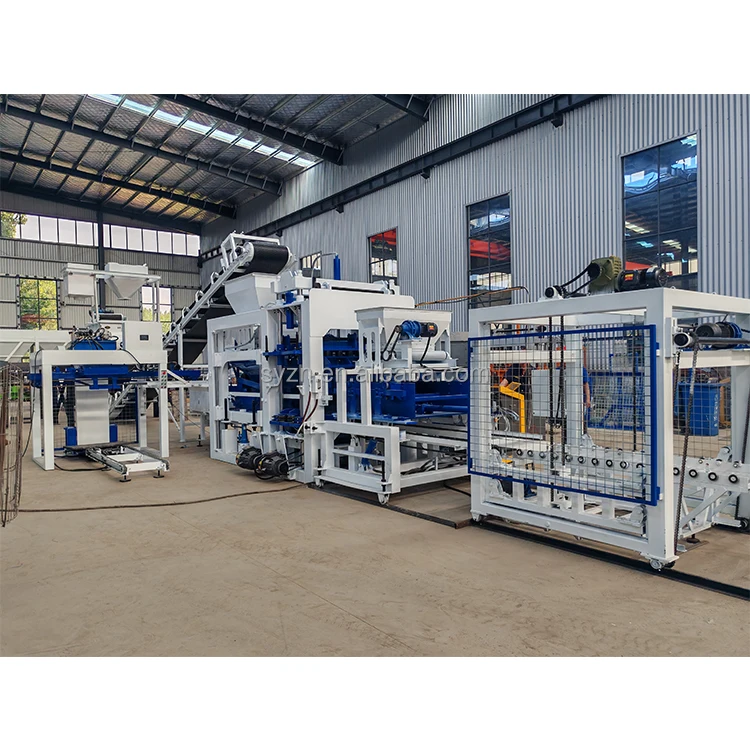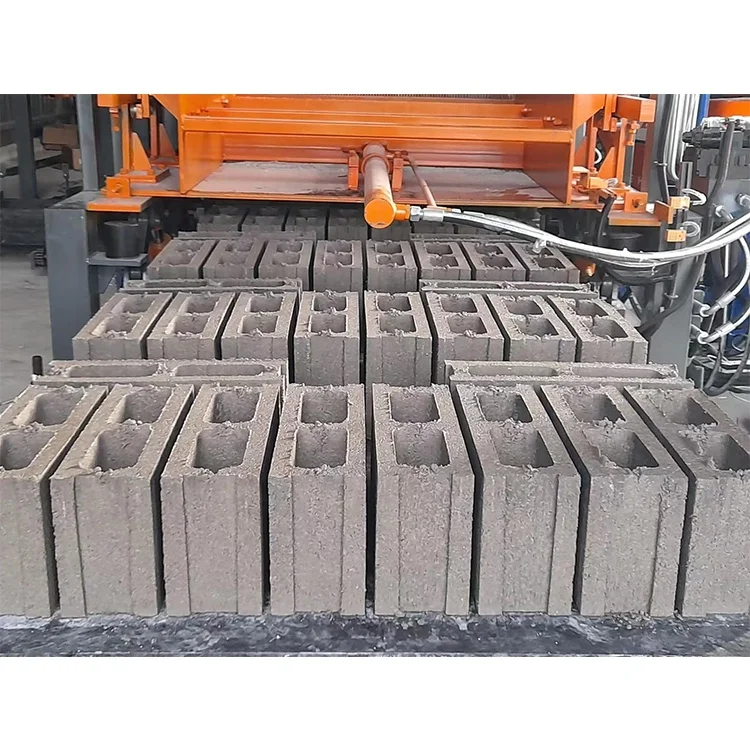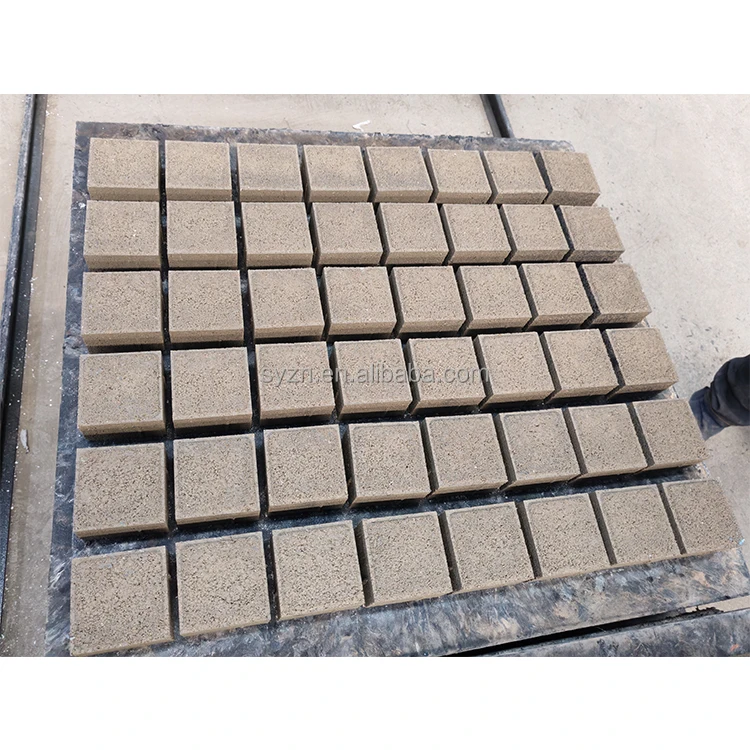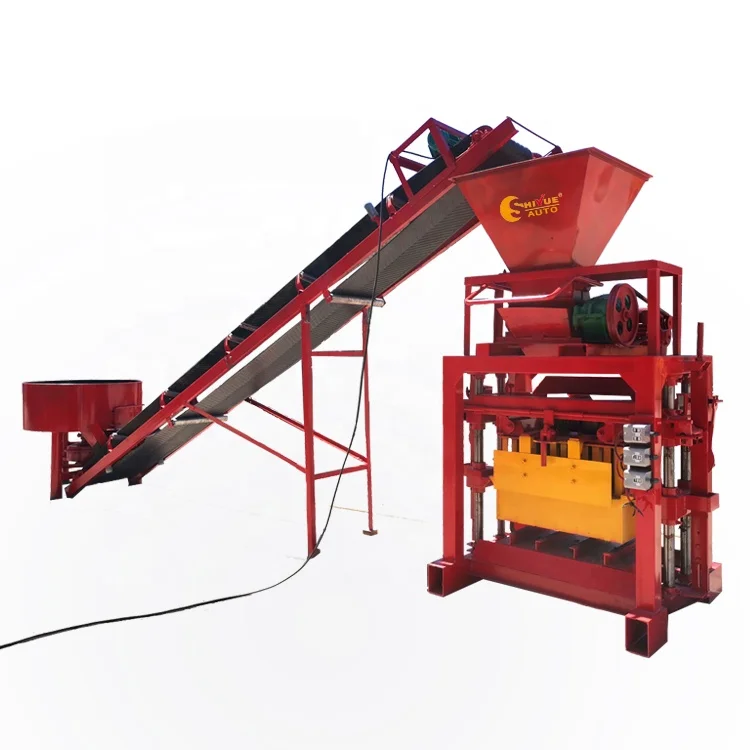

Description
Mould and format matched to buyer output — every cycle time and pallet dimension is verified against the block format you actually sell, not a generic catalogue claim.
Technical Specifications
| Parameter | Value |
|---|---|
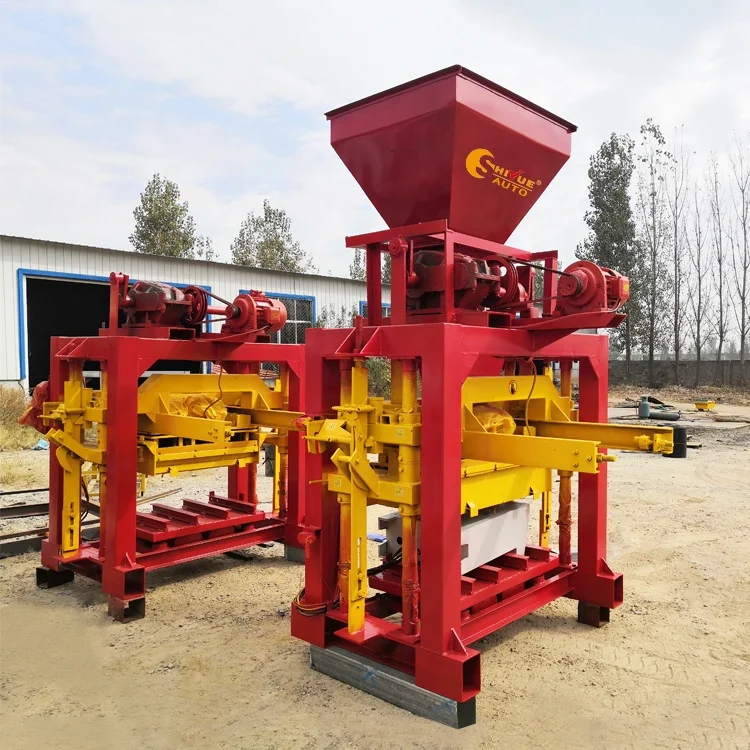
| Model | QTJ4-35 |
| Product Type | Concrete Block Making Machine |
| Overall Dimensions (L×W×H) | 1350×1460×1800 mm |
| Molding Cycle | 35 s |
| Vibration Frequency | 2800 r/min |
| Exciting Power (Vibration Force) | 30 kN |
| Total Power | 11.15 kW |
| Mixer Model | JQ350 |
| Pallet Size | 850×450×20 mm |
| Total Weight | 1500 kg |
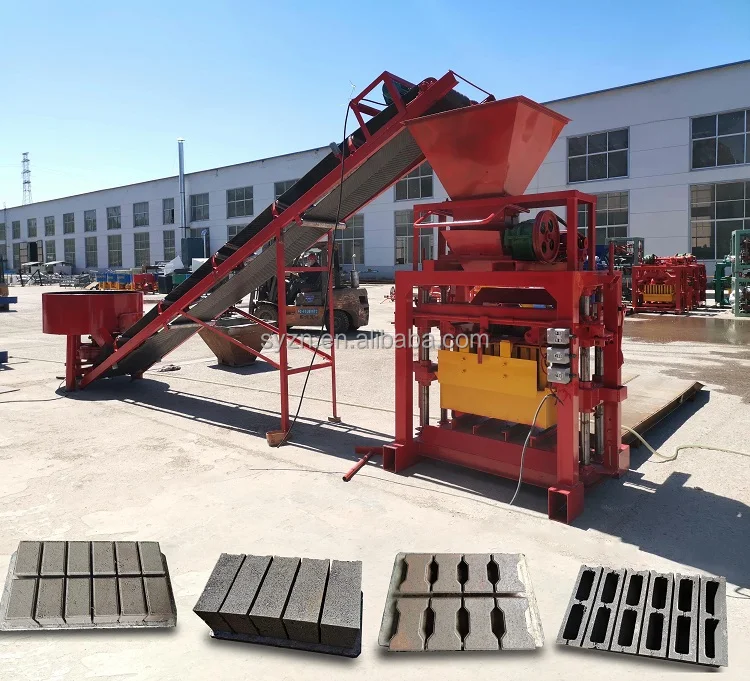
| Applied Products | Concrete hollow blocks (8 inch, 6 inch), solid bricks |
| Raw Materials | Crushed stones, sand, cement, dust, fly ash |
| Output Capacity — 400×200×200 mm Hollow Block | 4 pcs/mould, 408 pcs/h, 3264 pcs/8 hr |
| Output Capacity — 400×150×200 mm Hollow Block | 5 pcs/mould, 510 pcs/h, 4080 pcs/8 hr |
| Output Capacity — 240×115×53 mm Solid Brick | 18 pcs/mould, 2100 pcs/h, 17000 pcs/8 hr |
| Automation Level | Semi-automatic |
Application Suitability
| Application | Material or Output |
|---|---|
| Small-scale concrete block production | Crushed stone, sand, and cement mix for 8-inch and 6-inch hollow blocks |
| Fly ash brick manufacturing | Fly ash blended with dust and cement for solid brick formats |
| On-site production for building contractors | 400×150×200 mm hollow blocks at project location |
| First workshop setup for new block entrepreneurs | 240×115×53 mm solid brick with manual pallet handling |
Why "3264 Blocks per Day" Can Mislead Your Production Plan
The QTJ4-35 block machine specifications only hold meaning when tied to a specific block format, mould, and raw material profile.
A common mistake I see across the industry is buyers comparing machines based on a single cycles-per-hour number. That figure assumes the lightest, fastest block the press can form. When a buyer in the Yangtze River Delta once ordered a semi-automatic press for a fly ash mix, the local crushed stone had a larger top-size particle than the mould was designed for. The 35-second cycle stretched as operators cleared blockages, and the daily tally dropped significantly below the brochure claim [NEED_CITE: common causes of block machine output shortfall in small plants]. Capacity figures must be read alongside the exact block dimensions and the aggregate grading available at your site.
Matching the Press to Your Local Block Market
The QTJ4-35 is built around a fixed mould area that accepts an 850×450 mm pallet. This pallet size determines the maximum number of block faces per cycle. For a 400×200×200 mm hollow block, four units form per press stroke; switching to a 400×150×200 mm mould increases that count to five. Buyers entering a market where 6-inch hollow blocks dominate need the second mould to hit their daily volume, while contractors producing standard 8-inch blocks for structural walls should plan around the four-piece layout.
Vibration Force and Aggregate Grading
The 30 kN vibration force at 2800 r/min is adequate for well-graded sand and fine crushed stone mixes. If your local quarry produces aggregate with a top size exceeding 10 mm, the vibration may not fully compact the outer shell of a hollow block, leaving surface voids that reduce compressive strength. Before confirming a QTJ4-35 block machine specifications order, send your aggregate sieve analysis so the vibration force can be evaluated against your target block density [NEED_CITE: relationship between vibration force and aggregate size in block compaction].
Reading the Cycle Time Against Your Shift Pattern
A 35-second moulding cycle translates directly to hourly output only when pallet handling keeps pace. On this semi-automatic configuration, pallets are fed and removed manually. The real constraint on a long shift is not the press itself but the operator speed at the pallet station. Plan the layout so the curing rack area sits within a few steps of the press exit, and ensure the pallet return path does not cross the mixer feed zone.
How Pallet Size Affects Your Curing Yard
The 850×450×20 mm pallet must match both the curing rack slots and the forklift tine width already on site. A buyer who orders the machine without confirming pallet compatibility often finds the standard wooden pallets too wide for existing rack bays, forcing a costly rack modification or a new pallet purchase. Verify your rack dimensions and forklift capacity against this pallet size before the machine enters production.
The Hidden Cost of Unconfirmed Voltage and Language
When voltage, frequency, and control display language are assumed rather than confirmed in writing, the machine may arrive with a motor wound for the wrong supply or a PLC screen in a language the operators cannot read. Commissioning then stalls while replacement components are shipped [NEED_CITE: electrical standard mismatches in exported industrial machinery]. Always lock these three items into the purchase order before the factory begins assembly.
Why Format-Specific Data Matters at This Scale
For a buyer choosing the QTJ4-35, the difference between a 400×200×200 mm and a 400×150×200 mm hollow block is one extra piece per cycle. Over an eight-hour shift, that single extra block per stroke translates into hundreds of additional units. Knowing the exact output per format lets you calculate the number of curing racks, pallets, and raw material batches needed for a full day, avoiding mid-shift material shortages.
Documentation & Verification
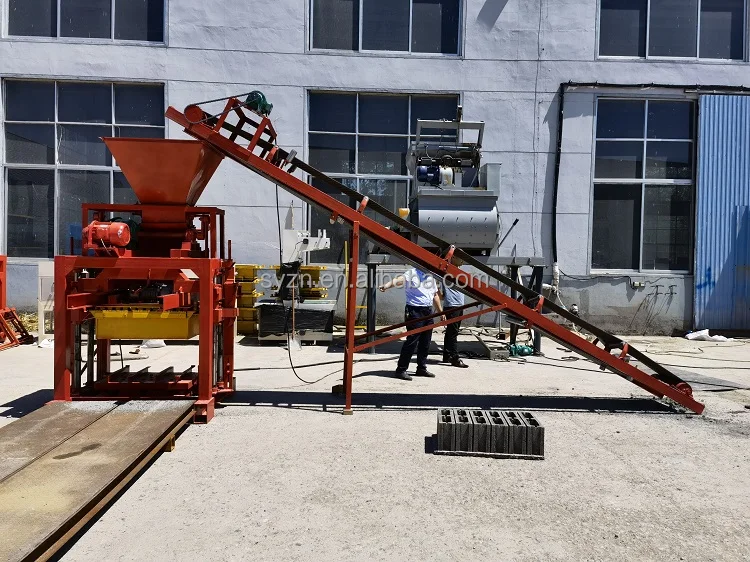
- Line layout drawing showing pallet flow from the JQ350 mixer through the press and into the curing yard
- Capacity calculation sheet listing output for each block format included in your mould order
- Pallet specification confirming 850×450×20 mm dimensions and recommended material grade
- Hydraulic and electrical schematic with confirmed voltage, frequency, and control language noted
- Factory test record documenting the 35-second cycle on your selected block format before dispatch
Installation, Commissioning & Support
- Confirm site power supply matches the 11.15 kW total load before the JQ350 mixer and press are wired.
- Prepare a level concrete pad sized for the 1350×1460 mm machine footprint plus pallet return clearance.
- Receive on-site alignment of the vibration table and mould clamping to maintain the 30 kN force path.
- Conduct first-run cycle verification on your specific block format with the operator present.
- Obtain a wear parts list covering mould liners and vibration motor mounts for the first replacement interval.
Requesting a Configuration Proposal
Send your target block format dimensions, the local aggregate sieve analysis, and your site voltage and frequency. Include the curing yard layout and existing forklift specifications so the pallet and rack compatibility can be checked before the quotation is issued. This information allows a realistic daily output calculation for the exact block your market demands, not a generic figure.
Frequently Asked Questions
Q: How is the stated output per format calculated for the QTJ4-35, and what block dimensions does each figure assume?
A: Each output figure is based on a 35-second moulding cycle multiplied across an eight-hour shift, assuming continuous pallet feed and removal. The 3264-piece figure assumes 400×200×200 mm hollow blocks at four per mould; the 4080-piece figure assumes 400×150×200 mm blocks at five per mould. Actual daily totals depend on pallet handling speed and raw material flow.
Q: Is the 30 kN vibration force sufficient for my local aggregate and target block compressive strength?
A: The 30 kN force at 2800 r/min compacts well-graded sand and fine crushed stone effectively. For aggregate with a top size above 10 mm or for high-density paver blocks, the force may not achieve full compaction. Share your sieve analysis and target strength so the vibration parameters can be evaluated before ordering.
Q: What pallet material is recommended for the 850×450 mm pallet, and how does it affect curing?
A: Wooden, bamboo, and PVC pallets are all compatible with the 850×450×20 mm size. Wooden pallets absorb moisture and may warp in high-humidity curing yards, while PVC pallets remain dimensionally stable but cost more upfront. The choice affects how evenly moisture leaves the block during the first 24 hours of curing.
Q: How long does a mould change take on the QTJ4-35, and what formats can I add later?
A: Mould change time depends on the clamping mechanism and operator familiarity. On this semi-automatic configuration, expect the swap to take a portion of a shift until the team is practiced. Any future format must fit within the 850×450 mm pallet area; confirm new mould drawings before ordering to ensure press clearance.
Q: What voltage and frequency options are available, and can the control interface be set to my local language?
A: The motor and control panel are wound and programmed to your confirmed supply before assembly. Specify voltage, frequency, and the preferred language for any display labels during the order stage. Confirming these details in writing before production avoids commissioning delays when the machine arrives on site.