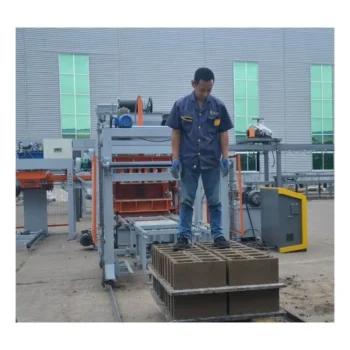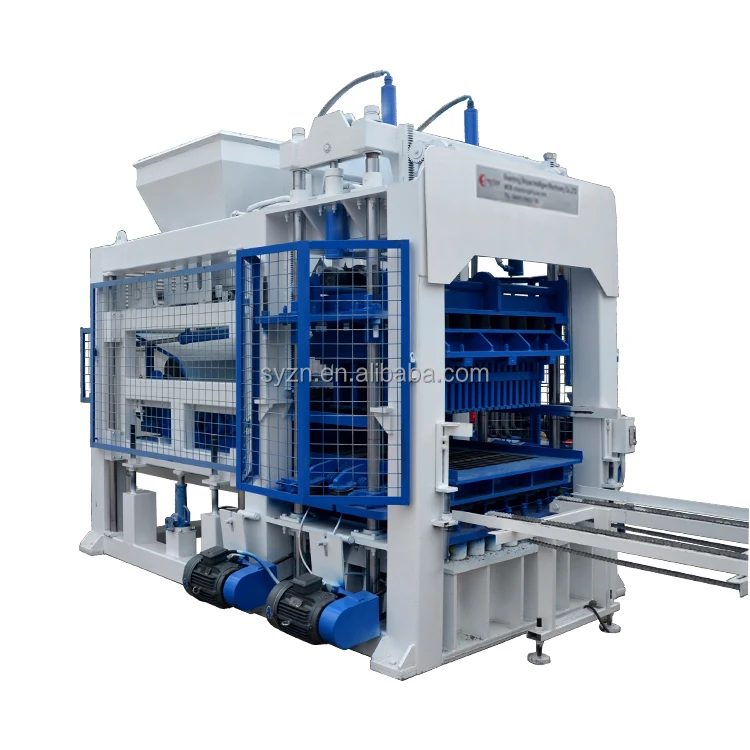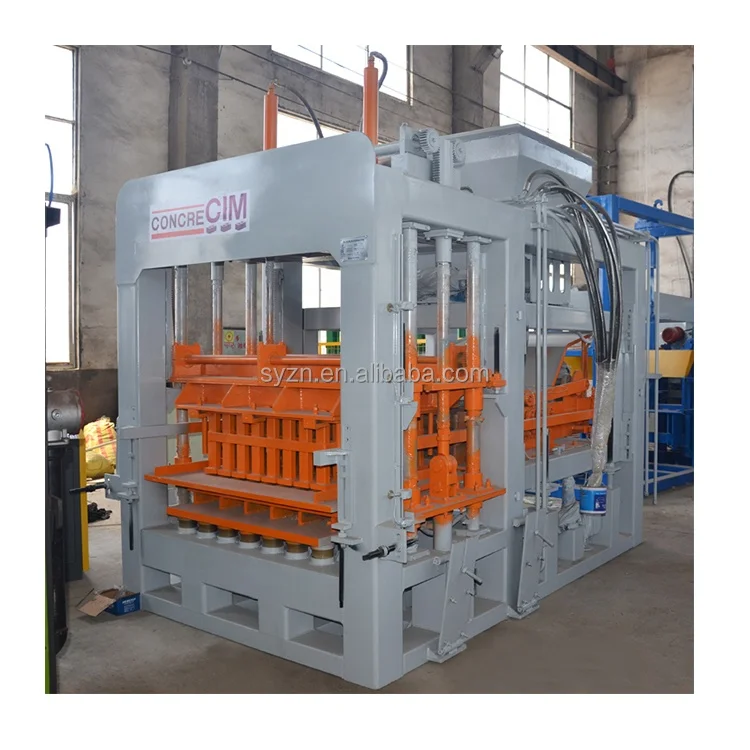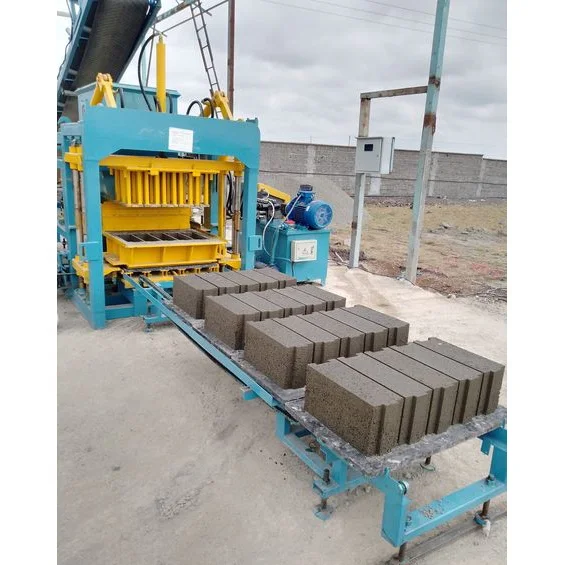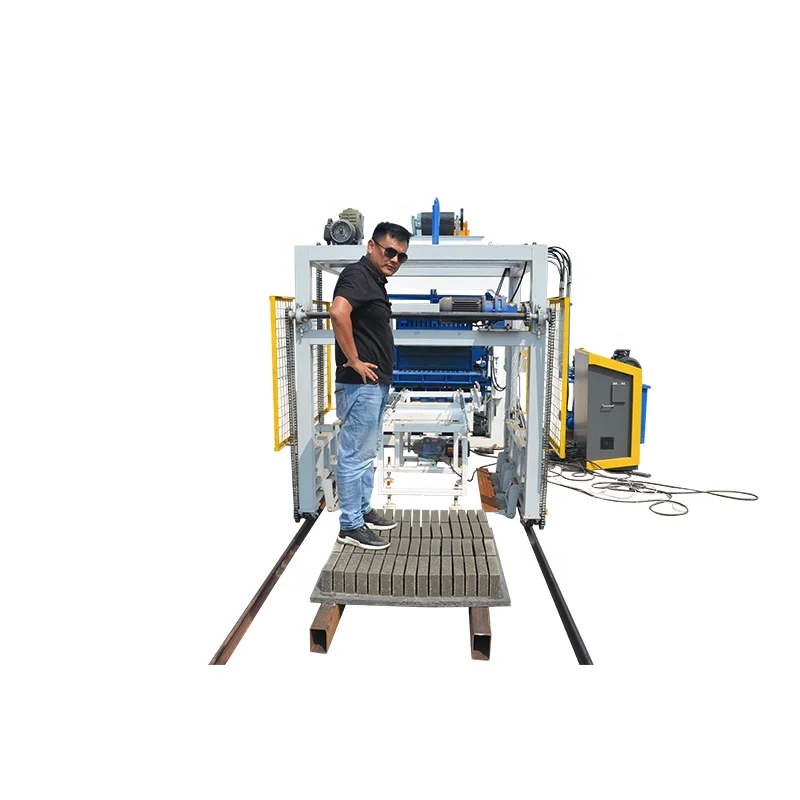
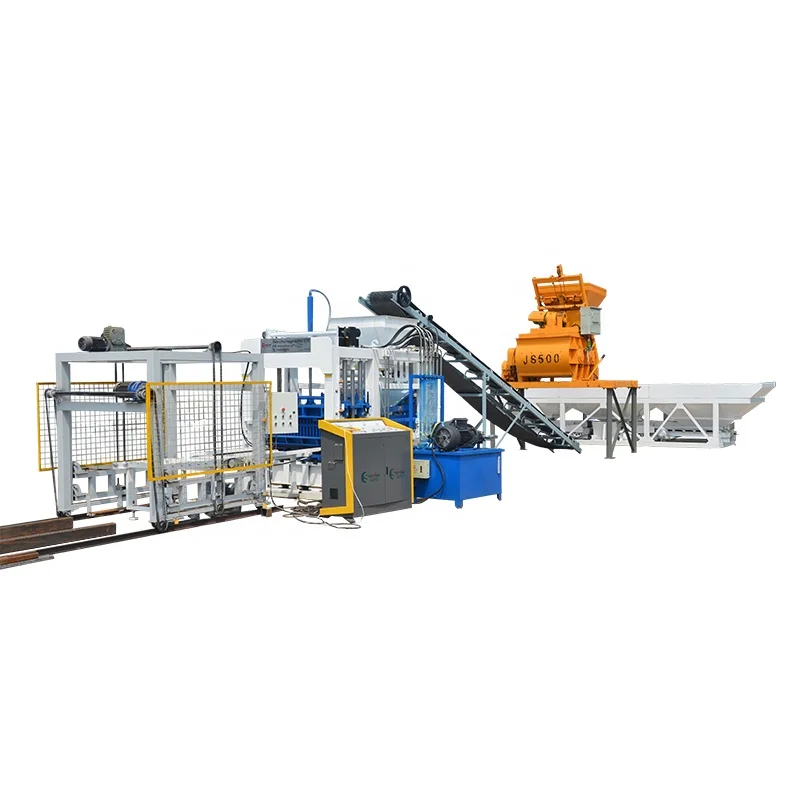

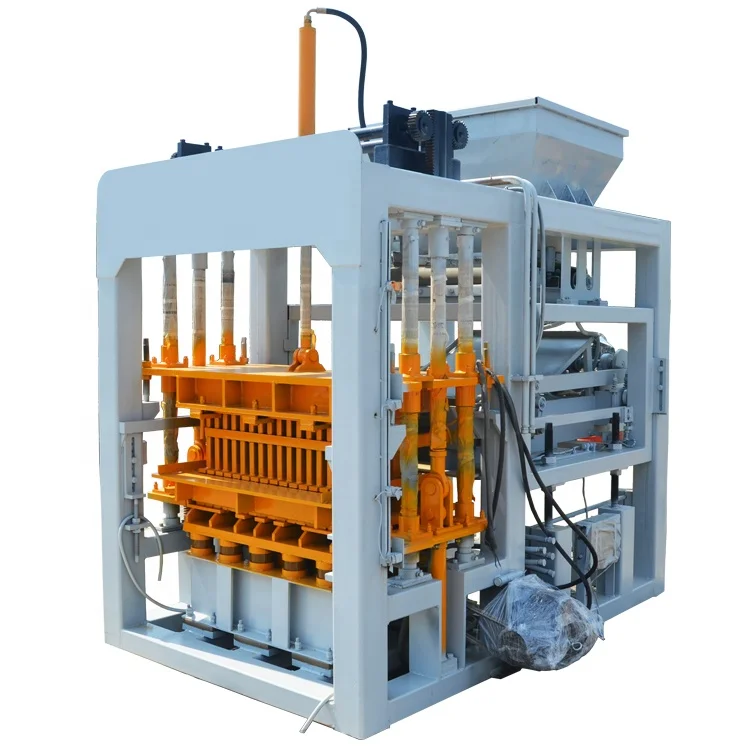
Description
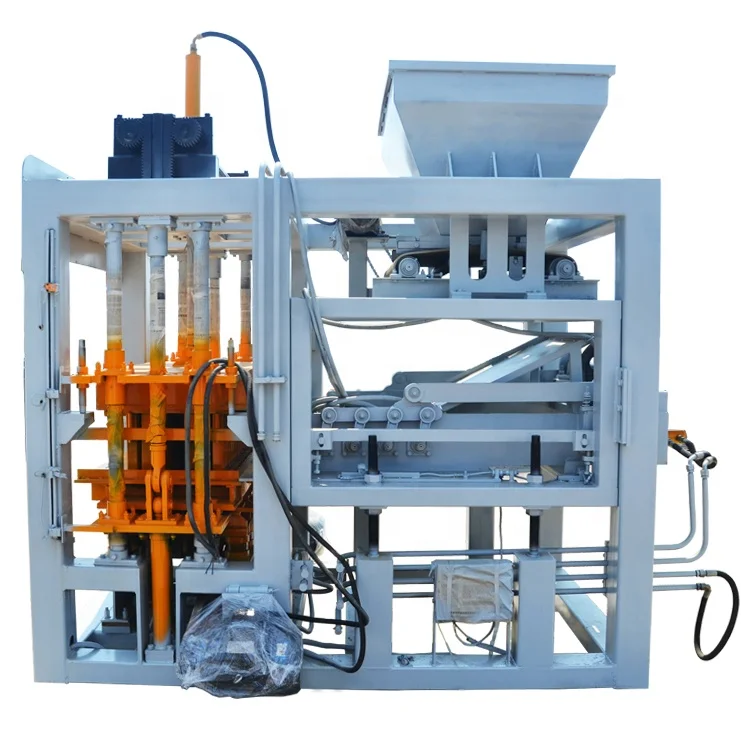
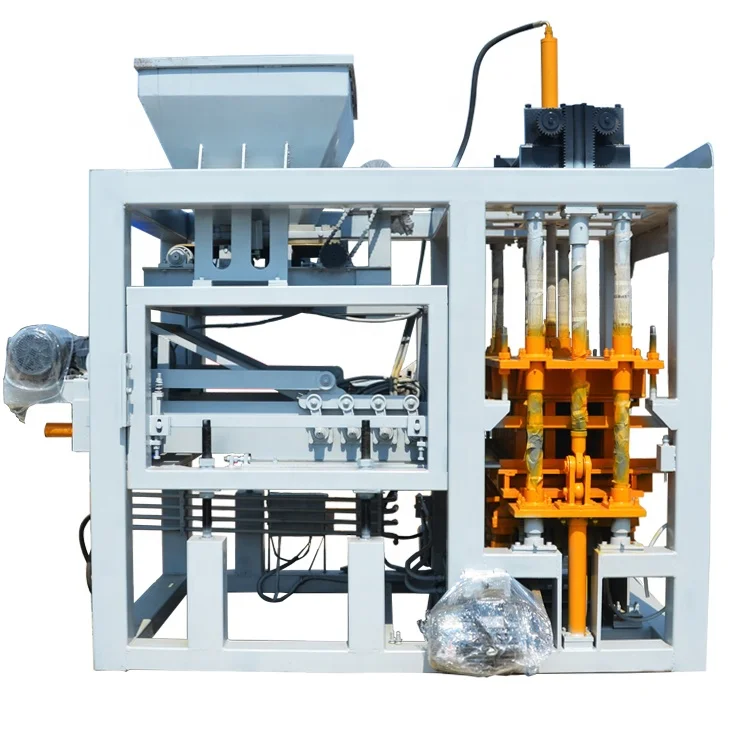
Single-focus block machinery — every QT4-15B configuration is matched to the buyer’s actual block format, local aggregate and target cycle time before production begins.
Technical Specifications
| Parameter | Value |
|---|---|
| Model | QT4-15B |
| Product Type | Fully Automatic Concrete Block Making Machine |
| Automation Level | Fully automatic, computer controlled |
| Vibration Mode | Multiaxis synchronizer vibration, vertically downward |
| Hydraulic System | High thermal efficiency, low heat productivity |
| Control System | Computer control (PLC brand and language to confirm) |
| Guide Bearing | Long-period over-length guide bearing for upper mould and mould box alignment |
| Mixer System | Multiaxis forced mixer system |
| Frame Construction | High-strength rack with special welding technique, vibration-shock resistant |
| Moulding Cycle | 15–20 s (basis not stated in source — confirm block format and material) |
| Output — 400×200×200 mm hollow block | 4 pcs/mould, 900–1,200 pcs/h, 7,200–9,600 pcs/8 hr |
| Output — 400×150×200 mm hollow block | 5 pcs/mould, 1,080–1,440 pcs/h, 8,640–11,520 pcs/8 hr |
| Output — 400×100×200 mm hollow block | 8 pcs/mould, 1,440–1,920 pcs/h, 11,520–15,360 pcs/8 hr |
| Output — 200×100×60 mm paving block | 16 pcs/mould, 2,880–3,840 pcs/h, 23,040–30,720 pcs/8 hr |
| Output — 240×115×53 mm solid brick | 28 pcs/mould, 5,930–6,720 pcs/h, 47,400–53,700 pcs/8 hr |
| Pallet Size | To confirm based on curing area and forklift |
| Hydraulic Pressure | To confirm based on mix design |
| Vibration Force | To confirm based on block format |
| Rated Power | To confirm |
| Voltage & Frequency | To confirm |
| Overall Dimensions | To confirm |
| Net Weight | To confirm |
| Warranty | 1 year for whole machine (excluding spare parts) |
Application Suitability
| Application | Material or Output |
|---|---|
| Hollow block production for commercial and residential construction | Crushed stone, cement, sand, and fly ash blends |
| Paving block production for roads, walkways and parking areas | High-density aggregate mixes with pigment layers |
| Solid brick production for load-bearing walls | Standard brick clay or cement-sand formulations |
| On-site block production for housing projects | Locally sourced aggregate adapted to regional conditions |
| Multi-format concrete product manufacturing | Interchangeable moulds across hollow, solid and paving formats |
What "7,200 Blocks per Shift" Actually Means for Your Plant
Every output figure on this page is tied to a specific block format — no single headline number hides the real daily capacity.
Sellers often quote the highest possible cycles per hour and leave the block format out of the conversation. A buyer budgeting around one number then discovers on commissioning day that the machine only hits that figure on a small solid brick, while the hollow block the market actually demands cuts throughput to a fraction. The QT4-15B block machine specifications table above lists output per format so planning starts from honest ground. [NEED_CITE: block format impact on cycle time and daily output]
When I first started sending machines overseas, I watched buyers run the wrong mix through a perfectly good press and blame the vibration system for weak blocks. Now I ask for a local aggregate sample before I sign off on any hydraulic pressure or vibration force setting. That step alone has prevented most of the commissioning headaches we used to see.
Matching the Press to the Block Your Market Buys
The QT4-15B concrete block making machine capacity by format is the starting point for sizing a plant, not the finish line. A buyer producing 200×100×60 mm paving blocks will see the highest hourly count on the table, while 400×200×200 mm hollow blocks require longer vibration cycles and therefore lower hourly throughput. Knowing which format drives revenue in the local market determines whether this press is the right tier or whether a larger model is needed.
Why Mould Selection Comes Before Machine Selection
Every format listed in the specifications requires its own mould, and each mould has a specific cycle time window. A plant planning to run hollow blocks in the morning and paving blocks in the afternoon needs a realistic mould change procedure and a clear count of how many production hours that change consumes. We match the QT4-15B mould package to the buyer’s product list so the machine arrives with the formats the market actually orders. [NEED_CITE: mould change time and multi-format production scheduling]
Reading the Vibration and Hydraulic Numbers Together
Block density depends on the combination of vibration force and hydraulic pressure — neither number alone tells the story. The multiaxis synchronizer vibration on the QT4-15B delivers vertically downward force, which packs aggregate evenly through the mould box. The long-period over-length guide bearing keeps the upper mould aligned with the mould box during each press stroke, preventing the dimensional drift that causes rejected batches on the curing rack. When hydraulic pressure is set too low for a coarse aggregate, blocks leave the press with soft corners regardless of vibration intensity. When vibration is too aggressive for a fine sand mix, the surface tears before the block sets. Both values must be confirmed against the buyer’s actual material.
The Cost of Skipping Format-Level Capacity Planning
Buyers who select a machine on a single headline output figure often find that the block format their customers order most is the one with the lowest throughput. That gap shows up as missed delivery schedules and overtime shifts within the first month of operation. [NEED_CITE: common block plant capacity shortfalls after commissioning] When pallet size was chosen without checking the curing area dimensions, blocks stack by hand because the forklift cannot reach the racks. These are not machine defects — they are configuration oversights that surface only after the crate is opened.
Why Buyers Specify This Machine Through Our Process
Block machinery is our single product focus, so the QT4-15B press, mould, pallet and handling equipment are specified as one matched system rather than assembled from separate suppliers. Each configuration is set against the buyer’s actual mix design and target block format instead of a catalogue default. Mould design covers the formats the buyer’s market sells, including custom drawings when standard formats do not fit. The automation level is selectable, allowing a buyer to start with semi-automatic pallet handling and add automatic stacking later. Installation includes commissioning support and operator training so the crew can run the machine from the first week.
Documentation & Verification
- Line layout and capacity calculation stating the block format assumed for each output figure
- Mould drawing and format list confirming included and optional block types
- Machine specification sheet with hydraulic pressure, vibration force and pallet size matched to mix design
- Voltage, frequency and PLC display language confirmation before production
- Factory test record on buyer’s specified block format before dispatch
- Operation and maintenance manual with wear parts and mould replacement schedule
Installation, Commissioning & Support
- Foundation plan and floor loading matched to the QT4-15B frame weight and vibration footprint
- Dedicated electrical circuit sized to the confirmed rated power and local voltage
- Machine dismantled for container loading with reassembly sequence documented
- First-run commissioning with hydraulic pressure and vibration force tuned to buyer’s aggregate sample
- Operator training covering mould change procedure, PLC navigation and daily maintenance checkpoints
- Wear parts list covering hydraulic seals, vibration springs and guide bearing service intervals
What We Need to Build Your Configuration
Send us the block format your market orders most, the daily output you need for that specific format, and a sample of your local aggregate. Include your site voltage, frequency and preferred PLC display language so we can confirm electricals before production starts. If you already have curing racks and a forklift, share the pallet dimensions you are currently using so the new line slots into your existing handling workflow.
Frequently Asked Questions
Q: How is the QT4-15B output capacity calculated and which block format does it assume?
A: Each output figure in the specifications table is stated for a specific block format and mould cavity count. The 7,200–9,600 pieces per eight-hour shift, for example, assumes 400×200×200 mm hollow blocks at four pieces per mould. Actual daily output depends on the format mix the plant runs, mould change frequency and raw material feed consistency.
Q: Can the QT4-15B be configured for my local aggregate and mix design?
A: Yes. We ask buyers to send a representative sample of their local aggregate before finalising hydraulic pressure and vibration force settings. The multiaxis forced mixer system is adjustable for different material natures, and the mould gap is set to match the particle size distribution of the buyer’s mix.
Q: How long does a mould change take and what formats are available?
A: Mould change time depends on the format pair and the operator’s familiarity with the procedure. Available formats include hollow blocks, paving blocks and solid bricks listed in the capacity table, plus custom moulds designed to buyer drawings. We provide a documented change sequence during commissioning.
Q: What pallet size does this machine require and is it matched to my curing setup?
A: Pallet size is confirmed during the proposal stage based on the block format, curing rack dimensions and the forklift already on site. Choosing pallet size without checking these three factors leads to manual stacking, which is one of the most common oversights we correct during line planning.
Q: What voltage, frequency and control language options are confirmed before shipment?
A: Voltage, frequency and PLC display language are confirmed with the buyer before production begins. This avoids commissioning delays caused by electrical mismatches or operators unable to read the control interface. The control system is specified as part of the machine quotation, not left to assumption.