


Description
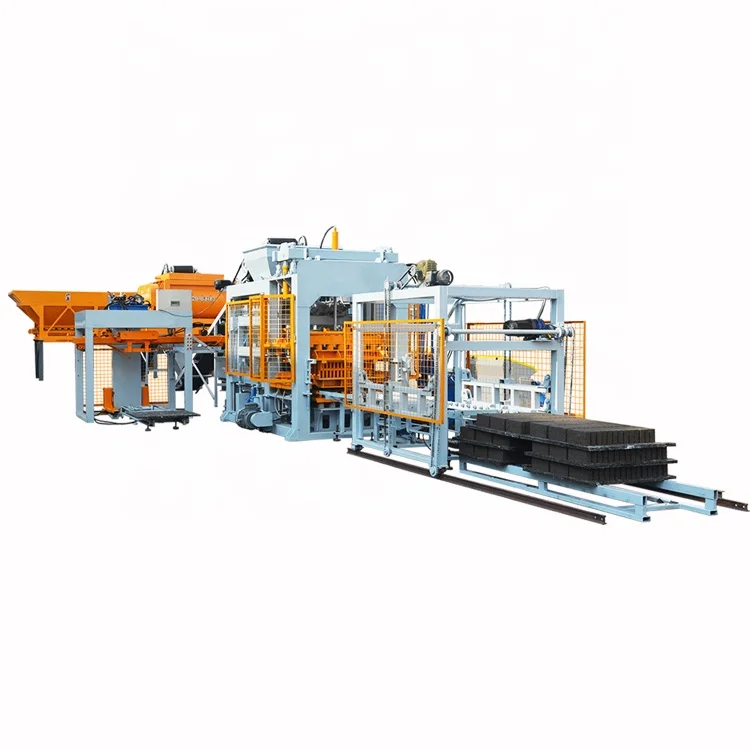
Matched System Specification — the QT6-15 block machine, moulds, and pallets are engineered as a unified production cell rather than sourced from disparate suppliers, ensuring vibration force and hydraulic pressure align with your specific mix design.
Technical Specifications
| Parameter | Value |
|---|---|
| Model | QT6-15 |
| Product Type | Automatic Concrete Block Making Machine |
| Overall Dimensions | 7400×1900×2660 mm |
| Total Weight | 7 T |
| Molding Cycle | 15–25 s (basis not stated in source) |
| Vibration Frequency | 4600 r/min |
| Exciting Power (Vibration Force) | 40–50 kN |
| Total Power | 31.25 kW |
| Mixer Model | JQ350 |
| Pallet Size | 850×550×25 mm |
| Control System | PLC control system |
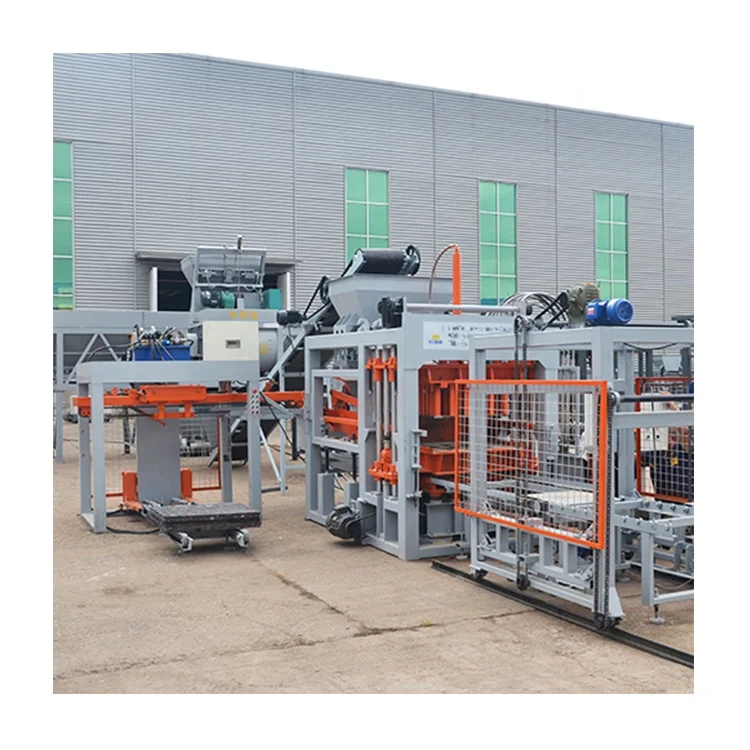
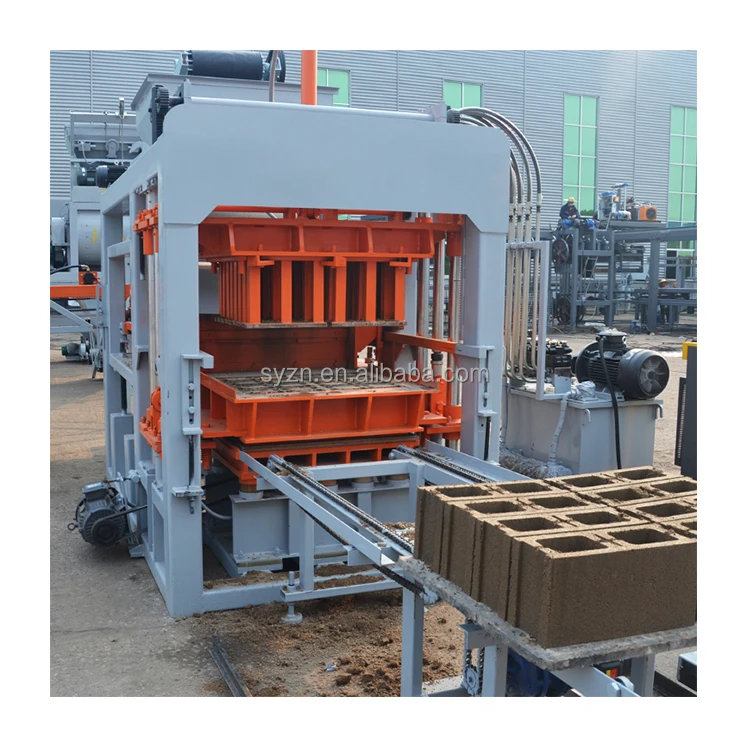
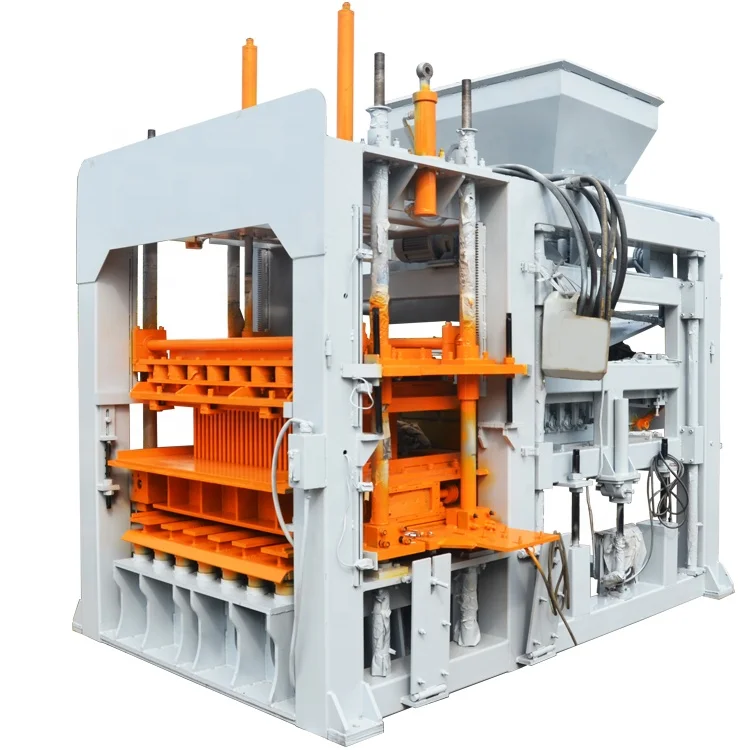
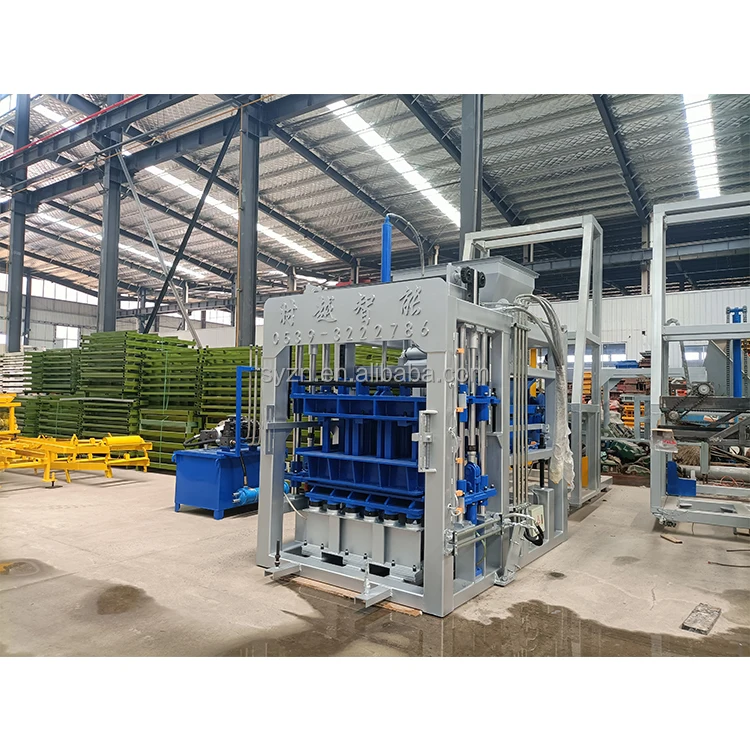
| Included Equipment | Block making machine, hydraulic station, PLC control system, pallet feeder, brick conveyor, block sweeper |
| Output Capacity (Hollow 400×200×200 mm) | 1200–1680 pcs/h (basis: 15–20 s cycle, 15 pcs/mould) |
| Output Capacity (Hollow 400×150×200 mm) | 1800–2400 pcs/h (basis: 15–20 s cycle) |
| Output Capacity (Solid 240×115×53 mm) | 3240 pcs/h (basis: 15–20 s cycle) |
| Applied Products | Paver, solid block, hollow block, curbstone |
| Raw Materials | Crushed stones, sand, cement, dust, fly ash |
| Standards | CE |
Application Suitability
| Application | Material or Output |
|---|---|
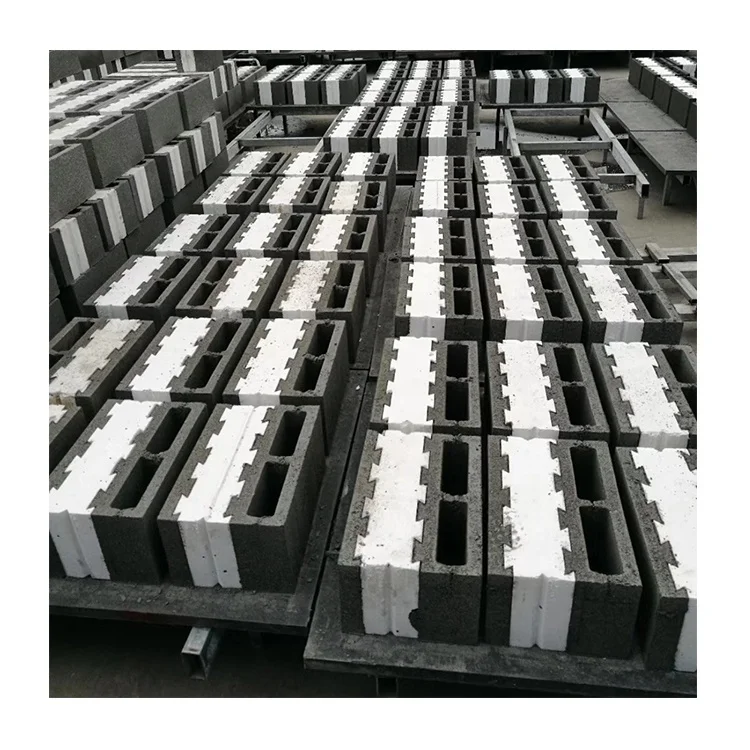
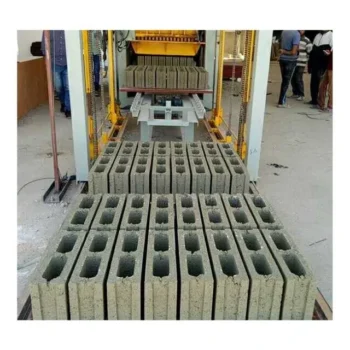
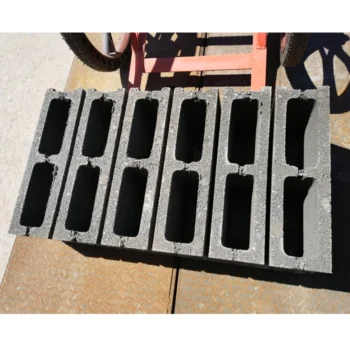
| Load-bearing wall construction | Hollow blocks (400×200×200 mm / 400×150×200 mm) from crushed stone and cement |
| Masonry and partition walls | Solid bricks (240×115×53 mm) from sand, fly ash, and cement |
| Infrastructure and landscaping | Pavers and curbstones from high-density aggregate mixes |
| On-site project production | Concrete products utilizing locally available aggregates and industrial by-products |
What "15 Seconds Per Cycle" Actually Means for Your Daily Output
Capacity figures are meaningless unless tied to a specific block format and local material density.
In the export market, quoting a single "pieces per hour" number is a common trap. I have watched buyers sign contracts based on a 15-second cycle time, only to realize upon installation that this speed was achieved using lightweight, standardized river sand. When they switch to a heavier local aggregate or a more complex interlocking paver design, the automatic concrete block making machine specifications change drastically, and the cycle time often doubles. Real output is a function of the mould cavity count, the vibration frequency required to compact your specific mix, and the curing time needed before the pallet can be moved. [NEED_CITE: impact of aggregate density on block molding cycle times]
Matching Vibration Force to Aggregate Gradation
The QT6-15 delivers an exciting power of 40–50 kN at a vibration frequency of 4600 r/min. This specific energy profile is suited for compacting mixes containing crushed stones and fly ash into high-strength structural units. If your local aggregate is porous or requires a higher cement content to achieve the target MPa, the vibration amplitude must be adjusted in tandem with the hydraulic pressure to prevent micro-cracking during the demolding phase.
Pallet Sizing and Curing Logistics
The system utilizes a pallet size of 850×550×25 mm. This dimension dictates the footprint of your curing yard and the type of forklift required for daily handling. When sizing a plant, the pallet spec is often the most overlooked constraint; buying a machine with oversized pallets can render an existing curing shed unusable. The included pallet feeder ensures that the press is never left waiting for a return board, maintaining a consistent rhythm across the 8-hour shift. [NEED_CITE: standard pallet handling requirements for medium-scale block plants]
Hydraulic Pressure and Mix Design Compatibility
While the hydraulic station is included, the pressure rating must be verified against the block height and the "zero-slump" nature of your concrete mix. A higher vibration force is only effective if the hydraulic head pressure is sufficient to hold the mix in place during the vibration burst. For the 400×200×200 mm hollow block, the machine is rated at 1200–1680 pcs/h based on a 15–20 second cycle and 15 pieces per mould. Attempting to exceed these parameters with an unapproved mix design usually leads to premature mould wear.
The Cost of Ignoring Voltage and Control Language
A frequent failure in international shipments involves the control system. The PLC control system must be programmed for the local voltage and frequency (e.g., 220V/60Hz vs 380V/50Hz) and the operator interface must be in a language the floor staff can read. Failing to confirm these details before production results in costly rewiring and commissioning delays. [NEED_CITE: electrical compliance standards for industrial machinery exports]
Why Configuration Integrity Matters Here
Our approach focuses on the block line as a matched system. We do not simply ship the QT6-15; we verify that the JQ350 mixer capacity and the brick conveyor speed are synchronized with the 15–25 s molding cycle. We provide custom mould design based on your market’s specific format requirements, ensuring the machine produces what your customers actually buy. Every quotation is backed by a factory test record using a simulated mix, and we provide comprehensive wear parts lists to prevent downtime during the first replacement cycle.
Documentation & Verification
- Line layout and capacity calculation stating the block format assumed for each output figure.
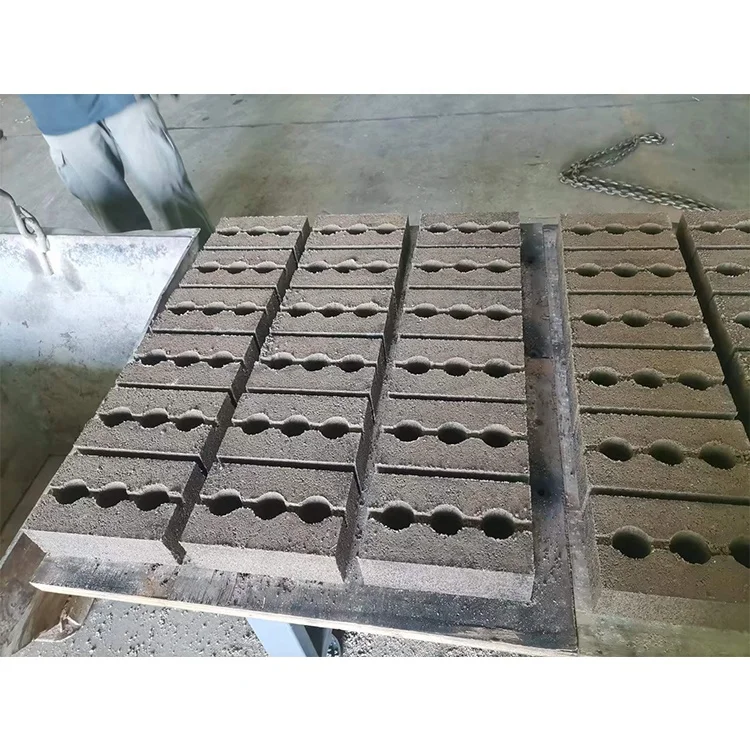
- Mould drawing and format list confirming cavity count and dimensional tolerances.
- Hydraulic and electrical schematic for local maintenance and troubleshooting.
- Factory test record demonstrating cycle time on your specified raw material mix.
Installation, Commissioning & Support
- Foundation plan accommodating the 7400×1900×2660 mm footprint and vibration isolation.
- Power supply verification for the 31.25 kW total load and hydraulic station startup current.
- On-site assembly and leveling of the pallet feeder and brick conveyor stations.
- PLC parameter setting for local voltage, frequency, and operator display language.
- Training on mould change procedures and daily lubrication of the 4600 r/min vibration system.
Preparing Your Technical Inquiry
To ensure the QT6-15 is configured for your actual production environment, please provide the specific block formats you intend to sell and the target daily output for each. We also require a report on your locally available raw materials, particularly the type of aggregate and its moisture profile, to set the correct hydraulic and vibration parameters. Finally, confirm your site’s voltage and the preferred language for the control interface to ensure immediate commissioning upon arrival.
Frequently Asked Questions
Q: How is the capacity figure calculated for different block formats?
A: The output is based on the mould cavity count and the cycle time for that specific size. For example, the 1200–1680 pcs/h figure assumes a 400×200×200 mm hollow block with a 15–20 second cycle. Different formats like solid bricks will have higher hourly counts due to different mould configurations and compaction requirements.
Q: Can the machine handle local aggregates like volcanic ash or stone dust?
A: Yes, but the vibration force and hydraulic pressure must be matched to the aggregate’s density and absorption rate. We require a sample or lab report of your local materials to adjust the PLC parameters and ensure the 40–50 kN exciting power produces consistent block strength without damaging the mould.
Q: What is included in the standard line configuration?
A: The standard package includes the block making machine, hydraulic station, PLC control system, pallet feeder, brick conveyor, and block sweeper. This ensures the material flow from the mixer to the curing area is synchronized with the press cycle, preventing bottlenecks at the pallet return stage.
Q: How do I confirm the pallet size against my existing facility?
A: The QT6-15 uses an 850×550×25 mm pallet. You must verify that this dimension fits your existing curing racks and that your forklift can handle the loaded weight. Mismatched pallet sizes are a primary cause of logistical inefficiency in established block plants.


![QTJ4-40 Concrete Block Making Machine | Technical Guide 长度计算:Q(1)T(2)J(3)4(4)-(5)4(6)0(7) (8)C(9)o(10)n(11)c(12)r(13)e(14)t(15)e(16) (17)B(18)l(19)o(20)c(21)k(22) (23)M(24)a(25)k(26)i(27)n(28)g(29) (30)M(31)a(32)c(33)h(34)i(35)n(36)e(37) (38)|(39) (40)T(41)e(42)c(43)h(44)n(45)i(46)c(47)a(48)l(49) (50)G(51)u(52)i(53)d(54)e(55) 长度55,在50-70之间。 结构:[品类词] [机型号] | [站点修饰词] 机型号QTJ4-40原样保留。 没有禁词。 只输出一行。QTJ4-40 Concrete Block Making Machine | Technical Guide](https://shiyuebrickmachine.com/wp-content/uploads/2026/04/Ha43b61d1d551461b82ff204769acfc30h.webp)