
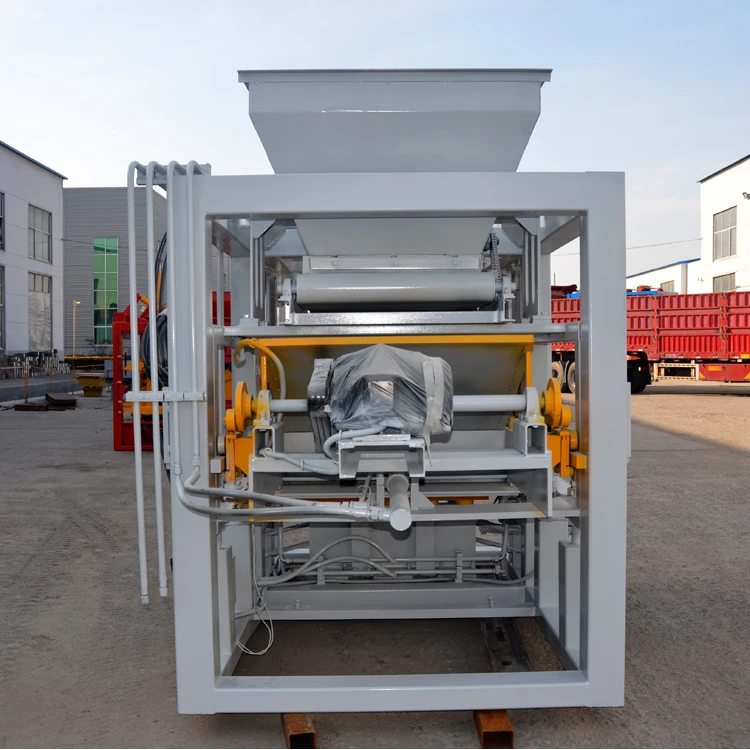


Description
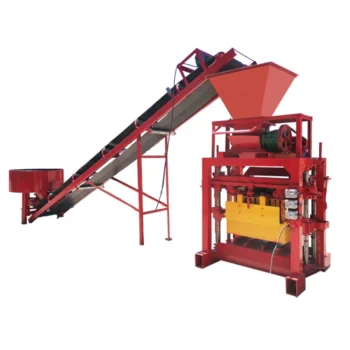
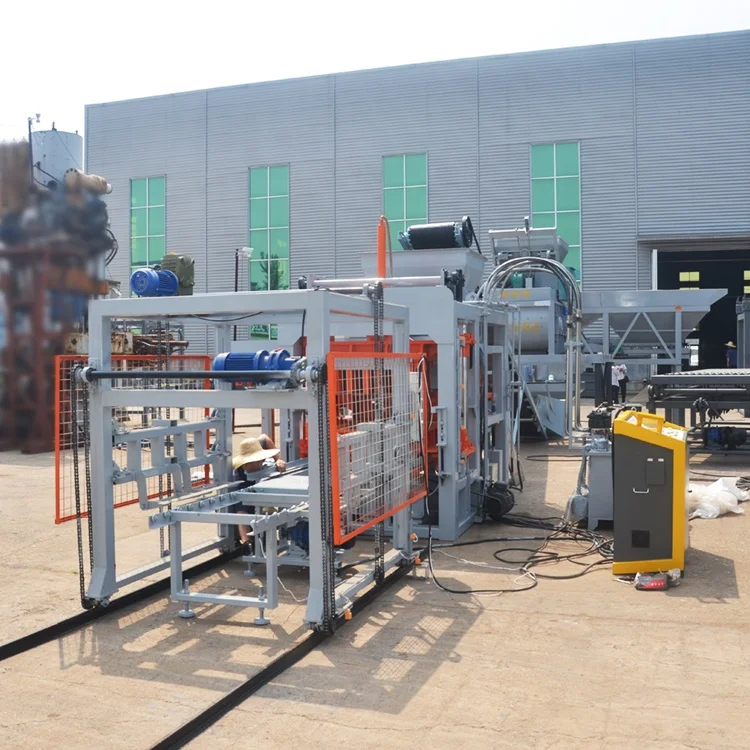
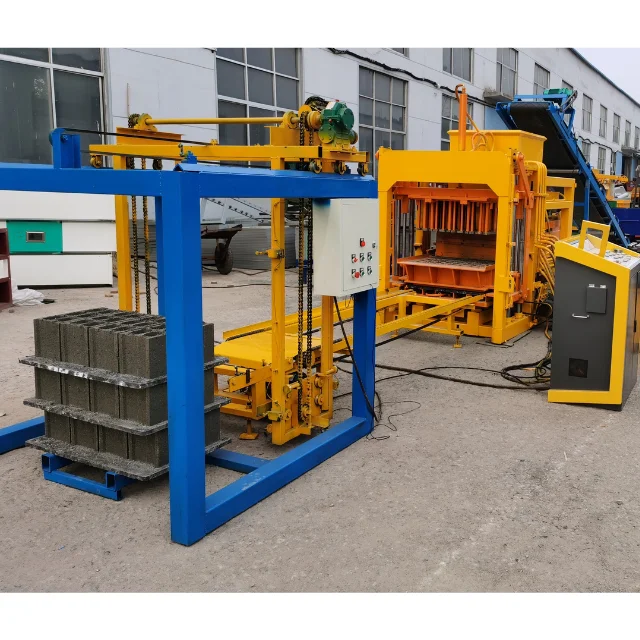
Matched System Sizing — QT5-15 configuration starts from your target block format and local aggregate, not a catalogue default, so machine, mould and pallet are specified together.
Technical Specifications
| Parameter | Value |
|---|---|
| Model | QT5-15 |
| Product Type | Hydraulic Block Making Machine |
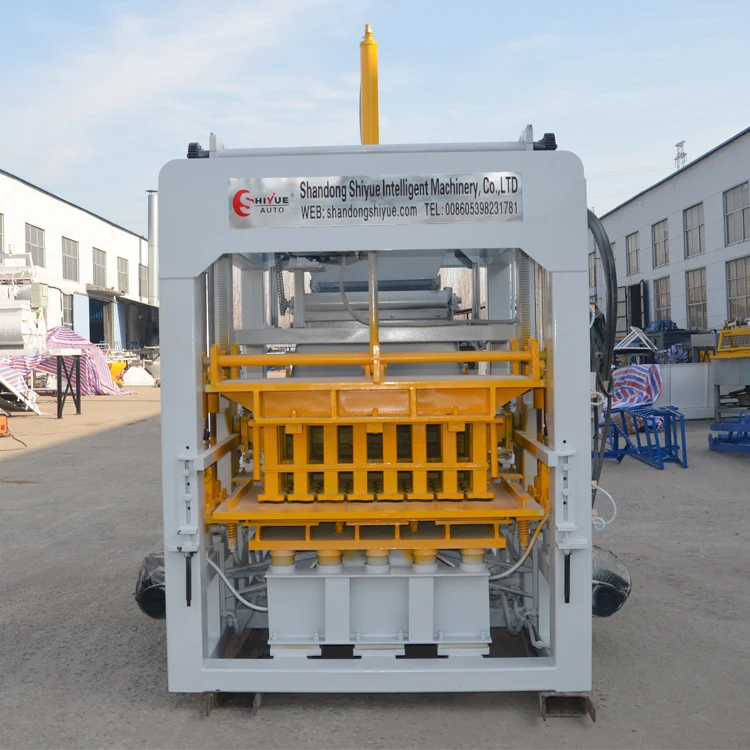
| Overall Dimensions (L×W×H) | 7400×1950×2800 mm |
| Total Mass | 5000 kg |
| Vibration Force | 80 kN |
| Vibration Frequency | 0-60 Hz |
| Vibration Form | Platform Vibration |
| Moulding Mode | Automatic load, vibration moulding |
| Demolding Method | Hydraulic |
| Pallet Size | 1100×550 mm |
| Molding Cycle | 15-20 s (basis not stated in source — confirm block format / material / thickness) |
| Overall Power | 32 kW |
| Control System | PLC with touch screen interface |
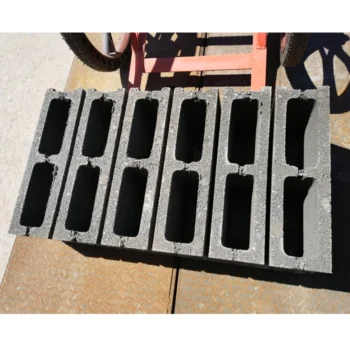
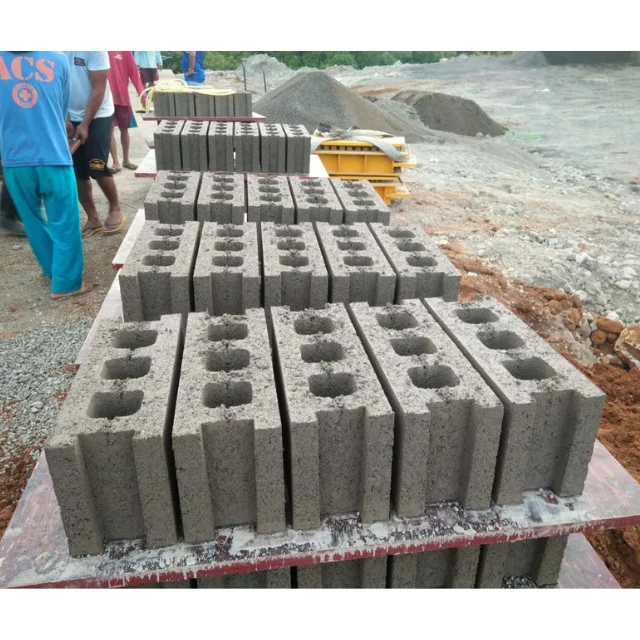
| Output — Hollow Block 400×200×200 mm | 7200-9600 pcs/8hr (5 pcs/mould, 15-20s cycle) |
| Output — Hollow Block 400×150×200 mm | 8640-11520 pcs/8hr (6 pcs/mould, 15-20s cycle) |
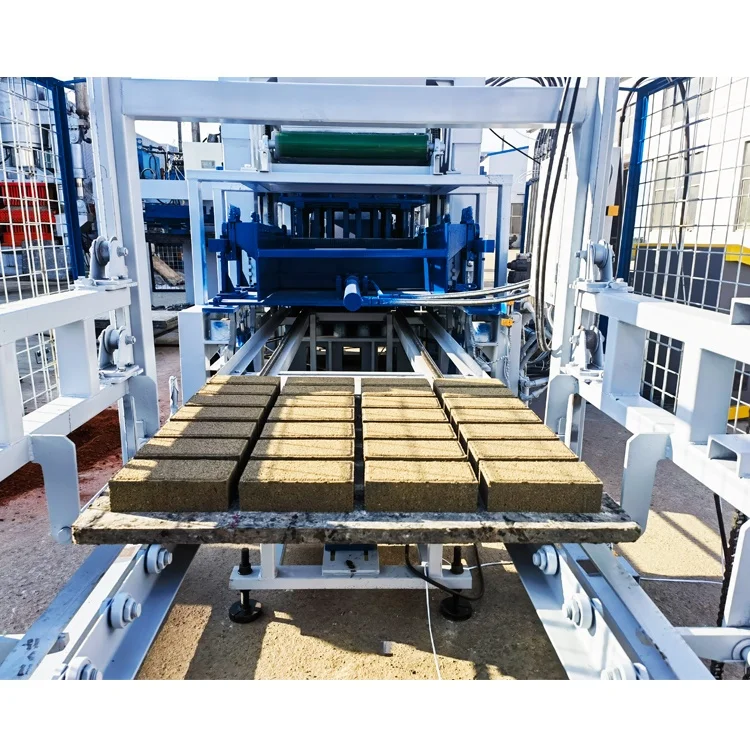
| Output — Solid Brick 240×115×53 mm | 46080-61440 pcs/8hr (32 pcs/mould, 15-20s cycle) |
| Output — Rectangular Paver 200×100×60 mm | 28800-36000 pcs/8hr (25 pcs/mould, 20-25s cycle) |
| Output — Zigzag Paver 225×112.5×60 mm | 18432-23040 pcs/8hr (16 pcs/mould, 20-25s cycle) |
| Block Compressive Strength | >15 MPa |
| Recommended Factory Area | 1000 m² |
| Raw Material Compatibility | Fly ash (up to 70%), slag, gangue, sand, crushed stone, cement, water |
| Automation Level | Automatic (pallet feeding, material feeding, vibrating, demoulding) |
| Stacking Method | Batch stacking off pallet |
| Warranty | 1 year for whole machine (excluding spare parts) |
Application Suitability
| Application | Material or Output |
|---|---|
| Hollow block production for regional construction markets | Crushed stone, sand and cement blends; fly ash mixes up to 70% |
| Solid brick manufacturing for masonry and partition walls | Sand, gangue and cement at standard grading |
| Rectangular paving block for driveways and walkways | Fine aggregate with cement binder, 200×100×60 mm format |
| Interlocking zigzag paver for commercial landscaping | Crushed stone and cement, 225×112.5×60 mm format |
| On-site block production for housing projects | Local aggregate sourced near project location |
What "9600 Blocks per Shift" Actually Means for Your Plant
Every capacity figure on this page is tied to a specific block format, mould cavity count and cycle time — because a single headline number tells you nothing about what your plant will actually produce.
I spent years on service calls across Latin America watching buyers discover, months after commissioning, that the "high output" they were quoted assumed a solid brick format their market never orders. The QT5-15 block machine specifications here list each format separately: hollow block at 5 or 6 cavities, solid brick at 32 cavities, pavers at 25 or 16. When a supplier quotes you a cycle-per-hour number without naming the block, you are buying blind. [NEED_CITE: common gap between quoted and realised block plant output]
Format-Specific Cycle Time and What It Tells You
The QT5-15 block machine specifications separate hollow block cycles at 15-20 seconds from paver cycles at 20-25 seconds, reflecting the extra compaction time denser paver formats require. A buyer targeting 400×200×200 mm hollow blocks for a housing project should plan around the 7200-9600 pieces per 8-hour shift figure, not the solid brick number that looks several times higher on paper. Matching the machine to the format your market actually buys prevents the most common disappointment in block plant investment.
Pallet Sizing and Your Curing Area Layout
The 1100×550 mm pallet dimension governs how many blocks cure per rack level and which forklift class can handle loaded stacks. Buyers who select a pallet size without measuring their curing area or checking their existing forklift capacity end up rearranging the entire yard after the first production week. This QT5-15 configuration locks the pallet format early so the curing rack spacing, transport trolley width and forklift tine length all align before the machine ships. [NEED_CITE: pallet handling mismatches in block production plants]
Reading the Vibration and Pressure Numbers Together
The 80 kN vibration force works with hydraulic pressure to compact the mix into the mould cavity, and both must match the buyer’s aggregate gradation and cement ratio. Platform vibration distributes energy across the full pallet area rather than concentrating it at one point, which matters when producing hollow blocks where wall thickness is narrow and uneven compaction shows up as cracking during curing. A higher vibration frequency range (0-60 Hz) allows the operator to tune the setting for fly ash mixes that behave differently from pure crushed stone. The >15 MPa compressive strength target is achievable when vibration force, hydraulic pressure and mix design are configured as one system rather than treated as independent variables.
The Cost of Skipping the Format Conversation
When a quotation lists only a generic cycle time and omits which block format it assumes, the buyer typically discovers the gap during the first production month — output falls well short of the business plan, and the project timeline slips. Moulds ordered as an afterthought arrive weeks later, and in the meantime the plant runs a single format at reduced commercial viability. [NEED_CITE: block plant downtime caused by late mould specification] Voltage and PLC language confirmed after the machine is already built can delay commissioning further, because rewiring a control cabinet or replacing an HMI screen on site is not a simple swap.
Why Sizing Starts Here, Not at the Price
Every QT5-15 configuration we release begins with the buyer’s target block format, local aggregate sample and daily volume requirement, because those three inputs determine the mould cavity count, vibration setting and pallet specification. Mould drawings are reviewed against the buyer’s market format list before production starts, so custom cavity layouts can be incorporated rather than added later. Pallet specification is cross-checked against the buyer’s curing rack dimensions and forklift model to avoid yard-side surprises. Voltage, frequency and PLC display language are confirmed in writing before the machine enters assembly, so commissioning does not stall on a language mismatch or a wrong transformer. Documentation ships with the machine: factory test records run on the buyer’s specified block format, not a generic demonstration cycle.
Documentation & Verification
- Line layout drawing showing capacity per block format with cavity count stated
- Mould drawing and format list confirming included and optional tooling
- Pallet specification matched to buyer curing rack and forklift dimensions
- Voltage, frequency and PLC language confirmation record before assembly
- Factory test record run on buyer’s target block format and mix design
Installation, Commissioning & Support
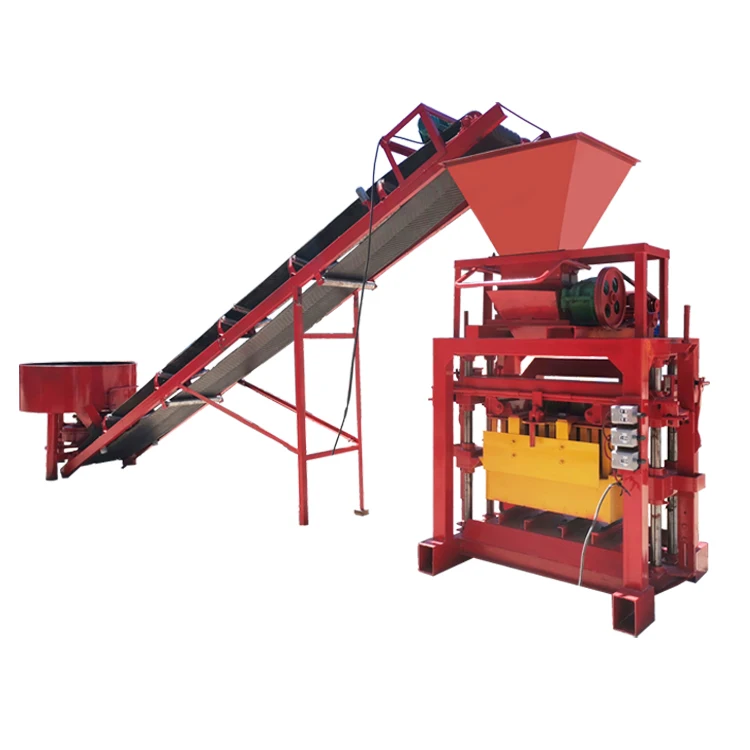
- 7400×1950 mm footprint requires level concrete pad within the 1000 m² recommended area
- 32 kW overall power needs a dedicated circuit with confirmed voltage and frequency
- Machine ships with hydraulic unit and PLC cabinet pre-wired; pallet feed and conveyor assemble on site
- First-run cycle time verified against buyer’s block format and local aggregate sample
- Operator training covers mould changeover procedure and PLC touch screen navigation
- Wear parts and mould list supplied at delivery with reorder part numbers identified
Preparing Your QT5-15 Inquiry
A useful inquiry names the block format your market buys most, the daily volume your project or plant requires, and the raw materials available locally — including aggregate type and any fly ash or slag source. Confirming your site voltage, frequency and preferred PLC display language at this stage removes the most frequent cause of commissioning delay. If you already operate a curing yard, share the rack dimensions and forklift model so pallet sizing can be validated before the proposal is finalised.
Frequently Asked Questions
Q: How is the capacity figure calculated, and which block format does each number assume?
A: Each output figure on this page states the block format, mould cavity count and cycle time range it is based on. The 7200-9600 pieces per 8-hour shift, for example, assumes a 400×200×200 mm hollow block with 5 cavities and a 15-20 second cycle. No single headline number is used across all formats.
Q: What mould formats are available for the QT5-15, and can custom moulds be designed?
A: Standard moulds cover hollow block, solid brick, rectangular paver and zigzag paver in the dimensions listed above. Custom moulds can be designed to buyer drawings for formats outside this range, with cavity count and cycle time confirmed before tooling is manufactured.
Q: How long does a mould changeover take, and what tools are required on site?
A: The QT5-15 uses a simple mould replacement system designed for format changeover without specialised tooling. Exact changeover time depends on operator familiarity and the specific format pair being swapped; training covers the procedure during commissioning so the crew can perform it independently.
Q: How should pallet size be matched to my curing rack system and forklift?
A: The 1100×550 mm pallet size must align with curing rack shelf width, rack spacing and forklift tine length. Buyers should share existing yard equipment dimensions during the inquiry stage so pallet specification is validated before the machine enters production.
Q: What block compressive strength can be achieved with my local aggregate?
A: The QT5-15 targets >15 MPa compressive strength, but actual results depend on aggregate gradation, cement ratio and vibration setting. Configuration starts from the buyer’s local material sample so vibration force and hydraulic pressure are tuned to that specific mix rather than a generic default.