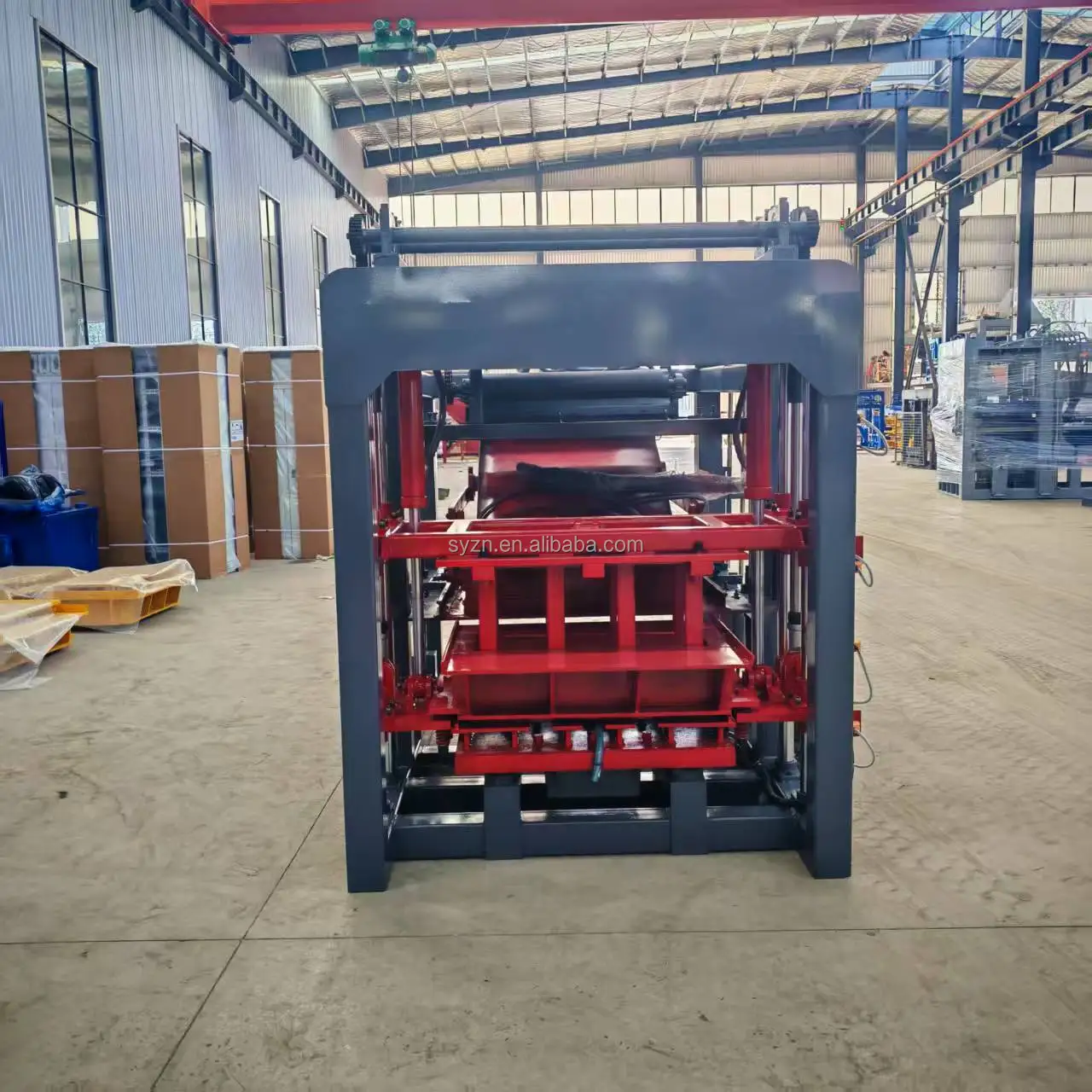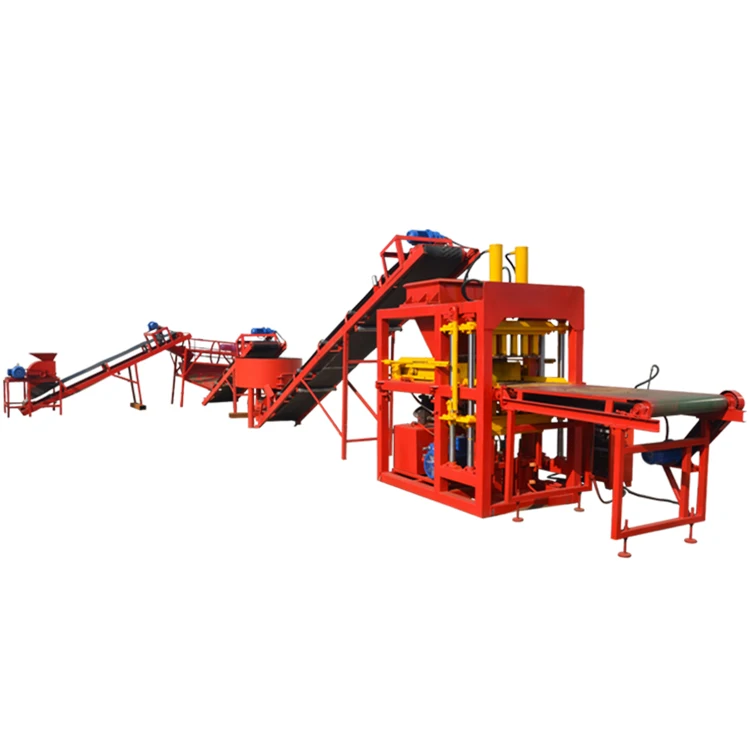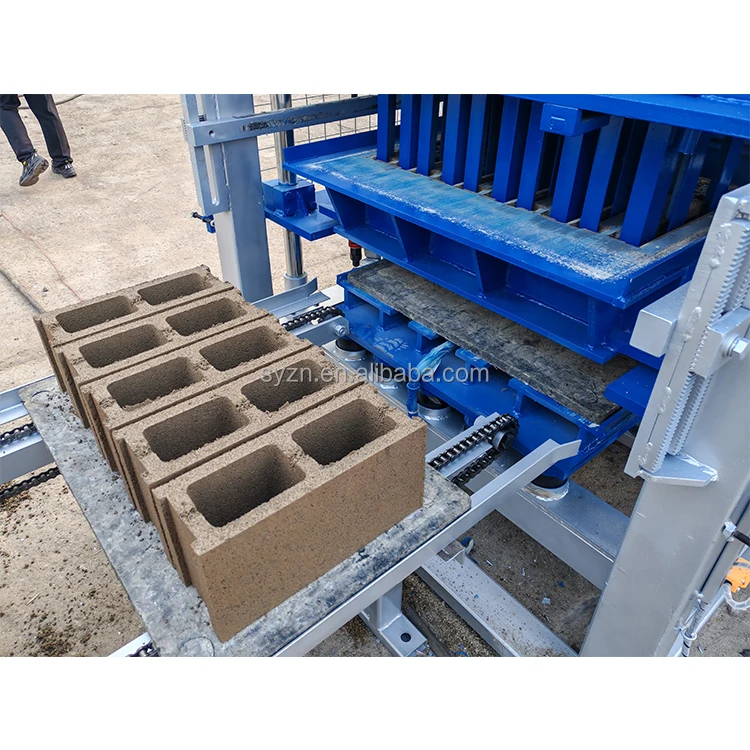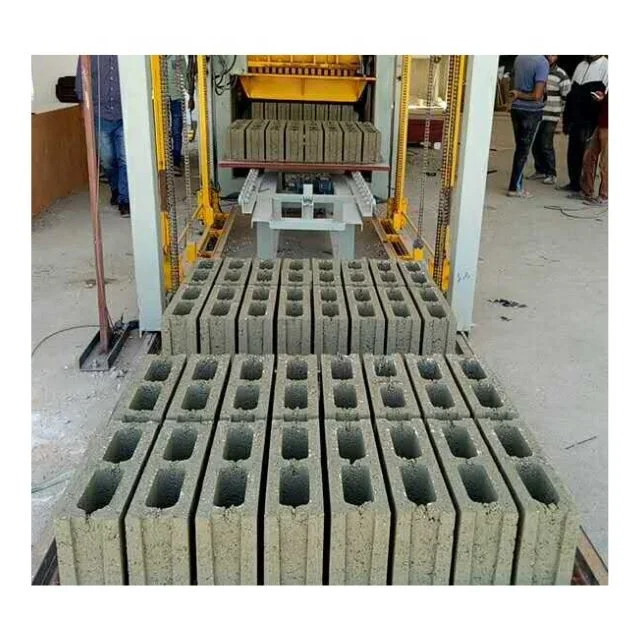


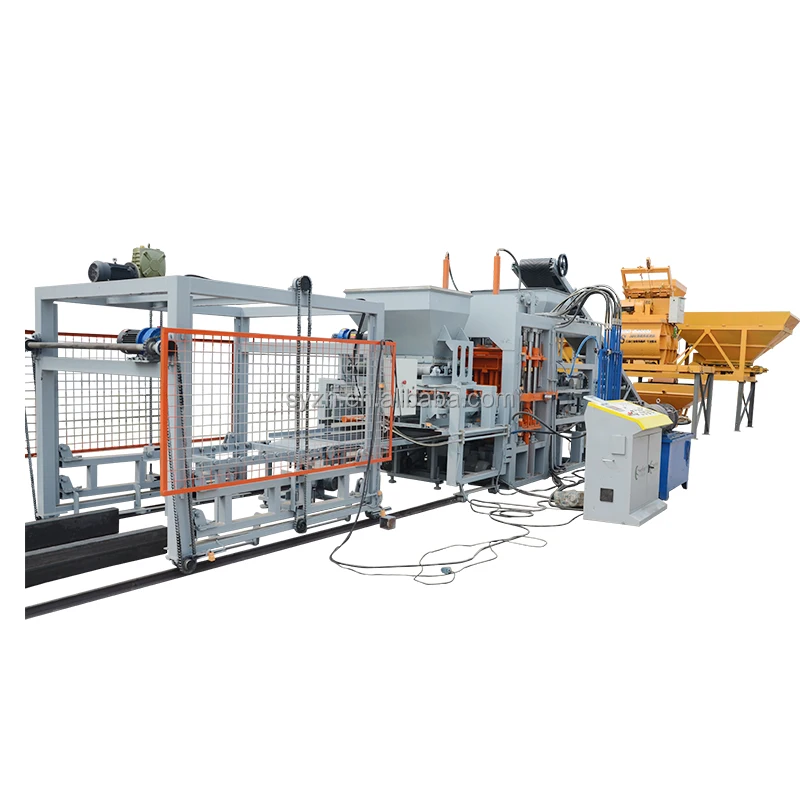

Description
Per-Format Capacity Sizing — every QT5-15 output figure is tied to a specific block dimension, mould cavity count and cycle range, so the machine is matched to what your market actually sells rather than a single headline number.
Technical Specifications
| Parameter | Value |
|---|---|
| Model | QT5-15 |
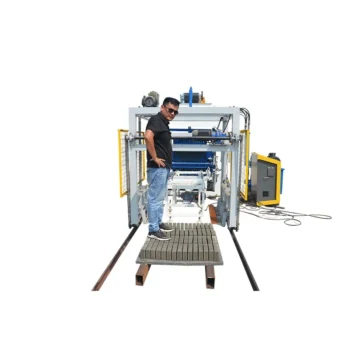
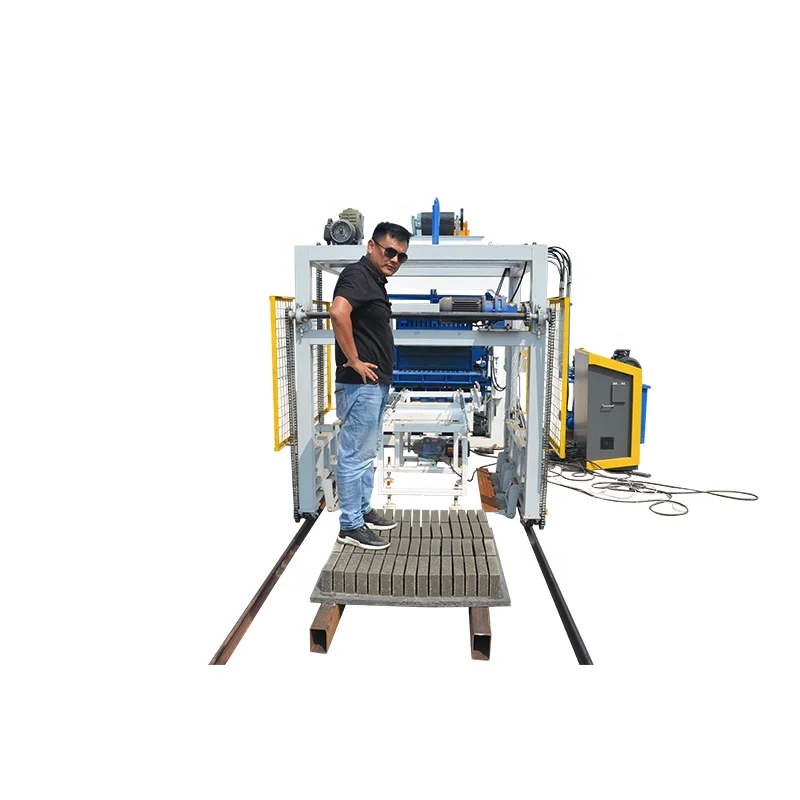
| Product Type | Fully Automatic Hydraulic Concrete Block Making Machine |
| Overall Dimensions (L×W×H) | 7400 × 1950 × 2800 mm |
| Total Mass | 5000 kg |
| Vibration Form | Platform Vibration |
| Vibration Frequency | 0–60 Hz |
| Vibration Force | 80 kN |
| Moulding Mode | Automatic loading with vibration moulding |
| Demolding Method | Hydraulic |
| Pallet Size | 1100 × 550 mm |
| Molding Cycle | 15–20 s (basis not stated in source — confirm block format / material / thickness) |
| Overall Power | 32 kW |
| Control System | PLC with touch screen interface |
| Hydraulic System | Independent integrated hydraulic station |
| Mould Change System | Synchronized mould system with quick replacement |
| Automation Level | Fully automatic (pallet feeding, material feeding, vibrating, demoulding) |
| Fault Diagnosis | Remote control and fault diagnosis capability |
| Block Compressive Strength | > 15 MPa |
| Recommended Factory Area | 1000 m² |
| Raw Material Compatibility | Fly ash (up to 70%), slag, gangue, sand, crushed stone, cement, water |
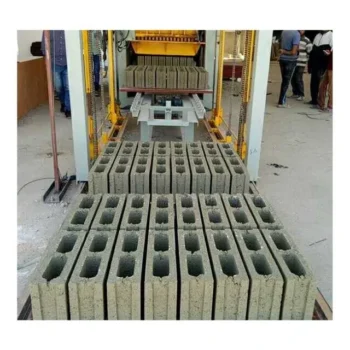
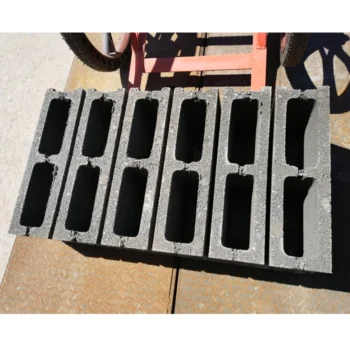
| Output — Hollow Block 400×200×200 mm | 900–1200 pcs/h, 7200–9600 pcs/8 hr (5 pcs/mould, 15–20 s cycle) |
| Output — Hollow Block 400×150×200 mm | 1080–1440 pcs/h, 8640–11520 pcs/8 hr (6 pcs/mould, 15–20 s cycle) |
| Output — Solid Brick 240×115×53 mm | 5760–7680 pcs/h, 46080–61440 pcs/8 hr (32 pcs/mould, 15–20 s cycle) |
| Output — Rectangular Paver 200×100×60 mm | 3600–4500 pcs/h, 28800–36000 pcs/8 hr (25 pcs/mould, 20–25 s cycle) |
| Output — Zigzag Paver 225×112.5×60 mm | 2304–2880 pcs/h, 18432–23040 pcs/8 hr (16 pcs/mould, 20–25 s cycle) |
Application Suitability
| Application | Material or Output |
|---|---|
| Hollow block production for building construction | Crushed stone, sand, cement; 400×200×200 mm and 400×150×200 mm formats |
| Solid brick production for masonry and structural use | Sand, fly ash, cement; 240×115×53 mm standard brick format |
| Rectangular paving block production | Aggregates and cement; 200×100×60 mm for driveways and walkways |
| Interlocking zigzag paver production | Crushed stone and cement; 225×112.5×60 mm interlocking format |
| Fly ash and industrial residue utilization | Fly ash content up to 70%, blended with slag, gangue, sand and cement |
What "900–1200 Pieces per Hour" Leaves Out About QT5-15 Block Machine Specifications
Capacity only means something when you know which block format it was measured on.
Suppliers quote a headline cycle rate and let you assume it applies to every format in the catalogue. The reality is that a 400×200×200 mm hollow block with five cavities per mould will never match the hourly volume of a 240×115×53 mm solid brick running thirty-two cavities. When the QT5-15 concrete block machine is evaluated against your actual product mix, the per-format table above becomes the real planning tool — not a single number on a brochure cover [NEED_CITE: block format impact on daily output calculation].
How the QT5-15 Concrete Block Machine Matches Vibration to Your Mix
The platform vibration system on the QT5-15 delivers 80 kN of force across a 0–60 Hz frequency range. That range matters because different aggregates respond to different frequencies — fine desert sand needs a higher frequency to consolidate, while coarse crushed stone compacts better at lower frequencies with higher amplitude. The PLC touch screen stores process parameters so the operator can recall the exact vibration profile for each mix without guessing on the shop floor.
Mould Selection and the Real Cost of Format Flexibility
The synchronized mould system is designed for quick replacement, but the actual changeover time depends on workshop conditions and operator familiarity. A buyer producing three paver formats and two hollow block sizes needs to confirm that the total weekly changeover hours still leave enough runtime to meet dispatch schedules. The 1100 × 550 mm pallet size is fixed — every mould must fit within that envelope, which determines the maximum cavity count per format and therefore the realistic shift output for each product in your range [NEED_CITE: mould cavity layout and pallet envelope constraints].
Reading the Specs That Actually Shape Daily Output
The 32 kW overall power rating covers the hydraulic station, vibration motors and PLC control together. On sites with limited transformer capacity, that figure determines whether the QT5-15 block machine can run alongside a mixer and conveyor without tripping breakers. The independent integrated hydraulic station drives the demolding rams with consistent pressure, which directly affects block edge definition and dimensional tolerance — a weak hydraulic cycle produces blocks with rounded corners that fail visual inspection at the curing yard.
The 15–20 second molding cycle quoted for hollow blocks and solid bricks assumes a specific material consistency and fill depth; thicker pavers at 60 mm push the cycle toward 20–25 seconds because the vibration must consolidate a deeper bed. The recommended 1000 m² factory area accounts for the press footprint, pallet return conveyor, curing rack space and forklift circulation — a tighter site forces pallets to stack on the floor, which slows the entire line regardless of how fast the press cycles.
When the Wrong Configuration Reaches the Site
A machine configured for a standard river sand mix arrives at a site that only has access to fine dune sand, and the vibration profile no longer compacts the material to the required density. Blocks crumble at demolding, the operator increases cement content to compensate, and material cost climbs every shift. Pallet size is another frequent mismatch — the 1100 × 550 mm pallets arrive but the buyer’s existing curing racks were built for a different dimension, forcing a complete rack rebuild or a daily handling bottleneck [NEED_CITE: pallet and curing area mismatch in block plants].
Voltage and frequency confirmed after the machine ships create a different problem: the motor windings are wound for a supply the site does not have, and rewinding or replacing motors adds weeks before the first block is produced.
Why Procurement Through This Channel Works for Format-Matched Sizing
Block machinery is the single focus here, so the QT5-15 block machine is specified alongside its moulds, pallets and handling equipment as one matched system rather than assembled from separate suppliers. Configuration is set against the buyer’s actual mix design and target block format, not a catalogue default, which means the vibration force and hydraulic pressure are adjusted before the machine leaves the factory.
Mould design covers the formats the buyer’s market sells, including custom drawings when a local standard brick dimension does not match the catalogue. Automation level is selectable — a buyer can start with semi-automatic pallet handling and add automatic stacking later as volume grows. Installation support includes operator training so the crew knows how to adjust cycle parameters for each format from day one.
Documentation & Verification
- Line layout and capacity calculation listing every block format you intend to produce on the QT5-15
- Mould drawing and format list with cavity count and cycle range per block type
- Pallet specification sheet confirming 1100 × 550 mm dimensions and material grade
- Hydraulic and electrical schematic for on-site maintenance reference
- Voltage, frequency and PLC display language confirmation signed before production
- Factory test record on your specified block format and mix design before dispatch
Installation, Commissioning & Support
- Foundation must support 5000 kg static load plus dynamic vibration forces across the 7400 × 1950 mm footprint
- Dedicated 32 kW circuit with confirmed voltage and frequency matching the PLC and hydraulic motor ratings
- Machine ships dismantled for container loading; on-site reassembly includes vibration platform alignment
- First production run verifies cycle time, block dimensions and compressive strength against your mix design
- PLC touch screen configured in your operator language with stored parameters for each block format
- Wear parts list covers hydraulic seals, vibration springs and mould liners with reorder intervals
What to Include in Your QT5-15 Block Machine Specifications Inquiry
To size the QT5-15 concrete block machine accurately, share the block formats your market actually sells with daily volume targets for each. Confirm your local aggregate type — river sand, crushed stone, dune sand or fly ash — so vibration parameters can be matched. Provide your site voltage, frequency and preferred PLC display language to avoid commissioning delays after arrival.
Frequently Asked Questions
Q: How is the QT5-15 capacity verified for each block format, and what cycle time does each format actually run at?
A: Every output figure in the specification table is tied to a specific block dimension, mould cavity count and cycle range. The 900–1200 pieces per hour figure, for example, applies to 400×200×200 mm hollow blocks at five cavities per mould with a 15–20 second cycle. Your actual cycle time depends on mix design and material, which is confirmed during factory testing before dispatch.
Q: What mould formats are available, and how long does a changeover take under normal conditions?
A: The QT5-15 supports hollow blocks, solid bricks, rectangular pavers and zigzag pavers within the 1100 × 550 mm pallet envelope. The synchronized mould system allows quick replacement, but actual changeover time depends on operator training and workshop layout. Custom mould designs are available to buyer drawings for non-standard local formats.
Q: How do I confirm pallet size, voltage, frequency and PLC language are correct before the machine ships?
A: These parameters are locked during the quotation stage and confirmed in writing before production begins. The pallet specification sheet, voltage confirmation document and PLC language setting are all included in the pre-production documentation package so there are no surprises when the machine arrives on site.
Q: What raw material mix designs has the machine been configured for, and how is vibration matched to local aggregate?
A: The QT5-15 handles fly ash up to 70 percent, slag, gangue, sand, crushed stone and cement. Vibration frequency and hydraulic pressure are adjusted based on the buyer’s specific aggregate sample and target block strength. Fine sand requires different frequency settings than coarse crushed stone to achieve consistent compaction above 15 MPa.
Q: What block strength can I expect with my specific mix, and how is batch consistency maintained?
A: The rated compressive strength exceeds 15 MPa, but actual strength depends on your mix proportions, aggregate grading and curing conditions. The PLC stores vibration profiles and cycle parameters for each format, so the operator recalls the exact settings every run — removing manual guesswork and keeping batch-to-batch density consistent.