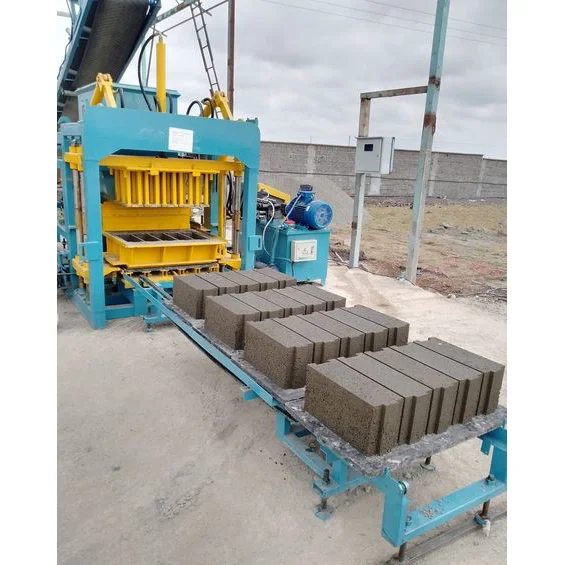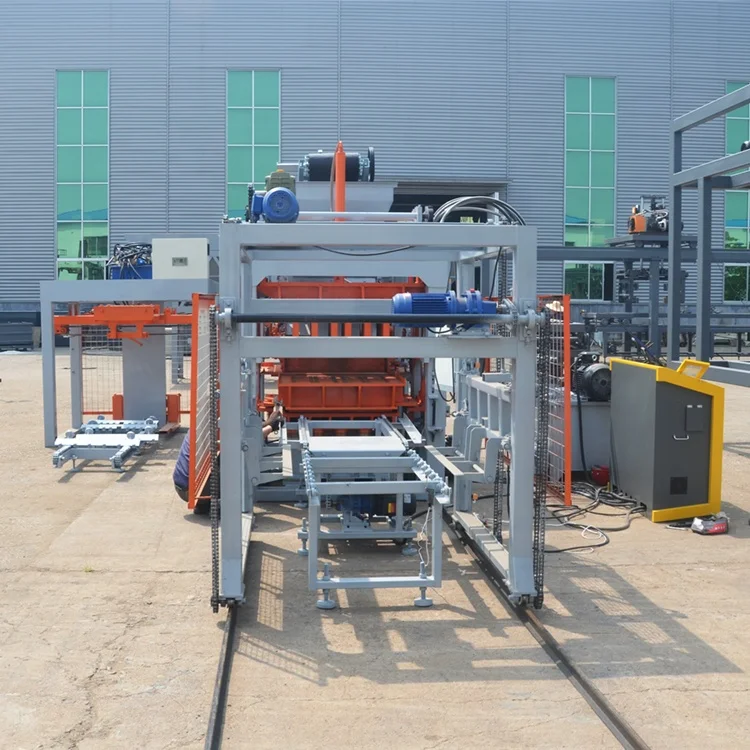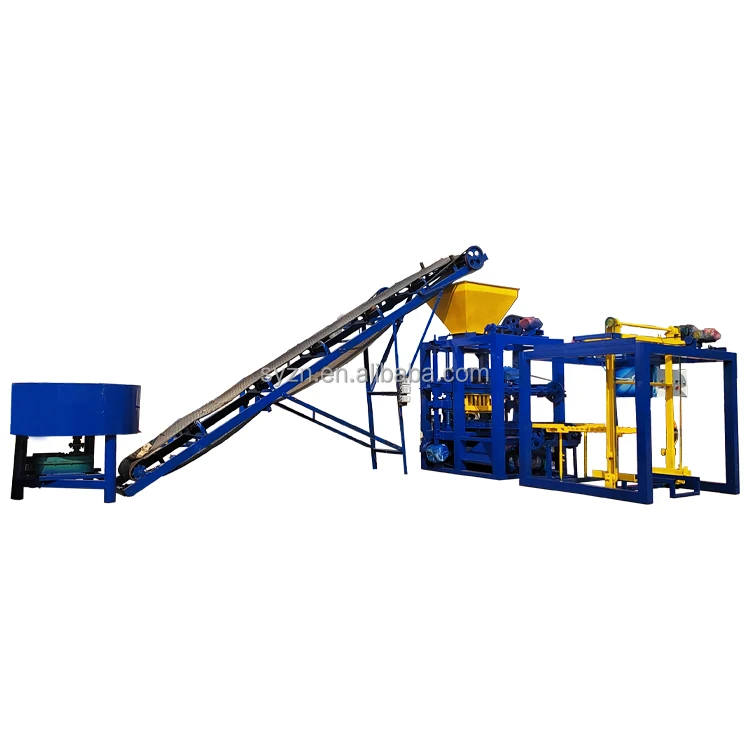


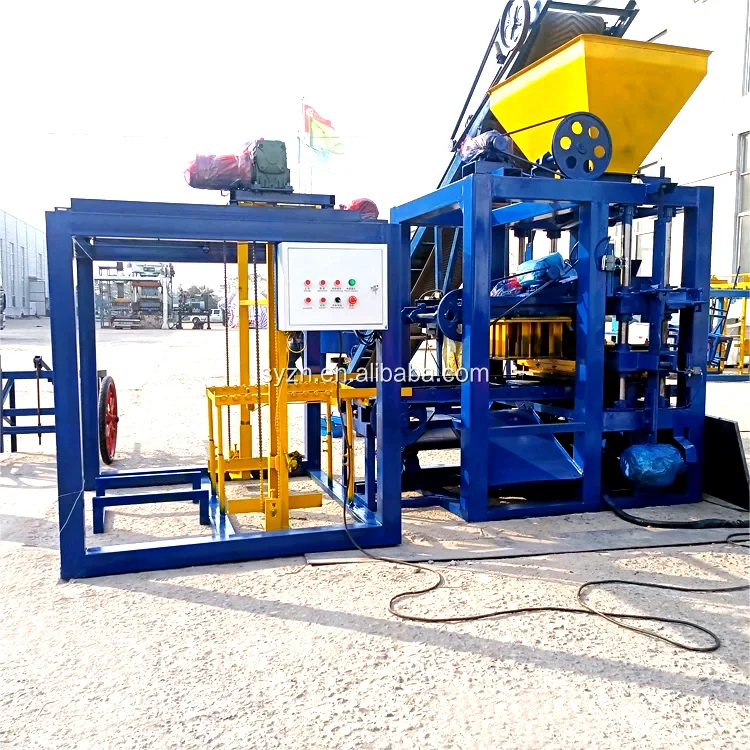
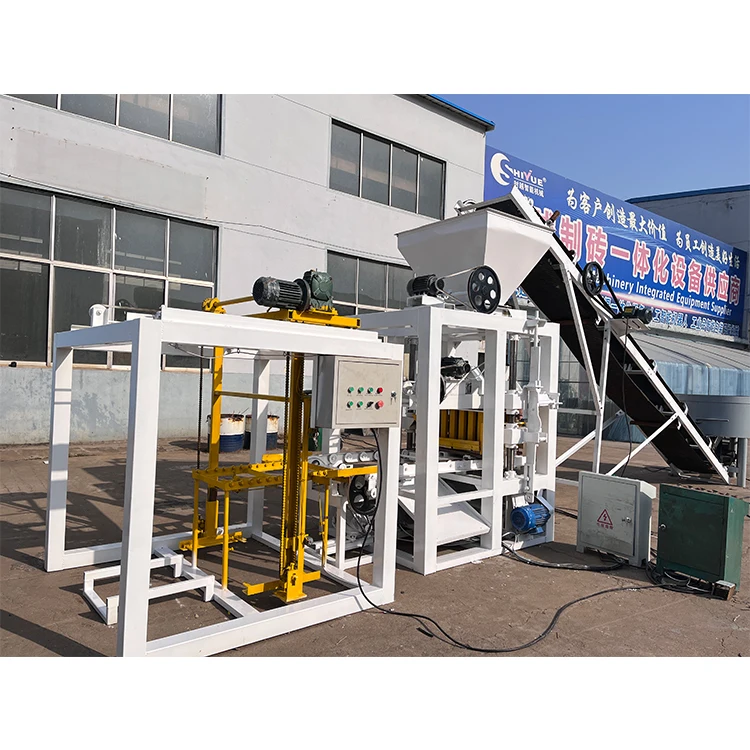

Description
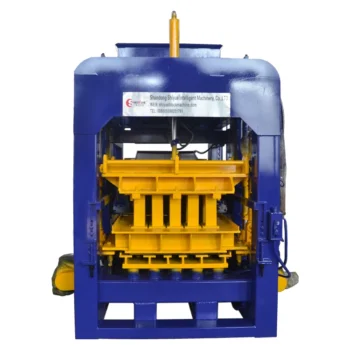
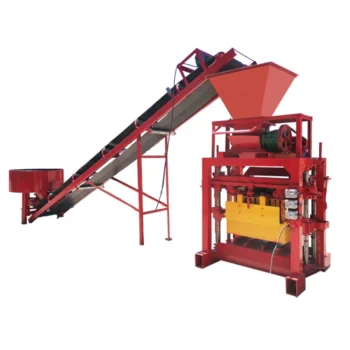
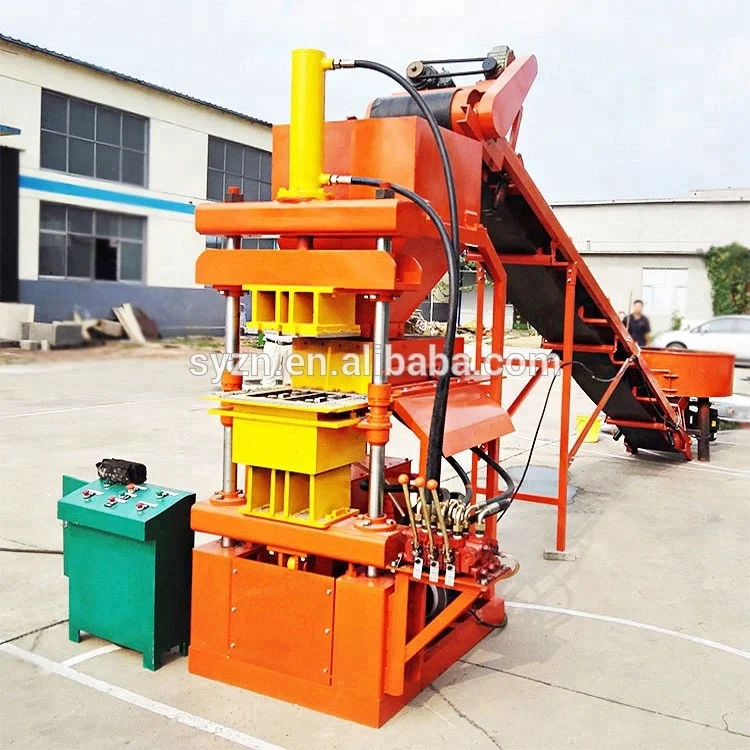
Honest capacity per block format — the QTJ4-26 is configured and quoted against the buyer’s actual mix, aggregate and target hollow block or solid brick, with cycle time and output stated per format rather than as a single catalogue number.
Technical Specifications
| Parameter | Value |
|---|---|
| Model | QTJ4-26 |
| Product Type | Semi-Automatic Concrete Block Making Machine |
| Overall Dimensions (L×W×H) | 2060×1730×2580 mm |
| Molding Cycle | 26 s |
| Vibration Frequency | 4200 r/min |
| Vibration Force (Exciting Power) | 35.5 kN |
| Total Power | 14.25 kW |
| Mixer Model | JQ350 |
| Pallet Size | 850×450×20 mm |
| Net Weight | 1800 kg |
| Guide System | Four guide pillars with automatic mould movement |
| Vibration Type | Dual vibrating motors under mould, vertical vibration combined with upper mould pressing |
| Applied Products | Concrete hollow blocks (8-inch, 6-inch), solid bricks |
| Raw Materials | Crushed stone, sand, cement, fly ash, stone dust |
| Output Capacity (390×190×190 mm hollow block) | 4 pcs/mould, 480 pcs/h, 3800 pcs/8h (basis: stated format) |
| Output Capacity (400×150×200 mm hollow block) | 5 pcs/mould, 600 pcs/h, 4800 pcs/8h (basis: stated format) |
| Output Capacity (240×115×53 mm solid brick) | 18 pcs/mould, 2100 pcs/h, 17000 pcs/8h (basis: stated format) |
| Automation Level | Semi-automatic |
| Voltage & Frequency | (basis not stated in source — confirm with buyer’s site requirement) |
| Control System | (basis not stated in source — confirm PLC / manual control level) |
| Mould Change Time | (basis not stated in source — confirm on site) |
| Hydraulic Pressure | (basis not stated in source — confirm if hydraulic or purely mechanical vibration) |
| Certification | (basis not stated in source — confirm CE or other applicable marks) |
Application Suitability
| Application | Material or Output |
|---|---|
| Small to medium block plant producing 8-inch and 6-inch hollow blocks | Crushed stone, sand, cement, stone dust |
| Solid brick production for local masonry markets | Fly ash blended with sand and cement |
| On-site block production for housing and construction contractors | Locally sourced aggregate including crushed stone and sand |
| First block plant for entrepreneurs entering the concrete product market | Hollow blocks (390×190×190 mm, 400×150×200 mm) and solid bricks (240×115×53 mm) |
What "480 Pieces per Hour" Actually Depends On
Cycle time and daily output change with every block format — the QTJ4-26 semi-automatic block making machine specifications must be read against the exact mould installed.
Many quotations list a single hourly number without naming the block size behind it. A buyer expecting 480 pieces per hour on a 400×150×200 mm hollow block will see that figure drop once the mould is swapped to a larger 8-inch format, because cavity count and compaction time differ. In one early shipment I was involved with, the machine arrived and ran fine — until the operator switched to a heavier mix with local volcanic aggregate, and the cycle stretched well past the catalogue value. Matching vibration force to the buyer’s actual raw material is not optional. [NEED_CITE: effect of aggregate gradation on concrete block compaction cycle]
Mould Cavity Count and the Output Buyers Actually See
The QTJ4-26 produces 4 pieces per mould for 390×190×190 mm hollow blocks and 5 pieces per mould for 400×150×200 mm hollow blocks. Solid brick output reaches 18 pieces per mould at 240×115×53 mm. Every semi-automatic block making machine specifications sheet should state the format behind each number so the buyer can calculate real shift output against the block their market actually purchases, not a theoretical maximum from a different mould.
Pallet Size Must Match the Curing Area Before Shipment
The QTJ4-26 uses an 850×450×20 mm pallet. If the buyer’s existing curing racks or forklift are built around a different dimension, every pallet must be manually re-stacked on arrival — adding labour the quotation never accounted for. Confirming pallet size against the site layout is part of the specification conversation, not an afterthought once the machine is crated. [NEED_CITE: pallet handling standards in concrete block production]
How Vibration Force and Frequency Shape Block Density
The 35.5 kN vibration force at 4200 r/min is delivered by dual vibrating motors mounted directly beneath the mould, working together with upper mould pressing. This vertical vibration approach compacts the mix uniformly through the block height. For a buyer using a fly-ash-heavy mix, the vibration frequency determines whether the fines settle properly or leave weak zones — a parameter that must be validated with the buyer’s own sample before the machine leaves the factory.
The Hidden Cost of Skipping the Mix Validation Step
When vibration force and hydraulic pressure are not matched to the buyer’s local aggregate, block strength becomes inconsistent across the shift. Some blocks pass the drop test; others crack during curing. The buyer then blames the machine, when the real issue is that the factory test used a different sand than what arrives on site. Resolving this after commissioning means re-tuning parameters and sometimes replacing mould components — delays that a pre-shipment sample test would have avoided entirely. [NEED_CITE: concrete block strength variance from aggregate mismatch]
Why Sizing the Machine to Your Format Matters Here
Configuration starts from the buyer’s target block format and local raw material, not from a catalogue default — the QTJ4-26 is set up with the mould, pallet and vibration parameters the buyer’s market demands. Mould design covers the hollow block and solid brick formats the buyer actually sells, including custom drawings when standard options do not fit. Automation level is selectable, so a first-time plant owner can begin semi-automatic and add automatic pallet feeding later. The 14.25 kW total power and 1800 kg net weight reflect a machine sized for small to medium plants, not over-specified for the output tier. Factory test records show actual cycle time achieved with the buyer’s own mix before dispatch.
Documentation & Verification
- Line layout with capacity calculated per hollow block and solid brick format
- Mould drawing confirming cavity count and dimensions against market samples
- Pallet specification sheet matched to buyer’s curing rack and forklift
- Factory test record showing cycle time with buyer’s specified aggregate
- Voltage and control language confirmation before production begins
- Operation and maintenance manual with wear parts and mould list
Installation, Commissioning & Support
- Foundation pad sized for the 2060×1730 mm footprint and 1800 kg operating weight
- Dedicated power circuit matching the 14.25 kW total load and buyer’s local voltage
- Mixer JQ350 positioned for direct feed into the QTJ4-26 hopper
- Vibration frequency set to 4200 r/min on site and validated with buyer’s mix
- Four guide pillars inspected and lubricated during commissioning
- Operator training covering mould change procedure and daily maintenance
What We Need to Size This Correctly
Tell us the exact block format your market sells — dimensions, wall thickness and target compressive strength. Share a sample of your local aggregate so we can run a factory test and confirm cycle time against real material. Confirm your site voltage, frequency and the pallet size your curing area already handles.
Frequently Asked Questions
Q: How is the QTJ4-26 capacity calculated, and which block format does each output figure assume?
A: Each output line in the semi-automatic block making machine specifications is tied to a specific mould. The 480 pcs/h figure assumes 390×190×190 mm hollow blocks at 4 pieces per mould; the 600 pcs/h figure assumes 400×150×200 mm at 5 pieces per mould. Switching to a different format changes cavity count and cycle time, so daily output must be recalculated for the block you actually produce.
Q: What mould formats are available, and how long does a change take on site?
A: Standard moulds cover 8-inch and 6-inch hollow blocks plus solid bricks at 240×115×53 mm. Custom mould designs are available to buyer drawings. Mould changeover time depends on operator familiarity and the quick-release setup — we confirm the expected changeover duration during commissioning and training at your site.
Q: How is pallet size selected, and what if my curing area needs a different dimension?
A: The QTJ4-26 uses an 850×450×20 mm pallet. Before production we confirm this dimension against your curing rack spacing and forklift fork width. If your existing handling equipment requires a different pallet size, we assess compatibility and adjust the pallet feed system before the machine is shipped.
Q: What block strength can be achieved with my local aggregate?
A: Block strength depends on the interaction between your aggregate gradation, cement content and the 35.5 kN vibration force at 4200 r/min. We ask every buyer to send a raw material sample so we can run a factory test with their actual mix, measure compaction results, and adjust vibration parameters before final assembly.
Q: What documentation is provided to verify cycle time and output before shipment?
A: Buyers receive a factory test record showing actual cycle time and block density achieved with their specified mix, a mould drawing confirming cavity count, a pallet specification sheet, and a line layout with capacity stated per format. Voltage, frequency and control language are confirmed in writing before production starts.