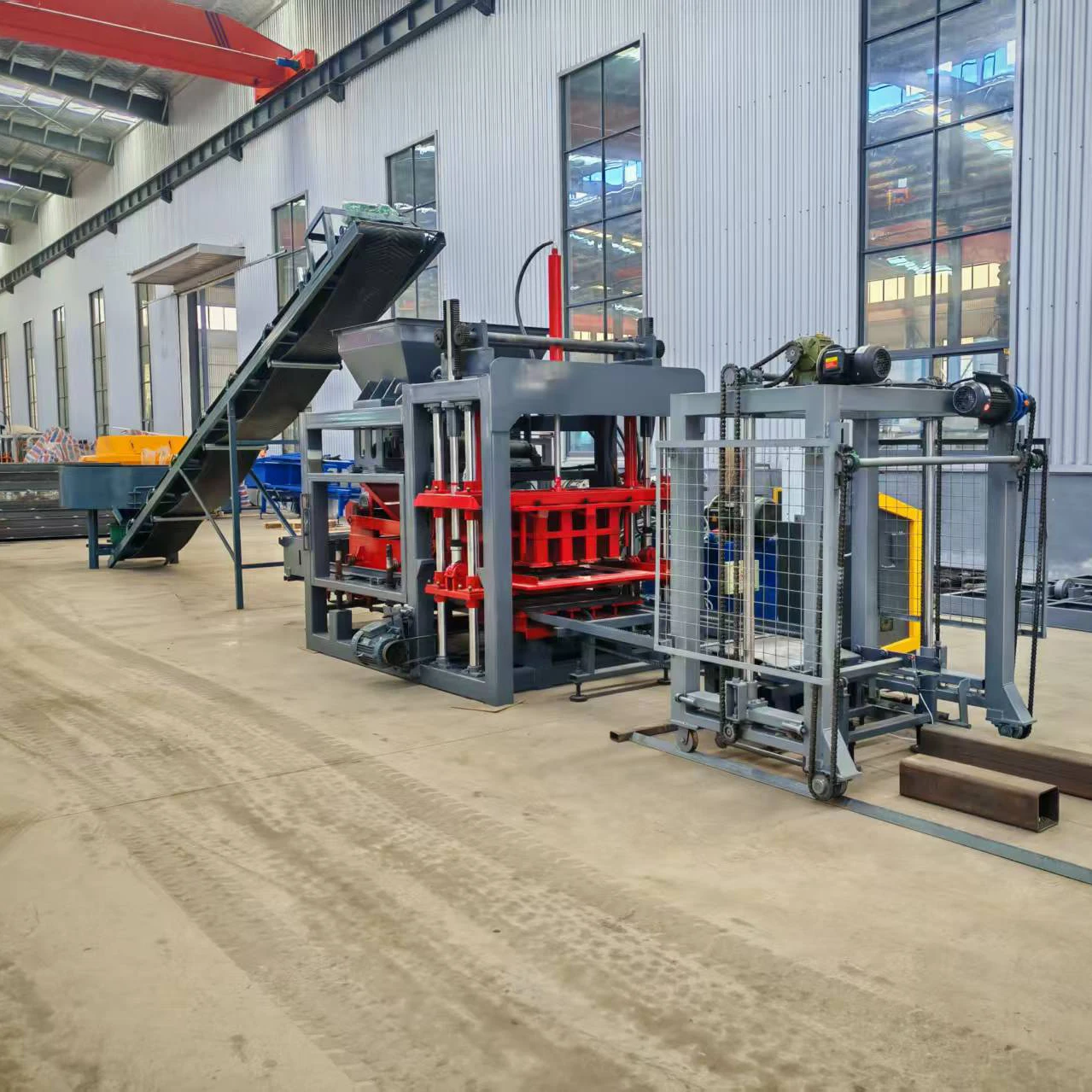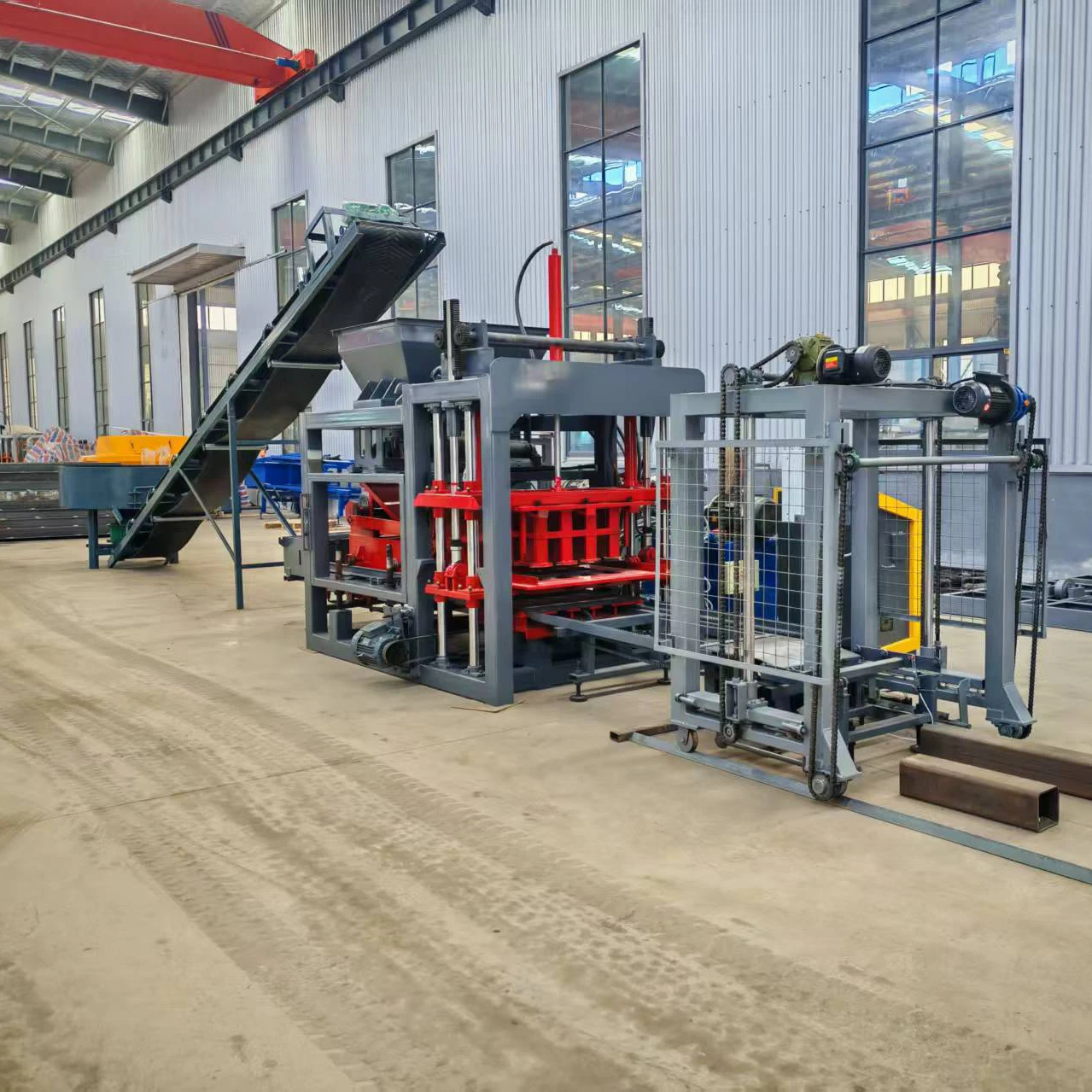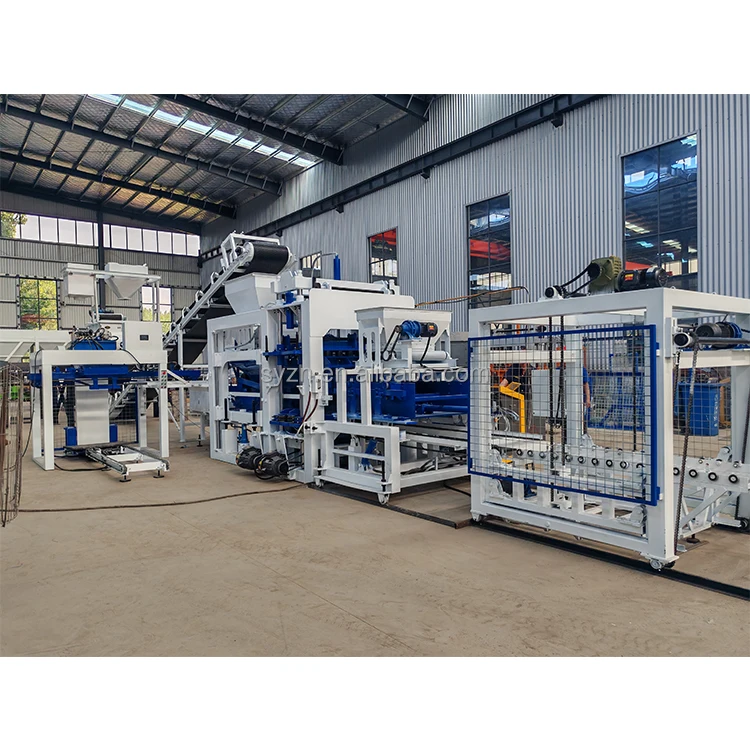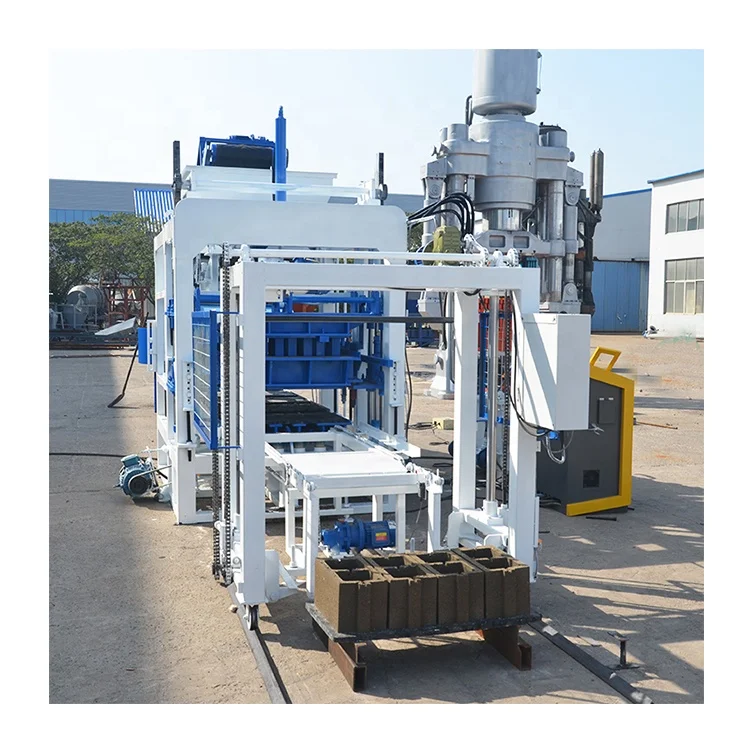
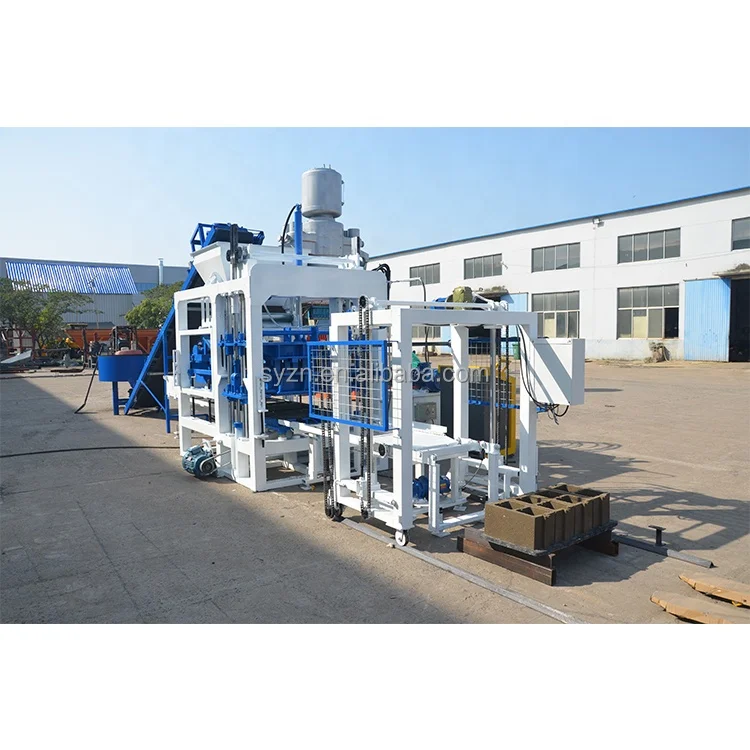


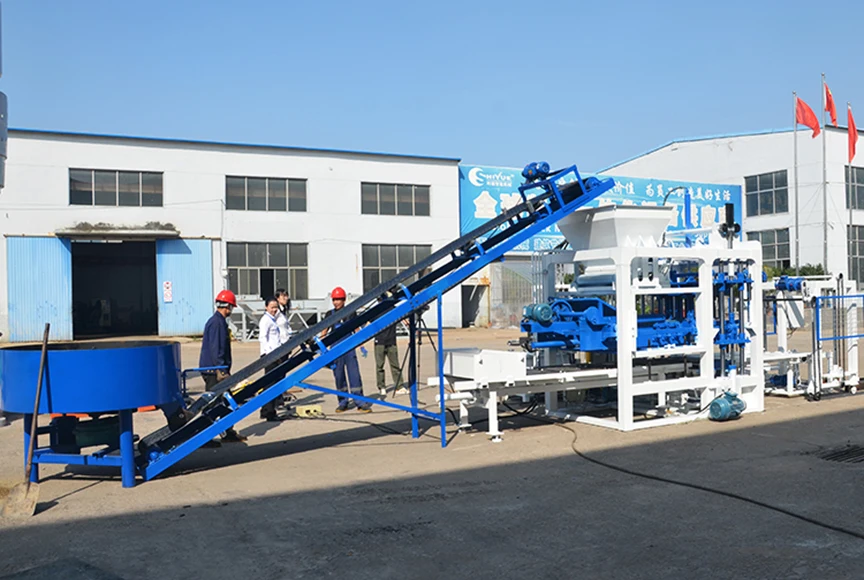

Description
Matched to your mix — hydraulic pressure and vibration force on the QT4-18 are set against your local aggregate and block format, not copied from a default table.
Technical Specifications
| Parameter | Value |
|---|---|
| Model | QT4-18 |
| Product Type | Automatic Hydraulic Concrete Block Making Machine |
| Overall Dimensions | 3900 × 1600 × 2300 mm |
| Total Weight | 3 T |
| Rated Power | 24 kW |
| Mixer Model | JQ350 |
| Vibration Force | 40–50 kN |
| Pallet Size | 850 × 550 × 25 mm |
| Molding Cycle | 15–25 s (varies by format) |
| Output Capacity | 1200–1680 pcs/h (basis: 400 × 200 × 200 mm hollow block) |
| Output Capacity | 1800–2400 pcs/h (basis: 400 × 150 × 200 mm hollow block) |
| Output Capacity | 3240 pcs/h (basis: 240 × 115 × 53 mm solid brick) |
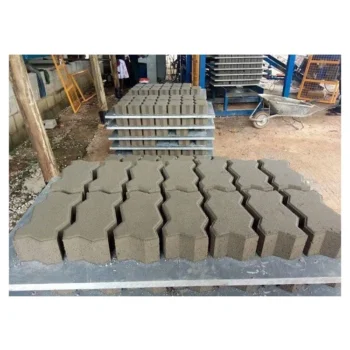
| Applied Products | Paver, solid block, hollow block, curbstone |
| Raw Materials | Crushed stones, sand, cement, dust, fly ash |
| Control System | PLC control system |
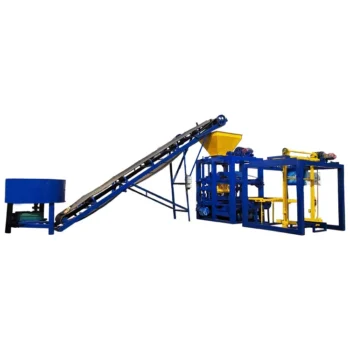
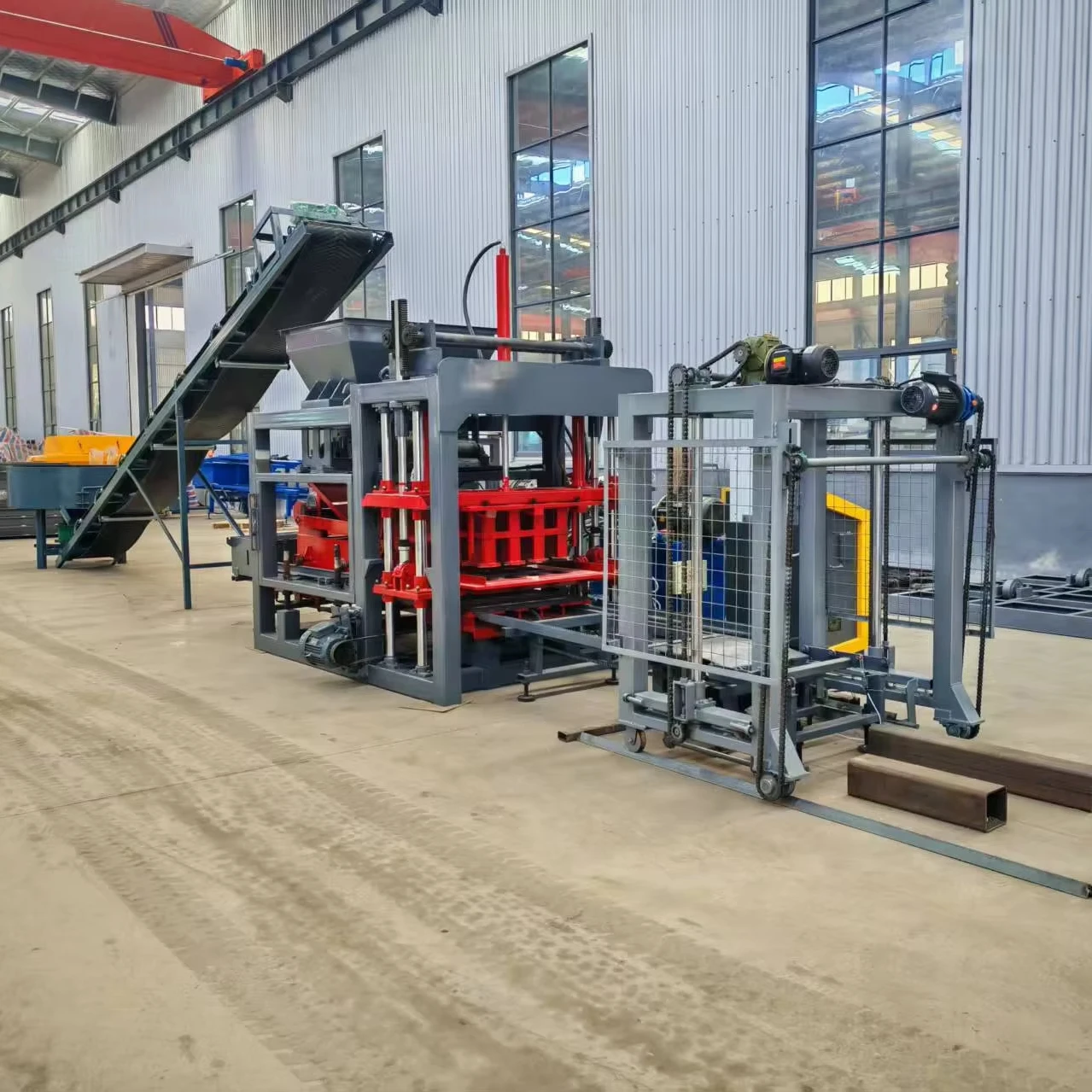
| Included Equipment | Block making machine, hydraulic station, PLC control system, pallet feeder, brick conveyor, block sweeper |
| Automation Level | Semi-automatic (hydraulic station and PLC included, manual hydraulic trolley supplied) |
Application Suitability
| Application | Material or Output |
|---|---|
| Hollow block production for wall construction | Crushed stone, sand, cement, fly ash blends |
| Solid brick manufacturing for load-bearing structures | Cement, sand, and fine aggregate mixes |
| Paver and interlocking block for landscaping | Crushed stones and dust with cement binder |
| Kerbstone and curb units for road edging | High-strength concrete with coarse aggregate |
| On-site block production for housing projects | Locally sourced sand and stone with Portland cement |
What "Pieces per Hour" Leaves Out About QT4-18 Block Machine Specifications
Capacity only means something when the block format is named alongside it.
A quoted output figure without the mould size attached creates a false expectation on the shop floor. If a supplier tells you the QT4-18 block machine specifications deliver a single hourly number, that number was calculated on one specific format — usually the largest hollow block the pallet can hold. Switch to a smaller solid brick and the cycle changes, the mould change takes time, and your actual daily count shifts. I once watched a Middle East buyer struggle for four days because the vibration frequency was tuned for standard sand while his plant ran volcanic aggregate; the bricks cracked under compression testing until we re-matched the pressure curve [NEED_CITE: effect of aggregate density on vibration tuning in block presses]. That is the difference between a catalogue promise and a working production line.
Mould Format and Cycle Time Reality
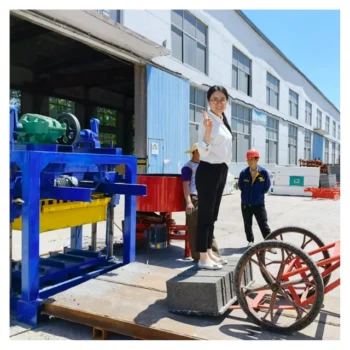
The QT4-18 accommodates paver, solid block, hollow block, and curbstone moulds on a single press frame. Each format carries its own cycle time within the 15–25 second range, and the output figures above reflect that variance. A buyer targeting hollow blocks for commercial construction will see different daily throughput than one running solid bricks for residential work. When evaluating how to choose a concrete block machine, the first question should always be which block your market actually buys, not which number looks largest on the spec sheet.
Hydraulic Pressure and Local Aggregate Matching
Vibration force alone does not guarantee block strength. The 40–50 kN rating on this press must be paired with hydraulic pressure that compresses the mix to the density your aggregate allows. Lightweight volcanic scoria, dense river gravel, and fly-ash-heavy blends each respond differently to the same pressure setting [NEED_CITE: hydraulic pressure adjustment for varying aggregate types in concrete block production]. The configuration step before order confirmation is where your material sample and target compressive strength are matched to the machine’s pressure range, preventing the kind of on-site troubleshooting that delays commissioning.
Reading the Specs That Matter on the Shop Floor
The 850 × 550 × 25 mm pallet size determines how many blocks cure per rack and whether your existing forklift can handle the loaded pallets without modification. Choosing a pallet dimension without checking the curing area layout leads to bottlenecks that have nothing to do with the press itself. The JQ350 mixer feeds the hopper at a rate matched to the 15–25 second cycle, so the press is not left waiting between strokes. Total installed power of 24 kW means most small-to-medium block plants can run this line on a standard industrial supply, though voltage and frequency must be confirmed in writing before the electrical panel is wired. The PLC control system supports multiple display languages, and specifying yours before production avoids a situation where the operator cannot read the fault codes on day one.
The Cost of Skipping Configuration Details
When pallet size is selected without consulting the buyer’s curing rack spacing, pallets pile up on the floor and blocks cure unevenly. When voltage is assumed rather than confirmed, the motor rotates in the wrong direction or the PLC refuses to boot, turning installation week into a waiting game for replacement components [NEED_CITE: common commissioning delays caused by voltage mismatch in exported machinery]. These are not machine defects — they are gaps in the specification conversation that surface only after the container is opened.
Why Source the QT4-18 Through This Configuration Process
Block machinery is the single focus here, which means the press, mould, pallet, and handling equipment are specified as one system rather than assembled from unrelated suppliers. The mould list is built around the formats your regional market sells, and custom moulds can be designed to buyer drawings when standard options do not cover a local format. Capacity calculations arrive with the block format stated for every line item, so there is no guesswork about what the daily target means. Voltage, frequency, and PLC language are locked in before production begins. Factory testing runs your chosen mould on the actual press that will ship, and the test record travels with the machine so you can verify settings on arrival.
Documentation & Verification
- Line layout with capacity calculation stating each block format assumed
- Mould drawing and format list for every included mould
- Pallet specification matched to curing rack and forklift dimensions
- Hydraulic and electrical schematic for on-site troubleshooting
- Voltage and control language confirmation signed before production
- Factory test record and wear parts list packed with shipment
Installation, Commissioning & Support
- Foundation pad sized to the 3900 × 1600 mm footprint with vibration isolation
- Dedicated 24 kW circuit with confirmed voltage and phase sequence before energizing
- Pallet feeder alignment verified against the 850 × 550 mm pallet during first run
- PLC parameters loaded for the specific mould and cycle time confirmed with operator
- Hydraulic station pressure adjusted on-site to match the buyer’s actual aggregate blend
- Wear parts and mould maintenance schedule handed over with the operation manual
Before You Send an Inquiry
Provide the block format your market sells most, the daily output you need for that specific format, and a sample or description of your local aggregate and cement type. Confirm your site voltage, frequency, and preferred PLC display language. If you already have curing racks and forklifts, share the pallet dimensions they accommodate so the 850 × 550 × 25 mm default can be verified or adjusted before the order is finalized.
Frequently Asked Questions
Q: How is QT4-18 capacity verified per block format?
A: Each output figure is calculated on a named block dimension and its corresponding cycle time. Hollow block 400 × 200 × 200 mm runs at a different cycle than solid brick 240 × 115 × 53 mm, and the capacity table reflects that difference. A written capacity calculation is supplied before order confirmation so daily targets are realistic.
Q: Which mould formats are available, and can custom moulds be ordered?
A: Standard moulds cover hollow block, solid brick, paver, and curbstone in common dimensions. Custom moulds can be designed to buyer drawings when a local market requires a non-standard format. Mould drawings are provided for approval before manufacturing begins.
Q: How are vibration force and hydraulic pressure matched to my aggregate?
A: The buyer provides a description or sample of the local aggregate and cement blend. Hydraulic pressure and vibration frequency are then set to produce the target compressive strength with that specific mix, rather than relying on a catalogue default that assumes standard sand.
Q: Is the 850 × 550 × 25 mm pallet compatible with my existing curing setup?
A: That is the default size, but it must be checked against your curing rack spacing and forklift capacity before the order is placed. If your existing infrastructure uses a different pallet dimension, the machine can be configured to match, preventing handling bottlenecks on arrival.
Q: What documentation ships with the machine for commissioning?
A: The package includes a factory test record run on your chosen mould, hydraulic and electrical schematics, a wear parts and mould list, and the operation manual. Voltage and PLC language confirmation is completed before production so the control system is ready when power is connected.