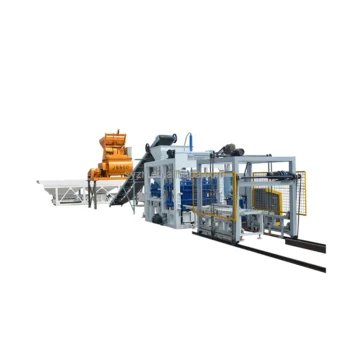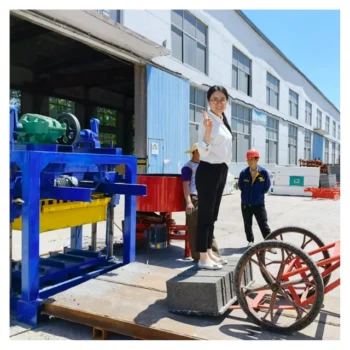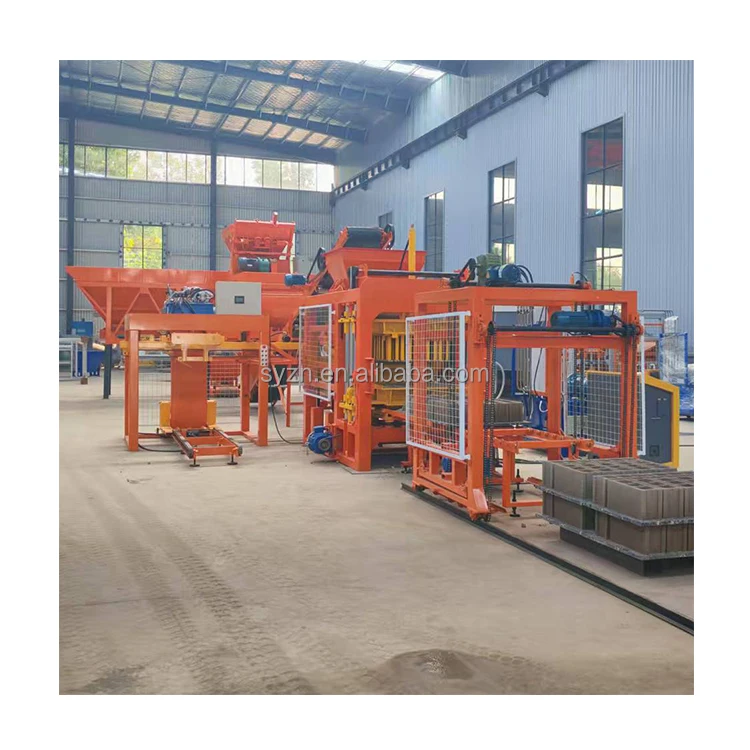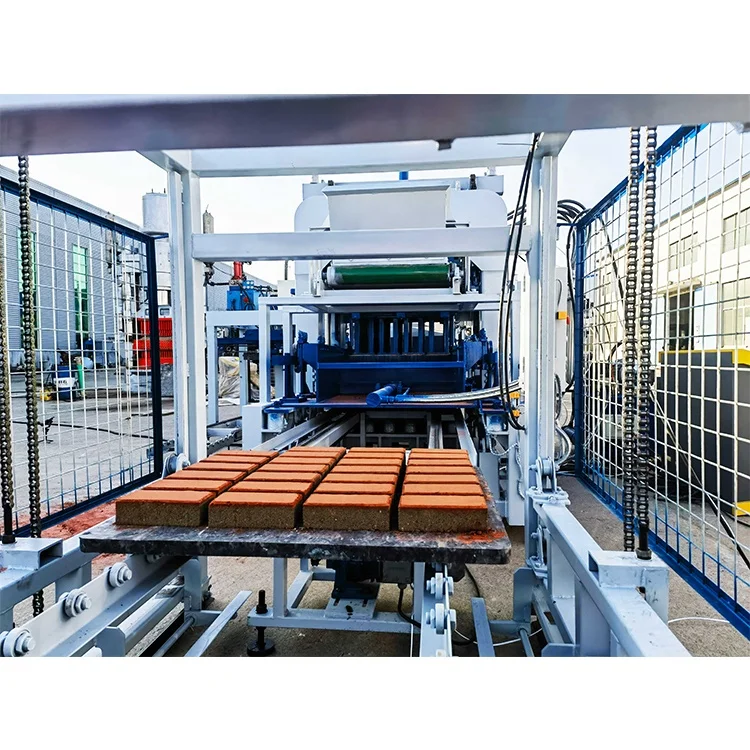
Description
Machine-to-format matching — we size the QMJ2-45 against the block dimensions your market actually sells, not a catalogue default, so cycle time and daily output are calculated for your specific product mix before the order is placed.
Technical Specifications
| Parameter | Value |
|---|---|
| Model | QMJ2-45 |
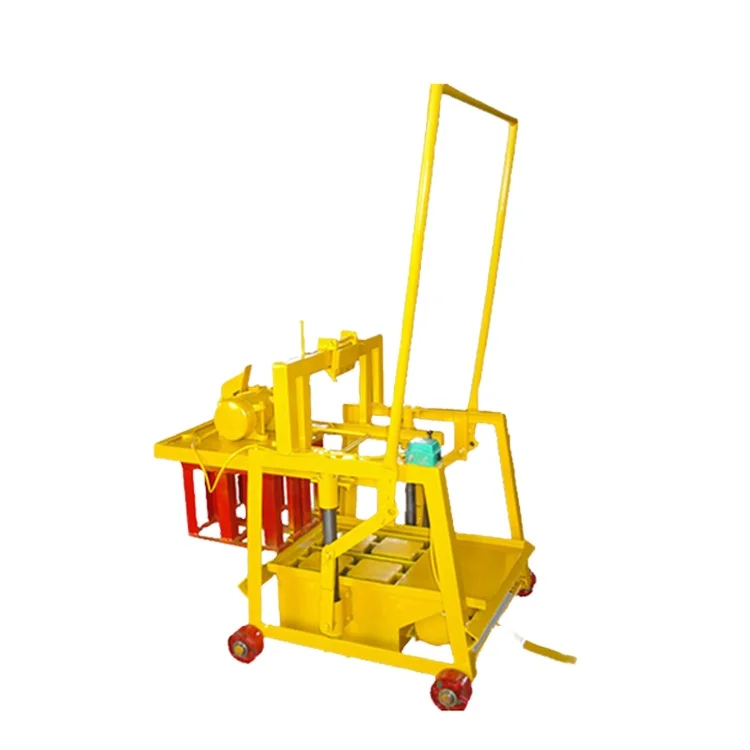
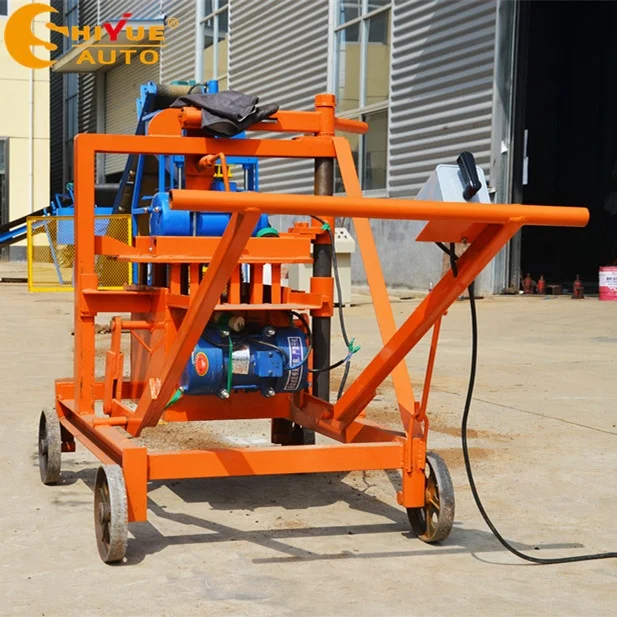
| Product Type | Mobile Egg Laying Block Making Machine |
| Machine Power | 1.5 kW |
| Exciting Power | 2 pcs per mould |
| Molding Cycle | 45 s |
| Output Capacity | 1280 pcs per 8 hours (basis not stated in source — confirm block format and material) |
| Block Format Example | 300×150×100 mm, 2 pcs per mould, theoretical 160 pcs per hour |
| Raw Materials | Concrete, sand, cement |
| Machine Weight | 150 kg (source value — verify against manufacturer catalog) |
| Overall Dimensions | 920×800×1258 mm |
| Automation Level | Semi-automatic, mobile egg-laying type |
| Voltage | Configured to buyer’s local voltage and frequency (confirm before order) |
| Pallet Requirement | Not applicable — blocks laid directly on ground |
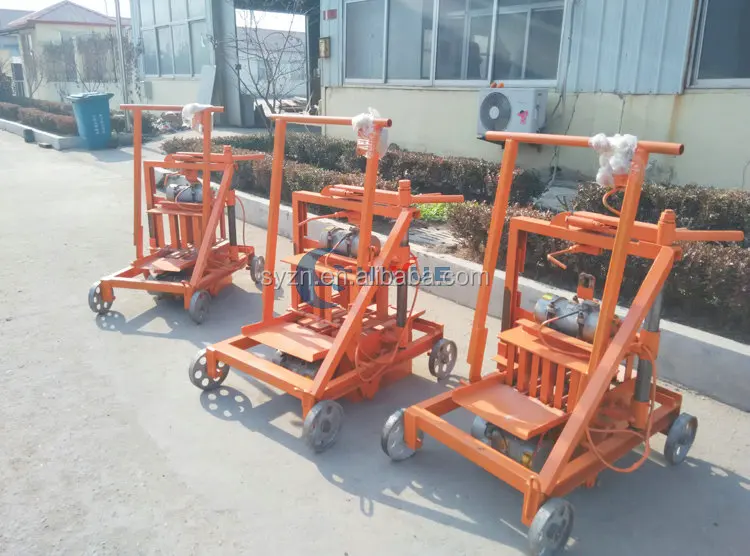
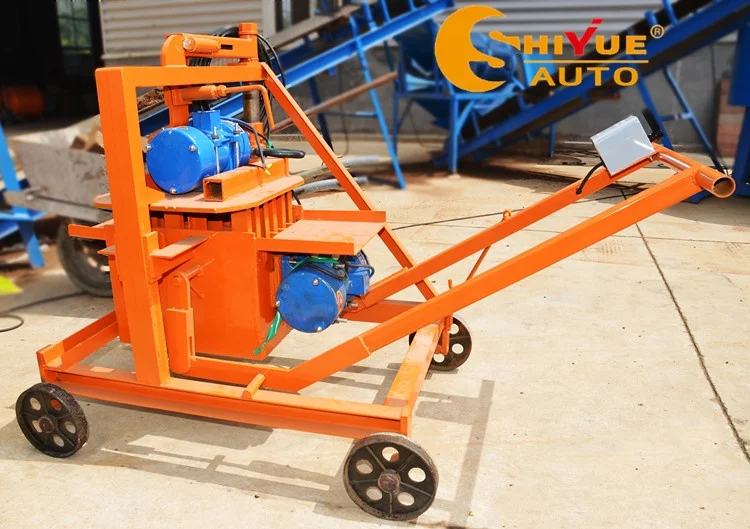
| Key Features | Bed mould vertical vibration combined with upper mould compression vibration, compact mobile frame, custom mould design available |
Application Suitability
| Application | Material or Output |
|---|---|
| On-site hollow block production at construction projects | Concrete, crushed stone and cement mixes laid on compacted ground |
| Small-scale solid block manufacturing | Sand and cement blends for low-investment first operations |
| Complementary mobile line for existing stationary plants | Same raw material feed, producing formats the fixed line cannot run efficiently |
| Contractor self-production for housing developments | Locally sourced aggregate with site-adjusted water-to-cement ratio |
What a "1280 Pieces per Day" Figure Hides When No Format Is Named
Output only means something when tied to a specific block size and wall thickness.
I once watched a contractor in Phnom Penh plan an entire pour schedule around a quoted daily figure, only to find the number assumed a small solid paver while his order book was all 200 mm hollow blocks — the same machine produced less than half what he had counted on. When you review Mobile Egg Laying Block Machine specifications, the cycle time stays constant, but the number of pieces that cycle produces changes with every mould you bolt on. A single-number capacity claim without a format attached is a production plan waiting to collapse. [NEED_CITE: block output calculation methods by format and cycle time]
Matching the Block Your Market Actually Buys
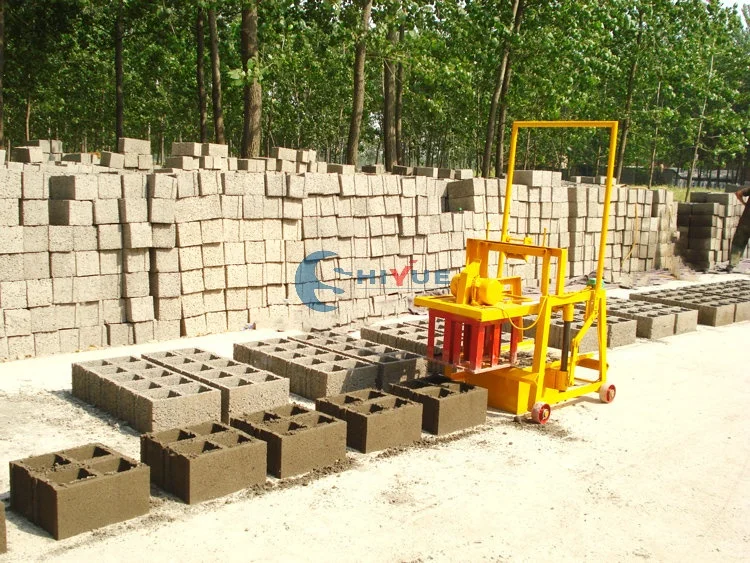
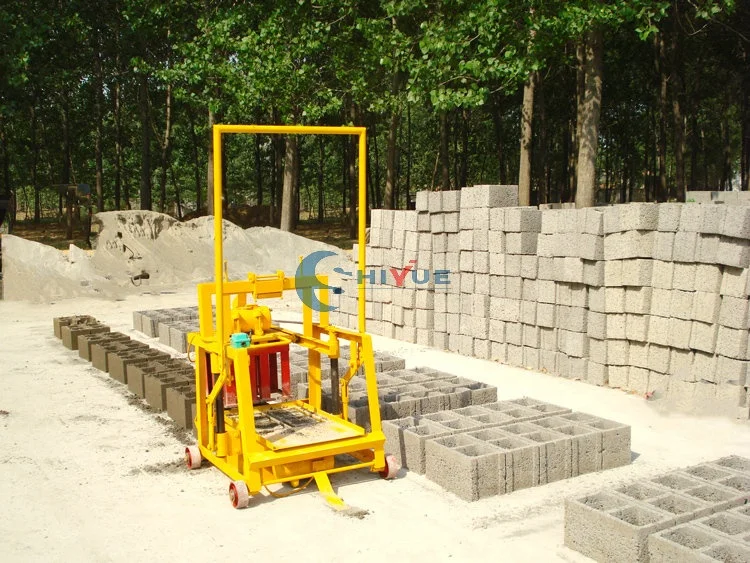
The QMJ2-45 lays blocks directly onto the ground in an egg-laying pattern, which removes the cost and logistics of pallets entirely. That advantage only matters if the machine is paired with a mould that produces the format your buyers order. A 300×150×100 mm hollow block comes out at 2 pieces per cycle, giving a theoretical 160 pieces per hour at a 45-second cycle. Switch to a wider solid block and the piece count per mould may drop, shifting daily throughput accordingly.
Why Local Aggregate Decides More Than the Machine Does
In Cambodia I saw a QMJ-class mobile unit sit idle for weeks because the river sand available on site carried a clay content the original mix design never accounted for. The blocks cracked on the second day of curing and the mould kept packing with fines. Before this machine ships, the buyer’s sand source and stone gradation should be sampled and a workable mix established — the vibration frequency and exciting force are fixed at 2 vibrators per mould, so the mix must suit the machine, not the other way around. [NEED_CITE: effect of clay content in fine aggregate on concrete block compressive strength]
Reading the Numbers That Matter
The 1.5 kW main drive keeps power draw within what a typical construction-site generator can supply, meaning the machine can operate where grid connections are unreliable. The 920×800×1258 mm envelope allows it to pass through a standard doorway and work inside a partially finished structure. A 45-second moulding cycle is the floor figure: actual cycle time on site includes the operator repositioning the unit between lays, so realistic hourly output will sit below the pure theoretical calculation. Weight at approximately 150 kg means two workers can tilt and wheel the machine without a forklift, which is the whole point of choosing a mobile egg-laying format over a stationary press.
The Cost of Skipping Format Confirmation
When a buyer accepts a generic capacity figure and signs the order without naming the target block, the factory ships with whatever mould was in stock. The machine arrives, the mould is wrong for the local market, and the buyer pays for air freight on a replacement while the line sits silent. Worse, if the voltage was assumed rather than confirmed, the motor may overheat on a 60 Hz supply it was never wound for, burning out within the first week of operation. [NEED_CITE: motor failure from frequency mismatch in exported machinery]
Why Buyers Source This Machine Here
Block machinery is our single focus, so the QMJ2-45 is specified as a matched system of machine, mould and ground-preparation guidance rather than a standalone press. Mould design follows the buyer’s own drawings when the standard format list does not cover a local product. Configuration is set against the buyer’s actual aggregate sample, not a laboratory reference mix. Automation level is selectable, allowing a first-time buyer to start with manual egg-laying and add a batching mixer later. Installation support includes operator training on mould change and daily maintenance routines.
Documentation & Verification
- Capacity calculation sheet naming the exact block format and wall thickness assumed
- Mould drawing and format list including any custom profile designed to your market
- Voltage and frequency confirmation sheet signed before production begins
- Factory test record run on your specified mix proportion before dispatch
- Operation and maintenance manual with wear parts list and mould catalogue
- Packing photographs and customs documentation support for your port
Installation, Commissioning & Support
- Level, compacted ground strip of at least 30 m prepared before the 150 kg unit arrives
- Power supply matched to confirmed voltage and frequency with a dedicated 1.5 kW circuit breaker
- Two-person tilt and wheel positioning using the 920×800 mm base footprint
- First-cycle moulding supervised to set vibration time for your aggregate blend
- Operator training on 2-vibrator-per-mould maintenance and daily greasing points
- Wear parts and mould replacement list supplied for first reorder planning
What We Need From You to Size This Correctly
Tell us the block dimensions and wall thickness your customers order most, along with the daily volume you need to meet. Share a sample or lab report of the sand and stone available near your site so we can confirm the mix will work with the 45-second cycle. State your local voltage and frequency so the motor is wound correctly before the QMJ2-45 leaves the factory floor.
Frequently Asked Questions
Q: How do I verify the daily output of the QMJ2-45 for the block format my market actually sells?
A: We supply a capacity calculation sheet that names the exact block dimensions, pieces per mould and cycle time used to derive the daily figure. You compare this against your product mix before the order is confirmed, so the quoted output matches what you will produce on site rather than a theoretical maximum tied to an irrelevant format.
Q: What voltage and frequency must I confirm before the QMJ2-45 is built?
A: Your local supply voltage and frequency — whether 220 V 50 Hz, 380 V 50 Hz or 440 V 60 Hz — must be stated in writing before motor winding begins. A motor built for the wrong frequency will overheat and fail within days, and rewinding on site is rarely possible in the field conditions where a mobile egg-laying machine operates.
Q: Which block formats can one QMJ2-45 run, and how long does a mould change take?
A: The machine accepts interchangeable moulds for hollow blocks, solid blocks and pavers within its frame envelope. Each mould is secured with bolt clamps, and a trained operator can complete the swap in a short maintenance window. We supply a format list showing every mould profile available, including custom designs built to your drawings.
Q: What local aggregate and mix design should I use with the QMJ2-45?
A: Send us a sample or test report of your sand and stone so we can adjust the recommended water-to-cement ratio and fines content. The 2-vibrator-per-mould excitation is fixed, so the mix must be designed around the machine’s vibration characteristics to achieve consistent block density without mould packing or surface tearing.